This post contains affiliate links. We may earn a small commission when you buy through our links — at no extra cost to you.
Most sleeping bags marketed for camping are rectangular and weigh over 4 pounds — not meant for carrying on your back. Even mummy-shaped bags often overstate warmth, leaving you cold on a 40° night when the label says 20°F. That gap between marketing and real use is the biggest trap for new backpackers.
Choose a mummy bag with a comfort rating that matches your coldest night, and add 10–15°F margin if you sleep cold. Synthetic fill handles damp conditions better; down compresses smaller for dry trips. Weight and pack size matter more than any other spec for backpacking.
This guide highlights bags that deliver honest warmth and real packability for three-season backpacking. Whether you need ultralight or budget-friendly, the right bag is here — no misleading best-sellers.


Best for Backpackers
Kelty Cosmic 20 Down
Key Features
- Temperature Rating: 20°F (limit 21°F)
- Weight: 2.6 lbs
- Shape: Mummy
- Fill Type: 550 FP Down
- Price: $$$
The Kelty Cosmic 20 Down hits a consistent 20°F comfort rating in a 2.6-pound package that compresses small enough to free up space for other gear. The 550-fill RDS-certified down, recycled fabrics, and PFAS-free DWR finish show attention to both performance and environmental standards. Stitching and baffle construction are clean, and the bag maintains its loft after repeated compression cycles.
On overnight trips, the mummy shape holds heat effectively, but the cut is intentionally snug through the chest and hips. Side sleepers and those with broad shoulders may feel restricted; back sleepers will find the fit comfortable. The draft collar and hood seal well against drafts, and the two-way zipper operates smoothly. The bag packs down to a size that fits easily in a mid-size backpack, leaving room for other essentials.
Compared to budget mummy bags that often overstate their temperature limits, the Kelty delivers on its 20°F rating — comfortable to freezing, with a comfort limit of 21°F per industry standards. The premium pricing reflects better materials and build quality, making it a long-term investment for regular backpackers rather than occasional campers.
This bag is best suited for backpackers who sleep on their back, want a genuine 20°F limit, and value a lightweight, packable down bag. It is not ideal for wet-weather camping without a bivvy, as down loses insulating properties when damp. Broad-shouldered or larger hikers should test the fit before buying, or consider the wide version. Side sleepers who toss frequently will prefer a roomier cut.
Pros
- Consistent warmth to freezing, suitable for three-season use
- Clean construction with no quality complaints reported
- Lightweight at 2.6 lbs and packs down small for backpacking
- RDS-certified down ensures ethical sourcing standards
- PFAS-free DWR finish adds light moisture resistance on recycled fabrics
Cons
- Snug mummy cut can feel restrictive for broad-shouldered sleepers or those who move during sleep
For backpackers who want a genuine 20°F bag that packs small and doesn’t inflate its temperature rating, the Kelty Cosmic 20 Down is a straightforward choice.
Best for Budget Backpackers
TETON Sports 20F Mummy
Key Features
- Temperature Rating: 20°F (limit)
- Weight: 2.9 lbs
- Shape: Mummy
- Fill Type: Synthetic microfiber
- Price: $
At under $60 and 2.9 pounds, the TETON Sports 20F offers a compelling entry point for backpackers on a tight budget. While premium down options like the Kelty Cosmic 20 deliver more accurate temperature ratings and better packability, the TETON undercuts them by half the price.
This bag suits petite to average-sized adults who expect to camp in conditions above 40°F. The mummy cut runs narrow — broad-shouldered or larger users will find it restrictive. And the 20°F limit rating is optimistic; comfortable use stops around 40°F.
The synthetic microfiber fill provides enough insulation for typical spring and summer nights. Weight is manageable for multi-day trips, though it won’t compress as tightly as down. For the price, the tradeoffs are clear: you save money but accept a snugger fit and a warmer effective temperature range.
Pros
- Adequate warmth for 40°F+ nights at a budget-friendly price
- Lightweight for its temperature rating at 2.9 lbs
- Best bang-for-buck in the mummy category
Cons
- Narrow fit may not accommodate broad-shouldered or larger users
- Temperature rating is optimistic; comfort drops below 40°F
For budget-conscious backpackers who camp above 40°F and have a slim build, the TETON Sports 20F provides the best value in a mummy sleeping bag.
Best for Damp Climate Backpackers
Kelty Cosmic Synthetic 20
Key Features
- Temperature Rating: 20°F
- Weight: 3.3 lbs
- Shape: Mummy
- Fill Type: Cirroloft synthetic
- Price: $$
Cirroloft synthetic fill keeps its insulating ability even in damp conditions, a clear advantage over down for backpacking trips where rain or condensation is likely. This 20°F mummy bag includes compression straps and a stuff sack, and the insulation holds up well when wet, unlike down which clumps and loses warmth. The tradeoff is weight and bulk compared to Kelty’s own down version, which is lighter and packs smaller.
This bag is best for backpackers who expect moisture, whether from wet climates, coastal hikes, or spring snowmelt. The 3.3 lb weight and larger packed size are acceptable if you prioritize reliable warmth in damp conditions over ultralight gear. For dry-weather trips where pack weight matters most, the down version (the top pick in this review) is a better fit.
Stitching and materials feel well put together, and the bag maintains warmth to the low 30s, matching its 20°F rating for most sleepers. Given the price point, it offers good value for a synthetic bag that performs in weather that would compromise down.
Pros
- Keeps you warm down to the low 30s, matching the 20°F rating for most sleepers.
- Good value for a synthetic 20° bag, offering dependable insulation without the cost of down.
- Construction quality is high, with well-executed stitching and materials.
Cons
- Zipper can snag or break in some cases, requiring careful operation.
If your backpacking trips involve damp conditions where down fails, this synthetic bag delivers reliable warmth without breaking the bank; accept the extra weight and bulk as the price of moisture resistance.
Best for Comfort-Focused Backpackers
Marmot Trestles 30
Key Features
- Temperature Rating: 30°F
- Weight: ~2.5 lbs
- Shape: Mummy
- Fill Type: Synthetic
- Price: $$
The Marmot Trestles 30 delivers reliable warmth in a comfortable mummy shape, with a footbox that gives toes room to move — a detail often missing in narrow bags. For backpackers who prefer synthetic fill over down, this bag offers solid performance in damp conditions without the worry of losing loft when wet. Compared to more compressible down alternatives, it trades some packability for wet-weather resilience and a proven fit that owners consistently praise.
This bag suits backpackers looking for a mid-range synthetic option from a familiar outdoor brand. The official specifications are sparse, so buyers who need exact weight, fill weight, or compression volume numbers for comparison may find the lack of transparency frustrating. That said, the real-world feedback points to a comfortable, warm bag for three-season conditions, particularly for side sleepers who appreciate the extra toe room. Long-term durability under repeated use has limited documentation, but no consistent functional complaints have emerged.
Pros
- Keeps users warm in 40°F nights despite a 30°F rating, offering margin for colder conditions.
- Roomy footbox and overall fit accommodate side sleepers and those who dislike tight mummy bags.
- Packs down small and light enough for typical backpacking loads, around 2.5 pounds.
Cons
- Official product specifications are sparse, limiting direct comparison with other bags on weight, fill, and dimensions.
A comfortable synthetic mummy bag that prioritizes fit and warmth over spec details — ideal for backpackers who know what they need from a familiar outdoor brand.
Best for Summer Backpackers
Naturehike Ultralight Down 40F
Key Features
- Temperature Rating: 40.4°F comfort
- Weight: 2.0 lbs
- Shape: Semi-Rectangular
- Fill Type: 650 FP Down
- Price: $$
This down bag weighs under 2 lbs and compresses to 13.8 by 7.1 inches, making it one of the lightest and most packable options for summer backpacking. The 650-fill duck down and semi-rectangular shape provide decent loft and room to move for side sleepers.
The 40.4°F comfort rating is accurate for warm nights, but users consistently report feeling cold when temps drop below 50°F. That places this bag firmly in summer and early fall use – not a true three-season piece despite the down insulation.
Best suited for ultralight enthusiasts and side sleepers heading out on summer trips where overnight lows stay above 50°F. If you need a bag for chilly spring or fall nights, a more insulated mummy like the Kelty Cosmic 20 Down will serve better.
Pros
- Weighs under 2 lbs for ultralight backpacking
- Packs to 13.8×7.1 inches for compact storage
- Semi-rectangular shape allows movement for side sleepers
Cons
- Only suitable for temperatures above 50°F – not warm enough for chilly nights
A featherlight, roomy bag for warm-weather backpacking – not a replacement for a 20°F mummy.
Best for Budget Bushcrafters
OneTigris Bushcrafter Mummy
Key Features
- Temperature Rating: 46.4-59°F (8-15°C)
- Weight: 3.1 lbs
- Shape: Mummy
- Fill Type: Polycotton
- Price: $
The OneTigris Bushcrafter keeps users warm in 30°F despite a conservative temperature listing, and costs under $60 — a standout for budget-conscious backpackers. While the top pick Kelty Cosmic 20 Down offers better packability and lighter weight, the OneTigris delivers comparable warmth at roughly half the price.
This bag suits campers who prioritize value over minimal pack weight. The 3.1 lb weight is manageable for short backpacking trips but not for ultralight pursuits. Bushcrafters and spring/fall campers will appreciate the roomy cut and reliable warmth above freezing. The temperature rating is conservatively listed; some users have been comfortable into the low 30s, though below 40°F you may need extra layers depending on your sleep system. The zipper can snag on fabric — a minor annoyance that careful zipping can mitigate.
The generous mummy shape offers more shoulder and hip room than typical budget bags, making it a good fit for side sleepers or broader frames. Polycotton fill provides consistent insulation for its weight class, and the draft collar helps retain heat on cooler nights.
Pros
- Keeps users warm at 30°F despite a conservative 46°F rating
- Great value for a mummy bag with this warmth and room
- Roomy mummy cut accommodates wider frames and side sleeping
Cons
- Zipper can snag on fabric during use
- Temperature rating is conservatively low; comfort limit may be higher than claimed
For backpackers on a tight budget who can accept a three-pound sleeping bag, the OneTigris offers exceptional warmth and room for mild three-season trips — just zip carefully.
Best for Budget Backpackers
1TG Tactical 25°F Mummy
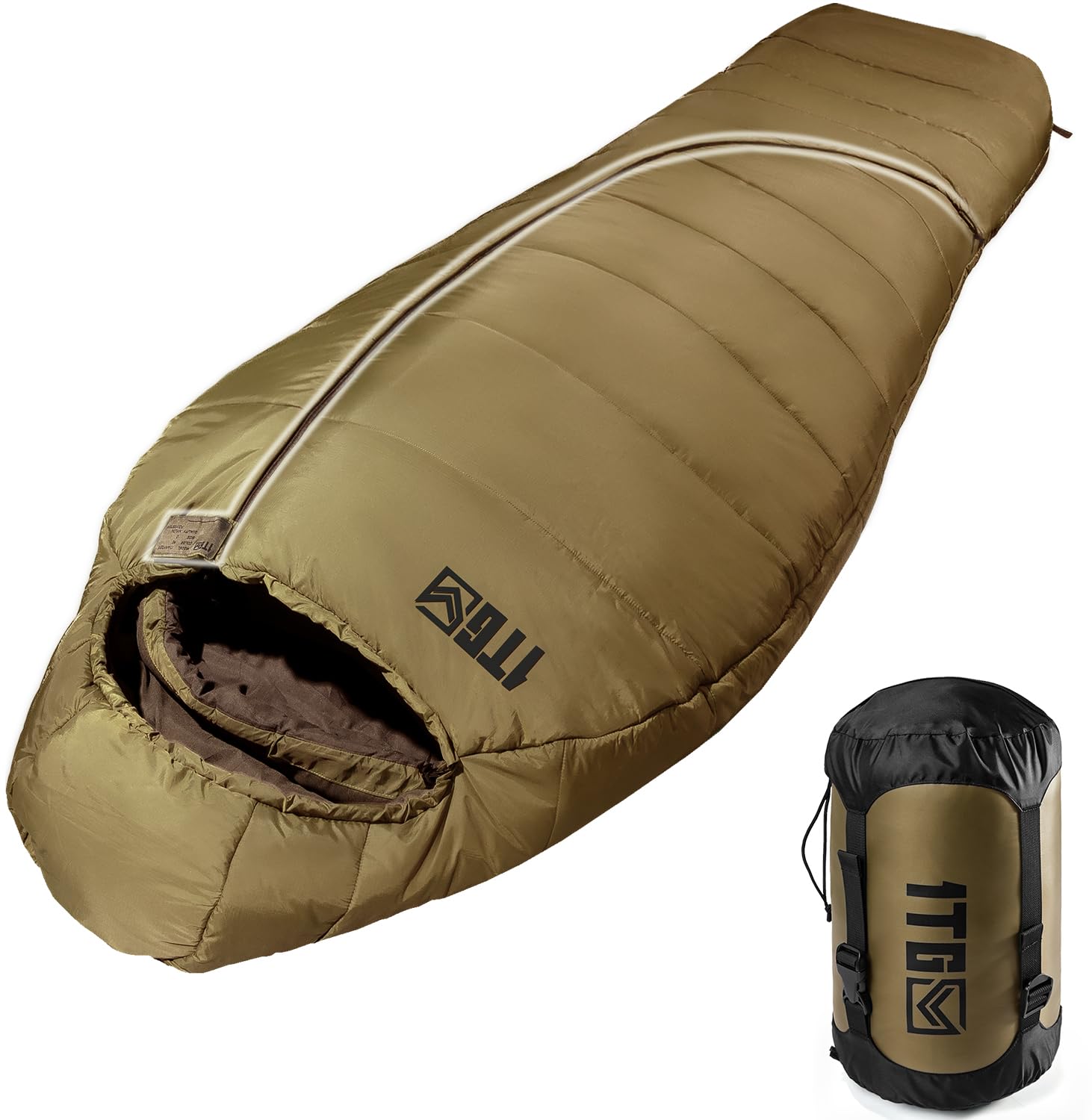
Key Features
- Temperature Rating: 25-36°F (limit)
- Weight: 3.88 lbs
- Shape: Mummy
- Fill Type: 7D hollow fiber
- Price: $$
The 1TG Tactical Mummy delivers reliable warmth down to 25°F and features a practical diagonal zipper that eases entry and exit. The synthetic fill holds up well in damp conditions, and build quality feels solid for the price. However, at 3.88 pounds it is heavier than most backpacking mummies in this temperature range, and the cut runs narrow across the shoulders. This bag works best for tactical users or budget backpackers who prioritize warmth and durability over pack weight, and who do not require a spacious fit.
Pros
- Keeps warm at 30°F
- Build quality is good for the price
- Diagonal zipper is easy to use and reduces snagging
Cons
- 3.88 lbs is heavy for a backpacking mummy bag
- Narrow shoulder fit may be tight for broader users
A practical choice for tactical or occasional backpackers who can accept extra weight in exchange for reliable warmth at 25°F and a durable build.
Best for Early Adopters
SYWSKW 15°F Down Mummy
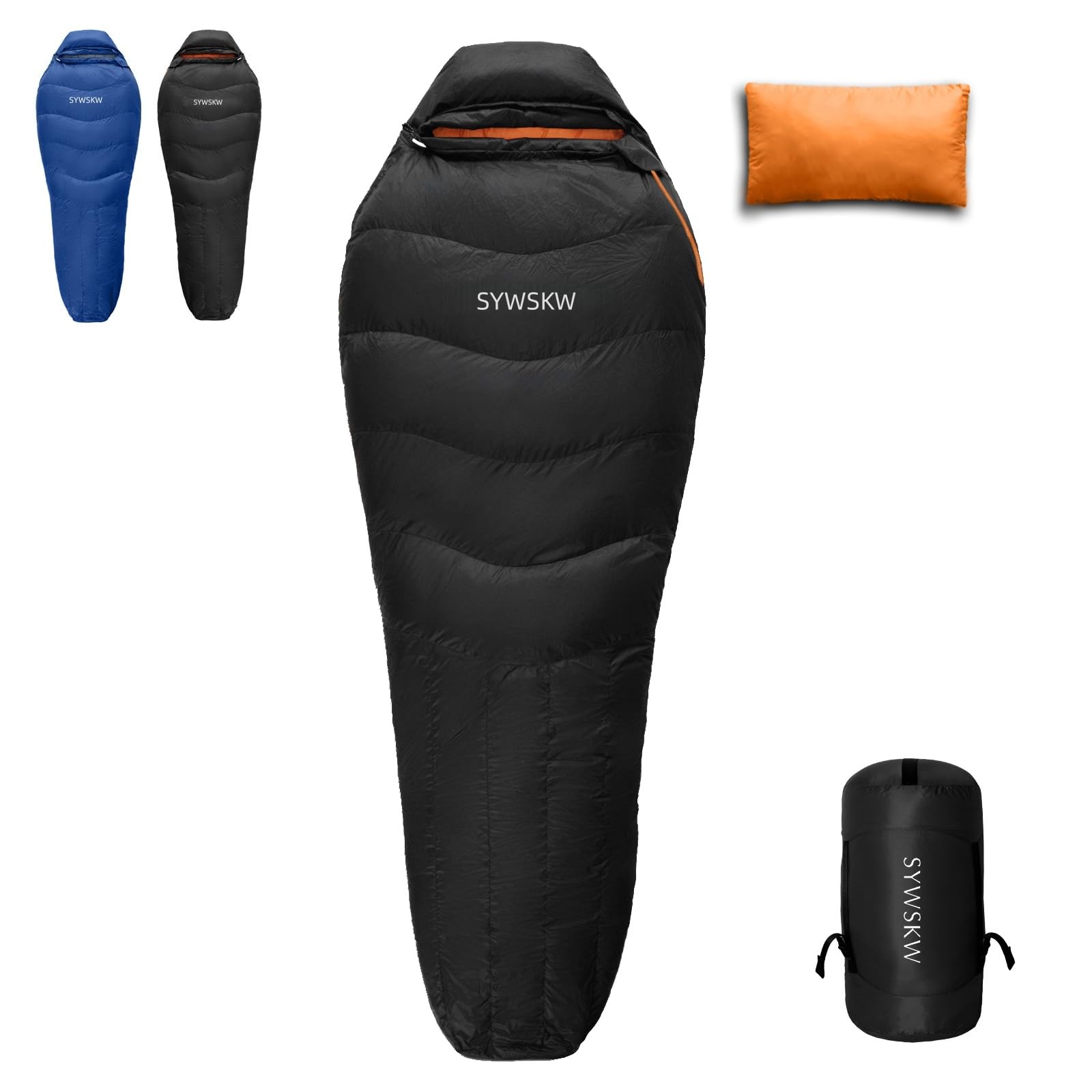
Key Features
- Temperature Rating: 15°F limit
- Weight: 2.6 lbs
- Shape: Mummy
- Fill Type: 680 FP Down
- Price: $$
This wide-cut mummy packs 680-fill duck down into a 2.6 lb package that compresses well for backpacking. Users report staying warm in 40°F conditions, and the fit provides extra shoulder and hip room compared to typical mummy bags. However, with a limited number of owners having put this bag through repeated trips, its long-term durability remains unverified. The zipper can catch on surrounding fabric, requiring a deliberate hand when closing. For early adopters who want a spacious down bag without the premium price — and are comfortable accepting a shorter track record — this is a compelling option.
Pros
- Keeps users warm in 40°F conditions
- Packs down to a compact size for its insulation level
- Good build quality for the mid-range price
Cons
- Zipper may snag on fabric if not carefully aligned
For backpackers willing to test a promising new design who value a roomy cut and don’t mind an occasionally finicky zipper, this bag offers good value for the price.
Best for Summer Backpackers
ECOOPRO Warm Weather Envelope

Key Features
- Temperature Rating: 55-60°F (comfort)
- Weight: 1.5 lbs
- Shape: Envelope
- Fill Type: Polyester
- Price: $
At 1.5 lbs and packing to the size of a football, the ECOOPRO is extraordinarily light and compressible for its price. Its envelope shape offers room for side sleepers, but the 55-60°F comfort rating limits it strictly to warm-weather trips. Three-season backpackers targeting 20-40°F nights will find it too cold, and the narrow, short cut excludes average-sized adults. This bag shines for petite users or kids on hot summer backpacking outings where every ounce matters.
Pros
- Extremely lightweight at 1.5 lbs, ideal for shaving pack weight
- Compresses to a football-sized bundle for easy packing
- Designed specifically for warm-weather camping comfort
Cons
- Not warm enough for nights below 55°F, limiting use to hot weather only
- Narrow and short fit unsuitable for average-sized adults
Best for summer-only ultralight backpacking if you are under 5’6” and do not need warmth below 55°F.
Best for Car Campers
SOULOUT 3-4 Season Rectangular

Key Features
- Temperature Rating: 32-77°F (0-25°C)
- Weight: 4.2 lbs
- Shape: Rectangular
- Fill Type: Polyester
- Price: $
This rectangular bag delivers comfort and warmth at a budget price for car camping or kids’ sleepovers. The soft lining and ample room suit casual use, and the included compression sack helps reduce size, but at 4.2 lbs and a rectangular shape it cannot replace a mummy bag for backpacking. Zipper snagging can occur, and the temperature rating is optimistic below 45°F, making it best for mild-weather trips where weight is not critical.
Pros
- Budget-friendly price for a warm, roomy bag
- Soft interior lining adds comfort on mild nights
- Keeps most users comfortable down to around 45°F
Cons
- Zipper can snag and seams may unravel with regular use
- Too heavy and bulky for backpacking trips
This bag works well for family car camping or occasional mild-weather use where weight isn’t a concern.
Best for Car Camping
MalloMe 3-Season Rectangular

Key Features
- Temperature Rating: 50-80°F
- Weight: 3.1 lbs
- Shape: Rectangular
- Fill Type: Synthetic
- Price: $
This MalloMe sleeping bag is a popular choice for car camping thanks to its affordable price and soft, roomy interior. However, the rectangular shape and 3.1 lb weight make it too bulky for backpacking packs — unlike the slimmer mummy-style options better suited for trail use.
Pros
- Budget-friendly price for a roomy rectangular sleeping bag.
- Soft, comfortable interior for warm nights.
- Reasonable weight for car camping gear at 3.1 lbs.
Cons
- Temperature range of 50-80°F limits use to mild conditions; not warm enough for chilly backpacking trips.
- Zipper can snag or separate over time.
Best reserved for budget-conscious families car camping in warm weather or as a spare bag for emergency kits.
Best for Kids
JEAOUIA 3-Season Rectangular

Key Features
- Temperature Rating: 50-68°F
- Weight: 3.3 lbs
- Shape: Rectangular
- Fill Type: Hollow fiber cotton
- Price: $
Affordable and light for the price, the JEAOUIA rectangular bag provides enough warmth for 50°F+ nights and packs reasonably for casual use. The short, narrow cut excludes average-sized adults, and the zipper may catch or separate under regular handling. Below 50°F the bag quickly loses its comfort edge. This works for kids or occasional summer car camping, but it is not a three-season backpacking choice.
Pros
- Very low price for a summer bag
- Adequate warmth for 50°F+ nights
Cons
- Zipper may snag or separate over time – more noticeable with heavier fabrics
- Short and narrow cut limits use to children or very petite adults
Best left for mild-weather car camping with kids or as a low-cost backup, not for adults on backpacking trips.
Best for Car Campers
Atarashi 4-Season Semi-Rectangular

Key Features
- Temperature Rating: 32-77°F (0-25°C)
- Weight: 4.2 lbs
- Shape: Semi-Rectangular
- Fill Type: Polyester
- Price: $
This bag offers plenty of room to stretch out at a budget-friendly price, with enough warmth for mild nights above 50°F. However, the 4.2-pound weight and rectangular shape make it impractical for backpacking — it’s better suited to car camping where weight doesn’t matter. The zipper can separate from the bag during use, and the temperature rating is optimistic; you’ll want extra layers if the forecast dips below 50°F.
Pros
- Generous interior space allows freedom of movement.
- Low price makes it an economical choice for car camping.
Cons
- Heavy for backpacking at over 4 pounds, adding significant pack weight.
- Zipper can separate from the bag, leading to closure issues.
This sleeping bag works for car camping or occasional mild-weather use where weight and zipper reliability aren’t critical.
Best for Car Camping Cold
TETON Celsius Rectangular

Key Features
- Temperature Rating: 25/20/0°F variant
- Weight: 5 lbs
- Shape: Rectangular
- Fill Type: Synthetic fiber fill
- Price: $$
The TETON Celsius delivers impressive warmth for subfreezing nights thanks to its synthetic fill and flannel-like lining, making it a comfortable choice for car camping or family trips. However, at 5 pounds and with a rectangular shape, it is far too heavy and bulky to fit in a backpack, and the zipper does not open fully at the bottom, limiting airflow. This is a dedicated car camping bag, not for anyone carrying gear on their back.
Pros
- Keeps you warm in subfreezing conditions with a soft, flannel-like interior.
- Generous rectangular shape allows room to move and is comfortable for side sleepers.
- Priced affordably for the warmth and comfort offered in a car camping setup.
Cons
- At 5 lbs, it is too heavy for backpacking and takes up significant pack space.
- Zipper only opens partway, preventing full ventilation or using the bag as a blanket.
This bag is best for car campers who prioritize warmth and comfort over packability, not for backpackers.
Best for Ultralight Summer
Naturehike 42°F Down Short

Key Features
- Temperature Rating: 42-52°F comfort
- Weight: 1.3 lbs
- Shape: Rectangular
- Fill Type: 650 FP Down
- Price: $$
This down bag delivers an impressive 1.3-pound weight and compresses to the size of a football, making it a great choice for summer trips where every ounce counts. The 650-fill RDS down provides good loft in mild conditions, and the rectangular shape allows some room to move. However, the short version maxes out at about 5’6", and the comfort range starts at 50°F — too warm for the 30°F nights typical of three-season backpacking. A longer variant exists but sees less positive feedback. If your trips stay above 50°F and you’re under 5’6", this is a lightweight option worth considering; otherwise, look to the mummy-shaped bags in this guide for better cold-weather performance.
Pros
- Extremely lightweight at under 1.5 pounds
- Packs down to a very small 10×5 inches
- Good value for a down bag at a mid-range price
Cons
- Short length can limit use for adults over 5’6"
- Comfort range starts at 50°F — less suitable for cooler nights common in three-season backpacking
For ultralight summer trips in warm climates by smaller hikers, this is a compelling choice — but it won’t handle the cooler temperatures of true three-season backpacking.
How to Choose
The most important factor for a backpacking sleeping bag is matching its temperature rating to your actual comfort needs, not the optimistic limit printed on the tag.
Temperature Rating: Comfort vs. Limit
Manufacturers list two numbers: the limit rating (survival temperature) and the comfort rating (where you’ll sleep without shivering). Most budget bags only advertise the limit, which can be 10–15°F colder than what most people find comfortable. If you sleep cold or use a minimal pad, assume you need a comfort rating 10°F warmer than the coldest night you expect.
A 20°F limit bag will keep a warm sleeper alive at 20°F, but you’ll likely be cold below 35°F. For three-season backpacking, aim for a comfort rating around 30°F or a limit of 20°F and plan to add a liner or wear extra layers for chilly nights.
Weight and Packed Size
Every extra pound on your back translates to noticeable fatigue over miles of trail. A backpacking sleeping bag should weigh under 3.5 lbs; ideal weights are 2–2.5 lbs for down and 2.5–3.5 lbs for synthetic. Packed size matters just as much — down bags compress to the size of a football, while synthetic bags can be nearly twice as bulky.
If you’re counting grams for a thru-hike, a bag under 2 lbs is worth the premium. For weekend trips, a 3 lb bag with roomier fit may be a better trade-off. Always check the packed dimensions with the stuff sack provided.
Shape: Mummy vs. Rectangular
Mummy bags taper at the feet and include a hood, which saves weight and traps heat more efficiently. Rectangular bags offer more room to move but lose heat and add bulk — they’re designed for car camping, not backpacking. Semi-rectangular shapes (like envelope or spoon bags) compromise between comfort and packability.
For backpacking, a mummy shape is almost always the right choice. If you’re a side sleeper or claustrophobic, look for a bag with a wider cut or a ‘spoon’ shape that allows knee room without the bulk of a rectangle.
Fill Type: Down vs. Synthetic
Down insulation (goose or duck) offers the best warmth-to-weight ratio and compresses smaller than synthetic. However, down loses almost all insulation when wet and takes longer to dry. Synthetic fill retains loft even when damp, dries faster, and costs less, but it’s heavier and bulkier for the same warmth.
Choose down for dry climates and ultralight backpacking, or if you’re willing to use a waterproof bivvy. Choose synthetic for damp environments, humid summer trips, or when you need a budget-friendly option that won’t fail if your tent leaks.
FAQ
Why does my 20°F sleeping bag feel cold at 30°F?
The 20°F number is typically a survival limit, not a comfort rating. Most people will feel cold below 35°F in a bag with a 20°F limit, especially if they sleep cold or use an uninsulated pad. Add a liner or wear thermal layers to extend the comfort range by 10–15°F.
Can I use a rectangular sleeping bag for backpacking?
Rectangular bags weigh 4–5 pounds and pack large, making them impractical for carrying on your back. They’re best left for car camping. For backpacking, choose a mummy bag that weighs under 3.5 lbs and packs small enough to fit inside your pack.
How do I fix a sleeping bag zipper that keeps snagging?
Most snags are caused by fabric catching in the zipper track. Hold the bag taut near the zipper and gently pull the slider backward while smoothing the fabric. If snags persist, rub the teeth with a wax candle or silicone lubricant. For broken zippers, a sewing kit and zipper repair slider can buy time until a professional replacement.
Is down or synthetic better for damp climates?
Synthetic fill is the safer choice for damp climates because it retains insulation when wet and dries quickly. Down loses nearly all warmth when soaked and takes much longer to dry. If you prefer down’s packability, pair it with a waterproof bivvy or tent to keep moisture off the bag.