This post contains affiliate links. We may earn a small commission when you buy through our links — at no extra cost to you.
Many tents labeled “4-season” handle light frost okay but buckle under real snow loads. The difference often comes down to a few spec numbers—like hydrostatic head and pole gauge—that most shoppers don’t check until after a wet night.
This guide focuses on that gap between marketing and performance. You’ll find options that actually hold up in wind and freezing temperatures, along with clear trade-offs between weight, space, and budget.
Whether you’re car camping with a family or solo backpacking in the backcountry, the right shelter starts with understanding how waterproofing, ventilation, and ground area interact when the weather turns.
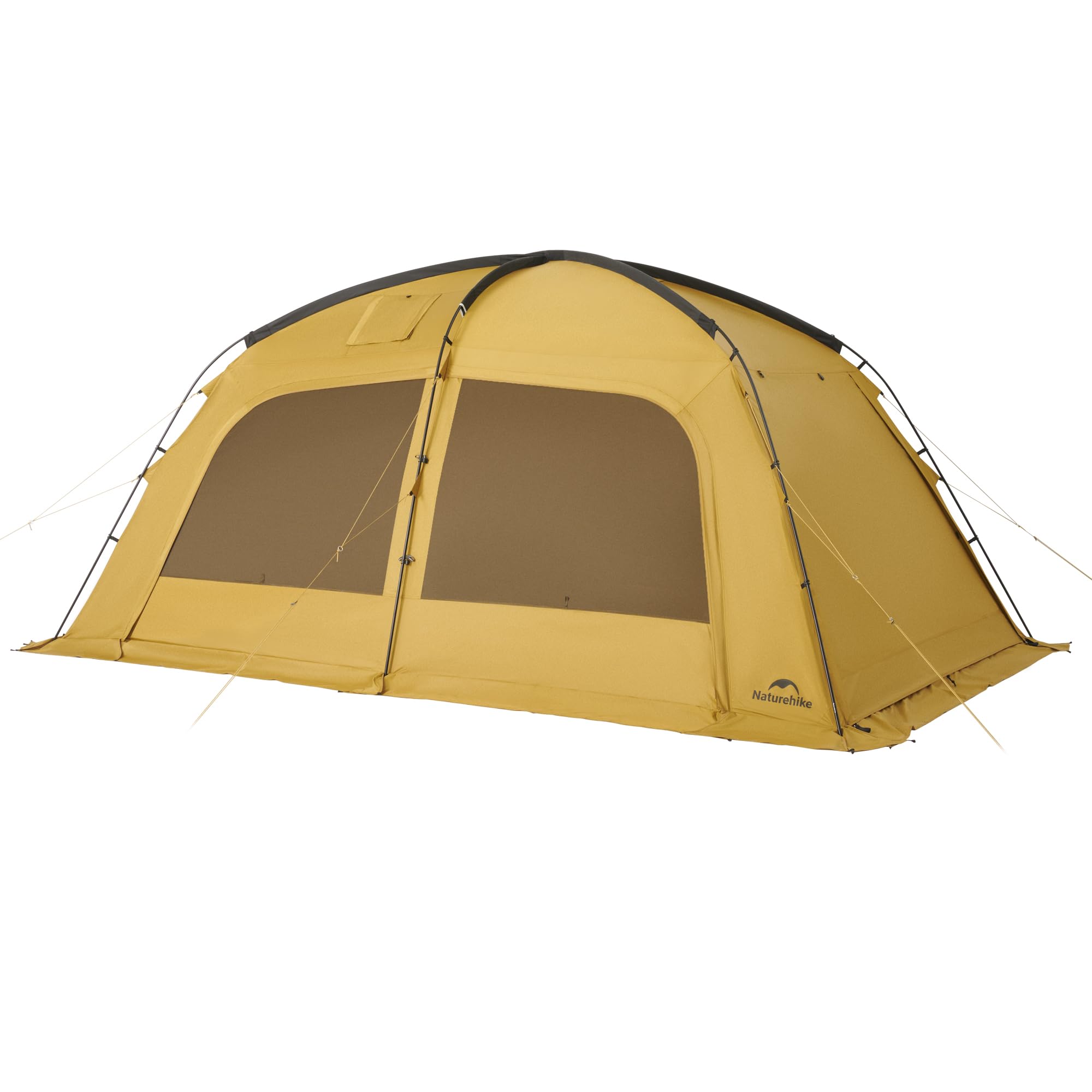


Best for Winter Car Camping
Naturehike Dune Hot Tent
Key Features
- Waterproof Rating: 10000mm+
- Weight: 27.6 lbs
- Floor Area: 132 sq ft
- Key Features: Stove jack, 6 doors, PU coating
- Price: $$$
The 10000mm hydrostatic head on the Naturehike Dune sets a high bar for weather protection, making it one of the most water-resistant hot tents available. The double-layer design adds an extra barrier against snow and wind, and the high-quality zippers and fabric hold up well in repeated winter use.
Setup is manageable by one person, and the tent holds its shape in strong winds and snow loads. The stove jack is well-integrated, allowing a wood stove to warm the interior quickly even in freezing temperatures.
The Dune’s double-wall construction and sturdy pole system handle strong gusts and snow loads without sagging. Feedback over multiple seasons confirms the tent retains its shape and waterproofing after repeated exposure to harsh conditions.
This tent is built for winter car campers who expect harsh conditions and accept the tradeoffs of a premium hot tent. It comfortably accommodates two to three adults with gear and a stove, with weather sealing that gives confidence in snow and rain. Buyers seeking a lighter, more spacious alternative at a lower price should consider the Massif.
Pros
- High-quality materials with robust zippers and mesh that withstand repeated use.
- Durable enough to handle strong winds and snow without collapse.
- One-person setup is realistic and straightforward.
- Heats up quickly when paired with a stove, retaining warmth well.
Cons
- At 27.6 lbs, the tent is limited to car camping, not backpacking.
- With a stove and gear, four adults may feel cramped — it’s most comfortable for two to three people.
The Naturehike Dune is the right choice for winter campers who need a tent that won’t let moisture or wind compromise their trip — just size your group accordingly.
Best for Solo Backpacker
Underwood Aggregator 1-Person
Key Features
- Waterproof Rating: PU5000mm
- Weight: 4 lbs
- Floor Area: 19.1 sq ft
- Key Features: Snow skirt, freestanding
- Pole Material: Aluminum
- Price: $
A 5000mm hydrostatic head rating and integrated snow skirt give this tent legitimate winter credentials at a fraction of the cost of premium alternatives. Where the top pick offers double the waterproofing and more robust pole construction, the Underwood Aggregator delivers adequate weather protection for budget-conscious solo backpackers. The free-standing design and aluminum poles set up quickly, and at 4 pounds it packs small enough for multi-day trips.
This tent works best for shorter solo hikers who pack light and accept its tight quarters. The 19.1 sq ft floor area leaves no room for gear inside — plan to store packs under the fly. Internal condensation is a known tradeoff in cold weather, and freezing poles may require care when setting up in subzero conditions. For anyone over 6 feet or wanting space for equipment, the interior will feel cramped.
Pros
- Sets up quickly with straightforward pole design and clips
- Compact and light enough (4 lbs) for backpacking trips
- Sturdy fabric and aluminum poles hold up to moderate winds
Cons
- Interior too tight for anyone over 6 feet or storing gear inside
- Poles may freeze together in cold conditions; floor may need extra ground protection
For budget-focused solo winter backpackers who prioritize cost over space, the Underwood Aggregator delivers reliable 4-season shelter without breaking the bank.
Best for Ultralight Backpacker
OneTigris Stella 4-Season
Key Features
- Waterproof Rating: 3000mm
- Weight: 4.4 lbs
- Floor Area: 28.3 sq ft
- Key Features: Dome design, blackout fly
- Pole Material: Aluminum
- Price: $
The OneTigris Stella packs just 4.4 lbs and offers a 3000mm waterproof rating in a design that sets up in minutes, making it a lightweight option for backpackers who want cold-weather capability without the heft of a dedicated winter tent. Its easy assembly and solid build quality stand out at this price. Compared to the top pick in this category, it trades robust snow-and-wind protection for a lower weight and faster pitching.
This tent suits solo campers who prioritize weight and quick setup for 3-season trips with occasional shoulder-season or mild winter use. It’s not designed for heavy snow loads, and the floor space is tight for two with gear – more realistic as a 1.5-person shelter. Limited ventilation is worth noting for cold-weather camping.
Pros
- High build quality with durable materials and solid stitching.
- Quick and intuitive setup – can be pitched in minutes.
- Provides noticeable warmth retention in cool conditions.
- Offers strong value for the price given its weight and features.
Cons
- In cold or wet conditions, condensation buildup can be an issue without adequate venting.
- Floor space is tight for two people with gear – better suited for solo use or one person plus pack.
A lightweight, well-built shelter for solo backpackers who need occasional cold-weather capability without the weight penalty of a full winter tent.
Best for Budget Family
Naturehike Massif Hot Tent
Key Features
- Waterproof Rating: 3000mm
- Weight: 17.6 lbs
- Floor Area: 161 sq ft
- Key Features: Stove jack, snow skirt, 4 doors
- Price: $$
The Naturehike Massif packs 161 sq ft of interior space into a 17.6 lb package, giving winter car campers a roomy shelter that stands head-high inside. Compared to the premium-priced competitor in this class, the Massif trades top-tier waterproofing for more usable square footage and easier transport — a sensible swap when you drive to camp and prioritize elbow room over absolute storm-proofing.
Budget-conscious winter car campers and small groups who want a hot tent with a stove jack will find the Massif a practical fit. The 3000mm waterproof rating is adequate for snow but may need seam sealing for heavy rain or melting snow, and condensation drips can occur in certain conditions — a known tradeoff at this price point that is manageable with preparation.
Pros
- Spacious interior with stand-up height for four people
- Sturdy poles and resilient fabric hold up well in windy conditions
- Color-coded poles and quick assembly make setup straightforward
- Good price for a hot tent that includes a stove jack
Cons
- Waterproofing may require seam sealing for heavy rain or melting snow; condensation drips can occur in some conditions
If your winter camping is car-accessed and you value space and budget over absolute waterproofing, the Massif is the right choice among hot tents.
Best for Fair-Weather Glamping
WaldZimmer Canvas Bell Tent

Key Features
- Waterproof Rating: 500mm
- Weight: 52 lbs
- Floor Area: 129 sq ft
- Key Features: Stove jack, canvas, PVC floor
- Pole Material: Steel
- Price: $$
This canvas bell tent offers a spacious 129 sq ft interior with stand-up height, ideal for groups gathering around a stove in mild conditions. The steel center pole and well-stitched canvas provide solid stability in moderate winds. However, its 500mm waterproof rating means heavy rain can soak through, and the tent loses heat quickly when the stove is off — making it a glamping base camp rather than a 4-season shelter. At 52 lbs, it is best suited for car camping.
Pros
- Spacious interior with room for a family group and stand-up headroom.
- Canvas construction offers good durability and moderate wind stability.
- Setup is manageable with two people; center pole design simplifies assembly.
Cons
- Heavy rain can penetrate the 500mm rated canvas; some owners add waterproofing treatment.
- Without the stove, the tent cools quickly; in warm weather canvas may become uncomfortably hot.
Best for mild-weather family glamping with a stove, but not a reliable winter or rain shelter.
How to Choose
The single most important spec for a 4-season tent is the hydrostatic head rating—anything below 3000mm means you’re gambling with melting snow on the ceiling.
Waterproof Rating
A 3000mm hydrostatic head is the baseline for snow camping; moisture from melted snow seeps through lower ratings under pressure. Higher ratings (5000mm–10000mm) use thicker coatings or multiple layers that also reduce condensation transfer. In practice, a 3000mm tent can work after seam sealing, but a 10000mm rating handles overnight snow buildup without interior drips.
Weight
True winter tents weigh 10–30 lbs because they use thicker poles, heavier fabrics, and extra features like snow skirts. A 4 lb tent labeled “4-season” typically sacrifices pole strength and fabric denier—it will shed light snow but not a foot of accumulation. The trade-off is clear: car campers can carry the weight, backpackers must accept a lighter build that limits severe weather capability.
Floor Area and Peak Height
A 4-person winter tent needs at least 130 sq ft of floor space to fit four sleeping pads plus gear, yet many models squeeze in at 120 sq ft. Peak height matters for sitting up and moving around in confinement. A tent with a 50-inch peak lets you change layers without touching the fly, while shorter ceilings force you to hunch—annoying during a multiday storm.
Stove Jack and Snow Skirt
A stove jack allows a wood or propane stove, but it creates a ventilation challenge: heat rises and moisture from breath condenses on cool fly surfaces, often dripping inside. A snow skirt blocks drafts and spindrift at the ground edge, but adds weight and can collect water if snow melts against it. Both features are essential for winter camping but require active management to stay dry.
Pole Material and Design
Aluminum poles handle wind loads better than fiberglass, but gauge thickness matters—thin 8.5mm poles flex more under snow weight compared to 9.5mm+ poles. Steel center poles (common in bell tents) are heavy but very strong. A geodesic dome design distributes snow load evenly, while a simple dome may collapse under heavy accumulation. Check pole diameter and hub reinforcement if you expect deep snow.
FAQ
Can I use a wood stove in a canvas bell tent?
Yes, if the tent has a stove jack and the canvas is flame-retardant. But canvas tents like the WaldZimmer have low waterproofing (500mm) and lose heat quickly without the stove, so they’re better suited for fair-weather glamping than snow camping. Always use a spark arrestor and keep the stove away from walls.
Why does my 4-season tent have condensation inside?
Condensation happens when warm, moist breath hits a cold fly. Hot tents worsen this because the stove raises interior temperature but the fly stays cold. Solutions: vent the peak, crack a side door, and choose a double-wall design with a mesh inner to reduce direct moisture on your sleeping bag. A 10000mm fly also reduces moisture transfer compared to a 3000mm one.
How much does a true 4-person winter tent weigh?
Expect 15–30 lbs for a genuine 4-person winter tent with a stove jack and snow skirt. Lighter models under 10 lbs are typically 3-season tents with winter marketing—they’ll shed light snow but not sustained winter storms. Plan for car or sled transport if you need full winter capability.
Is a 3000mm waterproof rating enough for snow camping?
It’s borderline. 3000mm can handle light snow and rain if the seams are factory-sealed, but melting snow over 24 hours applies hydrostatic pressure that can cause drips. A 5000mm+ rating provides a reliable buffer. If you already own a 3000mm tent, seam seal it and expect to manage condensation.