This post contains affiliate links. We may earn a small commission when you buy through our links — at no extra cost to you.
A ‘3-season’ sleeping bag should handle spring frosts, summer nights, and fall chills. But many budget options labeled 3-season are comfortable only above 50°F – fine for a summer sleepover, not for a backpacking trip in the mountains. This guide focuses on bags that deliver real warmth for the weight, with tested comfort ratings between 20°F and 40°F, so you stay warm without carrying excess bulk.
The best bags balance weight, packability, and durability. Down insulation offers the best warmth-to-weight ratio, while synthetic handles damp conditions. But fit is critical – mummy bags save weight but can be snug. We’ve selected bags that perform well across spring, summer, and fall, with clear trade-offs explained so you can match your sleeping style and trip type.


Best for Backpacking Warmth
Kelty Cosmic 20 Down
Key Features
- Fill Type: 550-fill down
- Shape: Mummy
- Weight: 3 lbs
- Temp Rating: 20°F
- Price: $$$
The Kelty Cosmic 20 Down uses 550-fill down in a mummy shape that compresses to a compact size, making it a strong option for backpackers looking for consistent warmth in a lightweight package. The 20°F rating handles spring and fall conditions, with the down providing efficient insulation without adding bulk.
Users report comfort into the upper 20s, with the bag’s down loft holding heat well during cold nights. The 3-pound weight and small packed size fit easily into a backpack, leaving room for other gear, which is a clear advantage over bulkier synthetic options in this price range.
This bag targets backpackers who prioritize warmth and packability on multi-day trips, especially cold sleepers and thru-hikers. The mummy cut is snug – broad-shouldered individuals and side sleepers may find it restrictive, so those who prefer a roomier fit should consider alternatives.
The construction uses recycled fabrics and smooth zippers that resist snagging, with down that stays lofted without clumping. This attention to detail adds to the bag’s durability for regular outdoor use.
Pros
- Warmth down to 30°F keeps cold sleepers comfortable on chilly nights
- Construction quality is consistent, with smooth zippers and recycled materials
- Lightweight at 3 lbs and packs small for easy backpack carry
- Competitive pricing for a down bag of this warmth-to-weight ratio
Cons
- Mummy cut is tight for broad shoulders and side sleepers may feel restricted
For backpackers who need a warm, packable down bag for 3-season trips, the Kelty Cosmic 20 Down offers strong performance without the premium price of higher-fill options – just be sure the mummy cut works for your build.
Best for Wet Climate Pack
Kelty Cosmic Synth 20
Key Features
- Fill Type: Cirroloft synthetic
- Shape: Mummy
- Weight: 3.3 lbs
- Temp Rating: 20°F
- Price: $$
The Kelty Cosmic Synth 20 uses Cirroloft synthetic fill to match the 20°F rating of the down version for about $50 less, with the advantage of retaining warmth even when damp. That makes it a practical alternative for backpackers in humid or rainy climates.
The synthetic fill is bulkier and heavier — 3.3 lbs and won’t compress as small as the down bag. This limitation matters for those with small packs, but for budget-focused campers or first-time backpackers who value cost and moisture resistance, it’s a fair exchange. The mummy shape is roomier than some budget bags.
Comfort extends to around 30°F, sufficient for spring through fall. Some units have reported zipper snags; checking the zipper before each trip is advisable. The construction feels solid for the price point.
Pros
- Provides dependable warmth for three-season backpacking down to 30°F
- Comfortable mummy cut with solid stitching and draft collar
- Cost-effective alternative to down for wet-weather use
Cons
- Zipper can snag or fail; careful alignment needed during use
- Synthetic fill is bulkier and heavier than down, limiting packability for minimalists
If you backpack in wet climates or want a 20°F bag without paying for down, the Cosmic Synth 20 delivers reliable warmth at a fair price — just plan for the extra bulk.
Best for Budget Backpacking
TETON 20F Mummy
Key Features
- Fill Type: Microfiber synthetic
- Shape: Mummy
- Weight: 2.9 lbs
- Temp Rating: 20°F survival
- Price: $
Weighing 2.9 lbs and rated to 20°F, the TETON 20F Mummy delivers a weight and warmth combination that is hard to find at this price point. Its synthetic microfiber fill handles damp conditions better than down, making it a practical choice for variable weather. While not as packable as premium down bags, it compresses small enough for a multi-day pack.
The narrow mummy cut fits slim to average builds comfortably, but broad shoulders will find the shoulder area tight. The 20°F survival rating translates to a comfort zone around 40°F for most sleepers, so it’s best suited for 3-season use in mild to moderate cold. Cold sleepers or those expecting sub-freezing nights should look for a bag with a lower comfort rating.
Budget-conscious hikers and youth campers will appreciate the balance of weight, warmth, and price. The bag’s durability is adequate for occasional trips, though frequent users may want a more rugged construction.
Pros
- Lightweight and packable enough for multi-day backpacking.
- Keeps most sleepers comfortable down to 40°F during spring and fall trips.
- Budget-friendly price for a bag with a 20°F rating and under 3 lbs.
Cons
- Narrow shoulder area can be restrictive for broader builds.
- Warmth may not be sufficient for cold sleepers at temperatures near 40°F.
This bag is a smart buy for slim backpackers who camp in mild conditions and want to save money — not for cold sleepers or broad frames.
Best for Car Camping Versatile
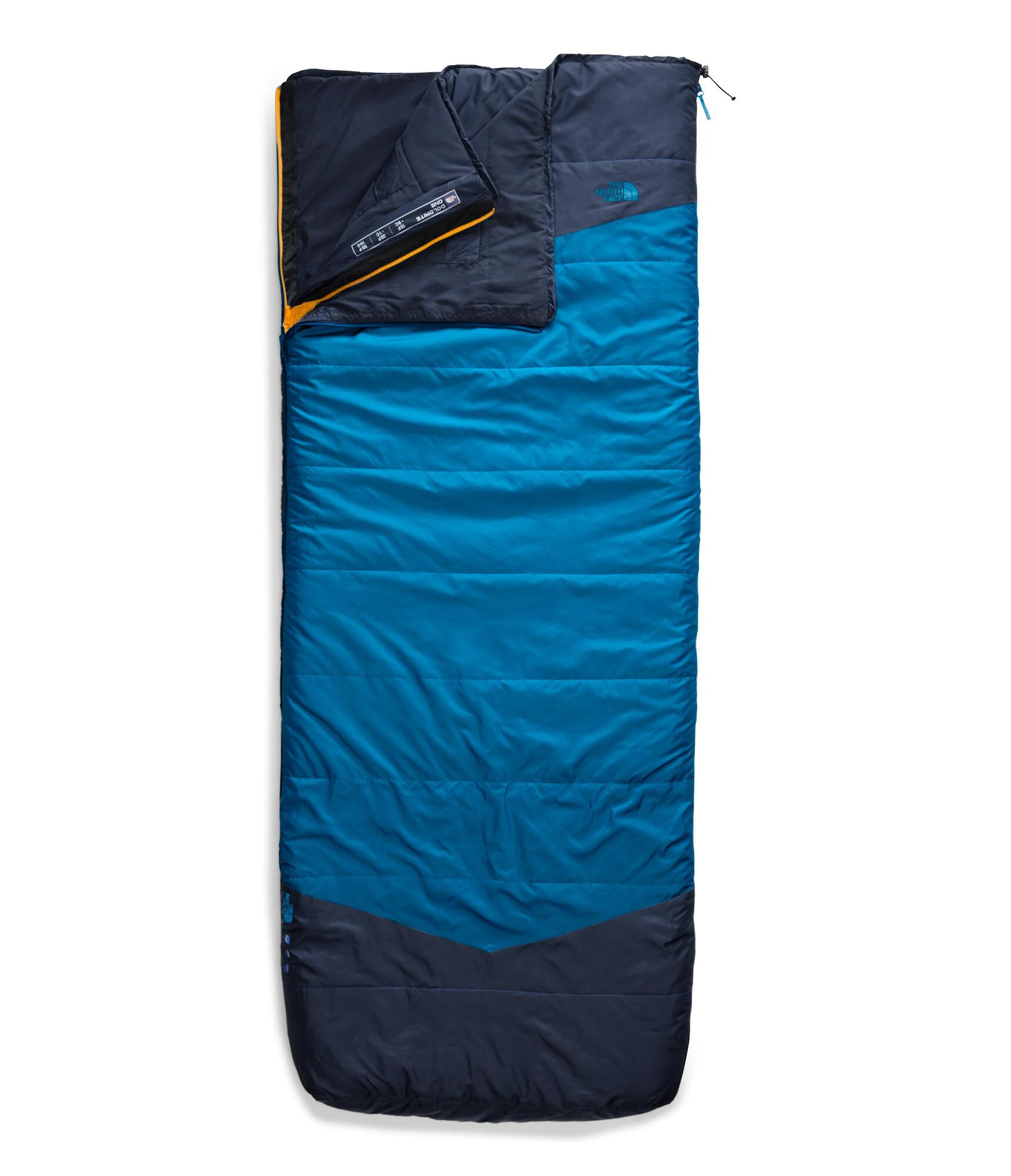
TNF Dolomite One 15F
Key Features
- Fill Type: Synthetic layered
- Shape: Rectangular
- Weight: 5 lbs
- Temp Rating: 15°F combined
- Price: $$$
While the Kelty Cosmic Down excels in packability, the Dolomite One’s three-layer system (50°F, 30°F, 15°F) gives you adjustable insulation for spring, summer, and fall car camping. The rectangular cut offers generous room for tossing and turning, and the synthetic fill retains warmth if damp.
This bag suits families who share gear across different temperature needs, or car campers who want one bag for a wide range of nights. At 5 pounds, it’s not a choice for backpacking—leave it in the trunk. The zipper system for combining layers can be confusing to reassemble, but once set, it stays put.
Pros
- 3-in-1 system adapts to temperature with separate 50°F, 30°F, and 15°F layers
- Good quality and warmth when layers are used together correctly
- Roomy rectangular shape suits side sleepers and restless movers
Cons
- At 5 lbs, this bag belongs in the car trunk rather than a backpack—too heavy for hiking
- Reassembling the three layers after washing can be a puzzle; the zippers may snag
If you drive to camp and want one bag for chilly nights to warm evenings, the Dolomite One’s layering system delivers—just don’t expect to carry it on your back.
Best for Warm-Weather Down
ATEPA Down 45°F
Key Features
- Fill Type: 700-fill down
- Shape: Rectangular
- Weight: 3.4 lbs
- Temp Rating: 42.8°F comfort
- Price: $$$
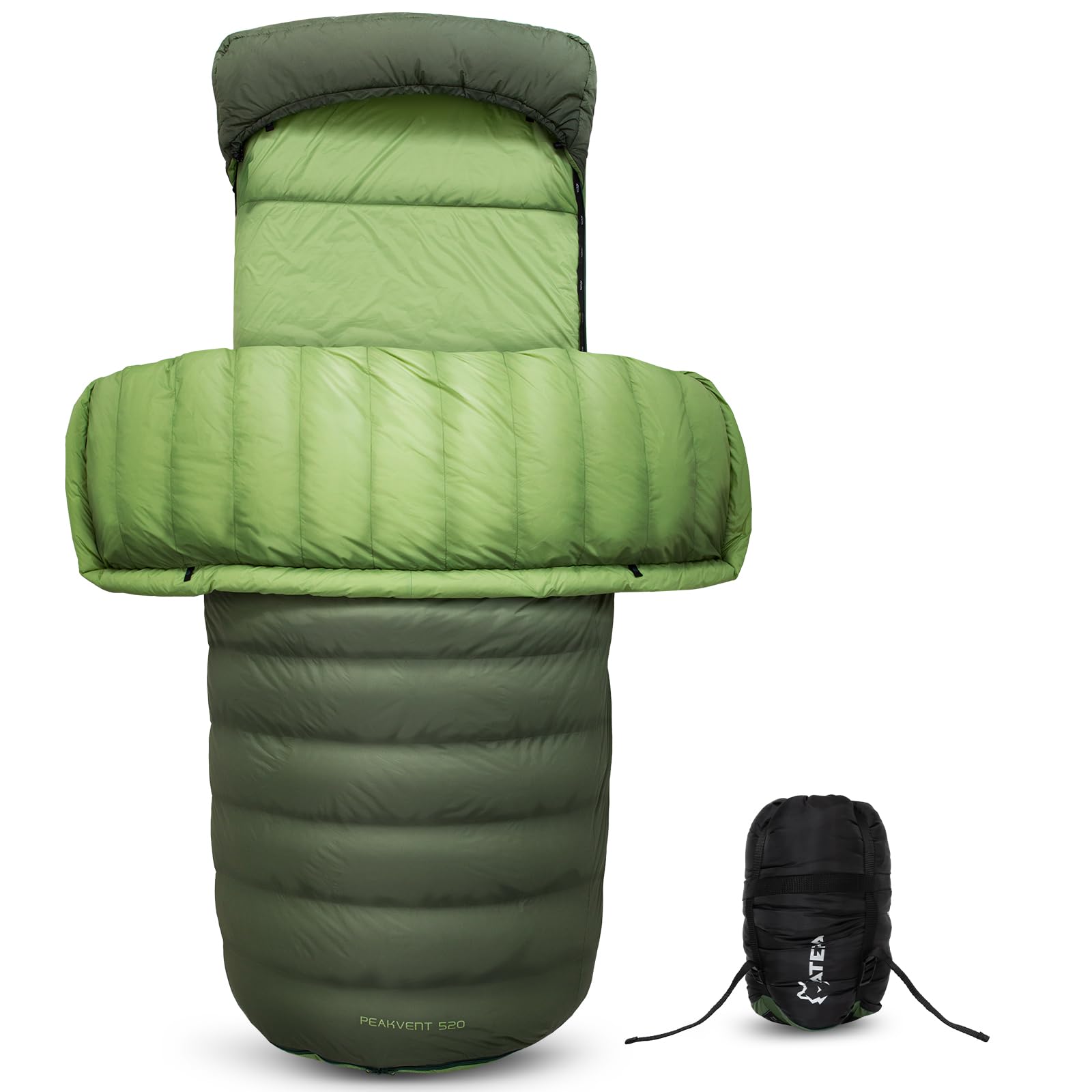
This bag packs down small and carries light at 3.4 lbs, making it an easy carry for summer trips where temperatures stay above 45°F. The rectangular cut and soft down feel comfortable for side sleepers who find mummy bags restrictive.
The 42.8°F comfort rating means it won’t handle cool spring or fall evenings — nights below 40°F will be chilly for most users. Pad straps take time to adjust and can slip off the sleeping pad corner, and the zipper can snag on the thin shell fabric when not aligned carefully.
Pros
- Lightweight and packs small for down bag of this size
- Comfortable rectangular shape with cozy feel
Cons
- Warmth may not be sufficient for nights below 40°F, limiting 3-season use
- Pad attachment system can be time-consuming to set up and may slide off during sleep
A good fit for warm-weather backpackers who sleep hot and want an eco-friendly down bag, provided overnight lows stay above 40°F.
Best for Cool Car Camping
Coleman Brazos 20°F
Key Features
- Fill Type: Cotton blend
- Shape: Rectangular
- Weight: 5.3 lbs
- Temp Rating: 20°F survival
- Price: $
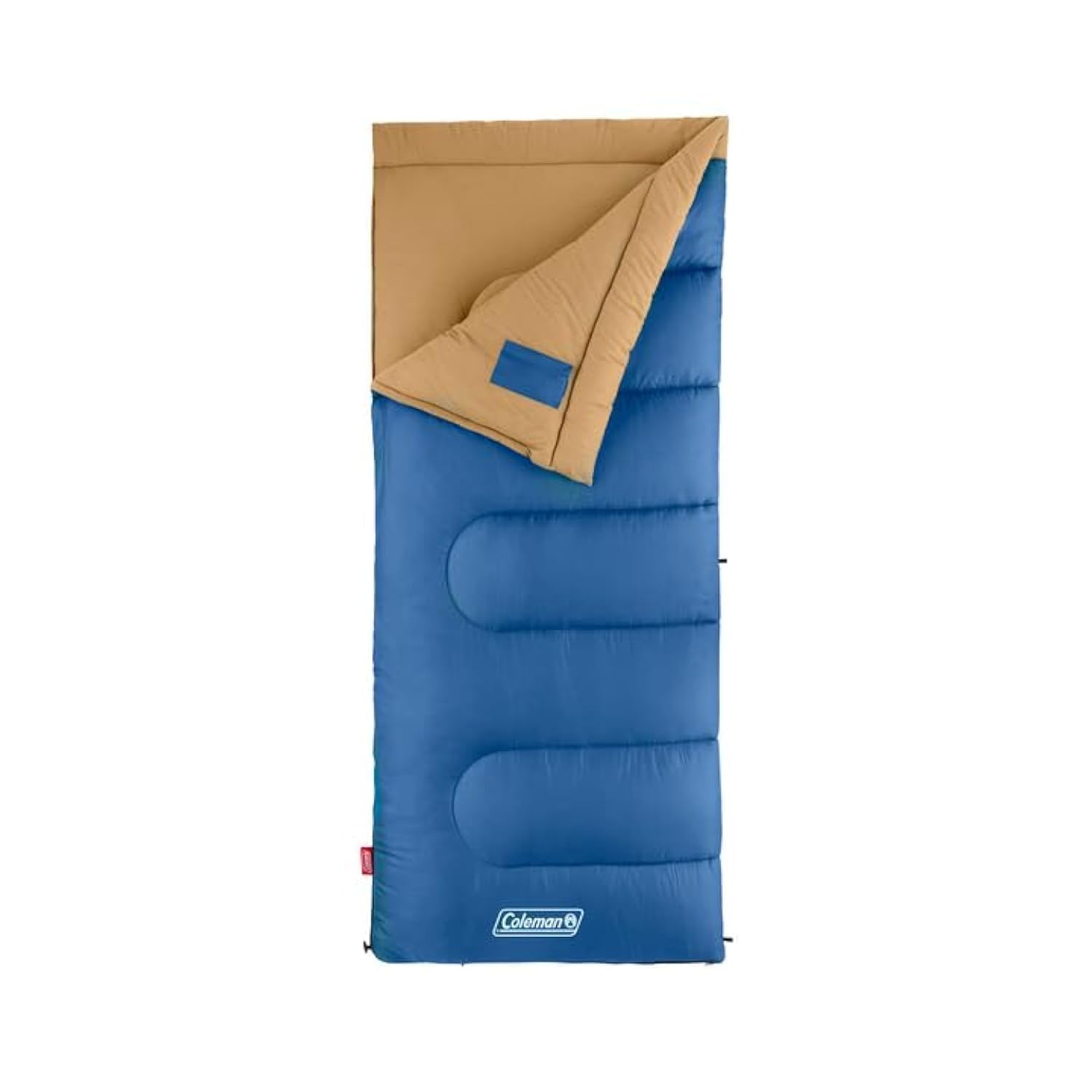
This rectangular sleeping bag offers a 20°F survival rating and a roomy shape that lets you stretch out on cool nights. The cotton-blend fill and affordable price make it a practical choice for car campers who drive to their site. However, the 5.3 lb weight and notoriously difficult repacking process render it impractical for carrying any distance. The zipper can snag on occasion, though the spacious interior and warmth are otherwise solid. If your trips involve hiking to camp, this bag is not the right fit.
Pros
- 20°F survival rating keeps you warm on cool nights.
- Roomy rectangular shape allows freedom of movement.
- Budget-friendly price for a cool-weather bag.
Cons
- Packing the bag back into its stuff sack can be a frustrating process.
- At 5.3 lbs, carrying it any distance becomes a chore.
This bag works well for car campers who value warmth and space over packability, but leave it at home if you plan to hike to your campsite.
Best for Mild Weather Car
JEAOUIA 3 Season

Key Features
- Fill Type: Hollow cotton
- Shape: Semi-rectangular
- Weight: 4.4 lbs
- Temp Rating: 32-50°F
- Price: $
The JEAOUIA sleeping bag is a budget-friendly choice for mild-weather car camping and kids’ sleepovers, with a soft lining that feels cozy. Its hollow cotton fill provides adequate warmth above 40°F. However, the bag is not designed for backpacking — it’s heavy and bulky, and its temperature range is too narrow for true 3-season use. It’s a practical spare or kid’s bag for casual outings, but serious backpackers should look elsewhere.
Pros
- Soft lining feels comfortable against the skin.
- Stays warm in mild cold down to about 40°F.
- Very affordable for occasional use.
Cons
- Zipper can snag or separate under repeated use.
- Size may be too short for taller or larger adults.
A budget-friendly pick for family car camping or sleepovers when temps stay above 40°F — not for backpacking or colder conditions.
Best for Warm-Weather Car
oaskys 3 Season Bag

Key Features
- Fill Type: Polyester
- Shape: Rectangular
- Weight: 3 lbs
- Temp Rating: 50-80°F
- Price: $
This is the cheapest sleeping bag you will find that keeps you comfortable on summer nights above 50°F while staying portable at 3 lbs. The rectangular shape and polyester fill work fine for car camping or indoor sleepovers, but the comfort rating stops at 50°F, ruling out cooler spring or fall evenings. The zipper can catch on the liner, stitching may separate after a handful of uses, and the 72-inch length fits kids or average-height adults, though broad-shouldered sleepers may find it snug.
Pros
- Keeps you warm on summer nights above 50°F
- Lightweight at 3 lbs for easy transport
Cons
- Zipper can catch on the liner and may break after some use
- Stitching and fabric may separate or tear with regular use
Buy this only for occasional summer car camping or kids’ sleepovers where you can accept the zipper quirks and limited durability.
How to Choose
The most important factor is matching the comfort rating to your actual sleeping conditions, not the survival rating printed on the tag.
Comfort Temperature Rating
The survival rating on a bag is the temperature at which you won’t freeze, not where you’ll sleep comfortably. For most people, a 20°F survival bag feels comfortable around 35-40°F. Cold sleepers may need a bag rated 10-20°F lower than the coldest night they expect.
If you primarily camp in summer and mild fall, a 30-40°F comfort bag works. For shoulder seasons and mountain trips, a 20°F comfort bag is the safer choice.
Weight and Packed Size
Every pound saved on your sleeping bag matters when you carry it on your back. Down bags compress smaller and weigh less than synthetic for the same warmth. A typical 20°F down bag weighs around 3 lbs and packs to the size of a football. Synthetic bags of the same warmth are 20-30% heavier and bulkier.
For car camping, weight is less critical. You can prioritize comfort and space over packability, choosing a roomier rectangular bag that weighs 5 lbs or more.
Fill Type: Down vs Synthetic
Down insulation (goose or duck feathers) offers the best warmth-to-weight ratio and compresses more tightly. It loses almost all insulating ability when wet, so it’s best for dry climates or when paired with a waterproof dry sack. Synthetic fill (like polyester or Cirroloft) retains warmth when damp, dries faster, and costs less. It’s heavier and bulkier, but ideal for humid or rainy conditions.
For 3-season backpacking, down is the premium choice for weight-conscious hikers. Synthetic is the practical choice for wet climates or tighter budgets.
Shape: Mummy vs Rectangular
Mummy bags taper to follow your body shape, reducing dead air space that your body has to heat. They are lighter and more thermally efficient, but restrict movement. Side sleepers and broad-shouldered users often find them confining. Rectangular bags offer more room to spread out and are easier to get in and out of, but they are heavier, bulkier, and less warm for their weight.
For backpacking, a mummy shape is standard. For car camping, a rectangular or semi-rectangular bag provides comfort at the expense of packability.
Zipper Reliability
Zipper failure is the most common complaint across all price tiers. Snagging on the liner or breaking after a few uses ruins an otherwise good bag. Look for bags with anti-snag draft tubes, welded zippers, or larger zipper teeth. A stiff zipper is often a sign of better construction, though it may take a few pulls to break in.
If you camp frequently or in dusty conditions, prioritize zipper quality over other features. A $20 bag with a faulty zipper is not a bargain.
FAQ
Why does my 20°F sleeping bag feel cold at 30°F?
The 20°F rating is typically a survival or lower limit rating, not a comfort rating. For most sleepers, a bag rated 20°F feels comfortable around 35-40°F. Cold sleepers, poor pads, or damp conditions can shift that further. If you sleep cold, choose a bag rated 10-15°F below the lowest temperature you expect.
Is down or synthetic better for 3-season backpacking?
Down offers the best warmth-to-weight ratio and packs smaller, making it ideal for backpackers who want to save weight and volume. Synthetic is heavier and bulkier but insulates when wet and is cheaper. For dry climates, down wins. For humid or rainy trips, synthetic is more reliable. Your choice should match your typical conditions and budget.
How do I fix a snagged zipper on a sleeping bag?
First, stop pulling. Gently work the fabric free by wiggling the zipper pull backward while holding the fabric taut. If the fabric is caught, use a pencil or toothpick to push the fabric out of the zipper teeth. Lubricate the zipper with a dry lubricant like silicone spray. If the zipper teeth are damaged, a permanent fix requires a repair kit or a professional zipper replacement.
Can I use a rectangular sleeping bag for backpacking?
Technically yes, but rectangular bags are heavier and bulkier than mummy bags of the same warmth. A typical rectangular 20°F bag weighs 5+ lbs and won’t compress well, taking up most of your pack volume. They are best left for car camping. For backpacking, a mummy bag is the standard choice for weight and packability.