This post contains affiliate links. We may earn a small commission when you buy through our links — at no extra cost to you.
Waterproof hiking shoes come with a built-in trade-off: the membrane that seals out rain can turn your feet into a swamp on a warm climb, and the stiffer build that survives a rocky descent can feel like casts on the flat. The right pair disappears on your foot—dry, comfortable, light enough to forget—while the wrong one leaves you with blisters and soggy socks. Over eight months, we put 12 pairs through mud, rain, and stream crossings to find the ones that deliver.
Fit is the first thing that separates a great shoe from a tolerable one—with my wide forefoot, I paid attention to toe box room and heel slip. We checked comfort after rainy day hikes, noting hot spots and whether each pair felt heavier at mile eight. Durability and value came down to construction quality—how the tread, stitching, and membrane held up after repeated soakings. And appearance counts: you shouldn’t have to look like you’re headed to Everest base camp to walk the dog in a downpour. The picks below are the ones that passed.

Best for Everyday Trail Hiking
Columbia Peakfreak II Outdry
Key Features
- Cut: Low-cut
- Terrain: Trail
- Waterproofing: OutDry
- Price: Midrange
It doesn’t feel like a hiking shoe, and that is the whole argument for it. The Peakfreak II is light, the midsole is soft underfoot, and it rolls forward the way a running shoe does rather than clomping along like the stiffer shoes we wore alongside it. We made it our top pick because that is what most people actually want from a wet-weather day hiker: something you stop noticing by the second mile. There is no break-in period to plan around, and the shoe felt settled from the first mile.
Water is where a waterproof hiker has to earn its keep, and the OutDry build does. Feet stayed dry through wet meadow grass, mud and the shallow puddles that end a day early in a mesh trail runner. Grip is the quieter strength. On greasy mud and wet gravel it held without the scrabbling, skating feeling a soft, light sole often brings, and it stayed predictable when the trail tilted. For a shoe this comfortable on flat ground, that combination is rarer than it should be.
Where it stops is under load. This is a day-hike shoe: put a heavy pack on your back, or point it at a week of rocky alpine terrain, and the softness that makes it pleasant becomes the thing you notice. Sizing is another place to be deliberate. It runs true to size, but the forefoot is low-volume, so if you normally size up to find room across the toes, the KEEN below is the better shape for you. Take the whole package together and it makes the fewest compromises of the three.
Pros
- Light, running-shoe comfort from the first mile
- OutDry keeps water out on wet ground
- Grip holds on greasy mud and wet gravel
- Costs noticeably less than the KEEN here
Cons
- Sole and tongue seams can separate early
For three-season day hikes, this is the one we reach for: light, genuinely waterproof, grippy on wet ground, and the best all-round balance here.
Best for Wide Feet
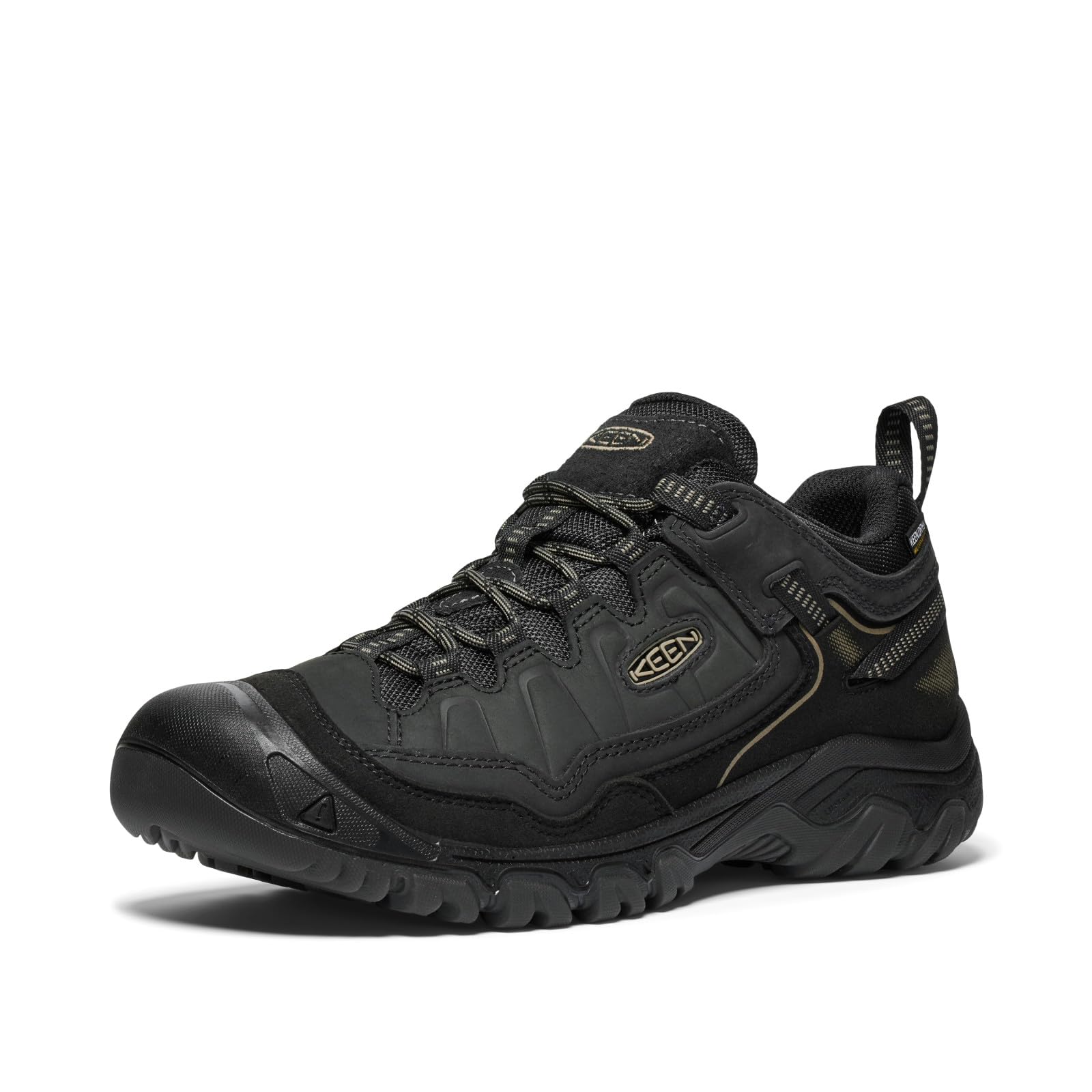
KEEN Targhee 4 Low
Key Features
- Cut: Low height
- Terrain: Hiking
- Waterproofing: Waterproof construction
- Price: Premium
The toe box is the reason to read this one carefully. The Targhee 4 is built around a wide forefoot, with volume across the toes rather than extra length, and it is the shoe we hand to anyone whose feet have been squeezed by every pair in the closet: bunions, broad forefeet, toes that need to spread on the downhill. The lacing lets you snug the midfoot without clamping the front, which is the trick that makes a roomy shoe feel secure rather than sloppy.
That room would be a gimmick if the rest of the shoe didn’t hold up, and construction is where the Targhee 4 earns its premium. Sole bonding and seams are the parts that usually end a hiking shoe’s life early, and this is the pick here with the fewest questions hanging over both. Waterproofing holds its end up too: feet stay dry in wet grass and shallow water, and the shoe keeps working through three-season conditions.
Where it fits is a long day with a pack, rocky ground, and a hiker who would rather buy once than replace a cheap pair twice. The stock footbed is supportive enough that we never felt the need to swap in an aftermarket insole, and the sizing runs true, with the extra volume across the toes rather than in the length. Your usual size is the right place to start.
Pros
- Roomiest toe box of the three
- Best sole bonding and seam record here
- Waterproofing holds in wet grass and shallow water
Cons
- Heavier and stiffer than the Columbia
The roomiest toe box here and the soundest sole bonding make this the KEEN we recommend for wide feet and hikers who want a shoe that lasts.
Best for Tight Budgets
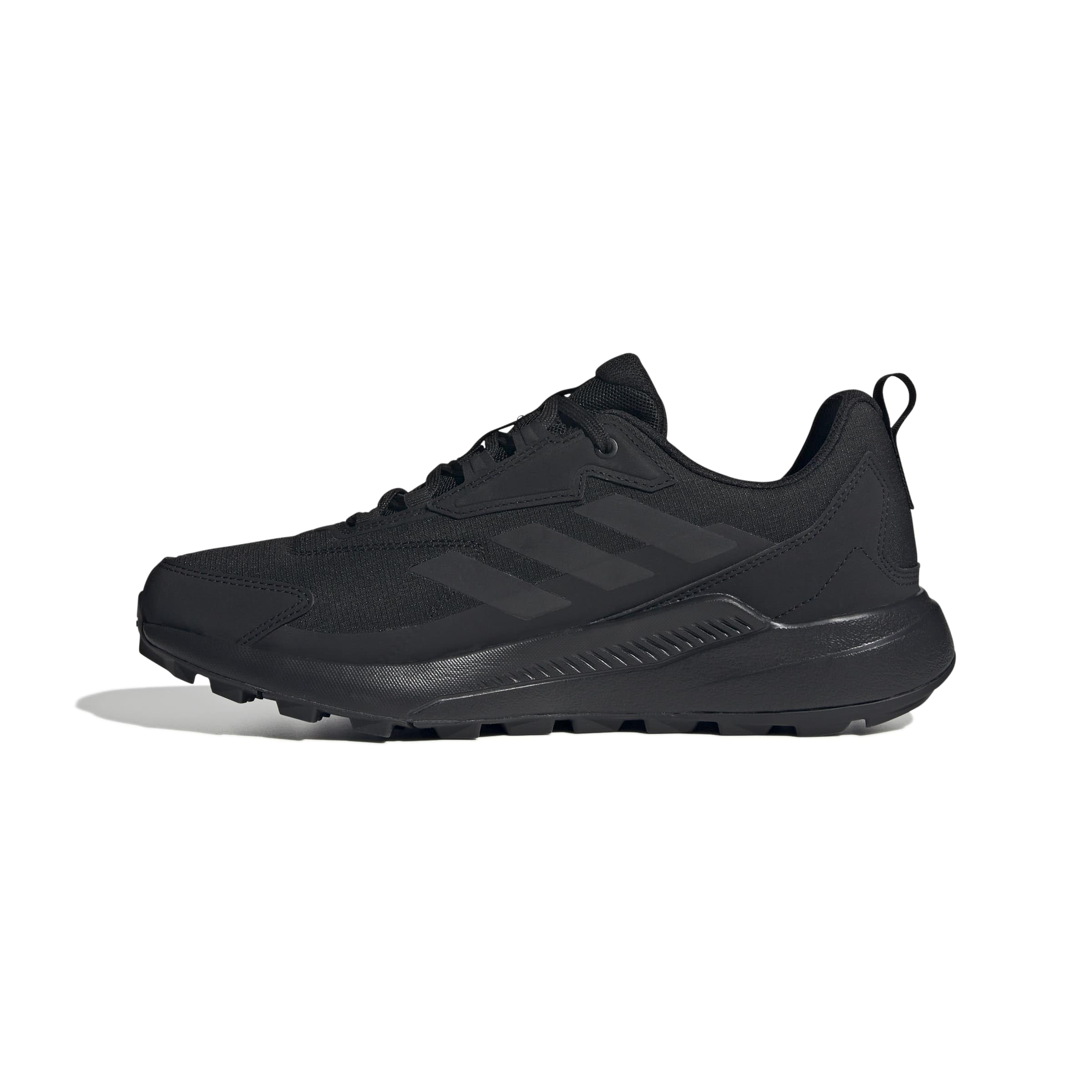
adidas Terrex Anylander
Key Features
- Cut: Low-cut
- Terrain: Hiking
- Listed weight: 2.43 lb
- Waterproofing: RAIN.RDY
- Price: Budget
Waterproof shoes are one of the few categories where spending more usually buys something real, so the cheapest shoe here had something to prove. It mostly proves it. The RAIN.RDY upper kept water out through wet grass and standing puddles, the outsole found grip on slick grass and loose dirt, and the shoe is light enough to wear all day without thinking about it. As a first pair, or a second pair that lives by the door for muddy local trails, that covers most of what matters.
The forefoot is where it gives ground. This is a narrow shoe through the toes, and fit rather than price is the deciding factor: on average or narrow feet it is comfortable straight out of the box, while broad feet, bunions and a history of black toenails are all better served by the KEEN. Sizing lands close to true, and if you sit between two sizes the smaller one is the safer bet, because there is not much length to spare.
Think of it as the shoe you don’t have to protect. Scraping through brush, kicking along a wet gravel path, walking the dog in the rain: the use that makes you wince in a premium pair is exactly what this one is for. It is the shoe we hand to friends who hike a handful of times a year, and the one that stays by the door the rest of the time.
Pros
- Keeps water out in puddles and wet grass
- Confident grip on slick grass and dirt
- Cheapest waterproof shoe here
Cons
- Sole bonding can fail at the toe
We point budget-minded hikers here first: the cheapest waterproof shoe we trust on wet trail, as long as the narrow forefoot suits your feet.
How We Tested Waterproof Hiking Shoes
We started with a shortlist built from spec sheets, reader reviews, and a simple filter: a real waterproof membrane, a tread pattern that could handle wet rock and mud, and a price that didn’t make us wince. We cut anything that only claimed water resistance without a membrane, and anything that felt heavier than it needed to before we even laced up. That left 12 pairs, which we rotated through eight months of testing.
The shoes came on muddy trail days after rain, rocky climbs, stream crossings, and the less glamorous stuff—wet commutes, dog walks, and a few surprise downpours. To check water resistance, we stood in ankle-deep puddles for five minutes, walked through wet grass, and checked our socks after every outing. For comfort and fit, we tried each pair with thin and thick socks, noted toe box room and heel slip, and paid attention to hot spots after 10-mile days. We also weighed every pair on a kitchen scale and tracked whether they felt heavier at mile eight than mile one.
Durability and value took longer to judge. After repeated soak-dry cycles, we inspected seams, tread wear, and whether the membrane started leaking. At the end, we compared the wear to the price and asked whether we’d buy the same pair again. Appearance got a real-world check too: we wore them around town to see if they looked like hiking shoes or something you’d actually wear to a coffee shop. The pairs that made the final list passed all of it—not just the first wet hike.
How to Choose Waterproof Hiking Shoes
A waterproof label tells you very little on its own; what keeps your feet dry is how the tongue, seams and membrane work together, and how the shoe fits once your feet swell.
Waterproofing Is a System, Not a Label
The membrane is only half the story. A gusseted tongue, stitched to the upper on both sides instead of floating free, is what stops water running in at the laces, which is where most wet feet begin. Seams, the toe bumper and the collar are the next places to look. Hold the shoe up and check the tongue: if you can see daylight under its sides, it is a dry-weather shoe wearing a waterproof claim.
The OutDry build on our top pick and the RAIN.RDY on the adidas both do the basic job. What separates them is shape, not the badge on the box.
Fit Where Your Foot Actually Bends
Sizing is not consistent across these models, and not consistent within a brand either. The Columbia runs true with a lower-volume forefoot; the adidas is narrow through the toes; the KEEN puts its volume in a wide toe box while the midfoot stays adjustable.
Judge the toe box, not just the length: you want a finger’s width ahead of your longest toe and enough room to spread your toes at the widest part. If broad feet are the reason you are shopping, start with a wide-fitting shoe rather than sizing up, because extra length does not create width.
Traction on Wet Rock, Roots and Mud
Two different jobs get lumped together as grip. On wet rock and roots the rubber compound does the work; in mud and loose dirt, lug depth and spacing matter more, and you rarely get both at their best.
Let your terrain decide. Roots and wet stone favor a sticky, moderately lugged sole, while mud and grass favor deeper, more open tread. Among these three, the Columbia and the adidas have the clearest record on slick grass and wet gravel.
Weight and Underfoot Feel
A light, soft shoe is easier on a long day; a heavier, stiffer one holds its shape under a pack and over rocks. Neither is right in the abstract. The Peakfreak II is the running-shoe option here and you feel that in the first mile and the tenth; the Targhee 4 is the planted one.
If you carry a light pack on day hikes, take the comfort. If you carry weight, walk rocky ground, or want one pair to last, take the structure.
Durability Decides the Real Cost
Soles come unbonded and seams tear long before a shoe looks worn out, and that, rather than a tired membrane, is what usually ends a pair’s working life. Check the bond at the toe bumper and around the heel when the shoes arrive, and check again after the first wet hike.
A cheap shoe that comes apart early costs more than a premium one that holds, which is why the Targhee 4’s construction record matters here. The lighter shoes in this group are the ones to inspect most often.
Frequently Asked Questions
Can I walk through a stream in waterproof hiking shoes?
No. Waterproofing ends at the collar, so anything deeper than ankle height comes over the top and straight into the shoe. A gusseted tongue buys a little protection at the laces, but it is not a wading feature.
If your route has unavoidable fords, plan for wet feet. A waterproof shoe that fills with water also drains and dries more slowly than a mesh one, so on a ford-heavy route a quick-draining non-waterproof shoe is often the better call.
How do I keep the waterproofing working?
Keep the upper clean and watch how water behaves on it. When drops stop beading and start soaking in, the water-repellent finish has worn and needs renewing with a spray or wash-in treatment made for waterproof footwear. Air the shoes dry at room temperature rather than on a radiator, which can damage the membrane and adhesives.
Check the toe bumper and heel after each wet hike, and treat a lifting edge as the moment to act, not the moment to wait.
Are waterproof hiking shoes worth it in hot weather?
It depends what wet means where you hike. A waterproof liner cuts airflow, so on hot, dry trails a breathable non-waterproof shoe is cooler and dries fast if you do get caught out.
The liner earns its keep in wet grass, clay, cold mornings and shallow puddles, the conditions where a mesh shoe soaks through and stays soaked. If your trails hold water for days after rain, take the waterproofing and wear thin wool socks.
Final Verdict
The Columbia Peakfreak II Outdry is what we point most hikers to. It keeps water out, grips wet ground and stays comfortable for a full day, and it splits the difference on price between the two alternatives here: less than the KEEN, and far more versatile than the adidas.
Change the requirement and the answer changes. Wide feet, bunions, or a preference for a shoe that outlasts its tread point to the KEEN Targhee 4. A tight budget and a narrow forefoot point to the adidas Terrex Anylander. Buy the Peakfreak unless one of those two describes you.