This post contains affiliate links. We may earn a small commission when you buy through our links — at no extra cost to you.
A jacket is only as waterproof as its weakest seam. Plenty of shells use genuinely waterproof fabric, then let the rain in through unsealed stitching, a zipper with no storm flap behind it, or a face fabric whose water-repellent finish quits after a season of bus stops and wet dog walks. You notice it fast — damp shoulders on the walk to the office, a cold trickle at your wrist when you reach for the handrail. The right jacket ends that argument: you step out into weather and stay dry without feeling like you’re wearing a trash bag.
I’ve owned both kinds, and the difference has nothing to do with the logo. My team and I wore 12 waterproof jackets through nine months of wet commutes, weekend trails, and school runs, and the good ones made themselves obvious within a week. Two things a first-time buyer should know: "waterproof" and "water-resistant" are different claims, and taped seams matter more than a fabric’s headline rating. Below are the jackets we’d happily wear again, grouped by what each one is actually good at.


Best for Hiking and Travel
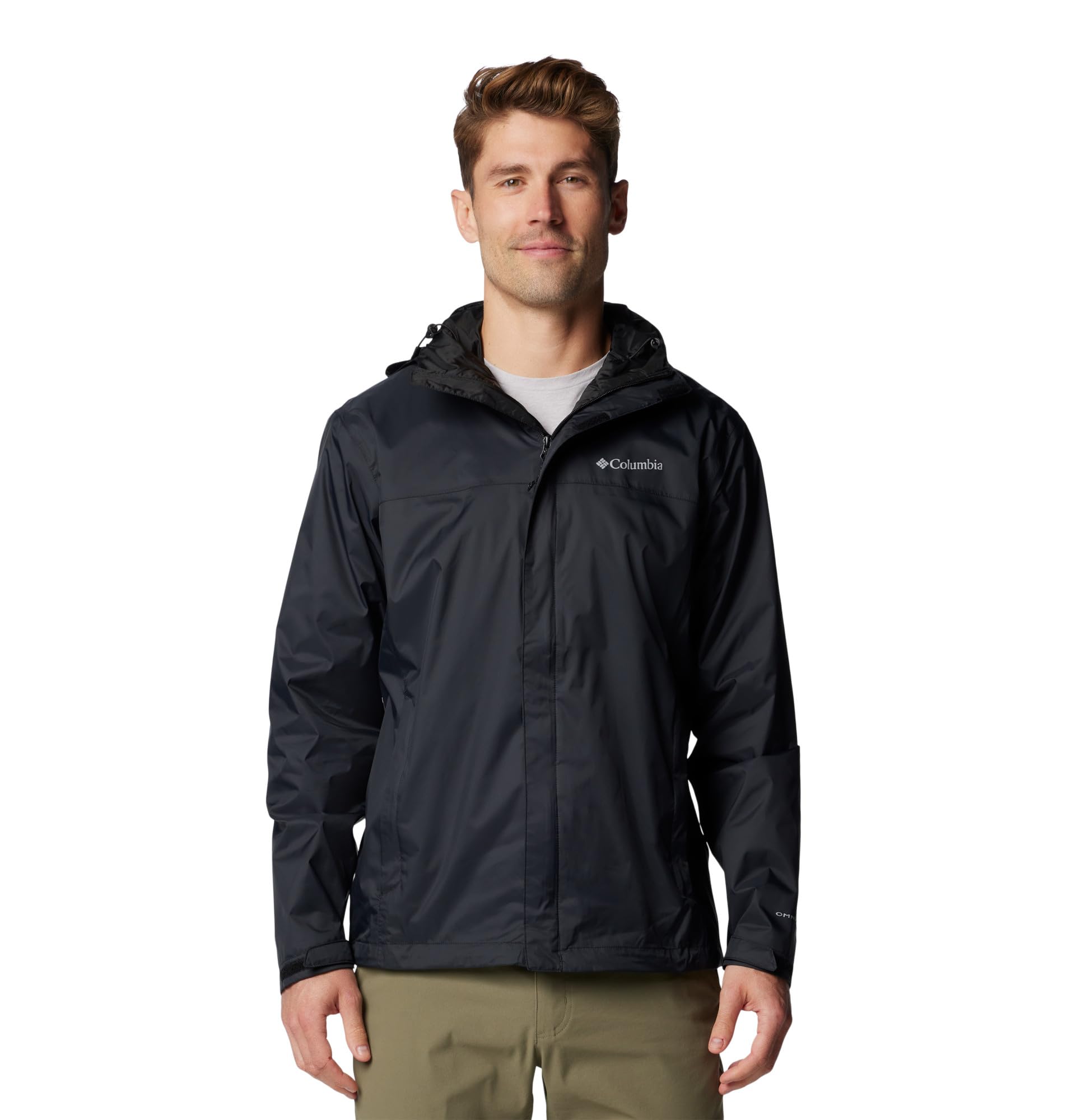
Columbia Watertight II
Steady rain is the test that matters, and the Watertight II is the jacket in this set we trust most to come through it. Water stays on the outside where it belongs, and the shell lets enough heat out that a hard climb does not leave you clammy underneath — the combination that separates a jacket you wear from one you carry and resent.
What makes it our top pick is how little it asks of you. It is light enough to forget in a daypack, it rolls down small enough to live there permanently, and it dries fast enough to be ready for the next walk. Nothing else here covers as many wet days with as little fuss.
The hood is the detail we kept noticing: it sits close and stays put when you turn your head, which matters more than any fabric figure on an exposed ridge. Zipped hand pockets keep a phone and keys dry, and the body is cut with room for a fleece underneath in most sizes.
It is a shell, so it adds no warmth of its own. In cold weather you wear it over a mid-layer, and that layering is the point: one jacket takes you from spring showers to a wet autumn. If you want warmth built in instead, the 33,000ft fleece-lined shell is the better buy.
Pros
- Keeps rain out in sustained weather
- Packs small and dries fast
- Light enough to forget in a pack
- Breathes well on a hard climb
Cons
- Sizing runs unevenly between sizes
Our default pick for a reason: it keeps rain out, packs small, and dries fast enough to be ready for the next walk.
Best for Layering in Cold
The North Face Antora
Key Features
- Brand: The North Face
- Department: Men’s
- Size range: Standard and big sizes
- Model number: NF0A7QEY
- Price: Premium
The Antora is the premium jacket here, and the case for it is room. It goes over a puffer without turning you into a parcel, and the shoulders and sleeves are cut for actual movement, so reaching for a handhold does not drag the hem up. That room is what you pay for: a shell that works as the outer layer over everything you already own.
It earns the rest of its keep in the rain. Wind stays out, water beads and runs off through long wet walks, and the fabric is thin enough that it disappears into a pack. The front pockets are enormous, with space for gloves, a hat and a folded map at once, which you appreciate on a cold day when you do not want to take your hands out twice.
Warmth is the thing to be clear about: there is none. Worn over insulation it is excellent; worn alone in real cold you will be cold. That mismatch, buying a shell and expecting a winter coat, sits behind most of the disappointment around it. It also comes in standard and big sizes, which most of the jackets here do not.
Pros
- Room for a puffer underneath
- Keeps wind and rain out
- Front pockets swallow gloves and a hat
- Standard and big sizes
Cons
- Premium price for an uninsulated shell
We hand the Antora to anyone who layers hard: it is the roomiest shell here, and you pay for that room.
Best for Women’s Everyday Shell
Columbia Arcadia II
Watch the Arcadia II in even a light shower and you can see the finish working: water beads on the surface and runs off instead of soaking in. The details back it up, with a storm flap over the main zip and velcro at the wrists, the sort of sealing you do not always get on a jacket this light.
It is genuinely light, the kind of jacket that disappears into a tote or a daypack and comes out looking presentable, which is why it works for a commute as well as a trail. The hood is cut to cover your face rather than perch on your hair, and the color range runs well beyond black and navy, worth something when the alternative is a jacket you leave at home.
For most women shopping this category, this is where we start. It shrugs off rain and wind, packs to nothing, and does not look like technical gear. It is cut close through the chest and hips, so go up a size if you want a sweater underneath. What we like most is that it is the jacket people end up wearing to death rather than saving for hikes.
Pros
- Water beads and runs off
- Light enough to carry all day
- Hood actually covers the face
- Smart enough for a commute
Cons
- No interior pocket for a phone
For most women we start here: light, properly rain-proof, and easy to wear with anything in your closet.
Best for Cold, Wet Hikes
33,000ft Fleece-Lined Rain Shell
Key Features
- Brand: 33,000ft
- Lining: Fleece
- Department: Men’s
- Price: Midrange
Cold rain is a different problem from warm rain, and the 33,000ft is the jacket here built for it. Fleece runs through the body and sleeves, so you can pull it on over a T-shirt on a raw morning and stay comfortable without a second layer and the bulk that comes with one.
It is tidy construction for the money: the seams are solid, the zips work with gloves on, and the shell has handled steady, miserable days rather than just showers.
Rain protection has a ceiling, though. It shrugs off steady rain and wind, but it is not the jacket for a day of driving, sideways weather, and anyone heading onto an exposed ridge in a storm should take a proper shell instead. Walkers and commuters will never reach that ceiling, and for them the trade is worth it.
For cold-weather walking, this is the one we reach for before any shell here: a single jacket replaces the shell-and-fleece combination, so you carry less and stay warmer. It suits a walker’s steady pace better than a climber’s stop-start effort. It also looks ordinary in the best way, reading as a jacket rather than kit, so it goes to town as happily as onto a hill.
Pros
- Fleece lining replaces a mid-layer
- Solid seams and glove-friendly zips
- Handles steady rain and wind
- Looks like a jacket, not kit
Cons
- Narrow sleeves fight a hoodie underneath
- No vents, so arms get clammy
We like it best in cold, wet weather: the fleece lining means one jacket does the work of a shell and a mid-layer.
Best for Cycling and Running
baleaf Reflective Rain Jacket
Key Features
- Brand: baleaf
- Design: Reflective and packable
- Department: Men’s
- Price: Midrange
Most rain jackets are built for standing around; the baleaf is built for moving. The hood is cut big enough to keep rain off your face when you are heads-down on the bars, the fabric is light enough to forget you have it on, and the reflective detailing shows up in a headlight. That combination is why it is the one we take on the bike.
The pockets are the surprise: zipped, storm-flapped, and one on the chest that takes a phone without bouncing around. It rolls into a jersey pocket or the corner of a small pack, and it has handled light-to-moderate rain on wet commutes without drama.
Warmth is not the point. With nothing but a base layer under it, this is a wind-and-rain layer and no more, which is exactly right for a hard effort and wrong for standing at a trailhead. It is also cut longer at the back, so it stays put when you are bent over the bars.
Pros
- Reflective details for dark, wet rides
- Packs into a jersey pocket
- Storm-flapped zipped pockets
- Longer at the back
Cons
- Sizing runs small through the chest
We keep this one for the bike: reflective, pocket-rich, and cut for movement rather than standing around.
Best for Budget Women’s Rain
Diamond Candy Rain Jacket
Key Features
- Hood: Removable, zippered
- Brand: Diamond Candy
- Department: Women’s
- Model number: OW004
- Price: Budget
The Diamond Candy behaves like a coat rather than a shell: there is a lining, the hood zips off, the cuffs adjust, and it rolls up small enough to live in a tote. For a wet weekend in a city, that set of features is more useful than a technical jacket.
At the budget end, this is where we point anyone who wants one jacket for dog walks, the school run and a damp weekend away. It is warmer than the unlined shells here, sheds steady rain off its surface, and does not look like outdoor gear, the three things that decide whether a cheap rain jacket actually gets worn.
The lining earns its place on a cold morning: it is the difference between a jacket you wear in October and one you wear into December, and the zip-off hood turns it into something lighter for a mild afternoon. It also packs flat, so it hangs by the door without taking over the hallway.
Pros
- Warm without a sweater underneath
- Zip-off hood adds flexibility
- Sheds steady rain off the surface
- Small enough for a tote
Cons
- Cut small through chest and shoulders
The budget pick we recommend without hedging: warm, lined, and good in steady rain.
Best for Cold-Weather City Wear
Outdoor Ventures Softshell Rain Coat

Key Features
- Brand: Outdoor Ventures
- Lining: Fleece
- Department: Women’s
- Price: Midrange
The first thing to know about this coat is the length. It comes down past the backs of the knees, which is the difference between dry legs and wet ones on a walk in weather, or on a wet bench at half time.
Underneath, it is fleece-lined through the body and sleeves, so it is warm in a way the shells here cannot match: cold rain, a mild winter day, a bus stop with wind funnelling through it. The pockets are generous, with zipped ones outside and two large ones inside, and the two-way zip lets you sit down without unzipping the whole coat.
Water rolls off the surface rather than soaking in, and the details are the sort you appreciate over a winter rather than in a shop: a hood with room for a hat, and inside drawstrings to shape the waist.
We like it as a coat rather than as a shell, something to wear to work, to the shops, to the school gate in February, that also happens to be waterproof. It is the warmest thing in this set, and the bulk that comes with that is the trade: this is not the jacket you fold into a daypack on the off chance.
Pros
- Knee-length coverage keeps legs dry
- Fleece lining through the sleeves
- Two large inside pockets
- Two-way zip for sitting down
Cons
We keep coming back to the coverage: knee length and a fleece lining make this the warmest coat here for a wet bus stop.
Best for Daypack Backup
33,000ft Packable Rain Jacket

Key Features
- Brand: 33,000ft
- Department: Men’s
- Package size and weight: 17.72 x 9.13 x 2.99 inches; 10.86 ounces
- Price: Budget
This one arrives folded into its own stuff sack, which tells you what it is for: a jacket that lives in the bottom of a pack until the weather turns. It weighs very little, takes up almost no room, and is quiet rather than crisp and rustly the way cheap shells usually are.
For the occasional soaking it does the job. Rain and wind stay off, it dries quickly, and it copes with steady rain better than the price suggests. One thing to know: the hand pockets are not sealed, so paper tickets and a phone are better off somewhere else.
Buy this for the pack you do not want to think about, the commute bag, the daypack, the trip where a proper shell would be overkill. It is the least expensive way into a jacket that genuinely keeps rain off, and for occasional use that is all you need.
Pros
- Packs into its own stuff sack
- Keeps rain and wind off
- Dries fast and stays quiet
- Light enough to leave in a bag
Cons
- Seams and lining wear with regular use
For a jacket that lives in a pack and comes out twice a year, we think this is the sensible buy.
How We Tested Waterproof Jackets in Actual Rain
We started with about 60 jackets sold in sizes XS through 3X, filtered for fully taped seams, adjustable hoods, and waterproof ratings of 10,000mm or better, then cut the list to 12 that covered the real range of what’s out there — packable shells, everyday rain coats, burlier winter-ready hardshells. We bought every one ourselves and wore them for nine months.
Water resistance came first, since it’s the whole point. Each jacket went through a five-minute shower with a paper towel pressed against the chest seam and another tucked inside a pocket, and we checked both for damp patches afterward. Every one also got worn through at least one long, steady rainstorm. We noted where water beaded, where it soaked in, whether the hood brim dripped onto our glasses, and whether cuffs wicked water up our sleeves when we raised an arm.
We weighed each jacket and packed it into its own pocket or stuff sack to see how small it went. For warmth, we wore them over just a t-shirt on a 40-degree morning, then again over a fleece, watching for cold spots at the collar and cuffs. Fit got the most attention: our testers run from XS to 2X, and every jacket was tried over a hoodie and a puffy with arms raised overhead to check sleeve length and hem coverage, with each size chart compared against measurements taken flat.
Last came durability and looks. We washed every jacket twice by its care label to see whether the water-repellent finish survived, whether seam tape lifted, and whether zippers caught or pulls snapped. Appearance is subjective, but we wore each one to the office, the grocery store, and a weekend brunch and asked ourselves whether it read as trail gear or something you’d leave on at the table.
How to Choose a Waterproof Jacket
Almost every jacket in this category claims waterproofing; what separates them is how much rain they handle, whether they add warmth, and how small a bundle they make in your pack.
Waterproof and water-resistant are not the same promise
Waterproofing comes from a coating or a membrane bonded to the fabric, plus a surface finish that makes rain bead and roll off. That finish is the part that wears away first, which is why a jacket that shed water last winter can soak through this one. Read the listing closely: a jacket described as water-resistant and suited to light rain is a shower jacket, and the label is being honest about it. If you want one jacket for real weather, look for the word waterproof, a hood that cinches, and seams that are finished rather than bare.
Shell or fleece-lined: decide what goes underneath
An unlined shell is the most flexible thing you can own, because you choose the warmth with the layer under it — the same jacket works in June and in October. A fleece-lined jacket is warmer for the same effort and easier to grab on the way out, but it is a one-piece answer: too warm on a mild day, bulkier in a pack, and clammy if you climb hard. If you walk and stand around in the cold, take the lining. If you generate heat on the way up, take the shell and a mid-layer.
Pack size and drying time decide whether it comes with you
The jacket that works is the one in your bag when the weather turns, and that has less to do with the fabric than with how small it packs and how fast it dries. A shell that dries overnight can go back in a pack damp and be ready by morning; a lined coat needs a radiator and a reason. Packable on a listing can mean it folds into its own pocket or just that it squashes, so treat the packed size as the number that matters. We would rather carry a slightly less warm jacket that lives in the pack than a warmer one that stays in the car.
Fit, hoods and pockets
Size for the layer you will actually wear underneath, not for the fit you like in a T-shirt: a shell that is snug over a fleece is a shell you stop layering. Watch sleeve length, because cuffs that stop short let water run up your arm, and watch the hood, which should turn with your head and cinch down over a cap. Zipped pockets matter more than pocket count, since a phone in an open pocket is a phone in a puddle. If you are between sizes and plan to layer, take the larger one.
Frequently Asked Questions
How can I tell if a rain jacket is really waterproof?
Run it under a tap for a few minutes with a dry towel balled up inside, then check for damp patches at the seams, shoulders and hood. A shower-proof jacket will wet out and darken across the surface within a minute or two, while a real shell keeps beading. If the towel stays dry, trust it on a hike.
Why does my waterproof jacket feel damp inside?
Usually it is condensation rather than a leak: your sweat has nowhere to go, so it collects on the inside of the fabric. Loosen the cuffs and hood, wear a wicking base layer, and slow down. If the damp sits in one place, a shoulder or a seam, that is a leak, and worth checking before you rely on it.
How do I keep the waterproofing working?
Wash the jacket. Dirt, sweat and body oils break down the surface finish and let the fabric soak through, which feels exactly like a leak. Use a technical wash rather than detergent, skip fabric softener, and tumble it on low, since the heat reactivates the finish. When water stops beading and the fabric darkens in the rain, it is time to reproof.
Final Verdict
The Columbia Watertight II is the jacket we point most people to. It keeps rain out, packs to nothing, and dries fast enough to be ready for the next day, which is what a rain shell is for. If you want room for a puffer underneath and do not mind paying for it, the North Face Antora is the better shell. Women should start with the Arcadia II and go up a size; for cold rain, the 33,000ft fleece-lined jacket does more with one layer.