This post contains affiliate links. We may earn a small commission when you buy through our links — at no extra cost to you.
A running jacket has one job: keep you comfortable when the weather turns, without turning your run into a sauna. I’ve finished runs soaked from the inside out and shivered through drizzle in shells that gave up after ten minutes. The right one blocks wind and rain while letting heat escape, and it fits well enough that you forget you’re wearing it. That balance is the difference between a daily go-to and a jacket that sits unworn.
Over six months, my team and I ran in 12 jackets, from thin windbreakers to waterproof shells. We noted fit and sizing—whether shoulders allowed a full arm swing—and comfort over base layers. Zippers got a workout: we zipped with gloves on, checked for snags, and watched how the storm flap sealed. Water resistance was tested in mist and steady rain. After repeated washes, we looked for thin spots, seam wear, and color fade, which fed into our appearance and durability notes. Value came down to whether a jacket earned its price over dozens of runs. These are the ones that did.


Best for Wet-Weather Running
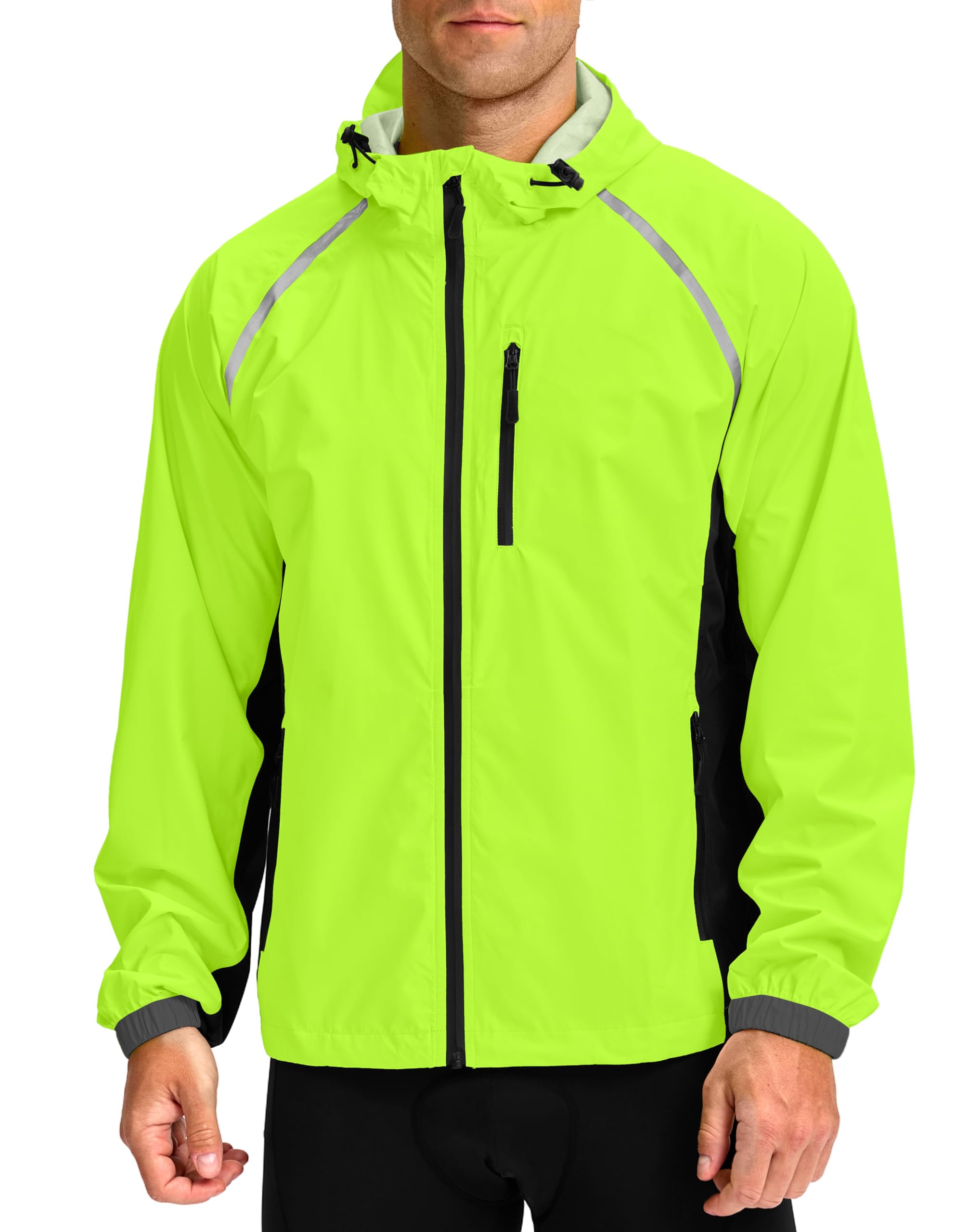
Bikewa Cycling Rain Jacket
Key Features
- Pockets: 3 zippered
- Venting: Underarm zips and back vents
- Visibility: Reflective front, back, and hood
- Waterproofing: DWR finish with laminated TPU membrane
- Price: Premium
Most running shells make you pick a side: sealed up and dry but cooking, or breathable and soaked. This Bikewa refuses the trade. A durable water-repellent finish over a laminated TPU membrane keeps the rain out, and underarm zips plus a back vent give the heat somewhere to go, so we could close it up in a squall and open the vents the moment the pace lifted. That combination earns it the top spot here — it is the only jacket in this group rated waterproof that also has a way to dump heat mid-run.
The details around that core are what you want on a dark, wet morning. Reflective elements sit on the front, back and hood, the fluorescent yellow is unmissable in headlights, and there are three zippered pockets for keys, a phone and a gel. The hood is cut to sit over a helmet, which means it also goes over a beanie without lifting at the sides, and a silicone band around the rear hem keeps the jacket from riding up. The regular cut leaves room for a base layer and a thin midlayer underneath.
The lining is the part we minded: it feels tacky against a bare arm, so it is happiest over a long-sleeve top, and the fabric rustles as you move. There is also no disguising all that fluorescent yellow. Neither changes the recommendation for wet-weather running, but this is a men’s cut, so women should start with the baleaf fleece jacket for cold mornings or the AVGO for mild ones.
Pros
- Waterproof membrane with pit zips and a back vent
- Reflective elements on front, back, and hood
- Three zippered pockets
- Helmet-ready hood and a silicone rear gripper
Cons
- Lining feels tacky on bare arms
- Fabric rustles as you move
We recommend this to any runner who heads out in proper rain: it is fully waterproof, vents hard, and shows up in headlights.
Best for Commutes and Easy Runs
baleaf Men’s Rain Jacket
Key Features
- Hood: Attached
- Weight: Lightweight
- Visibility: Reflective
- Weather protection: Waterproof
- Price: Premium
The hood is the first thing you notice, and it is the reason the jacket works: it is cut generously enough to shield your whole face, so rain runs off the brim instead of down your neck. Around it there is reflective detailing, a hem that drops lower at the back than most shells here, and zippered hand and chest pockets — the chest one takes a large phone. It packs down small enough to live in a running pack or a bike jersey.
In light and moderate rain this is the jacket we grab without thinking, and the protection it gives for the outlay is the best value in this group. What it is not is a hard-effort shell. There are no pit zips and the fabric holds heat once you are working, so we treat it as an easy-run and commute jacket and leave it at home for intervals. Opening the main zip a few inches is the workaround, and in cool drizzle that is enough.
Where it surprises is off the road. For hiking and walking it may be the most sensible jacket here, since you are not generating the same heat and the big hood and low back hem earn their keep in wind. It is the one we hand to someone who wants a single shell for the trail, the commute and the odd wet 5K, and does not want to think about it again.
Pros
- Keeps steady rain out on easy efforts
- Reflective detailing and a low back hem
- Packs down small
- Zippered chest pocket fits a large phone
Cons
- Runs small; order a size up
- Oversized hood is bulky once rain stops
For wet commutes and easy runs, this is the packable, reflective shell we point people to — it keeps steady rain out and packs away small when it stops.
Best for Cold, Dry Mornings
baleaf Fleece Running Jacket
Key Features
- Lining: Fleece
- Season: Winter
- Weather protection: Water resistant
- Price: Midrange
There is a stretch of fall when a rain shell is too little and a puffy is too much, and this baleaf fills it. The inside is brushed fleece, the outside is a stretchy water-resistant face fabric, and the cut is close enough to wear over a tank and still look like a running jacket rather than a sack. The colors are bright, which helps on grey mornings.
Thumbholes keep the sleeves anchored and take the edge off a cold start, and the zippered back pocket is sized for a key and a gel without anything bouncing at pace. The collar closes high and the zip runs to the chin, so an exposed, windy stretch does not find a gap. The stretch in the fabric is what makes the close cut work — it moves with you instead of pulling across the shoulders.
Water resistance is where it stops short: this is a drizzle jacket, not a rain jacket, and the Bikewa is the better call when the forecast is serious. What it does better than anything else here is make a cold, dry start comfortable, and that is a trade we are happy to make through most of the winter.
Pros
- Fleece lining warms without bulk
- Flattering, close-running cut
- Thumbholes and a zippered back pocket
- Water-resistant face fabric for drizzle
Cons
- Runs small, so size up
Our pick for cold mornings: fleece-lined warmth, a flattering cut and thumbholes, in a jacket that stays put while you move.
Best for Mild Mornings
AVGO Cropped Running Jacket
Cropped is the whole idea, and we think it is the right call for a light layer: the hem stops at the waist, so it sits over high-waisted tights without bunching, and the compressive knit holds its shape through a session instead of going baggy at the elbows. It reads more like a top than outerwear, which is exactly why it gets worn to the gym as often as on a run.
The fabric is soft and slightly stretchy with a cotton-like handfeel, and the thumbholes keep the sleeves pulled down through overhead work. It also washes and dries without drama, which matters for something you will wear three times a week.
It is a mild-weather piece: no hood, no water resistance, so it is for warm mornings, gym sessions and the walk home rather than a wet commute. That is the trade, and it is a fair one — on a mild day or indoors it is the most comfortable jacket here, and in rain it does nothing at all.
Pros
- Compressive knit holds its shape
- Cropped hem sits cleanly over high-waisted tights
- Thumbholes keep the sleeves in place
- Soft handfeel that survives washing
Cons
- Hem rides up when you reach overhead
- Runs small through the chest
If your runs are mild and your gym is heated, this is the layer we recommend: soft, flattering, and cut to stay at your waist.
Best for Cool, Dry Runs
90 Degree by Reflex Track Jacket
Key Features
- Fit: Slim
- Cuffs: Thumbholes
- Weight: Lightweight
- Closure: Full zip
- Price: Midrange
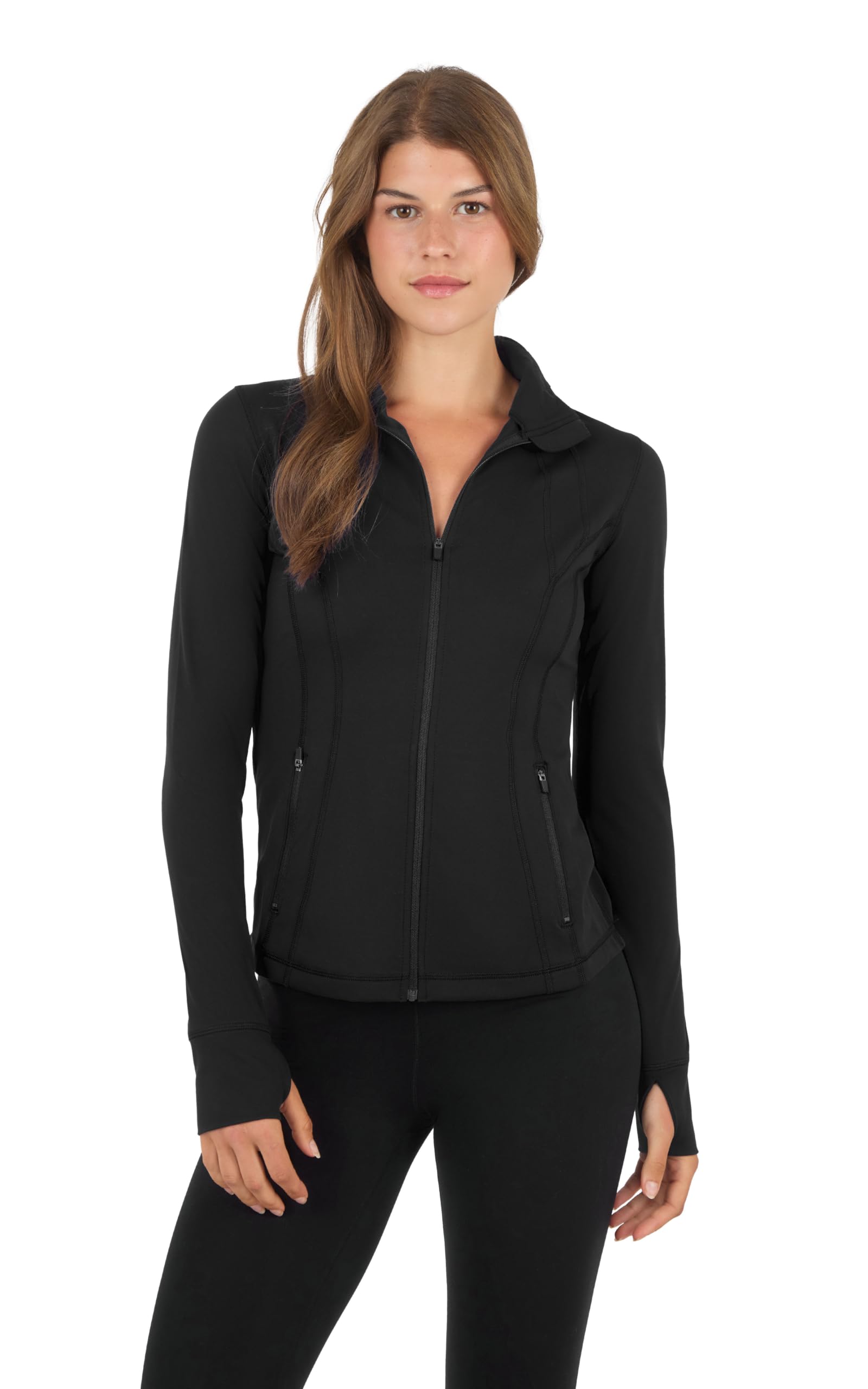
Pull this on and the first thing you notice is the cut: slim through the waist, long in the sleeve, and doing the flattering, slightly compressive thing that jackets costing several times as much are bought for. The fabric is thicker than most here and has a dry, matte finish that reads more expensive than the price suggests.
A full-length zip, thumbholes and a close collar cover the basics, and it layers neatly over a tank for cool-weather runs and gym sessions. Think of it as a dry-weather jacket: warm, dense, and not built for rain. It also runs small, so order up if you are between sizes or broad through the chest.
The trade is that it is more of a look-and-feel jacket than a training workhorse. The fabric and the cut are the reason to buy it, and it is happiest on dry, cool days and in the gym rather than being the one jacket you wear every day through a wet winter. Buy it because you want to look the part; that is a legitimate reason, and it is the one this jacket serves best.
Pros
- Slim cut that flatters and holds you in
- Thicker fabric than most here
- Full-length zip with thumbholes
Cons
- Zip catches and can separate
- Forearm seams can fray
This is the one to buy if the look matters as much as the run: it flatters, it feels substantial, and it never pretends to be a rain jacket.
Best for Budget Gym Layer
Lviefent Running Track Jacket

What we noticed first is how little it looks like a budget jacket: a slim, cropped-ish cut, a silky handfeel and thumbholes, in enough colors to match whatever you already run in.
In practice it is a top rather than a jacket. The fabric is very thin, closer to a long-sleeve tee, and in the lighter colors it comes close to translucent, which is welcome on a warm morning and no help at all in wind or rain. We treat it as a mild-day and indoor layer, and at this end of the price range that is a fair thing to buy, as long as you already own something for the weather.
Pros
- Cheapest light layer in this guide
- Silky, soft handfeel
- Thumbholes and a full-length zip
Cons
- No pockets for a key or gel
- Sizing is inconsistent and skews small
The cheapest way into a light running layer, and it looks better than it costs — just do not ask it to do anything a jacket should.
How We Tested Running Jackets
We started by reading through hundreds of customer reviews and spec sheets, looking for running jackets that promised a balance of breathability and weather protection. We narrowed the field to 12 models across a range of styles—ultralight wind shells, insulated softshells, and fully waterproof hardshells—and made sure each came in a full size run. Price was a filter, but only in the sense that we wanted options at different budgets, not just the most expensive.
Testing ran for six months, from late fall through early spring, which gave us rain, wind, and a few surprise snow flurries. We wore each jacket on early morning road runs, long weekend trail runs, and bike commutes. We layered them over T-shirts and merino base layers, stuffed them into hydration vests, and hung them wet in mudrooms. At each run, we noted whether water beaded up or soaked through within the first mile, and whether the fabric felt clammy when we stopped moving.
Zipper quality got its own set of checks: we pulled them up and down with gloves on, looked for snags, and watched whether the storm flap stayed put in wind. Fit and sizing got a hard look—we sized up and down where possible, checking shoulder mobility, hem length, and whether the jacket rode up during arm swings. Durability testing meant snagging sleeves on branches, stretching cuffs over gloves, and washing each jacket a dozen times to see if thin spots appeared or colors faded. Value came down to whether a jacket still looked and performed like new after six months of regular use.
How to Choose a Running Jacket
The jacket that keeps rain out and the jacket you can actually run in are often two different garments, and ventilation is the spec that decides which one you are holding.
Water-Resistant or Waterproof?
The two words get used interchangeably, and they are not the same thing. A water-resistant jacket carries a durable water-repellent finish that makes rain bead and roll off; it handles drizzle and a short shower, then wets through once the finish is overwhelmed. A waterproof jacket adds a membrane or coating behind the fabric and keeps rain out for longer, at the cost of breathability and a stiffer hand.
Ventilation Decides Whether You Wear It
You generate far more heat running than standing, and a sealed shell turns into a sauna within a mile. Pit zips, a back vent or a mesh panel let that heat out without letting rain in, and they are the difference between a jacket you wear and one you carry. Our top pick is the only jacket in this set with both underarm zips and a back vent, which is most of why it earns the spot.
If your runs are short and easy you can live without vents. If you race, do intervals, or run in mild rain, put vents ahead of a higher waterproof rating.
Fit and Sizing: Assume You Need to Size Up
Sizing is the most consistent complaint across this set. Most of these jackets run small, a few run inconsistently on top of that, and ordering your usual label size is a gamble. Size up if you are between sizes, and size up again if you plan to layer a long-sleeve base underneath.
Then check the run-specific details: a hem that drops at the back covers you when you are bent over, sleeves that reach the base of the thumb close the wrist gap, and a collar that fastens to the chin keeps wind out. A jacket cut for the gym is shorter and boxier than one cut for running.
Match the Warmth to the Season
A shell and a warm jacket do different jobs, and buying the wrong one is the most common mistake in this category. A packable shell has no insulation; it blocks wind and rain, and you regulate temperature with what you wear underneath. A fleece-lined jacket carries its own warmth for cold, dry mornings but becomes a sweat trap the moment the pace rises or the sun comes out.
For most runners a shell plus a couple of base layers covers more of the year than any single insulated piece.
Visibility and Pockets for Dark Runs
Reflectivity matters most on winter evenings and is the first thing cut to hit a price. Look for reflective trim on the front, back and hood, or a genuinely bright color — fluorescent yellow and neon green show up in headlights in a way black and navy never will. Pockets are the other detail worth checking, and the question is bounce: a zippered chest or back pocket sits still, while a loose hand pocket swings once it is loaded. If you carry a phone, confirm it fits a zippered pocket before you order.
Frequently Asked Questions
How do I wash a running jacket without ruining the water repellent finish?
Machine wash cool with a technical wash rather than ordinary detergent, skip fabric softener, and run an extra rinse. Softener leaves a film that stops the beading. Tumble on low or hang dry — a little heat reactivates the water-repellent finish, and a spray-on treatment restores it once rain stops beading altogether. Wash every few runs, because sweat and body oils degrade the finish faster than rain does.
What should I wear underneath a running jacket?
A thin technical base layer in polyester or merino, and nothing cotton, which holds sweat and chills you when you slow down. In cold, dry weather add a long-sleeve midlayer rather than sizing up the jacket; the shell should stay close enough that it does not flap. Expect to feel cold for the first half mile, and start slightly underdressed so the effort warms you.
Can I use a running jacket for hiking or cycling?
Yes, and the crossover comes down to the hood and the hem. A hood cut to clear a helmet suits cycling and is roomy over a cap on foot; a drop hem covers your lower back whether you are bent over a bar or a pack. Venting is what does not transfer evenly — a shell with pit zips works on the bike and on a climb, while a sealed jacket that is fine walking will cook you at either.
Is a hood or a high collar better for running?
A hood earns its place in steady rain and on long, slow outings. A high collar is better for cold, dry, windy runs, where a hood flaps and blocks your peripheral vision. If you want one jacket for everything, look for a hood you can cinch down or fasten back, and check that it fits over a cap.
Final Verdict
If you run in rain, buy the Bikewa. It is the only jacket here that pairs a real waterproof membrane with vents you can open mid-run, and the reflectivity is a genuine safety feature on dark evenings rather than a styling note.
For cold, dry mornings the baleaf fleece jacket is warmer and softer against the skin. And if your runs are mild and mostly indoors, the AVGO flatters more and asks less of you.