This post contains affiliate links. We may earn a small commission when you buy through our links — at no extra cost to you.
A running jacket has one job, and it’s a job with a built-in contradiction: keep the rain and wind off without turning your run into a sauna. Most jackets solve one half and fail the other, which is why so many end up in a drawer by February. Then there’s sizing — these layers are cut to fit over a tank and a long-sleeve, so the size that matches your T-shirt can feel tight across the shoulders and short in the sleeve.
Over the past six months my team and I have run in 12 jackets, from featherweight shells to warmer softshells, and the gaps showed up around mile three: zips that catch, hems that ride up, fabric that rustles or feels paper-thin against the wind. Fit mattered more than any spec sheet promised — sleeve length, shoulder room, whether a jacket layers cleanly over what you already run in. Style counts too, since the right one is the one you’ll also wear to the coffee shop afterward. Here’s what held up.


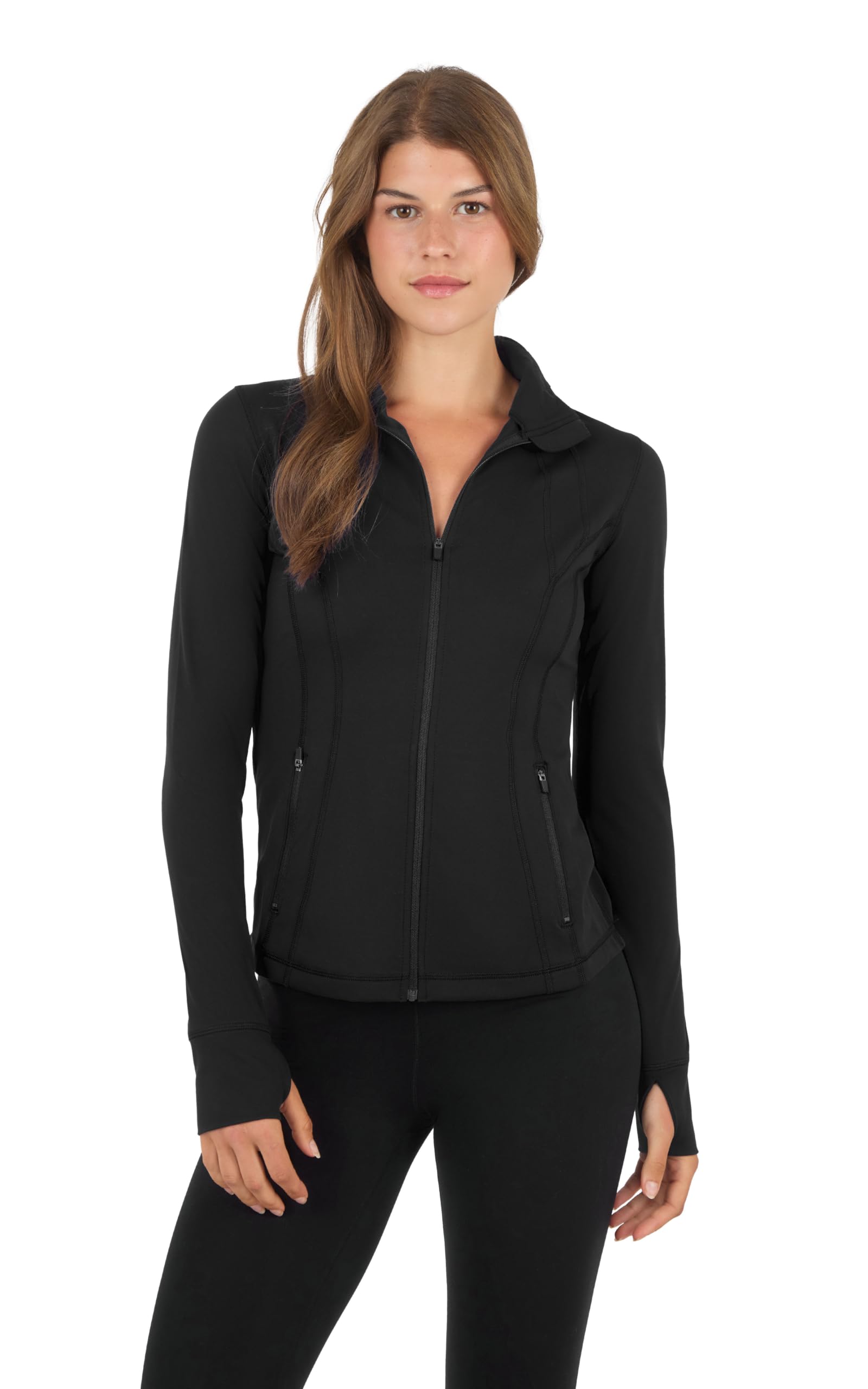


Best for Everyday Running
Queenie Ke Running Jacket
Key Features
- Length: Hip length
- Closure: Full zip
- Pockets: Zippered pockets
- Sleeve detail: Thumb holes
- Price: Premium
The Queenie Ke earns the default spot because it gets the everyday details right: a full zip, a soft stretch fabric, and zippered pockets that are actually worth using. We like that the pockets give a key and a gel somewhere secure to go without turning the jacket into a bouncing pack, and the thumb holes keep sleeves from riding up when the wind picks up.
We keep it in the everyday slot because the fit is slim without fighting you. The fabric moves with a tank underneath, the full zip sits flat, and the length covers a waistband rather than stopping at it. For a run that starts cool and ends warm, that combination is easier to live with than a stiffer shell.
Sizing is the one thing to sort before you order. The cut is close, and it runs small for some; if you are between sizes or plan to layer a long-sleeve tee underneath, go up. Wired runners should check the pocket’s cord opening, since a chunky earbud plug may not pass through. The colors are a small bonus: a brighter option does double duty for visibility on early starts.
Pros
- Soft, stretchy fabric for layering
- Zippered pockets keep essentials secure
- Full zip with thumb holes
- Flattering slim fit
Cons
- Not a rain or winter layer
We recommend the Queenie Ke as the default running jacket for mild-to-cool runs: soft, stretchy, full-zip, and genuinely useful pockets.
Best for Cold Runs
baleaf Fleece Running Jacket
Key Features
- Lining: Fleece
- Pockets: Back zip pocket
- Sleeve detail: Thumb holes
- Weather protection: Water resistant
- Price: Premium
On a cold-morning run, the baleaf is the jacket in this group that feels purpose-built: fleece inside, a water-resistant face outside, and a full zip for dumping heat when the pace picks up. We rate it as the cold-weather pick because the warmth is the point, not an afterthought. The back zip pocket gives a key and card a secure spot; the thumb openings are a small comfort when gloves are still in the car.
The fleece lining is soft against a tank top and warm enough for winter runs. Where it earns its keep is slow cold runs, walking, and cold-weather cycling. It is a seasonal jacket, and that is the honest trade: you get real warmth instead of a thin layer that only takes the edge off.
Sizing runs small for some, especially through the bust, so check the shoulders before you commit. If you want a base layer underneath, go up rather than assuming the fleece has enough give. The upside is a jacket that feels cozy without the rustle of a hard shell.
Pros
- Fleece lining for winter warmth
- Water-resistant outer fabric
- Secure back zip pocket
- Soft against a base layer
Cons
- Too warm for mild-weather runs
For cold, wet-feeling runs, we reach for the baleaf first: fleece warmth, water-resistant protection, and a secure back pocket.
Best for Lightweight Value
Rapbin Full-Zip Running Jacket
Key Features
- Fit: Slim fit
- Closure: Full zip
- Pockets: Zippered pockets
- Sleeve detail: Thumb holes
- Price: Budget
The Rapbin is the value argument in this group: full zip, thumb holes, and zippered pockets in a slim running cut. We noticed the zipper locks where you set it, which sounds small until you are adjusting ventilation mid-run and do not want the pull creeping down. That is the kind of detail that makes a budget jacket feel considered.
The fabric is light and stretchy, the kind of layer that works over a tank in mild weather or under a vest when the wind picks up. The inner pockets are a useful bonus for a key or card. It is a running layer first, not a fashion jacket that happens to zip.
We keep it as the lightweight value pick because the details are right for running, not just gym wear. The fit is slim and the sizing runs small for some, so size up if you want room for a long-sleeve base layer. Check the fabric in light colors if opacity matters; dark colors are the safer bet.
Pros
- Locking zipper stays where set
- Full zip with thumb holes
- Light, stretchy fabric packs small
Cons
- Thin fabric offers little warmth
The Rapbin is our lightweight value pick: a full-zip running layer with thumb holes and zip pockets for mild-weather miles.
Best for Slim Gym-To-Run
90 Degree By Reflex Track Jacket
Key Features
- Fit: Slim fit
- Closure: Full zip
- Fabric weight: Lightweight
- Sleeve detail: Thumb holes
- Price: Premium
Compared with our top pick, the 90 Degree By Reflex is cut closer through the waist and finished more like a track jacket than a soft everyday layer. The slim fit and thumbholes give it that pulled-together look, and the fabric has a bit more body than the lightest jackets here.
That extra body makes it a better bridge between a gym cover-up and a cool-weather run. It does not have the weather protection of the baleaf, but it looks less technical with jeans. The close cut is flattering, though it leaves little room for a bulky base layer.
The zipper is the part to watch. Some jackets last, while others fail early; seams at the forearms are the other wear point. If you are hard on zippers or wash athletic wear often, treat this as a lighter-duty piece.
We still recommend it for the runner who wants a slim, flattering track jacket for gym-to-errand days and easy jogs. It is not the toughest build in this group, but the fit is the reason to choose it.
Pros
- Flattering slim track-jacket fit
- Full zip and thumb holes
- Lightweight enough for easy runs
Cons
- Sleeves run long for petite frames
The 90 Degree By Reflex earns its spot as our slim track-jacket pick for gym-to-errand days; treat the zipper as the wear point.
Best for Windy Spring Runs
Locachy Windproof Jacket
Key Features
- Waist: Cinch toggles
- Collar: Stand collar
- Closure: Full zip
- Weather protection: Windproof
- Price: Midrange
The stand collar and waist toggles are the details that set the Locachy apart from the pull-on running layers here. Cinch the waist and the jacket stops flapping; stand the collar up and it blocks the wind on an exposed ridge. It is the one in this group that feels like a light hiking shell as much as a running jacket.
The fabric is thin and meant to go over a tee or tank, so size for the layer you will wear underneath. It is a wind shell first, not a cozy jacket. The full zip and zippered pockets are there, and the cut is easier to layer than the compression-fit picks.
We like it for blustery morning runs and hikes where you want a little protection without carrying a hard shell. The cinch waist gives it a shape, which is rare in a windproof layer. Just go in expecting a shell, not a winter coat.
Pros
- Stand collar blocks wind
- Cinch waist stops flapping
- Light shell layers easily
Cons
- Thin fabric can be see-through
- No insulation for cold runs
We like the Locachy for windy spring and fall runs: a stand collar, cinch waist, and light windproof shell that layers easily.
Best for Cropped Workouts
AVGO Cropped Running Jacket
Key Features
- Fit: Compression-style
- Length: Cropped
- Closure: Full zip
- Sleeve detail: Thumb holes
- Price: Budget
The cropped hem is the first thing you notice about the AVGO, and it is the reason to buy it. With high-rise leggings it meets the waistband and creates a clean running line; the compressive fabric holds you in without feeling like shapewear. We like it for gym sessions and warm-weather runs where coverage is not the goal.
The thumb holes keep the sleeves from riding up, and the full zip makes it easy to vent. It is not a jacket you layer a hoodie under; the slim fit is the point. The fabric has enough stretch to move through a workout, but it is not a wind blocker.
The payoff is a top that stays put during a jog instead of bunching at the waist. It is a specific look, and it delivers that look well. If you want a running jacket that covers the hips or blocks weather, this is not the one.
Pros
- Compressive fit stays put
- Cropped hem meets high-rise leggings
- Thumb holes keep sleeves down
Cons
- Cropped hem exposes waist with low-rise bottoms
- Runs small through the bust
The AVGO is our cropped pick for high-rise leggings and gym-to-run days, with a compressive fit that stays put.
Best for Budget Layering
Lviefent Track Jacket

Key Features
- Fit: Slim fit
- Closure: Full zip
- Fabric weight: Very lightweight
- Sleeve detail: Thumb holes
- Price: Budget
The Lviefent is the jacket that disappears into a gym bag, and that is the appeal. The fabric is very thin and stretchy, so it layers over a tank without bulk and packs down to almost nothing. It is a light extra layer, not a piece of weather gear.
We see it as a budget layering piece rather than a standalone running jacket. For a warm-up, a gym session, or a run where you just need a little coverage, it does the job. That is a narrow role, but it is a useful one.
The fit is slim and tight through the bust and arms, so sizing up is the safer call if you want breathing room. The thumb holes are a nice touch at this level, and the full zip makes it easy to vent. It is the kind of jacket you keep in the car or the bottom of a pack.
Pros
- Packs down small
- Soft, stretchy layer
- Full zip and thumb holes
Cons
- Very thin and see-through in light colors
- Little warmth or weather protection
We see the Lviefent as a budget layering jacket for warm-ups and gym sessions; buy it for light coverage, not cold or wet runs.
Best for Fitted Long Sleeves
PINSPARK Slim Fit Jacket

Key Features
- Fit: Compression-style
- Closure: Full zip
- Sleeve detail: Thumb holes
- Sleeve length: Long sleeves
- Price: Midrange
The sleeves are the first thing we noticed on the PINSPARK: long enough to feel generous at the wrist, with thumb holes to keep them there. The body is cut close through the waist and bust, more compression top than loose warm-up. It looks sharp with leggings, and the full zip sits flat when closed.
The close cut is what makes it look sharp, and the fabric has a sturdy, slightly compressive feel. It is not a loose layer, so plan the base layer before you choose a size. The long sleeves make it useful when the morning starts cold, and the thumb holes keep the cuffs from creeping up.
The jacket is at its best on cool-weather runs and gym days, not as a summer shell. The full zip vents well, and the close fit means less fabric flapping in the wind. It is a piece you wear because you want the fit, not because you need maximum coverage.
We recommend it for someone who wants a fitted, long-sleeve running top and will size for the shoulders rather than the waist. It is not the easiest jacket to layer, but the compression fit is the point.
Pros
- Long sleeves with thumb holes
- Compression-style fit stays close
- Full zip vents well
Cons
- Runs small through the body
- Sleeves run long for petite frames
We rate the PINSPARK as the fitted long-sleeve pick; size for the shoulders and bust, not the label.
How We Tested Women’s Running Jackets
We started with more than 60 jackets and cut the list by reading fabric specs, weatherproofing claims, available size ranges, and price against what the jacket actually promised. Anything with a history of zipper complaints or a size run that stopped short got dropped early. That left 12 jackets, spanning packable wind shells to lined softshells, which we wore for six months.
Testing happened where jackets actually get used: 6 a.m. drizzle runs, windy long runs along an exposed stretch of path, a few 35-degree track sessions, and two proper downpours we didn’t plan for. Each jacket got worn over a tank and again over a long-sleeve to see how much room the cut really left, and we kept them on through the cool-down walk home to note how quickly they turned clammy.
We zipped each one up and down with gloves on, one-handed, until we stopped fumbling — a few never got there. Jackets got stuffed into a waistband or belt bag mid-run to check how small they packed and how badly they creased. Every one went through three washes per its care label, after which we checked seams, pilling, and whether water still beaded on the surface or soaked straight in.
Sizing got its own pass: we ordered our usual size and one up in several jackets to compare shoulder room and sleeve length, since a jacket that restricts your arm swing is a jacket you’ll leave home. Finally, we weighed price against what each one delivered and asked the honest question — would we wear this somewhere other than a run?
How to Choose a Women’s Running Jacket
The right running jacket is the one you can forget you are wearing until the weather turns, so start with the conditions you run in and work backward to fit, fabric, and storage.
Match the layer to the weather you actually run in
Start with temperature and wind, not the size label. A fleece-lined jacket like the baleaf is a winter tool: it traps warmth and handles damp cold, but it is too much for a mild morning. A thin windproof shell like the Locachy is the opposite trade: it blocks wind and packs small, with little insulation. A light stretch layer like the Rapbin sits between them. Water-resistant is not waterproof, so if you run in steady rain, plan for a shell or accept that the jacket is a damp-weather compromise.
Fit the shoulders and bust first
A running jacket has to clear the shoulders through a full arm swing and close without pulling across the bust. That is why the size that works in a loose raincoat can be wrong here. Several jackets in this group run small, especially the compression-style cuts; if you are between sizes or plan to wear a long-sleeve base layer, go up. Check the waist last. A close waist is flattering, but it should not stop you from breathing or make the zipper pull.
Check the zipper and pockets as running hardware
The full zip is the part you touch most, and it is where this category separates. A zipper that creeps down or snags at the chest ruins a run faster than a little extra fabric. Look for a zip that seats cleanly at the bottom and stays where you set it; the Rapbin’s locking pull is a good example. Pockets matter too: a secure zip pocket for a key and phone beats a deep open pocket that bounces. If you run wired, check the cord opening before you buy.
Choose cropped or hip length for your wardrobe
Cropped jackets like the AVGO are designed to meet high-rise leggings, and they look intentional with that combination. With low-rise bottoms, the same jacket leaves the waist exposed, which is fine for gym sessions and warm runs but not for cold or exposed weather. A hip-length cut like the Queenie Ke covers the waistband and layers more easily over a tee. If you run in winter, prioritize coverage at the waist; if you run warm and wear high-rise kit, a cropped cut can be the more comfortable choice.
Read light colors and thin fabrics honestly
Thin fabric is not automatically a flaw in a running jacket; it is often what makes the layer breathable and packable. The catch is opacity. Light colors in thin cuts can show the base layer underneath, especially when the jacket is stretched across the bust or shoulders. If that bothers you, choose a darker color or plan to wear a nude or matching tank. For windy runs, a thin shell is useful; for cold, it is only a layer. Match the fabric weight to the job.
Frequently Asked Questions
Do thumb holes actually help on a run?
They do when the morning is cold and you want your sleeves to stay down over your hands. The trade is that pulling them on and off can stretch the cuffs over time, so use them for warm-up and easy cold runs rather than as a substitute for gloves. If you run hot, a plain cuff is less fuss.
Can I wear a running jacket for hiking?
Yes, if you match it to the weather. A windproof shell like the Locachy works on exposed ridges; a fleece like the baleaf is better for cold, slow hikes. Running jackets are cut closer than hiking shells, so check that you can layer a fleece or grid top underneath. Pockets that hold a phone and map are worth more than another zip.
How should I wash a running jacket?
Zip it fully, wash cold on a gentle cycle, skip fabric softener, and air-dry. That protects the zipper and the stretch in the fabric. Check the care label first, especially on fleece-lined and water-resistant jackets; heat can damage the finish. If the zipper snags, clean the teeth before forcing the pull.
Final Verdict
The Queenie Ke is the jacket we point most runners to first because it handles the everyday run without asking much of you: soft stretch fabric, a full zip, secure pockets, and a slim fit that layers over a tank. For mild-to-cool mornings, it is the easiest recommendation in this group.
If your runs are mostly cold, the baleaf is the better buy: fleece warmth and water-resistant coverage for winter miles. If you want the lightest full-zip layer for mild weather and do not need insulation, the Rapbin is the value alternative. Start with the conditions you run in, then choose the fit that leaves room to move.