This post contains affiliate links. We may earn a small commission when you buy through our links — at no extra cost to you.
A treadmill should be a piece of equipment, not a subscription service. If you’ve shopped lately, you’ve noticed that many of the flashiest machines want a monthly fee for classes or training programs—features that often go unused once the novelty wears off. The best treadmills without a subscription skip the recurring charge and put the money into a sturdy frame, a smooth incline motor, and a deck that doesn’t punish your knees. Over the past eight months, I’ve tested seven treadmills from brands known for no-fee programming, and the ones that stand out share a few traits.
Assembly can make or break the first day—some went together in under an hour, while others had me hunting for a second set of hands. I also paid attention to how much floor space each one claimed (and how easily it moved if I needed to reclaim that space), how loud the motor got at a walking pace, and whether the console offered enough built-in workouts to keep things interesting without a login. The seven models below are the ones that earned a permanent spot in my home, and they range from compact walkers to full-size runners.


Best for All-Round Home Use
WELLFIT TM037PRO
Key Features
- Incline: 0%-12% auto
- Top speed: 7.6 mph
- Folded size: 50.4 x 18.5 x 5.5 in
- Weight capacity: 375 lb
- Price: Midrange
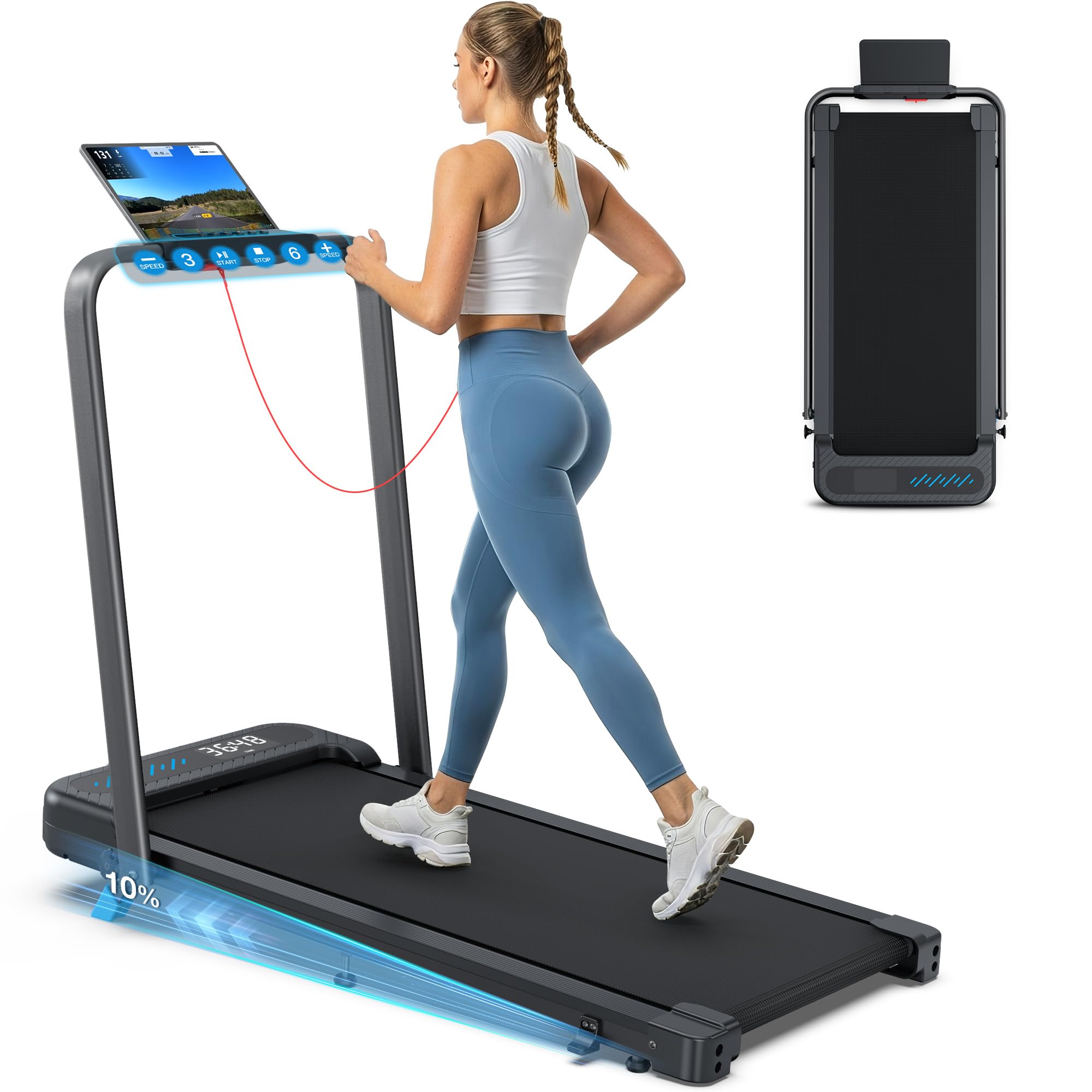
A 12 percent automatic incline is the feature that makes the WELLFIT TM037PRO more than another foldable walking pad. You can raise the deck while you are walking, so a flat session becomes a climb without stopping to move a pin or step off the belt. Add a 7.6 mph top speed and a 375-pound capacity, and it covers more ground than most compact treadmills.
That combination is why it earns the top spot for most buyers. We like that the frame folds to 5.5 inches and still includes a pair of handrails, so it can live against a wall or under a bed without becoming a permanent piece of furniture. The 3-year full warranty is also a meaningful vote of confidence at this size and type, and the controls stay useful without opening an app.
At 57 pounds, it is light enough for one person to tip and roll, but not something we want to carry up stairs. The 40-by-16-inch belt is the other number to weigh: it is comfortable for walking and a light jog, while a runner who wants a long stride should look at the Sunny. The incline does most of the work of making a small treadmill feel demanding, and that is the part we kept coming back to.
If you want one subscription-free machine for desk walks, evening jogs, and incline intervals, this is the one we point to first. The Vhorilix is easier to move; the TRAILVIBER is the more dedicated desk walker; neither covers as many jobs.
Pros
- 12% automatic incline changes pace mid-walk
- 375-pound capacity suits more households
- Folds to 5.5 inches with handrails
- Three-year full warranty
Cons
- 16-inch belt is tight for running
For a subscription-free home treadmill that handles walking, jogging, and incline work without taking over the room, this is the one we recommend.
Best for Full-Size Running
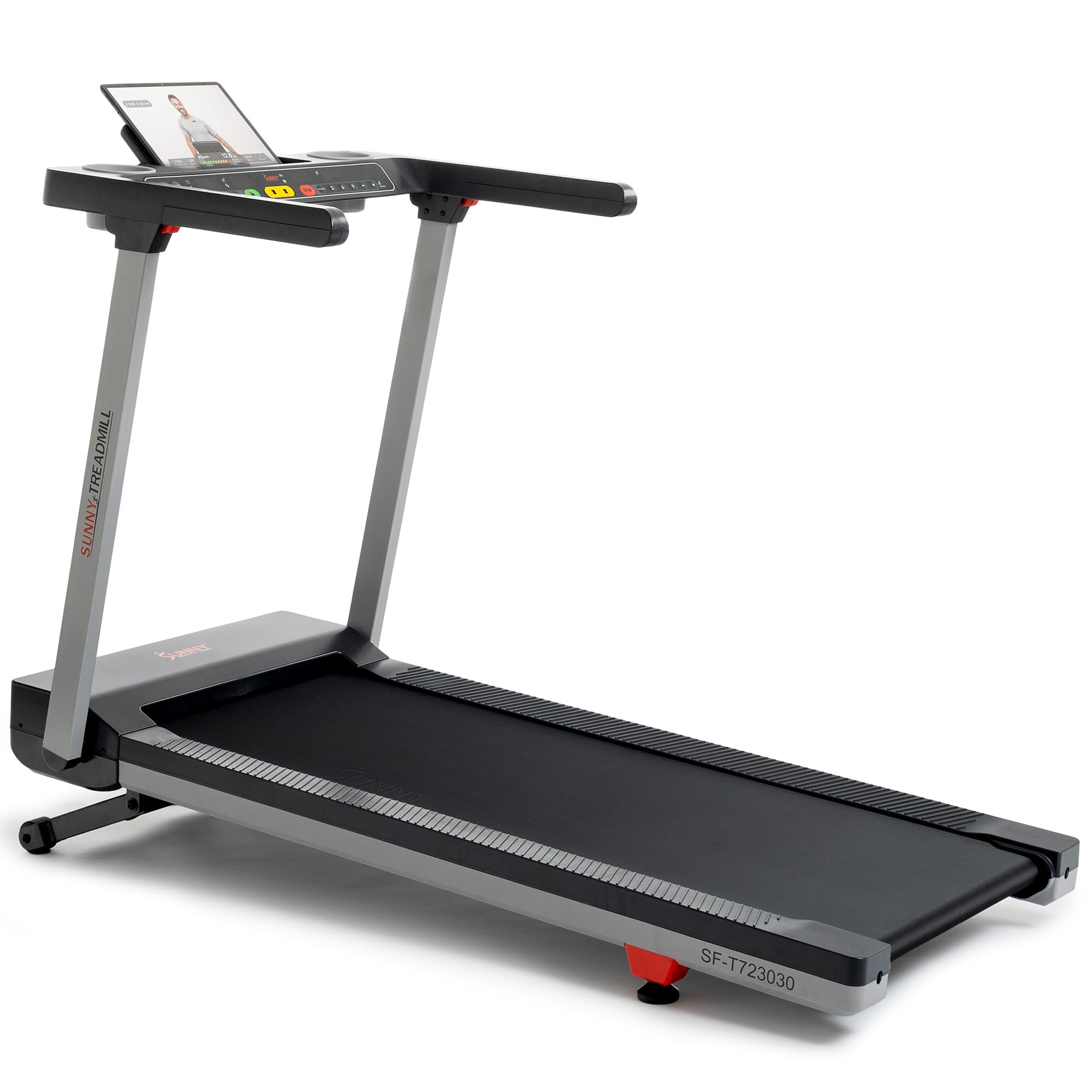
Sunny SF-T723030
Key Features
- Incline: up to 15%
- Top speed: 10 mph
- Item weight: 130.3 lb
- Running surface: 20 x 53 in
- Price: Premium
The Sunny SF-T723030 arrives essentially assembled: raise the handlebar, lock it, and you are ready to walk. That is a pleasant change from an afternoon with an Allen key, and it sets the tone for a treadmill built around the idea that the machine should feel planted and get out of the way of the workout.
The 20-by-53-inch running surface is the reason we recommend it for runners. It gives you room to stride without watching your feet, and the 10 mph top speed and 15 percent incline cover everything from a brisk walk to hill intervals. The 24 programs are a bonus, but the simple quick controls are what we reached for most.
The catch is placement. At 59.1 kg, this is a two-person delivery and a machine that wants a permanent corner. We see that weight as the price of its stable feel, not a defect, but it rules out daily folding and rolling for most people.
We like the 24 programs, though the reason it earns a place is simpler: a full-size deck, a strong incline, and no subscription prompt in the way. The machine is for the person who knows where it will live and wants a running surface that stays put.
Pros
- 20-by-53-inch running deck
- 15% incline and 10 mph top speed
- Fully assembled setup
Cons
- Mixed long-term reliability record
- Can develop squeaks at speed
For runners who want a full-size, stable deck and no subscription, this is our pick, provided the treadmill can stay in one place.
Best for Under-Desk Walking
TRAILVIBER X01
Key Features
- Incline: 0%-12% auto
- Deck size: 41 x 16.5 in
- Top speed: 4 mph
- Weight capacity: 450 lb
- Price: Midrange
A 450-pound capacity is unusual in a walking pad that weighs 44 pounds. The TRAILVIBER X01 gets there with a reinforced steel frame, and the result is a machine we trust underfoot in a way most pads this size do not manage. The deck is 41 by 16.5 inches, and the whole thing slides under a bed or desk when the workday ends.
Auto incline is the upgrade that makes it more useful than a flat pad. Nine levels take you from flat to a 12 percent climb with one button, and we like that you can change it without breaking stride. The triple cushioning and 16.5-inch deck make the walking surface comfortable for long stretches at a desk.
Setup is minimal, and the 3-year warranty is longer than most compact machines offer. The FitYo app and Bluetooth speaker are there if you want them, but the remote and console work without either. That matters for a subscription-free purchase: the extras should be extras.
For heavier walkers or anyone who wants incline without a full-size frame, this is the walking pad we choose. It stores vertically, rolls easily, and does not ask for a monthly fee to do its main job.
Pros
- 450-pound capacity in a compact pad
- 12% auto incline with nine levels
- Three-year warranty
Cons
- 4 mph top speed rules out running
For under-desk walking, incline steps, and heavier walkers, this is the walking pad we choose.
Best for Tight Budgets
Vhorilix XM-A1
Key Features
- Motor: 2.5 HP
- Top speed: 4 mph
- Item weight: 36.4 lb
- Weight capacity: 264 lb
- Price: Budget
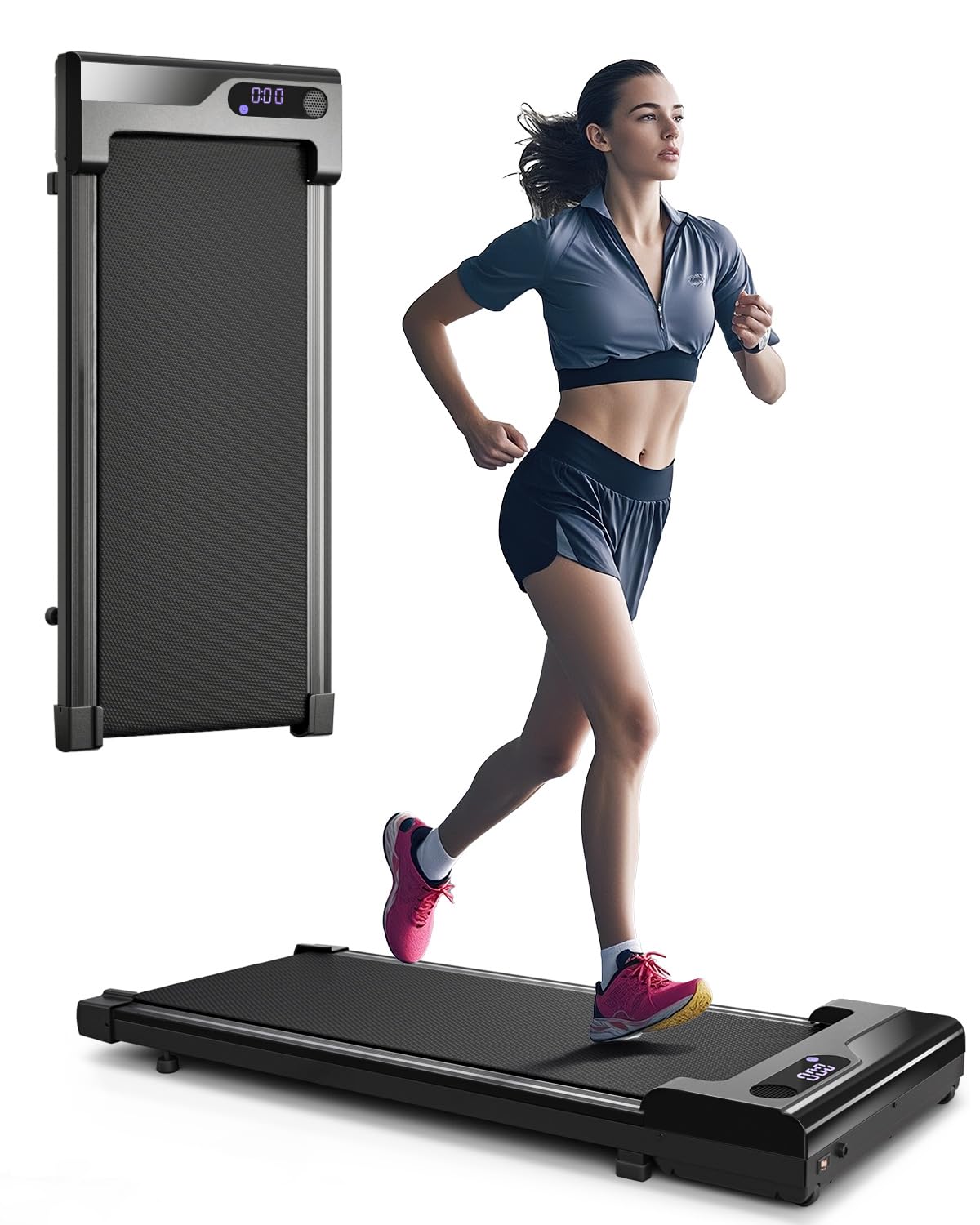
At 36.4 pounds, the Vhorilix XM-A1 is the one we move from room to room without thinking about it. It is 4.3 inches tall, rolls on built-in wheels, and arrives ready to use, so there is no assembly ritual before the first walk. For a small apartment or a desk that has to become a workout station at lunch, that simplicity is the whole appeal.
The 2.5 HP motor tops out at 4 mph, and the remote handles start, stop, and speed while the LED shows distance and time. We appreciate that there is no app gate: the machine works from the remote, full stop. The low profile makes it easy to push under furniture, and the shock-absorbing belt is comfortable for a daily walk.
It suits a desk walker who wants to add steps without a permanent gym corner. We think of it as the machine that disappears when you are done, and the lack of setup makes it the easiest one here to live with.
Pros
- 36.4-pound body is easy to move
- Ready to use without assembly
- Simple remote and LED controls
Cons
- No incline or handlebar
- 264-pound capacity is limiting
This is the budget walking pad we keep for desk days: light, simple, and easy to stash, with a capacity that suits casual walking.
Best for Small Apartments
WELLFIT WFTM037
Key Features
- Incline: up to 10% manual
- Top speed: 6.2 mph
- Folded size: 49.2 x 21.3 x 6.1 in
- Weight capacity: 350 lb
- Price: Budget
The controls on the WELLFIT WFTM037 sit on the handlebar, which sounds minor until you are walking at a steady pace and want to change speed without bending down. Start, stop, 3 mph, 6 mph, and speed adjustments are all at your fingertips. It is a small design decision that makes the machine feel more finished than its budget positioning suggests.
The 6.2 mph top speed and 350-pound capacity give it more range than a basic walking pad, and the 10 percent manual incline adds a useful change of pace. It folds to 6.1 inches, so it can go under a bed or couch, and the 36-by-16-inch belt keeps the overall length compact.
The deck is only 36 inches long, which is fine for walking and short jogs but tight for a long running stride. We like that the handle can be used up or down, and the wheels make it easy to reposition when the room needs to become a living room again.
For an apartment walker who wants handles but does not want a full treadmill footprint, this is the sensible middle. The TRAILVIBER is the better dedicated desk pad; this WELLFIT is the more supportive small-space walker.
Pros
- Handlebar controls at your fingertips
- 6.2 mph top speed and 350-pound capacity
- Folds to 6.1 inches
Cons
- Handlebar is short for taller users
- Short power cord limits placement
For small apartments and walkers who want handlebar support without a huge footprint, this WELLFIT is the practical budget choice.
Best for Supportive Budget Walks
Aiteid 380C

Key Features
- Deck size: 39 x 15 in
- Top speed: 6.2 mph
- Folded size: 45 x 22 x 5.5 in
- Weight capacity: 300 lb
- Price: Budget
The Aiteid 380C is one of the few compact treadmills here with a fixed handlebar, and that changes how it feels in a small room. You have something to hold when you want stability, but the machine still folds to 5.5 inches and can be rolled out of the way.
The 6.2 mph top speed and 300-pound capacity are solid for a budget machine, and the 3.0 HP motor is paired with 12 preset programs. The LED console tracks time, speed, distance, and calories, so the basics are covered without a subscription or a phone.
We see it as a spare-room treadmill for daily walks and slow jogs, not a pace trainer. The handles are the reason to choose it over a flat walking pad, and the compact fold is the reason it can stay in a small home.
Pros
- Fixed handlebar adds support
- 6.2 mph top speed and 300-pound capacity
- Folds to 5.5 inches
Cons
- 15-inch belt is narrow for running
- Noise rises with speed
A compact, affordable treadmill with handles for light walking and slow jogs in a small room.
Best for Subscription-Free Tech
Azomabox NB2
Key Features
- Motor: 5 HP
- Incline: up to 10%
- Top speed: 9.6 mph
- Weight capacity: 440 lb
- Price: Premium
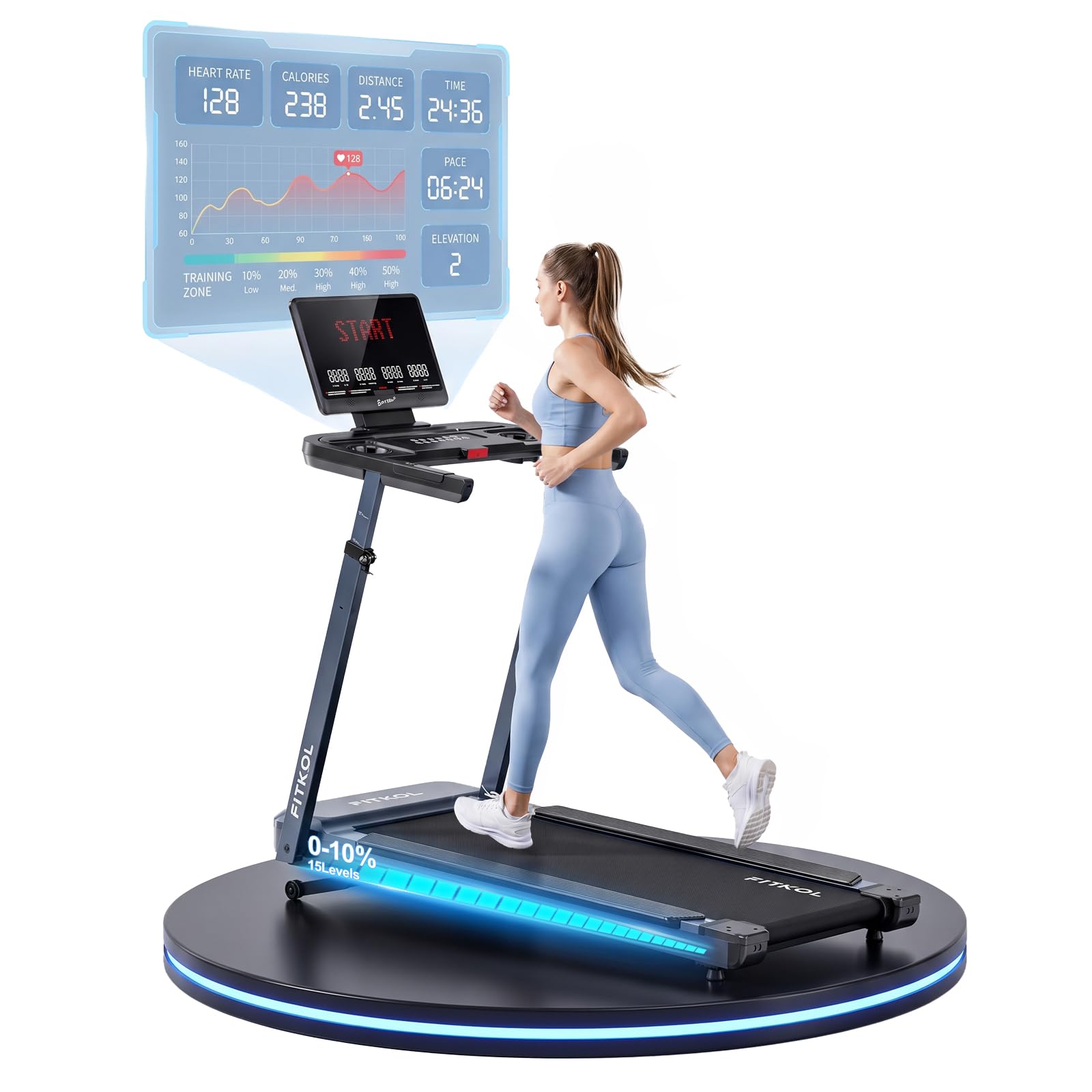
Free lifetime AI coaching with no monthly fee is the sentence that makes the Azomabox NB2 stand out. The machine watches heart rate and adjusts speed and incline around a chosen zone, which is a more ambitious idea than another console full of preset programs. It is also a lot of hardware: a 5 HP motor, a 440-pound capacity, and a 9.6 mph top speed.
We like the hardware case more than the coaching promise. A 20-by-54-inch deck gives runners room, and the 10 percent incline is enough for walk-jog intervals. The 2-year warranty is decent for a newer name, but the AI is the part that needs the most faith because it is doing the thinking for you.
This is a machine for someone who wants the tech and the training space in one purchase. The 5 HP motor and 440-pound capacity are the numbers that make it credible; the free coaching is the bonus that may change how you use it.
If you want a full-size treadmill and the idea of adaptive coaching appeals, this is the one to shortlist. Buy it for the motor and deck first; the free coaching is a bonus, not a reason to overlook the fit.
Pros
- No required subscription
- 440-pound capacity and 5 HP motor
- 20-by-54-inch running deck
Cons
- Shipping can take one to two months
- 10% incline trails the 15% pick
If free AI coaching and a big, fast deck matter more than a quick delivery, this is the no-subscription smart treadmill to shortlist.
How We Tested the Best Treadmills Without Subscriptions
We started by pulling together every treadmill we could find that didn’t require a subscription for its core features—no monthly fee for classes, no paywall for manual mode. From there, we filtered by specs and price, aiming for a mix of compact walkers and full-size runners, and landed on seven models from brands with solid customer reviews. We assembled each one ourselves, timing how long it took two people and noting when a second set of hands was absolutely necessary.
For eight months, those treadmills lived in a spare room, a garage, and a corner of a living room—the places where people actually put them. We walked at 3 mph while on conference calls, ran intervals at 6 mph, and cranked the incline to its steepest setting to see how smoothly it transitioned. We measured the footprint with a tape measure and noted how far the cord reached from a standard outlet. We also checked weight by trying to slide each one across carpet and hardwood—some needed two people, others moved easily.
To judge noise, we stood beside the console and listened for motor whine at walking and running speeds—one model was quiet enough to use while a baby napped upstairs, another announced every footfall. Comfort came down to 30-minute runs: we noted whether the deck felt cushioned or jarring. And for value, we compared what each machine offered at its price point—built-in workouts, incline range, warranty—against the cost of a year’s subscription on a competitor. After eight months, we checked for loose bolts, belt slippage, and console glitches; the ones that held up are the ones that made the list.
How to Choose a Treadmill without a Subscription
The subscription is the easy part to avoid; the harder question is whether the machine still feels complete when you never open the app.
Match the Top Speed to Your Actual Workout
A 4 mph ceiling is a walking pad, not a beginner’s running treadmill: that is a brisk walk, and it is fine for desk steps or incline walking. If you want to jog, look for at least 6 mph; for regular running, 7.6 to 10 mph and a longer deck matter more than a crowded console. The TRAILVIBER X01 is purpose-built for walking, the WELLFIT TM037PRO stretches to a light jog, and the Sunny SF-T723030 is the full-size runner of the group.
Treat Incline as a Separate Purchase
Auto incline is worth paying for if you use intervals, because you can change elevation without stopping or stepping off. A 12 to 15 percent range is meaningful; 4 percent is a gentle nudge, and a manual incline is a set-and-forget feature rather than a training tool. The WELLFIT TM037PRO changes incline on the move, the Sunny goes steeper, and the WELLFIT WFTM037 uses a manual incline that you set before you start.
Measure the Folded Footprint and the Weight
Compact describes the footprint, not the effort. Check folded height, weight, and whether the handlebar comes off or folds; a low profile is useless if you have to unscrew a rail every time you want to slide it under a desk. The Vhorilix XM-A1 is the easiest to move at 36.4 pounds, while the Sunny’s 59.1 kg frame is a two-person placement job. Measure the doorway and the outlet distance, too.
Plan for Noise, Assembly, and Repairs
Treadmill noise rises with speed, and compact frames can amplify it. Run the machine at your normal pace before the return window closes, not just at a slow walk. Assembly ranges from none on the Vhorilix to a mostly assembled Sunny, but a heavy machine still needs a second person for placement. Check the warranty split between frame, motor, and parts; a long frame warranty is little comfort if the electronics are covered for months.
Frequently Asked Questions
Can I use these treadmills without a subscription?
Yes. Every pick here starts, stops, and changes speed from a console or remote, and the incline models have buttons or a lever on the machine. Apps add classes, scenic routes, or automatic coaching, but they are optional. Before buying, confirm the incline control works without logging in; the Azomabox NB2 goes the other way and includes its AI coaching free.
How much clear space do I need behind a treadmill?
Leave at least one deck length of clear floor behind the belt, plus room to step off to the side. On the walking pads that means roughly 41 to 42 inches; on the Sunny SF-T723030 it is 53 inches. Keep the space free of furniture and pets, and put the treadmill where you can reach the safety key without stepping over the belt.
What maintenance does a walking pad need?
Keep the belt centered and lubricated as the manual directs; the low-friction belt is what lets the motor run without strain. Wipe grit off the deck, check the belt tension if it starts to drift, and listen for new squeaks at speed. The Vhorilix and TRAILVIBER arrive ready to use, but ready to use is not maintenance-free.
Final Verdict
The WELLFIT TM037PRO is where we start for most homes: auto incline, a 7.6 mph top speed, a 375-pound capacity, and a frame that folds to 5.5 inches. It covers walking, jogging, and incline work without a subscription getting in the way. If you only walk at a desk, choose the TRAILVIBER X01; if you want a full-size running deck, choose the Sunny SF-T723030. Both make a clearer trade than buying a machine that does everything adequately.