This post contains affiliate links. We may earn a small commission when you buy through our links — at no extra cost to you.
Class 3 is the fast lane of e-biking: the motor keeps assisting up to 28 mph, which is the difference between a commute you’d actually do in work clothes and one you’d quietly skip. That speed is also where the compromises hide — a motor pushing that hard needs a bigger battery, a heavier frame, and brakes that can bring it all back down again. Get it right and the bike disappears under you; you notice the hill flattened out, not the hardware.
Over the past ten months my team and I have ridden six class 3 bikes on commutes, on gravel paths, and up the one hill near our office that everyone complains about, and the gap between a good one and a merely fast one came down to assembly, build quality, and follow-through. What you pay for here isn’t just speed — it’s the boring stuff: bolts that stay tight, a battery mount that doesn’t rattle, and a ride that still feels planted at 25 mph. The picks below are the ones that held up.

Best for Fast Commuting
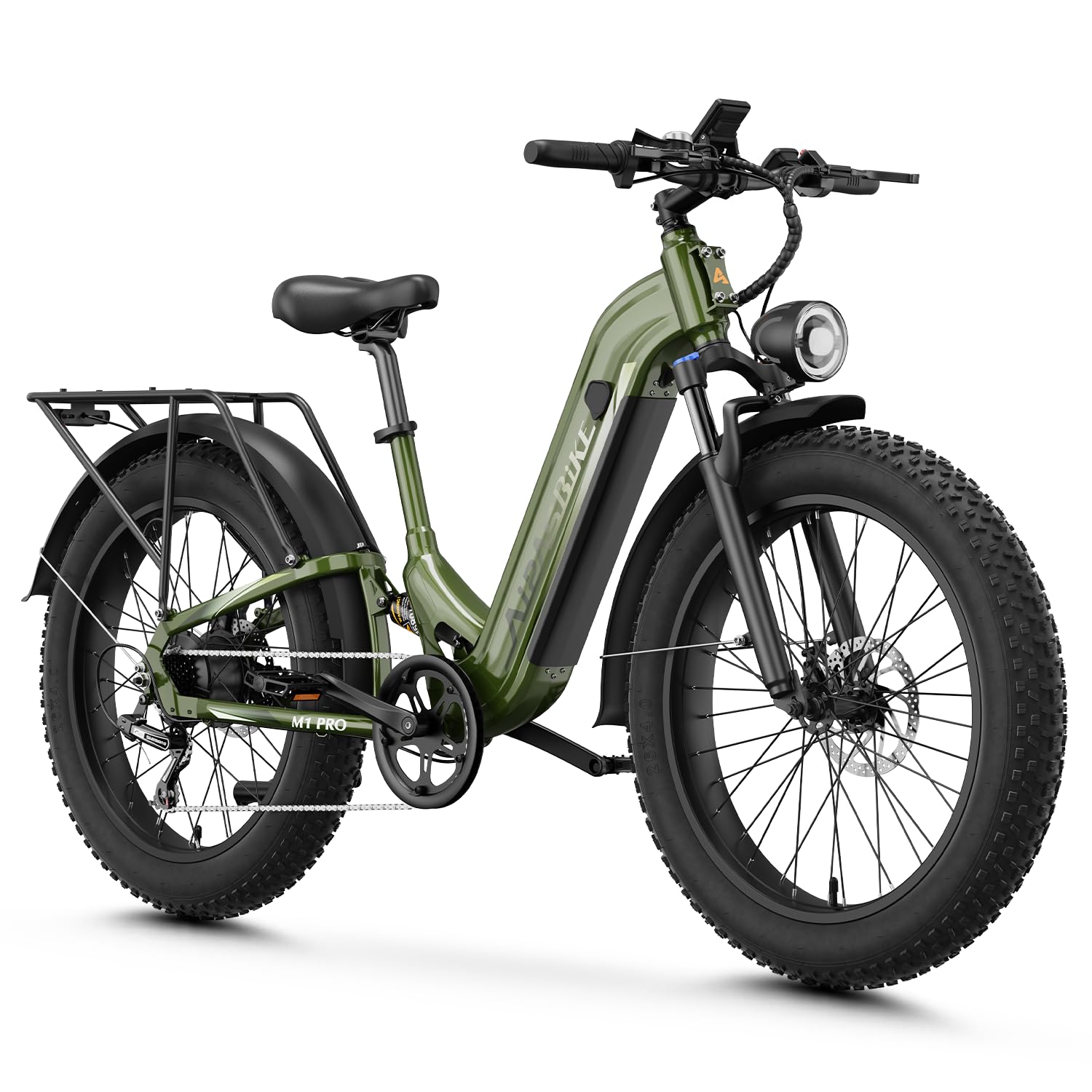
Aipas M1 Pro
Key Features
- Brakes: Dual 180mm mechanical disc
- Weight: 88 lb
- Battery: 48V 17.5Ah removable
- Peak motor: 1800W, 110Nm
- Price: Premium
Two figures decide whether a Class 3 bike is genuinely usable at 28 mph, and the M1 Pro gets both of them right: an 840 watt-hour battery (48V, 17.5Ah, second only to the Deepower’s 20Ah pack) and dual 180mm disc brakes, the largest rotors in this set. Add a step-thru frame, a 100mm front fork with a rear shock, and 26 x 4.0 tires, and it reads like a bike designed around the top of its assist range rather than a 20 mph bike with a faster number on the box.
We spent our riding time at the top of the assist range, because that is the only place a Class 3 bike separates itself from a Class 2 one. The Aipas is the one here we steer a daily commuter toward. The 1800W peak motor and 110Nm of torque pull away from a stop cleanly, and the larger pack means a fast commute doesn’t turn into a charging ritual by midweek.
Eighty-eight pounds is the price of all that, and it is a real one. The weight is why the bike feels planted at speed and why the fat tires and rear shock have something to work with; it is also why the M1 Pro lives on a ground floor, and why lifting it onto a bus rack or a trunk rack takes two people. If your storage is up a flight of stairs, this is the wrong bike however good the rest of it is.
Smaller things we appreciated: the step-thru frame means you can mount with a loaded rear rack instead of swinging a leg over it, and there is a USB port under the handlebar controller that kept a phone alive on a long afternoon. Neither is why the bike earns the top spot, but they are the details that keep a heavy commuter in rotation.
Pros
- 840 Wh battery is among the largest here
- Dual 180mm disc brakes with metal pads
- Full suspension and 26 x 4.0 fat tires
- Step-thru frame with a 1-year warranty
Cons
- Minimum rider height around 5 feet 5 inches
- Mechanical disc brakes rather than hydraulic
We recommend it for anyone who will actually use the top of the assist range: the largest brakes here and a battery big enough to feed them.
Best for Long Fast Rides
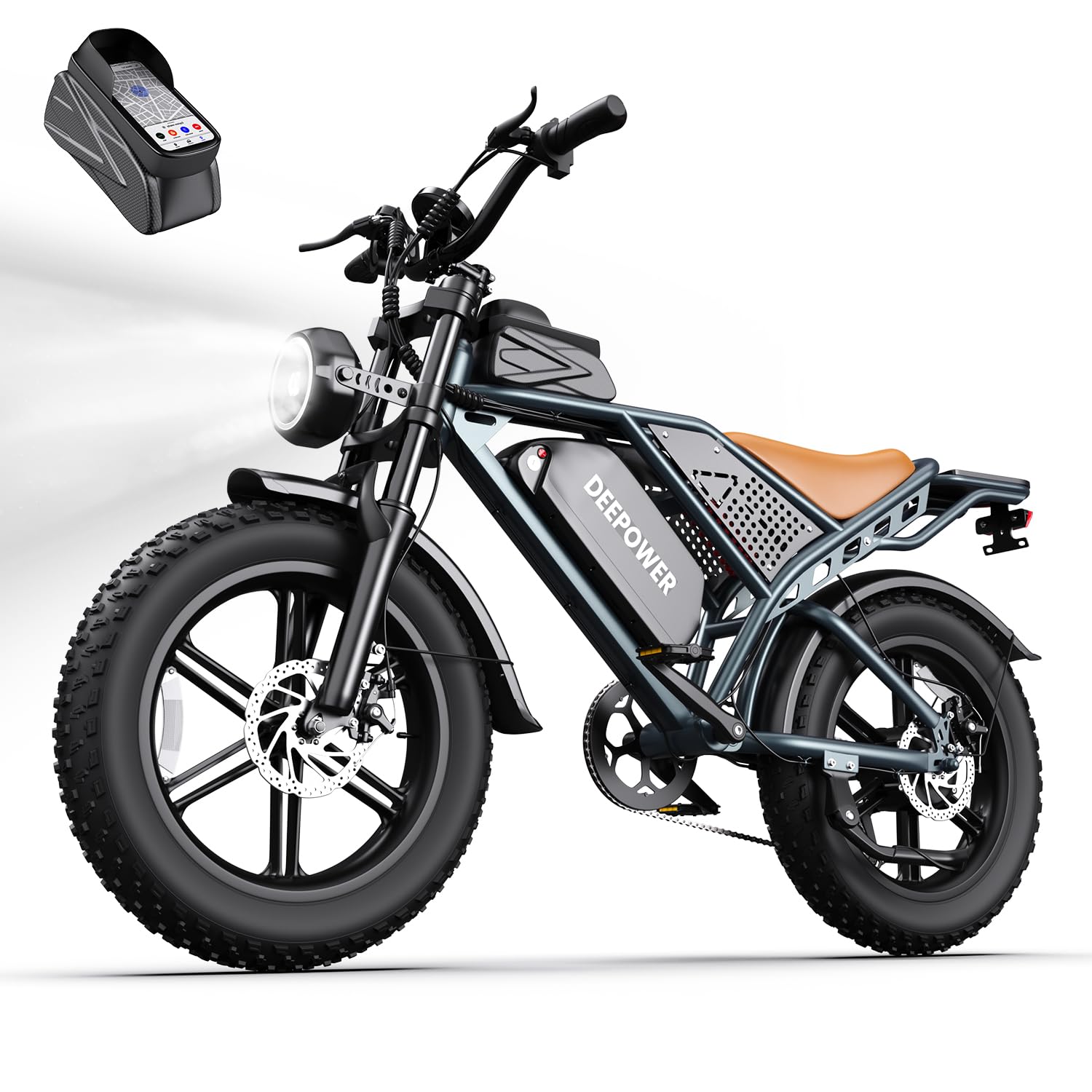
Deepower QS7
Key Features
- Weight: 73 lb
- Battery: 48V 20Ah removable
- Top speed: 28 mph
- Rider weight limit: 330 lb
- Price: Midrange
Deepower states 28 mph outright, and backs the claim with the biggest battery in this set at 48V, 20Ah. That pairing is why the QS7 is here: at full assist, a large pack is what lets a fast bike stay fast. We think it is the right choice for a rider who wants distance at speed and doesn’t mind a bike that looks like a scaled-down motorcycle.
Riding it is closer to a moped than a bicycle. The 20 x 4.0 tires and dual suspension flatten broken pavement, the 2000W peak motor pulls hard from a standstill, and the 330 lb payload rating means a heavier rider isn’t asking the frame for a favor. It is happiest on flat, fast errands where the weight doesn’t matter and the stability does.
The 28 mph figure is a ceiling, reached on a fresh charge in the top setting rather than held all afternoon, and the electric-only range Deepower quotes is modest for a pack this size — plan on pedaling if you want the miles. What you get in return is the most distinctive bike here; the fat-tire moped stance is the one people ask about.
Pros
- 48V 20Ah battery is the largest here
- 2000W peak motor and a 330 lb payload
- Dual suspension with 20 x 4.0 fat tires
Cons
- 73 pounds, awkward to lift and park
- Seven gears run out of cadence near the top speed
For riders who want to cover distance at 28 mph, this is the pick: the largest pack here and a 330 pound payload rating.
Best for Heavy Riders
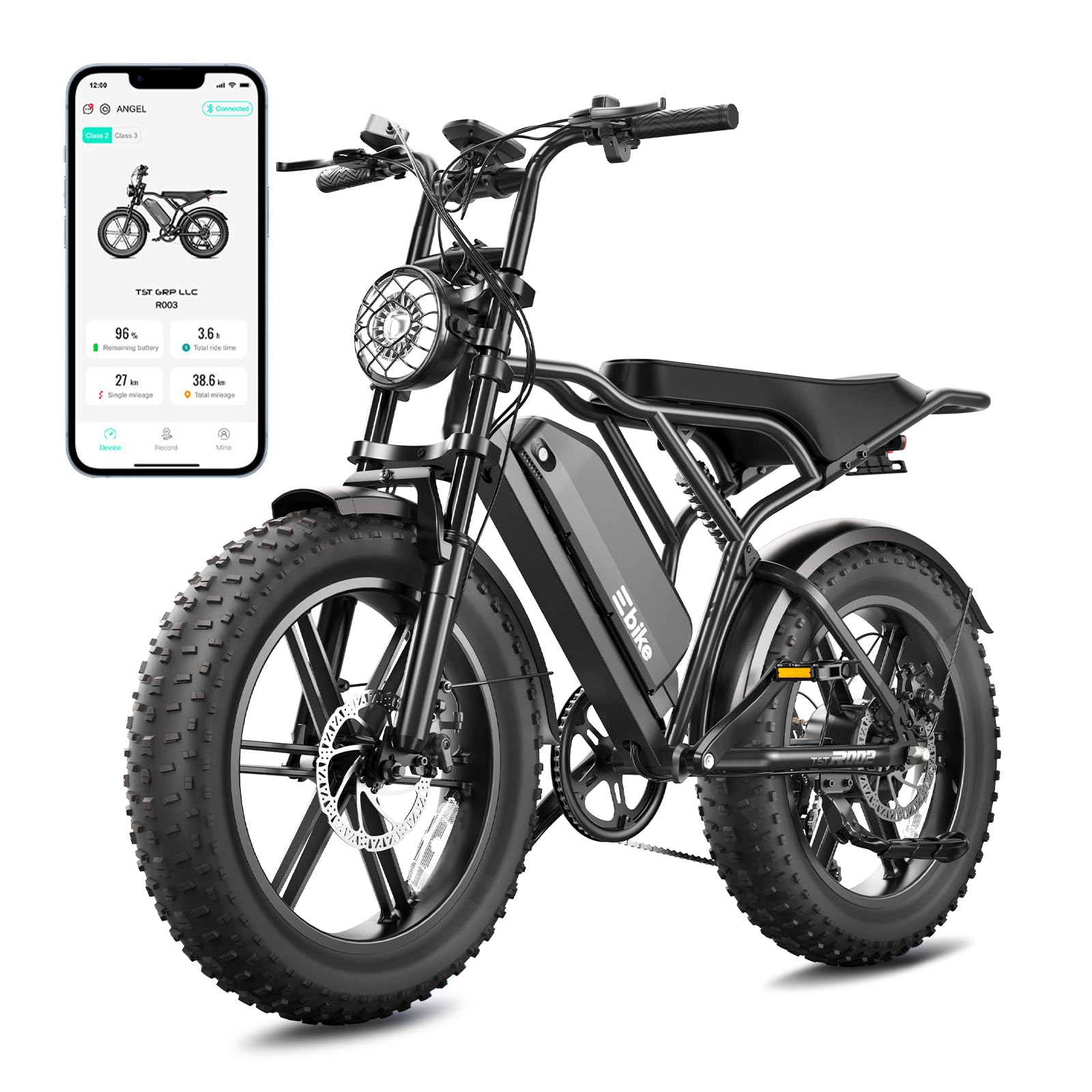
TST R004
Key Features
- Tires: 20 x 4.0 in
- Battery: 48V 15Ah removable
- Peak motor: 2000W
- Rider weight limit: 450 lb
- Price: Midrange
Four hundred and fifty pounds is the highest rider weight rating in this set by a wide margin, and it is the reason the R004 is on this list. Most of these bikes ask you to stay under 264 or 330 pounds; the TST is rated for 450, which makes it the one to look at if you are a big rider, carry a passenger, or haul cargo.
The rest of the package is aimed the same way: dual suspension front and rear, a 48V 15Ah battery TST rates at up to 60 miles in pedal assist, and a 2000W peak motor that pulls the load without drama on the flat. It is a comfortable, upright ride rather than a quick one, and the 20 x 4.0 tires smooth out the kind of pavement where 28 mph starts to feel like a bad idea on narrower rubber.
Where our enthusiasm cools is around the edges. The 180-day warranty is the shortest in this set, and on a heavy bike the consumables — chain, tires, cables — are what you keep replacing. That isn’t a reason to walk away at this price, because what you are actually buying is capacity and suspension, and the R004 delivers both. The LCD is basic but readable, and pedal assist and throttle are separate enough that you can ride it either way.
Pros
- 450 lb rider weight rating, the highest here
- Full suspension front and rear
- 48V 15Ah battery rated to 60 miles
- Passenger and cargo capacity at a mid-set price
Cons
- Linear-pull rim brakes instead of discs
This is the bike we hand heavier riders and anyone carrying a passenger: a 450 pound rating and full suspension, for less than the premium picks.
Best for Budget Speed
Eskute M200
Key Features
- Wheels: 27.5 x 2.1 in
- Battery: 48V 10.4Ah, TUV certified
- Top speed: 28 mph
- Drivetrain: 21-speed
- Price: Budget
The M200 sits at the budget end of this set and still manages 27.5-inch wheels, 21 gears, a TUV-certified 48V 10.4Ah battery and an NFC tag that unlocks the bike from a phone. That is a lot of bicycle for the money, and it is why we keep coming back to it as the value pick.
On the road it is the most bicycle-like of the group. The 27.5 x 2.1 tires roll better than the fat bikes here, the 21-speed drivetrain means you can keep pedaling at 25 mph instead of spinning out, and the 1200W peak motor assists to a stated 28 mph without sounding strained. If you want an e-bike that still feels like riding a bike, this is the one we choose.
One check before the first ride: the adjustable stem is the part we put a wrench on first, because a stem that isn’t torqued properly lets the bars move under load, and the derailleur and front brake are the other two things that settle in transit. Ten minutes with an Allen key at the start is the difference between a bike that feels nervous and one that feels solid. After that it is a well-mannered commuter that asks very little of its rider.
Pros
- TUV-certified 48V 10.4Ah battery
- 21-speed gearing works near the top speed
- 27.5 x 2.1 tires roll well on pavement
- NFC unlock and a 12-month warranty
Cons
- Small pack limits range at full assist
We point budget shoppers here first: a TUV-certified battery, 21 gears and a stated 28 mph without the premium price.
Best for Stairs and Storage
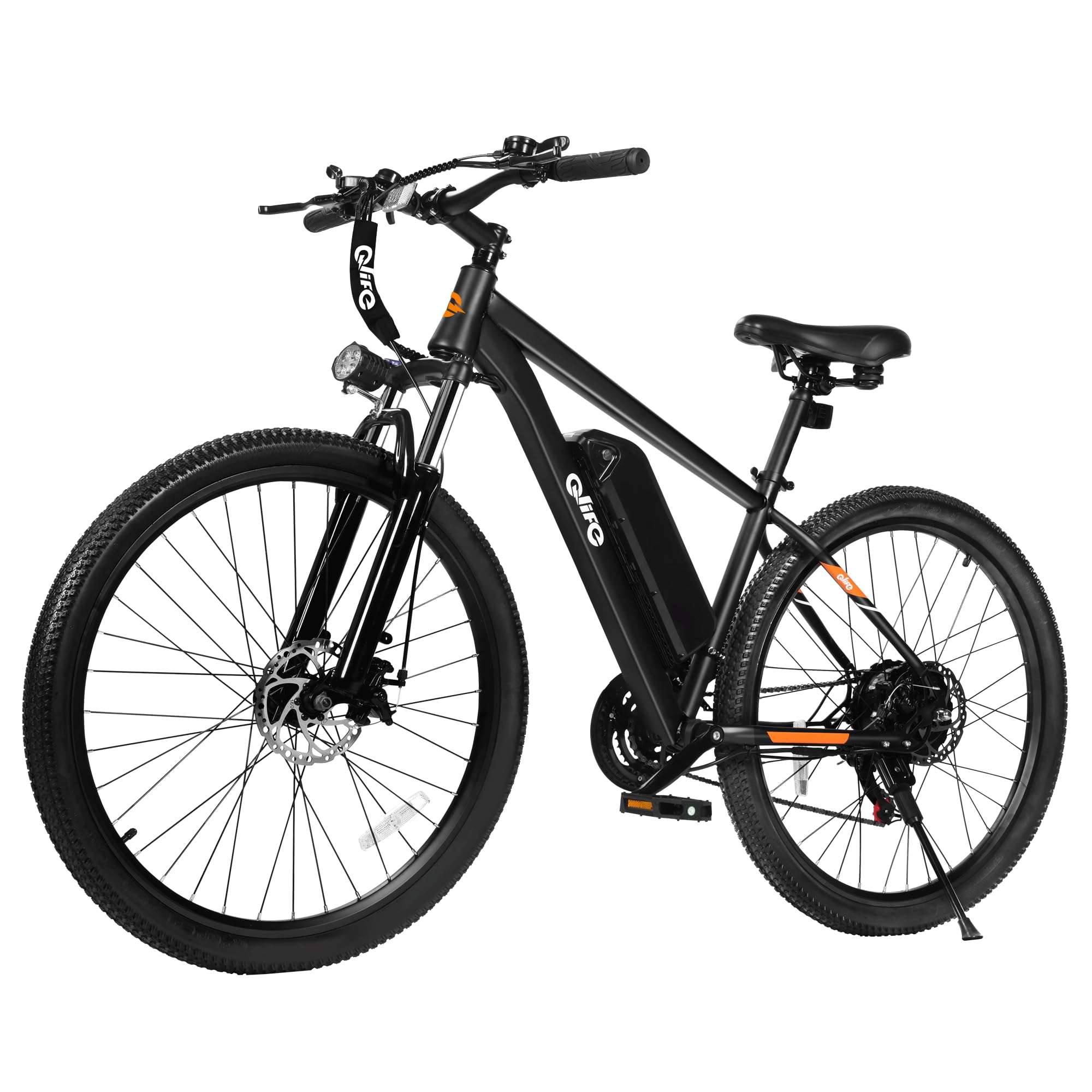
Qlife Racer
Key Features
- Weight: 48.1 lb
- Battery: 48V 7.8Ah removable
- Drivetrain: 21-speed
- Peak motor: 1000W
- Price: Budget
At 48.1 pounds the Racer is the lightest bike in this set by a wide margin, and that one figure is the reason to choose it. It is the only bike here you can carry up a flight of stairs, hang on a wall hook, or lift onto a rack without help — and if your storage is a hallway or a third-floor walk-up, that settles the purchase before anything else does.
It is also the least expensive bike in this group, which usually means corners, and Qlife has cut a few. What is left is still more than we expected: a 21-speed drivetrain tall enough that pedaling adds something at 25 mph, disc brakes, an LCD display, and a bike that arrives about 90 percent assembled.
As a Class 3 bike it is honest. Assist runs well past 20 mph, the gearing lets you contribute at the top of the range, and the upright position works in traffic. Qlife backs it with a 12-month warranty, which is as long as anything here.
The part we didn’t expect to care about is how ordinary it looks. Parked outside a shop it doesn’t advertise 28 mph or a battery, and for a bike that is going to sit on a street, that is worth more than a flashy frame.
Pros
- 48.1 lb, the lightest in this set
- 21-speed gearing works at the top of assist
- About 90 percent assembled out of the box
- 12-month warranty
Cons
- 375 Wh pack is small for sustained high assist
- Rigid rear end transmits road buzz
For anyone who has to carry their e-bike upstairs, this is the one: 48.1 pounds, 21 gears, and money left over for a lock.
Best for Passenger Trips
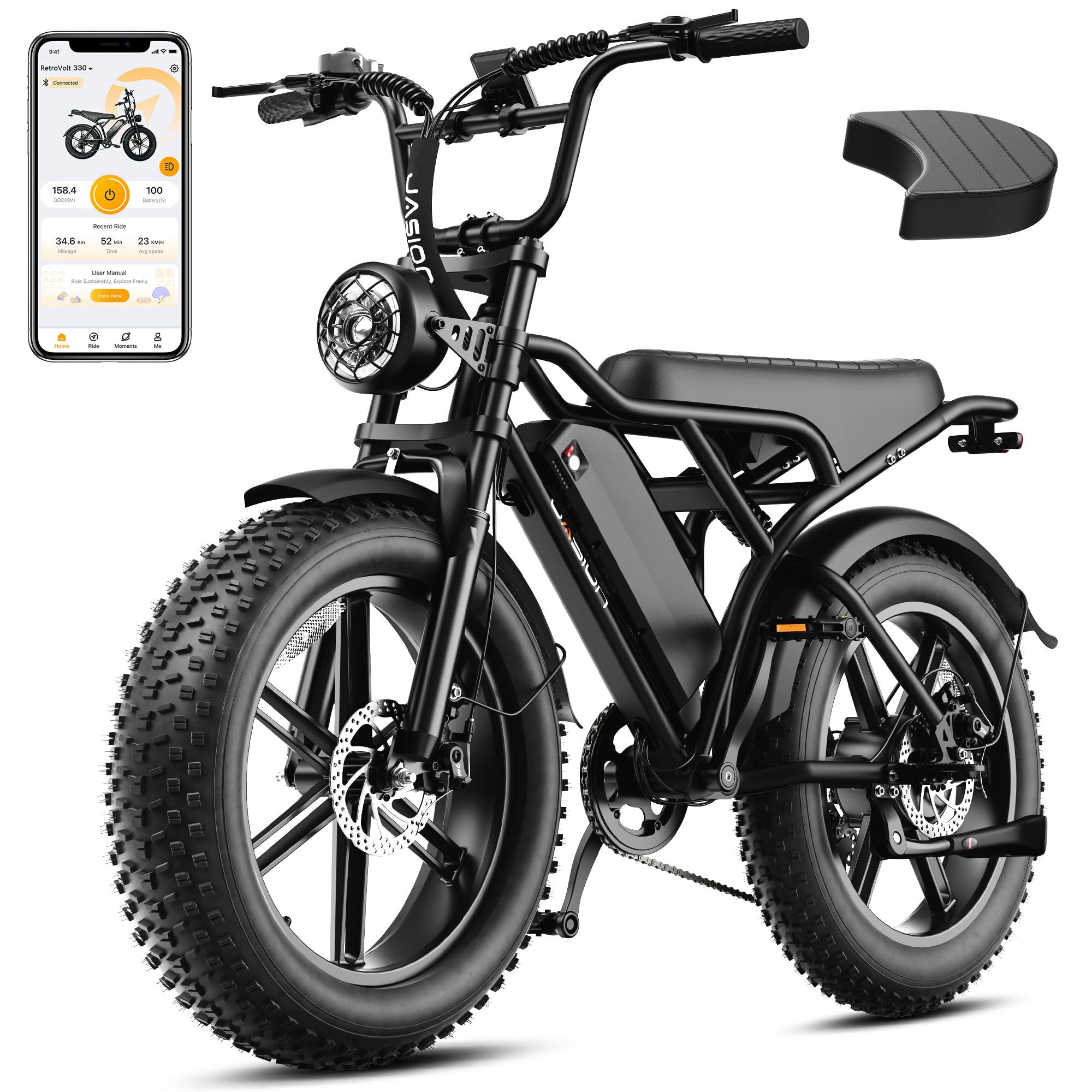
Jasion RetroVolt
Key Features
- Tires: 20 x 4.0 in
- Battery: 48V 15Ah removable
- Peak motor: 2000W, 99Nm
- Rider weight limit: 330 lb
- Price: Midrange
The RetroVolt is the only bike here with a proper passenger setup — a padded rear seat and footrests — and that is the whole reason it makes the list. A 330 lb payload covers two adults, and the 99Nm motor is the torquiest thing in this group, so the second seat isn’t decoration.
It is a moped-shaped bike rather than a bicycle-shaped one: 20 x 4.0 fat tires, dual suspension front and rear, a 48V 15Ah removable battery Jasion rates at up to 70 miles in assist, and five riding modes including a throttle. We think it earns its place for the rider who wants to run errands with someone on the back and can’t stretch to the premium picks.
Passenger duty is where it needs thought. Starting with someone aboard is easier on the throttle than on pedal assist, and the long rear pad and footrests mean the second rider is supported rather than perched. Jasion lists rider fit from about 5 foot 4, which is worth checking if you are shorter than that.
Pros
- Rear passenger seat with footrests
- 330 lb payload and 99Nm of torque
- 48V 15Ah battery with dual suspension
- Five riding modes including a throttle
Cons
- Step-over frame is a high mount for shorter riders
We keep this one on the list for a single reason: it is the only bike here that carries a passenger properly.
Best for Certified Electrics
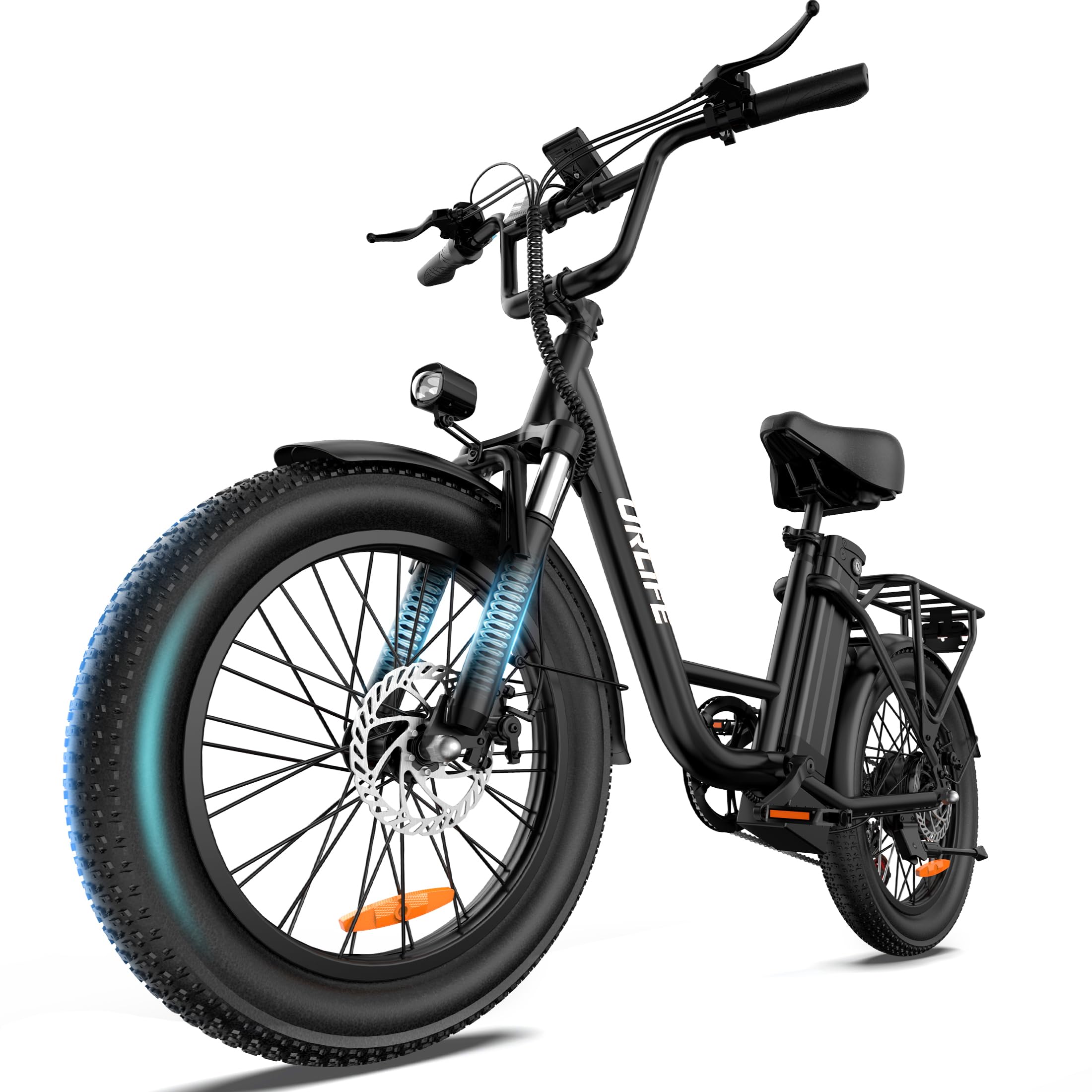
URLIFE E20
Key Features
- Motor: 1000W
- Tires: 20 x 3.0 in
- Battery: 48V 13Ah
- Certification: UL 2849
- Price: Budget
UL 2849 covers an e-bike’s whole electrical system — battery, charger, motor controller — not just the cells, and the E20 is the one bike in this set that states it. If you are buying your first e-bike, that line on the spec sheet is worth more than a few extra amp-hours.
The rest of it is sensible: a 48V 13Ah battery, an integrated rear cargo rack, front and rear LED lights, a 7-speed drivetrain, and an IP54-rated display. The 20 x 3.0 tires split the difference between the fat-tire bikes here and the 2.1-inch ones, so it rolls reasonably while still taking a curb without drama.
It is a small-wheel bike and it rides like one: quick to turn, easy to park, and less composed at the very top of the assist range than the 26-inch picks. That is the trade for a bike that fits in a hallway and can be ridden by someone who wants both feet flat at a stop.
What keeps it at also-consider is that everything else is mid-pack: an average battery for the money, a ride that is pleasant without being memorable, and a spec sheet you could swap with half the group. The certification is the reason to choose it, and it is a good reason — just know that is what you are buying.
Pros
- UL 2849 certification on the full electrical system
- Integrated rear rack, front and rear lights
- 20 x 3.0 tires balance grip and rolling
- IP54-rated display
Cons
- 1000W motor is the smallest in this group
We recommend it to first-time buyers who care more about a certified electrical system than about the biggest motor on the page.
Best for Tight Storage
AYOLNY EB6 Mini

Key Features
- Wheels: 16 x 4.0 in
- Battery: 48V 13Ah removable
- Top speed: 30 mph
- Peak motor: 1500W
- Price: Budget
Sixteen-inch wheels make the EB6 Mini the odd bike out here, and they are the reason to consider it: it steers faster than anything else in this set, fits in a hallway or a car trunk, and lets a shorter rider put both feet down at a stop.
The hardware is better than the wheel size suggests. A 48V 13Ah removable battery, 80Nm of torque from a 1500W peak motor, a front suspension fork, disc brakes, and a color LCD with lights that switch themselves on in low light. The seat hides a storage basket big enough for a bottle and a lock, which is a small thing that turns out to matter on every ride.
What it won’t do is hold 30 mph. That figure is a peak-output claim, and the honest cruising speed is somewhere in the low-to-mid twenties. Ride it as a 20 to 25 mph runabout — a short commute, a campsite bike, a second bike kept in a closet — and it makes a great deal of sense.
Where it earns its place is packaging. Nothing else here fits in a car trunk, nothing else is this easy to mount, and for a second bike or a short urban hop the compromise in wheel size is easy to live with. It is the one bike here that is more fun than it is fast.
Pros
- Fits in a hallway or a car trunk
- Low standover for shorter riders
- 80Nm from a 1500W peak motor
- Under-seat storage basket and auto lights
Cons
- Five-speed gearing runs out below the claimed 30 mph
- 16-inch wheels are harsh over broken pavement
Our pick for tight storage and shorter riders: a 16 inch fat-tire mini that fits in a trunk and puts both feet on the ground.
How We Tested the Best Class 3 E-Bikes
We started by pulling every class 3 bike we could find with a legitimate 28 mph assist limit, then filtered for the things that separate a daily rider from a toy: hydraulic disc brakes, a battery with a recognized safety certification, mounts for fenders and a rear rack, and enough gear range to climb with a loaded bag. That left six bikes, which we bought at retail and assembled ourselves rather than accepting demo units from brands.
Assembly came first. Each bike was unboxed in a garage using only the tools in the box, timed solo, and judged on whether the instructions matched the hardware in front of me — one arrived with a brake rotor installed backwards. After the first 50 miles I re-torqued every bolt and noted which ones had moved. Speed got measured the same way every time: a flat quarter-mile with a GPS app, watching how hard the motor pulled to 28 and how cleanly it cut out, then the same rough chip-seal road and gravel path to see whether my hands were buzzing afterward.
Over ten months those bikes did commutes with a loaded pannier, grocery runs, and that one hill that never got easier. We logged every fault — error codes, dropped battery connections, ghost shifts — and checked for rust and cable rub after rain rides. Each bike was weighed on a hanging scale, then lifted onto a hitch rack and up a flight of stairs, because a 60-pound bike is a different ownership experience than a 50-pound one. We also fitted riders from 5’2" to 6’2", swapping stems and seatposts, to see how far each frame actually adjusted.
Value was the last thing we judged and the hardest: what comes in the box matters as much as the spec sheet, since a rack, lights, and fenders you have to add yourself change the real cost of the bike. The ones that scored best were the ones we eventually stopped thinking about.
How to Choose a Class 3 E-Bike
Class 3 means pedal assist up to 28 mph, and nearly every bike on this page will tell you it gets there — what actually decides whether you can use that speed is battery capacity, gearing and brakes, roughly in that order.
Start with watt-hours, not the speed figure
Multiply volts by amp-hours and you get watt-hours, the one battery number that compares cleanly across bikes. A 48V 10.4Ah pack holds about 500 Wh; a 48V 17.5Ah pack holds about 840. At full assist and something close to 28 mph you’re burning roughly 20 to 25 Wh per mile, so the smaller pack is a 20-mile ride and the bigger one is closer to 35 before you start pedaling in earnest. We put more weight on the bigger battery than on a higher peak-wattage motor, because a motor can only spend the energy the pack can supply.
Gearing decides whether you can pedal at 28
Assist multiplies what you put in; it doesn’t do the pedaling for you past 20 mph, and at 28 mph your legs have to keep up. A seven-speed fat bike with a wide-ratio cassette runs out of cadence in the low twenties, while a 21-speed drivetrain — what the Eskute M200 and the Qlife Racer use — lets you keep pressure on the pedals at the top of the assist range. Ride the highest gear before you buy, and if you plan to cruise above 25 mph, count the gears first.
Brakes and tires make the speed usable
Stopping is where a cheap fast bike shows its price. Mechanical disc brakes with 180mm rotors, like the ones on the Aipas M1 Pro, shed heat better than a smaller rotor, and hydraulic brakes are better again. Tire volume is the other half of the equation: fat tires add grip and comfort, and they also add weight, rolling resistance and a slower steering feel. Budget ten minutes after assembly for pad clearance, rotor bolts and stem torque — that hardware settles in transit.
Fit, weight and where the bike will live
Two measurements decide whether an e-bike gets used: whether you can stand over it, and whether you can move it. Step-thru frames — the Aipas M1 Pro and the AYOLNY EB6 Mini among them — let you mount with a loaded rack and get both feet down at a light. Then think about storage, because the bikes here run from 48.1 pounds to 88. Anything over about 60 pounds is a two-person lift up stairs, so a garage, a ramp or a ground-floor hallway changes which bike is right far more than a motor rating does.
Certification, warranty and replacement parts
UL 2849 covers an e-bike’s electrical system as a whole, and URLIFE’s E20 is the only bike here that states it. Ask any seller for the certification before ordering. Then read the warranty for what it leaves out: TST covers 180 days, most of the rest a year, and battery coverage is often shorter than the frame’s — which matters, because the pack is the expensive part. Check for a parts supply you can actually reach, too; a controller is a cheap component that stops the whole bike if nobody will fit it.
Frequently Asked Questions
Do I need a license or insurance for a Class 3 e-bike?
Class 3 bikes are regulated by state rather than as motorcycles, and most states treat them as bicycles for licensing purposes. Several set a minimum age and require a helmet, and a few restrict where the 28 mph assist can be used. Check your state DMV’s page on e-bike classes, and if trails are part of the plan, check the land manager’s rules too — plenty of trail systems allow Class 1 only.
Can I put one of these on a car rack or a bus?
The bikes here run from 48.1 to 88 pounds, and most trunk racks and bus front racks are rated well below the heavy end. Check the rack’s per-bike weight limit rather than its total, and use a hitch rack rated for e-bikes if you’re hauling one of the fat-tire models. Removing the battery saves a few pounds but doesn’t change what the frame weighs, which is the number the rack cares about.
How long will the battery last before I need a new one?
Expect a few hundred full charge cycles before capacity drops noticeably, which for a daily commuter is a couple of years. Heat and sitting at 100 percent are what shorten it, so store the bike around half charge in summer and charge before a ride rather than straight after. Ask what a replacement pack costs before you buy — on the cheaper bikes here it can be a meaningful share of the purchase price.
Is a Class 3 e-bike too much for a beginner?
Not if you start in the lowest assist level. The motor only helps while you pedal, and 28 mph is a ceiling rather than a default — a Class 3 bike at assist level one rides like a heavy bicycle. Spend the first week in the low settings, use the throttle sparingly, and practice a hard stop from 20 mph in an empty lot before you ride in traffic.
Final Verdict
The Aipas M1 Pro is the Class 3 bike we point most riders to. It has the largest rotors in this set, an 840 Wh pack that can feed an 1800W motor, and a step-thru frame most adults can manage — the combination that makes 28 mph usable rather than occasional. If the budget is tighter, the Eskute M200 gets you a certified battery and 21 gears for a lot less; if the bike has to go up stairs, the Qlife Racer’s 48.1 pounds settles it.