This post contains affiliate links. We may earn a small commission when you buy through our links — at no extra cost to you.
Trail running shoes have a split personality. The plush, comfortable pairs that feel wonderful on pavement get sketchy the second the path tilts, and the aggressive, ground-hugging ones can leave your feet thrashed by mile eight. What you’re actually after is a shoe that grips wet roots and loose gravel, cradles your foot without squeezing it, and still feels fine on the road stretch to the trailhead — a narrower ask than it sounds.
Over the past six months my team and I have run in 12 different pairs across rocky singletrack and muddy spring trails, with plenty of pavement in between, and the same lessons kept surfacing. Toe box room matters more than almost any number on a spec sheet — a snug toe turns into black toenails on your first long descent — and sizing drifts enough between brands that you should assume nothing. Cushioning is a personal call, some feet want a marshmallow and others want to feel every rock, while arch support is where several pairs quietly fell short. A handful of these shoes are handsome enough to wear to the coffee shop afterward; most are not.




Best for Technical Trail
Salomon Speedcross
Key Features
- Closure: Quick-pull cord
- Outsole: Deep, aggressive lugs
- Audience: Men’s
- Price: Premium
Trail running is usually settled at the outsole, and this is the most aggressive tread in the group. Deep, widely spaced lugs bite into mud and loose dirt in a way the smoother shoes here simply don’t, and that is the whole case for it as our top pick. The lacing is a small pleasure too: one pull on the cord snugs the entire upper, which is exactly what you want when your fingers are cold and the weather is turning.
The fit is the part to get right before you buy. This is the narrowest shoe we’re covering, and the front of the foot is where you feel it. A wide forefoot should size up half or move to the Altra Lone Peak 8; average-width feet get a secure, locked-in ride with no break-in at all.
Soft, sticky rubber is what produces that grip, and soft rubber wears. The lugs round off on abrasive rock well before a firmer outsole would, and the tread is loud enough on hard floors that these aren’t shoes you’ll wear to the coffee shop. Run soft, muddy, rooty trail and neither point matters; spend your weeks on hardpack and scree and you’re buying grip by the season.
Pros
- Most aggressive outsole in this group
- Quick-pull lacing snugs with one hand
- Secure, locked-in fit with no break-in
- Holds on wet rock and loose descents
Cons
- Soft outsole rubber wears fast on abrasive rock
- Narrow cut pinches wide forefeet
Our top pick for real trail: the most aggressive outsole here grips wet roots and loose rock, and the locked-in fit suits average-width feet.
Best for Wide Forefeet
ALTRA Lone Peak 8
Key Features
- Drop: Low, near flat
- Toe box: Wide, foot-shaped
- Audience: Men’s
- Price: Midrange
The Lone Peak is shaped like a foot rather than tapered like a shoe, and that single decision is why it’s here. The toe box is broad and rounded, so toes splay and the little toe stops rubbing. If standard trail shoes leave your forefoot numb after an hour, this is the shape to try.
The platform is low and near flat, which changes how the shoe runs: your calves and Achilles take more of the load, and it takes a few weeks of shorter runs before a long day feels normal again. It’s also the wrong shoe if you want heel elevation for plantar fasciitis — the flatter the platform, the more the calf has to do.
Our reservation is longevity. The seams and the insole are what go first, and a season of regular trail work is a realistic expectation rather than several. Grip is dependable on gravel, dirt and rock, though it isn’t the mud tool the Speedcross is. Take it hiking, take it rucking, stand in it all day — it’s one of the most comfortable shoes here for everything except wet, churned ground.
Pros
- Roomiest toe box in this group
- Low, near-flat platform for a natural stride
- Reliable grip on gravel, dirt and rock
- Works for hiking and all-day standing
Cons
- Seams and insoles wear before the outsole
- Flat platform takes weeks of calf adaptation
A foot-shaped toe box that finally gives cramped forefeet room, and the reason to accept a flat platform and a short upper life.
Best for Slick Rock
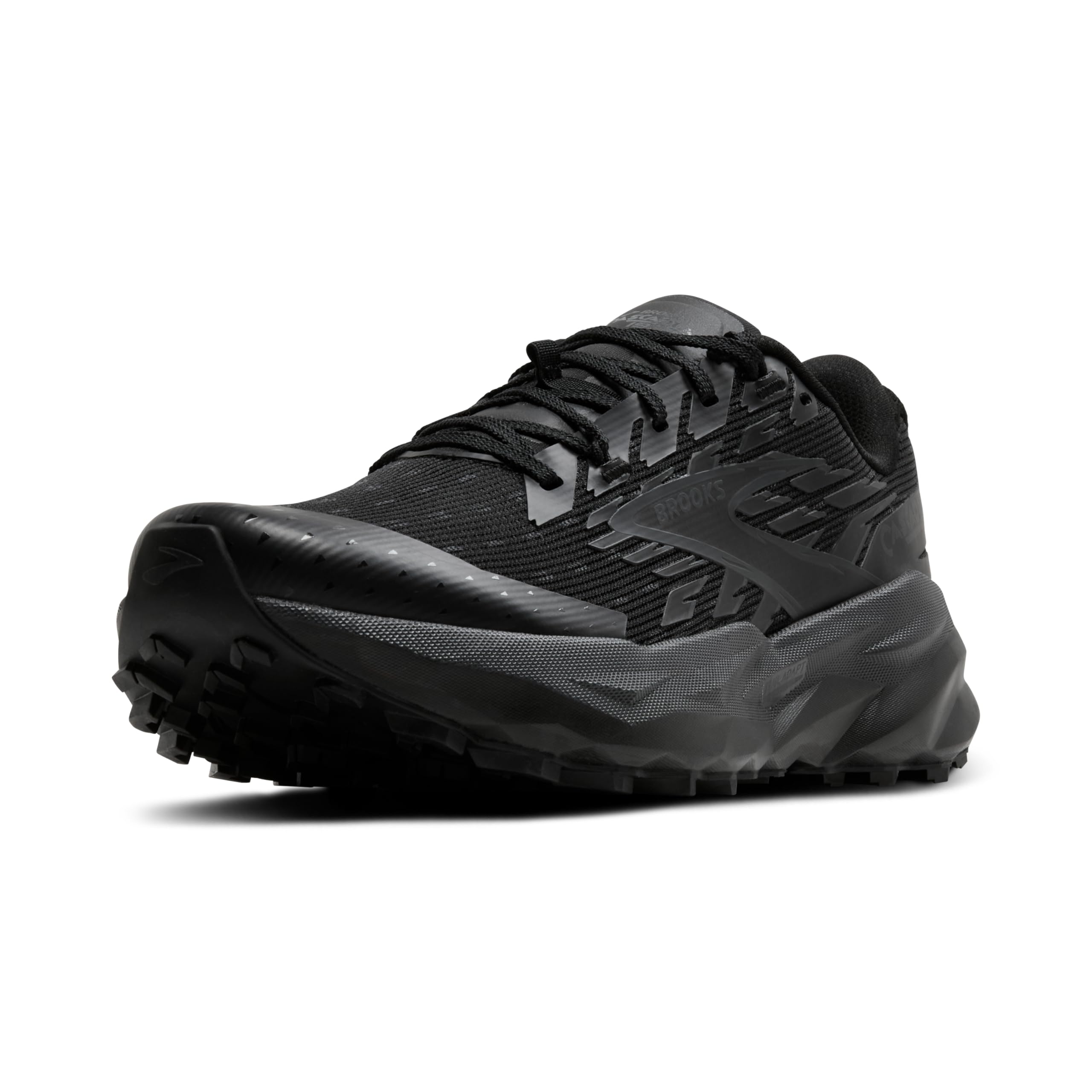
Brooks Cascadia 19
Key Features
- Midsole: Balanced cushion and stability
- Toe box: Roomy
- Audience: Men’s
- Price: Midrange
This is the closest rival to our top pick on pure grip, and it gets there with a wider, more stable platform. Where the Speedcross is narrow and built for soft ground, the Cascadia sits the foot on a broader base that resists rolling on off-camber trail. On slick rock, roots and loose descents, it’s the shoe that feels safest of the ones here.
Comfort is high without turning mushy: enough midsole to protect the foot on rock while the ground still comes through. Sizing lands close to true with a roomy toe box, so most runners can order their normal size; if you’re between sizes and wear thick socks on long days, go up half.
Tread life is the compromise. The outsole grips well and pays for it by wearing down on rocky ground, and the heel collar is the other place these give out. A season of regular trail work is realistic, three is optimistic. For the money, that’s still a fair trade for the grip and the stability.
Pros
- Traction that nearly matches our top pick
- Wide, stable platform resists ankle roll
- Roomy toe box, close to true to size
- Supportive over long days
Cons
- Tread wears through on rocky ground
- Heel collar is an early wear point
Grip that comes close to our top pick, on a wider and more stable platform — the technical-trail shoe for feet the Salomon pinches.
Best for Long Cushioned Miles
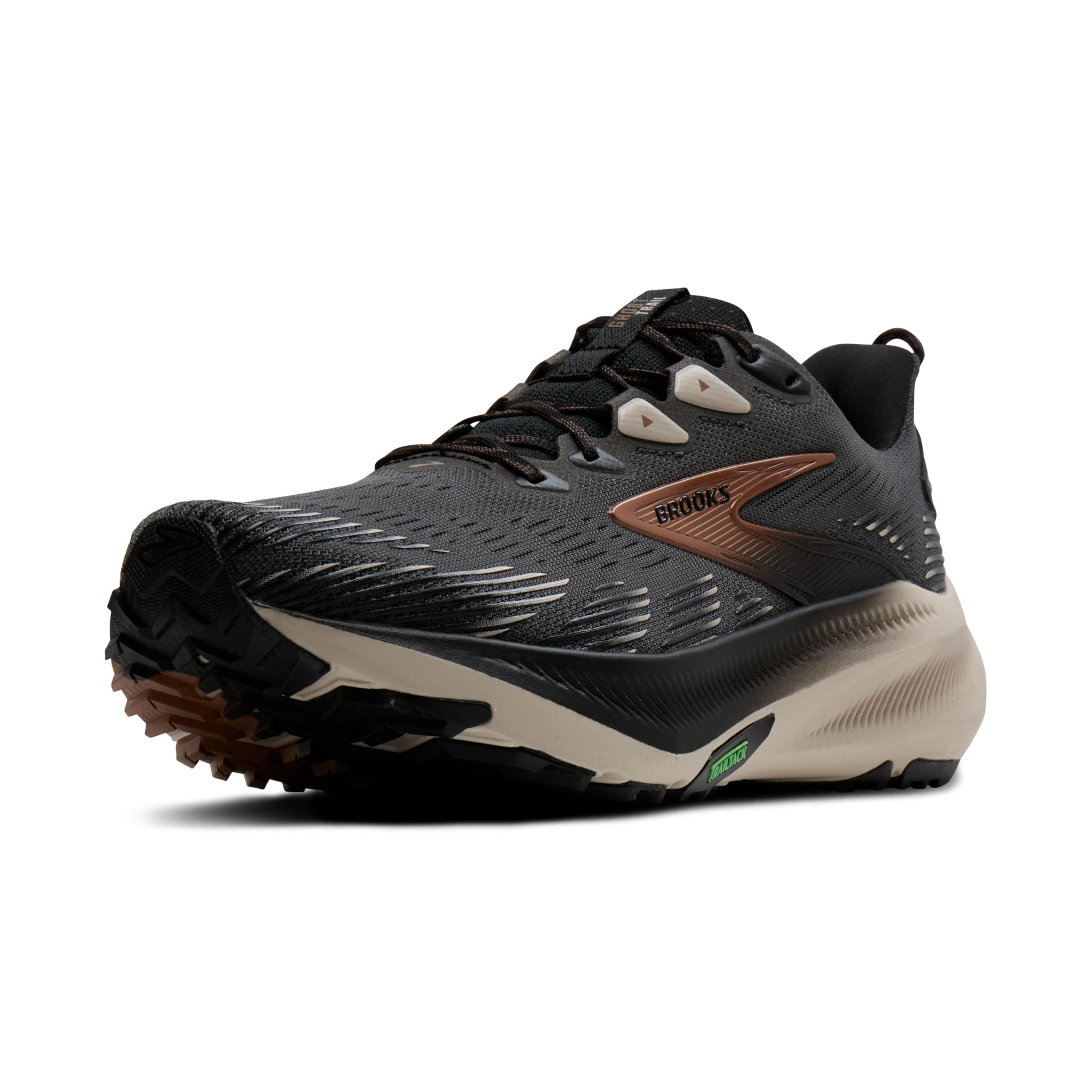
Brooks Ghost Trail
Key Features
- Fit: True to size
- Audience: Men’s
- Cushioning: Soft and protective
- Price: Premium
At the very top of this group’s price range, the Ghost Trail is the shoe you buy when comfort over distance matters more than grams or mud. Its midsole is the softest and most protective here, noticeably softer than the Cascadia, and it takes the sting out of gravel roads and hardpack without feeling vague.
There’s more grip than a road shoe has any right to. The tread handles dirt, roots and gravel with confidence, and the run from your door to the trailhead is genuinely comfortable. What it is not is a mud shoe: the lugs are shallow next to the Speedcross or the Cascadia, so a churned-up winter trail will have you picking a line.
Fit runs true with a roomy toe box and effectively no break-in, which is rare in a shoe this cushioned. Our hesitation is how it holds up. The upper finish has flaked with light use, and the outsole is not built for rocky abuse. Buy it for cushioned miles on mixed surfaces and it earns the money; buy it for technical ground and you’re paying for protection you won’t use.
Pros
- Plushest, most protective midsole here
- True to size with a roomy toe box
- Confident grip on gravel, dirt and roots
- Effectively no break-in
Cons
- Upper finish can flake with light use
- Shallow lugs struggle in mud
Choose this if comfort over long miles outweighs everything: the plushest midsole here, let down only by shallow lugs and a premium price.
Best for Road and Trail
Under Armour Bandit Trail 3
Key Features
- Use: Trail and road
- Build: Light and flexible
- Audience: Men’s
- Price: Budget
Every trail shoe compromises somewhere, and this one compromises toward pavement. It’s light, it flexes, and it handles the run from your door to the trailhead without the clatter and drag of a deep-lug shoe. On dirt, gravel and roots it grips well; on wet rock it’s fine rather than exceptional. For a lot of runners that’s the right balance, and it’s why we rate it so highly for the money.
What we appreciate most is how little there is to complain about. Sizing runs true with a slightly roomy feel that suits wide-ish feet, and the construction is simple and solid rather than fussy. Support is deliberately light — this is a flexible, ground-feel shoe, not a stability model — so a rocky, technical route will want more underfoot. For everyday trail mileage and mixed surfaces, it’s the best value in this group.
Pros
- Best value in this group
- Light and flexible on road and dirt
- Grip holds on gravel and roots
- True to size with a roomy feel
Cons
- Light cushioning on sharp rock
The best value in this group for door-to-trail running, light and flexible on pavement yet still grippy on dirt and gravel.
Best for Budget Wide Fit
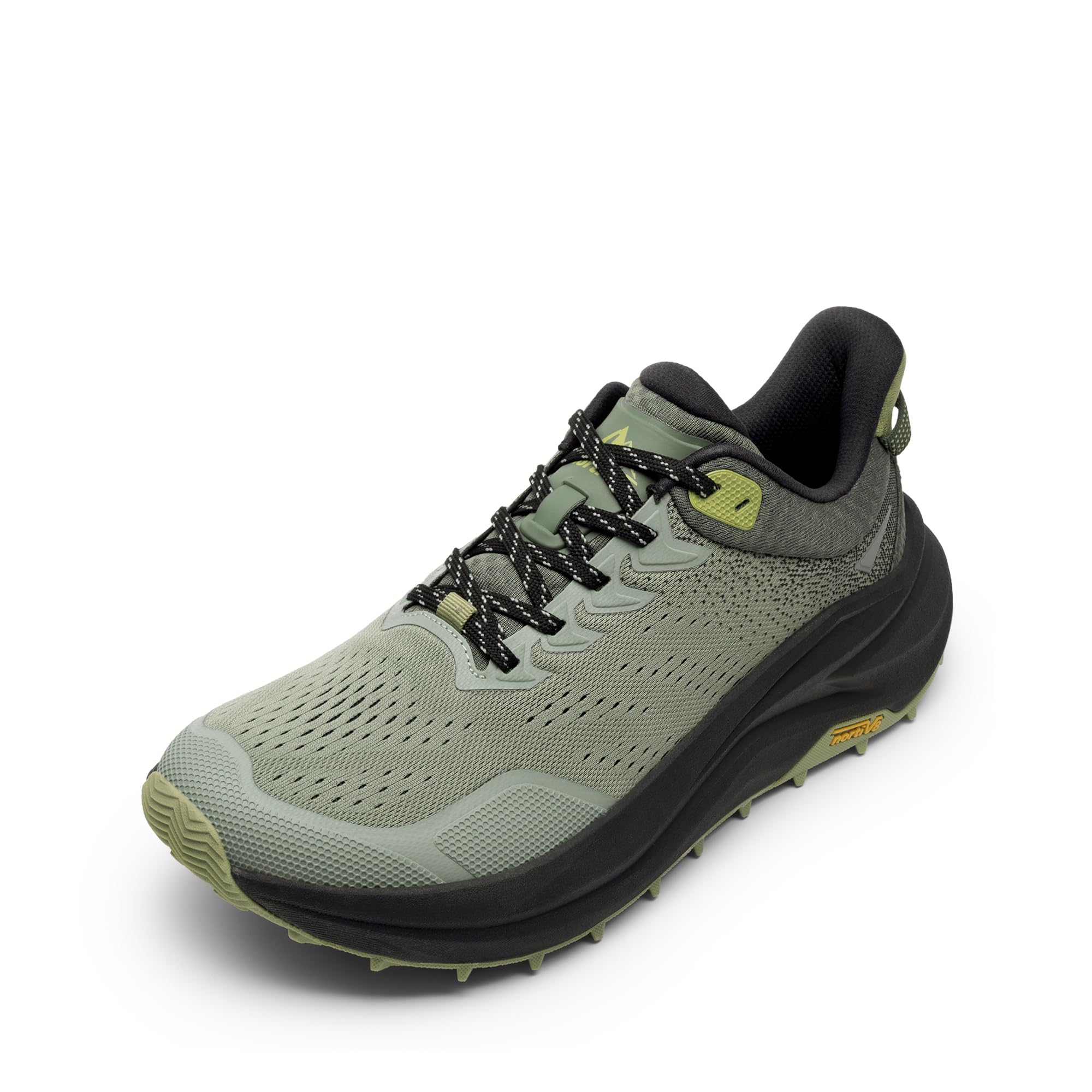
NORTIV 8 Wide Toe Box
The tread here is happiest on dry, dusty trail. On dirt and gravel it holds well; on wet roots and slick rock it’s a step behind the Salomon and the Cascadia. That’s the honest limit of a cushioned wide-fit shoe at this price, and it’s the thing to know before you buy.
Where it earns its place, for us, is the shape. The toe box is genuinely wide, the drop is low without being flat, and the midsole is soft without feeling vague. If you’ve been squeezing into narrow trail shoes and wincing, this is the least expensive way to find out whether a roomier forefoot suits you — and the arch support is more than the money suggests.
Two practical notes. Order a half size up if you’re between sizes: the toe box is long but the midfoot is not generous, and the two together make the fit feel smaller than the length suggests. And treat this as a packed-trail and hiking shoe rather than a technical one — excellent on dry singletrack, less sure-footed when the ground turns rough.
Pros
- Genuinely wide toe box
- Low drop, soft but not vague midsole
- Good grip on dry, dusty trail
- Supportive arch for the money
Cons
- Tread loses grip on wet roots and rock
- Snug midfoot for a wide toe box
A wide, low-drop trail shoe for not much money; just keep it on dry ground, because wet roots and rock are where the tread gives up.
Best for Light Trail Days
Saucony Excursion Tr13
Key Features
- Use: Road and easy trail
- Audience: Women’s
- Cushioning: Light and firm
- Price: Budget
This is a women’s trail shoe that behaves like a sturdy everyday sneaker, and plenty of runners want exactly that. It’s light, it breathes, it grips wet pavement and packed trail, and there’s no break-in to speak of.
Underfoot is where it comes up short. The cushioning is thin and the arch support is modest, so long days on hard trail feel long. Runners who want a plush ride should look at the Brooks Ghost Trail; runners doing rail trails, gravel paths and long walks will be perfectly happy here.
Our bigger reservation is the upper. The fabric around the ankle collar is thin, and that’s where these fail first, sometimes within the first weeks of wear. Buy them for light trail, walking and gym work and the clock runs slowly; buy them for rocky, brushy ground and it runs a lot faster.
Pros
- Light and breathable
- Reliable grip on wet pavement and packed trail
- Comfortable from the first mile
- Good value for light trail
Cons
- Thin ankle-collar fabric frays early
- Minimal cushioning for long days
A light, grippy women’s shoe for rail trails and gravel, if you can live with thin cushioning and a collar that frays early.
Best for Gravel and Walking
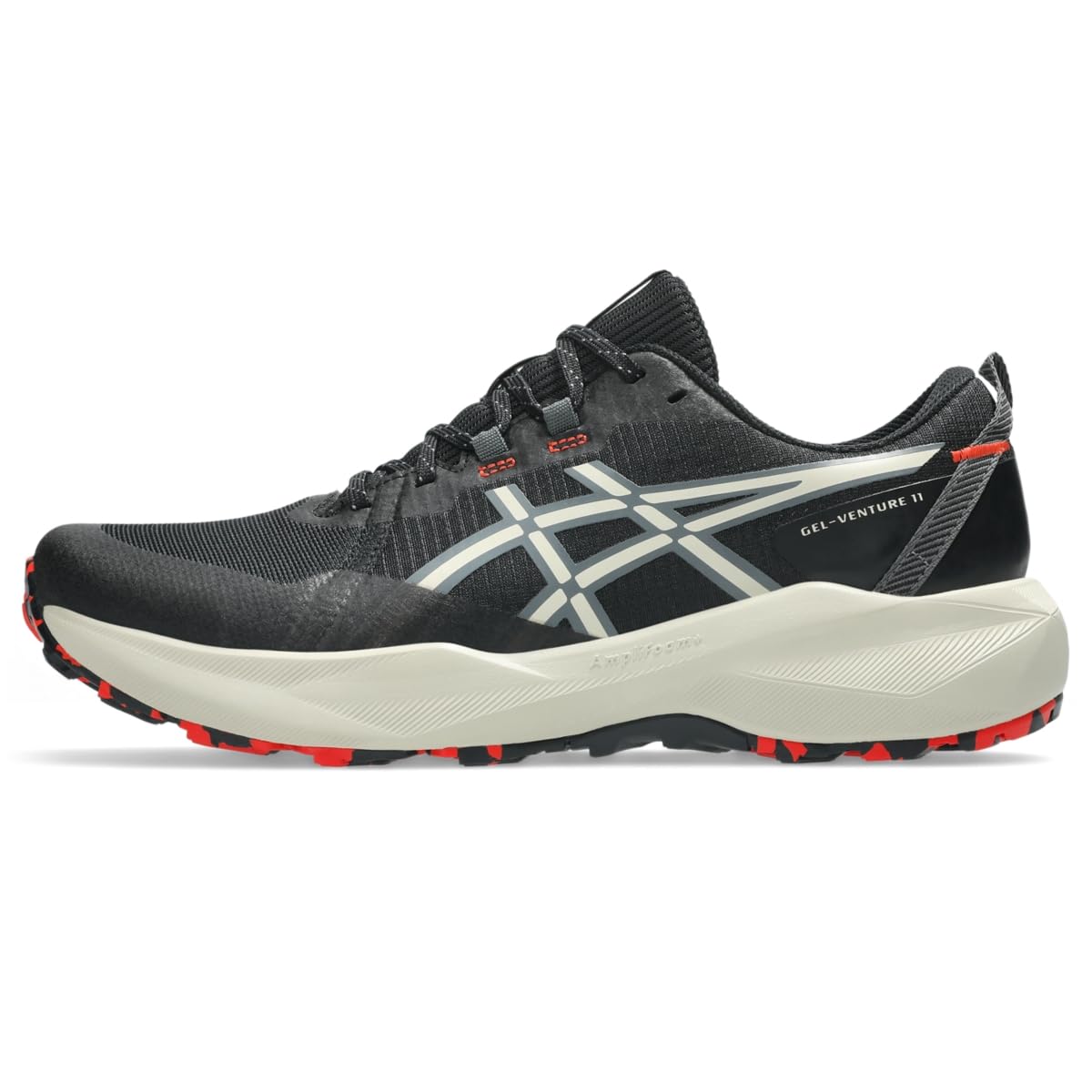
ASICS Gel-Venture 11
Key Features
- Use: Light trail and road
- Audience: Men’s
- Arch support: Substantial
- Price: Midrange
This is really a road shoe with trail ambitions, and we think that’s the more useful thing to own for a lot of runners. It handles gravel paths, packed dirt and the mile of pavement before them, and its arch support is more substantial than most of the shoes here. What it won’t do is wet rock and root networks at speed.
Two details decide the fit. It runs small, so order up or try a pair on before committing. And there’s a small plastic tab where the laces meet the upper that can press into the top of the foot — noticeable on long days, fine on short ones. Get past both and you have a cushioned, supportive shoe that doubles as a walking and light-hiking option.
Pros
- Better arch support than most here
- Cushioned and protective for gravel and light trail
- Doubles as a walking shoe
- Good value
Cons
- Runs small
- Lace-line tab can press into the top of the foot
More arch support than anything else here and a cushioned ride for gravel paths; order up half a size and mind the tab at the laces.
Best for Everyday Trail Style
New Balance Tektrel V1
Key Features
- Upper: Suede
- Audience: Women’s
- Arch support: Minimal
- Price: Budget
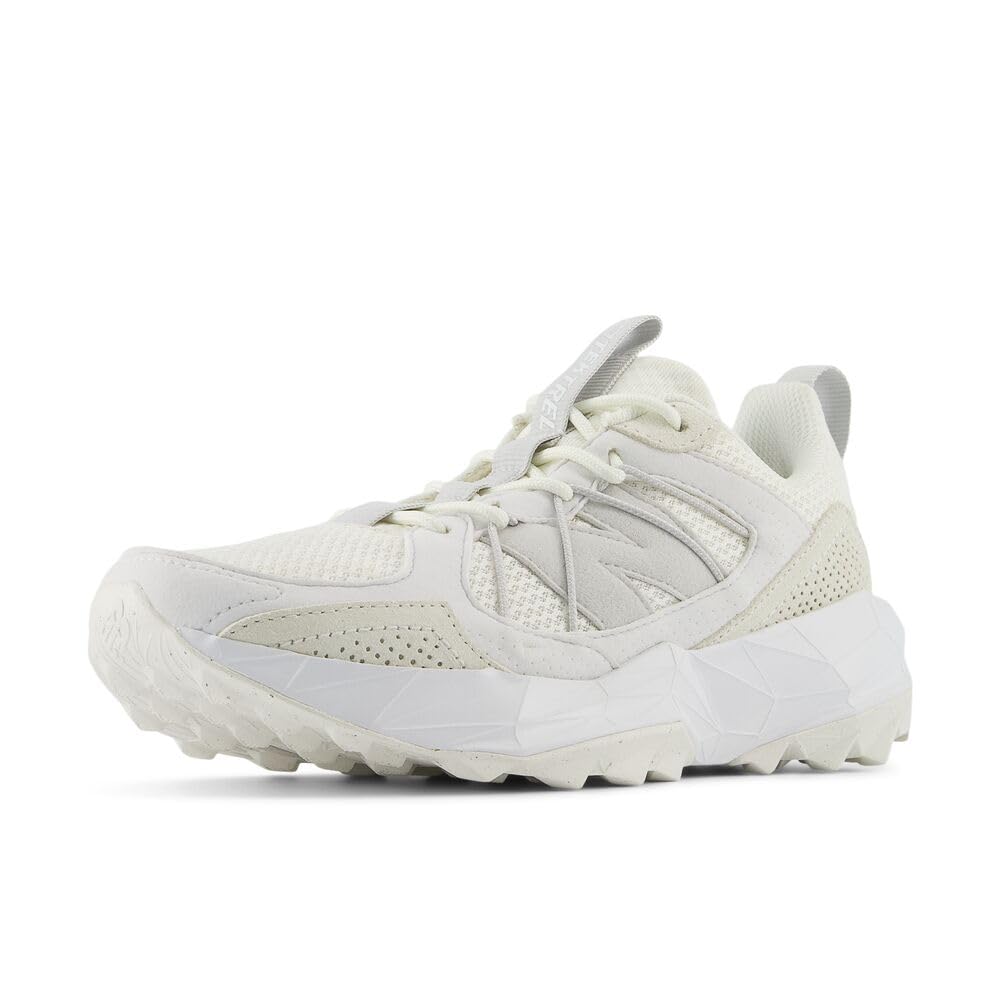
The suede upper is the first thing we noticed, and it’s a real argument for this shoe. It looks like something you’d wear to work, so the run and the errand stop being two pairs of shoes. Underneath, it’s a genuine trail shoe with a lugged outsole that handles gravel roads and packed dirt comfortably.
The fit is what to check. It hugs through the midfoot, which feels secure on smooth ground and restrictive if you want toe room, and the arch support is minimal — anyone who overpronates or wants a supportive footbed will find it thin. Narrow-to-average feet with a neutral gait get the best of it.
Durability is the caveat. The sole is soft and can break through at the sides early, and the cushioning is on the firm side, so try a pair on if you want something plush. As a good-looking everyday shoe that can handle a gravel path, it’s a strong buy; as a technical trail shoe, it isn’t trying to be.
Pros
- Suede upper looks good off the trail
- Grips gravel roads and packed dirt
- Hugs the midfoot securely
- Decent value
Cons
- Soft outsole breaks through at the sides early
- Minimal arch support
Suede looks and gravel-road manners in one shoe; minimal arch support and a soft outsole keep it off technical ground.
Best for Barefoot on a Budget
Joomra Barefoot Trail

Key Features
- Design: Zero-drop barefoot
- Toe box: Wide
- Audience: Women’s
- Price: Budget
The closure is the detail worth knowing about: a cord you pull and a Velcro strap across the top, so you dial the fit from the instep instead of cranking laces. Add a wide toe box and a flat, zero-drop sole and you have a genuinely barefoot-feeling trail shoe for the least money here.
Barefoot shoes ask more of your calves and feet, and this one is no exception — build up slowly rather than switching cold. The flat sole also means you feel every rock, which is the point and also the limit: on a rocky descent there’s not much between you and the ground. Sizing is the practical sticking point, so measure your foot, size up, and check the label matches what you ordered when they arrive.
For trail running, we think of these as a light-trail and everyday shoe first. Grip on dry dirt and gravel is good; technical ground wants more structure. As a cheap way into barefoot running, a travel and gym shoe, or a wide everyday sneaker, they’re hard to argue with.
Pros
- Least expensive wide, zero-drop shoe here
- Secure cord-and-strap closure
- Good grip on dry dirt and gravel
- Wide toe box for toe splay
Cons
- Runs small with mismatched size labels
- Little protection underfoot on rocky ground
The least expensive route into a wide, zero-drop shoe; buy it for feel and everyday wear, not for technical trail.
How We Tested 12 Pairs of Trail Runners
We started by pulling together every trail shoe we could find that was actually available in a full size run, then compared stack heights, lug depth, claimed weight, materials, and the number of colorways offered, filtering out anything that landed well above the rest of the field on price for what it delivered. From that list we bought 12 pairs, deliberately mixing max-cushion cruisers with low, technical shoes and including both well-known and smaller brands.
Each pair went to a tester who ran in it at least three times a week for six months, rotating between rocky foothill singletrack, a muddy spring thaw, a gravel towpath, and the two miles of asphalt between the trailhead and home. We logged every mile and kept notes after each run rather than at the end of the month.
Traction got judged on a fixed stretch of wet rock and slick roots after rain, where we counted slips and noted how much the lugs had worn by the 100-mile mark. We measured each insole against the brand’s own size chart and checked toes and toenails after long descents, ran the same routes in both a high-arched and a flat-footed tester’s rotation to see how the arch felt underfoot, and compared how feet felt at mile 12 versus mile two. Durability came down to uppers, seams, and outsoles after 150 miles, and we wore each pair for errands and road miles to see how far past the trail they could go without looking or feeling out of place.
How to Choose Trail Running Shoes
Fit and grip decide more trail runs than cushioning does, so start with the shape of your foot and the ground you actually run on.
Start with the toe box, not the midsole
A trail shoe that pinches your forefoot will hurt on the descents no matter how good its foam is. Feet spread under load, and the shoes here run from deliberately foot-shaped — the Altra Lone Peak 8 and the Nortiv 8 give toes room to splay — to the narrow, locked-in Salomon Speedcross. Half a size up buys length, not width, so it is not a substitute for a roomier shoe.
If your current pair leaves your little toe sore or your forefoot numb after an hour, change shape rather than size. A shoe that is slightly long but wide enough will feel better on a five-mile descent than one that fits lengthwise and squeezes across the ball of the foot.
Match the outsole to the ground you run
Lug depth is a trade-off, not a score. Deep, widely spaced lugs clear mud and bite into loose dirt, and they are the wrong choice if most of your miles are pavement or hardpack — they feel clattery underfoot and the soft rubber wears flat fast. Shallower tread, as on the Brooks Ghost Trail and the Under Armour Bandit Trail 3, rolls smoothly on gravel and road but will slide on wet roots and slick rock.
Buy for the worst ground you meet regularly rather than the best. If more than half your running is on pavement or packed gravel, choose the shallower, lighter shoe and accept that a muddy November day will be cautious work.
Decide how much trail you want to feel
Cushioning is preference as much as performance. A plusher shoe like the Ghost Trail protects the foot on rock and hardpack over long days; a firmer, lower shoe gives quicker ground feedback and better balance on technical terrain. Neither is more advanced than the other — they answer different questions about how you like to run.
Be honest about the trade. Every millimeter of protection is something you carry uphill and something that sits between your foot and the trail. Rocky ground and long days push you toward more shoe; smooth singletrack and short fast runs push you toward less.
Budget for a season, not a decade
Trail shoes wear from the outsole up. The rubber that grips best is soft, so it rounds off on abrasive rock — the Speedcross and the Cascadia both give up tread before anything else fails. Uppers go at the ankle collar and the flex point, which is where the Saucony Excursion Tr13 and the New Balance Tektrel are weakest.
Treat a regularly worn trail shoe as a one- to two-season purchase. Once you’re replacing a pair a year, the gap between a budget shoe and a premium one narrows to something much smaller than the shelf price suggests.
Frequently Asked Questions
Do trail running shoes need to be waterproof?
Usually not. A waterproof membrane keeps water out until it comes over the collar, then holds it in and dries slowly, and it traps heat on warm days. A breathable upper is the better default for three-season running.
Save waterproof shoes for cold, wet conditions where warm feet matter more than dry ones, and check the listing rather than assuming — a trail shoe is not automatically water resistant.
How long does it take to get used to a zero-drop shoe?
Give it four to six weeks. Start with two or three short, easy runs a week in the new shoes, keep your long runs in your old pair, and add distance only when your calves and Achilles feel normal the next morning.
If tightness lingers more than a day after a run, drop back a step. Runners with a history of Achilles or plantar fasciitis trouble are usually better off with some heel-to-toe drop.
Can I wear trail runners for hiking?
Yes, for day hikes with a light pack. Trail runners are lighter and more flexible than hiking shoes, drain and dry faster, and the grip on something like the Brooks Cascadia 19 is plenty for maintained trail.
Once you’re carrying a heavy pack or moving on rough, off-trail ground, the extra structure and ankle coverage of a hiking shoe is worth the weight.
How do I stop my toes hitting the front on descents?
Buy for length and then lock the heel. Your longest toe should sit about a thumb’s width from the front of the shoe when you stand. Then lace a heel lock: run each lace back through the top eyelet on its own side to make a loop, thread the ends through the opposite loop, and pull.
If you’re between sizes and run long descents, take the larger one.
Final Verdict
For most trail runners the answer is the Salomon Speedcross. It has the most aggressive outsole in this group, a locked-in fit, and grip that holds in mud and on wet rock — check the width before you order, because a wide forefoot will be happier in the Altra Lone Peak 8.
If you want that grip on a broader, more stable platform, the Brooks Cascadia 19 is the alternative and it costs less. And if your trails are really gravel paths and park loops, skip the mud shoes entirely: the Brooks Ghost Trail or the Under Armour Bandit Trail 3 will be more comfortable and last longer.