This post contains affiliate links. We may earn a small commission when you buy through our links — at no extra cost to you.
The first time I pressed an SOS button, I was in a canyon with zero bars, and the device in my hand had to do far more than call for help. A satellite communicator is the pocketable gadget that turns a blank phone screen into a check-in, a weather forecast, or an emergency line to rescue services. The best ones feel sturdy but compact enough to forget on a pack strap, while the frustrating ones make you dig through menus with cold fingers just when you need a simple message to go out.
Over eight months, my team and I tested eight communicators on day hikes, a wet coastal sail, and long rural drives where service vanished. We paid attention to connection time and message delivery, battery life after a weekend away, and whether the interface made sense without the manual. Value mattered beyond the sticker price, since subscriptions can cost as much as the device over time, and reliability is the whole point. The picks below are the ones I’d trust when my phone has nothing to say.

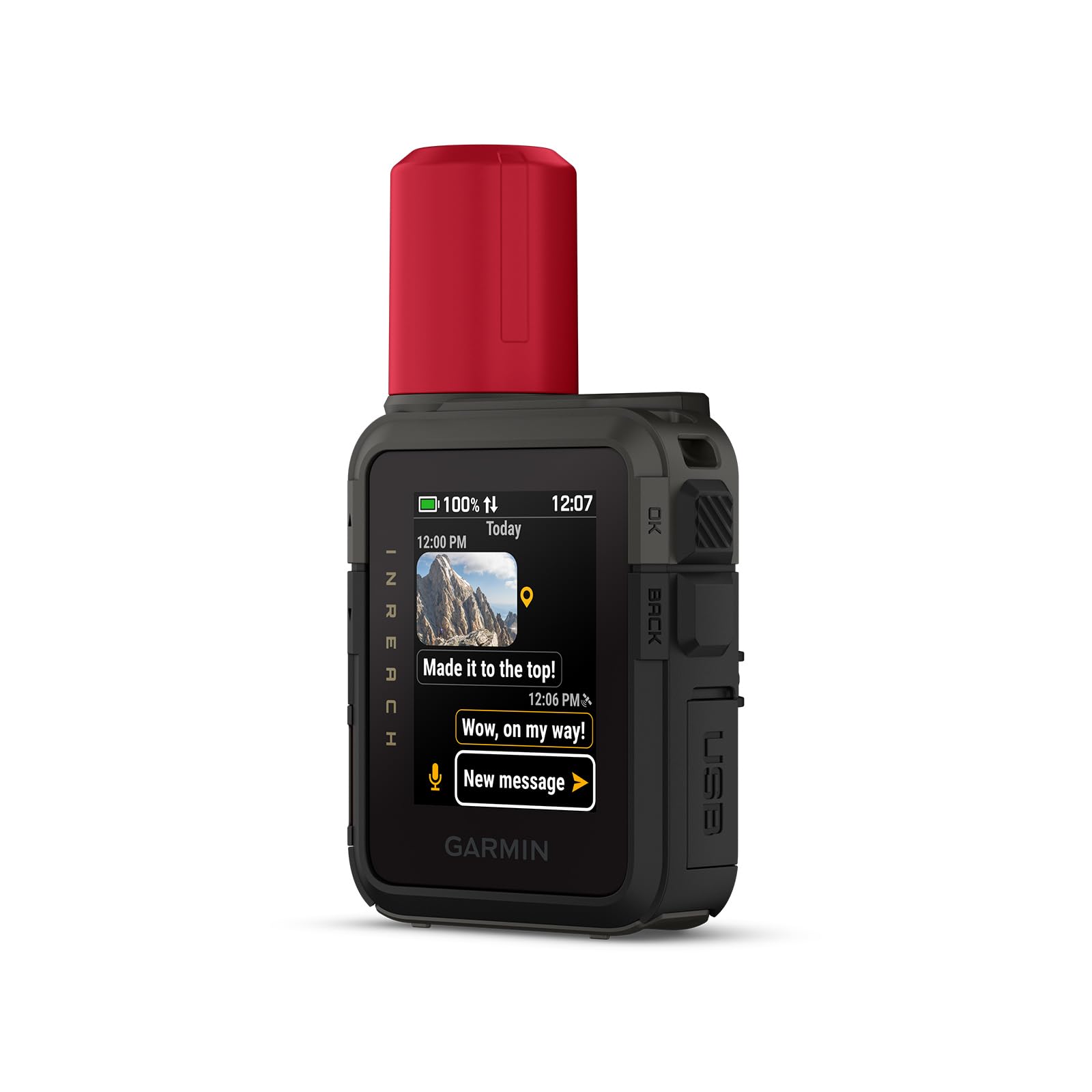
Best for Backcountry All-Rounder
Garmin inReach Mini 2
Key Features
- Display: 1.27 inches, monochrome
- Messaging: Two-way text and location sharing
- Dimensions: 2.04 x 1.03 x 3.9 inches
- Battery Life: 336 hours
- Price: Midrange
Two things decide whether a communicator earns its place in a pack: whether the message leaves, and whether there is still battery when it does. The inReach Mini 2 handles both with the least fuss of anything here. It measures 2.04 by 1.03 by 3.9 inches, small enough to live on a shoulder strap, and its listed 336-hour battery life means a long weekend barely moves the gauge. The 1.27-inch monochrome screen is the compromise, since topographical mapping happens on your phone through the Garmin Explore app rather than on the device, and it is one we are happy to make.
Messaging is where it pays off. Paired over Bluetooth, your phone becomes the keyboard while the device handles the satellite leg, so sending an update home does not mean thumbing through a menu. MapShare shares a live location with whoever you have invited, which is the feature that quietly ends the are-they-off-the-mountain-yet worry. Away from the phone, the Mini 2 still sends preset messages and your coordinates, and TracBack points you back down the route you came in on. The digital compass gives a heading while you are standing still, which is exactly when you are least sure which way is out.
Sends need open sky, and that shapes how you use any of these. Step away from the trees or the tent door, let the message go, wait for the confirmation, and only then pack the unit away. Under heavy canopy or in a deep valley, expect to work for a signal. What we appreciate about the Mini 2 in those moments is that the rescue path does not run through your phone: the SOS is the device’s own function, sent from the unit on your strap rather than from the handset in your pocket that might be flat.
Pros
- Two-way messaging with MapShare location sharing
- Listed 336-hour battery life
- TracBack routing and digital compass on board
Cons
- Frequent tracking and sends drain the battery
- Menus take practice before they feel quick
If you want one small device that texts home, points you back to the trailhead and can call for rescue, this is the one we recommend.
Best for Photos and Voice
Garmin inReach Mini 3 Plus
Key Features
- Weight: 4.31 oz
- Display: 1.9 inches, color touchscreen
- Messaging: Text, photo and voice
- Battery Life: Up to 350 hours with 10-minute inReach tracking, up to 95 hours messaging
- Price: Premium
Two battery figures sit side by side on the Mini 3 Plus listing, and they explain the device better than any feature list: up to 350 hours with 10-minute inReach tracking, and up to 95 hours in performance messaging mode. Neither is wrong. Leave it tracking in the background and it runs for weeks; use it as a messenger with the color screen lit and messages moving, and you are counting days. Which of those describes your trips is most of the decision.
We think this is the model to reach for if you want a communicator you will actually look at. The 1.9-inch color touchscreen changes the experience, because a map, a thread of messages and a confirmed send are readable at a glance in daylight instead of a line of monochrome text to decipher. Text, photo and voice messages all go out over the Iridium network, with photos taken and sent through the Garmin Messenger app on a paired phone. It is 4.31 ounces, IP67 rated, and the buttons sit where your thumb expects them, with the touchscreen for the parts that benefit from one.
The extra money is the honest sticking point. This costs a clear step more than the Mini 2, and if your messages are variations on all fine, at the lake, home Saturday, you are paying for a screen and a camera you will rarely use. Where it earns the premium is detail: a photo of a swollen ankle sent to someone who can tell you whether to walk out, a voice note that says in ten seconds what a thumbed text takes two minutes to, a map you can actually read in sunlight. We also like how little it asks of you, because the layout stops being a puzzle after a day.
Pros
- 1.9-inch color touchscreen plus physical buttons
- Text, photo and voice messaging
- Up to 350 hours with 10-minute tracking
- IP67 rated at 4.31 ounces
Cons
- Photo messaging needs a paired smartphone
- Costs a clear step more than the Mini 2
We hand this to people who want to read a screen in daylight and send a photo, not just a sentence; the premium buys real usability.
Best for Sos-Only Backup
SPOT Gen 4

Key Features
- Power: User-replaceable batteries
- Tracking: Motion-activated location updates
- Messaging: One-way check-in and SOS
- Satellite Network: Globalstar
The Gen4 does not do conversation. It sends a check-in, a tracking point or an SOS, and that is the entire vocabulary: no back-and-forth texting, no photos, no screen with a reply on it. Read as a two-way communicator it comes up short. Read as a button that summons help and leaves a trail for the people watching at home, it makes a lot of sense, and it is the least complicated device here to hand to someone who does not want to learn an interface.
What it does, it does plainly. The SOS alert goes out with your GPS coordinates, tracking updates on its own when the device senses you are moving, and the batteries are replaceable, which we like more than we expected, because a spare set in a pack resets the clock without a cable or a wall socket. Globalstar carries the satellite side. Aim it at open sky and a check-in goes out while you are standing at a viewpoint; aim it into a wooded slope and you may be waiting, so give it the best patch of sky you can find.
Two things to know before you commit. There is no reply coming back, so nothing confirms that a message landed, and you are trusting the status lights and whoever is watching the map. The subscription is also mandatory before the device does anything at all. Where it earns its place is as second-device insurance: the thing that lives at the bottom of a pack, gets its batteries checked twice a season, and does the one job that matters when everything else has failed.
Pros
- One-button SOS with GPS coordinates
- Motion-activated tracking for the folks at home
- Replaceable batteries, no charging routine
Cons
- One-way only, with no replies or conversation
- No screen, status lights only
We think it is the right buy when the only message you will ever send is come and get me: one button, coordinates attached, no conversation to learn.
How We Tested Satellite Communicators in the Wild
We built a shortlist from communicators sold by established satellite networks, then narrowed it by size, weight, battery claims, messaging options, and subscription structure. We ruled out anything that demanded a long contract just to start, and we favored devices that offered both preset check-ins and custom messages. That left us with eight units, which we used for eight months rather than a single afternoon of button-pressing.
On day hikes, we powered each unit on under tree cover and timed how long it took to get a satellite lock, then sent a preset check-in and a custom message and noted whether delivery confirmation arrived in seconds or minutes. On a wet coastal sail, we clipped them to life jackets, tested screen readability in glare and with wet hands, and left tracking on for a full afternoon. On long rural drives, we monitored battery drain in standby and after a weekend of intermittent use, checking charge before and after each trip. We repeated the same sends three times and logged failures, delayed messages, and any reboots, because reliability shows up in the repeats.
We also handed each device to a first-time user wearing gloves and watched them compose a message, trigger a test alert, and find the weather screen without coaching; menus that needed explaining got marked down. We noted how each one carried, including pocket bulge, strap-clip security, button feel, and whether the antenna caught on layers, and we checked the bodies for scuffs after drops on rocks and wet jacket pockets. At the end, we compared subscription tiers and overage charges against what each device actually let you do, since a low hardware price can hide a costly plan. The units that scored best were the ones we stopped thinking about until we needed them.
How to Choose a Satellite Communicator
Start with the message rather than the hardware: whether you need a conversation or only a rescue settles almost every other choice.
Two-way messaging or a one-way beacon
A one-way device sends a check-in, a tracking point or an SOS, and that is the whole vocabulary. A two-way communicator lets you trade texts with home, change a pickup time or describe an injury to whoever is coordinating the response.
If the message you care about is come and get me, one-way is enough, and it is simpler to live with because there is no interface to learn. If it is we are a day late, do not call the ranger, you need two-way. The SPOT Gen 4 is the clearest example here of the first kind, and its review shows where that stops being enough.
Price the plan, not just the device
Every communicator here needs an active subscription before it will send anything, so the plan is part of the purchase rather than an afterthought. Compare what each tier includes: message allowance, tracking interval, and whether SOS coordination comes bundled.
The most useful question is whether you can suspend service between seasons instead of cancelling it. A cheaper unit locked into an annual plan you resent can cost more over three years than a dearer one you can pause in November and restart in May.
Battery figures measure different modes
Up to 350 hours and up to 95 hours can describe the same device. Long numbers usually come from tracking mode with a wide interval between position reports; the shorter figure is what you get when the screen is lit and messages are moving.
Find the number that matches your trip before you buy. A week of background tracking with one check-in a day is a different job from a twenty-minute text exchange every evening, and only one of those is what the marketing line describes.
Keep the rescue path off your phone
A paired phone is the better keyboard, the bigger map and the brighter screen, and it is also the thing that dies in the cold or gets left in a tent. Check that preset messages, tracking and the SOS function live on the device itself rather than in an app screen.
The Garmin units here put SOS on the unit, which is why we are comfortable recommending either for solo travel. A communicator that needs a working smartphone to call for help has a single point of failure sitting in your pocket.
Sky, canopy and the send you cannot see
Satellite sends need a clear view of the sky, and the failures are quiet: no alarm, no error, just a message that sits there. Heavy canopy, a deep canyon or the inside of a tent can all swallow a send.
Build the habit of stepping into the open, letting the message go and waiting for confirmation before you break camp. Test a send from the places you actually go, in the weather you actually get, well before the trip where it has to work.
Frequently Asked Questions
What actually happens when I press the SOS button?
On the Garmin units, an interactive SOS goes to a staffed coordination center with your coordinates and opens a message thread, so responders can ask about injuries and the best way in. Stay put unless you are in immediate danger, keep the device under open sky and answer the messages.
The SPOT Gen 4 sends the alert and your position, but there is no thread to reply to, so your job is to stay reachable and visible where you triggered it.
Can I take a satellite communicator abroad?
The satellite networks are global, so a message from Patagonia reaches home as easily as one from Colorado. Permission is the part to check: some jurisdictions regulate or prohibit satellite communication devices, so look up the rules for your destination before you travel.
Do that before you buy, not at the airport. It also tells you whether the device is legal in the country where you actually plan to use it.
Do I still need a PLB if I carry a communicator?
A personal locator beacon and a communicator solve different halves of the problem. A PLB is a single-purpose rescue device with no messaging and no subscription; a communicator lets you talk, but needs an active plan to do anything at all.
If rescue is all you want, a PLB is simpler to live with. If you want to say you are fine, change a pickup time or describe an injury, you need a communicator.
Final Verdict
For most people heading past the last cell tower, the inReach Mini 2 is the communicator we point to. It is small enough to clip to a strap, its listed 336-hour battery covers a long trip, and it can text home, share a live location and call for rescue without depending on the phone in your pocket. That combination is why it is our default.
Spend more only for a reason you can name. The Mini 3 Plus is the better buy if you know you want a screen you can read in daylight and a way to send a photo or a voice note; the premium goes into usability, not just capability. And if the only message you will ever send is come and get me, the SPOT Gen 4 does exactly that and no more, which is a legitimate thing to carry and a poor thing to expect more from.