This post contains affiliate links. We may earn a small commission when you buy through our links — at no extra cost to you.
A waterproof backpack only earns its name on the day the sky opens up halfway through your commute. The good ones keep a laptop bone dry through a forty-minute walk in a downpour and, just as important, don’t turn into a swamp inside once you’ve zipped everything back up. That’s the whole job: keep your gear dry, then dry out itself instead of mildewing in a closet. Everything else — carrying a week’s groceries, surviving a season of yanked zippers, costing what it’s actually worth — hangs off that.
Over the past eight months, my team and I have carried 12 backpacks through rainy commutes, weekend hikes, and one camping trip that turned into a mud bath. The most useful thing I learned is that water-resistant and waterproof are two different promises, and a coated zipper with taped seams does more real work than any fabric spec printed on the hangtag. The picks below are the ones I’d hand someone along with a laptop and a change of clothes.


Best for Most Wet Days
Earth Pak 35L Dry Bag Backpack
Key Features
- Shell: 500D PVC
- Closure: Roll-top buckle
- Capacity: 35 liters
- Warranty: 5 years
- Price: Premium
Thirty-five liters is the size we reach for first, and the Earth Pak is the one we keep coming back to. The 500D PVC shell and roll-top closure are the fundamentals we want on a wet day, and the backpack straps make the walk from the car to the launch feel like carrying a pack rather than hauling a sack. At 2.5 pounds it is not a featherweight, but it carries more like a daypack than a stuff sack.
The roll-top is the part we pay closest attention to. You need a generous roll-down section so the buckle can bite, and this one gives you enough fabric to fold over several times before clipping. The included IPX8 phone case is a practical extra that keeps a phone usable on the water, and the interior is easy to wipe clean after a sandy day.
The five-year warranty is what tips it for us. Dry bags get dragged over rocks, stuffed into hatches, and left in the sun, and that coverage is a meaningful cushion against the abuse a waterproof pack takes. It is the detail that makes the Earth Pak feel like a long-term purchase rather than a seasonal one.
Pros
- Balanced 35L capacity for day trips and overnights
- Roll-top closure and 500D PVC shell
- Five-year warranty adds confidence
- Backpack carry and an IPX8 phone case
Cons
- Single main compartment; no internal organization
Our default waterproof backpack: the 35L Earth Pak pairs a roll-top seal and backpack carry with a five-year warranty, and it fits most wet day trips and short overnights.
Best for Multi-Day Trips
Earth Pak 55L Dry Bag
Key Features
- Carry: Backpack straps
- Shell: 500D PVC
- Weight: 2.16 lb
- Capacity: 55 liters
- Price: Midrange
The 55-liter Earth Pak is the bigger sibling of our top pick, and the difference is not subtle. It uses the same 500D PVC shell and roll-top idea, but the capacity jumps from a day pack to a gear hauler, and the 30L-and-up sizes get backpack-style straps. The bag weighs 0.98 kg empty, which is manageable for the volume, but this is not the pack you grab for a quick hour on the water.
We like it for trips where the load includes a tent, sleeping bag, or several days of clothes. The extra volume is real: it swallows bulky gear without a fight, and the backpack straps keep the load stable on the walk in. The simple interior is quick to load and easy to wipe out.
The roll-top snaps down and can be rolled further as the load shrinks, so a half-full bag stays tighter than a fixed-lid pack. That is the detail that makes the 55L useful beyond the first day of a trip: it adapts as the gear pile gets smaller.
Pros
- 55L capacity handles tents and multi-day loads
- 500D PVC shell and roll-top seal
- Backpack straps keep the load hands-free
Cons
- One main compartment limits organization
- Full load is bulky to carry
Buy the 55L Earth Pak when your gear pile is bigger than a day trip allows; it swallows bulky loads, though it is a lot of bag to carry.
Best for Organized Travel
IDRYBAG 30L Dry Bag Backpack
Key Features
- Shell: 500D vinyl-coated polyester
- Closure: Roll-top buckle
- Capacity: 30 liters
- Front pocket: Zippered, not waterproof
- Price: Midrange
A zippered front pocket on a dry bag is a useful idea, and the IDRYBAG gets the convenience part right. The caveat is important: that front pocket is not completely waterproof, so we treat it as a place for a leash, snacks, or a damp map, not a phone. The main 30-liter compartment is the part that keeps gear dry, with a roll-top buckle and a 500D vinyl-coated polyester shell.
The three compartments are what make this bag easier to live with than a plain sack. We can keep dry clothes in the main roll-top and use the other sections to separate sandy shoes or small essentials, so lunch does not require unpacking everything.
If you want the simplest, tougher shell here, the simpler Earth Pak is the safer call. The IDRYBAG earns its place when organization matters more than a stripped-down build, and the 30-liter size is right for a day on the water plus a change of clothes. The removable straps are the practical detail we appreciate most: strip them off for a short carry, clip them back on for the walk to the beach.
Pros
- Quick-access front pocket for non-critical gear
- Three compartments help separate gear
- Removable backpack straps add carry options
Cons
- Side pockets can tear under load
The IDRYBAG 30L is the dry bag for travelers who want pockets and quick access, as long as the really wet stuff stays in the main compartment.
Best for Light Day Trips
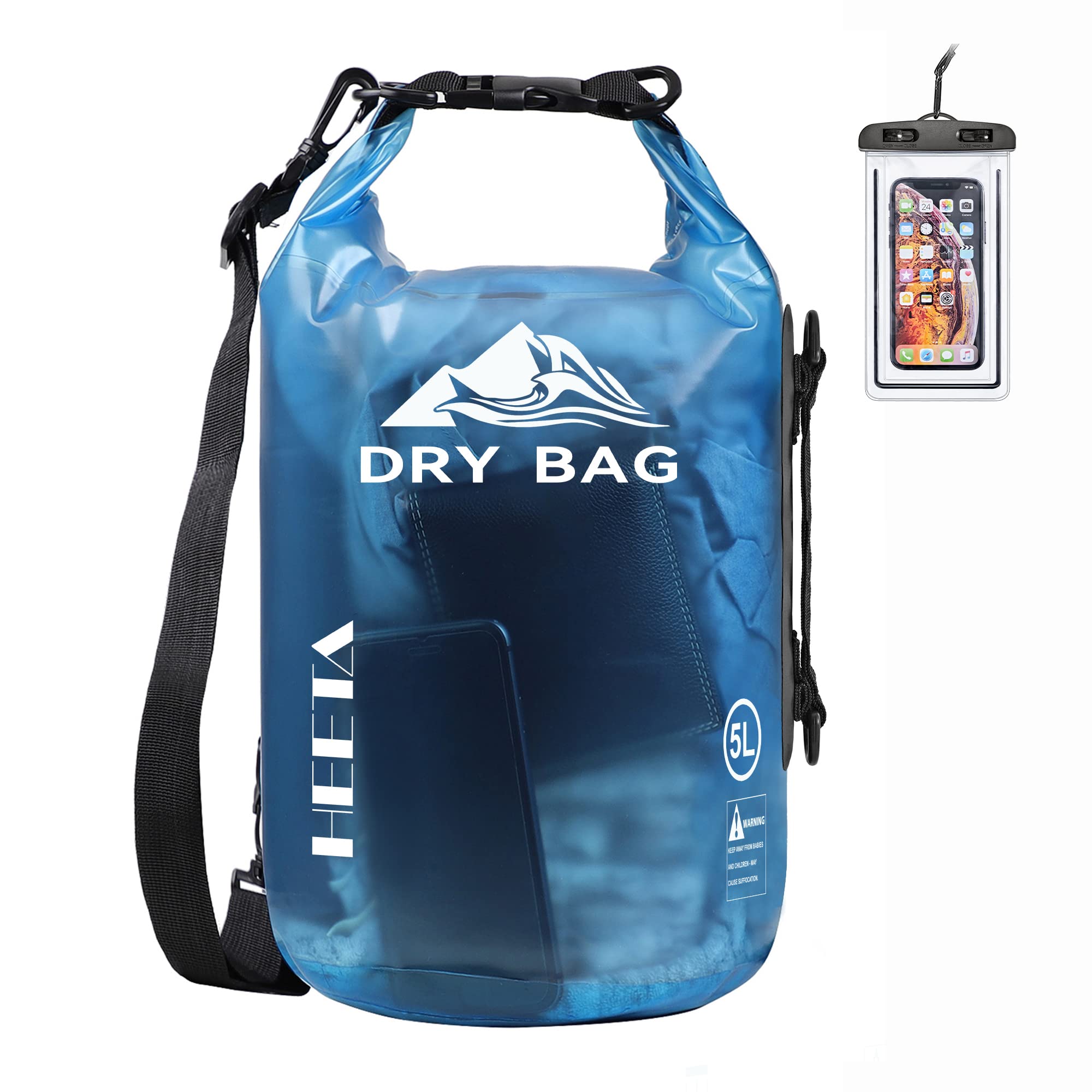
HEETA 10L Dry Bag
Key Features
- Carry: Backpack straps
- Weight: 10.7 oz
- Closure: Roll-top buckle
- Capacity: 10 liters
- Price: Budget
The HEETA is a small dry bag, and it is the one we pack when the day is more about splashes than expeditions. The 10-liter size is right for a towel, sunscreen, a phone, and a light layer, and the backpack straps and side handle give you two ways to carry it. The shape is tall rather than wide, so it sits close to your back when the load is soft.
The roll-top buckle and PVC shell do the basic job, and the included waterproof phone case is a sensible extra. The 10.72-ounce weight is light enough to forget in a larger pack, and the bag folds down small when empty. The clear PVC body is also useful for spotting a leaking sunscreen bottle before it coats everything else.
The HEETA is not the bag we build a serious trip around, but it is a useful spare to keep in a larger pack. The side handle is a small thing, and it makes a difference when you are stepping out of a kayak and want to grab the bag with one hand. For beach days, splashy boat rides, and kids’ gear, the simple design is the point.
Pros
- Clear PVC body makes contents easy to find
- Roll-top buckle and waterproof PVC shell
- Backpack straps and side handle
Cons
- Thin 0.3 mm PVC sides can tear under rough use
- One simple compartment; no pockets
The HEETA 10L is a simple, transparent dry bag for light, splashy days, and its backpack straps make it easy to carry.
How We Tested 12 Waterproof Backpacks
We started with a shortlist of roughly 35 packs from brands known for outdoor gear and commuter bags, then cut anything that couldn’t back up its waterproof claim with taped or welded seams and a coated or water-resistant zipper — no bare nylon with a water-resistant sticker. We also narrowed by capacity, 18 to 35 liters, so the field covered everything from a daypack to an overnight bag, and by price, keeping a mix of budget and investment picks. That left 12 backpacks, each of which we bought ourselves at retail.
The first test was deliberately unpleasant. We loaded each pack with a folded bath towel, a hardcover book, and a laptop-sized weight, then held it under a running shower head for five minutes, aiming at the zippers, the top closure, and the base. Afterward we unzipped everything and checked whether the towel had wicked up any dampness, whether the book’s pages curled, and where water had pooled. We repeated it with a soaked rain shell stuffed inside to see whether a wet item would transfer moisture to the laptop sleeve.
Then we carried them for eight months — on rainy commutes, on a couple of weekend hikes, on bike rides, and through that mud-bath camping trip. Each pack hauled a laptop, a change of clothes, a water bottle, and groceries at various points, and we noted where straps dug in and whether the bag stayed upright when set down. Drying mattered as much as waterproofing: after each soaking, we set the pack on a rack and checked morning and evening how long the lining and straps stayed damp. We finished by inspecting seams, base abrasion, and zipper teeth for wear, and weighing each bag’s price against what it actually did.
How to Choose a Waterproof Backpack
Start with the closure and the carry, not the pocket count: a waterproof backpack is only as good as the seal that keeps water out and the harness that makes you willing to carry it.
Start With the Closure
A roll-top is the most trustworthy closure in this group. You load the bag, roll the fabric down three to five times, and buckle it; the fold is what creates the seal. That works for splashes, rain, and a dunking at the launch, but only when the top is rolled properly. A bag that relies on a standard zipper is a different product, even if the fabric is labeled waterproof.
External zippered pockets are convenient, but they are not all created equal. The IDRYBAG’s front pocket is specifically not completely waterproof, so keep a phone and dry layers in the main roll-top. If you want one pocket for everything, choose a simpler bag with a bigger main compartment.
Match Capacity to the Load
Capacity numbers are easy to compare and easy to misread. A 10-liter bag is for a towel, sunscreen, phone, and a light layer; 30 to 35 liters covers a day on the water plus a change of clothes or a short overnight; 55 liters is for tents, sleeping bags, and group gear. Pack the bulkiest things you plan to carry, then choose the smallest bag that fits them. The 35-liter Earth Pak is the most versatile size here for most buyers.
Carry System and Weight
A dry bag with a single shoulder strap is fine for a short walk from the car, but it becomes tiresome once you add water, a towel, and a camera. Backpack straps spread the load and leave your hands free; the Earth Pak 35, Earth Pak 55, and HEETA 10 all offer that option, while the IDRYBAG’s straps are removable. Empty weight matters less than packed weight, but a 2.5-pound bag plus gear is still a load. If you plan to hike in, prioritize two straps and a simple harness.
Durability, Organization, and Warranty
Thicker shells and clean seams matter more than a long feature list. A 500D PVC or vinyl-coated polyester body is the right starting point for rocky launches and repeated loading; a 0.3 mm PVC side panel is better suited to light duty. Organization is the other trade-off: one big compartment is simple and easy to wipe out, while pockets and dividers help on trips but can add weak points. A stated warranty is worth checking, especially on a bag that will be dragged over rocks and stuffed into hatches.
Frequently Asked Questions
Do waterproof backpacks float?
Some float when they trap air and are properly rolled, but do not count on it. A dry bag is not a flotation device, and a heavy load can pull it under. If a bag goes overboard, retrieve it quickly and check the seal before trusting the contents.
How can I tell if the roll-top is sealed?
Roll the top at least three times, buckle it, then squeeze the bag gently. If air escapes, open it, smooth the fabric, and roll again. A firm, quiet bag is ready for splashes; a hiss means the closure is not gripping.
What should I do with wet gear inside a dry bag?
Keep wet swimsuits, towels, and sandy shoes away from the dry layers. A dry bag keeps water out; it does not dry damp contents. Use a separate stuff sack for wet items, and let the bag and its contents air out fully before storage.
Final Verdict
For most people, the 35-liter Earth Pak is the waterproof backpack to buy. It has the right mix of sealed roll-top protection, usable day-trip capacity, backpack straps, and a five-year warranty. If your load is genuinely bulky, step up to the 55-liter Earth Pak. If you want pockets and compartments and can live with a front pocket that is not fully waterproof, the IDRYBAG 30L is the organizer’s pick.