This post contains affiliate links. We may earn a small commission when you buy through our links — at no extra cost to you.
The wind picked up around nine, the transformer popped, and our block went dark for the next 14 hours. My phone was at 4 percent, the fridge was full of food, and the only flashlight I could find had dead batteries. A portable power station is what fixes that night: a big battery with real household outlets that keeps the fridge, the router, and your phone alive until the lines come back — and on a nicer weekend, the thing that makes a campsite feel less like roughing it.
I’ve kept one within arm’s reach ever since, and over the past year my team has put seven through real outages, camping trips, and ordinary weekends. The spec to watch is watt-hours, not watts: wattage tells you what it can run for a moment, watt-hours tell you for how long, and a unit that skimps on battery to post a flashy wattage number will quit on you at hour three. Everything below was judged on what it actually powered, how quickly it refilled, and what it felt like to haul.

Best for All-Round Camping
Jackery Explorer 1000 v2
Key Features
- Weight: 23.8 lb
- Capacity: 1,070Wh
- AC output: 1,500W
- Recharge time: 1 hr (emergency mode)
- Price: Midrange
One hour from empty to full is the number that makes the Explorer 1000 v2 the easiest recommendation here. That time depends on switching on emergency charging in the Jackery app, and it changes how a trip works: a breakfast stop with an outlet can replace a night of watching a battery gauge. The 1,070Wh capacity and 1,500W AC output are enough for a weekend of camping or a short outage, and that balance is the best default in this group.
At 23.8 pounds, it is still a one-person carry from the car to the cabin or the tent. Three AC outlets, two USB-C ports, one USB-A, and a car port cover a family’s devices, and the 100W USB-C port moves a laptop quickly. The 1,500W output runs a mini fridge, a coffee maker, or a laptop-and-monitor setup; the 3,000W surge gives a motorized appliance some startup headroom.
The LiFePO4 battery is rated for 4,000 cycles to 70% capacity, which is the kind of spec that matters if the station sits ready for years between outages. We appreciate that Jackery kept the weight under 24 pounds while making that chemistry the default. The display is readable at a glance, and the handle is shaped for a straight carry rather than a two-hand hug.
Three AC outlets are fewer than the biggest stations here, but a short power strip covers that without much fuss. What we kept coming back to is the way the 1000 v2 makes a 1kWh battery feel ordinary to move and live with. That is a harder trick than the capacity figure suggests.
Pros
- Weekend capacity with 1,500W output
- One-hour full recharge
- Manageable 23.8 lb body
- LFP battery rated for 4,000 cycles
Cons
- App pairing can be inconsistent
The Explorer 1000 v2 earns our top pick by balancing a weekend’s worth of capacity, a one-hour recharge, and a weight one person can handle.
Best for High-Power Appliances
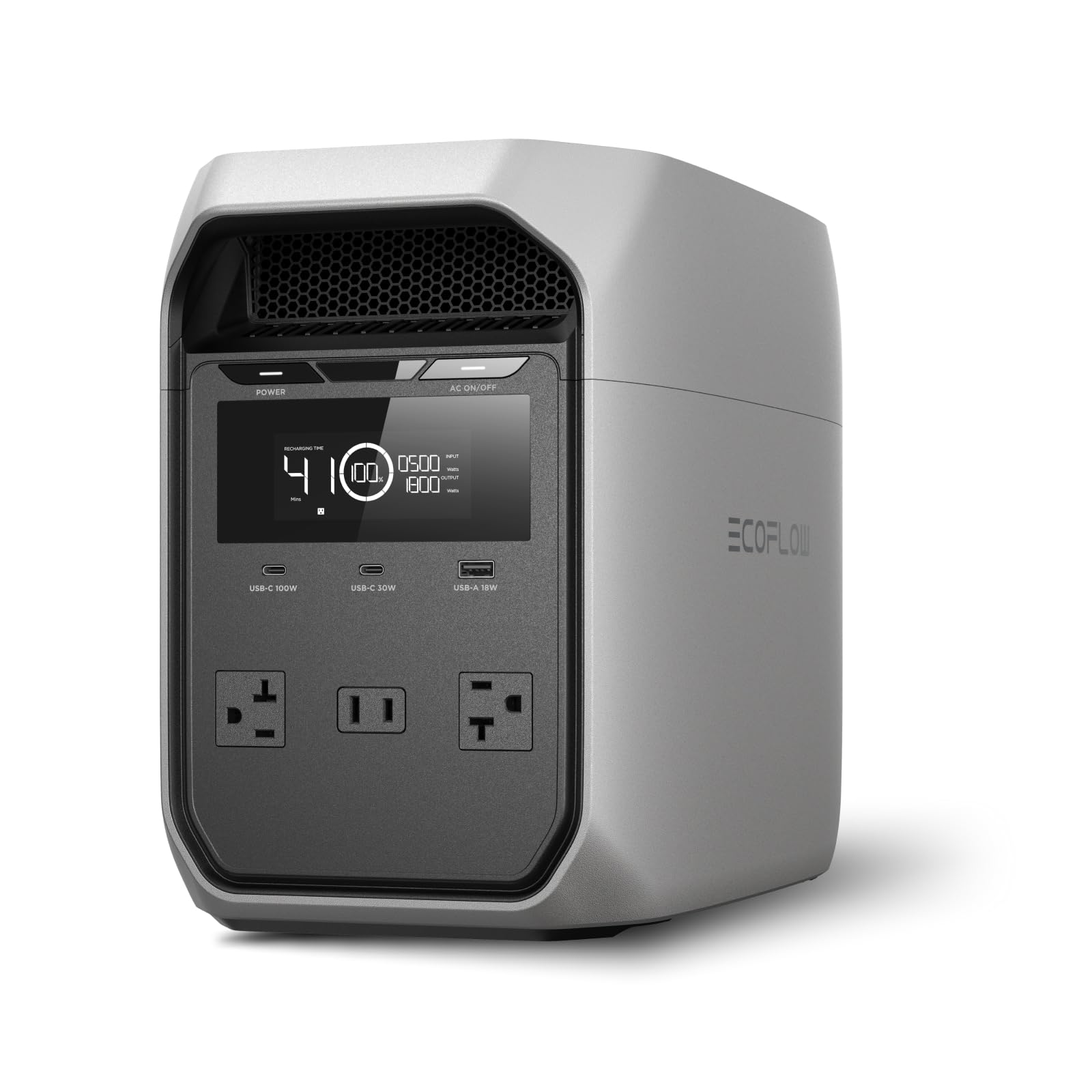
EcoFlow Delta 3 Classic
Key Features
- Weight: 26.7 lb
- Capacity: 1,024Wh
- AC output: 1,800W
- Recharge time: 0-80% in 45 min
- Price: Midrange
An induction burner, a microwave, or a full-size fridge changes what you ask from a power station. The Delta 3 Classic answers with 1,800W of continuous output and a 3,600W surge, so it can start appliances that can trip a smaller 1,000W unit. That is more AC headroom than the Jackery 1000 v2, and it is the reason this one belongs in the conversation for a real camp kitchen or a serious outage.
0-80% in 45 minutes with X-Stream AC charging is the other reason it earns a place. The 1,024Wh LiFePO4 battery gives you roughly the same overnight capacity as the top pick, and the 10ms UPS switchover keeps a router or a desktop computer alive when the grid blinks. We choose the Delta 3 Classic over the top pick when high-draw appliances matter more than the last few pounds; at 26.7 pounds it is still a short-haul carry.
Six outlets, USB-C, and app monitoring round out the package, and the 500W solar input can recharge it in about 2.5 hours with enough panel. We treat the 45-minute number as a wall-charge figure, not a solar promise. For a basecamp with a real appliance load, this is the more capable station; for a lighter trip, the Jackery is easier to carry.
Pros
- 1,800W continuous and 3,600W surge
- 0-80% wall charge in 45 minutes
- 10ms UPS for sensitive electronics
Cons
- No 12-volt socket or alternator input
We choose the Delta 3 Classic when a campsite or outage includes high-draw appliances; its 1,800W output and fast recharge justify the extra bulk.
Best for Fridge Backup
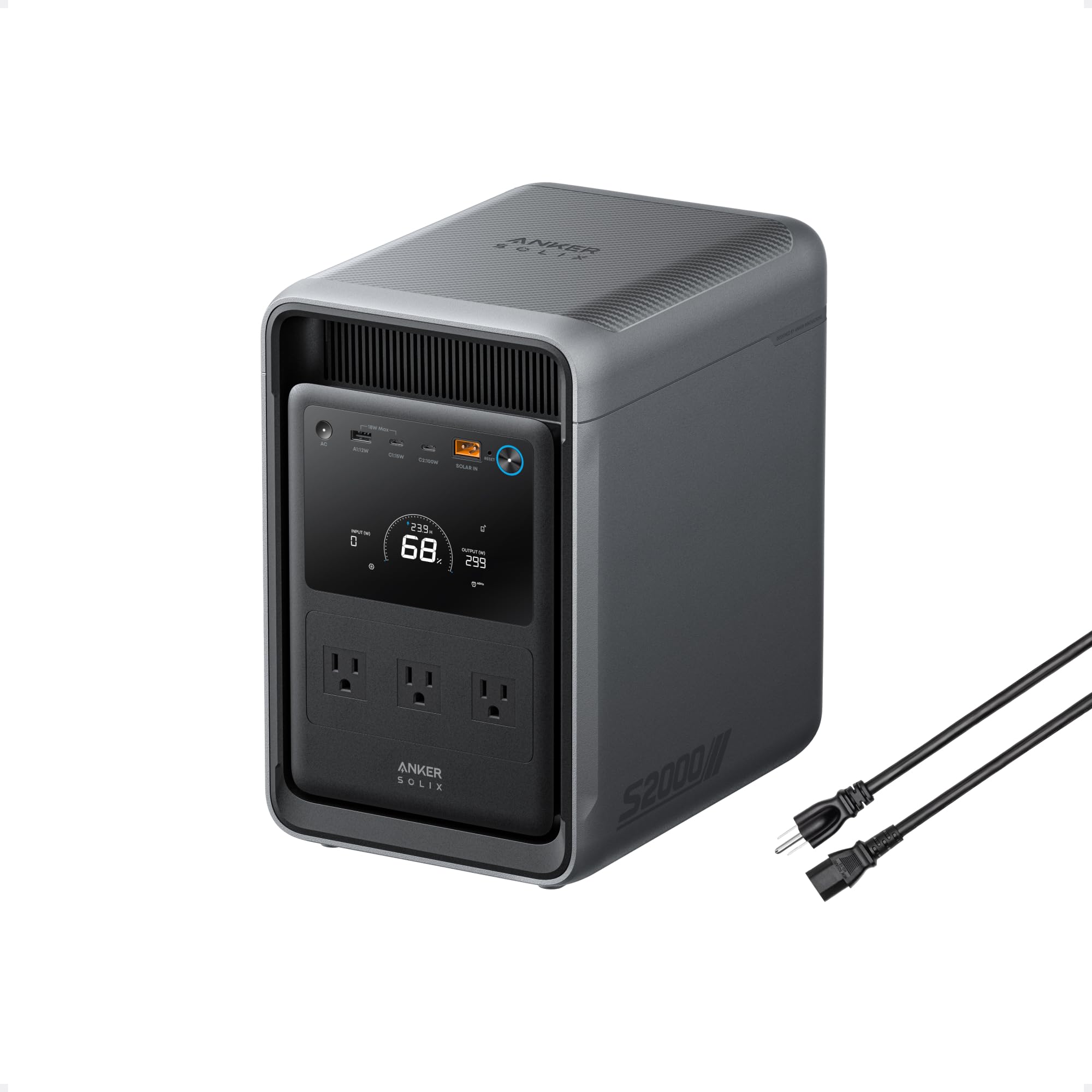
Anker SOLIX S2000
Key Features
- Weight: 35.7 lb
- Capacity: 2,010Wh
- AC output: 1,500W
- Battery cycles: 10,000 cycles
- Price: Premium
At 35.7 pounds, the SOLIX S2000 is not the station you toss in a daypack. It is the one you park next to the fridge. With 2,010Wh and a 1,500W output, we rate it the best pick here for long outage coverage, and the 3,000W peak gives a fridge compressor the jolt it needs to start.
Anker’s claim of up to 35 hours of fridge backup is the headline, but the 6W idle draw is the detail that matters over a multi-day outage. The 10,000-cycle LFP cells are built for that kind of standby use, and six ways to recharge include a 400W solar input. We paid attention to the idle figure because a station that drains itself between outages is not much of a backup.
Eight outlets and a compact 8.19 by 11.1 by 12.7-inch body make it easier to tuck beside a kitchen counter than its capacity suggests. The display and app make it easy to see what a fridge is actually drawing, which turns a backup plan from guesswork into math. That information is worth more than another outlet when the power is out for days.
Pros
- 2,010Wh for long fridge backup
- 10,000-cycle LFP battery
- Compact for a 2kWh station
Cons
- No parallel cable for linking units
- Fan noise under heavy load
If your main worry is keeping a fridge alive through a long outage, we think the SOLIX S2000 is the one, provided you can leave it in place.
Best for Ultralight Weekends
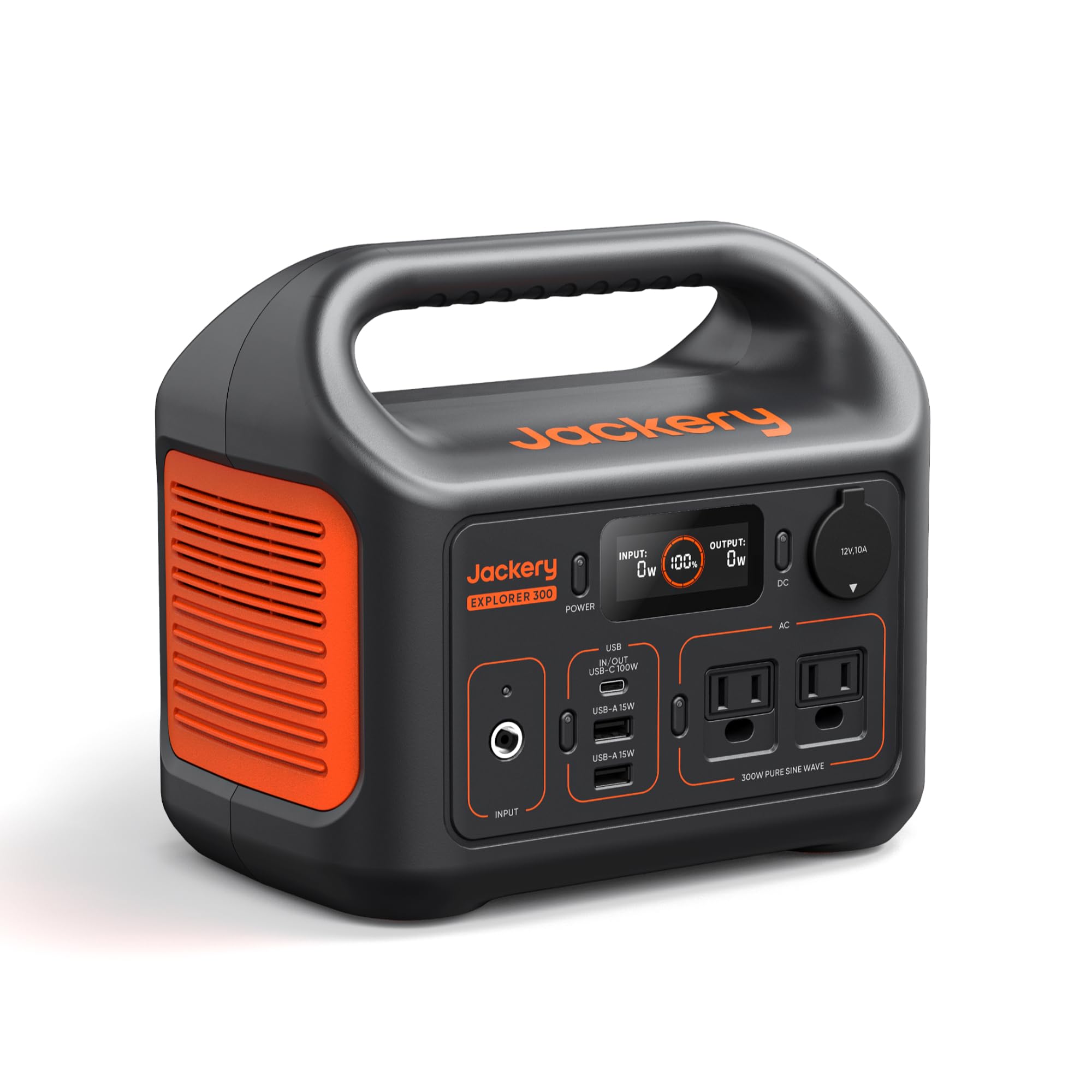
Jackery Explorer 300
Key Features
- Weight: 7.1 lb
- Capacity: 292Wh
- AC output: 300W
- Recharge time: 4 hr
- Price: Budget
For a day at the lake or a weekend in a tent, the Explorer 300 is the size that makes sense. It weighs 7.1 pounds, so we can carry it with one hand along with a daypack, and the 292Wh battery covers phones, cameras, a fan, and a laptop. The integrated handle stays out of the way when you set it down, which matters in a small tent or a car trunk.
The 100W USB-C port is the one we reach for first because it can top up a laptop without a power brick. For our money, this is the right small station for a paddling weekend or a festival where the goal is keeping devices alive, not running a camp kitchen. The two AC outlets handle a lamp and a small appliance, not a coffee maker.
The LiFePO4 battery is rated for over 4,000 cycles to 70%, which is a long service life for a small station. The front display is easy to read at a glance. The 12-volt car port is a useful top-up on a long drive, not a substitute for a wall outlet. It earns its place by doing the small jobs without making you think about the battery.
Pros
- 7.1 lb one-hand carry
- 292Wh for phones and cameras
- LFP battery with 4,000-cycle rating
Cons
- Four-hour wall recharge is slow
- Solar panel sold separately
For light trips and small devices, the Explorer 300 is our easy carry: it handles the basics and asks little of your back.
Best for Compact Power
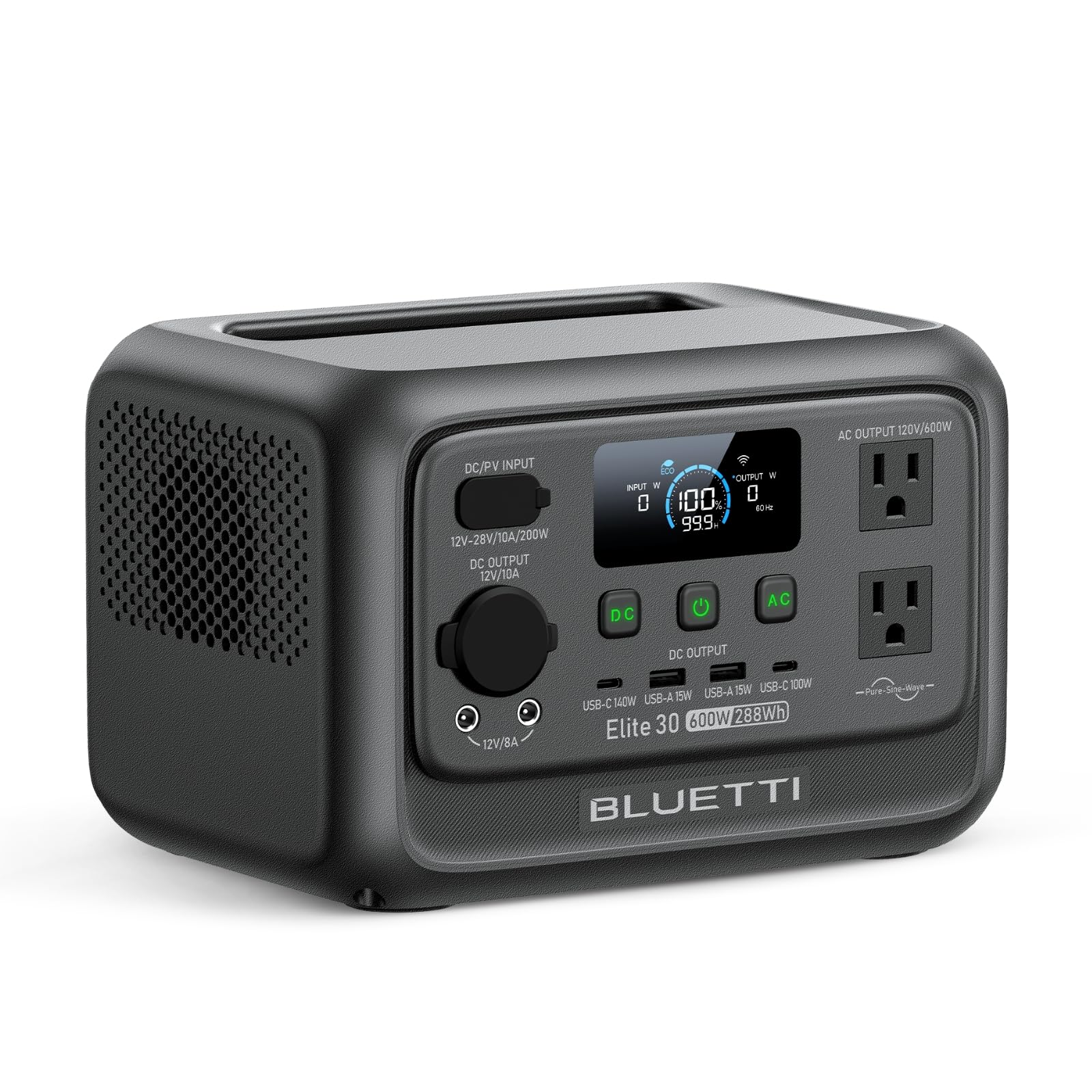
BLUETTI Elite 30 V2
Key Features
- Weight: 9.5 lb
- Capacity: 288Wh
- AC output: 600W
- Recharge time: 0-80% in 45 min
- Price: Midrange
600 watts from a 9.5-pound box is the Elite 30 V2’s best trick. That is double the continuous AC output of the Jackery 300 at only a couple of pounds more, and the 1,500W Power Lifting mode gives high-draw appliances a short burst. For a rice cooker, a projector, or a fan, the extra headroom is the difference between a stalled outlet and a useful one.
The 288Wh capacity is the trade-off you accept for that output. The 380W wall charger takes it from 0 to 80% in about 45 minutes, and the 10ms UPS switchover keeps a router or a CPAP running when the house power drops. The 8 charging modes and LFP battery make it a flexible little box, and the 140W USB-C port is quick for a laptop or a drone battery.
We like the Elite 30 V2 for campers who want real AC output in a bag-friendly box and can plan around a smaller battery. It is not the station for a long outage or a full-size fridge, but it is the one we prefer when the car is already full. That focus is worth more than another 200Wh of capacity on a short trip.
Pros
- 600W continuous from 9.5 lb
- 0-80% in 45 minutes at 380W
- 10ms UPS backup
Cons
- Solar panel sold separately
The Elite 30 V2 earns our compact pick for campers who want serious AC output in a bag-friendly box and can live with a modest battery.
Best for Budget Car Camping
GRECELL 500W
Key Features
- Weight: 18 lb
- Capacity: 519.48Wh
- AC output: 500W
- Total outlets: 10
- Price: Budget
519.48 watt-hours and a 500-watt AC outlet are the reason the GRECELL undercuts the better-known names. The 500W continuous output and 1,000W surge cover lights, fans, laptops, a small TV, and a 12-volt cooler, and the 10 ports include a 60W USB-C PD outlet for a laptop.
Capacity is the real story. 519Wh gives you more overnight headroom than the 256-292Wh stations here, which matters if you run a CPAP or a cooler through the night. The 100W solar input is enough to top it up over a sunny day, and the port layout covers AC, USB-A, USB-C, and a car socket without a nest of adapters. We noted that the display is simple and the handle is easy to grab.
The GRECELL makes the most sense to us as a car-camping station for someone who wants more capacity than a small unit and does not need premium charging speed. The capacity is the feature; the rest is acceptable rather than special. Its real advantage is that it puts 519Wh within reach without making the jump to a 1kWh unit, and the 24-month warranty is a useful cushion for a budget buy.
Pros
- 519.48Wh and 500W output
- 10 ports including 60W USB-C
- Budget capacity for car camping
Cons
- Heavy at 18 lb
- Charging speed can lag
Budget-minded car campers should look to the GRECELL: it offers more capacity than a small station and accepts the weight and slower charging that come with it.
Best for 1Kwh Power
BLUETTI AC180

Key Features
- Weight: 37.4 lb
- Capacity: 1,152Wh
- AC output: 1,800W
- Recharge time: 1 hr
- Price: Midrange
A 1,152Wh battery, 1,800W of AC output, and a one-hour charge: the AC180 puts the big numbers where car campers can use them. The 2,700W peak handles a coffee maker or a small air conditioner, and eight outlets leave room for a laptop, a fridge, and a few lights at once.
Charging is its strongest card. The 1,440W AC input gets it to full in about an hour, and a 500W solar array can do it in 2.8 to 3.3 hours. The 20ms UPS switchover is slower than the 10ms units here but still quick enough for a router or a desktop computer. LFP cells and a 5-year warranty make it a long-term buy rather than a one-season gadget.
The 37.4-pound body is the price of the metal and the battery. We minded it on stairs and appreciated it less on a long walk from the parking lot, but it is fine for a car-camping trip where the station stays near the vehicle. The display is clear, and the app adds monitoring without being required for basic use.
What tips the decision is the combination: 1,152Wh, 1,800W, and a one-hour charge in a package that costs less than the premium 1kWh alternatives. We kept coming back to it when the job called for real appliance power without stepping up to a 2kWh unit. The AC180 is not the lightest, but it is the value play in this class.
Pros
- 1,152Wh with 1,800W output
- One-hour full charge
- 2,700W peak for appliances
Cons
- Early unit failures are a risk
The AC180 earns our pick when you need 1kWh-class power and fast charging and will trade portability to get it.
Best for Tiny Charging Hub
Anker SOLIX C300

Key Features
- Weight: 9.11 lb
- Capacity: 288Wh
- AC output: 300W
- Recharge time: 0-80% in 50 min
The C300 looks more like a desktop speaker than a power station, and that is part of why it earns a place. At 288Wh and 300W, it is built for phones, laptops, cameras, and lights, not a camp kitchen. The tower shape fits on a shelf or in a car console, and the 4.13kg body is easy to move with one hand.
The 140W two-way USB-C port is the standout. It can recharge the station from a USB-C charger or deliver 140W to a laptop, and the 50-minute 0-80% wall charge keeps it ready. Three AC outlets, a car socket, and USB-A ports cover the small stuff, and the app adds monitoring. A 300W ceiling means a kettle or a space heater is out; that is not the job.
We noticed the C300 is small enough to leave on a desk between trips. The display is simple, and the ports are easy to reach without moving the unit. It is the kind of station you top up after a weekend and forget about until the next one.
We reach for the C300 when the bag is already full and the goal is keeping a laptop, a phone, and a camera alive. The combination of USB-C speed, eight ports, and a tiny footprint is what makes it useful; the capacity is the limit, not the point. That is a narrow job, but it is one this station does better than the bigger boxes here. The C300 is the one that gets packed by habit, not by planning.
Pros
- 140W two-way USB-C
- Eight ports in a 4.13kg body
- 0-80% in 50 minutes
Cons
- Carry strap sold separately
- 100W solar panel not included
We see the C300 as a compact charging hub for phones, laptops, and cameras, not as a whole-campsite power source.
How We Tested Portable Power Stations
We started with spec sheets for about 40 models, sorted them into capacity bands, and cut anything with a proprietary charging brick, a thin port selection, or a price that didn’t line up with its watt-hour rating. That left seven stations, from a weekend-sized unit you can carry in one hand to a fridge-running box with wheels, and we lived with them for 12 months.
Charging got timed with a stopwatch: a full recharge from zero on a wall outlet, a partial top-up from a car’s 12-volt socket on a two-hour drive, and a solar panel in the backyard on a clear morning and again under haze, where the input wattage fell by roughly half. We noted which units let you run the AC outlets while charging, and paired every app to see how far the Bluetooth actually reached.
The performance test was a real mini fridge for 24 hours, then a kettle, a blender, and a count of how many laptops and phones each one kept alive. Portability was a weigh-in followed by a one-handed carry up a flight of stairs and a walk out to a campsite, watching for handle shape, wheels, and tipping. We measured noise with a decibel meter at arm’s length while charging and under load, then slept beside one in a tent.
Each unit ran three full charge-and-drain cycles, and two sat idle for eight weeks so we could see what self-discharge ate. Port covers got opened and shut a few dozen times, plugs got a yank test to check grip, and we divided each station’s price by the usable watt-hours we measured on a meter — that number, more than anything printed on the box, is where value showed up.
How to Choose a Portable Power Station
The first decision is not capacity; it is where the station will live: in the car, at the tent, or beside the fridge.
Capacity Is Runtime, Not a Badge
Watt-hours tell you how long a load can run, not how impressive the box looks. Multiply each device’s watts by the hours you expect, then add them up; a 50W fridge that cycles on and off draws less than its label suggests over a day. Inverter losses mean you get less than the full figure, so leave headroom. For a weekend of phones, a laptop, and a fan, 300Wh can be enough; for a fridge or a CPAP through the night, 1,000Wh is a more realistic starting point. The Jackery Explorer 1000 v2’s 1,070Wh is why it works as an all-rounder.
Continuous Watts and Surge Are Different Numbers
Continuous watts are what the station can deliver all day; surge watts are the brief burst a motor needs to start. A fridge, an air conditioner, or a pump can draw several times its running wattage for a moment. Check the appliance label and leave room above the running figure. The EcoFlow Delta 3 Classic’s 1,800W continuous and 3,600W surge are aimed at exactly this problem. If your devices are phones and laptops, 300W is plenty; if you want a coffee maker or a microwave, step up.
Weight Decides Where It Goes
A 2kWh station can weigh 35 pounds or more, which is fine beside a fridge and miserable on a trail. A 300Wh unit at 7 pounds is the one that goes in the car for a day trip. Decide whether the station will stay near the vehicle or move to the tent, then treat weight as a feature. The Anker SOLIX S2000 is a home backup at 35.7 pounds; the Jackery Explorer 300 is a weekend carry at 7.1.
Recharge Speed and Solar Realism
A one-hour wall charge changes how you use a station; a four-hour charge asks for planning. Solar is slower and weather-dependent, so a panel is a supplement, not a wall-outlet replacement. Match panel wattage to the station’s solar input and expect a full day of good sun for a meaningful charge. The Delta 3 Classic reaches 80% in 45 minutes from the wall, while its 500W solar input needs about 2.5 hours under ideal sun.
Chemistry, Ports, and UPS
LiFePO4 is the chemistry we look for because it offers more cycles and better standby behavior than older lithium-ion designs, and most picks here use it. Check the port mix for the devices you carry: USB-C PD for laptops, a 12-volt car socket for coolers, and enough AC outlets for a power strip. A UPS switchover under 20ms protects a router or computer; it is unnecessary for a tent. The Anker C300’s 140W two-way USB-C is a good example of a small port that does real work.
Frequently Asked Questions
Can I take a portable power station on a plane?
No for the models here. Airline rules allow lithium batteries up to 100Wh in carry-on, with limited approval above that; these stations are 256Wh and larger, and they are not checked-baggage friendly. Drive, ship by ground, or buy at your destination instead.
How should I store a power station between trips?
Keep it in a dry, moderate room, partly charged rather than empty, and top it up every few months. Heat is the enemy, so a hot trunk or shed is a bad long-term home. Before a trip, charge it fully and test the outlets with a small device.
Can I charge a portable power station from my car?
Yes, through the 12-volt car port, but it is a top-up rather than a fast recharge. A long drive adds less than a wall outlet in an hour, and some cars cut power when the engine is off. Use it to stretch a charge, not to replace a wall charge before you leave.
Is it safe to use a portable power station indoors during an outage?
Yes for lamps, routers, fans, and medical devices, provided the station is dry and its vents are clear. Do not bring a gasoline generator indoors, and do not run a fuel-burning heater from the station inside. Keep the load within the rated output and follow the charging instructions.
Final Verdict
The Jackery Explorer 1000 v2 is the station we point most people to. It has enough capacity for a weekend or a short outage, a one-hour recharge that makes planning easier, and a weight one person can manage. That balance is why it earns the top pick.
When the job changes, the answer changes with it: the Anker SOLIX S2000 for long fridge backup, the EcoFlow Delta 3 Classic for high-draw appliances, or the Jackery Explorer 300 when every pound counts. Start with where the station will live, and the choice gets simpler.