This post contains affiliate links. We may earn a small commission when you buy through our links — at no extra cost to you.
A tick bite can turn a hike into weeks of worry, and the gear that prevents one shouldn’t feel like a compromise. I’ve spent enough summer evenings picking seed ticks off my socks to care about this stuff: the right outdoor gear keeps bugs off, covers skin without overheating, and still fits in a daypack. It also has to work without a fight—no clogged nozzles, no smell that announces you before you reach the trailhead, no flimsy zippers that quit halfway up a ridge. Good gear fixes the failures that ruin a day outside, so you can stay out longer and think about the view instead of your ankles.
Over the past seven months, my team and I tested 12 pieces of outdoor gear—sprays, treated layers, gaiters, and packs—on day hikes, campsite weekends, and backyard afternoons. We cared about effectiveness first, but value mattered too: an item earns its place only if it works, packs small, and feels worth reaching for again. The picks below survived repeated tick checks, sweaty afternoons, and one-handed use on the trail.




Best for Every Pack
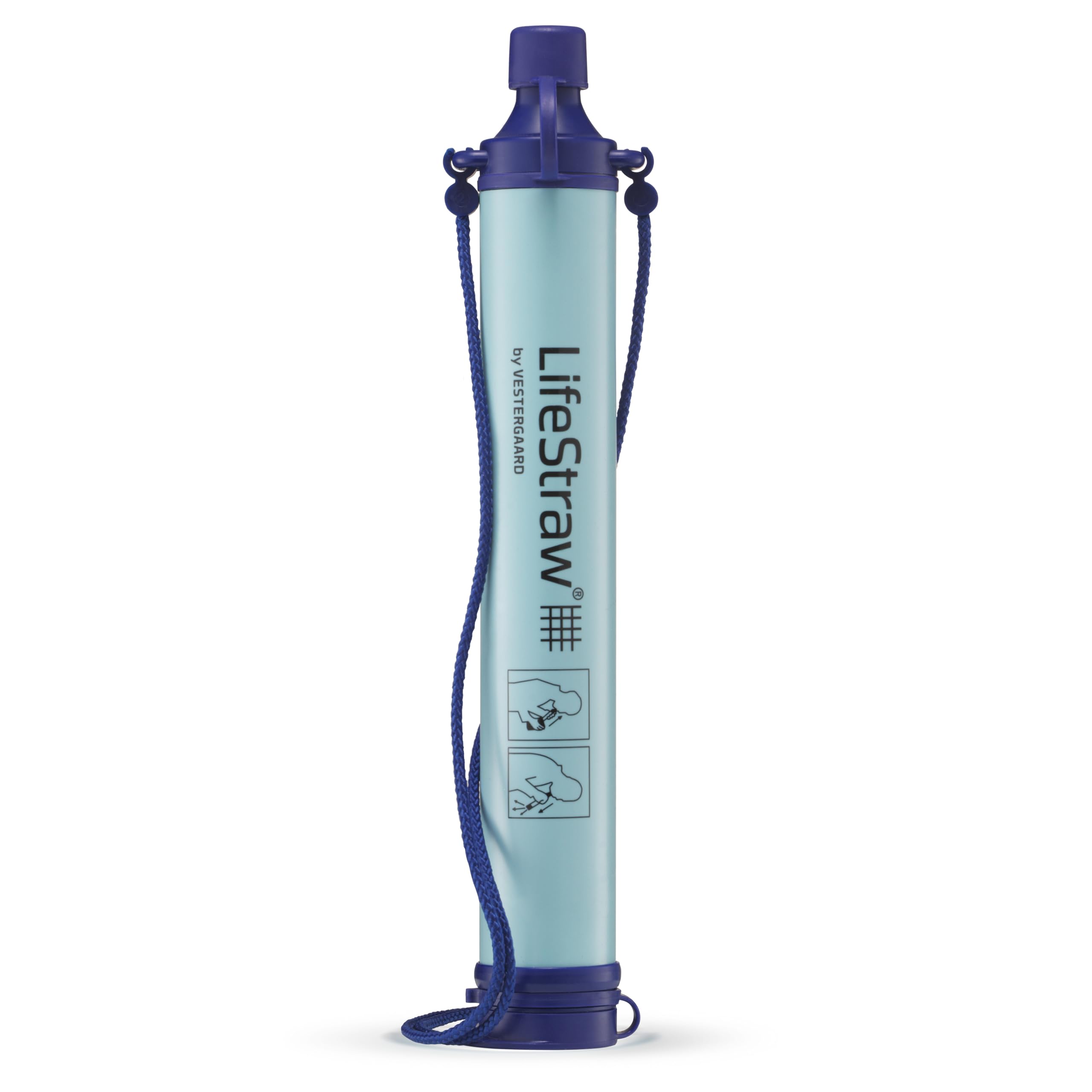
LifeStraw Personal Water Filter
Key Features
- Weight: 1.59 oz
- Testing: NSF
- Filter life: 4,000 liters (1,000 gallons)
- Bacteria removal: 99.999999%
- Price: Budget
Forty-five grams and a four-thousand-liter rating is the whole argument for the LifeStraw. It is the cheapest piece of real capability in this set, and it is the one we are most likely to have with us when a bottle runs dry, because it asks nothing of you: no batteries, no pumping, no cartridge to buy. You put the mouthpiece in the water and drink.
The filtration numbers are the serious part. The hollow-fiber membrane is rated to remove 99.999999% of waterborne bacteria and 99.999% of parasites, along with microplastics down to one micron, and the claims are verified against EPA, NSF and ASTM protocols. In plain terms, it handles the organisms that make stream water a gamble. A membrane like this works on biology, not chemistry, so it is not a fix for industrial or agricultural runoff.
The catch is ergonomic rather than mechanical. You are kneeling at the water’s edge with your face near the surface, and on a silty creek the flow slows and you pull harder for less water. For a solo hiker or a kit that lives in the car, that is a fair trade for something smaller than a candy bar. If you are filtering for a group, the bottle-threading filter below is the better tool.
Pros
- 45 g with no power source to fail
- 4,000-liter rated life at a budget price
- Rated for bacteria, parasites and microplastics
- Simple enough to use correctly when tired
Cons
- Feeds one drinker straight from the source
We recommend it to anyone who walks near water: the lightest, simplest way to make a stream drinkable, and the item we most want in every pack.
Best for Bottle Setups
Sawyer Mini Water Filter
Key Features
- Fits: 28 mm bottles and bladders
- Weight: 1.45 oz
- Rated life: 100,000 gallons
- Filter rating: 0.1 micron absolute
- Price: Midrange
Where the LifeStraw is a straw you lean over a creek to use, the Sawyer Mini is a filter you attach to something. The 28 mm thread screws onto a standard disposable water bottle, a hydration bladder hose or the 16-ounce pouch in the box, and there is a drinking straw for going straight from the source. That flexibility is why it earns a place here even though the top pick is simpler.
The membrane is rated 0.1 micron absolute, with 99.99999% bacteria and 99.9999% protozoa removal, and the rated life is 100,000 gallons, an enormous number next to the LifeStraw’s 4,000 liters. It weighs 41 grams and comes with a cleaning plunger, which is the part people forget: gritty water loads the membrane, and backflushing with the plunger is what keeps the flow usable trip after trip.
We preferred it for anything where the water ends up in a container rather than in your mouth, and for trips where one filter has to serve a couple of bottles. The one fussy detail is the o-ring at the bottle thread, which is easy to overtighten and pop out; snug is enough. If your kit revolves around a bladder and a group, this is the filter to pack.
Pros
- Screws onto standard bottles and bladders
- 0.1 micron absolute with a huge rated life
- 41 g with pouch, straw and plunger included
- No batteries, pumping or cartridges
Cons
- Filling a bottle takes minutes of squeezing
For bottling and bladders we reach for this one: it threads onto a standard bottle and filters as you squeeze.
Best for Tick Country
Sawyer Permethrin Spray
Key Features
- Format: Trigger spray
- Use on: Clothing, gear, tents
- Targets: 55+ insect species
- Bond duration: 6 weeks or 6 washes
- Price: Budget
Sawyer’s permethrin is not a bug spray. It goes on fabric, bonds to the fibers and then works on whatever lands on you, which is a different job from the repellent you rub on your arms. That distinction is the whole product, and it is also where most disappointment comes from: people buy it expecting to spray their skin and find out at the trailhead that it is a clothing treatment.
A treatment lasts up to six weeks or six washings, whichever comes first, and is effective against more than 55 kinds of insects including ticks. The maker cites research showing a sharp drop in tick bites when shoes and socks are treated, and that matches how ticks actually reach you, low and from the grass. We start with footwear and pant cuffs, then work up to shirts, packs and tent walls.
The weak point is the sprayer rather than the chemistry. Trigger heads clog, and a bottle that turns up with only a cap leaves you pouring, so keep a cheap garden trigger sprayer on hand. Treat everything outdoors, let it dry completely before wearing it, and expect to re-treat after a handful of wash cycles. A season of protection is a season of reapplications, not a one-time purchase.
Pros
- Bonds to fabric for weeks, not hours
- Works against ticks and 55+ insect species
- Protects through clothing where ticks reach you
Cons
- Re-treatment every six washes or six weeks
If you hike where ticks live, this is the treatment we put on socks and shoes first, because it works through the fabric rather than on your skin.
Best for Campfires
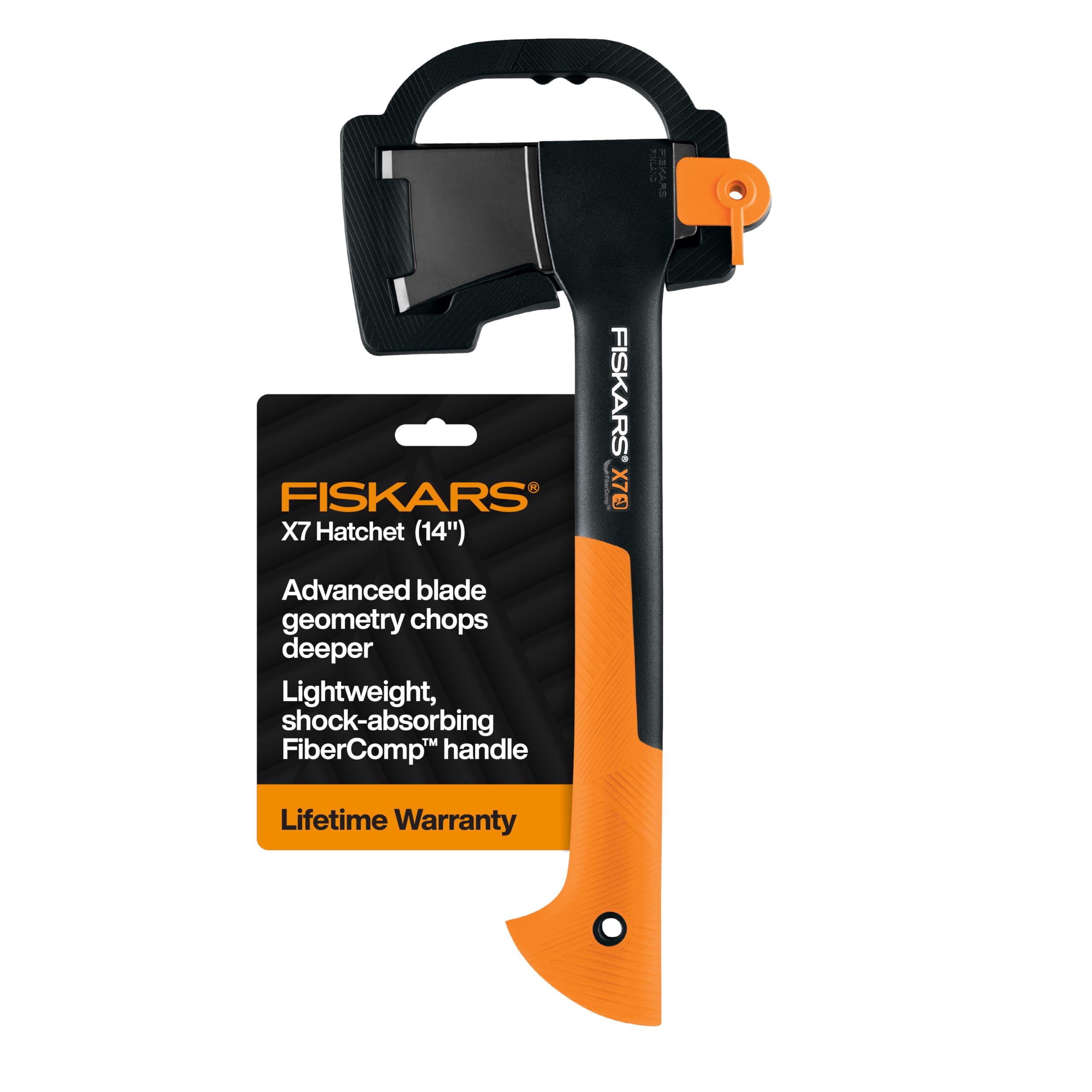
Fiskars X7 Hatchet
Key Features
- Head: Insert-molded forged steel
- Length: 14 in
- Warranty: Lifetime limited
- Blade length: 5.12 in
- Price: Midrange
A 14-inch handle and a 5-inch blade do not sound like much axe, and that is the design: the X7 is short enough to swing one-handed at a knee-high round and balanced so the head does the work instead of your shoulder. It is a kindling tool, not a felling axe, and it is honest about that.
The details are what earn it a place in the truck. The head is insert-molded onto a FiberComp handle rather than wedged onto wood, so there is no loose head to tighten, and the blade carries a low-friction coating that helps it release from wet rounds instead of sticking. It arrives sharp enough to make kindling on the first swing, and a few strokes of a file bring the edge back. Add the included sheath and the lifetime limited warranty, and the price starts to look like a tool you keep rather than replace.
Keep expectations sized to the tool. It splits kindling and small limbs and will not stand in for a full axe on a real log, and 14 inches means you are working bent over at ground level. For car camping, a backyard fire pit, or turning the damp stuff you found at the site into something that burns, it is the tool we reach for first.
Pros
- Splits kindling in one-handed swings
- Insert-molded head, no loose wedge to maintain
- Ships sharp with a sheath and lifetime warranty
Cons
- Short handle means bent-over work at ground level
We hand it to anyone building campfires: it turns branch wood into kindling in a few one-handed swings and shrugs off the abuse.
Best for Camp Lounging
Kootek Camping Hammock
Key Features
- Weight: 2.1 lb
- Capacity: 500 lb
- Folded size: 8.7 x 5.1 x 5.1 in
- Unfolded size: 120 x 78 in
- Price: Midrange
Two trees, two straps and about three minutes. That is the Kootek’s pitch, and it is the reason it comes out of the truck at every stop: no knots to learn, no separate rope to buy, no hunting for trunks that happen to sit the right distance apart.
The straps carry 18+1 loops each, so you move the carabiner along and hang the same hammock between trunks that are close together or far apart. They are tree-friendly webbing rather than rope, which matters at a campsite that gets used all season, and the stuff sack is sewn to the hammock so it does not get left behind in the truck bed.
Unfolded it measures 120 inches long and 78 inches wide with a 500-pound rating. The width is what makes the two-person claim believable: 78 inches lets two adults sit side by side without one of them sliding into the middle. Rolled up it is 8.7 by 5.1 by 5.1 inches at 2.1 pounds, which is day-hike and car-camping weight rather than ultralight weight.
We treat it as the lounger rather than the shelter. At 120 inches it is short for a tall sleeper, and there is nothing in the box for bugs or rain, so a full night in it means buying a net and a pad separately. For lunch stops, after-dinner reading and keeping kids off the ground, it is the piece of gear guests ask about before they ask about anything else.
Pros
- Straps and carabiners included, no extras to buy
- 78-inch width genuinely seats two adults
- Setup a beginner can manage in minutes
- Attached stuff sack that stays with the hammock
Cons
- 2.1 lb and bulky for backpacking
For car camping and lazy afternoons we have not found a better value: two adults, straps included, hanging in minutes.
Best for Cold Hands and Feet
HotHands Variety Pack
Key Features
- Type: Air-activated, single use
- Contents: 5 hand pairs, 5 body warmers, 3 toe pairs
- Heat duration: 10–18 hours by type
- Max temperature: 140 °F
- Price: Budget
The coldest ten minutes of a winter hike are usually spent standing still: at the trailhead, at a lunch stop, at the car while someone digs out the keys. A pair of these in your gloves fixes that faster than any layer you can put on, and the pack costs less than the gas to get there.
They are air-activated, so you open the wrapper, expose them to air and they come up to heat without shaking, boiling or a lighter. The variety pack is the sensible version: five pairs of hand warmers, five body warmers and three pairs of toe warmers, rated for 10 to 18 hours depending on type, with a top temperature of 140 °F. The toe warmers are the ones that make a difference in a stiff boot on a cold morning.
The body warmer is the sleeper in the pack. Tuck one into a jacket pocket or a sleeping bag liner and it keeps working long after the hand warmers have cooled, which makes it the one we save for the evening rather than the ascent. The limits are simple: they need airflow, so a packet crushed into a sealed stuff sack sulks instead of heating, and they are a consumable rather than a piece of kit.
Pros
- Three warmer types in one pack
- Heat without shaking, boiling or a flame
- 10 to 18 hours depending on the type
- Thin enough to wear inside gloves and boots
Cons
- Single use, so the cost comes back every trip
We buy these by the box for cold-weather trips; a pair in your gloves does more for a miserable trailhead than another layer.
Best for Fire Backup
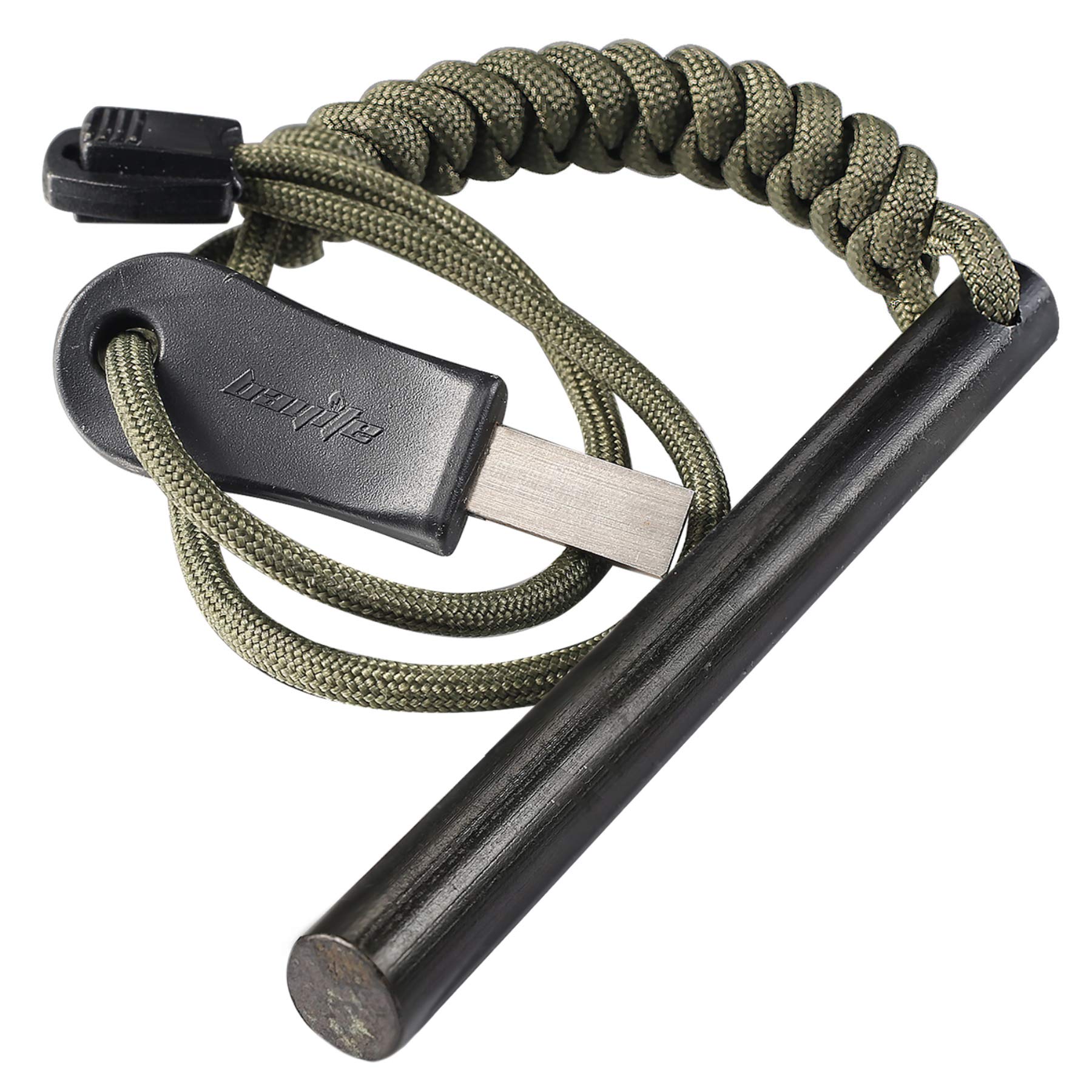
bayite Ferro Rod Kit
Key Features
- Weight: 2.46 oz
- Includes: 5 ft paracord, HSS striker
- Rod size: 4 in x 3/8 in
- Spark temperature: 5,500 °F
- Price: Budget
A fire is the thing that turns a cold, wet evening around, and this is the least expensive way in this set to guarantee you can start one. You get four inches of ferrocerium rod, a hardened steel striker on a five-foot paracord lanyard, and sparks rated at 5,500 °F whether or not it is raining.
Using it is a scrape rather than a strike. You hold the striker steady and pull the rod back, which throws sparks down into your tinder instead of across the ground and past it. The striker has six edges and holds up well, and the paracord gives you a grip that does not slip when your hands are numb while keeping both pieces together in a pocket.
What we did not expect is how much the ritual matters: this is a tool you practice with, not one you unwrap in an emergency and hope about. Light it in the yard a few times, learn how much tinder a spark needs, and pack a lighter alongside it. The rod is the backup that always works, not the method you reach for when your fingers are already cold.
Pros
- Sparks at 5,500 °F in wet weather
- Striker stays attached on a paracord lanyard
- Pocketable at 2.46 oz
Cons
- Needs fine, dry tinder to catch a spark
We keep one in every pack’s fire kit: cheap, pocketable, and it sparks in weather that kills a match.
Best for Emergency Light
Glow Mind Glow Sticks

Key Features
- Wrapping: Individually wrapped
- Glow time: Up to 12 hours
- Pack size: 12 sticks, green
- Waterproof: Yes
- Price: Budget
Glow sticks will not light a trail. What they do is mark one, and after dark in an unfamiliar camp that is a job worth handing to something with no switch, no battery and no way to fail quietly.
The Glow Mind sticks come 12 to a box in green, individually wrapped, and rated for up to 12 hours of 360-degree light. They are waterproof and non-toxic, and the shelf life at room temperature is long enough that a box can sit in a pack for years and still work when it is opened.
Where they earn their keep: one hung in the tent as a nightlight, two marking the guy lines somebody will trip over at 2 a.m., one clipped to a child’s jacket, one in the glovebox. The brightness curve is honest, bright for the first few hours and then fading to a marker you can still see from across a campsite but would not want to read by.
As emergency light, the appeal is that nothing about it depends on a charged battery or a working switch, which is why a handful lives in our car kit alongside a headlamp rather than in place of one. It is also the least expensive way in this set to keep a child visible and unafraid in the dark, and that counts for more than it sounds like.
Pros
- 12 hours of light with no battery
- Individually wrapped with a long shelf life
- Waterproof and safe around kids
Cons
- Single use, one night of light per stick
We treat these as emergency kit, not lighting: twelve hours of battery-free glow for marking a camp or a kid after dark.
How We Tested the Best Outdoor Gear
We started with a shortlist of gear marketed for buggy trails and warm-weather camping, then filtered it by packability, replacement cost, and whether the coverage claims made sense for ankles, wrists, and necks—the spots ticks find first. Every item had to be usable outdoors without instructions: a spray that mists evenly, a layer that moves, a pack that swallows a small bottle without swallowing the whole bag. We cut anything that felt disposable or required two hands to operate.
Over seven months, we tested 12 items on day hikes, campsite weekends, and backyard afternoons. We applied sprays to our forearms and watched whether the mist landed evenly or dripped, sniffed each one after application, and asked a hiking partner to do the same. Layers and gaiters got worn through tall grass and low brush, then checked at the ankles, waist, and wrists for ticks. Back at camp, we packed each item into a hip belt or side pocket, timed how quickly it came out, and noted whether zippers, seams, or nozzles failed after repeated use.
We also weighed value against real use: an item that worked but felt fiddly or needed constant reapplication lost points, while one that stayed low-odor, covered skin well, and kept ticks off without slowing us down moved up. We compared portability by handing loaded packs to different hikers, and we checked functionality in wind, rain, and one-handed situations. The gear below is what held up.
How to Choose Outdoor Gear
The gear worth carrying is the gear that still works when the weather, the battery or the plan has already gone wrong, so we judge every item here on its worst day rather than its best.
Weight Is a Budget You Spend Every Trip
Every gram you add is a gram you carry out and back, which is why we favor gear that replaces something rather than supplementing it: a filter instead of four liters of water, a hatchet instead of a bag of split wood. The trap is the word compact. In a listing it describes the object, not the space it takes in your pack, so check the folded dimensions against the pocket you actually have. Three small items that each need their own stuff sack usually cost more room than one bigger item that swallows them.
Choose Manual Over Charged for the Emergency Layer
Anything with a battery is a fair-weather friend in the cold: capacity drops, switches stick, and the item you were counting on becomes a spare you are now carrying. That is why the filter, the hatchet and the fire starter here are all hand-powered, and why a glow stick sits in our car kit alongside a headlamp rather than in place of one. For the layer of gear that lives in a pack for years without being touched, buy the version with no power source, or carry a non-electric backup you have actually tried.
Read Rated Capacity as a Ceiling
A filter rated for thousands of liters, a hammock rated for 500 pounds, a warmer rated for 18 hours: each number assumes reasonable conditions and ordinary care. Gritty water loads a membrane faster than clear water, a hammock rating is for a static hang rather than two people bouncing into it, and a warmer’s rating assumes airflow around the packet. Buy for the job rather than the biggest number on the page, and with filters assume you will be backflushing more often than the packaging suggests.
Know Where Each Item Fails
Gear in this category tends to fail at the cheap moving parts: a sprayer head, a plastic buckle, the small screws in a folding blade, the coating on a dry bag. What separates a good purchase from a frustrating one is whether the failure is gradual or sudden. A clogged filter tells you it is clogged; a switch that quits does not. Spend on the items that fail slowly and visibly, and test the sudden-failure ones, meaning anything with a button, a striker or a valve, at home before a trip that depends on them.
Build Around the Trip You Take Most
Water, fire, light and warmth cover the emergencies that actually happen on a day hike. For day trips that is a small filter, a lighter plus a ferro rod, a glow stick and a couple of hand warmers, and it all fits in the space of a paperback. Overnight camping adds the hatchet for wood and the hammock for comfort. If your kit lives in the car, build it for the season you are in and swap the consumables every autumn.
Frequently Asked Questions
How should I store a water filter between trips?
Drain it, shake out the excess and let it air-dry before it goes back in the bag; a filter sealed damp is a filter that starts to smell. Don’t let a wet filter freeze, because the hollow fibers can crack and you will not see the damage from outside. Before your next trip, run a liter of water through it and check that the flow still feels normal.
Should permethrin go on skin?
No. It is a fabric treatment for clothing, gear and tent walls. Spray items outdoors, let them dry completely before wearing them, and start with socks, shoes and pant cuffs, since that is where ticks reach you. If you want protection on exposed skin, that is a separate repellent decision, and the two are meant to be used together rather than interchangeably.
Hatchet or folding saw for camp firewood?
They do different jobs, so pick the one that matches the wood you gather. A hatchet splits, driving through a round along the grain, which is what turns dry wood into kindling. A saw crosscuts, which is faster on deadfall and limbs that are too thick to break. Take the hatchet if your site has split-able dry wood; take the saw if it has mostly fallen limbs.
How many hand warmers do I need for a weekend?
Plan one pair of hand warmers per person per day and one pair of toe warmers for each cold morning; the body warmers are the ones people ration, so two per person covers a weekend. Count days rather than packing spares, because an opened packet starts working whether you need it or not. A sealed box left in the car is worth more than a loose one in a pocket.
Final Verdict
Start with the LifeStraw. It is the least money and weight you can spend to remove the most common way a good day outdoors goes wrong, and it is the item most likely to still be in your pack when you need it. If you want water in a bottle or a bladder rather than straight from the source, the Sawyer Mini does that job better and earns its place beside it.
Then add fire and warmth: the Fiskars X7 for wood, the bayite rod for ignition, and a box of HotHands for the standing-around parts. Those last two are consumables, so check the box each spring rather than discovering it empty in November.