This post contains affiliate links. We may earn a small commission when you buy through our links — at no extra cost to you.
Outdoor clothing has a simple job—keep you comfortable outside—but most pieces ask you to compromise. A jacket warm enough for a cold trailhead often turns clammy on the first climb, and a shell that sheds rain can fit like a box. The right piece fixes that by handling warmth, breathability, and fit together, so you’re not choosing between shivering and sweating. I’ve spent the past seven months wearing 14 jackets and layers in everything from wet commutes to snowy weekend hikes, and the gaps between them were obvious.
The details that separate good from frustrating rarely show up in the specs. They’re in the hem that stays put when you reach overhead, the sleeve length that covers your wrist without swallowing your hand, and the cut that leaves room for a fleece without making you look like a tent. Color and appearance matter, too—if a piece looks off or fades after a few washes, it won’t get worn—and value only holds up when the seams, zippers, and fabric survive a season of brush, mud, and laundry. The picks below earned their spot by the door.


Best for Three-Season Layering
Wrangler Sherpa Shirt Jacket
Key Features
- Style: Button-front shirt jacket
- Lining: Sherpa fleece
- Department: Men’s
- Price: Midrange
A cold trailhead at sunrise is where this thing makes its case. A sherpa-lined body over a t-shirt is enough for the first mile, and by the time you are climbing, the sleeves are rolled and it still feels comfortable rather than clingy. It is a shirt in cut and a jacket in warmth, which is exactly the gap most layering advice leaves open.
That middle position is why it is our top pick. Of everything here it covers the most days: cool-weather hiking, a fall commute, a camp evening, a winter walk with a shell over the top. The lining is genuinely warm for how little bulk it adds, and it does not wear like a sleeping bag the way some insulated shackets do.
Wind is where it stops. A hard gust goes straight through the cotton face, so the fix is a base layer underneath or a shell over the top — the same fix you use for any fleece, just worth knowing before you take it above treeline on an exposed day. The cut is generous, too. If you plan to wear it over a heavy sweater, order your normal size rather than sizing up.
The buttons are chunky enough to work with cold fingers, the pockets are sized for hands rather than a phone, and it comes out of a wash without drama. For the money, it is the piece to buy first.
Pros
- Warm without bulk
- Wears as a shirt or a light jacket
- Good value for the days it covers
Cons
- Runs large; sleeves short for tall wearers
We recommend it as the first piece to buy: a warm, low-bulk layer that works from a cold trailhead to a camp evening, and looks like a shirt while doing it.
Best for Fleece Midlayer
Columbia Benton Springs Fleece
Key Features
- Fabric: Fleece
- Closure: Full zip
- Department: Women’s
- Price: Premium
The best thing we can say about the Benton Springs is that it disappears into a layering system. It is a light fleece, not much thicker than a heavy sweatshirt, and yet it holds real warmth for its weight — which is the entire job of a midlayer. Under a shell on a windy ridge you notice it; alone on a mild fall walk it passes as a normal jacket.
The cut is the part we did not expect to like as much. It is shaped through the waist rather than boxy, so it does not add the puffy outline most fleeces give you, and the elastic cuffs take up the extra sleeve length instead of leaving it bunched at your wrists. The hem sits above the hip, which is fine over jeans and less fine under a shell with a fixed drop hem.
Sizing is the frustration. The same size draws completely opposite reactions on whether it runs large or small, so measure your chest and use the chart rather than the size you wear in other brands. Colors are the other thing to check — some shades land darker or lighter than the photo. Neither problem is serious in a fleece you will mostly wear under something else.
Pros
- Warm for its light weight
- Shaped, flattering cut
- Slides under a shell without bunching
Cons
- Long sleeves and a high hem on taller frames
- Colors can differ from the photos
Our pick for a midlayer: warm for its light weight, shaped rather than boxy, and presentable enough to wear on its own.
Best for Hot-Weather Sun Cover
baleaf UPF 50+ Sun Shirt
Key Features
- Sleeve: Long sleeve
- Department: Men’s
- Sun protection: UPF 50+
- Price: Budget
Sun protection is the one category where spending more buys very little. This is the budget route into a UPF 50+ long sleeve, and it does the job: the fabric is thin, it dries quickly, and it does not turn into a sauna the way a cotton tee does at midday. It is also sold as a rash guard, so it handles water as happily as it handles a trail.
What surprised us is the sleeve length. Sun shirts are usually cut for an average arm, and this one runs long — genuinely useful if you are tall or have wide shoulders, and the reason it fits a broad range of people for the money. The body is relaxed too, which reads as airflow on a hike and as baggy if you wanted something close-fitting.
Sizing splits both ways: some sizes feel true and others feel a size up, so order the smaller of two options if you are between. The fabric is thin enough that a pack strap will eventually mark it, and nobody will mistake it for a technical layer. For hot, exposed days where the goal is covering skin rather than looking sharp, none of that matters.
Pros
- UPF 50+ cover for arms and shoulders
- Thin, fast-drying fabric
- Long sleeves suit tall frames
Cons
- Relaxed, roomy cut through the body
The sun shirt we point budget-minded hikers to: full-arm UPF 50+ cover that stays cool, dries fast, and does not need careful handling.
Best for Full Coverage in Sun
Roadbox Sun Hoodie
Key Features
- Hood: Attached hood
- Department: Men’s
- Sun protection: UPF 50+
- Price: Budget
A hood changes what a sun shirt is for. With it up, this covers your ears, the back of your neck, and the parting in your hair — the three places that burn first and the three places sunscreen is most annoying to reapply. On a shadeless stretch of trail or a long day on the water, that is the difference between finishing comfortable and finishing cooked.
The fabric is the same thin quick-dry stuff as the other sun shirts here, and it takes a soaking well. Wet it at a stream, put it back on, and the evaporation does the cooling for you. It packs to nothing, which is why it earns a permanent slot in a daypack from late spring through early fall.
We wondered whether the hood would be worth the fuss, and it is — with a caveat. It is cut big, which is great over a cap and floppy if you want something snug, and it is the most common sizing surprise with this shirt. The body is relaxed as well, so if you are between sizes the smaller one is usually right.
There are no logos, no zips, and nothing to chafe under a pack strap, which is exactly what you want from a layer you forget you are wearing. It will not keep you warm and it is not trying to. Treat it as sun cover with a built-in hat and it earns its place in the bag every summer.
Pros
- Hood covers ears, neck, and hairline
- Very light and packs to nothing
- Cools as it dries when wet
Cons
- Oversized hood
- Relaxed fit through the body
For shadeless days this is the one: a hood that covers ears and neck, fabric that cools as it dries, and a price that makes a second one sensible.
Best for Cold-Weather Headwear
Carhartt A18 Watch Cap
Key Features
- Model: A18
- Style: Knit watch cap
- Department: Men’s
- Price: Budget
Warmth per ounce is a silly way to shop for a hat, but this one justifies the measurement. The knit is thick enough to hold heat on a windy ridge and still breathable enough that you are not sweating under it on the climb, which is the balance most cheap beanies get wrong. It is the hat that stays on in the car afterwards.
Sizing is the thing to settle before you buy. There is no adjuster, so the fit is whatever the knit gives you: roomy enough for large heads, snug on others, with a cuff that rolls to take up slack but will not rescue a hat that is genuinely too small. If you are between, try it over the hair you will actually have on the mountain rather than a fresh haircut.
What we appreciate most is how little it costs you in comfort. There is no itch, no pressure line across the forehead after an hour, and the shape stays put under a helmet or a hood. Colors are the one place to check yourself — some shades land a little off the photo — but the hat itself is a plain, warm, well-made thing that does exactly what it promises.
Pros
- Warm knit that still breathes
- Room for large heads
- Soft, non-itchy against the skin
Cons
- One size with no adjuster
The hat we reach for on genuinely cold mornings: warm, breathable, and comfortable enough that you forget you are wearing it.
Best for Snow and Ski Days
Arctix Insulated Ski Bibs
Key Features
- Style: Bib overall
- Department: Women’s
- Insulation: Insulated
- Water resistance: Water resistant
- Price: Midrange
Bibs solve a problem pants cannot. There is no waist gap for snow to find and no cold spot where a hem rides up under a pack, and the coverage runs higher up the back than any pair of snow pants. These do it with a water-resistant shell and enough insulation to sit on a cold lift without a second pair of thermals underneath.
The straps come over the shoulders like a tank top rather than crossing at the back, which is why they stay put when you bend to adjust a binding. The leg zips open wide enough to get the bibs over ski boots without taking your boots off, which is the detail that makes them genuinely practical in a cold parking lot.
Torso length is the deciding measurement, not your height. The legs run long and the rise runs short, so a long-torsoed skier can find the straps pulling while a shorter one gets a close-to-perfect fit. Order by your torso and be ready to size up if you plan to layer a fleece underneath.
The stitching is the part to inspect when they arrive, since the seams along the inner leg are where these wear out first under hard use. They also run warm, which is the point in January and less welcome in spring slush. For a handful of lift days a season, neither is a reason to look elsewhere.
Pros
- No waist gap; snow stays out
- Insulated and water resistant
- Leg zips clear ski boots
Cons
- Short rise and long legs; size by torso
- Seams are the wear point under hard use
Worth it for lift-served snow: real insulation, no waist gap, and leg zips that clear ski boots. Order by torso length rather than height.
Best for Cold-Weather Base Layer
CAMPSNAIL Fleece Leggings
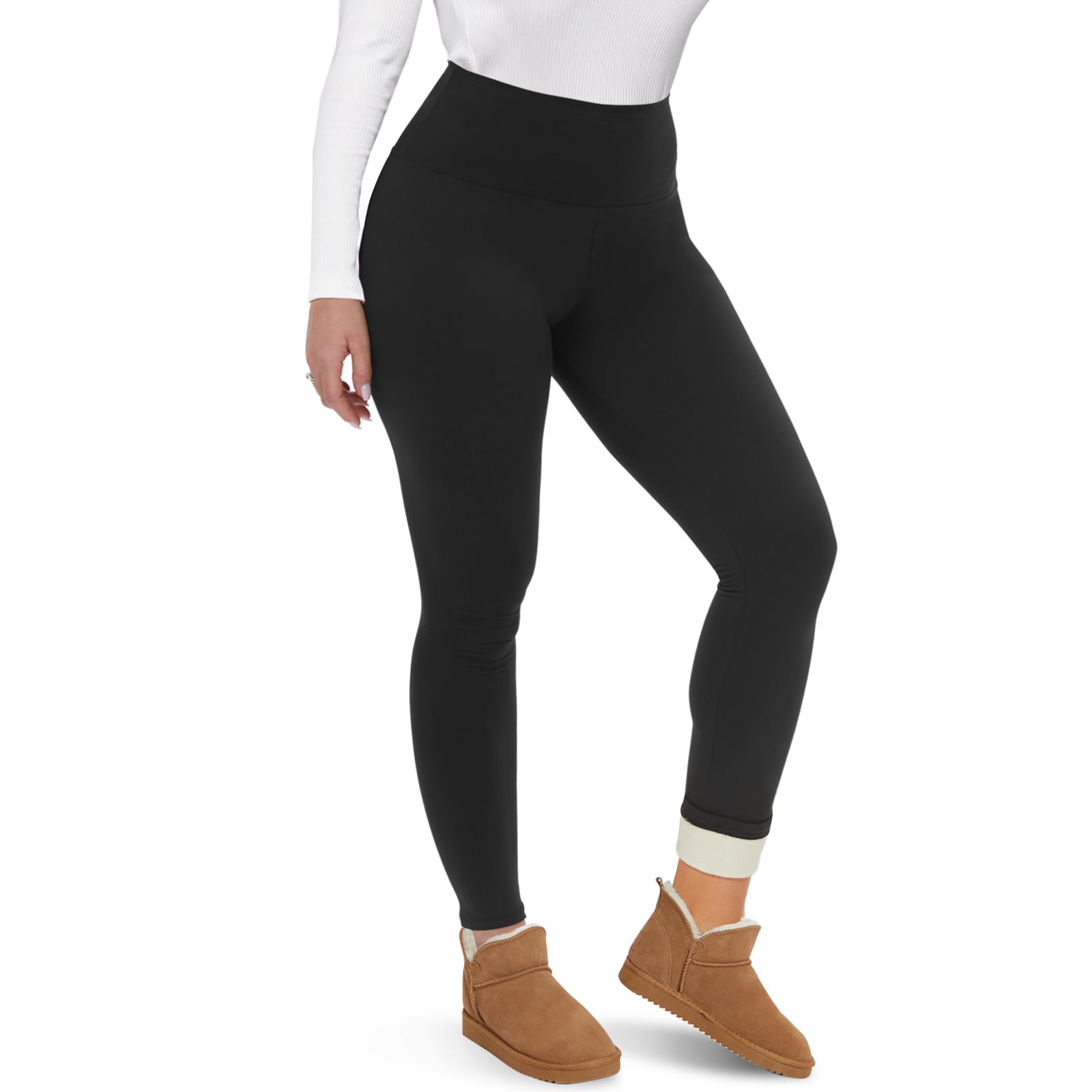
Key Features
- Style: Leggings
- Lining: Fleece
- Department: Women’s
- Price: Budget
These are not a hiking trouser and should not be sold as one. They are a warm base layer in a legging shape: brushed fleece inside, a smooth face outside, and enough stretch that they move with you under shell pants or jeans. On a cold morning they are the reason the first ten minutes outdoors is not miserable.
The fleece is the whole point, and it is thicker than most thermal leggings — thick enough that they are too warm indoors and too warm for anything but a genuinely cold day. Under snow pants, or with boots on a winter walk, they are exactly right. On a mild climb you will be stopping to strip them off.
Sizing and length are the mess. The cut runs both long and roomy depending on the size, and taller wearers find the ankle sitting well above the boot rather than covering it. Check the inseam before you commit, and if you are tall this is the pair to skip.
What we like is that they do not bind. Fleece leggings often turn into a wrestling match at the waist; these do not, and the waistband stays where you put it under a pack belt. Keep them for cold-weather layering, treat the size chart as a starting point, and they cost very little for the amount of winter they open up.
Pros
- Thick fleece lining for real cold
- Stretchy and non-binding at the waist
- Works under trousers and snow pants
Cons
- Inconsistent sizing and length; too short for tall wearers
A genuinely warm base layer for cold days under trousers or snow pants, and an inexpensive way to extend the clothes you already own.
Best for Wind and Face Protection
Sireck Fleece Balaclava

Key Features
- Weight: 3.84 oz
- Coverage: Head, face, neck
- Material: Fleece
- Dimensions: 5 x 5 x 0.7 in
- Price: Budget
A balaclava is the piece nobody buys until they have had one bad day. On a windy ridge a face covering does more for comfort than another midlayer, and this one is thin enough to wear under a helmet or a hat without turning your head into a furnace on the climb.
Wind is what it is built for. The fleece face panel blocks a headwind and the neck section seals the gap between collar and chin, which is where cold actually gets in. At just under four ounces and folded to pocket size, it lives in a jacket without you noticing until you need it.
The mouth panel is the weak point. Breathe hard on a climb and it gets damp quickly, and the fabric over the nose bridge is where the seal sits — which means glasses fog, and no amount of adjusting fully fixes it. Pull the panel below the bridge and let your nose take the cold instead, or wear it lower on the face when you are working hard.
The fit is one size and it behaves like one size: snug on some heads, loose on others, and better under a hat than on its own if you are in between. What we keep coming back to is the price of admission. It is a small, packable fix for the worst twenty minutes of a winter day, and it earns its place in a pocket rather than a gear cupboard.
Pros
- Blocks wind on face and neck
- Thin enough to wear under a helmet
- Packs to pocket size
Cons
- Nose panel fogs glasses
- One size fits loosely on smaller heads
Small, light, and genuinely effective against wind on your face and neck; the best budget fix for the coldest part of a winter day.
How We Tested These Outdoor Layers
We started by surveying the outdoor clothing market—shells, insulated jackets, fleece, and base layers—and filtering for available size ranges, published fabric specs, and price relative to comparable pieces. From that list, we narrowed to 14 pieces that covered different conditions and budgets. We ordered each tester’s usual size and, where the brand offered it, one size up to compare layering room.
Testing ran for seven months, from late fall through early spring, across wet commutes, daily dog walks, snowy weekend hikes, and one cold camping trip. We wore each piece over a base layer and, when the cut allowed, over a midlayer; we raised our arms, reached overhead, sat in the car, and wore a backpack to see whether hems rode up, sleeves pulled, or shoulders bound. On climbs we noted whether fabric felt clammy or breathable; on cold mornings we logged warmth with and without a midlayer; in rain we checked hood coverage and whether water beaded or soaked through.
After each wear, we washed pieces according to care labels, then checked seams, zippers, cuffs, and fabric for pilling or fading. We wore the same pieces on brushy trails and through mud to see how they held up, and compared colors in daylight after several washes. To judge value, we tracked how often each piece made the rotation against how it performed—not just its sticker price. At the end of seven months, the pieces that stayed in rotation were the ones that fit well over layers, kept us dry without overheating, and showed the least wear.
How to Choose Outdoor Clothing
Buy in the order you put clothes on, and spend your money where the weather actually hits you — that is the whole method.
Build the system, not the shopping list
A base layer moves sweat away, a midlayer traps warmth, and a shell keeps the weather out. Most people overbuy midlayers and underbuy shells, which is why a cold, windy hike feels worse than the forecast suggested. Starting from nothing, buy the midlayer first because it is the piece you wear most, then a shell, then base layers.
The shirt jacket here is a shortcut: it does a midlayer’s job and looks like a shirt, so it covers the walk to the trailhead as well as the trail. That matters more than it sounds. A layer you are happy to wear in town is a layer that does not get left in the car.
Match the layer to the weather, not the season
Cold and dry is the easy problem; any insulated piece here handles it. Wind is what catches people out. A fleece or a cotton shirt jacket blocks almost none of it, and no amount of extra insulation fixes a draught, so if your trips involve exposed ridges, put the money into a windproof shell and treat the warm layers as what goes underneath.
Wet is the other trap. Water resistant on a pair of bibs means slush and a damp lift seat, not a day of rain, and fleece and cotton both lose most of their insulation once soaked. For anything beyond a short shower, own a real waterproof shell before you own another warm layer.
Sizing is the real variable
Fit is where this category divides most, and the reason is simple: the same letter size means different things in a sun shirt, a fleece, and a shirt jacket. Sun shirts run roomy, fleece runs long in the sleeve, insulated shirt jackets run large, and bibs are cut by torso rather than height.
Measure your chest and your torso and use the size chart rather than the size you wear in another brand. Do not size up for layering on a piece that is already generous — you end up with a jacket that swallows the midlayer and lets cold air move around inside it.
Sun protection is a fabric decision
A UPF 50+ shirt protects the skin it covers and nothing else, so face, ears, and hands still need sunscreen. What makes a sun layer worth wearing is coverage plus airflow: long sleeves, a hood that reaches the ears, a loose cut, and a fabric thin enough that evaporation does the cooling.
That is why the hooded shirts earn a place on hot trips. They cover the neck and ears you would otherwise chase with a sunscreen stick, and they pack to nothing. Buy light colors and buy two if you can — a sun shirt you have to ration is one you leave at home.
Frequently Asked Questions
Can I wear ski bibs for hiking?
For cold, wet, or snowy hikes, yes — the insulation and water resistance that make them good on a lift work on a trail too. The rest of the year they are overkill: the legs are cut wide to go over boots and the insulation traps heat fast on a climb. Treat them as winter kit, not a three-season trouser.
How do I wash fleece and fleece-lined leggings without ruining them?
Cold water, gentle cycle, and no fabric softener — softener coats the fibers and flattens the loft that does the insulating. Skip the dryer or use low heat, since high heat is what shrinks linings and pills the outer face. Turn fleece-lined pieces inside out and hang them to dry so the brushed inside does not mat.
Are sun shirts worth it if I already use sunscreen?
Yes, on long days. Sunscreen sweats off, rubs off on a pack strap, and needs reapplying well before the day is out, while a UPF 50+ shirt keeps working. Cover the awkward parts — shoulders, neck, ears — with fabric and save the sunscreen for your face, hands, and the back of your knees.
Final Verdict
Start with the Wrangler shirt jacket. It covers the widest range of conditions here — cool mornings, camp evenings, a winter walk with a shell over the top — and it does it without a jacket’s bulk, which is why we recommend it to almost anyone building an outdoor wardrobe from scratch.
Change the pick if your trips are specific: the Arctix bibs for lift-served snow, the Roadbox hoodie for heat and hard sun, and the Columbia fleece if you want a midlayer that disappears under a shell. Buy for the weather you actually go out in, not the weather you hope for.