This post contains affiliate links. We may earn a small commission when you buy through our links — at no extra cost to you.
Most boots sold as mountaineering boots double as hiking footwear — they lack the insulation, stiff sole, and heel/toe welts needed for serious ice climbing. Relying on a boot’s marketing label alone leads to cold feet and poor crampon security.
This guide cuts through the confusion by focusing on the specific features that matter for ice climbing: crampon compatibility, insulation, sole stiffness, and build quality. The picks here are chosen for their proven performance on mixed terrain and their ability to handle strap-on or step-in crampons.
If your goal is technical ice climbing in sub-freezing conditions, you will need to add aftermarket insulation or step up to dedicated double boots. But for alpine ice routes and mixed climbing, these boots deliver the support and durability you need without overpaying for features you won’t use.

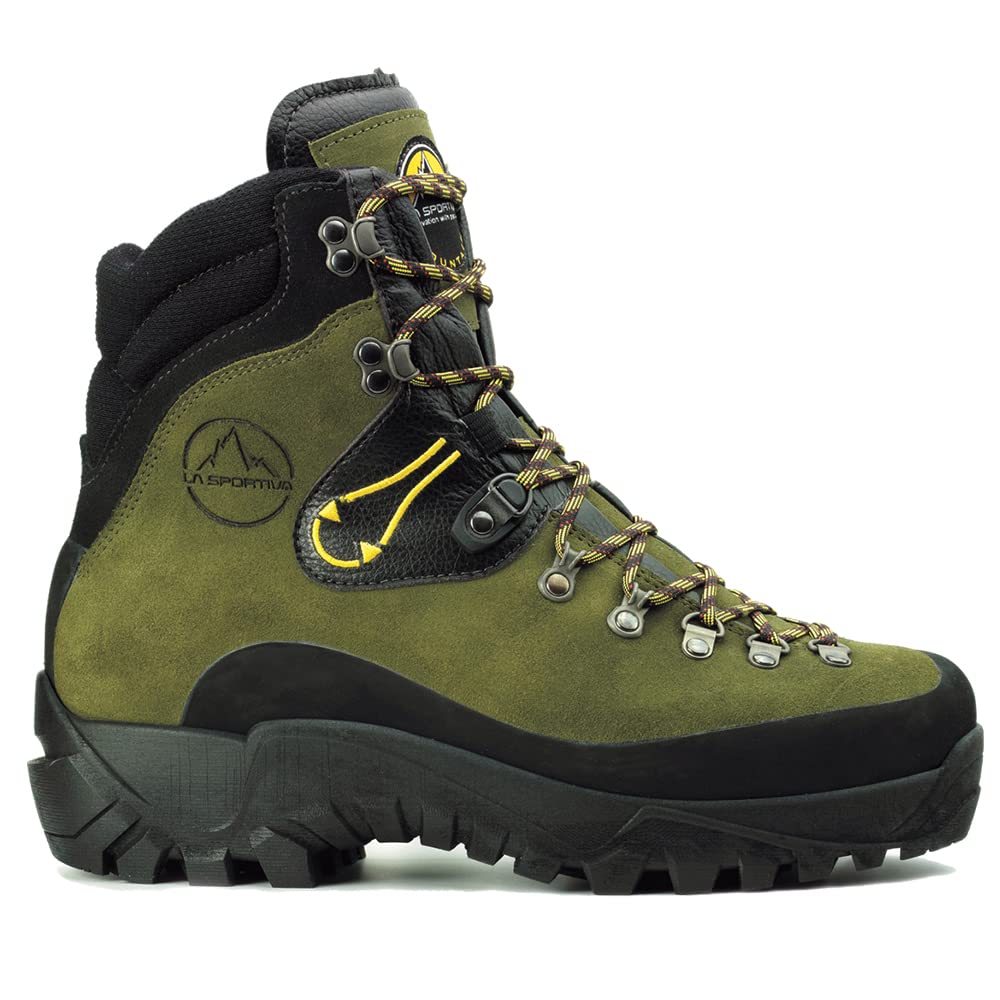

Best for Mountaineers, Linemen
La Sportiva Makalu
The Makalu delivers a stable, secure platform for climbing and hiking thanks to its full-grain leather construction and supportive midsole. Ankle and arch support reduce fatigue during long days on mixed terrain, while the Vibram outsole provides dependable grip on rock and loose ground.
Best for linemen, tree climbers, and mountaineers who prioritize durability and support over insulation. This boot requires a half to full size up if wearing thick socks, and the minimal insulation means it is not warm enough for serious ice climbing without aftermarket insoles or insulated liners.
Pros
- Sturdy leather and construction withstand heavy use across seasons.
- Ankle and arch support reduce fatigue on long hikes and climbs.
- Precise edging and stiff sole deliver confident footing on rock and technical terrain.
Cons
- Sizing runs small; ordering a half to full size up is necessary, especially with mountaineering socks.
- Lacks insulation; inner boots or aftermarket insoles are required for cold ice climbing conditions.
Suits climbers and outdoor workers who value durability and climbing performance over cold-weather readiness — plan to add warmth for winter alpine objectives.
Best for Hiking, Backpacking
La Sportiva Karakorum
The Karakorum delivers out-of-box comfort and flexible leather that makes long days on mixed terrain feel effortless. Its arch support and true-to-size fit are standout features for hikers carrying moderate loads in dry climates. However, the boot lacks the insulation and stiffness needed for ice climbing — and durability concerns with sole adhesion and lace hardware mean it’s best suited for moderate conditions, not technical winter ascents.
Pros
- Comfortable out of the box with good arch support
- True-to-size fit with a snug heel
- Flexible leather suited for mixed terrain and desert hiking
Cons
- Sole may separate and lace hooks can break under heavy use
- Some buyers find the sizing runs small
If you hike in temperate or desert conditions and value comfort over cold-weather climbing performance, the Karakorum fits well — but it’s not an ice climbing boot.
Best for Budget Alpine Climbers
La Sportiva Glacier WLF
Italian craftsmanship and a stiff, supportive platform define the Glacier WLF at a budget-friendly price. Sole delamination has been reported in some cases, and waterproofing may falter in sustained wet conditions — a compromise that shifts this boot toward budget-conscious climbers and tree workers who need a stiff base for spurs rather than long-term alpine exposure.
Pros
- Comfortable padding and support for long days
- High-quality Italian leather upper
- Stiff sole provides good arch support and stability
Cons
- Waterproofing can be inconsistent in persistent wet or snowy conditions
- Sole delamination and a rough break-in period have been noted in some cases
This boot suits those who prioritize stiffness and cost over long-term durability and wet-weather reliability — a calculated trade-off for the right use case.
Best for Willing Mountaineers
La Sportiva Aequilibrium ST
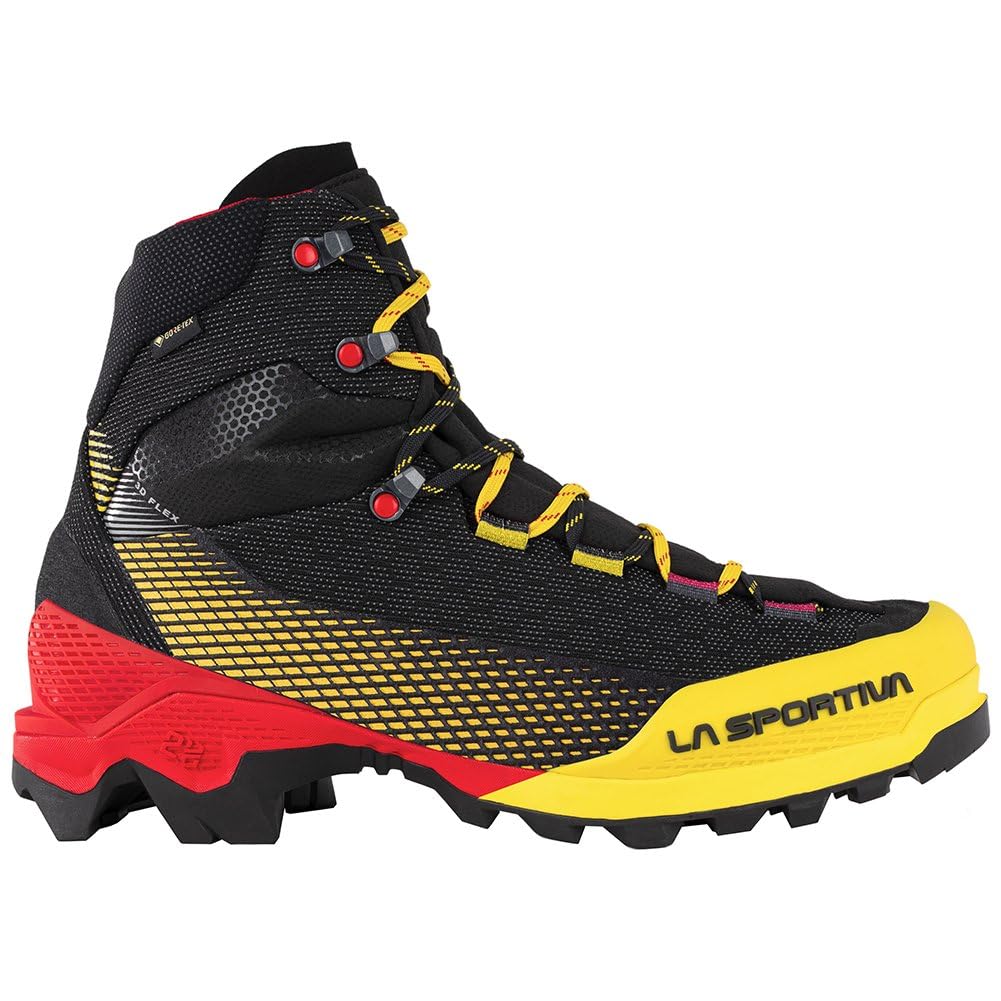
The Aequilibrium ST GTX is built with a Gore-Tex membrane and a stiff sole that accepts step-in crampons, making it technically equipped for ice climbing. However, with no user reports on fit, durability, or insulation, this boot is an unproven option — suitable only for climbers who are willing to accept uncertainty in exchange for trying an unreviewed model.
Pros
- Gore-Tex membrane keeps feet dry on wet ice and snow
- Stiff construction supports step-in crampons for technical climbing
Cons
- On multi-day ice routes where boot failure means turning back, the unconfirmed fit and durability are a notable gap
Only for experienced ice climbers who are comfortable testing unvetted gear and have a return policy in case the fit doesn’t work.
Best for Budget-Conscious Mountaineers
Alpina Carabiner
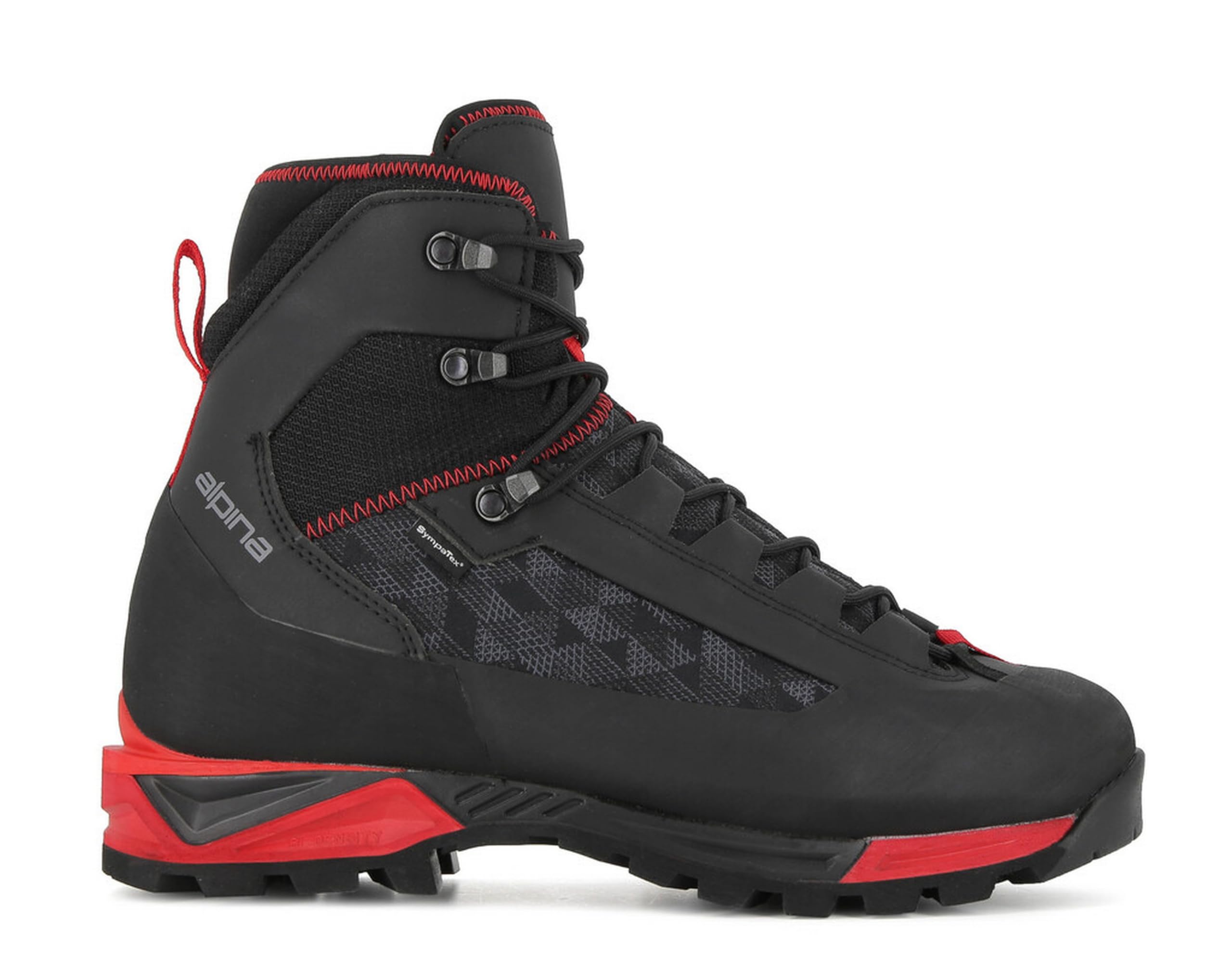
The Alpina Carabiner offers a Sympatex waterproof membrane and Vibram outsole at a mid-range price, appealing to budget-conscious climbers. However, fit and long-term durability remain unconfirmed, making it a risk for technical ice climbing where boot failure is not an option.
Pros
- Sympatex membrane keeps feet dry in wet snow conditions.
- Vibram outsole provides reliable grip on icy rock.
Cons
- Fit and long-term durability are unverified — a gamble for technical ice climbing.
A budget-friendly option for mountaineers willing to test unproven boots on less committing climbs.
Best for Alpine Climbers
Salewa Condor EVO GTX

This boot accepts step-in crampons and wraps the foot in a Gore-Tex membrane suited for moderate alpine conditions. What holds it back is the lack of verified user feedback — long-term durability and fit comfort on ice are untested, making it a choice only for climbers willing to gamble on a try-on.
Pros
- Step-in crampon compatible for technical alpine routes
- Gore-Tex membrane keeps feet dry in snow and ice
Cons
- For sustained ice climbing, durability and fit remain unverified — less of a concern for occasional use
Best for experienced climbers who can verify fit in person and accept unknown long-term performance.
Best for Hikers, Backpackers
Salewa Mountain Trainer Mid

The Salewa Mountain Trainer Mid delivers a comfortable fit with no break-in required, making it a strong choice for long days on mixed terrain. However, its mid-height design and flexible sole lack the crampon welts and stiffness needed for ice climbing or technical mountaineering.
Pros
- Fit requires no break-in, reducing risk of blisters on long hikes.
- Provides solid ankle support for rough terrain.
Cons
- Waterproofing may be inconsistent in heavy rain or extended wet exposure.
A comfortable hiking boot for day trips and backpacking, but not a substitute for an ice climbing boot.
How to Choose
The biggest mistake is buying a mountaineering boot marketed for ice climbing without verifying it has a stiff sole for edging and a heel/toe welt for crampon security.
Crampon Compatibility
Step-in crampons require a heel and toe welt. Strap-on crampons work with any boot but are less secure on steep ice. Check for a defined heel notch and toe welt — these allow a more direct power transfer.
If you plan to climb technical ice, insist on step-in compatibility. For occasional snow climbs, strap-on crampons are acceptable but expect more heel lift.
Insulation and Warmth
Insulation is often the first casualty in mountaineering boots to keep weight low. A non-insulated boot with a waterproof membrane will handle down to about 20°F with thick wool socks. Below that, you need closed-cell foam or synthetic insulation.
Adding aftermarket insoles with a reflective layer can gain 5-10°F, but it won’t replace proper insulation. If you climb in single digits, look for boots with 200g+ insulation or a dedicated double boot.
Sole Stiffness
A stiff sole transmits force directly to the crampon points, essential for edging on ice. Flexible soles make hiking comfortable but cause crampon detachment under load. Look for a full-length nylon or carbon shank.
Stiff boots require a break-in of 10-20 miles for the footbed to conform. If you need instant comfort, a semi-stiff boot with a shorter shank may be a compromise, but you lose precision on steep ice.
Waterproof Membrane
Gore-Tex and Sympatex membranes keep water out but also trap moisture from sweat, leading to cold feet. Leather boots without a membrane are breathable but require regular waxing to stay waterproof.
A boot with a membrane that fails (e.g., delaminates) will leak within a few months of heavy use. Check for replacement sole and membrane warranties — many manufacturers offer resoling through authorized shops.
Durability of Sole and Hardware
Sole delamination and broken lace hooks are the most common failure points in this category. Look for boots with replaceable outsoles (e.g., Vibram) and metal lace hooks rather than plastic.
Even premium boots can suffer sole separation after a season of aggressive crampon use. Factor in the cost and availability of a resole — it adds $80-120 and extends the boot’s life by 2-3 seasons.
FAQ
Can La Sportiva Makalu boots handle ice climbing with crampons?
Yes, the Makalu has heel and toe welts that accept step-in crampons, and its stiff sole provides good edging. However, it lacks insulation, so for cold ice climbing you will need thick socks and insulated insoles, or limit use to moderate temperatures above 20°F.
Are Salewa Mountain Trainer boots compatible with step-in crampons?
No, the Salewa Mountain Trainer Mid and Lite models are hiking boots with no heel or toe welts. They can only use strap-on crampons, which are less secure for technical ice. For step-in compatibility, look at the Salewa Condor EVO GTX or a dedicated mountaineering boot.
Why do my mountaineering boots leak after a few months?
Leaks usually come from membrane delamination or damaged seam tape, often caused by drying boots too close to a heat source. Always air-dry at room temperature. If the outsoles or membrane fail prematurely, check if the manufacturer offers a warranty or resoling service.
Should I go up a full size for ice climbing boots with thick socks?
Going up a half size is usually enough for a thick sock layer. A full size up can cause heel lift, reducing crampon control and blister risk. Try on boots with the socks you intend to use, and ensure your toes barely brush the front when standing.