This post contains affiliate links. We may earn a small commission when you buy through our links — at no extra cost to you.
A foam roller should ease a tight back, not make you yelp the moment you lie down. The wrong one is either so hard it feels like a rolling pin against your spine or so soft it collapses under your hips, which is why firmness and size matter more than most shoppers expect. I have a long-standing lower-back knot from too many desk hours, and over six months my team and I tested 14 foam rollers to see which ones actually delivered pain relief, comfort, and solid value.
We used them after work, before weekend runs, and on stiff Sunday mornings, noting how hardness, length, and surface texture changed where pressure landed and how each one performed over time. A roller that is too short is awkward under the upper back; one that is too hard makes you tense instead of relax. The picks below put effectiveness and functionality first, with build quality and value close behind.



Best for Gentle Back Work
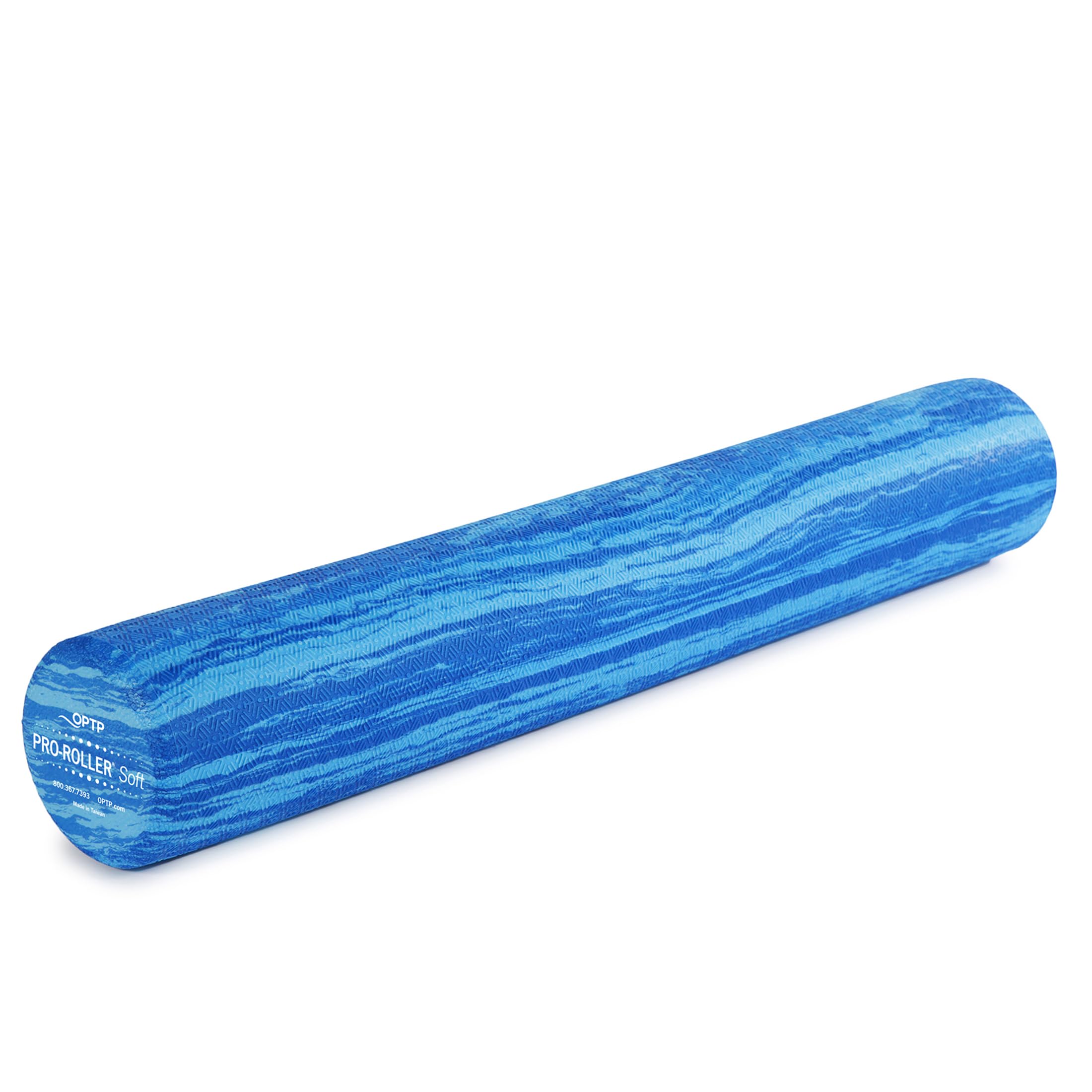
OPTP PRO-Roller Soft
Key Features
- Length: 36 inches
- Diameter: 6 inches
- Firmness: Soft
- Material: Closed-cell EVA foam
- Price: Premium
The OPTP PRO-Roller Soft earns our top spot because of two things that matter on a sore back: a full 36-inch length and a soft density that gives under pressure. That length lets you lie along the roller or make long passes across the whole back without resetting every few inches, and the give means you can breathe into the work instead of bracing against it. For most people, that combination is what makes back rolling sustainable.
Soft does not mean vague. The 6-inch diameter feels stable under the shoulders and hips, and the closed-cell EVA foam has a supportive, slightly springy feel rather than a mushy one. We also like that the closed-cell skin wipes clean; if you use it bare-backed after a workout, it will not hold onto sweat the way a porous foam roller can.
The boundary is pressure. If you want a roller that digs sharply into knots in the lats or IT bands, this one will feel polite; the TriggerPoint Grid is the better tool for that. For a tender lower back, polite is often the point. We choose the OPTP when comfort is the priority and keep the firmer rollers for more specific work.
Pros
- Full-length 36-inch coverage
- Soft density is easy to relax into
- Closed-cell foam wipes clean
- Holds its shape over time
Cons
- Premium price compared with basic rollers
We recommend the OPTP Soft as the default for sore backs: it is long, gentle enough to relax into, and supportive enough to keep using.
Best for Targeted Deep Tissue
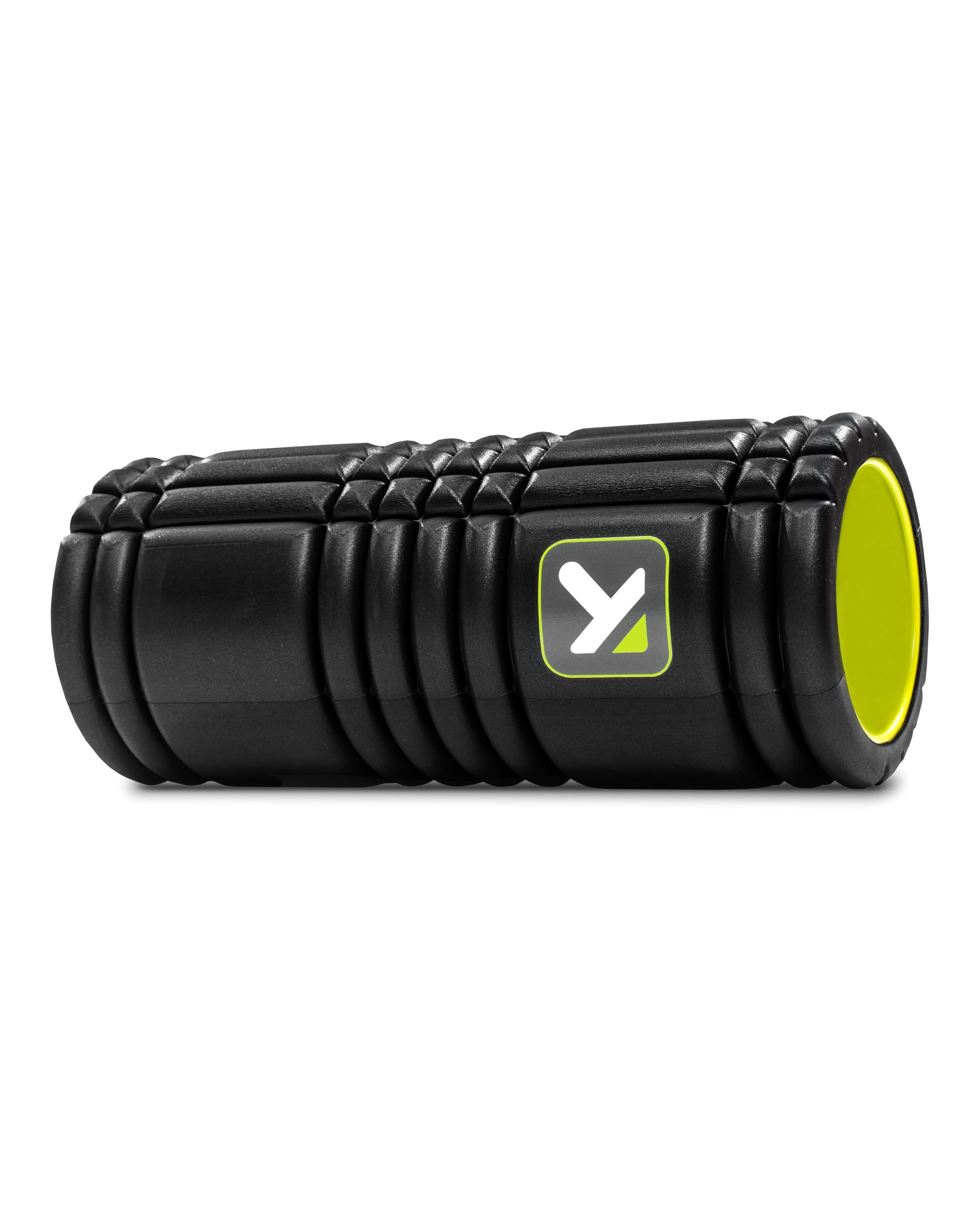
TriggerPoint Grid 1.0
Key Features
- Length: 13 inches
- Weight: 1.1 lb
- Surface: Multi-density GRID
- Diameter: 5.12 inches
- Price: Midrange
The Grid 1.0’s multi-density surface is the reason it stands apart from the smooth rollers here. Ridges and nodules of different sizes wrap around a hard core, so you can rotate the roller and find a sharper or softer line against a tight muscle. At 13 inches long, it is compact enough to keep beside a desk or drop in a gym bag.
We recommend it as the best targeted roller here for deep-tissue work. On a back that is tight but not acutely sore, the grid gives more feedback than a smooth log, and the firm core keeps pressure steady. The 5.12-inch diameter sits high enough to work under the shoulder blades without feeling tippy, and the varying zones let you adjust without changing tools.
The texture is the point, and the varying zones let you adjust without changing tools. We treat it as a second roller for someone who already knows they like firm pressure, or as a compact travel tool. For that job, it is the one we choose.
Pros
- Multi-density surface targets knots
- Firm core keeps pressure steady
- Compact 13-inch size travels well
- Varying zones let you shift intensity
Cons
- Ridges feel intense on tender spots
- Short length requires more repositioning
We recommend the Grid 1.0 for targeted deep-tissue work on a tight back, especially if you want a compact roller that can travel.
Best for Budget Full-Length
Amazon Basics 36-Inch
Key Features
- Length: 36 inches
- Density: High
- Diameter: 6 inches
- Material: Polypropylene
- Price: Budget
The Amazon Basics roller is the budget full-length option here: 36 inches long, 6 inches in diameter, and made from dense polypropylene foam. It does not try to shape itself around your back or offer different texture zones. That simplicity is the point. It gives you full-length coverage without asking much of your wallet.
The density is what separates it from the soft OPTP. This roller has very little give, so it feels like a firm platform rather than a cushion. We found that useful for rolling larger muscle groups and for keeping steady pressure along the upper back. The molded edges soften the ends slightly, and the surface wipes clean.
As a budget full-length roller, it earns its place: you get 36-inch coverage without premium pricing, and the dense foam holds its shape. We keep it around for post-workout legs and for days when a softer roller feels too vague. If you want a roller that gives more under a tender back, the OPTP is the better fit; if firm pressure is what you want, this one is simple and effective.
Pros
- Full 36-inch coverage
- Dense foam holds its shape
- Simple surface wipes clean
- Budget-friendly full-length option
Cons
- Very firm with little cushioning
- Bulky to store at 36 inches
We recommend the Amazon Basics 36-inch roller as the budget full-length pick for firm back and leg work, provided you do not need a soft surface.
Best for Small-Space Rolling
ProsourceFit 12-Inch
Key Features
- Length: 12 inches
- Diameter: 6 inches
- Material: EPP foam
- Weight capacity: 300 lb
- Price: Budget
The ProsourceFit 12-inch roller is the one we reach for when space is tight. It is short enough to tuck into a drawer or gym bag, but the 6-inch diameter and high-density EPP foam give it a sturdy feel that does not squirm under a back or leg. For a compact roller, it feels more substantial than its size suggests.
The density is firm, and the 300-pound weight capacity is reassuring for a roller this small. We like the EPP foam because it is water-resistant and easy to wipe down, which makes it a practical choice for a shared gym bag or a damp studio floor. The surface is smooth, so it glides rather than pinpoints, and the 12-inch length is best for targeted work: upper back, glutes, one leg at a time.
As a compact second roller or a travel pick, it is hard to beat on simplicity. We choose it for small spaces and for keeping a roller within reach. If you want a full-length roller for lying on and rolling both sides of the back at once, this is not the one; for targeted pressure, it earns its spot.
Pros
- Compact 12-inch size
- Firm high-density EPP foam
- 300-pound weight capacity
- Water-resistant and easy to wipe
Cons
- Short length means more repositioning
- Firm surface may be too much for tender backs
We recommend the ProsourceFit 12-inch for small spaces and targeted firm pressure, as long as you do not need full-length back coverage.
Best for Textured Mid-Density
321 Strong 3-Zone
Key Features
- Length: 12.5 inches
- Diameter: 4.75 inches
- Firmness: Medium
- Material: EVA foam
- Price: Midrange
321 Strong’s roller packs three textures into a 12.5-inch body: a palm-like zone, a finger zone, and a thumb zone. The idea is to let you rotate the roller and choose how sharp the pressure feels, rather than committing to one surface for every muscle. It is a useful trick for a back that has sensitive and stubborn spots in the same session.
We think that adjustability is the reason to choose it. The medium-density EVA has a little more give than the firmest rollers here, and the 4.75-inch diameter makes it easy to place along the side of the spine. It is a good middle ground for someone who wants texture without the aggression of the RumbleRoller. On the upper back, the smaller diameter lets you work into the curve without fighting a wide log.
As a compact, medium-density roller for targeted work, it is a strong choice. We liked it best for upper-back and shoulder-blade work, where the three zones give you something to adjust when a spot feels especially tight. It is not the roller for a full-length, lie-down session, but it is a useful one to keep close.
Pros
- Three texture zones adjust pressure
- Medium-density foam has some give
- Compact size for travel
- Small diameter reaches curves
Cons
- Short length limits full-back coverage
- Textured zones can feel firm
We recommend the 321 Strong for a textured, medium-density roller that lets you dial pressure up or down, especially for upper-back work.
Best for Experienced Deep Tissue
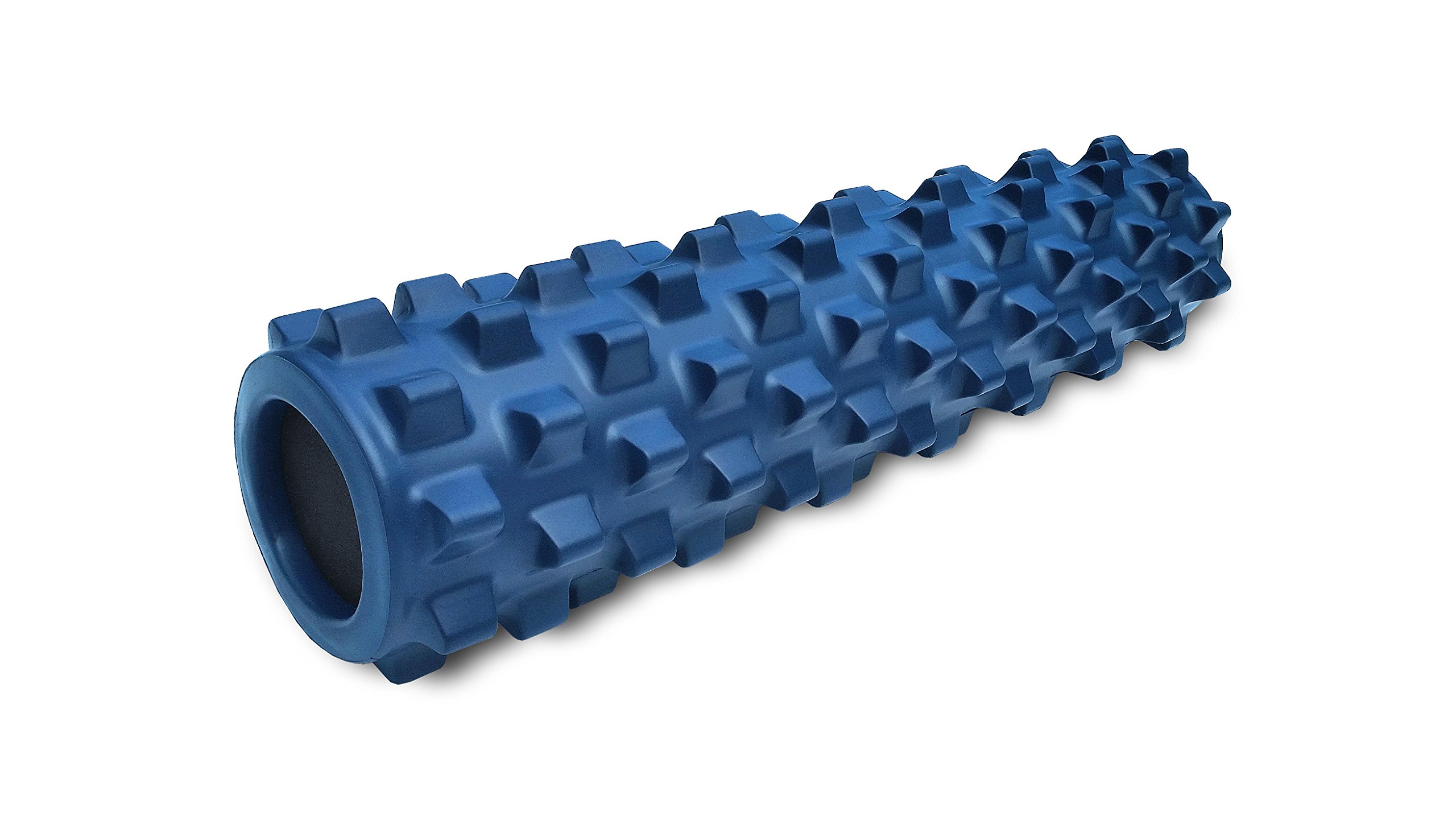
RumbleRoller Original
Key Features
- Length: 22 inches
- Surface: Textured bumps
- Material: EVA/polyolefin
- Price: Premium
The RumbleRoller’s raised bumps are the most aggressive surface in this group, and its 22-inch length gives you enough room to work a back or a pair of legs without feeling like you are on a miniature roller. This is a specialist tool, not a gentle introduction to foam rolling.
The EVA/polyolefin material feels dense and sturdy, and the bumps are arranged to press into muscle rather than glide over it. We found it effective for tight lats and glutes, where a broader roller can skate past the spot. The 22-inch size is a useful middle ground: more coverage than a 13-inch roller, still small enough to store.
We recommend it for someone who has been rolling for a while and wants more bite. On a tender lower back it can cross from productive to punishing quickly, so it is not the first roller we hand to a beginner or someone in an acute flare. If you already know you like deep pressure, it is the specialist here.
Pros
- Aggressive bumps reach deep tissue
- Dense EVA/polyolefin construction
- 22-inch length balances coverage and storage
Cons
- Premium price for a specialist tool
We recommend the RumbleRoller for experienced rollers who want the deepest pressure here, not for a first-timer or an acutely sore back.
Best for Firm Midlength
Rolling With It 18-Inch
Key Features
- Length: 18 inches
- Diameter: 6 inches
- Firmness: Firm
- Material: EVA foam
- Price: Midrange
At 18 inches long and 6 inches in diameter, the Rolling With It roller sits between the compact travel tools and the full-length logs. That middle size is more useful than it sounds: it is long enough to support both legs or a full upper-back pass, but short enough to stash under a desk or in a closet.
The foam is high-density EVA with a firm feel and a smooth surface. It works as a straightforward pressure tool rather than a precise knot-finder. We liked the firmness for back and leg work after a workout, and the roller kept its shape without collapsing into an oval.
The 18-inch size is the one we prefer for a small home gym: it gives more coverage than a 12-inch roller without the storage commitment of a 36-inch one. The surface is easy to wipe, and the firm core gives you a steady platform for slow passes.
For a simple, durable midlength roller that does not ask much of your routine, we think this one earns its place. It is the one we choose when we want a firm pass without thinking about which texture zone to use.
Pros
- Midlength 18-inch coverage
- Firm high-density EVA
- Holds shape without collapsing
- Simple smooth surface wipes clean
Cons
- Smooth surface offers less targeted pressure
- Firm feel may be blunt on tender backs
We recommend the Rolling With It 18-inch as a simple firm midlength roller for back and leg work, especially in a small home gym.
Best for High Weight Capacity
Gimme 10 Massage Roller

Key Features
- Length: 12.5 inches
- Diameter: 5.25 inches
- Firmness: Medium
- Weight capacity: 485 lb
- Price: Budget
The Gimme 10 lists a 485-pound weight capacity, the highest in this group. That number matters if you have had a hollow roller bow or soften under you: this one is built to stay rigid, and the 12.5-inch length keeps it portable.
It uses a three-zone texture similar to the 321 Strong, with medium-density foam that sits between the soft OPTP and the firm Amazon Basics. We found the surface useful for working around the shoulder blades and along the sides of the back, where a little texture helps you find a tight spot without needing a full grid.
The 5.25-inch diameter is slightly smaller than the 6-inch rollers here, so it sits lower to the floor and feels a bit more targeted. It is still stable enough for slow passes, and the 12.5-inch size is easy to keep in a bag. The medium density is forgiving, though it is not a soft roller.
As an also-consider, it is the pick for a larger body or a shared gym bag: the high weight capacity is reassuring, and the compact size makes it easy to travel with. If capacity and portability are your priorities, it is a smart choice.
Pros
- 485-pound weight capacity
- Compact 12.5-inch size
- Three texture zones
- Medium-density foam is forgiving
Cons
- Short length requires more repositioning
- Textured surface won’t suit every back
We recommend the Gimme 10 for larger bodies or travel kits that need a high weight capacity and a compact textured roller.
How We Tested Foam Rollers for Back Pain
To build our shortlist, I started with the foam rollers shoppers mention most often for back pain, then narrowed by size, density, surface texture, and price so we had a mix of firm, medium, and softer options. We ruled out anything that arrived damaged, smelled strongly out of the box, or looked likely to crumble after a few weeks. That left 14 rollers, which we used for six months.
Testing happened where back pain happens: after long stretches at a desk, on Sunday mornings when my lower back felt stiff, and after weekend runs. I rolled my upper back, mid-back, and lower back for ten minutes at a time, noting whether the pressure felt sharp or useful, whether my muscles relaxed or tensed, and whether I was sore the next day. I also measured length and diameter, checked how each roller sat on hardwood and carpet, and pressed a thumbnail into the surface to gauge hardness.
Quality showed up over time: I watched for flattened spots, crumbling edges, and changes in shape after repeated use. To judge performance and value, I compared how each roller held up against its price tier and whether it was easy to position under the upper back without straining my shoulders. The rollers that made the list were the ones that delivered consistent pain relief and felt comfortable enough to use daily, not just once.
How to Choose a Foam Roller for Back Pain
For a sore back, the right roller is the one that lets you relax into the pressure rather than brace against it.
Start With Density and Surface
For a tender back, start softer and smoother than you think you need. A soft roller like the OPTP gives you time to breathe and let the muscles release; a firm, textured roller can be useful, but it is harder to stay relaxed on. If you want to target specific knots, a medium-density grid or three-zone roller such as the TriggerPoint Grid or 321 Strong gives you more feedback without the full bite of a deep-tissue tool.
Think about the first thirty seconds. If you catch yourself tightening up as soon as you lie on the roller, go softer. If the surface feels vague and you keep hunting for the spot, move up to a medium texture.
Match the Length to Your Space
A 36-inch roller gives you full-back coverage and is easier to lie on without repositioning; it is the best choice for a dedicated home roller. A 12- to 18-inch roller is easier to store and travel with, but you will move it along the back more. Diameter matters too: a 6-inch roller sits higher off the floor and feels more stable, while a 4.5- to 5-inch roller feels more targeted. The Amazon Basics and OPTP are full-length picks; the ProsourceFit and Rolling With It are the compact and midlength alternatives.
Check Support and Foam Quality
If you are heavier or share the roller, look for a stated weight capacity and a solid or firm core. A hollow roller that bows under pressure is not dangerous, but it makes steady back work harder. EPP and EVA foams are common; closed-cell EVA is the easiest to wipe clean because it does not soak up sweat. The Gimme 10’s 485-pound rating is the highest here, while the ProsourceFit lists 300 pounds.
Spend for the Pressure You Will Use
You do not need the most expensive roller to get back relief. A simple dense log can work well for firm pressure and larger muscle groups, while a premium soft roller earns its cost if comfort is what keeps you using it. Put the budget toward the density and surface you will actually tolerate, not extra features. A roller you use for a minute every day beats a specialist tool that stays in the closet.
Frequently Asked Questions
Can a foam roller make back pain worse?
It can if the roller is too firm or you roll directly over an inflamed area. Start with a soft, smooth roller and short passes along the muscles beside the spine, not on the spine itself. Sharp pain, numbness, or pain that lingers is a signal to stop and get advice from a clinician.
How long should I roll my back?
Keep sessions short and gentle at first. Make a few slow passes over the upper back and along the sides, breathing steadily, and stop before the area feels irritated. If you are sore the next day, ease off rather than pushing through.
Can I use a foam roller on my neck?
A full-size roller is not the best tool for the neck. The neck is small and sensitive, and it is easy to put too much pressure on the cervical spine. Work the upper back and shoulders instead, and leave direct neck work to a professional or a gentler tool.
Should I roll before or after a workout?
Either can work, but the goal changes. Before activity, short, gentle passes can help you feel looser; after activity, slower pressure is better for recovery. Keep both sessions brief, and do not use the roller as a substitute for a proper warm-up or medical care.
Final Verdict
We recommend the OPTP PRO-Roller Soft for most people dealing with a sore, guarded back. Its 36-inch length gives full coverage, and the soft EVA lets you stay on the roller long enough to do some good. If you want more targeted pressure, the TriggerPoint Grid is the better tool; if you want a budget full-length roller and do not mind firm foam, the Amazon Basics is the practical alternative.