This post contains affiliate links. We may earn a small commission when you buy through our links — at no extra cost to you.
The first time I tried fly fishing, I spent more time untangling a borrowed line than casting it. A good starter kit fixes that: one box with a rod, reel, line, leader, and a few flies chosen to work together, plus a case that keeps it all organized between trips. The point isn’t to buy the cheapest complete package — it’s to get gear that lets you learn properly, without replacing the line or reel before your second season.
Over the past eight months, my team and I cast a dozen starter kits on farm ponds, small trout streams, and one windy lake edge. We judged them like beginners: how fast we could rig up, how often the line fouled, whether the case kept flies and spools sorted, and whether the whole package still felt worth its price after months in the truck. A kit that skimps on line quality or drag control will teach you bad habits fast, so we paid extra attention to the parts manufacturers usually cut corners on.


Best for First-Time Trout Anglers
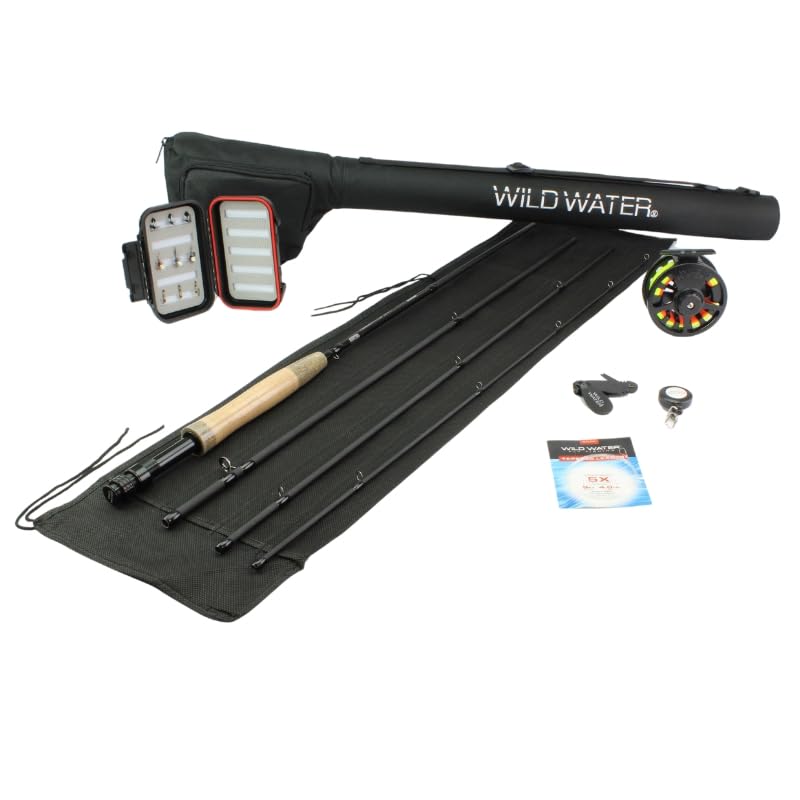
Wild Water Standard Combo
Key Features
- Pieces: 4
- Carrying case: Nylon case with 32-inch rod tube
- Included flies: 9
- Rod and line weight: 9 ft, 5/6 wt
- Price: Midrange
The Wild Water Standard Combo is the one we recommend first when someone wants to learn on streams and ponds without assembling a kit part by part. The 9-foot 5/6-weight rod is the practical all-rounder: long enough to mend line, light enough at 4.4 ounces to cast through a morning. It comes with backing, floating line, leader, a fly box, and nine flies, so the first session can be about the cast rather than the shopping list.
We liked the four-piece breakdown more than we expected. The rod packs into a 32-inch tube, and the nylon case carries the reel as well, so the outfit stays together instead of turning into a loose pile of gear. The medium action is forgiving; we could feel the rod load at short range without forcing it, which is the feel a new caster needs.
The fly box has room for a few more patterns, and that is the first upgrade we make: local flies, not a new rod. The outfit is complete enough that a beginner can spend the first month learning water and presentation instead of shopping.
Pros
- Complete with line, leader, flies, and box
- Light 4.4-ounce 9-foot rod
- Case carries rod and reel together
- Forgiving medium action
Cons
- Reel seat can work loose
- Rod tip can break under rough handling
The best first fly outfit in this group for most people: complete, light, and forgiving on streams and ponds, with the case and fly box ready to go.
Best for Premium Beginner Outfit
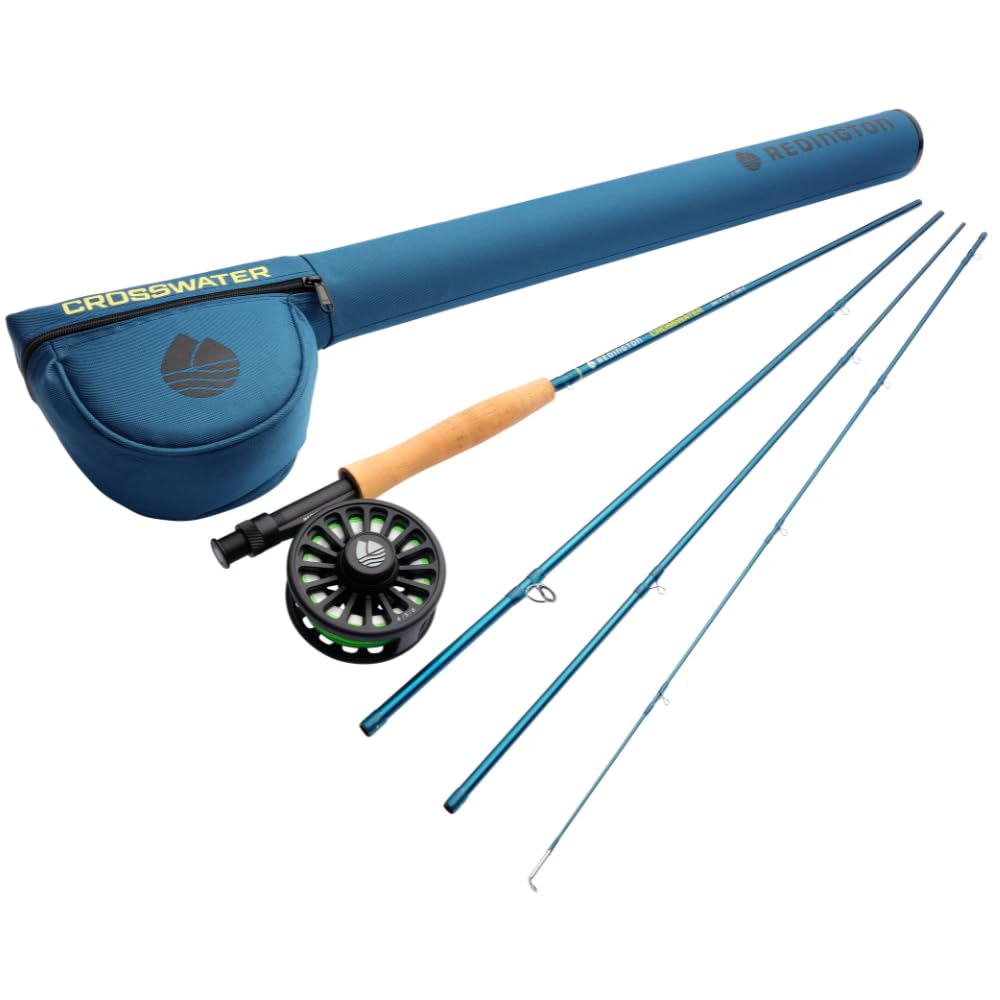
Redington Crosswater Outfit
Key Features
- Rod: 9 ft, 5 wt, 4-piece
- Case: Zippered travel case
- Reel: Crosswater disc drag
- Fly line: RIO Mainstream WF5F
- Price: Premium
The Redington Crosswater arrives as a matched 9-foot 5-weight outfit: four-piece rod, Crosswater disc-drag reel, RIO Mainstream WF5F line, and attached leader. The line is already on the reel, so the box-to-water step is short. The zippered case holds the rod, reel, and line without a wrestling match.
What separates it from the cheaper kits is the casting feel. We found it loaded smoothly at short range and stayed stable when we pushed out a longer line, which gave us more confidence than the softer rods here. The medium-fast action is easy to time, and the reel balances the rod well. It is the outfit that makes practice feel like fishing rather than a drill.
The four-piece ferrule fit is firm, and the sections line up without hunting for the guides. That small precision is what you notice every time you rig up, long after the first cast.
Pros
- Smooth medium-fast 9-foot 5-weight
- Pre-rigged RIO line and leader
- Crosswater disc-drag reel
- Zippered travel case
Cons
- Included line coils and tangles
- Drag adjustment is not the smoothest
A polished step-up for beginners who want a matched 5-weight outfit and a more confident cast from the first session.
Best for One-Purchase Completeness
Ventures Weekend Warrior
Key Features
- Rod: 9 ft, 5 wt
- Package: 23-piece starter package
- Included: Net and sling pack
- Warranty: Lifetime
- Price: Premium
The Ventures Weekend Warrior is the one kit here that feels packed for a full day rather than a first cast. The 9-foot 5-weight outfit includes the rod, reel, line, leader, tippet, forceps, nipper, floatant, a fly box, a landing net, a net release, and a sling pack, plus a beginner guide and fly reference cards. The 23-piece package is genuinely broad.
We liked how much thinking that removes. On a first trip, the net and sling pack are two things beginners often borrow or skip, and having them matched to the kit meant we were not improvising storage or handling. The 5-weight rod is the right all-rounder for trout and panfish, and the lifetime warranty is the strongest support in this group.
The trade is bulk. The listed package weight is 6.5 pounds, and the pack, net, and case add up when you are hiking in. This is a kit for someone who wants to arrive equipped, not for a minimalist who already owns a vest and net. If you already have the accessories, much of the value disappears.
Pros
- Net, sling pack, and tools included
- Lifetime warranty support
- Matched 5-weight outfit
- Beginner guide and fly cards
Cons
- Bulkier than a bare rod case
The most complete one-purchase package here for a beginner who wants the rod, net, pack, tools, and flies sorted in one go.
Best for Budget 9-Foot Setup
Master Logic Fly Combo
Key Features
- Rod: 9 ft, 5/6 wt, 4-piece
- Tools: Zinger and nipper
- Warranty: 1 year
- Included flies: 9
- Price: Budget
The Master Logic kit is the full-size budget outfit we point to when a reader wants a 9-foot rod without paying for a premium label. The 5/6-weight, four-piece rod is the right all-rounder for streams and ponds, and the kit adds a zinger, nipper, nine flies, and a one-year warranty. The waterproof fly box and travel bag make it a complete first rig, not a rod and reel alone.
We liked the tools more than the fly count. The zinger and nipper are the two accessories beginners reach for most, and having them on the kit means less fumbling for a clipper in a pocket. The rod is light in hand and the four sections break down into a case that fits in a car trunk or a daypack. The reel is basic but it does the job for panfish and modest trout.
Setup is the other thing we appreciate: the four-piece rod seats firmly, the reel comes loaded, and the case has a separate pouch for the reel. The one-year manufacturer warranty is a useful backstop for a first rod. We treat it as a kit to learn on and then hand down, not the last rod anyone buys.
Pros
- Full 9-foot 5/6-weight rod
- Zinger, nipper, and fly box included
- One-year manufacturer warranty
- Light, packable four-piece build
Cons
- Included line lacks a welded loop
A good budget choice for a full-size 9-foot outfit, with useful tools and a simple build that gets a beginner onto the water.
Best for Small Ponds
Wakeman Charter Series

Key Features
- Rod: 8 ft, 3-piece
- Case: Travel case
- Reel: 5/6 weight
- Rod material: Fiberglass
- Price: Budget
The Wakeman Charter Series is the lowest-priced kit in this group, built around an 8-foot three-piece fiberglass rod, a 5/6-weight reel, and an EVA foam handle. It comes with a travel case, line, and starter flies. The shorter rod is the first thing you notice: it breaks down small and is easy to swing in tight cover.
The fiberglass blank has a slower, softer feel than the graphite rods here. That can suit short casts and small water, and the 8-foot length is easier to manage from a bank or a small boat than a 9-footer. The reel is simple, the case holds the rod and reel, and the handle is comfortable when wet.
We still see a place for it: pond fishing for bluegill and small bass, a spare kit for the truck, or a rod for a kid who is not ready for a longer graphite stick. It is not the kit we choose for a first trout stream, because the 8-foot length gives up reach and line control on open water. On small water, that trade makes sense.
Pros
- Lowest-cost kit in this group
- Compact 8-foot, 3-piece rod
- Travel case holds rod and reel
- Simple for ponds and small water
Cons
- Included line is basic
A compact, low-cost kit for small ponds and tight water, with the short 8-foot rod as both its charm and its limit.
Best for Step-Up 5-Weight
Maxcatch Premier Outfit

Key Features
- Rod: 9 ft, 5 wt, 4-piece
- Reel: CNC-machined aluminum
- Warranty: 1 year
- Included flies: 10
- Price: Midrange
The Maxcatch Premier is the step-up 5-weight in this group: a 9-foot four-piece rod, a CNC-machined aluminum reel, a matched line, ten hand-tied flies, and a rod bag with a separate reel pouch. It sits between the budget outfits and the Redington in finish and price.
The rod has a medium-fast action, and the reel has a disc drag. The kit also includes a line zinger, clipper, and a waterproof fly box. The listed package weight is 1.6 pounds, light enough to carry in a daypack, and the four sections break down without fuss.
We were impressed by how much more finished the Premier feels than the entry kits. The reel seats solidly, the guides line up cleanly, and the rod loads without the wobble we noticed on the cheapest blanks. The flies give you a starting box. For a beginner who plans to stay with the sport and wants a rod that can grow with them, this is the middle step we point to.
The rod still asks to be treated like a fly rod: keep the tip clear when you free a snag, and do not lift a fish by the mid-section. The one-year warranty is a reasonable backstop, and the reel pouch keeps the reel from rattling against the sections in transit.
Pros
- More refined medium-fast 5-weight
- CNC-machined aluminum reel
- Ten flies and tools included
- One-year warranty
Cons
- Included line is basic
A smart step-up for a beginner who wants a more refined 5-weight and a useful accessory set, with the rod still needing careful handling.
How We Chose and Tested Fly Fishing Starter Kits
We started by pulling together every starter kit we could find from established fly-fishing brands, then narrowed the list by price — we focused on kits that cost less than a mid-range rod alone — included components, and rod weights suited to the kind of fishing most beginners do: panfish, small bass, and stocked trout. We eliminated anything that required buying a line or leader separately to fish, since the whole point is a complete package. That left us with a dozen kits to test over eight months.
We fished each kit on farm ponds, small trout streams, and one windy lake edge, rotating them through the same water so the comparison stayed fair. At the start of each session we timed how long it took to rig up from the case, noting whether the included leader and flies were usable or just filler. We false-cast on grass and water, watching for line memory, tangles, and how the fly line turned over; we also pulled line off each reel with the drag set light and heavy to feel for smooth startup and consistency. After each trip, we packed everything back into its case, carried it by the handle, and checked whether the contents had shifted or hooks had escaped.
Over eight months, we stored the kits in a truck bed, left them in a hot garage, and used them through cold mornings to see how the rods, reels, and cases held up. We compared the cost of each kit against buying the same rod, reel, line, and flies separately, and we noted which kits a first-timer could hand off to a friend without a tutorial. The best ones were not the cheapest; they were the ones that stayed complete and functional after a season of real use.
How to Choose a Fly Fishing Starter Kit
The right starter kit gets you from the box to the water without a second shopping trip, but the rod has to fit the fishing you actually do.
Match the rod to your water
A 9-foot 5- or 5/6-weight rod is the most versatile first choice for streams, ponds, and modest lakes. It has enough length to mend line and enough backbone for small streamers, yet it is not so heavy that a beginner tires in an afternoon. Shorter 8-foot rods pack easily and work in tight cover, but they give up reach and line control on open water. If you plan to hike in, we favor a four-piece rod and a case that swallows the reel; if you fish from a bank, a 9-foot rod is the easier default.
Look past the accessory count
A kit can advertise flies, tools, and a box while the line and leader remain the parts that decide whether the first casts work. We check that the reel arrives spooled with backing and a weight-forward floating line, that the leader is attached or included, and that the line has a welded loop or a clear way to connect a leader. A basic line can be replaced later, but a line without a loop adds a kitchen-table chore before the first trip. Accessories are useful; line readiness is what makes the kit a kit.
Prioritize rod and reel durability
Starter outfits live in car trunks, get stepped over on gravel bars, and are handled by people still learning to fight a fish. We pay more attention to ferrule fit, guide alignment, and a reel seat that stays tight than to the number of flies in the box. A rod can break under a closing door or a lifted fish, so a stated warranty and a case that holds the sections securely are worth having. Buy for the care you will actually give it; a fragile rod is not a bargain if it ends the trip.
Decide how much kit you want to carry
A bare rod, reel, and line case is easy to sling in a daypack. A full package with a net, sling pack, and tools is heavier and bulkier, but it removes the small purchases that can otherwise delay a first trip. We think the sweet spot for most beginners is a complete core kit with a fly box and a few tools, then add a net and pack once you know your water. If you already own those extras, a leaner outfit puts more of your budget into the rod and line.
Frequently Asked Questions
Can I practice fly casting without water?
Yes, and we recommend it before your first trip. String the rod, tie on a piece of yarn instead of a fly, and cast on grass where there are no hooks or people behind you. Start with 20 to 30 feet of line and watch whether the loop turns over; a short lawn session builds timing before you add moving water.
How do I assemble a four-piece fly rod?
Line up the guides before you push the sections together. Seat each ferrule firmly with a slight twist, then check that all guides are in one line and the reel seat is snug. Take it apart the same way at the end of the day; pulling a stuck ferrule straight is how tips get broken.
Can I use a 5-weight starter kit for bass and panfish?
For panfish and modest bass, yes. A 5-weight throws small poppers and streamers well and remains light enough for trout. If bass are the main target, or you fish wind and big flies, choose a 6- or 7-weight outfit instead and accept that it feels heavier for smaller fish.
Do I need waders to start fly fishing?
No. Start from the bank, a dock, or a boat and wear shoes you can get wet. Waders matter when you need to reach a seam or fish cold water, and they are easier to buy after you know where you will spend your time. For a first season, a license, sunglasses, and a cap are more useful.
Final Verdict
Start with the Wild Water Standard Combo if you want the most complete, forgiving first outfit for streams and ponds. Its light 9-foot 5/6 rod, pre-rigged line, nine flies, and organized case make the first trips about casting rather than assembling.
The Redington Crosswater is the upgrade for a beginner who wants a more polished 5-weight and a matched reel and line. The Ventures Weekend Warrior makes sense if you want the net, sling pack, and tools included; the Master Logic is the full-size budget route, and the Wakeman is the small-water spare.