This post contains affiliate links. We may earn a small commission when you buy through our links — at no extra cost to you.
A hiking backpack has one job no spec sheet can promise: it should feel like it disappeared by mile eight. On the rack they all look like nylon sacks with straps, but two inches of torso length or a hipbelt that rides too high can turn a good day into a slow, cranky one. What you’re buying is a way to carry water, layers, lunch, sometimes a tent, without your shoulders filing a complaint by noon.
Over the past six months, my team and I have hiked with 12 backpacks, from 18-liter daypacks to 50-liter overnight haulers, on rocky local loops and one memorably wet weekend in the Catskills. Fit, pockets, and how much gear a bag actually swallows decided the list; a pack with six compartments you can’t reach mid-climb loses to one with two you can. Something nobody tells a first-time buyer: capacity is measured loosely, so one brand’s 35 liters can swallow a load another’s won’t. Everything below has been loaded, carried, rained on, and dragged through scrub.



Best for Overnight Hikes
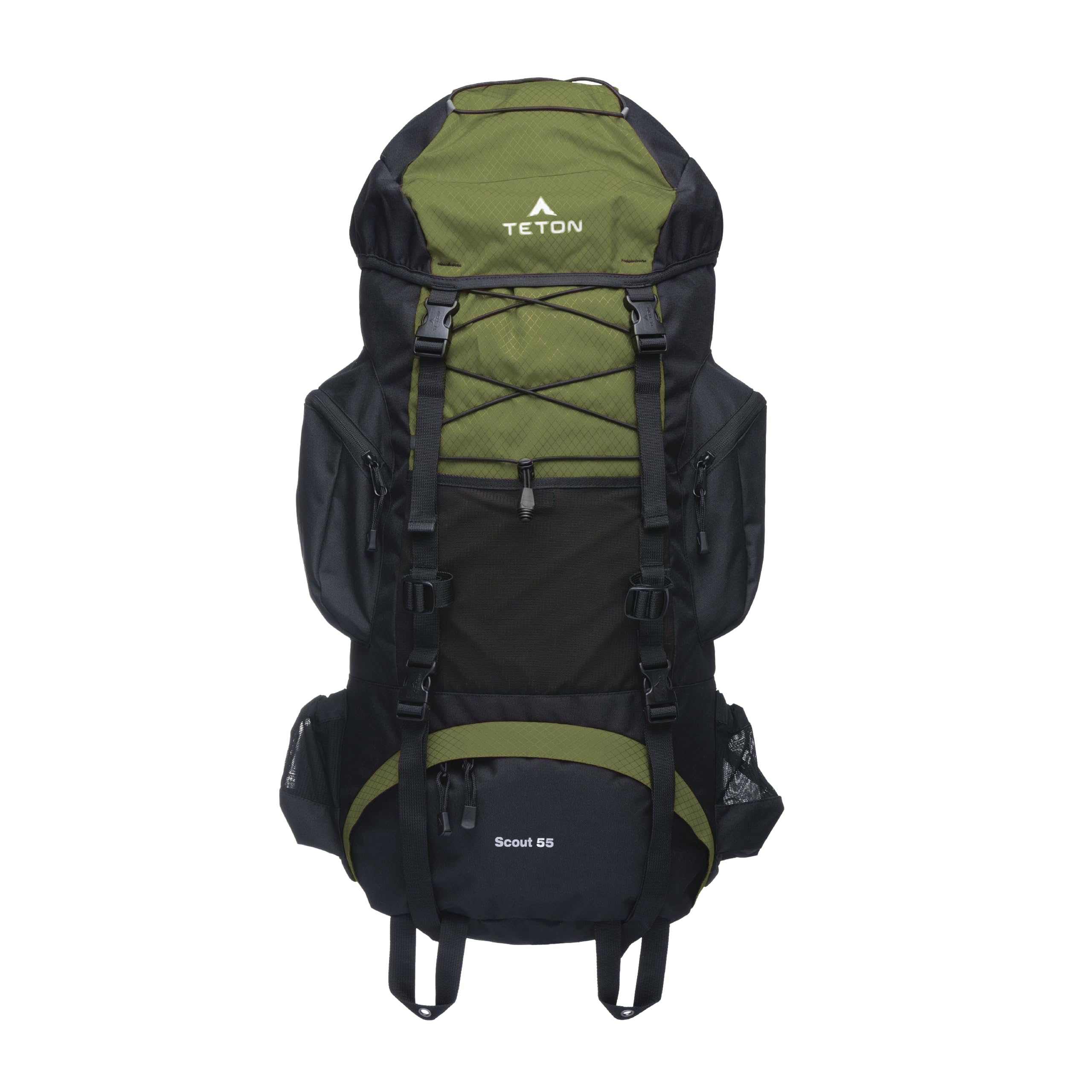
Teton Scout 55L
Key Features
- Frame: Internal frame
- Weight: 4.1 lb
- Capacity: 55 liters
- Rain cover: Included
- Price: Premium
An internal frame and a 55-liter body put the Scout in the overnight class, and that is exactly where it earns our top recommendation. The adjustable torso and open-cell foam lumbar pad give the pack a real structure to pull against your hips, so a tent, bag, food, and layers feel carried rather than hung from your shoulders. It is the pack we reach for when the hike includes a night out.
The organization is what makes it livable over a weekend. Seven pockets include a dedicated sleeping-bag compartment, side bottle holders, and a hydration sleeve, and the top lid gives you a place for small items without unpacking the whole load. We appreciated the rain cover living with the pack; it turns a threatening forecast from a trip-ender into a minor annoyance. The 600D ripstop has a reassuringly substantial feel, though at 1.86 kg the Scout is not the pack for a fast-and-light summit push.
The fit is adjustable enough for a range of adult torsos, but the pack rewards a loaded try-on. If you are tall or broad through the shoulders, check the strap lengths before committing; the same goes for anyone who likes a tight, close-carrying fit. For the rest of us, the Scout gives you a framed carry, a rain cover, and a usable pocket layout without making you choose between them.
Pros
- 55-liter capacity handles overnight gear
- Adjustable torso and lumbar pad support loads
- Rain cover and hydration sleeve add trail utility
- Seven pockets keep camp gear organized
Cons
- Sleeping-bag compartment is tight for bulky bags
For overnight hikes and loaded day trips, the Scout is the pack we recommend first: adjustable carry, useful pockets, and a rain cover in one capable package.
Best for Day Hikes
SKYSPER 20L Daypack
Key Features
- Weight: 1.1 lb
- Pockets: 10
- Capacity: 20 liters
- Water resistance: Water resistant
- Price: Midrange
A 20-liter pack that weighs 1.1 pounds is already doing the right thing for day hikes, and the SKYSPER adds ten pockets without turning into a bulky organizer. The main compartment takes a shell, lunch, first-aid kit, and a couple of water bottles; the exterior pockets keep the small stuff from disappearing to the bottom. The anti-theft zipper and trekking-pole fixtures are the kind of details you notice after a few miles, not on the product page.
We reach for this one when the day is long enough to need layers and a proper lunch but not big enough to justify a frame pack. The breathable grooved back panel and wide shoulder straps keep it stable on a steady climb, and the water-resistant shell shrugs off a passing shower. It will not carry a heavy load like the Scout, and that is the point: the SKYSPER stays light because it does not pretend to be an overnight pack.
The size is the sweet spot for one hiker’s day kit, though bulky cameras or a large hydration bladder can crowd the main compartment. If you routinely carry for two people or pack a stove, step up to a 35- or 40-liter bag; for a solo day hike, this is the one we keep coming back to.
Pros
- 1.1-pound carry stays light on long days
- Ten pockets keep small gear sorted
- Water-resistant fabric handles passing showers
- Trekking-pole fixtures free your hands
Cons
- Stitching at strap anchors is the wear point
For solo day hikes, the SKYSPER 20L hits the balance we want: light on the back, organized enough for layers and lunch, and water-resistant when the weather turns.
Best for Hydration Hikes
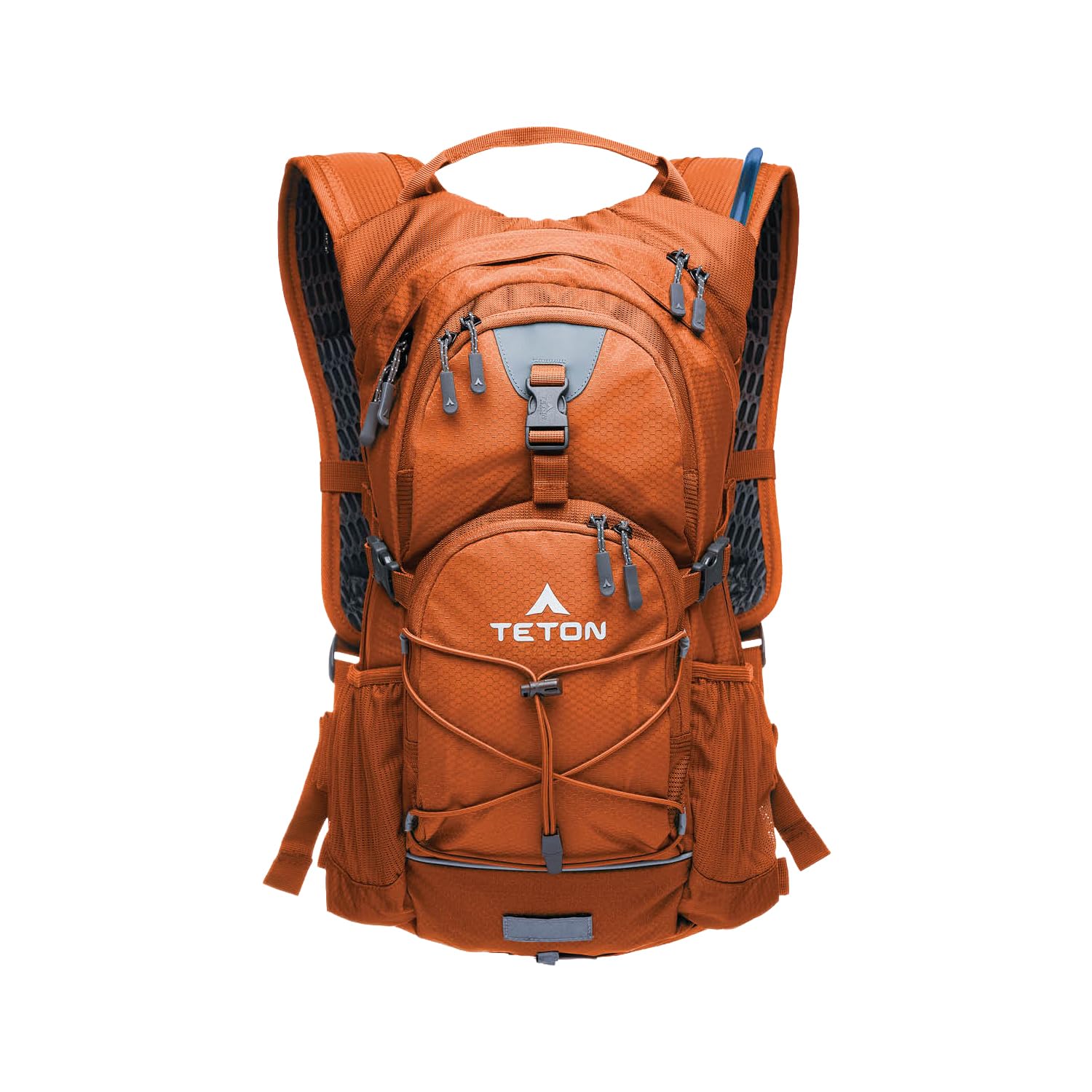
Teton Oasis 18L
Key Features
- Weight: 2 lb
- Bladder: 2 liters
- Capacity: 18 liters
- Rain cover: Sewn-in
- Price: Midrange
The Oasis takes the guesswork out of hydration: a 2-liter bladder, a kink-free hose, and a push-lock bite valve come in the box, so you are not budgeting for extra parts before your first hike. The insulated bladder pocket is a sensible touch on warm days, and the wide opening makes filling and rinsing less of a kitchen-sink operation. For day hikes where you want to drink without stopping to dig out a bottle, this is the pack we hand people first.
The 18-liter body is sized for a shell, lunch, first-aid kit, and a few extras, and the sewn-in rain cover means you do not have to remember a separate sack. The low-profile athletic cut is the part that matters when the trail is steep and you are moving fast; it stays close without the bulk of a 30-liter daypack. The weather-guarded zippers and bungee cord add useful security for a phone, keys, and a light layer.
What seals it for us is the role: this is a hydration pack for moving, not a gear hauler for a base camp. The 18-liter body has enough room for a day’s essentials, and the included bladder and rain cover mean fewer separate purchases. If you already carry bottles and prefer a bigger daypack, the SKYSPER is the more flexible choice; if you want to sip while you walk, the Oasis is the cleaner answer.
Pros
- 2-liter bladder and hose included
- Sewn-in rain cover stays with the pack
- 18 liters carries a day’s layers and lunch
- Insulated bladder pocket slows warming
Cons
- Harness can sit wide on smaller frames
The Oasis is our pick for hands-free hydration: the included 2-liter bladder, close-fitting 18-liter body, and sewn-in rain cover make it an easy choice for active day hikes.
Best for Budget Overnight Trips
Esup 50L
Key Features
- Capacity: 50 liters
- Rain cover: Included
- Water resistance: Waterproof
- Sleeping-bag compartment: Yes
- Price: Midrange
The Esup is the budget route to a 50-liter load, and it gets the basics right: a big main compartment, a sleeping-bag section, mesh side pockets, and a rain cover in the box. For a first overnight pack, that combination covers the gear you actually need without asking you to buy accessories separately. The tear-resistant polyester and nylon shell has a light, packable feel rather than the armored stiffness of a premium mountaineering pack.
Organization is straightforward. The main compartment swallows a tent, bag, and camp clothes; the sleeping-bag compartment keeps a dirty or bulky bag away from clean layers; and the front zip pockets give you a place for a headlamp, map, and snacks. The padded mesh shoulder straps are comfortable for a moderate load, and the S-curve shape helps the pack sit close enough to walk without constant adjustment.
We think of the Esup as a first overnight pack, not a load-hauler for a month on trail. It does not have the refined suspension of the Scout, but it keeps a sensible weekend load stable and accessible. For a first trip where the budget is tight, it does the job without drama and leaves room for the rest of your kit.
Pros
- 50 liters and a rain cover for overnight gear
- Sleeping-bag compartment separates camp items
- Padded mesh harness comfortable for moderate loads
- Low price for the capacity
Cons
- One-size harness limits torso fit
For a first overnight trip on a tight budget, the Esup 50L gives you the capacity, sleeping-bag compartment, and rain cover without overcomplicating the purchase.
Best for Travel and Backup
G4Free Packable Daypack
Key Features
- Weight: 4.59 oz
- Pockets: 4
- Capacity: 11 liters
- Packable: Folds into pouch
- Price: Budget
At 4.59 ounces and small enough to fold into its own pouch, the G4Free is the pack you keep in a suitcase or at the bottom of a larger bag for the hike you did not plan. It is not trying to be a framed daypack; it is an emergency cargo sack with shoulder straps. That makes it genuinely useful for travel, quick walks, and summit days where you only need water, a shell, and lunch.
The layout is simple: two zippered compartments and two side mesh pockets. The SBS zippers and tear-resistant polyamide feel more substantial than the weight suggests, and the side pockets hold a bottle without sagging. We don’t trust it with a laptop and a full camera kit, but for a rain shell and snacks it is more than enough.
We treat this as a second pack, not the only pack. The shoulder straps are narrow and unpadded compared with a proper daypack, so a long day with a full water bottle and layers will remind you of the load. But as a just-in-case bag that disappears until you need it, the G4Free earns its place; the packable design is the whole point, and it executes that better than the price suggests.
Pros
- Folds into its own pouch
- 4.59-ounce weight disappears in a bag
- Two bottle pockets and two zip compartments
Cons
- Main compartment has no internal organizers
The G4Free is the packable backup we keep for travel and short hikes: it folds into a pouch, weighs almost nothing, and handles water, snacks, and a shell.
Best for Day-To-Overnight
Maelstrom 40L

Key Features
- Weight: 2.2 lb
- Pockets: 10
- Capacity: 40 liters
- Rain cover: Included
- Price: Budget
Forty liters is an awkward size on paper and a useful one on the trail: enough for a long day with layers, a stove, and a shelter, or a single overnight if you pack light. The Maelstrom leans into that middle ground with ten pockets, a rain cover, and a 2.2-pound body that will not punish you on the approach. It is the pack we suggest when you want one bag for day hikes and the occasional overnight but do not want a full internal-frame hauler.
Our preferred use for it is as a value daypack for hikers who carry more than a bottle and a sandwich. The padded back and shoulder straps distribute a moderate load well, the side pockets hold two bottles, and the trekking-pole attachments keep your hands free on steep sections. The reflective accents are a small thing that matters on a dusk return. It is not as refined as the Scout, but it costs less and carries enough for a night out if you are disciplined.
The fit is adjustable at the shoulders and waist, and the 40-liter body compresses down when you are carrying less. That makes it more versatile than a dedicated overnight pack, though it is still a lot of bag for a fast solo day hike. If your hikes are mostly short and light, the SKYSPER 20L is the easier carry; if you want one bag to cover more ground, the Maelstrom is the compromise that works.
Pros
- 40 liters bridges day hikes and light overnights
- Rain cover and ten pockets add practicality
- Light 2.2-pound carry
- Trekking-pole holders and reflective accents
Cons
- Seams and zippers are the wear points
The Maelstrom 40L is the versatile middle pack: enough room for a light overnight, light enough for a long day, and organized enough to keep a full kit accessible.
Best for Travel Day Hikes
MIYCOO 35L Packable

Key Features
- Weight: 12.8 oz
- Capacity: 35 liters
- Wet compartment: Yes
- Water resistance: IPX4
- Price: Budget
The MIYCOO is a packable bag with a feature you do not expect at this size: a wet compartment. That one detail makes it more useful than the usual fold-into-a-pouch sack, because you can separate a damp rain shell or swimsuit from the dry layers without a plastic bag. At 35 liters, it also has enough room for a full day hike or a short trip, not just a water bottle and a snack.
It weighs 12.8 ounces and folds into its own inner pocket, so it can live in a suitcase or a larger pack until you need it. The polyester fabric is rated IPX4, which is enough for splashes and light rain, and the anti-theft zipper clips and survival whistle are small but sensible additions for travel. The main compartment and front pockets keep a day’s gear organized, and the side pockets hold bottles.
The 35-liter capacity is the useful surprise. It handles a full day of layers, lunch, water, and a small camera, and the wet compartment means you can pack a damp shell without soaking the rest. The anti-theft clips are a nice bit of peace of mind when you set the bag down at a cafe.
For the traveler who wants a hiking-ready daypack that disappears into a suitcase, the MIYCOO is the one we recommend. It gives you more room than the G4Free, a wet pocket the others do not have, and the convenience of folding away when the trip is over. It is a second pack in the best sense: the one that turns a sightseeing day into a hike without making you pack a second suitcase.
Pros
- Folds into its own pocket
- Wet compartment separates damp gear
- 35 liters holds a full day kit
- IPX4 water resistance for splashes
Cons
- Straps are thinly padded for heavy loads
For travelers and day hikers who want a packable bag with real room, the MIYCOO 35L adds a wet compartment and folds away when the trip ends.
How We Chose and Tested These Hiking Backpacks
We started by sorting the market into volume brackets: daypacks, weekend packs, and multi-day haulers. From there we filtered by frame type, torso adjustability, pocket layout, price, and whether the construction looked like it would survive more than a season, which left us with 12 packs to hike with over six months.
Each one got loaded with the same real kit: a sleeping bag, a pad, two days of food, and three liters of water, then weighed on a hanging scale. We noted how much of the stated capacity we could actually fill, counted pockets, and marked which ones we could reach without swinging the pack off, including whether a water bottle came out one-handed on a climb.
Fit got the most scrutiny. We adjusted torso length on every pack, swapped hipbelts where the brand allowed it, and walked the same four-mile loop with a 25-pound load, stopping to note where pressure showed up, whether shoulders, lower back, or collarbone. Then we were deliberately rough with them: dragging packs through scrub oak, yanking zippers, and hosing them down to see how fast the fabric dried. After six months we went back over strap stitching, buckles, and bottom panels for thinning and abrasion.
How to Choose a Hiking Backpack
The most useful first question is not which brand to choose but how far you are going and how much you need to carry.
Start With the Trip, Then the Liters
A 10- to 20-liter pack is a daypack: water, lunch, a shell, and a small first-aid kit. A 25- to 40-liter bag covers a long day with extra layers or a light overnight if you pack carefully, while 50 liters and up is the overnight and multi-day class. Be honest about bulk, not just weight: a 20-liter pack can hold a lot of dense food, but a bulky synthetic sleeping bag will eat a 50-liter pack’s space faster than the number suggests. We prefer to size up only when the load demands it, then use compression straps for shorter days.
Fit and Load Transfer Matter More Than Features
Torso length matters more than your height, and the hip belt should carry the weight. A pack with an adjustable torso, like the Teton Scout, can be dialed in for a range of adults; a fixed harness is simpler and lighter but less forgiving. Load the pack with about the weight you expect, loosen everything, tighten the hip belt first, then the shoulder straps, and finish with the sternum strap. If the bag pulls backward or the waist belt rides up, the fit is wrong regardless of the capacity.
Choose a Rain Cover or Trust the Fabric
Water-resistant fabric handles mist and a brief shower; a rain cover is what keeps a soaked trail day from turning your sleeping bag into a sponge. Packs with a sewn-in cover, like the Oasis, are the easiest to live with because you cannot leave the cover in the car. A separate cover is fine if you remember it, but check that it covers the whole pack, including the bottom and side pockets. For packable daypacks, add a dry bag for phone and layers rather than trusting the coating alone.
Packability Is a Different Job From Load Carrying
A packable bag is a second pack, not a substitute for a framed daypack. The thin straps and light fabric that let a small bag fold into a pouch are the same things that make a full day with water and layers feel heavier than it is. Choose packable when the bag will spend most of the trip inside another bag, and choose a structured daypack when the hike is the main event. The G4Free is the former; the SKYSPER 20L is the latter.
Inspect the Wear Points Before You Load Up
We check the strap anchors, the seam where the shoulder harness meets the body, and the zipper ends before trusting a new pack. Those are the places a budget pack tends to fail first, and a few minutes with the pack in your hands tells you more than a feature list. Open and close every zipper, pull the compression straps snug, and check that the buckles lock. If you plan to carry a bear canister or a heavy water load, test the pack with that weight before you leave the trailhead.
Frequently Asked Questions
Can I take a hiking backpack as a carry-on?
Measure the packed bag, not the empty one. A 10- to 20-liter daypack is the easy cabin choice, while a 50-liter internal-frame pack is usually too tall and too heavy for overhead bins. Check your airline’s size and weight limits before you fly, and loosen or remove any straps that could catch in the bin.
Can I machine-wash a hiking backpack?
No: most hiking packs are hand-wash only. Empty every pocket, remove the rain cover and bladder, then wash the bag in a tub with mild soap and a soft brush. Rinse thoroughly and air-dry it out of direct sun. A washing machine can distort the frame, tear the mesh, and leave detergent in the padding.
How should I pack a hiking backpack for a day hike?
Put the heaviest items close to your spine and above the bottom of the pack, keep water and snacks in reach, and place the rain shell near the top. Use the hip belt to carry the load, not just the shoulder straps. Before you leave, open and close every zipper and check that the pack sits snug without pressing on your lower back.
Final Verdict
The Teton Scout 55L is the pack we recommend first when the trip includes a night out: its adjustable internal frame, useful pocket layout, and included rain cover make a loaded pack feel sorted rather than improvised. For day hikes, the SKYSPER 20L is the cleaner choice; it carries a day’s layers and water without the bulk of an overnight pack. If hands-free drinking is the priority, the Teton Oasis earns its place with a bladder and sewn-in cover. Pick by the length of your walk, not by the biggest capacity on the page.