This post contains affiliate links. We may earn a small commission when you buy through our links — at no extra cost to you.
A backpacking pack can make or break a trip — and I mean that literally, after watching a friend hobble six miles with a pack that bruised her hips. The right one carries weight on your skeleton, not your shoulders, and keeps your gear organized enough that you’re not unpacking everything to find a snack. Over the past eight months, my team and I have tested 12 backpacking backpacks on overnighters, a five-day section hike, and plenty of training walks with loaded packs.
The liter count on the tag is only a starting point. A 50-liter pack that fits your torso and places pockets where your hands naturally reach will out-carry a 65-liter pack that fights you. We focused on usable capacity and storage, pocket layout, fit across different body types, construction that survives being set down on granite, and the functional details — compression straps, lid access, hip belt pockets — that separate a smooth trip from a fussy one. Size matters, but torso length and hip belt range matter just as much. The packs below are the ones we kept reaching for.
Best for Loaded Multi-Day Trips
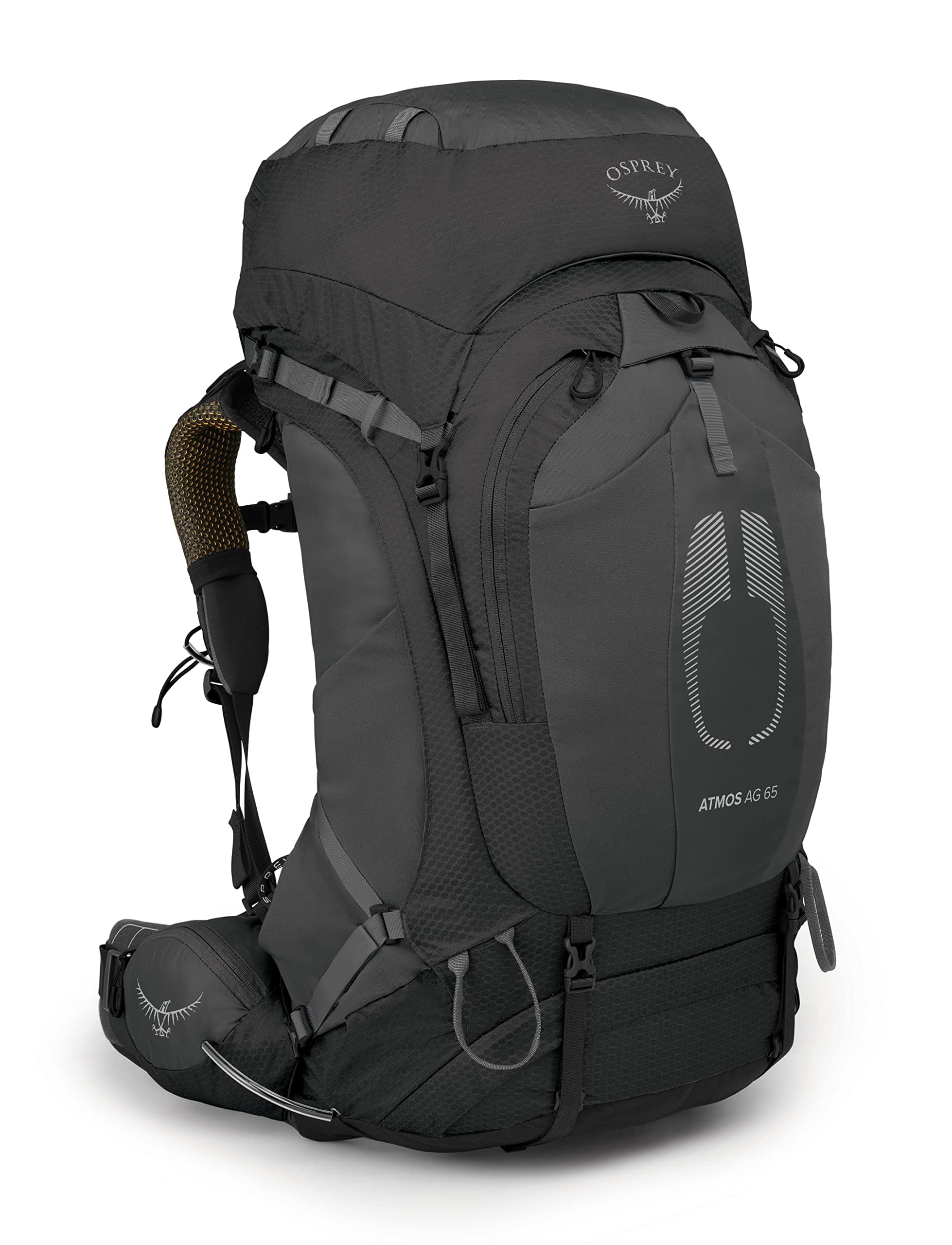
Osprey Atmos AG 65
Key Features
- Size: Large-X-Large
- Weight: 4 lb
- Capacity: 68 liters
- Rain cover: Included
- Price: Premium
The Atmos AG 65 is the pack we reach for when the trip involves a full load and a long approach. Its harness is the reason: the load settles onto the hip belt and stays close to your back instead of hanging from your shoulders. On a loaded carry, that is the difference between a pack you forget about and one you keep hitching up. The 68-liter body is enough for a weekend or a light multi-day trip, and the 4-pound weight is reasonable for the support you get.
The side zip is the detail we used most. You can reach the middle of the pack without emptying it onto the ground, which matters when the rain starts and your layers are buried. The included rain cover and zippered sleeping-bag compartment with a removable divider make a wet weekend easier to manage, and the floating lid gives you a place to lash a jacket or a wet tent fly.
The catch is fit and money. This listing is a single L-XL harness size, so smaller torsos should try a different Atmos size or look at the Scout before buying; the premium is real, and you are paying for the carry rather than a pile of extras. If the harness fits, the Atmos is the pack that makes a heavier load feel less like a wrestling match.
Pros
- Supportive harness keeps weight on the hips
- Side access reaches mid-pack gear
- Rain cover and sleeping-bag compartment included
- Reasonable weight for a load-hauler
Cons
- Single L-XL harness size limits fit
- Premium price for the category
The Atmos AG 65 is our best overall for loaded overnight and multi-day trips; its supportive harness earns the premium for backpackers who carry real weight.
Best for First Overnight Packs
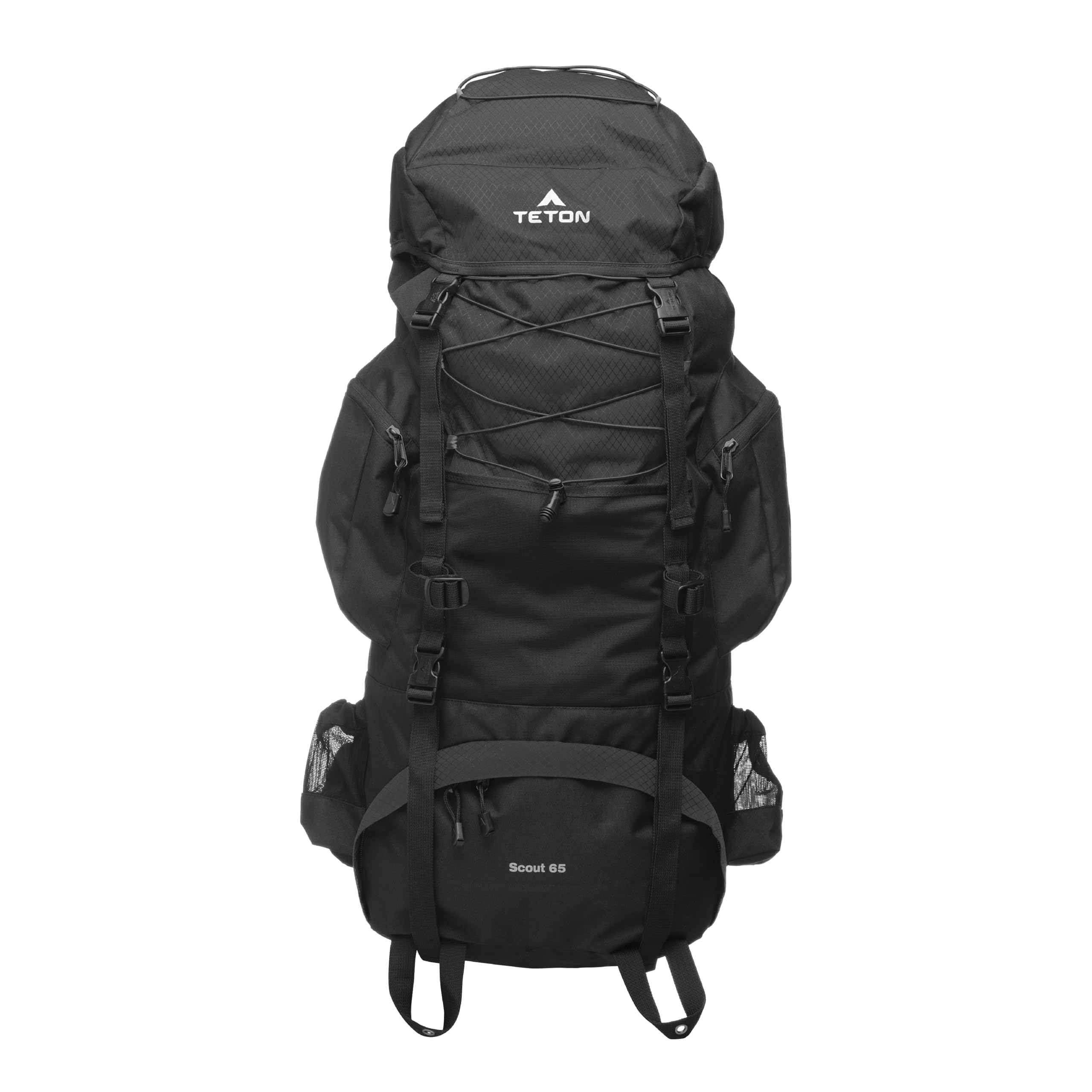
Teton Scout 65L
Key Features
- Frame: Internal frame
- Weight: 4.5 lb
- Capacity: 65 liters
- Rain cover: Included
- Price: Budget
The Scout 65 is the pack that makes a framed overnight trip possible on a starter budget. You get a 65-liter internal-frame body, an adjustable torso, a sleeping-bag compartment, and a rain cover, which is a lot of the checklist for a pack that costs a fraction of the premium option. On a loaded weekend, the Scout did the basic job: it swallowed a tent, bag, pad, and food, and the hip belt took enough weight off our shoulders to keep the walk comfortable.
We think it’s the right first backpacking pack for a lot of people, but it is not the plushest carry here. The adjustable torso is the feature that matters most: it lets a shorter or taller hiker dial in the fit, and the open-cell foam lumbar pad does a decent job of keeping the load stable. The Osprey is noticeably more refined under weight, but the Scout holds its own for a weekend load. It stays a value pick rather than the overall winner.
The sleeping-bag compartment is the first place the budget shows: a bulky synthetic bag can crowd the main pack, so plan to use the main compartment or a compression sack. Check the torso setting before you leave the house, and keep the load to a weekend’s worth rather than trying to turn it into a 75-liter hauler. When you eventually upgrade, the Scout still makes a sensible loaner or second pack.
Pros
- Framed 65L capacity at a budget price
- Adjustable torso fits a range of hikers
- Rain cover and sleeping-bag compartment included
Cons
- Straps can creep under heavier loads
The Scout 65 is our value pick for first overnight trips, with a real frame, adjustable torso, and enough capacity for a weekend.
Best for Bulky Gear Hauls
Mardingtop 75L

Key Features
- Frame: Internal frame
- Weight: 4.5 lb
- Capacity: 75 liters
- Hydration: 3-liter bladder sleeve
- Price: Budget
The Mardingtop 75L is the pack in this group that makes the least sense for a fast-and-light trip, and that is exactly why it earns a place for gear-heavy campers. It is a 75-liter internal-frame hauler with MOLLE webbing, a hydration sleeve, YKK zippers, and a rain cover; if your packing list includes a bulky tent, a bear can, or a camp chair, the volume is the point.
We found the fabric and zippers feel sturdier than the price suggests, and the pack opens wide enough to dig out gear without unpacking the whole bag. The trade-off is the carry: the harness is less refined than the Osprey’s, and it rewards a careful torso adjustment more than the other packs here. The listed 4.5-pound weight is reasonable for a 75-liter pack, but this is still a lot of pack to swing onto your back.
For a budget gear-hauler, the Mardingtop is easy to like. It is not the pack we want for a long, fast hike, but for a basecamp-style trip where capacity and attachment points matter, it solves a packing problem the smaller packs cannot. Set the torso length carefully, keep the heaviest items close to your spine, and treat the MOLLE as a bonus rather than a reason to overload it.
Pros
- Huge 75L capacity for bulky gear
- MOLLE and multiple pockets add lashing options
- Tough fabric and YKK zippers
- Rain cover and hydration sleeve included
Cons
- MOLLE webbing adds bulk and snag points
We recommend the Mardingtop 75 as a budget gear-hauler for bulky loads, with MOLLE, tough fabric, and a rain cover; it is not the pack for fast, light trips.
How We Tested (and Chose) Backpacking Backpacks
We started by researching the market and narrowing to packs with adjustable torso lengths, a range of volumes from about 40 to 70 liters, and reputations for durable construction. We filtered out anything with a fixed torso or a price far above the rest, then bought 12 packs at retail. Over eight months, we loaded each with the same gear list — tent, sleeping bag, stove, food for three days, and three liters of water — which weighed between 25 and 35 pounds depending on the pack’s volume. We adjusted every pack to each tester’s torso length and hip belt size, then walked.
On the trail, we paid attention to how the weight transferred. We noted whether the hip belt carried the load or the shoulders took it, whether the pack swayed on descents, and where pressure points appeared after a few miles. For fit, we had testers with torso lengths from 16 to 22 inches and different hip sizes try every pack, adjusting straps and load lifters mid-hike. We also practiced reaching for a water bottle while walking, digging snacks out of hip belt pockets, and packing and unpacking the main compartment to see how usable the capacity really was.
To test construction, we set packs down on granite and dirt, dragged them through brush, and inspected seams, zippers, and fabric abrasion after each trip. We checked functional details like compression straps, lid access, sleeping pad straps, and hydration sleeves. At the end of eight months, we compared notes and ranked the packs by how they carried weight, organized gear, and held up — not by the liter count on the tag.
How to Choose a Backpacking Backpack
The right backpacking pack is the one that makes a loaded carry feel boring; the liter count is only the start.
Start With the Harness, Not the Liter Count
The harness is what turns a loaded pack into something you can carry for hours. Look for a hip belt that wraps the iliac crest, a torso length you can adjust or order in your size, and shoulder straps that curve around the chest rather than pinching. We put more weight on this than on any pocket count. A 65-liter pack with a supportive harness will carry better than a 75-liter sack that hangs from your shoulders. If you are between sizes, size the harness first and the capacity second.
Match Capacity to the Trip, Not the Catalog
Capacity is a range, not a badge. A 40-50 liter pack can work for a minimalist overnight if it has a real frame and hip belt; 60-65 liters is the comfortable weekend-to-three-day zone for most three-season kits; 75 liters is for bulky gear, long food carries, or camp comforts. The trap is assuming two 50-liter packs carry the same: a frameless daypack and a framed backpacking pack are different tools. The Teton Scout 65 is a good example of the middle zone; the Mardingtop 75 is the one for bulky loads.
Weigh the Pack, Then Weigh the Load
A light pack is a pleasure on the shelf and a liability if the harness cannot control a heavy load. We look at base weight relative to capacity, but we care more about how the pack behaves when filled. A 4-pound pack with a strong frame can feel easier than a 3-pound pack that sags. Load your heaviest items first and check that the hip belt takes the weight; if the shoulder straps are doing the work, the pack is either too long, too short, or too softly structured for your load.
Check Access and Weather Protection
On a wet trip, the rain cover is the easy part; the harder question is whether you can reach your layers without unpacking the whole pack. Side zip access, a floating lid, and a sleeping-bag compartment with a divider all earn their place when the weather turns. We like a cover that lives in its own pocket so it does not migrate to the bottom. Check that your sleeping bag actually fits the bottom compartment before you leave; bulky synthetic bags often need the main compartment instead.
Frequently Asked Questions
Why choose a backpacking pack instead of a large travel backpack?
A travel pack is built for access and transport; a backpacking pack is built to carry weight over miles. The difference is the frame, hip belt, and harness, which transfer load to your hips and keep the pack stable on uneven ground. If you will walk more than a few miles with a loaded pack, start with a backpacking pack. For hostel-to-train travel, a travel pack’s opening layout may suit you better.
Can I take a 65L backpacking pack as a carry-on?
Usually not on strict airlines. A full 65L pack exceeds common carry-on dimensions once it is packed, and frame stays can make it harder to squeeze into a sizer. A 40-50L pack is the safer carry-on size, and even then you should check your airline’s limit before the airport. If you need the full 65L, plan to check it or ship gear ahead.
Why does my backpacking pack squeak, and can I stop it?
Squeaks usually come from the frame, harness, or torso-adjustment panel rubbing under load. Empty the pack, reset the torso panel to your size, and tighten the hip belt before the shoulder straps and load lifters. If it persists, check that the frame is seated correctly and that no strap buckle is rubbing. A little dry paraffin on the contact point can quiet it, but keep lubricants away from fabric and buckles.
Final Verdict
The Osprey Atmos AG 65 is the pack we recommend first for loaded overnight and multi-day trips. It earns the premium with a harness that keeps weight on the hips, a 68-liter body that swallows a weekend kit, and side access that saves unpacking in the rain.
If that spend is too much, the Teton Scout 65 is the value call: a real frame, adjustable torso, and enough capacity for a first weekend, with a snug sleeping-bag compartment to work around. The Mardingtop 75 is the specialist for bulky gear, not the default.