This post contains affiliate links. We may earn a small commission when you buy through our links — at no extra cost to you.
The boot that wins you over in the store and the boot that gets you down a rocky descent at mile 12 with a loaded pack are often two different boots. The gap shows up three days into a trip you spent all winter planning, as a heel that lifts on every climb or toes that jam on every downhill. Those are fit problems, not toughness problems, and grit doesn’t fix them — comfort, fit, and build quality have to be settled before you reach the trailhead.
My team and I have spent the past eight months in 11 pairs, and one pattern keeps repeating: the boot that flexes beautifully on the carpet at the shop is often the one that goes sloppy by month four, while a stiffer, heavier-built pair pays you back for the break-in. Appearance earns its place too — boots you actually like looking at get worn on the shoulder-season walks that do the real breaking in. The picks below are sorted by how you’ll actually use them.
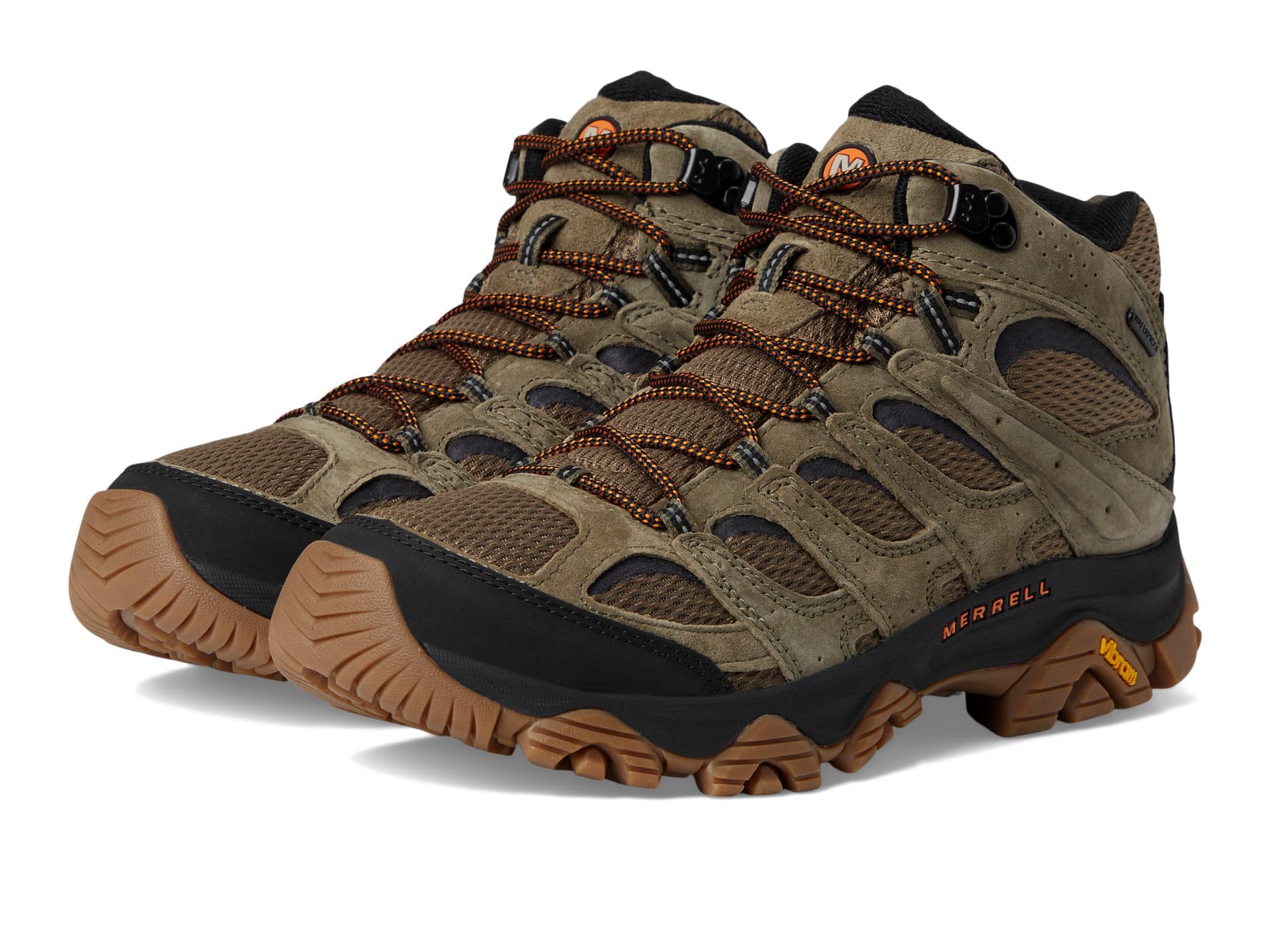



Best for Loaded Multi-Day Trips
Merrell Moab 3 Mid Waterproof
Key Features
- Cut: Mid
- Sizing: Runs small
- Waterproofing: Waterproof
- Price: Premium
Every boot here gets judged on the same trip: several days out, a pack that ends up heavier than planned, and weather that turns on the second afternoon. The Moab 3 Mid is where we keep landing. It’s a mid-cut waterproof boot with enough structure underfoot to carry weight and enough give at the collar that you’re not clomping around camp in something rigid.
It wins on durability, and that’s the right place to win, because durability is what ends backpacking trips early. Soles let go, seams open, and the boot that felt wonderful in the shop becomes the reason you walk out a day ahead of schedule. This is one of the few men’s boots here we don’t quietly worry about on that count, and the only other one is the Columbia Transverse, which costs considerably less. Build quality and comfort holding up together is rarer than either on its own.
Sizing is the thing to get right before you commit. The Moab 3 runs small, and the fix is straightforward: go up half a size and try them on late in the day, when your feet are at their biggest, wearing the socks and liner you’ll actually hike in. Do that and the toe box gives you room to move on descents, which is the difference between a long day and a miserable one.
Waterproofing is where it gives ground. Wet grass, shallow puddles, a rainy approach — all fine. A day of steady rain or a boggy traverse, and this is not the boot we trust to keep feet dry; that’s the trade a membrane makes. What no listing will tell you is how the collar softens exactly where the boot creases, so by day three the stiffness you noticed out of the box has stopped being part of the conversation.
Pros
- Best balance of support and comfort under a pack
- Durability holds where cheaper boots fail
- Short break-in and all-day comfort
- Roomy toe box for long descents
Cons
- Costs more than every boot here except the Danner
For a loaded multi-day pack, this is the boot we hand people first: firm enough underfoot, soft at the ankle, and the most consistent durability in this group.
Best for Budget Multi-Day
Columbia Transverse Hike Waterproof
Key Features
- Cut: Mid
- Sizing: Runs large for some
- Waterproofing: Waterproof
- Price: Midrange
The Transverse is the cheapest boot in this guide that we trust with a loaded pack, and that one sentence does most of the work. Durability is what normally sinks a budget boot, and this is one of the two men’s models here whose soles and seams are not the story. It’s also light enough that the last mile of a long day doesn’t feel like a punishment.
The other reason it’s here is the toe box. Among the men’s boots in this group it’s the roomiest in a standard width, which makes it the natural first try for wide feet or for anyone whose feet spread by mid-afternoon. Sizing is the thing to settle first, because it runs large for some feet and the toe box is the dimension that decides it. Order your normal size, walk around indoors, and send them back if your heel lifts.
One thing to budget for: the factory insole is flat, and swapping it for something with real arch support does more for this boot than for anything else here. Replace it before a long trip, not after. And the tongue sits deep enough in the collar that water doesn’t run straight in over the top at a wet crossing, which is a small detail you only appreciate on the day it matters.
Pros
- Durability that holds up at the lowest useful price here
- Roomiest standard-width toe box among the men’s boots
- Waterproofing holds on wet trails
- Light on the foot for the miles
Cons
- Firm sole needs several trips to soften
The best value we found here: a light, roomy, genuinely waterproof boot that carries a loaded weekend without complaint.
Best for Wide Women’s Feet
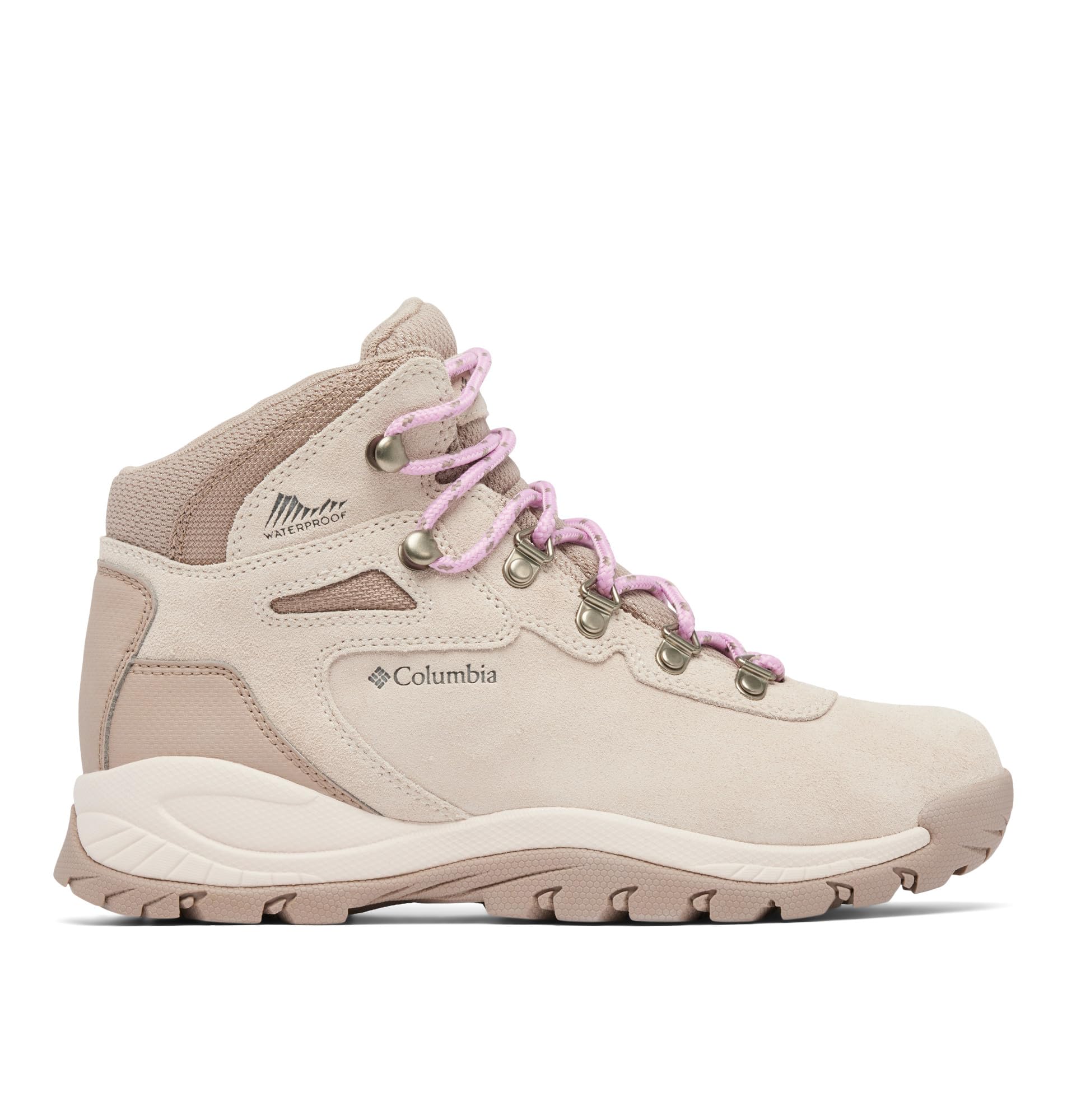
Columbia Newton Ridge Plus Amped
Key Features
- Cut: Mid
- Widths: Standard and wide
- Waterproofing: Waterproof
- Price: Midrange
Width is the reason to start here. The Amped comes in wide sizes, and it has the roomiest toe box of any women’s boot in this guide — space for thick socks, for bunions, for feet that spread over a long day, without the whole boot feeling like a bucket. If every women’s boot you try pinches across the forefoot, this is the one to order next.
Ankle support is the half that matters with weight on your back, and it’s the part we’re most confident about. The collar is stiff enough to hold a load without the bulk that usually comes with that, and on roots and rocks it keeps the foot from rolling. It’s also waterproof in the way that counts — sustained wet rather than a passing splash — and it looks considerably better than most of the boots here.
Comfort is the split: most feet walk all day in these without a word of complaint, but the collar rubs some ankles, so a long walk before a trip beats discovering it on day two. And they’re mid-pack on weight, not a light boot. The bright lace option is the detail that stops them reading as equipment, which is more of a reason to like a boot than it sounds.
Pros
- Wide sizing with a genuinely roomy toe box
- Firm ankle support without bulk
- Waterproof in sustained wet, not just splashes
- The best-looking boot in this guide
Cons
- Heavier than the light boots here
For women who need width and a firm ankle with a pack on, the Amped is the boot we point to first.
Best for First Overnighters
Timberland Mt. Maddsen Waterproof
Key Features
- Cut: Mid
- Sizing: About a half size small
- Waterproofing: Waterproof
- Price: Midrange
Set the Mt. Maddsen next to the Moab 3 and the difference shows up in the first mile, not the tenth. The Timberland is softer underfoot and softer at the collar, and it asks for almost no break-in — the boot you can buy the week before a trip and still trust on the trail.
Water is where it quietly overperforms: slush, wet grass, shallow crossings, feet stay dry. Fit is close to true, though it starts snug across the instep and loosens with wear, and the sizing runs about a half step small — go up half, especially if you’re between sizes. Against the pricier boots here it’s decent value as well.
So it’s the comfort-first pick, and that’s a real category rather than a consolation. For three-season trips on established trail with a moderate pack, it’s a fine first backpacking boot. What it won’t do is last like the leather boots above it, because seams rather than soles are its weak point. The lacing helps more than it should: open eyelets up top let you cinch the ankle without crushing the instep, which is why a boot this soft still feels locked in on a descent.
Pros
- Comfortable from the first mile, no real break-in
- Keeps feet dry in slush and wet grass
- Sensible value against the premium boots
Cons
- Seams, not soles, are the weak point
We recommend the Mt. Maddsen to anyone who wants comfort from the first mile and doesn’t plan to overload it.
Best for Light and Fast
Danner Mountain 600
Key Features
- Sizing: Between sizes for many
- Item weight: 1.2 lb
- Water resistance: Water-resistant
- Price: Premium
There’s a boot in this guide that looks like it came out of a 1970s catalog, and it’s the Danner. Leather, a clean profile, a Vibram outsole — the Mountain 600 is the one people notice, in town and on trail, and it’s the only boot here you could wear to dinner without changing.
It’s light, too. Of the leather boots here it’s the one that disappears on your foot, closer to a high-top sneaker than to a mountaineering boot, and it needs almost no break-in before a day hike. For five to ten miles of easy to moderate trail, it’s the most pleasant boot in this group to walk in.
Two things to know. The toe box is narrow for a boot at this price, so wide feet should look at the Columbia instead. And the sizing is odd — some go down half a size, others stay true — which usually means the boot sits between sizes for a lot of people. Durability is good for something this light: the outsole wears well and the toe holds up to rock.
The real limit is load. The Mountain 600 is built for lighter packs and shorter approaches, and with a heavy multi-day carry you feel the difference against the Moab by the end of the first long descent. Buy it for fast overnights and hut trips, and for the pleasure of a boot that looks better with a few miles on it.
Pros
- Light enough to forget you’re wearing leather
- The best-looking boot here
- Vibram outsole wears well and grips
- Almost no break-in for day hikes
Cons
- Narrow toe box for the money
- Priciest boot in this guide
The most pleasant boot we walked in over five to ten miles, and the best-looking here; just don’t load it for a two-week carry.
Best for Cold Weather Trips
XPETI Thermator Mid
Key Features
- Cut: Mid-rise
- Insulation: Insulated
- Water resistance: Water-resistant
- Price: Budget
Cold-weather trips are their own problem: frozen ground, wet snow, and boots that turn into bricks by the second morning. The Thermator is the warm one here — insulated, mid-rise, and built for exactly the conditions that make a three-season boot miserable.
Warmth is what it does best, and it manages it without the weight you’d expect from an insulated boot. Feet stay warm in snow and cold rain, and the water resistance holds up in slush and deep snow rather than only in a passing shower. It’s also the cheapest way into a boot that will handle a winter overnighter.
Sizing runs close but the volume is generous, and most people go up half a size so thick socks don’t cramp the toes. Traction in snow and mud is a genuine strength. What it isn’t is a precise boot — the fit is a little vague under the arch, and it feels like what it is: a warm, sturdy, inexpensive winter boot.
Durability is the worry. Seams and the fabric behind the heel are the failure points, and a boot that comes apart in one season is expensive at any price. For cold-weather overnights and winter training walks it earns its place; for a three-season thru-hike it makes no sense at all.
Pros
- Warm in snow and cold rain
- Keeps feet dry in slush and deep snow
- Light for an insulated boot
- Cold-weather capability at the lowest price here
Cons
- Seams and heel lining can give out in a season
We reach for the Thermator when the forecast turns cold: warmth is what it does best, at the lowest price in this guide.
Best for Weekend Day Hikes
NORTIV 8 Women’s Waterproof Hiking Boot

Key Features
- Department: Women’s
- Listed use: Trekking
- Waterproofing: Waterproof
- Price: Budget
This is a day-hike boot, and a good one: waterproof to the ankle, light, comfortable enough that it doesn’t need breaking in, and cheap enough to keep as a second pair for muddy weekends. It’s the budget women’s boot in this guide, and it earns the place.
Traction is where it’s least sure — fine on dry trail and gravel, less convincing where it’s wet and rooty. The laces work loose over a day too, and a double knot or a replacement pair of laces fixes that cheaply. As a first boot, or a knock-around pair for short loops and yard work, it’s a lot of hiking for very little money.
Pros
- Comfortable without a break-in
- Waterproof to ankle depth
- Light and cheap enough for a second pair
Cons
- Soft ankle support under a loaded pack
- Sizing is inconsistent across feet
We keep the women’s NORTIV 8 for day hikes and weekend loops: cheap, comfortable, waterproof enough for both, and not built for a loaded carry.
Best for Occasional Day Hikes
NORTIV 8 Ankle High Waterproof Boot

Key Features
- Cut: Ankle high
- Department: Men’s
- Waterproofing: Waterproof
- Price: Budget
If your trips are weekend loops with a daypack rather than a five-day carry, the case for spending more gets thinner, and this is the boot that makes it. It’s ankle-high, listed as waterproof, and sturdily built for the money.
For a budget boot it’s stiffer than you’d expect, which helps on rocky ground and when you’re scrambling rather than walking. Construction is a genuine strength: the stitching and the footbed hold together like a much more expensive boot, and the ankle holds your foot rather than flopping around it.
Comfort is the part to plan around. The boot is stiff and heavy, and for some feet it never really softens, so break it in on purpose — short walks, thick socks, a week before you need it. Sizing runs a little large for some feet, and the cuff sits high enough that a thick sock changes the fit more than it does on the pricier boots here. At this price none of that is unreasonable; it’s just a boot that asks a little more of you.
Pros
- Sturdy construction for the price
- Stiff enough for rocky ground
- Cheap enough to keep as a spare pair
Cons
- Soaks through in sustained wet, not puddles
We point occasional day hikers at this one: it’s cheap, sturdy, and asks for a proper break-in before it returns the favor.
How We Tested 11 Pairs of Backpacking Boots (and Broke Them In)
We started with a shortlist of about 40 pairs and cut it down on paper first: weight per pair, shank stiffness, rand construction, whether there was a real waterproof membrane or just a coating, and whether the boot came in wide sizes. Price counted, but only against how much boot it bought. Eleven pairs made the cut, and each one went on at least six outings over eight months.
Most of that time was loaded day hikes with 25 to 30 pounds in a pack — rocky ridgelines, loose scree, and one muddy spring weekend that turned every descent into a slip test. Two pairs came along on multi-day trips. We sized every boot with a midweight wool sock, walked up a steep hill to see whether the heel lifted, then walked down one to see whether toes hit the front. For water resistance, we stood in a creek up to the laces for two minutes and checked the socks afterward.
Each pair got inspected at the two-, five-, and eight-month marks: tread wear at the heel and ball, toe cap scuffs, rand separation, frayed eyelets. We weighed them again at the end, since a soaked boot carries water in its foam, and noted which ones still looked presentable enough for dinner in town. Traction was judged on wet rock and packed dirt, not manicured paths.
How to Choose a Backpacking Boot
The boot you need is decided by what’s on your back and under your feet, not by how tall the collar is or how many features the listing names.
Match the support to the load
The biggest fork in this category is how much boot to buy. A stiff sole and a firm collar keep a heavy pack from rolling your ankle and stop your arch collapsing on a long descent. The same stiffness is tiring when the load is light and the trail is smooth.
So decide your honest average rather than your dream trip. Multi-day carries with food and water over rough ground want the firmest boot you can wear comfortably, which is where the Merrell earns its place. Overnighters and fast trips want something lighter, and buying more boot than your trips need is the most common mistake we see.
Durability is a split, not a given
Almost every boot here is comfortable on day one. The difference shows up in season two, when soles start to lift, seams open and heel linings wear through — and on a backpacking boot those failures tend to happen a long way from a road.
Look at how the upper meets the sole, whether a rubber rand wraps the toe, and how many seams sit exactly where the boot flexes. The cheapest boots in this guide are the ones with the most divided long-term feedback; the Merrell and the Columbia Transverse are the two men’s models where that isn’t the story.
Waterproofing has a ceiling
A membrane is genuinely useful and genuinely limited. It keeps out rain, wet grass, slush and a shallow puddle. It does not keep out water that comes over the collar at a crossing, and once a boot is wet inside, that same membrane slows the drying.
Check the tongue first: one attached high up the sides stops water running in over the top, which is the failure people blame on the membrane. Treat leather each season, too — water repellency is maintenance, not a permanent property.
Fit beats brand every time
Sizing is not consistent across models. The Merrell runs small, the Columbia Transverse runs large for some feet, and the Danner sits between sizes for plenty of people, so a number on a box tells you less than a walk around the block.
Try boots on late in the day, in the socks and liner you hike in, and judge three things: room in front of your toes on a downhill, a heel that stays put, and no pressure across the instep. A wide fit isn’t a compromise — if your forefoot is wide, it’s the only fit that works.
Decide how cold you go
Insulation changes what a boot is for. A warm boot like the Thermator is a pleasure on frozen ground and in wet snow, and a misery in July; a three-season boot is the reverse in February.
If your trips run into late fall or start in early spring, decide whether you want one boot that’s mediocre all year or two that are good in their season. We lean toward the second, and toward putting the money into the three-season pair.
Frequently Asked Questions
Can I use trail runners instead of backpacking boots?
For light loads on smooth, dry trail, plenty of hikers do fine in trail runners, and they’re cooler and quicker on the feet. The trade is underfoot protection and ankle stability once weight goes on your back.
So use the load as the test: if your pack is heavy or the ground is rocky, take the boot. If you’re fast-packing with a light load, the lighter boots here cover you and the difference stops mattering.
How do I dry wet boots without ruining them?
Pull the insoles out, loosen the laces, and stuff the boots with newspaper or a dry cloth, changing it every few hours. Keep them away from radiators, fires and direct sun — heat shrinks leather and softens the adhesives holding the sole on.
A fan in a warm room does more than any heater. Never put a wet boot away for the season; that’s how you open the box in spring to a stiff, cracked upper.
When should I replace backpacking boots?
Not when the tread looks worn — the outsole usually lasts longer than the structure above it. The signals are a midsole that feels flat under the ball of your foot, a sole starting to lift at the toe, or a heel counter that no longer holds you in.
Any of those on a short test walk means the boot is done, whatever the tread looks like.
Final Verdict
For most backpackers, the Merrell Moab 3 Mid is the boot: the best balance here of load-bearing support and a durability record that isn’t a gamble, with a fit you can solve by going up half a size.
When your requirement changes, the answer changes with it — the Columbia Transverse for a wide forefoot on a smaller budget, the Columbia Newton Ridge Amped for women who need width and a firm ankle, the XPETI Thermator for cold-weather trips, and the Danner Mountain 600 for fast, light overnights where the look is part of the point.