This post contains affiliate links. We may earn a small commission when you buy through our links — at no extra cost to you.
A blister on a long descent is not a minor annoyance; it can turn a good trip into a slow, painful march. The right backpacking boot for men should be stable under a loaded pack, light enough to keep you moving, and comfortable from the first mile rather than the tenth. I want a boot that fits without hot spots, keeps feet dry without turning into a sweaty brick, and still looks presentable at the trailhead. The best pair solves those problems at once and holds up beyond one season.
Over eight months, my team and I put 10 pairs through overnight trips, muddy spring trails, granite scrambles, and wet creek crossings. We paid attention to heel lock, toe room, break-in time, and how each boot felt on long descents with weight on our backs. Because sizing varies so much between brands, we also noted where a half size up or down changed the fit. Looks and value mattered, but only after comfort, water resistance, and durability proved themselves. The picks below are the pairs we kept reaching for.



Best for Loaded Backpacking
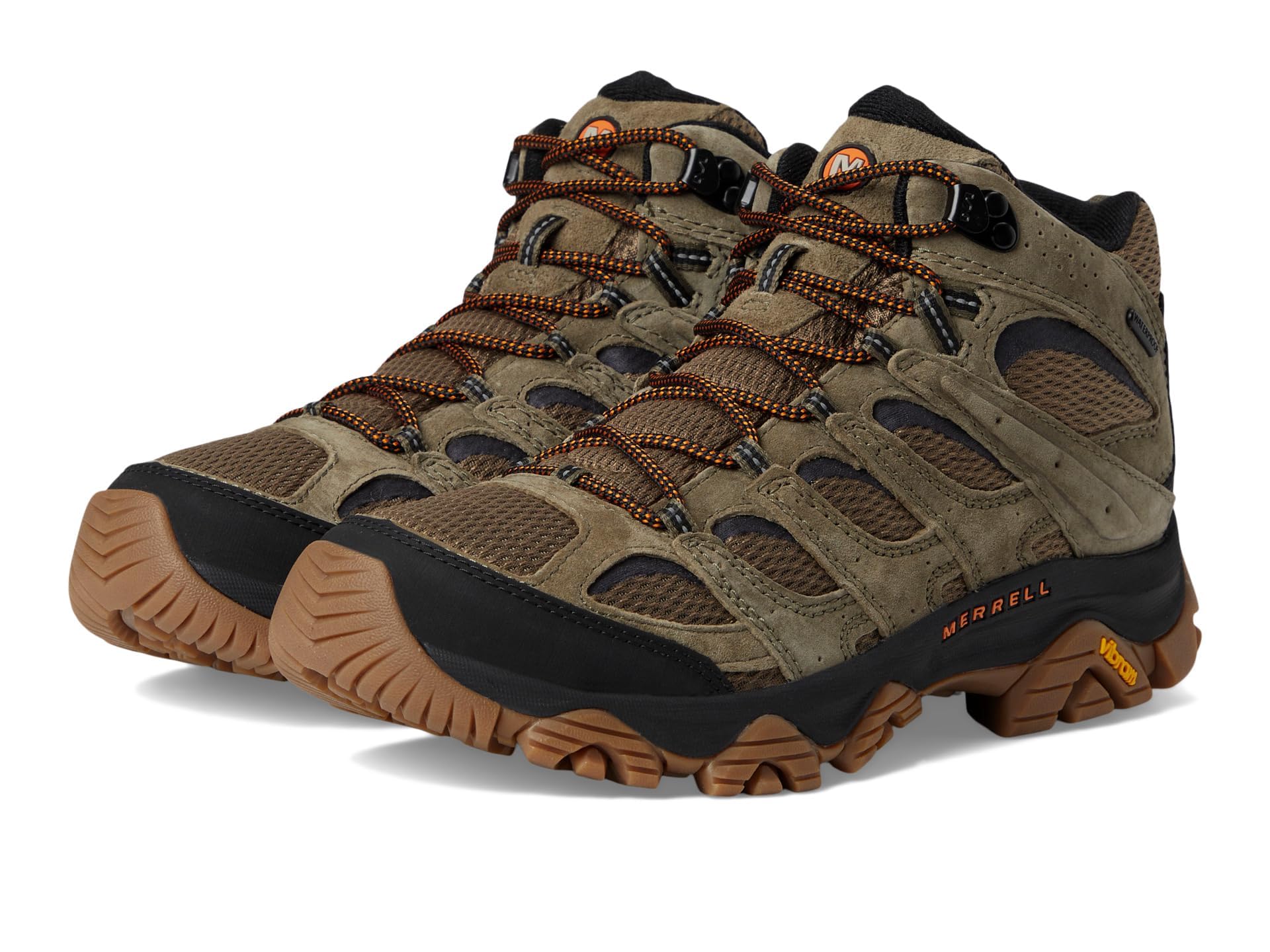
Merrell Moab 3 Mid Waterproof
Key Features
- Cut: Mid
- Sizing: Runs small for some
- Waterproofing: Waterproof
- Price: Premium
Every other boot in this guide gets measured against the Moab 3, and for three-season backpacking with a loaded pack it’s still the comparison we make first. Merrell’s mid-cut waterproof hiker is the strongest boot in this set on the two things that matter under weight: comfort over a long day and durability across seasons. The toe box is roomier than most here, the midsole holds its shape with a pack on, and the cushioning keeps the walk out on day three from turning into a punishment.
Comfort is the headline. It’s the boot here we’re happiest to put on for a full day: soft through the collar, cushioned underfoot, and roomy enough that wide feet aren’t punished. Sizing is the one wrinkle. It runs small for some, so if you’re between sizes or plan on thick socks, go up half a size rather than hoping it packs out.
Durability is where it separates further. These are boots that get replaced with the same model rather than a different one, and the soles and uppers hold up to the mileage a backpacking boot actually sees. The tread bites on dirt, gravel and dry rock, and the ankle support is steady on sidehill traverses. It’s a premium boot, and it’s worth the money if you’ll walk the miles.
Pros
- Cushioned for long days under a pack
- Roomy toe box suits wide feet
- Durable enough to buy the same model again
Cons
- Waterproofing can falter in wet grass
If you want one boot for three-season backpacking with a real load, this is the one we recommend: the most comfort and support here, and it lasts.
Best for Fast, Light Trips
Danner Mountain 600
Key Features
- Height: 4.5 inch
- Weight: 1.2 lb
- Waterproofing: Waterproof
- Price: Premium
Danner lists the Mountain 600 at 1.2 pounds, and on the foot that number is the whole story. It’s the lightest boot in this guide, and it feels closer to a high-top trail shoe than to the leather-and-lace profile it wears.
For fast, light trips it’s the boot we reach for. The upper and the waterproof build shrug off wet grass, rain and slush with no break-in at all, the outsole grips wet rock and roots well enough that we stopped thinking about it, and comfort is immediate rather than earned over a week. Long days with a daypack or a light overnight load are exactly its territory.
It’s also the best-looking boot in this set, in the way a well-made leather boot usually is: the kind of thing that looks better with a few muddy seasons on it, not worse. The catch is that the lightness is bought with structure. A heavy pack over broken ground is where we want a stiffer boot, and that’s the one job the Mountain 600 doesn’t do as well as the Moab 3.
Pros
- Lightest boot here at 1.2 pounds
- Waterproof and comfortable with no break-in
- Best-looking boot in this set
- Outsole grips wet rock and dirt
Cons
- Snug toe box for wider feet
The Mountain 600 is our pick for fast, light trips: 1.2 pounds, waterproof, and comfortable from the first mile.
Best for Wet-Weather Hiking
Timberland Mt. Maddsen
Key Features
- Cut: Mid
- Model: TB02730R242
- Waterproofing: Waterproof
- Price: Midrange
Water protection is where the Mt. Maddsen separates itself from the rest of this group. It has the most consistent showing here in sustained wet, from wet grass to slush to shallow crossings, and it does that at a midrange price. For a three-season backpacker in a wet climate, that’s the deciding quality.
Comfort lands immediately, which we can’t say about every boot in this bracket. The collar sits at the right height, there’s room to wiggle toes, and the open eyelets make lacing quick when you’re breaking camp in the cold. It’s light enough that it doesn’t feel like something you’re carrying rather than wearing, and the sizing is close to true.
Compared with the top pick, you give up a little structure under a heavy load; in exchange you get more reliable water protection and a lower price. On a wet weekend with a moderate pack, that’s a trade worth making.
Pros
- Most consistent water protection here
- Comfortable from the first wear
- Light and quick to lace up
Cons
- Seams and uppers wear before the sole
For wet-weather backpacking on a midrange budget, we reach for the Mt. Maddsen: the most consistent water protection here, and comfortable from the first wear.
Best for Trail and Town
Columbia Newton Ridge Plus II
Key Features
- Cut: Mid
- Fit: Runs narrow
- Waterproofing: Waterproof
- Price: Midrange
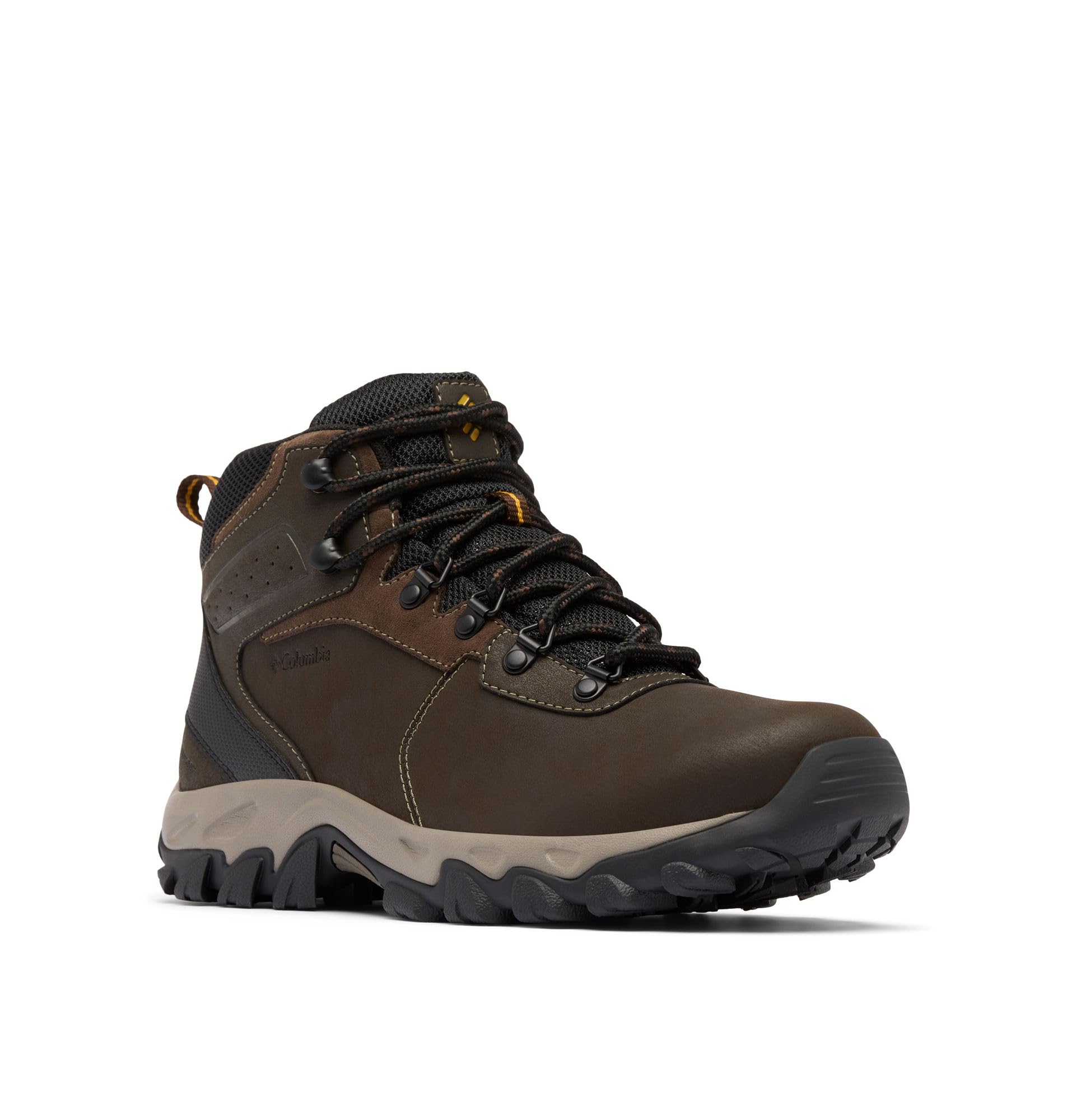
Brown leather, red laces, a shape that hasn’t changed much in decades: the Newton Ridge Plus II is the boot here that looks as good at the trailhead as it does in town. That matters more than it sounds for a boot you’ll wear on errands between trips.
It backs the look up on the trail. Long days on rough ground don’t produce pressure points, the waterproofing holds through wet grass and shallow water, and the sole has enough bite for gravel and packed dirt. The stitching and seams look tidy, and the classic styling is the sort of thing that ages well rather than looking dated. It’s the boot here that looks most like a hiking boot and least like a sneaker, which is either the appeal or the objection.
Long-term wear is the open question. This is a boot that can look tired after a couple of hard seasons, and the midrange price reflects that. For weekend trips and everyday wear, though, it’s a lot of boot.
Pros
- Classic leather looks that work off-trail
- Dry feet in wet grass and shallow water
- Comfortable over long days on rough ground
Cons
- Runs narrow for wide feet
The Newton Ridge Plus II is the boot we wear from trailhead to town: classic leather looks, dry feet in shallow water, and a lower price than the premium picks.
Best for Value and Comfort
Foxelli Men’s Hiking Boots
Key Features
- Upper: Suede leather
- Breathability: Breathable
- Waterproofing: Waterproof
- Price: Midrange
Foxelli isn’t the name most men type into a boot search, and that’s a big part of why the price looks the way it does. What the money buys is a suede hiker with the best-liked comfort and quality record in this entire group, ahead of boots that cost noticeably more.
These are the ones we put on for a long day hike without a second thought. The footbed is cushioned, the toe box is genuinely roomy for wide feet, and there’s almost no break-in. They also ship with a spare set of laces and a pair of socks, which tells you how Foxelli is playing this: give people more than they paid for.
Water beads off the suede instead of soaking in, and the tread holds on dirt, gravel and packed snow. The details are small but they add up: laces long enough to double-knot, a collar that doesn’t rub, and a boot that stays comfortable when the day runs longer than planned. For three-season day trips and light overnights, that’s a lot of boot for the money.
Pros
- Best-liked comfort and quality here
- Roomy toe box for wide feet
- Water beads off the suede
- Ships with spare laces and socks
Cons
- Less structure than the load-hauling picks
The Foxelli is the best value in this guide: the best-liked comfort and quality record here, a roomy toe box, and water that beads off instead of soaking in.
Best for Budget First Boots
NORTIV 8 Ankle High Waterproof

Key Features
- Cut: Ankle-high
- Fit: True to size
- Waterproofing: Waterproof
- Price: Budget
The price is the first thing anyone notices about the NORTIV 8, and it’s also the source of every reservation we have. What you get for it is a genuinely supportive ankle-high boot with a stiff chassis and real grip, which is structure budget hiking boots usually skip.
Stiffness is the surprise. The boot holds its shape underfoot and around the ankle in a way that makes rock scrambling and sidehilling feel less sketchy, and the tread finds grip in mud and on climbs. It’s the cheapest boot in this guide that we’re comfortable calling supportive.
Fit is friendly: true to size, wide enough for thick socks, easy to clean. It feels heavier and stiffer than the light boots here, which is the point. This is a boot that wants a pack on your back, not a stroll around the block.
Where it lands is simple. If the budget is fixed and the trips are real, this is the boot that gets you out there: it carries a load, protects the ankle and grips the trail for less than the midrange and premium picks. That’s a fair trade for a first season of backpacking, as long as you know what the discount buys.
Pros
- Supportive, stiff chassis at a budget price
- Real grip on mud and rock
Cons
- Waterproofing can give out in steady rain
- Sole separation shows up over time
The NORTIV 8 is the budget boot we can recommend for real backpacking: stiff, grippy and supportive, with the caveats that come with the price.
Best for Dry Short Trips
SHULOOK Mid Top Hiking Boots

Key Features
- Cut: Mid-top
- Fit: True to size
- Waterproofing: Waterproof
- Price: Budget
Not every backpacking boot needs to survive a thru-hike. The SHULOOK is what we point to when the budget is the binding constraint and the trips are short: it’s light, it’s comfortable, and it’s the least expensive way into a boot that’s actually sold as backpacking gear.
On the foot it feels like a sneaker with an ankle collar. That’s a compliment for short overnights and a limitation once there’s real weight in the pack. Sizing runs true, the toe box has room, and the laces are long enough to double-knot without hunting for slack.
Where it gives ground is wet weather. It’s sold as non-slip and waterproof, and the two things that come up against it most are water soaking through on a long wet walk and the tread letting go on slick surfaces. On dry trails and short trips, neither is a dealbreaker, and at the bottom of the price range that’s the honest summary.
Pros
- Very light on the foot
- True to size with a roomy toe box
- Comfortable for all-day wear
Cons
- Tread loses grip on wet, slick ground
- Waterproofing gives out in sustained rain
The SHULOOK is a cheap, light boot for dry-weather trips and short overnights, and we’re happy to recommend it for exactly that.
How We Tested These Backpacking Boots
We began by building a shortlist from hiking forums, specialty outfitter recommendations, and our own past trips, then filtered it by construction, available sizes, waterproof claims, weight, and price relative to materials. From that list, we narrowed to 10 pairs of men’s backpacking boots and assigned each to a tester with a similar foot shape and hiking style.
Over eight months, those boots went on day hikes, overnight trips, muddy spring trails, rocky ridgelines, and wet creek crossings, always with loaded packs. We noted heel lift, toe jam on descents, pinch points, and how quickly each pair softened up. To check water resistance, we stood in shallow streams and walked through wet grass, then looked for damp socks. For durability and quality, we inspected seams, toe caps, and outsoles after every trip, and we compared the wear to what each pair cost. Size got its own attention: testers tried half sizes and wider fits where available, and we tracked whether the recommended size matched the usable toe room.
We also weighed each boot ourselves and judged whether its heft matched the support it delivered. After mud, dust, and repeated wet-dry cycles, we looked at scuffs, stitching, and shape retention, and noted which pairs cleaned up well enough to wear into town. The pairs that stayed in rotation earned it through secure heel hold, comfortable break-in, and soles that still felt solid months later.
How to Choose Men’s Backpacking Boots
The right backpacking boot is the one that still feels steady at the end of a long day under weight, and almost everything that decides that happens before you look at the price.
Match the boot’s structure to the load
Cushioning is what sells a boot indoors; structure is what carries a pack. A stiffer midsole and a taller ankle keep their shape when you add weight and rough ground, which is why the Moab 3 Mid holds up under a full pack better than the lighter boots here. A soft, flexible boot is a pleasure on a day hike and a liability on a long descent.
If most of your trips are light and fast, buy for weight and accept a little less armor. If you’re carrying for several days at a stretch, buy for structure and accept the grams.
Read waterproofing as a range, not a promise
A waterproof boot has a membrane, and a membrane only keeps water out while the upper and seams around it stay intact. That’s why the same word produces different results: the Mt. Maddsen has the most consistent wet-weather showing in this set, while the Moab 3 can soak through wet grass for some wearers.
Cuff height matters too. The higher it sits, the deeper the water you can cross before it comes over the top. In a wet climate, pay for the water record; in a dry one, don’t.
Size for the descent, not the shop floor
Your foot slides forward on a descent, and a boot that felt snug indoors becomes a bruise three hours in. Leave about a thumb’s width at the toe when you’re standing in the socks you’ll hike in, and check that your heel stays put when you walk.
Much of the fit trouble in this category is sizing: the Moab 3 runs small, the Newton Ridge runs narrow, and neither is a fault if you order for it. Try boots late in the day, when your feet are at their largest.
Weight and break-in trade against each other
A lighter boot asks less of your legs and generally needs less breaking in; a heavier boot takes more work but can take more abuse. The Danner at 1.2 pounds is ready for a long day out of the box, while heavier hikers usually want a week of short walks first.
For weekend trips, weight matters more than armor. For long, rough routes, the extra grams buy protection.
Look at where boots actually fail
Soles separate, seams open and toe bumpers peel. Those are the failures that end a boot’s working life, not tread worn flat. Read a boot’s durability the way you read its comfort, and check the return policy before a big trip.
A boot that fits perfectly and comes apart in a season is a worse buy than one that’s merely good and keeps going.
Frequently Asked Questions
How do I break in a new pair of backpacking boots?
Wear them around the house for an evening in your hiking socks, then take two or three short walks with the pack you’ll actually carry, adding distance each time. Most modern boots need a handful of miles, not a month.
If a hotspot shows up in the first hour, that’s a fit problem rather than a break-in problem, so exchange the pair before you commit to a trip.
Can I backpack in trail runners instead of boots?
On smooth trails with a light pack, yes, and plenty of people do. Boots earn their weight on rough, rocky or wet ground and when the pack gets heavy: the stiffer platform protects the sole of your foot and the taller cuff supports the ankle.
Be honest about your terrain and your base weight, and let that decide rather than the label.
How much do I need to spend on backpacking boots?
Enough to match the miles you’ll actually walk. Budget boots handle a first season of short trips, the midrange is where water protection and construction get more consistent, and the premium picks buy lighter materials and better soles.
Count the nights you’ll camp this year: if it’s a handful, a budget or value boot makes sense, and you can upgrade once you know what your feet want.
Final Verdict
Buy the Merrell Moab 3 Mid if you want one boot for three-season backpacking with a real load. It is the most comfortable and most supportive boot in this guide, and it’s the one that holds up season after season.
If your trips are fast and light, the Danner Mountain 600 is the better companion at a similar price. And if you hike wet more often than not, the Timberland Mt. Maddsen keeps feet drier for less money. That is the trade this whole guide keeps coming back to: structure, weather protection or weight, and you can only have two.