This post contains affiliate links. We may earn a small commission when you buy through our links — at no extra cost to you.
Trail-ready electric bikes promise big numbers—peak wattage, mile-long ranges, and blistering speeds. But the gap between marketing claims and real-world performance is wider than a singletrack. A 3500W peak motor might deliver half that under load, and a 100-mile range often shrinks to 40 when climbing hills.
The bikes that actually hold up off-road share a few non-negotiable features: proper suspension, hydraulic disc brakes, and a battery rated in watt-hours rather than exaggerated amp-hours. This guide cuts through the noise to match riders with e-bikes that deliver on the trail, not just on the spec sheet.
Whether you need extreme range for multi-day exploring or simply want a capable budget bike for weekend loops, the right choice depends on understanding where manufacturers cut corners. We focus on the hardware and real user feedback that reveals which bikes earn their dirt.


Best for Serious Off-Road
FREESKY Swift Horse Ultra
Key Features
- Motor: 3500W Bafang mid-drive
- Battery: 48V 35Ah 1440Wh
- Suspension: Full double crown + rear
- Price: Premium
The FREESKY Swift Horse Ultra packs a 48V 35Ah battery using Samsung/LG cells, delivering 85-140 miles of pedal-assist range that surpasses most off-road e-bikes in its price bracket. The 3500W peak Bafang mid-drive motor provides solid climbing torque on steep grades, maintaining momentum without being tuned primarily for acceleration.
On uneven terrain, the full suspension system with a double crown fork and rear shock smooths out roots and rocks effectively. The 4-piston hydraulic disc brakes offer consistent stopping power when descending, and the frame welds and finish have drawn consistent owner praise for their quality.
This bike is designed for serious off-road enthusiasts who require extreme range for long backcountry trips or commutes without charging access. The tradeoff is that some units have experienced electrical or motor glitches within the first few months. FREESKY’s 2-year warranty and responsive customer service help mitigate the risk, making it a calculated choice for those prioritizing battery capacity over absolute dependability.
Pros
- Exceptional build quality and sturdy construction
- Powerful climbing ability and acceleration
- Long battery range well beyond most competitors
- Full suspension with double crown fork smooths rough trails
- 4-piston hydraulic disc brakes provide reliable stopping power
Cons
- Electrical and motor consistency can vary between units – some develop issues with stopping function or front wheel within the first few months
The FREESKY Swift Horse Ultra is the off-road e-bike for riders who need maximum range and suspension without reaching ultra-premium prices. The slight gamble on unit consistency is offset by a solid warranty and responsive support.
Best for Budget Conscious
TST R9
Key Features
- Motor: 1500W peak hub motor
- Battery: 48V 15Ah 720Wh
- Suspension: Dual front + rear
- Tires: 20×4 fat
- Price: Budget
The TST R9 delivers a smooth, comfortable ride that feels more substantial than its budget price suggests. The dual suspension and 20-inch fat tires absorb bumps well on mild trails and paved paths. The 48V 15Ah battery provides up to 60 miles of pedal-assist range, and assembly is straightforward out of the box.
Where it steps back from higher-priced models like the top pick is in peak power and speed. The 25 mph top speed and 750W nominal motor are adequate for gentle hills and flat terrain but will struggle on steep, technical climbs. Riders accustomed to mid-range torque may find the acceleration modest, though the ride quality and value at this price point are hard to match.
This e-bike is best for budget-conscious riders who want a comfortable, reliable ride without breaking the bank. It suits casual trail riding, neighborhood cruises, and daily commutes on mostly flat ground. Those needing high top speed or serious off-road climbing capability should consider spending more on a premium model.
Pros
- Exceptional value under $1,000 with strong performance.
- Smooth, motorcycle-like ride quality from dual suspension.
- Straightforward assembly out of the box.
Cons
- Top speed limited to 25 mph – not ideal for riders wanting faster commuting.
- Motor power is insufficient for steep, technical off-road climbs – better suited for gentle trails and pavement.
An outstanding value for casual riders who prioritize comfort and budget over speed or extreme off-road capability.
Best for Speed Enthusiast
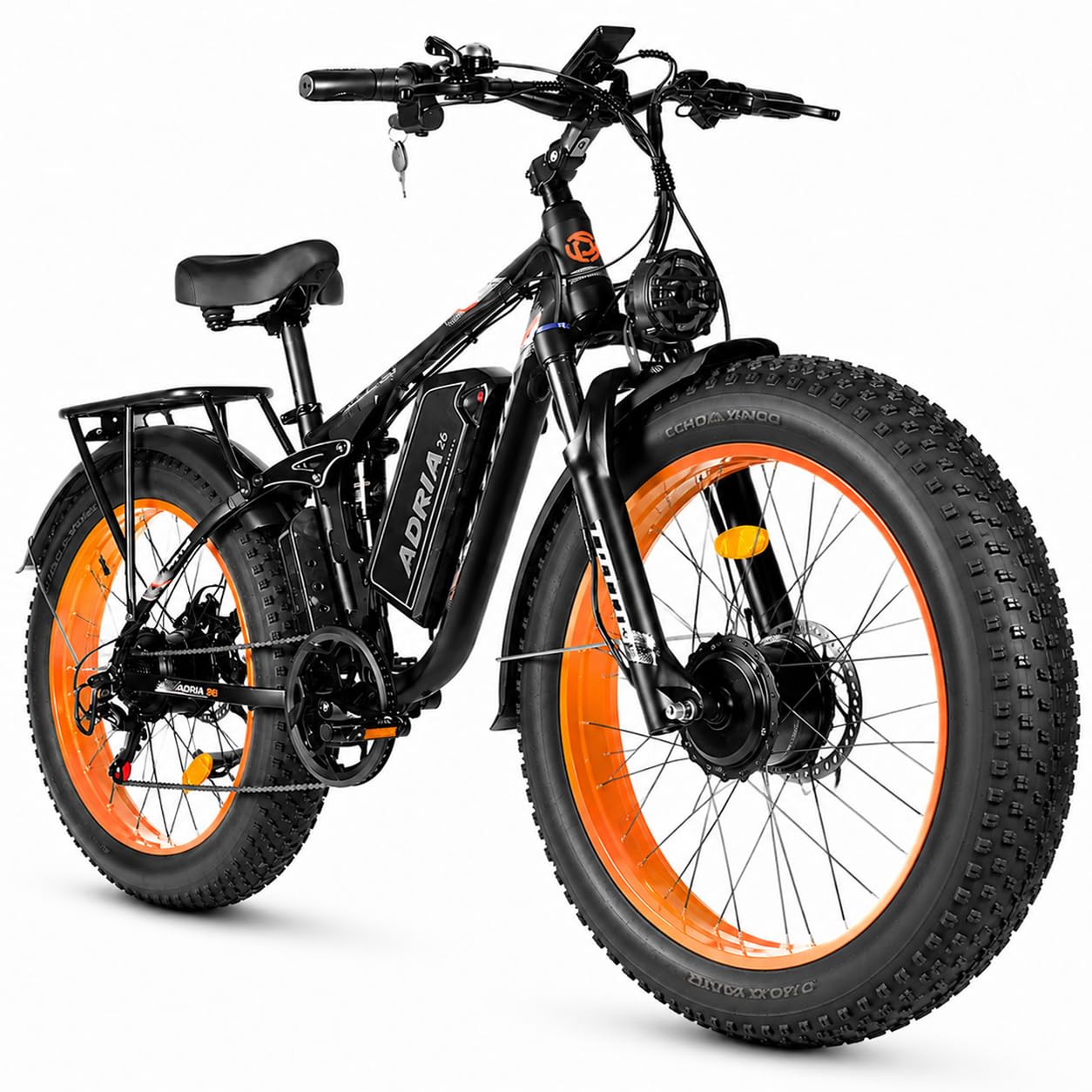
TUTTIO Adria26
Key Features
- Motor: Dual 5000W peak hub
- Battery: 52V 25Ah 1300Wh
- Suspension: Full front + rear
- Tires: 26×4 fat
- Price: Mid-Range
With dual 1000W nominal motors peaking at 5000W, the Adria26 hits 46 mph and climbs steep trails with a torque that few off-road e-bikes match. This raw acceleration puts it ahead of the top pick for short, thrilling bursts, though the top pick’s larger battery and mid-drive reliability suit longer expeditions better.
This bike is for speed demons who want the adrenaline of a near-motorcycle experience on dirt. Buyers should expect to spend time on assembly — some report a few hours with extra tools — and accept that battery life can be inconsistent, with occasional capacity drop after months. Riders who need consistent 100-mile range or a fuss-free unboxing will find the top pick a better fit.
Given its dual-motor hardware and full suspension, the Adria26 offers strong power per dollar among mid-range off-road e-bikes. The ride stays composed at speed, with hydraulic disc brakes providing confident stopping on descents.
Pros
- Incredible acceleration from dual motors for steep climbs and high-speed trails
- Good value compared to other dual-motor e-bikes in this price range
- Smooth handling at high speeds with full suspension and hydraulic brakes
Cons
- Assembly instructions can be confusing and may require extra tools beyond what is included
- Battery capacity may drop after a few months of use for some units, reducing effective range
For speed-first off-road riders who can tolerate assembly hassle and occasional battery quirks, the Adria26 delivers thrilling acceleration at a competitive price.
Best for Teens & Small
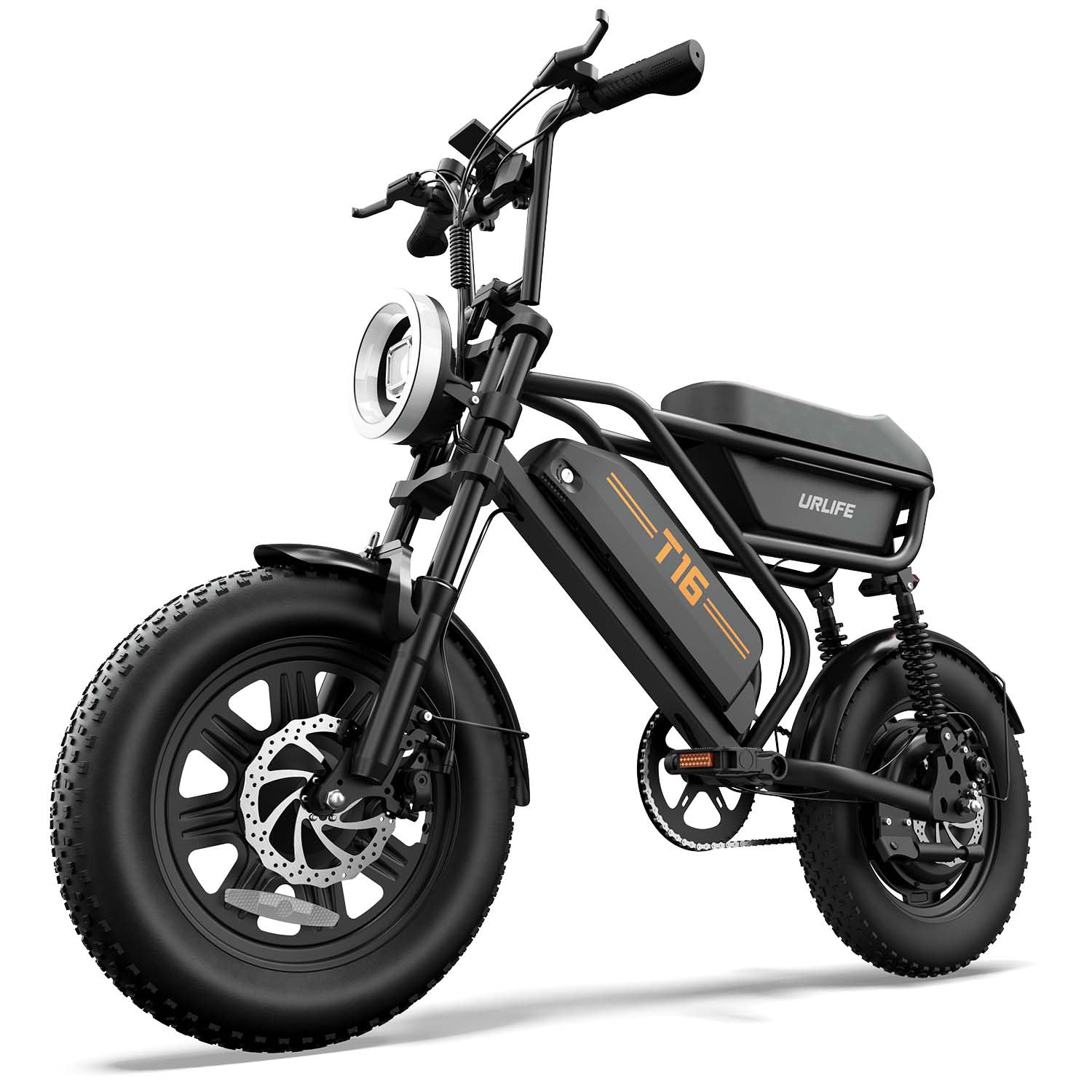
URLIFE 1000W 16" E-Bike
Key Features
- Motor: 1000W hub motor
- Battery: 48V 13Ah 624Wh
- Suspension: Dual front fork + rear
- Tires: 16×3 fat
- Price: Budget
The URLIFE stands apart from larger off-road models like the FREESKY Swift Horse Ultra because it prioritizes handling over outright power. Its 16-inch fat tires and relatively light frame let smaller riders maneuver easily on paved paths and packed dirt trails where bigger bikes feel cumbersome.
This e-bike fits teens and smaller adults who want an entry-level off-road experience without wrestling a full-size machine. The compact geometry keeps feet flat at stops and the 1000W motor provides enough torque for moderate inclines. Riders over 6 feet will find the cockpit cramped, and serious off-road obstacles like deep sand or large rocks exceed the suspension’s comfort zone — that terrain is better left to a larger-wheeled bike.
On neighborhood streets and easy trails the URLIFE delivers consistent, fuss-free rides. The 48V 13Ah battery reliably covers typical evening loops and short commutes, and the dual suspension smooths out sidewalk cracks and gravel. Owners note the bike feels sturdy for its size and that the battery range often outlasts a casual outing.
Pros
- Compact and easy to handle for teens and smaller adults.
- Reliable performance for neighborhood riding.
- Good battery life for the price – exceeds expectations on casual rides.
Cons
- 16-inch wheels limit capability on deep sand or large rocks.
- Compact frame is not comfortable for riders over 6 feet.
A nimble, confidence-inspiring e-bike for smaller riders who want a manageable taste of off-road riding on gentle terrain.
Best for Long-Range Explorers
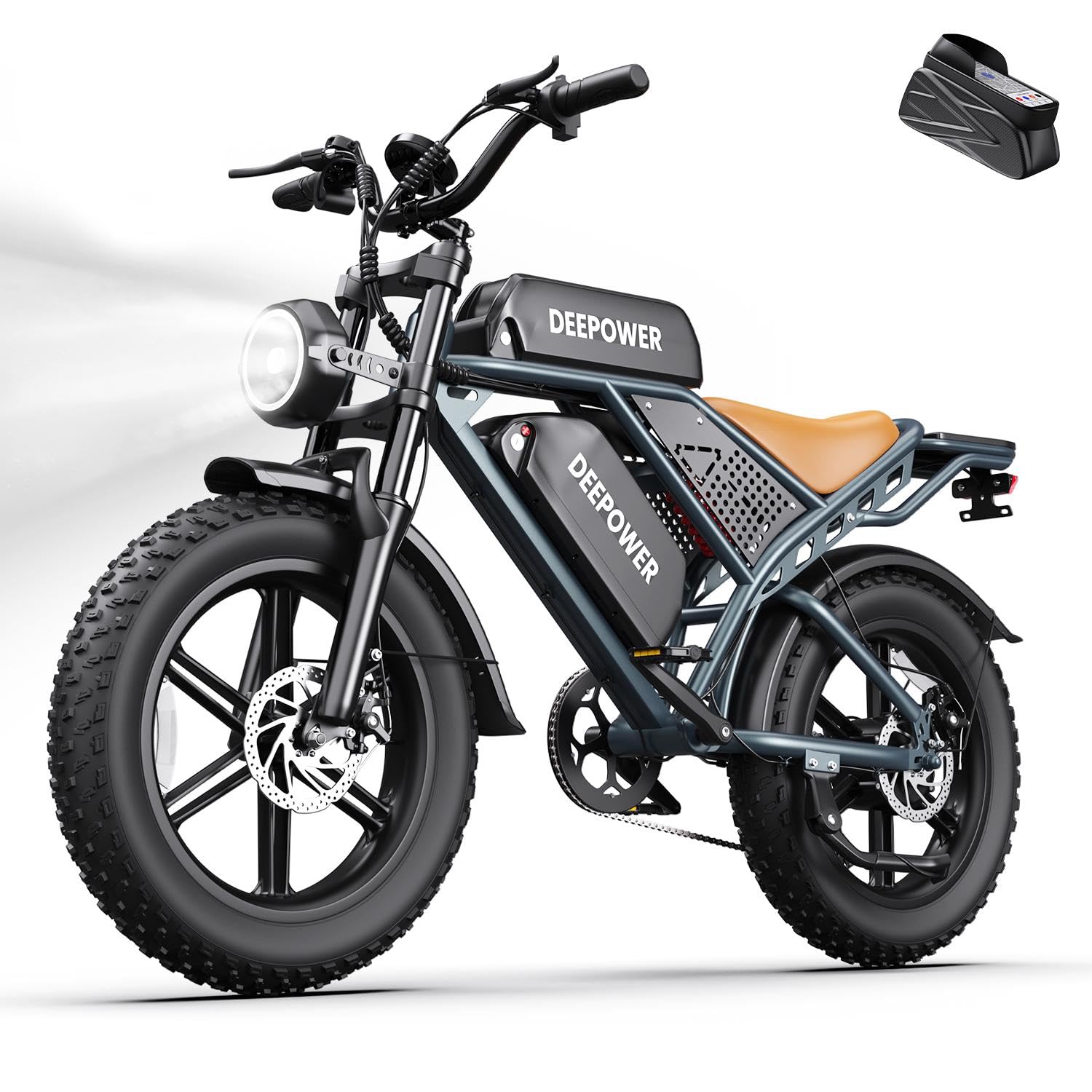
DEEPOWER QS7
Key Features
- Motor: 2000W peak hub motor
- Battery: 48V 20-60Ah options
- Suspension: Dual front fork + rear
- Tires: 20 fat
- Price: Mid-Range
Configurable battery sizes up to 60Ah allow the DEEPOWER QS7 to cover up to 160 miles per charge, a standout feature for riders who need distance over top speed. The 2000W peak motor provides sufficient power for light hills and pavement, but the bike’s real selling point is the ability to choose your range. This makes it a practical alternative to models with fixed batteries, especially for those on a budget who still want long-distance capability without frequent charging stops.
This bike suits riders who plan routes around mileage and want the option to upgrade battery capacity later. The dual suspension and 20-inch fat tires handle light off-road paths and gravel comfortably, though the QS7 is not a dedicated off-road machine. Because some units arrive with loose bolts or slightly bent rotors, buyers should budget a short setup session to tighten critical components and true the rotors. Those seeking a ready-out-of-the-box experience may find this step frustrating, but a careful inspection resolves most issues.
The frame and design feel well-executed, and assembly is straightforward for most riders. The larger battery options deliver on the promised range, providing confidence for longer rides. In some cases, minor adjustments like checking pedal tightness or rotor alignment have been noted, so a pre-ride check is advisable. For the price, the QS7 offers a solid combination of range, suspension, and tire size that most commuters and light trail riders will appreciate.
Pros
- Configurable battery options (20Ah/35Ah/60Ah) deliver up to 160 miles of range.
- Solid build quality with a sturdy frame and components that feel substantial on mixed surfaces.
- Easy assembly process that most riders can complete with basic tools in under an hour.
Cons
- Top speed of 28 mph is modest; cutting the speed limiter wire may void warranty and is not recommended for all.
- Designed for light off-road and commuting; technical trails and aggressive riding may strain suspension and drivetrain components.
If range matters more than speed and you’re willing to do a quick checkout after unboxing, the QS7 provides great value with its battery flexibility and comfortable ride for daily commutes and easy trails.
Best for Beginners
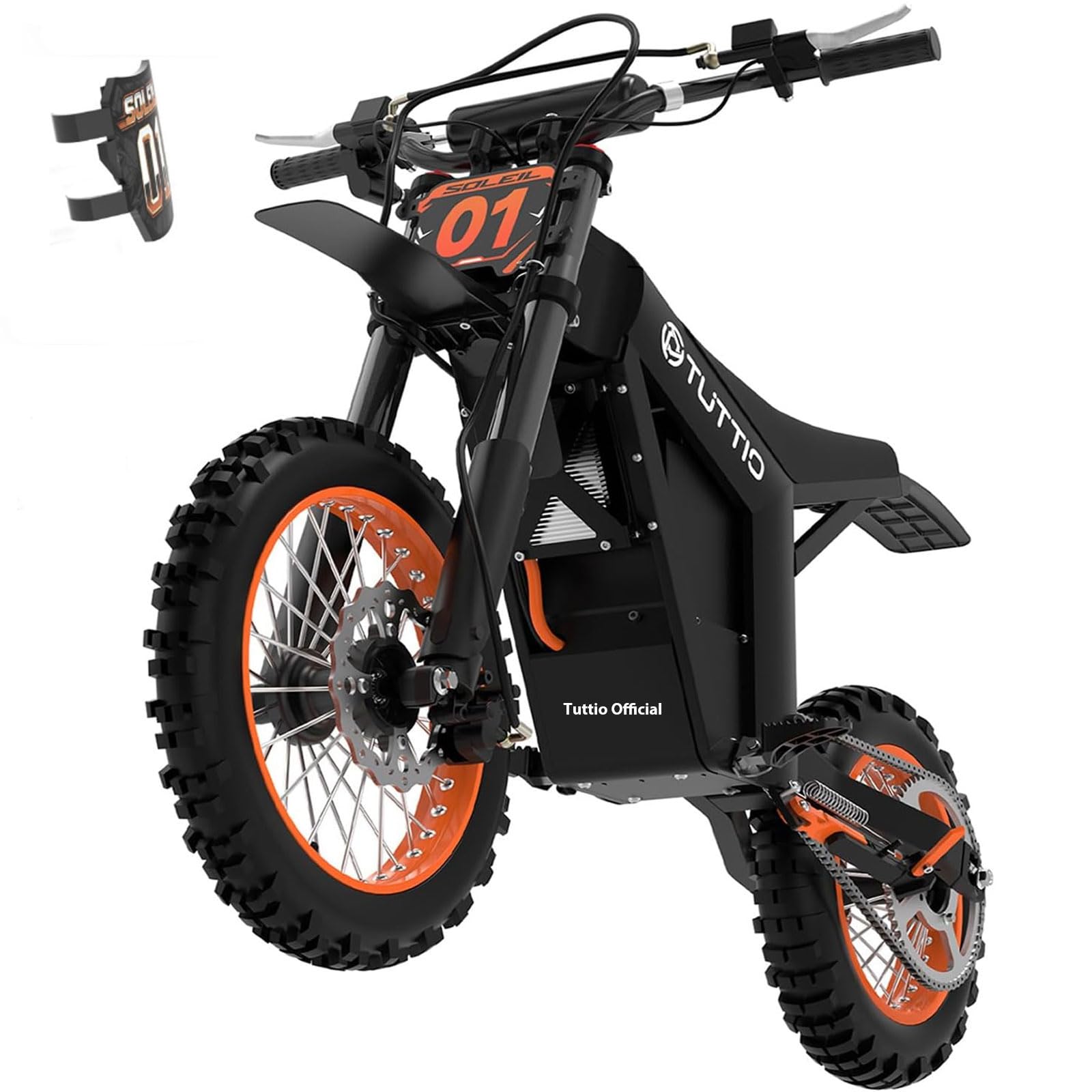
Tuttio Soleil01
Key Features
- Motor: 2000W mid-drive
- Battery: 48V 21Ah 1008Wh
- Suspension: Front hydraulic + rear air
- Tires: 14/12 fat
- Price: Mid-Range
The Soleil01’s lightweight frame and mid-drive power make it easy to handle on trails, hitting speeds up to 37 mph with responsive throttle. Assembly is quick, and the hydraulic brakes provide confident stopping. However, using it for frequent or aggressive off-road riding may accelerate wear on motor bearings and handlebars — some owners have noted mechanical issues within the first few months. This makes it a better fit for lighter use: teens, smaller adults, or riders new to dirt biking who want a thrilling but manageable introduction.
Pros
- Lightweight chassis and mid-drive torque make climbing and maneuvering easy for smaller riders.
- Out-of-box speed of 37 mph provides excitement without needing modifications.
Cons
- Motor bearings and handlebars may require replacement under heavy trail use.
- Lightweight build limits longevity for sustained rough terrain.
Ideal for beginners and smaller riders who want an easy-to-ride, fast dirt bike for occasional trail fun; those planning regular aggressive off-road adventures should consider a sturdier option like the FREESKY Swift Horse Ultra.
Best for Budget Buyers
Qlife Spark
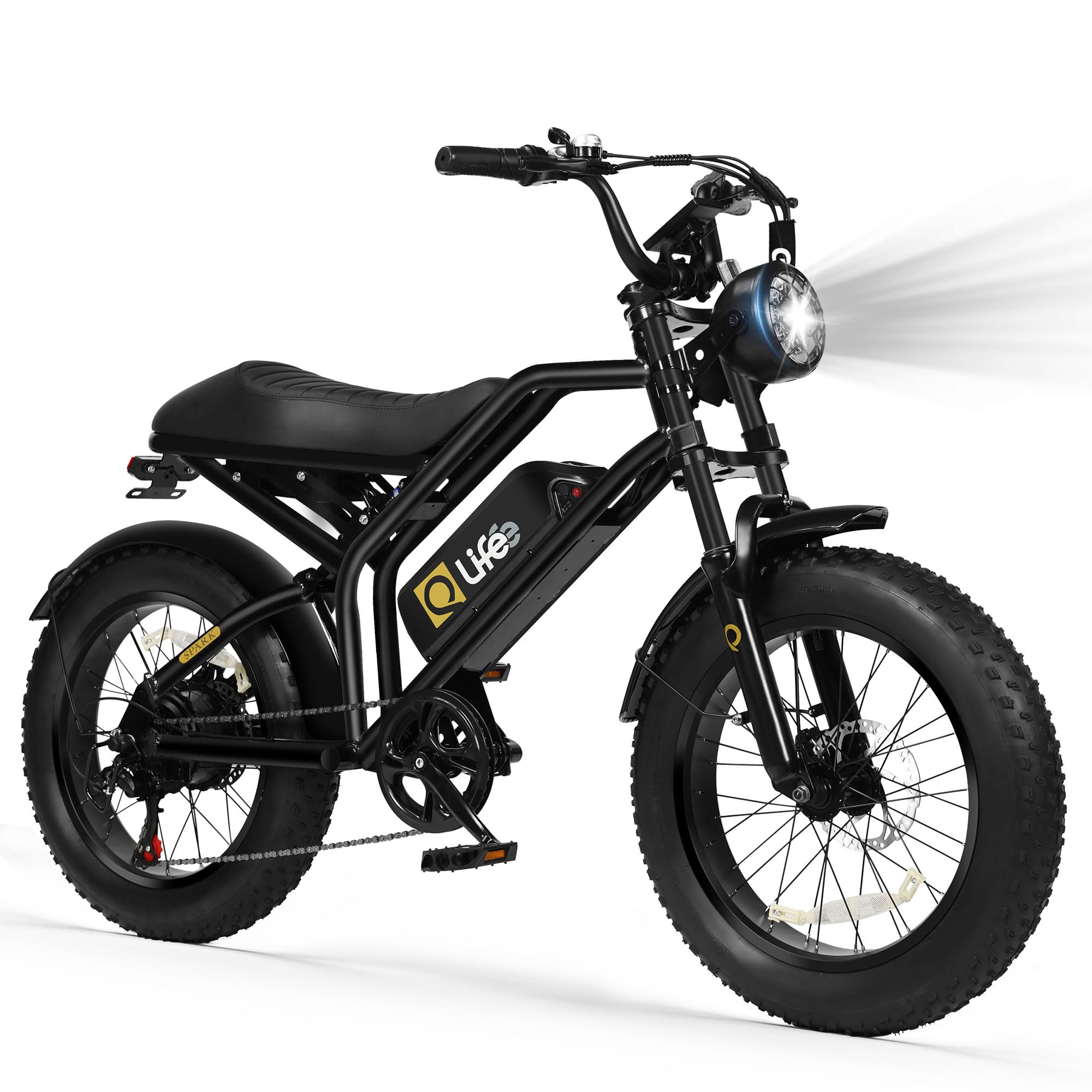
Key Features
- Motor: 1800W peak hub motor
- Battery: 48V 15.6Ah 749Wh
- Suspension: Dual front + rear
- Tires: 20 fat
- Price: Budget
The Qlife Spark pairs an 1800W peak motor with a 48V 15.6Ah battery for an estimated 30-50 mile range, making it a capable budget option for unpaved trails. Its dual suspension and 20-inch fat tires handle moderate terrain smoothly, and the overall design looks more premium than its price suggests. However, build consistency can vary between units; some bikes may arrive with damaged components or exhibit premature wear. This makes the Spark a better fit for buyers who can tolerate occasional QC hiccups and want a powerful, good-looking e-bike without spending top dollar. For those who prioritize long-term reliability above all else, the TST at a similar price point offers fewer uncertainties.
Pros
- Solid build quality that looks and feels above its price point
- Battery holds a useful charge and recharges quickly for daily rides
- Offers climbing torque and top speed that outshine many similarly priced models
Cons
- Build consistency varies between units; some may arrive with damaged parts or show early wear
Best suited for budget-conscious riders who want a stylish, powerful e-bike for moderate off-road trails and can handle occasional assembly or durability quirks.
Best for Motorcycle Riders
ESKUTE 3500W Dirt Bike
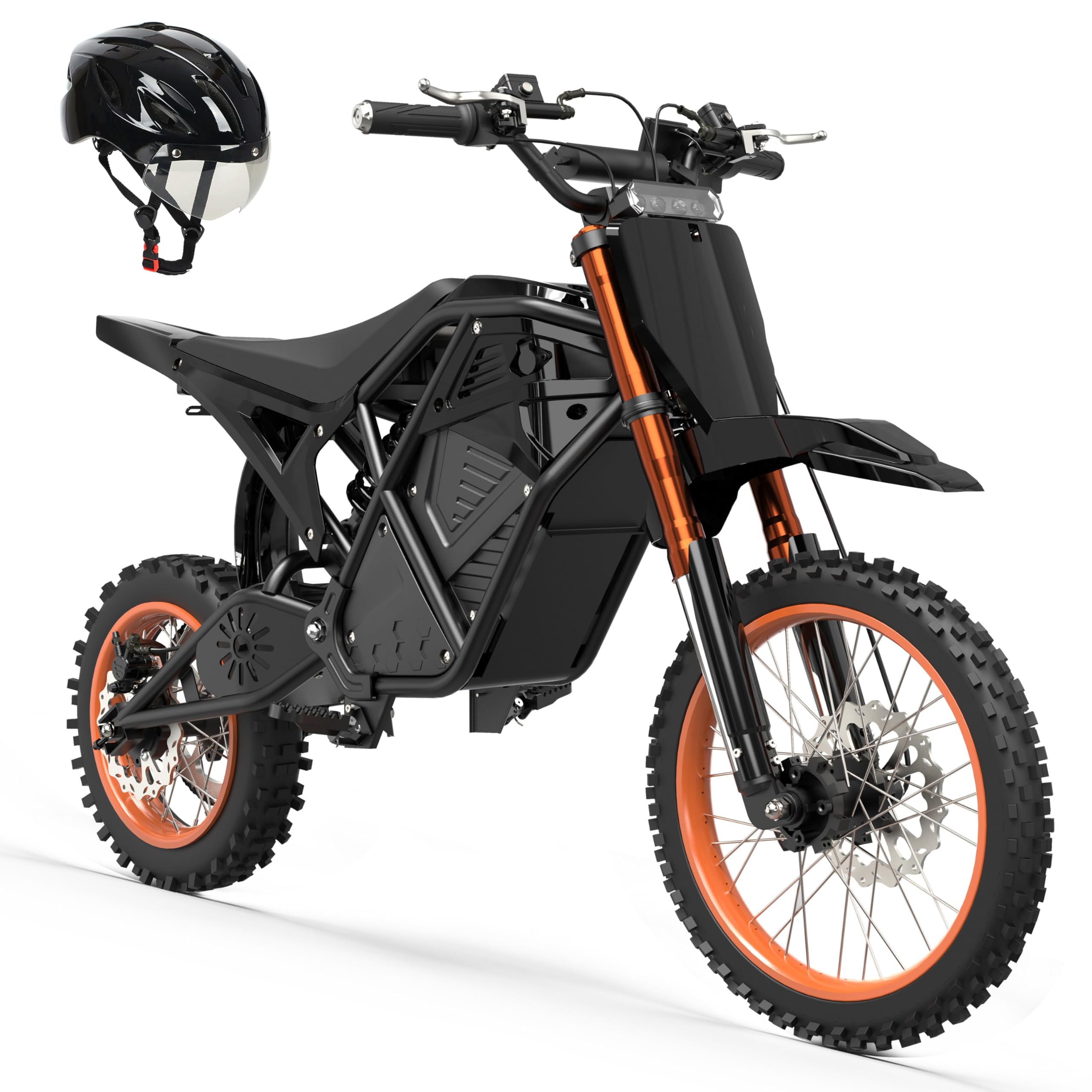
Key Features
- Motor: 3500W peak mid-drive
- Battery: 48V 23Ah 1104Wh
- Suspension: Hydraulic dual shock
With a 3500W peak mid-drive motor and 38 mph top speed, the ESKUTE offers acceleration and torque more akin to a small motorcycle than a pedal-assisted e-bike. Its 48V 23Ah battery supports a claimed 53-mile range, and the hydraulic nitrogen dual shock absorbers handle uneven trails with control. However, the complete absence of pedals means this model does not qualify as a bicycle-style e-bike in most regions, potentially requiring registration, insurance, and a license. Customer feedback is sparse, making long-term durability under sustained off-road use difficult to verify.
Pros
- 3500W peak motor provides strong acceleration for climbing steep hills and powering through loose terrain.
- 53-mile claimed range on a 1104 Wh battery supports extended off-road trips without frequent charging.
- Hydraulic nitrogen dual shock absorbers deliver capable suspension for rough, uneven trails.
Cons
- Lacks pedals and pedal assist, so it does not fit the bicycle-style e-bike category and may not comply with local e-bike regulations.
- Sparse customer feedback makes it difficult to assess long-term reliability for heavy off-road use.
If you are looking for an electric off-road motorcycle rather than a bicycle-style e-bike, the ESKUTE’s power and range are compelling – just verify local registration requirements before buying.
How to Choose
Off-road e-bike specs often highlight peak power and max range, but real trail performance depends on nominal motor output, battery watt-hours, and suspension travel.
Motor Power: Peak vs. Nominal
Peak wattage is the motor’s brief maximum – like a sprint. But climbing a steep trail requires sustained torque, measured by nominal wattage.
A 1000W nominal motor will outperform a 2000W peak model on long grades. Look at continuous power figures; they determine how well the bike handles repeated climbs without overheating.
Battery Capacity: Watt-Hours Matter More
Manufacturers advertise range using optimal conditions: low assist, flat terrain, light rider. Real-world range is typically 30-50% less.
Battery watt-hours (Wh) is a better comparison metric than amp-hours (Ah) because it accounts for voltage. A 48V 20Ah battery (960Wh) delivers more energy than a 36V 25Ah (900Wh). For off-road rides, aim for at least 700Wh for moderate trips, 1000Wh+ for long days.
Suspension Type: Dual vs. Front Only
Front suspension alone handles bumps but transfers jolts to the rear wheel on rough terrain. Dual suspension absorbs impacts from both ends, keeping the rear tire planted for traction on climbs and descents.
However, dual suspension adds weight and complexity. If you ride mostly smooth fire roads, a front-suspension bike may suffice; for rocky singletrack, dual is worth the extra heft.
Brake Type: Hydraulic Disc for Control
Mechanical disc brakes require more hand strength to stop and can fade on long descents due to cable stretch.
Hydraulic disc brakes offer consistent power with light lever pull, crucial for modulating speed on steep, loose trails. The difference is especially noticeable when the bike is loaded with gear. For off-road use, hydraulic brakes are a safety upgrade, not just a comfort feature.
Tire Size: Fat Tires for Traction
Fat tires (4-inch wide or more) provide a larger contact patch, increasing grip on loose surfaces like sand, mud, and gravel.
20-inch fat tires offer better acceleration and maneuverability, while 26-inch fat tires roll over larger obstacles with less effort. The trade-off: larger tires add rotational weight, reducing range and acceleration. Choose based on terrain.
FAQ
Why does my off-road e-bike’s actual range never match the advertised range?
Manufacturers test on flat pavement with low assist, a light rider, and no wind. Real riding involves hills, higher power use, and rider weight. Expect actual range to be 30-50% lower. Use battery watt-hours (Wh) as a more reliable guide: a 1000Wh battery typically provides 30-50 miles of mixed off-road riding.
Can a 750W motor really handle steep off-road trails?
A 750W nominal motor can handle moderate trails with careful gear selection and pedal assist, but it will struggle on steep, loose climbs where sustained torque is needed. For aggressive off-road, a 1000W+ nominal motor or a mid-drive with gear reduction is far more capable. The key is climbing torque, not peak wattage.
What’s the difference between hydraulic and mechanical disc brakes for off-road e-bikes?
Hydraulic brakes use fluid to transfer force, providing consistent braking with less hand effort and better modulation on steep descents. Mechanical brakes rely on cables, which stretch over time and require more maintenance. For heavy off-road use, hydraulic disc brakes are recommended for safety and control.
Is a dual suspension e-bike worth the extra weight for trail riding?
Dual suspension improves traction and comfort on rough terrain by keeping both tires in contact with the ground. It adds about 5-10 pounds, which can impact acceleration and carrying the bike over obstacles. If you ride mostly smooth fire roads, front suspension is enough; for technical singletrack, dual suspension significantly enhances control and reduces fatigue.