This post contains affiliate links. We may earn a small commission when you buy through our links — at no extra cost to you.
Many first-time kayak buyers discover that a low price tag hides a quick path to frustration: inflatable models develop seam leaks after a few outings, and even some hard shells arrive with cosmetic damage or seats that sag after an hour. The promise of easy entry gets complicated by the reality of storage, transport, and material longevity.
The real decision isn’t inflatable vs. hard shell in the abstract. It’s a match between how you’ll actually use the kayak and where you’ll keep it when you’re not paddling. For the paddler with a garage and a roof rack, a lightweight hard shell offers zero setup and years of reliable performance. For the apartment dweller or trunk-only transporter, a step-up inflatable with thicker PVC avoids the gamble of ultra-budget models.
That trade-off between portability and durability shapes every recommendation in this guide. Choose the path that fits your storage, your vehicle, and how many weekends you plan to spend on the water.



Best for First-Timers with Vehicle
Pelican Argo 100X
Key Features
- Weight Capacity: 275 lb
- Portability/Storage: Hard shell, roof rack
- Ease of Setup: Ready to go
- Durability: RAM-X polyethylene
- Price: $$
At 36 lb, the Argo 100X is light enough for one person to carry to the water without help. The RAM-X polyethylene hull handles bumps and scrapes better than cheaper rotomolded alternatives, and the sit-in cockpit stays dry in light chop. Stability is solid — the flat-bottom design lets beginners focus on paddling rather than balancing.
On flat lakes and mild river currents, the kayak glides smoothly with minimal effort. The seat is supportive enough for hour-long trips, and the 275-lb capacity covers most adult paddlers. Tracking is predictable for a 10-ft boat — no constant correction needed at casual speeds.
This kayak suits first-time owners who have a vehicle with a roof rack or a pickup and a garage or shed for storage. It is not an inflatable — setup is zero, but it takes up space. Some units arrive with minor cosmetic scuffs or scratches from shipping; inspect on delivery and return if the damage bothers you. Budget buyers under $300 should look at inflatables instead.
Pros
- Light enough for one person to carry and load solo
- Stable hull inspires confidence on lakes and mild chop
- RAM-X polyethylene is tough and backed by a lifetime warranty
- Smooth glide and comfortable seat make longer paddles enjoyable
Cons
- Shipping may leave cosmetic scuffs or dents on the hull — inspect upon arrival
For beginners who have a vehicle and storage space, this hard shell delivers the most direct path to the water with minimal fuss — just check for scuffs before your first paddle.
Best for Inflatable Beginners
Intex Excursion Pro K1
Key Features
- Weight Capacity: 220 lb
- Portability/Storage: Inflatable, packs small
- Ease of Setup: Requires inflation
- Durability: 3-ply laminate PVC
- Price: $
The Excursion Pro K1 builds on Intex’s budget inflatables with thicker 3-ply laminate PVC and spring-loaded valves that cut setup time to under five minutes. The three-chamber design provides stability that feels secure for flatwater paddling, and the included fishing rod holders plus a GoPro mount add real utility without extra cost.
This kayak suits first-timers who need a portable option that packs into a trunk but want more than a disposable inflatable. The tradeoff is that seam integrity can vary — some owners report leaks after several months of use, so it’s not a set-and-forget purchase. If you’re comfortable with periodic inspection and careful storage, the Pro K1 offers a solid balance of affordability and features.
Pros
- Thicker 3-ply PVC material holds up better than cheaper inflatable kayaks
- Spring-loaded valves enable fast inflation and deflation
- Includes fishing rod holders and a GoPro mount, adding value for entry-level anglers
Cons
- Seam leaks can develop after several months of use, making long-term durability uncertain
The Excursion Pro K1 is a strong pick for beginners who want portability and upgraded features over the cheapest inflatables, though seam durability remains a variable to keep in mind.
Best for Premium Comfort Seekers
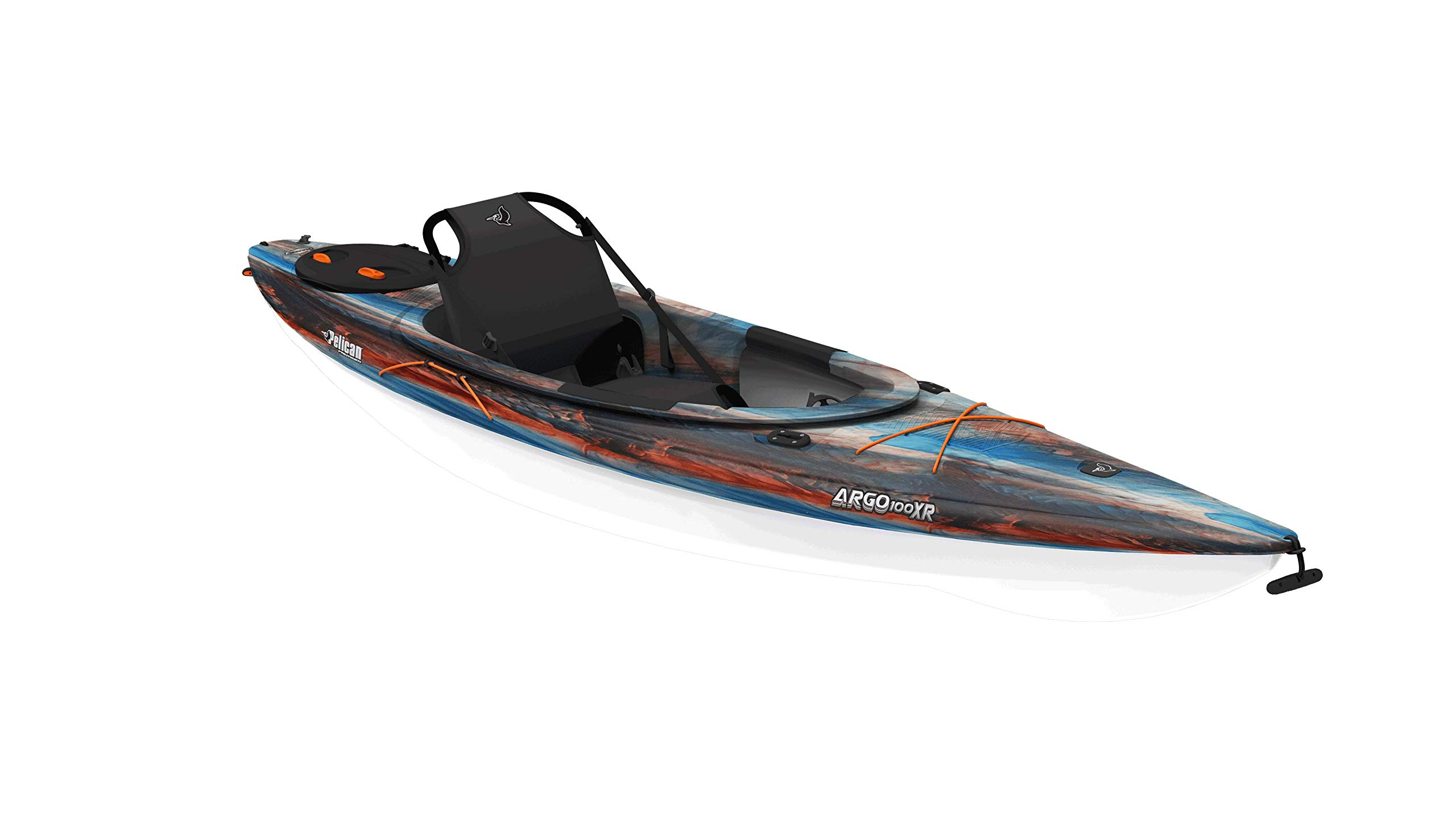
Pelican Argo 100XR
Key Features
- Weight Capacity: 300 lb
- Portability/Storage: Hard shell, roof rack
- Ease of Setup: Ready to go
- Durability: HDPE
- Price: $$$
The removable Ergocoast seat transforms this 10-ft sit-in kayak into a true comfort machine – you can take it out and use it as a beach chair between paddles. Compared to the lighter standard Argo 100X, the 100XR adds 7 lb of extra features like a sealed hatch and track mounts, raising total weight to 43 lb. That weight increase is the primary tradeoff for the added convenience.
This kayak is best for beginners who expect to spend full afternoons on the water and want integrated gear storage without buying aftermarket accessories. The occasional shipping damage – scuffs or a broken footrest – means it pays to inspect the box closely upon arrival; Pelican’s warranty covers these issues, but the inconvenience is real. If you car-top alone or need the lightest possible hull, the standard Argo 100X is a better fit.
Pros
- Removable padded seat that doubles as a beach chair
- Hull design feels planted and never tippy, even for first-time paddlers
- Integrated storage hatch, track mounts, and bottle holder keep gear organized
Cons
- At 43 lb, lifting onto a car roof requires more effort than lighter competitors – best with a partner or cart
- Some units arrive with cosmetic scuffs or broken footrests – inspect upon delivery and contact Pelican if needed
For beginners who will kayak frequently and value sit-in comfort, the Argo 100XR justifies its premium price – just account for the extra weight and plan to check the hull when it arrives.
Best for Tandem Couples
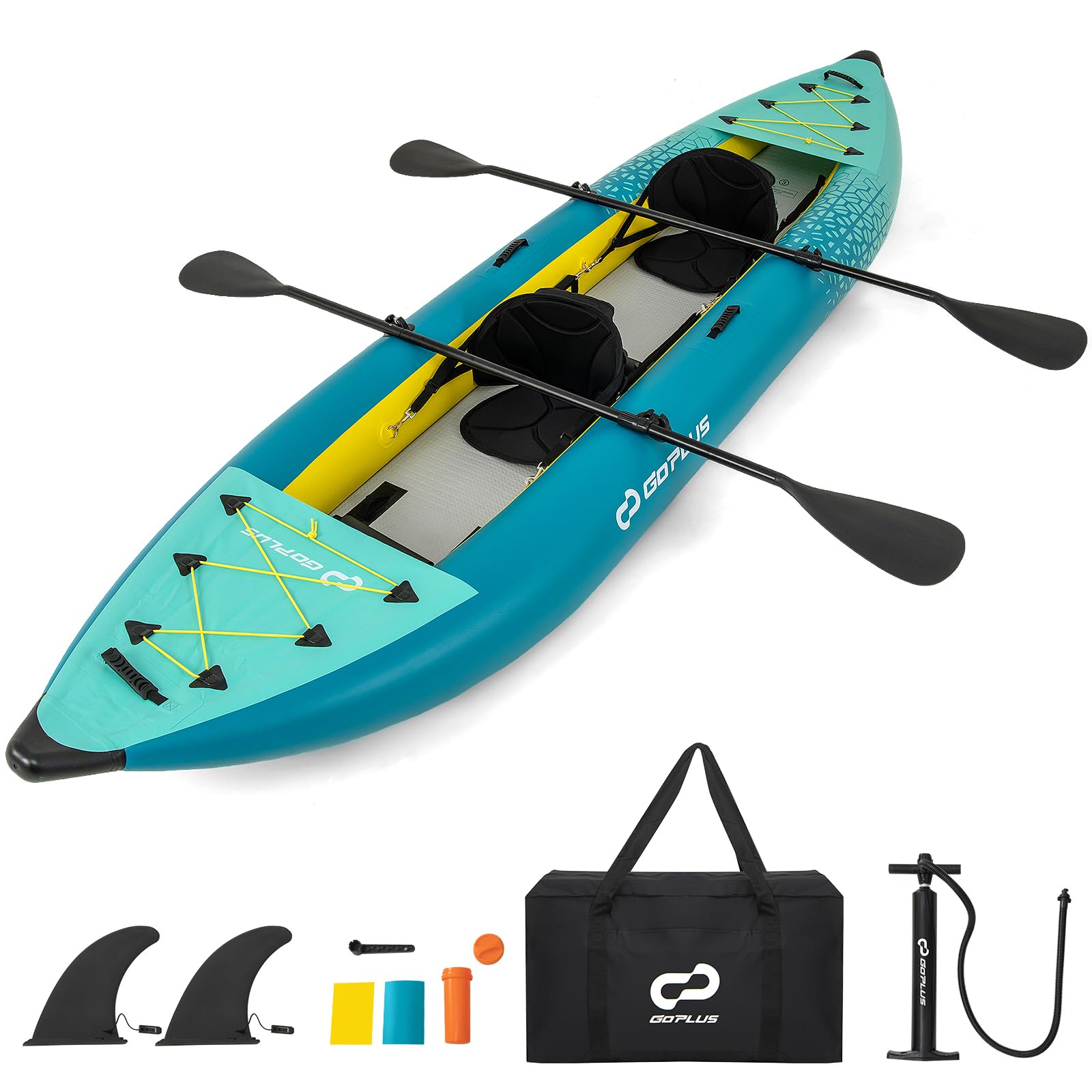
Goplus Tandem Inflatable
Key Features
- Weight Capacity: 507 lb
- Portability/Storage: Inflatable, packs small
- Ease of Setup: Requires inflation
- Durability: Reinforced laminate PVC
- Price: $$
The Goplus Tandem Inflatable Kayak uses a drop-stitch floor that stays rigid underfoot, giving it a stable platform that outperforms bargain inflatables in the same price range. The reinforced laminate PVC body handles routine lake and slow-river use without the early seam issues seen on cheaper designs. Setup takes about five minutes with the included pump, and the whole thing packs into the carry bag for storage in a closet or car trunk.
This kayak suits couples or friends who want a spacious two-person inflatable that fits a variety of body sizes (weight capacity 507 lb). The adjustable seats offer good back support, though paddle holders are positioned in a way that can interfere with hand placement during longer strokes. The side chambers run at lower pressure (2.18 PSI) and feel softer than the floor — you’ll notice it when leaning into turns or paddling in a breeze. Those who prioritize a uniform rigid hull throughout may prefer a hard-shell tandem, but for a packable option this is a solid compromise.
Pros
- Drop-stitch floor stays firm and stable under load
- Withstands typical lake and river use better than budget inflatables
- Sets up in minutes using the included pump
Cons
- Paddle holders can interfere with natural hand placement during extended sessions
- Side chambers feel noticeably softer than the drop-stitch floor, affecting tracking in choppy conditions
If you want a tandem inflatable that feels more substantial than cheap alternatives and can handle a weekend on calm water, the Goplus delivers — just be aware of the paddle holder position.
Best for Kids/petite Paddlers
Lifetime Lotus
Key Features
- Weight Capacity: 250 lb
- Portability/Storage: Hard shell, roof rack
- Ease of Setup: Ready to go
- Durability: HDPE
- Price: $$
The 8-ft hull of the Lifetime Lotus is stable and easy to maneuver, offering a confidence-inspiring platform for first-time kayakers. It’s heavier than the 36-lb Pelican Argo 100X and 2 ft shorter, so tracking in wind or current is less precise, but the trade-off is a very stable sit-on-top that doesn’t require inflation or assembly.
The 39-lb weight and 250-lb capacity make it a good fit for teens and petite adults who can manage the weight. The included paddle is basic but adequate for casual paddling. However, seat clips are prone to breaking, and hull quality can vary between units; careful inspection on arrival is recommended to catch any issues early.
On calm lakes, the Lotus tracks adequately for short distances. Its molded carrying handles and lightweight construction simplify transport from car to shore. The sit-on-top design makes re-entry easy if you tip over, adding safety for nervous beginners.
Pros
- Fits smaller paddlers well
- Very stable and hard to flip
- Lightweight at 39 lb, easy to carry
Cons
- Seat clips are prone to breaking; hull quality can vary between units
- Short 8-ft hull limits tracking in wind and reduces speed compared to longer kayaks
The Lifetime Lotus is a stable, paddle-included hard shell for smaller beginners who want a simple sit-on-top, with the caveat that seat clip durability and hull consistency require attention.
Best for Budget Occasional Use
Intex Challenger K1

Key Features
- Weight Capacity: 220 lb
- Portability/Storage: Inflatable, packs small
- Ease of Setup: Requires inflation
- Durability: SuperStrong PVC
- Price: $
Priced under $100, the Challenger K1 inflates in minutes and packs into a carry bag, making it the most accessible inflatable for calm lakes. Seam leaks and punctures have been noted after limited use, so it’s best for occasional trips where you accept a shorter lifespan.
Pros
- Sets up in under five minutes using the included hand pump.
- Packs into a compact carry bag for hassle-free transport and storage.
Cons
- Narrow hull can feel unstable in wind or waves, limiting use to calm conditions.
A sensible buy for the budget-conscious first-timer who sticks to flat water and doesn’t mind replacing it after a season or two.
Best for Budget Tandem
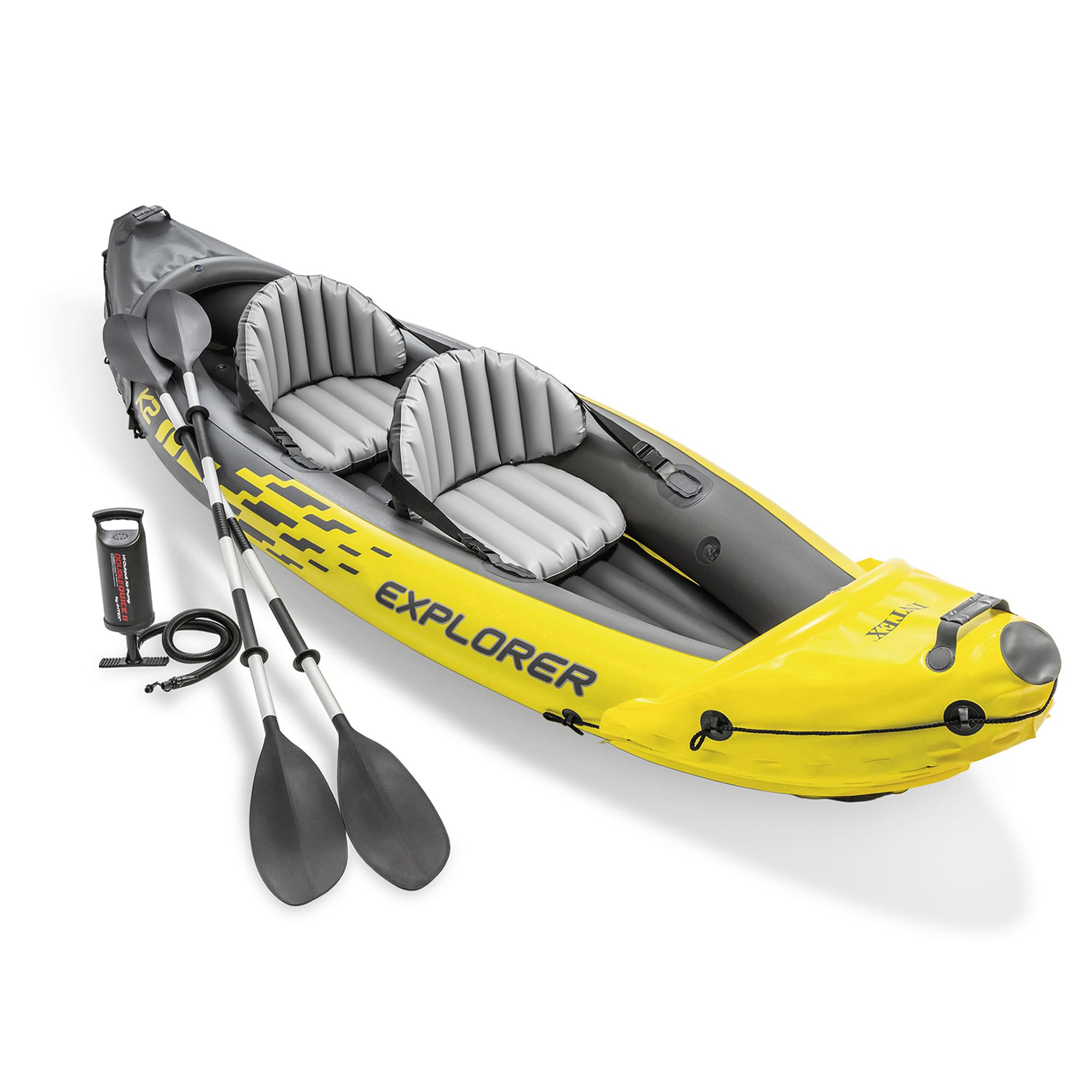
Intex Explorer K2
Key Features
- Weight Capacity: 400 lb
- Portability/Storage: Inflatable, packs small
- Ease of Setup: Requires inflation
- Durability: SuperStrong PVC
- Price: $
This two-person inflatable kayak includes paddles, pump, and carry bag — a budget-friendly way to get two people on calm lakes or slow rivers. It sets up quickly, but durability and stability are similar to the cheaper Challenger: seam failures and punctures can appear after moderate use, and the kayak can feel tippy with two paddlers. For frequent trips or a stiffer floor, stepping up to the Goplus tandem (with drop-stitch construction) offers better long-term value.
Pros
- Quick setup with numbered chambers and Boston valves
- Comes with paddles and pump for immediate use
Cons
- Stability can feel tippy with two paddlers; seats may shift
- Seam failures and punctures can occur after moderate use
A good choice for couples or friends who want an inexpensive inflatable for occasional lake paddling, but not for those expecting long-term durability or frequent use.
Best for Newer Pelican Model
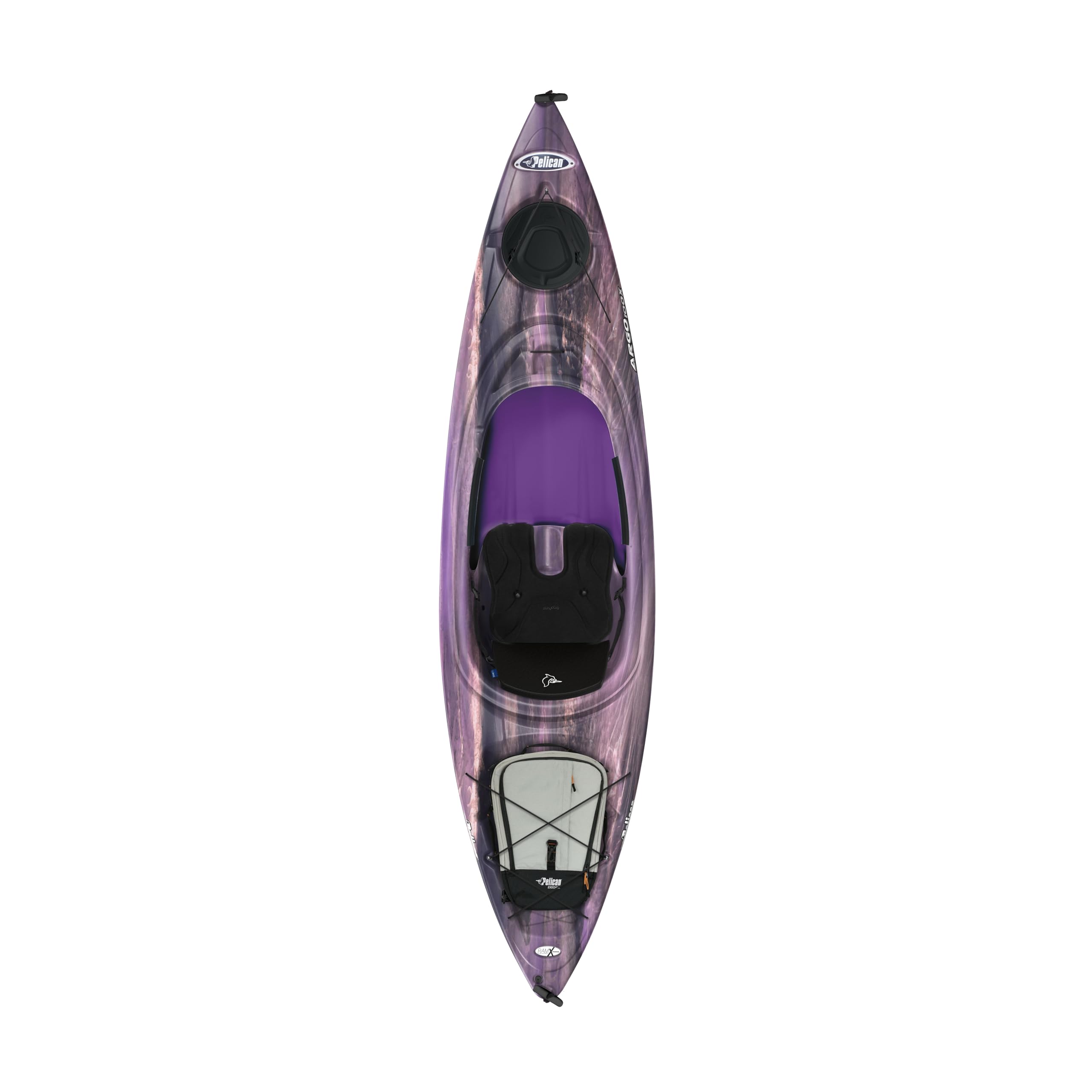
Pelican Argo 100X EXO
Key Features
- Weight Capacity: 275 lb
- Portability/Storage: Hard shell, roof rack
- Ease of Setup: Ready to go
- Durability: RAM-X polyethylene
- Price: $$
The Pelican Argo 100X EXO matches the standard Argo 100X in weight, material, and capacity, delivering the same stable ride and comfortable cockpit that beginners appreciate. Its RAM-X polyethylene hull provides solid build quality at 36 lb. However, because this is a newer release, long-term durability data is still limited. For paddlers who prioritize a well-documented track record, the standard Argo 100X remains the more established choice.
Pros
- Stable, non-tippy hull ideal for beginners on flat water
- Lightweight 36-lb shell makes car-top loading easy
Cons
- Long-term durability is less certain given the limited owner history
Best suited for buyers who want the exact same kayak as the standard Argo 100X but are comfortable being early adopters.
Best for Heavy-Duty Tandem
Perception Rambler
Key Features
- Weight Capacity: 550 lb
- Portability/Storage: Hard shell, roof rack
- Ease of Setup: Ready to go
- Durability: Polyethylene
- Price: $$$
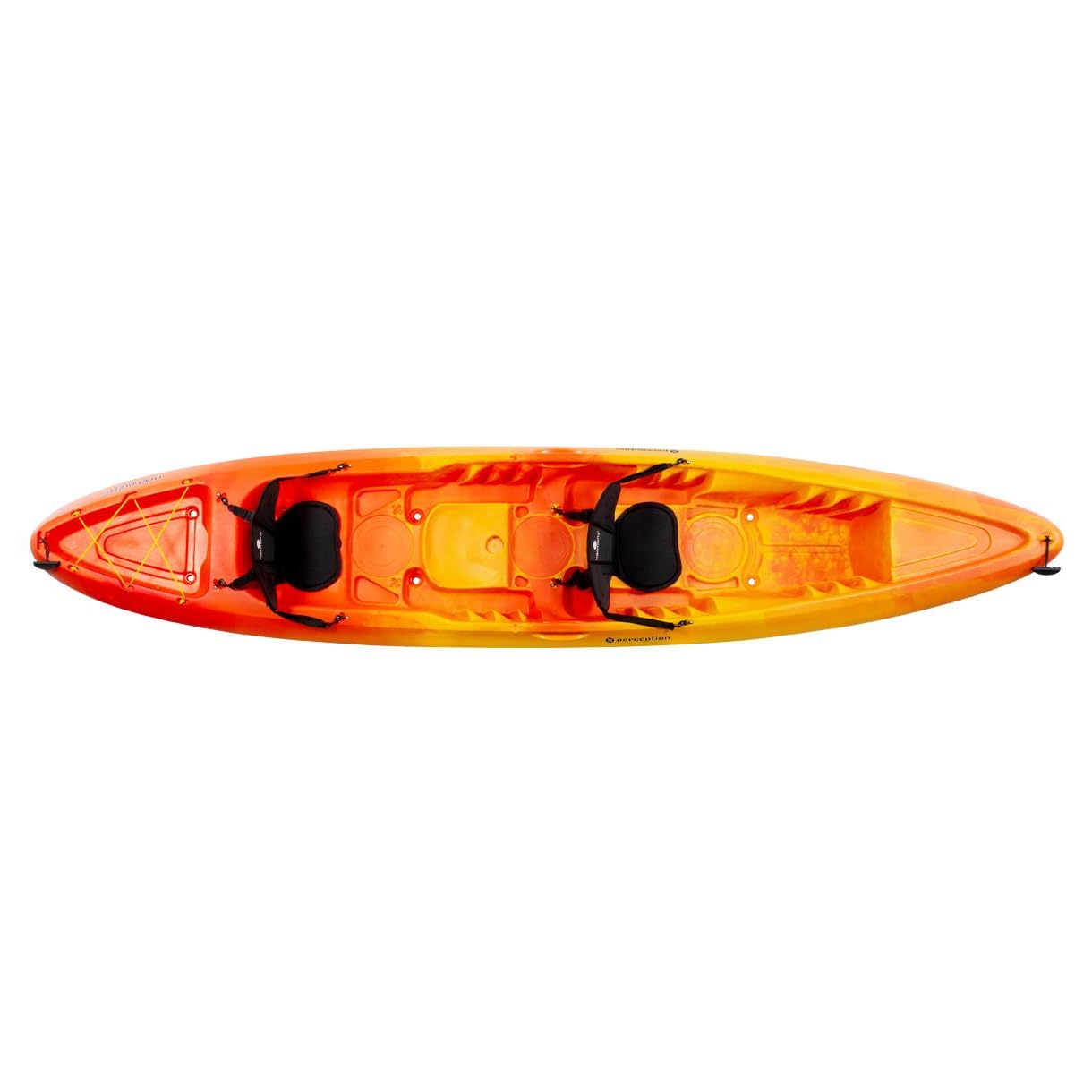
The Perception Rambler 13.5 offers a stable platform and 550 lb capacity that suits families with larger paddlers or groups wanting room for gear. However, its 78 lb hull is difficult for one person to lift and requires a vehicle with roof racks. The kayak also ships without paddles or scupper plugs, raising the total investment above $700. For a beginner looking for an affordable, easy-to-transport first kayak, the weight and missing accessories are significant hurdles that make the Rambler better suited for experienced paddlers with a truck and existing gear.
Pros
- Hull stays stable in choppy water, suitable for larger paddlers.
- Capacity of 550 lb fits three adults or two plus gear.
Cons
- At 78 lb, solo transport is impractical; loading onto a roof rack often requires two people.
- No paddles or scupper plugs included, adding cost and inconvenience.
Best for experienced families who already own roof racks and paddles and need a stable tandem for larger paddlers.
Best for Family Tandem
Lifetime Kokanee

Key Features
- Weight Capacity: 425 lb
- Portability/Storage: Hard shell, roof rack
- Ease of Setup: Ready to go
- Durability: UV-protected HDPE
- Price: $$$
This sit-on-top handles lake conditions with a stable, roomy hull that comfortably seats two adults. The UV-protected HDPE construction holds up for occasional recreational use. However, at 76 lb it requires two people to load onto a car, and the seats lack support and may not hold up over time. For the same premium price, the Pelican alternatives offer lighter weight and better seating, making this a better fit for families who can manage the weight together.
Pros
- Stable and sturdy hull for calm water paddling
- Spacious deck with legroom for two adults
Cons
- Very heavy (76 lb) – requires two people to transport
- Flimsy seats – support and durability are limited, particularly for longer trips
Best suited for families with a vehicle and storage for a heavy kayak who want a stable tandem for flat-water outings.
How to Choose
The kayak that works for you depends less on brand hype and more on how you’ll store, carry, and paddle it most weekends.
Weight Capacity
Capacity isn’t just about your body weight: it includes gear, water bottle, and any fishing tackle. A kayak rated at 220 lb leaves no room for extras, so if you plan to bring a dry bag or cooler, step up to 275 lb or higher.
Exceeding the listed limit pushes the kayak lower in the water, increasing drag and making the hull feel unstable. Stick within 80% of the capacity for a comfortable margin on calm lakes.
Portability and Storage
Inflatables pack into a car trunk and require no roof rack, but every trip means 5-10 minutes of setup and breakdown. Hard shells are ready to launch from the moment you lift them off the car, but they need a rack and a garage or shed.
Hard shells under 40 lb can be car-topped by one person; anything over 50 lb is a two-person job. If you live on a second floor or lack a vehicle with crossbars, an inflatable is the practical choice.
Stability
Stability for a beginner comes from hull width and shape. Sit-on-top kayaks are inherently more stable because you sit above the waterline and can shift weight easily; sit-ins give better protection from cold water but feel tippier at rest.
Hard shells with a flat or pontoon-style hull resist tipping even when you lean to reach for a paddle or fishing rod. Inflatables are narrower and rely on air pressure, so wind and chop can make them feel less planted.
Ease of Setup
Hard shells are grab-and-go: no inflation, no assembly, just secure to the car and hit the water. Inflatables require pumping to the right PSI, attaching the seat, and packing down after each use.
The trade-off is time for portability. If you kayak spontaneously after work, a ready-to-go hard shell removes friction. If you only paddle a few times a year, the setup routine of an inflatable is manageable.
Durability
Material quality directly dictates how many seasons a kayak lasts. Budget inflatables use single-layer PVC that punctures against sharp rocks or gets seam leaks after a few months. Mid-range inflatables with multi-layer laminate or drop-stitch floors resist wear far longer.
Hard shells made of polyethylene are impact-resistant but can develop stress cracks if left in direct sun for years. UV-protected blends reduce that risk. A kayak stored indoors and handled with care will outlast one left on a roof rack all summer.
FAQ
How long does it take to inflate an Intex Challenger K1?
With the included hand pump, you can inflate all three chambers in about five minutes. Using an electric pump cuts that to under two minutes. The Boston valves let air in quickly but require a firm twist to seal. Deflation and folding take roughly the same time.
Is a sit-on-top kayak more stable than a sit-in for beginners?
Yes. Sit-on-top kayaks place you above the waterline with a wider base, reducing the sensation of tipping. They also drain water through scupper holes, so they self-bail if you take on a splash. Sit-ins keep you drier in cold conditions but feel tippier until you build balance.
Can I transport a 36-pound kayak on my car alone?
Easily. At 36 lb, the Pelican Argo 100X can be carried under one arm and lifted onto a roof rack or into a truck bed by one person. Heavier models over 50 lb, like the Perception Rambler at 78 lb, require two people or a loading assist system.
What is the most durable inflatable kayak under $300?
The Intex Excursion Pro K1, at around $230, uses thicker three-ply laminate PVC that holds up better than the single-layer Challenger. It also includes a reinforced floor and high-pressure valves. For even sturdier construction under $300, the Goplus Tandem offers a drop-stitch floor but is a two-person design.