This post contains affiliate links. We may earn a small commission when you buy through our links — at no extra cost to you.
Many trekking poles sold as ‘ultralight’ tip the scales at over 10 ounces per pole — heavier than the average aluminum adjustable model. True ultralight starts under 6 ounces, and that usually means carbon fiber or a fixed-length folding design. The gap between marketing claims and real weight is bigger than most buyers expect.
The trade-off is straightforward: lighter poles often sacrifice adjustability or durability. Twist locks save weight but can slip under load. Fixed-length Z-poles pack smaller but can’t adapt to steep terrain or multiple users. Carbon fiber shaves ounces but costs more than aluminum and can be brittle if struck sideways.
This guide cuts through the weight claims to match poles to your actual trail style — whether you need sub-6oz for thru-hiking, instant stow for trail running, or a budget-friendly carbon pole for weekend trips.


Best for Day Hikers, Backpackers
Cascade Mountain Tech Carbon
Key Features
- Weight per Pole: 5.6 oz
- Material: Carbon fiber
- Collapsed Length: 30 in
- Locking Mechanism: Quick lock
- Adjustability: Telescopic
- Price: $$
At 5.6 ounces per pole, the Cascade Mountain Tech carbon fiber sticks are among the lightest adjustable trekking poles available anywhere under $100. The quick-lock mechanism allows on-trail length changes in seconds, and the carbon construction delivers real weight savings without the premium pricing of high-end brands.
On moderate trails, the quick-lock holds securely for day hikes and weekend backpacking. A small percentage of poles may develop wobbling at the joint or, in rare cases, snap under extreme torsional loads — typically when used as a vaulting pole or on very rocky terrain. For the intended use case of casual hiking, the weight benefit makes this an acceptable compromise.
The EVA foam grip provides a decent hold in dry conditions but may transfer black residue onto sweaty hands, especially in warm weather. The 30-inch collapsed length fits most daypacks but is longer than many ultralight folding poles, so it may not suit trail runners who need a compact stow. These are minor tradeoffs for a pole this light at this price.
These poles are a strong fit for day hikers, weekend backpackers, and first-time users who want to try carbon fiber without a big investment. Thru-hikers or anyone expecting years of heavy abuse should consider more robust designs — the occasional breakage report means guaranteed long-term durability is not a given here.
Pros
- Exceptional lightness at 5.6 oz per pole
- Quick-lock system enables easy on-trail length adjustments
- Great value for carbon fiber construction under $70
- Collapsed to 30 inches, fits most standard daypacks
Cons
- Some poles may develop wobbling or break under heavy loads, particularly on rocky terrain
- EVA foam grip can leave black residue on hands in sweaty conditions
For day hikers and weekend backpackers seeking lightweight poles without paying premium prices, the Cascade Mountain Tech delivers genuine carbon fiber performance at a budget-friendly cost.
Best for Trail Runners, Fastpackers
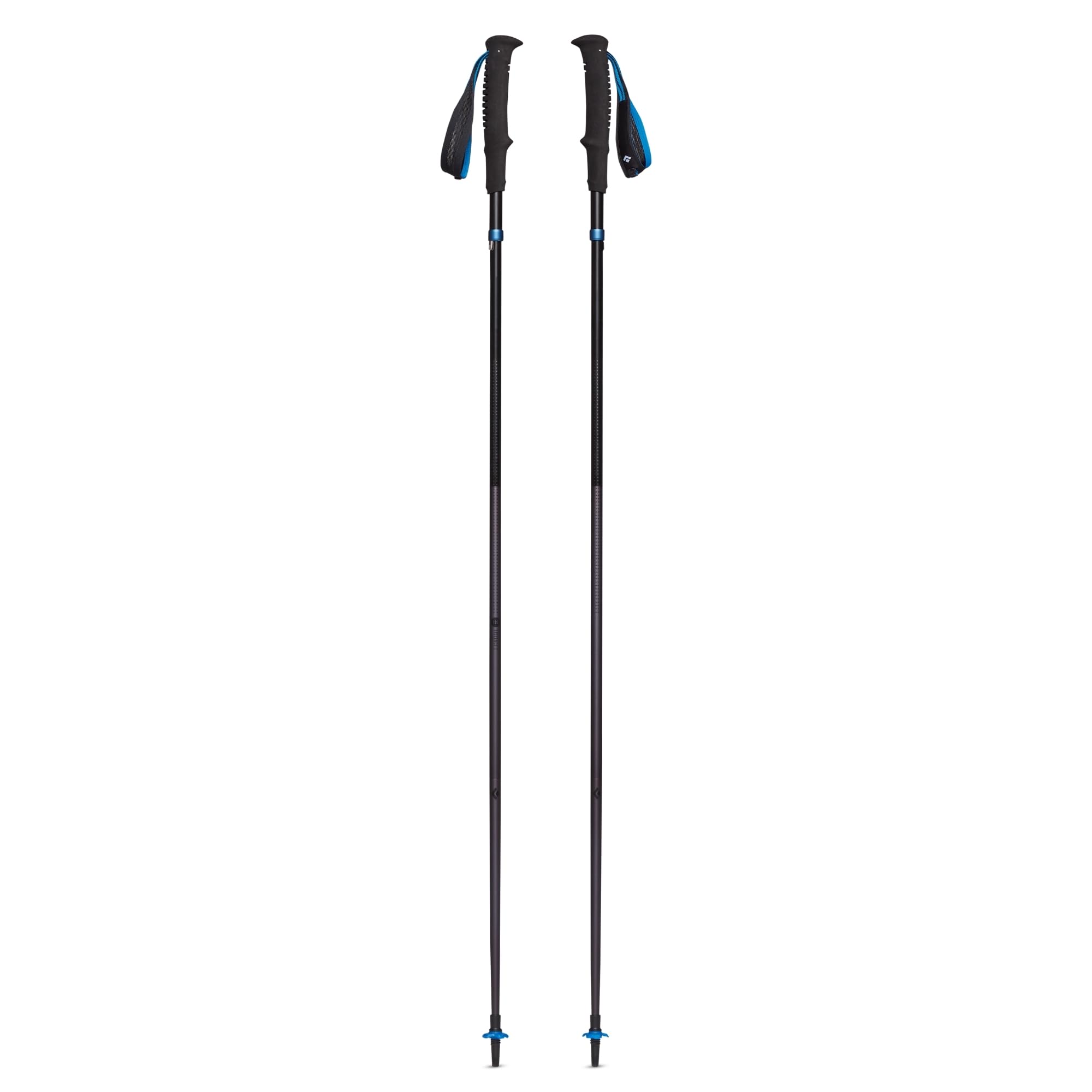
Black Diamond Distance Z
Key Features
- Weight per Pole: ~8 oz
- Material: Aluminum
- Collapsed Length: ~13 in
- Locking Mechanism: Z-pole push button
- Adjustability: Fixed length
- Price: $$$
The Distance Z’s standout feature is its instant fold-and-stow design. It collapses to just 13 inches, small enough to fit in a running vest pocket, and the push-button Z-pole mechanism lets you deploy both poles in a few seconds. This is a deliberate trade-off: there are no adjustable sections, cork grips, or twist locks — just a fixed 110 cm length and a lightweight aluminum build.
For trail runners, fastpackers, and travel hikers who know their preferred pole length and want minimal pack volume, the Distance Z delivers. The fixed length means you must measure your size before buying — if you share poles or encounter varied terrain requiring different lengths, this pole won’t adapt. It suits those who value speed of stow over on-trail adjustability.
On technical, rocky trails, the aluminum poles offer enough stiffness for stability without feeling overly heavy at roughly 8 oz per pole. Some evidence points to occasional breakage under heavy descending loads, but for typical trail running and fast hiking, the construction holds up well. The solid performance on hills and uneven ground makes it a capable partner for high-mileage days.
Pros
- Folds to 13 inches — compact enough for running vest pockets or carry-on luggage.
- Lightweight aluminum (8 oz per pole) keeps pack weight low without the cost of carbon.
- Push-button Z-pole mechanism allows instant deployment and collapse on the move.
- Provides reliable support on technical descents and uneven trail sections.
Cons
- Fixed length requires precise sizing; cannot adjust for varied terrain or different users.
- Under heavy repeated use, the poles may snap on rough descents — something to monitor.
If you prioritize instant stow and compact pack volume over adjustability, the Distance Z is a focused tool that delivers on its promise.
Best for Ultralight Thru-Hikers
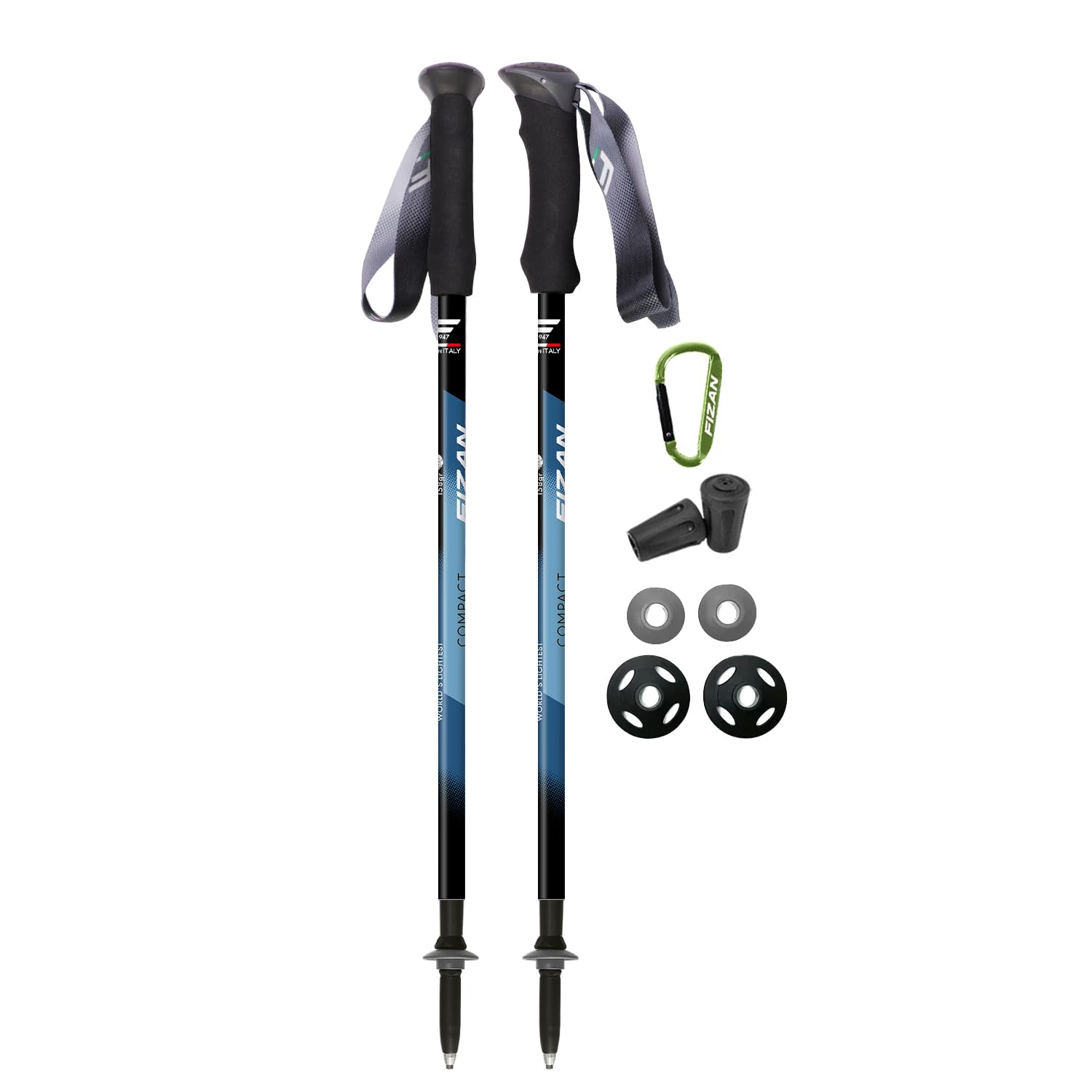
Fizan Compact 3
Key Features
- Weight per Pole: 5.6 oz
- Material: 7001 aluminum
- Collapsed Length: 22.8 in
- Locking Mechanism: Twist lock
- Adjustability: Telescopic
- Price: $$
Weighing just 5.6 oz per pole, the Fizan Compact 3 matches the weight of many carbon poles at a fraction of the cost, thanks to its 7001 aluminum construction and Italian assembly. Its twist-lock mechanism and compact collapse to 22.8 inches make it a favorite among thru-hikers who prioritize low weight for long miles.
This pole suits ultralight backpackers who are comfortable with the maintenance routine of twist locks: a firm initial tight and periodic checks during the day. The pole’s strength is its weight-to-price ratio, making it a cost-effective choice for those who plan to cover thousands of miles on varied terrain.
Build quality is consistent across units, with well-machined aluminum sections and a durable locking system. The internal twist mechanism can be susceptible to corrosion in salty or wet conditions – a quick rinse and dry after use helps maintain smooth operation.
Pros
- Ultralight at 5.6 oz per pole – among the lightest adjustable aluminum poles available.
- High-quality 7001 aluminum with Italian craftsmanship provides a solid feel despite the low weight.
- Great value: sub-$80 price delivers performance comparable to carbon poles costing twice as much.
Cons
- Twist lock can slip under heavy load if not tightened with significant force.
- Foam grips become slick when wet, reducing grip compared to cork.
- Internal locking mechanism may corrode over time, leading to sticking if not maintained.
For weight-obsessed thru-hikers who don’t mind checking twist locks periodically, the Fizan Compact 3 offers unbeatable value for an adjustable ultralight pole.
Best for Hikers, Mountaineers
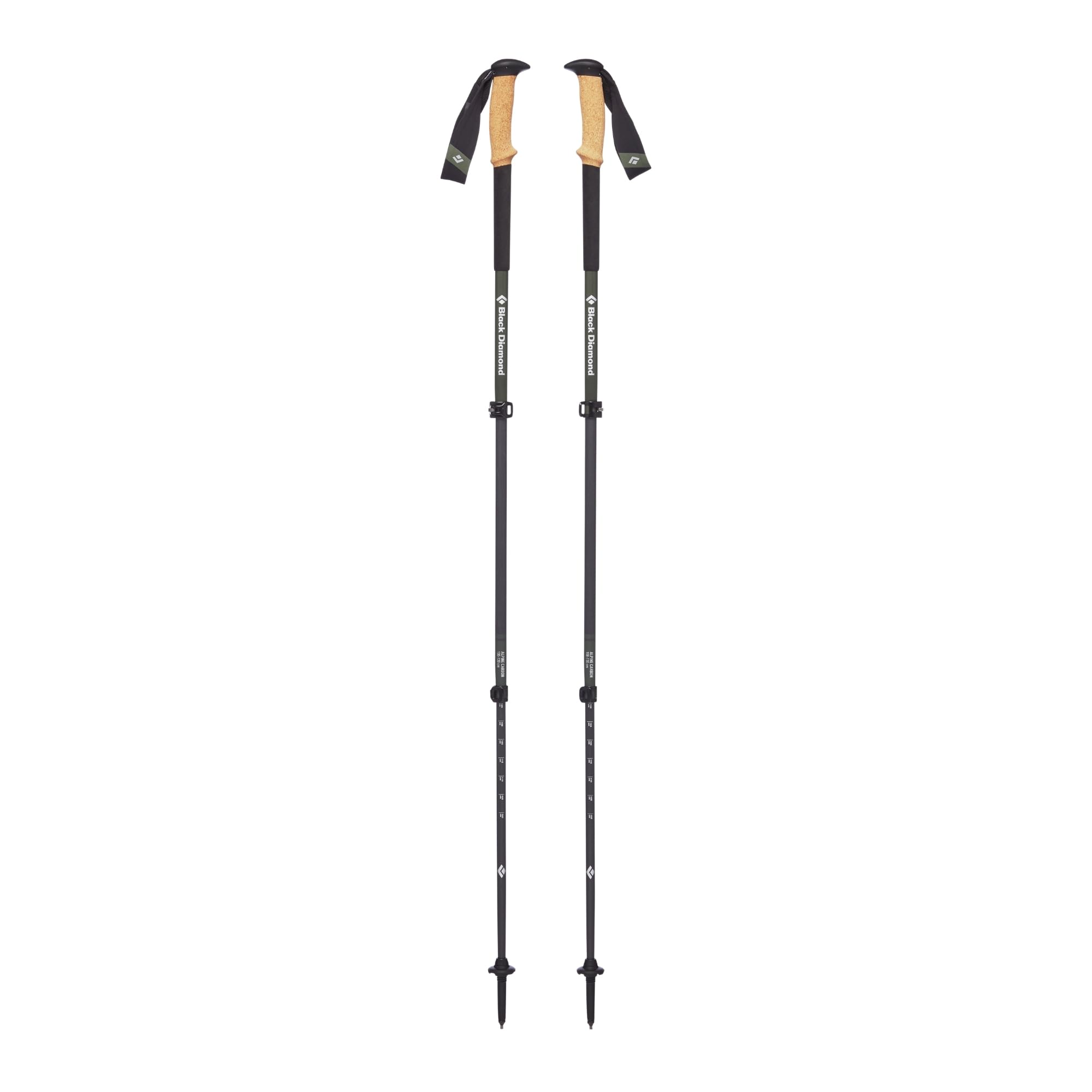
BD Alpine Carbon Cork
Key Features
- Weight per Pole: ~6.35 oz
- Material: Carbon fiber
- Collapsed Length: N/A (telescopic)
- Locking Mechanism: FlickLock
- Adjustability: Telescopic
- Price: $$$$
The Black Diamond Alpine Carbon Cork uses carbon fiber to keep weight around 6.35 oz per pole, and the natural cork grips wick moisture while molding to the hand over long days. Unlike fixed-length Z-poles favored by trail runners, the telescopic design adjusts from 100 to 130 cm to handle steep ascents and descents. The FlickLock mechanism locks securely when tightened firmly, but can loosen over time if not set with deliberate force.
This pole suits hikers and mountaineers who value cork grip comfort and on-trail adjustability over collapsed pack size. It extends to a relatively long 26 inches when stowed, so it won’t fit in a running vest or small daypack. Thru-hikers who check their gear frequently and don’t mind periodic lock re-tightening will get along well with the Alpine Carbon Cork, but fastpackers seeking instant stow should look at the Z-pole alternative.
Pros
- Premium carbon construction with natural cork grips provide lasting comfort and moisture control.
- Lightweight yet sturdy for adjustable poles — good weight savings without sacrificing strength.
- Cork grips wick sweat and mold to the hand for extended day hike comfort.
Cons
- FlickLock may loosen over time if not set with sufficient force during each use.
- Telescopic design collapses to 26 inches, limiting packability compared to foldable Z-poles.
A premium pole that delivers on cork grip comfort and range of adjustment, but requires periodic lock attention and won’t stow tiny — best for day hikers and mountaineers who can carry the length and check the locks.
Best for Trail Runners, Ultramarathoners
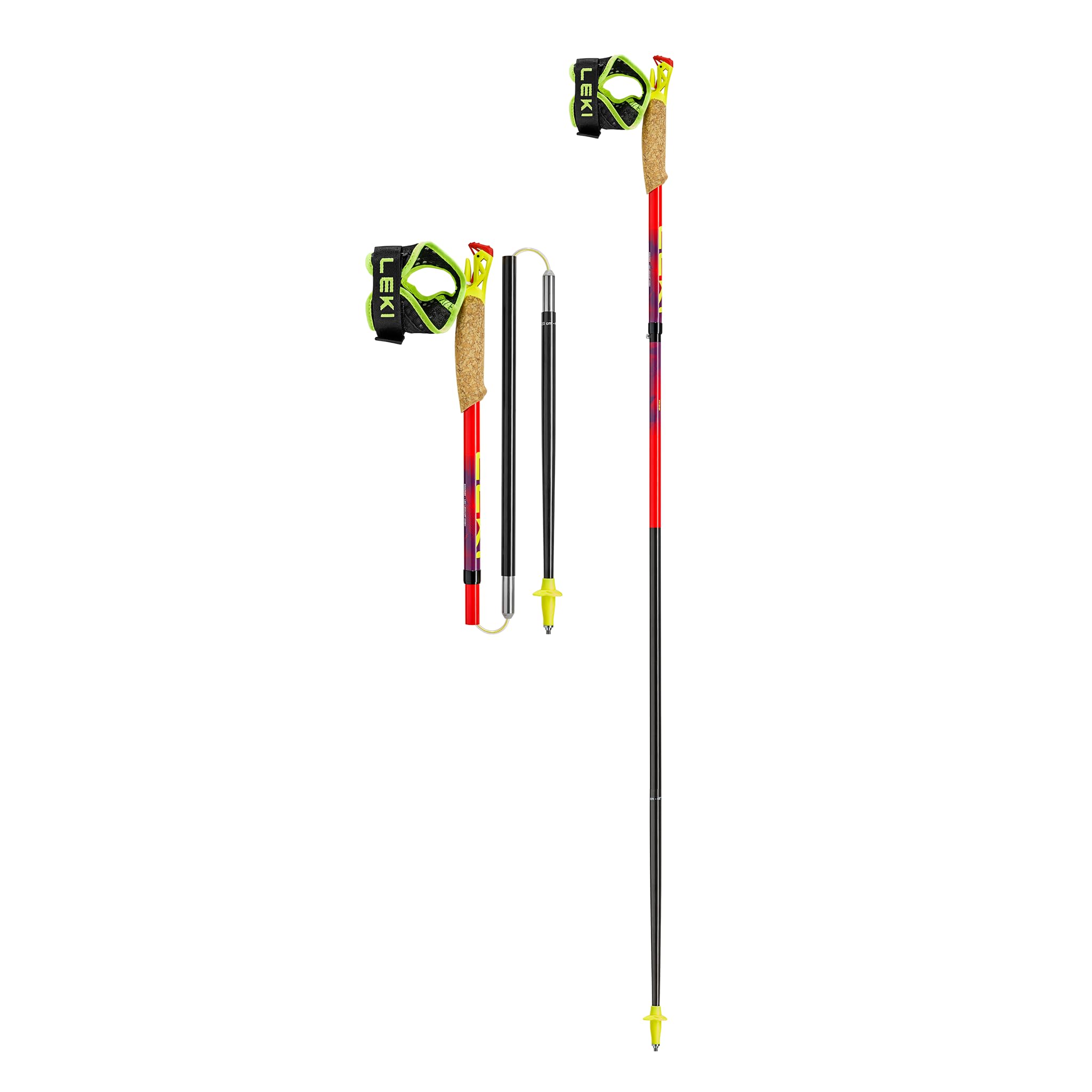
LEKI Ultratrail FX.One
Key Features
- Weight per Pole: 5.9 oz
- Material: Carbon (HRC max)
- Collapsed Length: 14.5 in
- Locking Mechanism: Push button Z-fold
- Adjustability: Fixed length
- Price: $$$
The LEKI Ultratrail FX.One sheds weight without sacrificing rigidity – the carbon construction feels noticeably stiffer than many ultralight poles. Where the top pick offers adjustability and a lower price, this pole doubles down on one fixed length per size, shaving every gram possible. Deployment is near-instant: the push-button Z-fold locks securely and collapses to 14.5 inches for easy stow in a running vest.
This pole is best suited for trail runners and ultralight hikers who know their ideal pole length and intend to use it on consistent terrain. The fixed-length design means no on-trail adjustability for steep climbs or descents – accurate sizing before purchase is essential. If you switch between hiking and running or share poles, this tradeoff will limit its usefulness.
Pros
- Incredibly lightweight at 5.9 oz per pole, among the lightest available
- Stiff carbon build provides rigid support despite the low weight
- Push-button Z-fold deploys and stows quickly, ideal for fast transitions
- LEKI build quality holds up well under demanding trail use
Cons
- Fixed length per size requires precise sizing before purchase; no on-trail adjustment
- Premium pricing limits appeal for budget-conscious buyers
For those who prioritize weight and stiffness above adjustability and cost, this pole delivers exactly what it promises – but only if you get the size right.
Best for Budget Hikers, Backpackers
Hiker Hunger Foldable
Key Features
- Weight per Pole: 9.95 oz (short)
- Material: Aircraft-grade aluminum
- Collapsed Length: 14 in
- Locking Mechanism: Metal flip locks
- Adjustability: Telescopic
- Price: $
The Hiker Hunger Foldable uses aircraft-grade aluminum with metal flip locks that provide secure adjustment at multiple heights. Cork handles with EVA foam extensions reduce fatigue on long days. These features are typically found on pricier poles, making this a standout in the budget segment. The flip locks are easy to operate even with gloves and hold firmly during normal use.
The cork grips absorb sweat and maintain comfort in hot or wet conditions. The flip locks hold well under normal use, though loosening has been observed after extended miles — a quick retightening addresses it. The pole feels solid and well-constructed for its price, with no rattling or wobbling.
Heavier than carbon ultralight alternatives at over 9 oz per pole, this pole is best for hikers who accept extra weight for better build quality and comfort. It fits standard backpack side pockets but is not the most compact when folded at 14 inches. For day hikes and moderate backpacking, it delivers dependable performance at a budget price.
Cork grips and metal locks at this price point are rare, making the Hiker Hunger Foldable a strong value proposition. If you are not chasing the lightest possible setup, this pole offers a durable, comfortable option without the premium cost.
Pros
- Sturdy aluminum construction with secure metal flip locks.
- Cork grips with EVA foam extension reduce hand fatigue.
- Easy adjustment even with gloves, locks hold firmly.
Cons
- Folded length of 14 inches limits pack fit in small daypacks.
- Flip locks can loosen after extended use; periodic tightening recommended.
A cost-effective choice for hikers who value cork grips and robust locks — this pole delivers strong performance without breaking the bank.
Best for Occasional Hikers
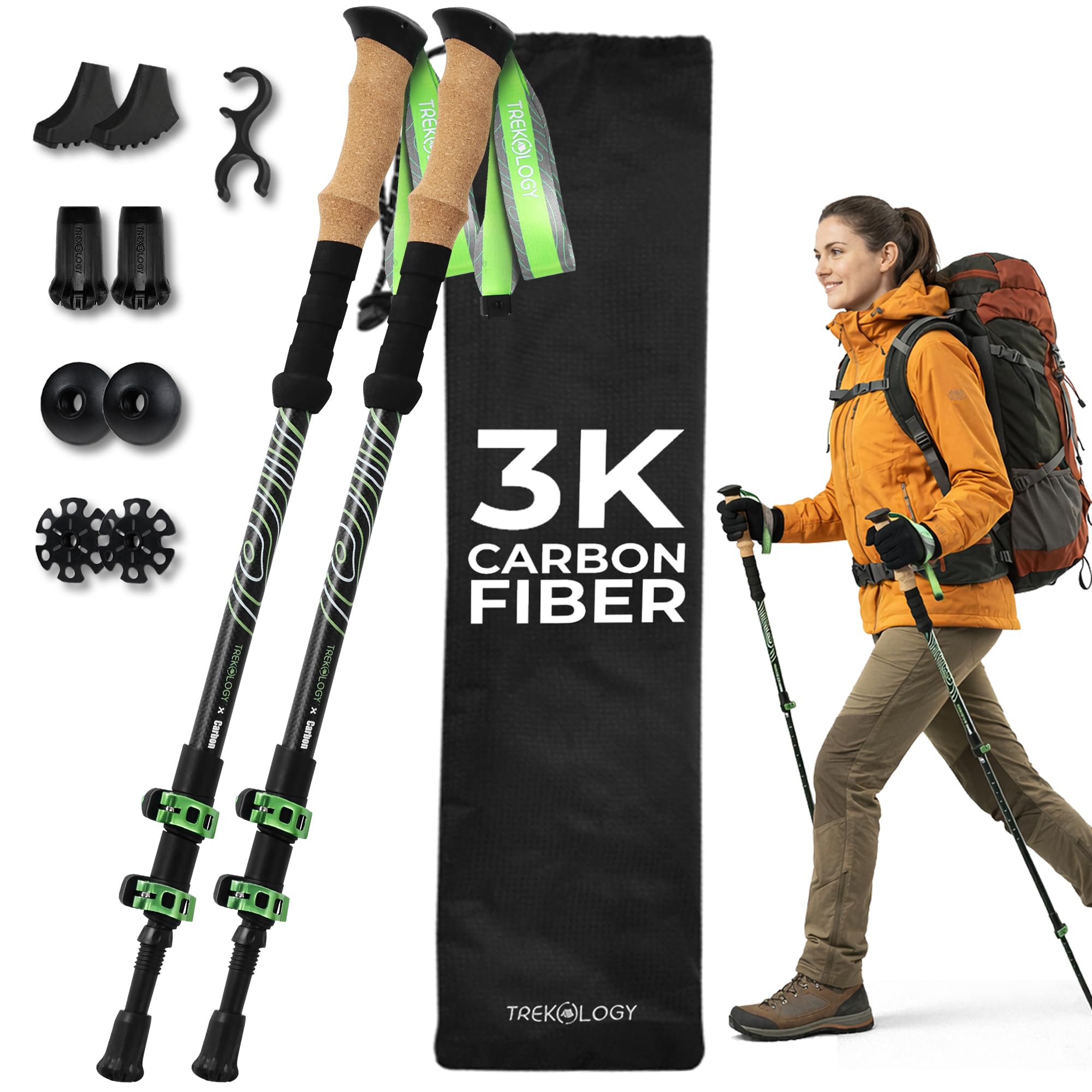
Trekology 3K Carbon
Key Features
- Weight per Pole: 7.4 oz
- Material: Carbon fiber
- Collapsed Length: 25.6 in
- Locking Mechanism: Metal flip locks
- Adjustability: Telescopic
- Price: $
The Trekology 3K Carbon offers genuine carbon fiber construction at a price that undercuts most competitors, and it comes with a 10-piece accessory kit covering mud baskets, snow baskets, and tips. The flip-lock adjustment system is functional but may require occasional re-tightening during a hike. Long-term durability under sustained heavy use remains unconfirmed, making this pair more appropriate for day hikes and casual trails than for multi-day backpacking or rough terrain.
Pros
- Light carbon fiber build keeps weight low without a premium price.
- Includes a full set of trail accessories out of the box.
Cons
- Flip locks can loosen during use and need occasional re-tightening.
- Long-term reliability under frequent or rough use is not yet verified.
A cost-effective entry into carbon fiber poles for the occasional hiker who values weight savings and does not plan to push them hard on extended trips.
Best for Travel Hikers, Casual
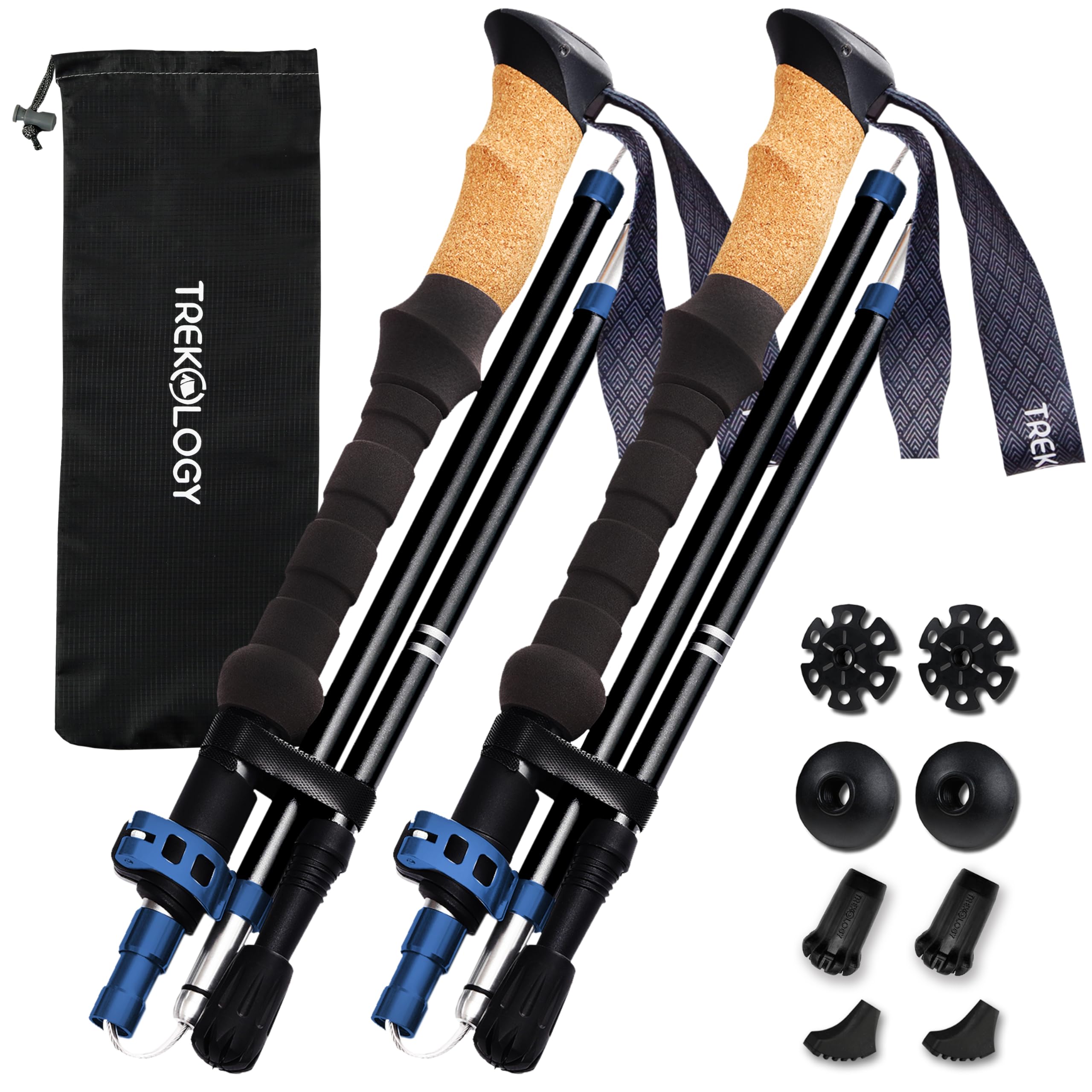
Trekology Trek-Z Cork
Key Features
- Weight per Pole: 11.5 oz
- Material: Aircraft-grade aluminum
- Collapsed Length: 15 in
- Locking Mechanism: Flip locks
- Adjustability: Telescopic
- Price: $
The Trek-Z folds to an impressively compact 15 inches and assembles quickly, making it one of the most travel-friendly poles available. The cork grips stay comfortable on flat trails, and stability on groomed paths is adequate. However, durability concerns limit this pole to light, occasional use — it is not designed for rugged backpacking or uneven terrain. Weight-conscious hikers should also note the 11.5 oz per pole, which misses the ultralight category.
Pros
- Extremely compact folded size for carry-on and daypacks
- Quick assembly and breakdown with push-button connections
Cons
- At 11.5 oz per pole, not ultralight — better suited for travel than weight-focused hikes
- Locking mechanism can slip on uneven ground, making it unsuitable for rocky terrain
For travel hikers and casual walkers on groomed trails who prioritize packability over ultralight weight, the Trek-Z fits its niche — but leave it at home for any multi-day trip or rugged terrain.
Best for Leki Loyalists
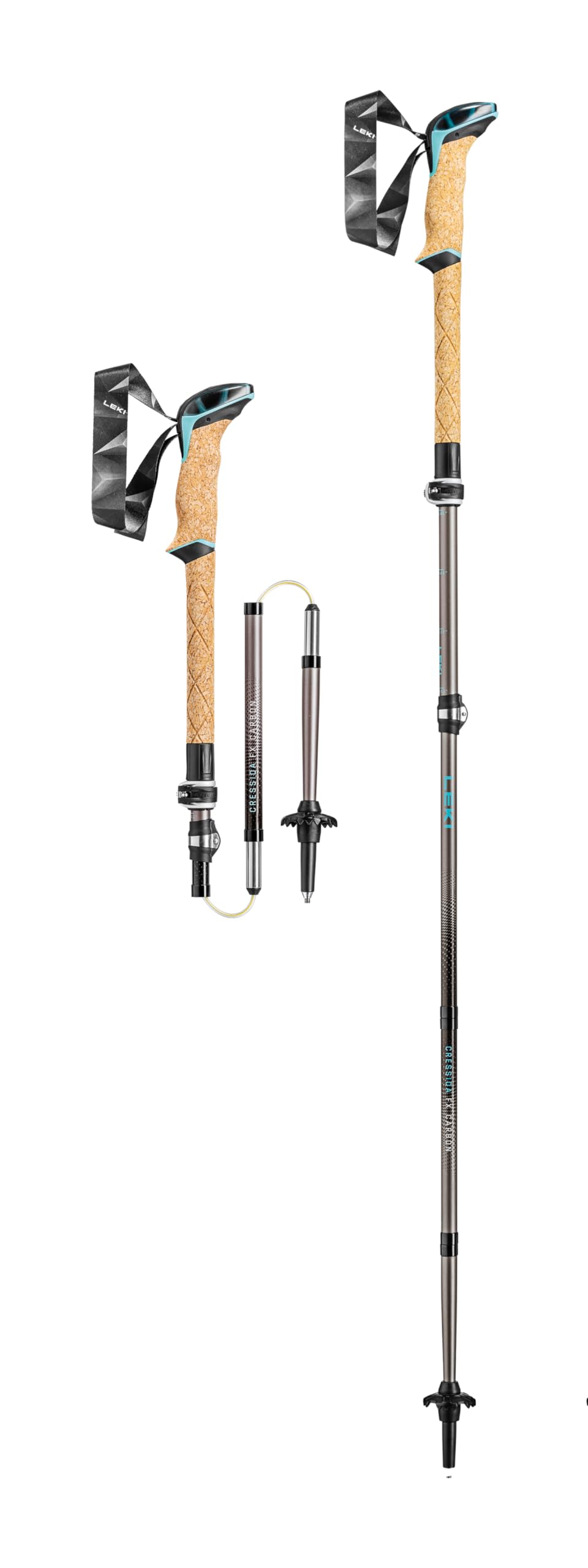
LEKI Cressida FX
Key Features
- Weight per Pole: 8.6 oz
- Material: Carbon (PRC 1000)
- Collapsed Length: 15.7 in
- Locking Mechanism: Speed Lock 2 Plus
- Adjustability: Telescopic
- Price: $$$
The LEKI Cressida FX pairs carbon fiber construction with LEKI’s build quality and Speed Lock 2 Plus adjustability, keeping each pole at 8.6 oz while collapsing to 15.7 inches. This combination delivers the lightweight, packable performance many backpackers seek in an adjustable pole. While early use impressions are positive, long-term durability under sustained backcountry conditions is not yet well-documented. For hikers who prioritize brand history and carbon weight savings over a deeper reliability record, the Cressida FX is a viable option — but those planning extended thru-hikes may want to consider poles with a stronger track record.
Pros
- Very light and collapsible for an adjustable pole
- Reputable LEKI build quality
Cons
Best for LEKI brand loyalists who want a carbon adjustable pole and accept that its long-term durability is less established than alternatives with more field data.
Best for Backcountry Skiers, Splitboarders
MSR DynaLock Ascent

Key Features
- Weight per Pole: 8.5 oz
- Material: Carbon fiber (Kevlar-reinforced)
- Collapsed Length: 14.25 in
- Locking Mechanism: DynaLock lever
- Adjustability: Telescopic
- Price: $$$
The MSR DynaLock Ascent uses Kevlar-reinforced carbon fiber to withstand demanding backcountry terrain, and its three-section fold collapses to 14.25 inches for easy stow in a ski pack. Stability on mixed snow and rock is reliable, making it a strong pick for backcountry skiers and splitboarders who need a pole that can handle abuse. However, the DynaLock lever mechanism can jam and pinch fingers during adjustment, which is a safety concern on the trail. At 8.5 ounces per pole, it is not lightweight enough for ultralight backpacking or trail running, and the premium price of nearly $190 reflects its niche audience rather than a general hiking tool.
Pros
- Kevlar-reinforced carbon fiber holds up on rocky, icy terrain
- Folds to 14.25 inches for easy packability in backcountry ski gear
- Stable weight distribution on mixed terrain
Cons
- DynaLock lever can jam and pinch fingers during adjustment
- Some units show breakage after limited use on rocky terrain
Best for backcountry skiers and splitboarders who prioritize compactness and durability over weight and lock simplicity — not a fit for ultralight hiking or trail running.
Best for Ultra-Budget, Occasional
Covacure Aluminum

Key Features
- Weight per Pole: ~10 oz
- Material: 7075 aluminum
- Collapsed Length: 14 in
- Locking Mechanism: Quick lock (tri-fold)
- Adjustability: Telescopic
- Price: $
At under $30 for a pair, these collapsible poles offer compact storage and easy assembly, making them an affordable option for casual use. However, the build quality and locking mechanism show limitations: breakage (including handle detachment or pole snapping) and lock slippage during use have been noted. These poles are best kept for well-groomed flat trails or a single trip where weight and packability matter more than durability. The high failure rate under stress makes them unsuitable for backpacking, thru-hiking, or rough terrain.
Pros
- Excellent value for a pair of collapsible poles under $30.
- Compact folded size fits easily in backpacks.
- Simple assembly and adjustment suitable for beginners.
Cons
- Breakage may occur during use, including handle detachment or pole snapping.
- Locking may slip, causing poles to collapse unexpectedly.
Best for travelers or occasional hikers on flat trails who need an entry-level pole for a single trip and accept the risk of breakage.
How to Choose
The single most important decision is whether you need adjustability or the absolute lowest weight, because these two goals usually conflict. Fixed-length poles save 1–2 ounces but lock you into one length; telescopic poles add a few ounces but work for varied terrain and multiple users.
Weight per Pole
True ultralight starts at 6 ounces per pole. Every ounce above that becomes noticeable over a 20-mile day. Carbon fiber poles typically hit 5–6 oz, while aluminum poles that claim ultralight often land at 8–10 oz. For thru-hikers and runners, the weight savings justify the premium. For weekend backpackers, a 7–8 oz pole is still a big upgrade from standard 12 oz models.
Material: Carbon vs. Aluminum
Carbon fiber is lighter and dampens vibration better than aluminum, but it can snap under a lateral blow if it catches between rocks. Aluminum bends rather than breaks — a bent pole is annoying but usually field-repairable. For rocky off-trail travel or mountaineering, aluminum’s toughness wins. For fast hiking on maintained trails, carbon’s weight advantage is worth the trade-off.
Collapsed Length
Folding Z-poles collapse to 13–15 inches, fitting inside most running vests and carry-on luggage. Telescopic poles collapse to 22–30 inches, which is fine for strapping to a pack but too long for small bags. If you travel by plane or need poles stowed while running, a short collapsed length is essential. For general hiking, a 25-inch collapsed length is manageable.
Locking Mechanism Reliability
External flip locks (FlickLock, Speed Lock) are easier to adjust with gloves and less prone to slipping — but they add a few grams and can loosen if not tightened fully. Twist locks are lighter and flush with the shaft but require periodic re-tightening and can seize up from grit or corrosion. Push-button Z-poles are the simplest: no adjustment, no slipping, but fixed length only.
Adjustability
Telescopic poles let you shorten for steep uphills, lengthen for descents, and share between hikers of different heights. Fixed-length poles save weight and complexity but demand accurate sizing upfront. If you hike varied terrain or plan to use the poles for tent support, telescopic is the practical choice. If you’re a runner or know your ideal length, fixed-length poles are lighter and faster to deploy.
FAQ
Why do my trekking poles keep collapsing while I hike?
This usually happens with twist-lock poles that are not tightened firmly enough. Ensure you tighten the lock with full hand strength — a light turn won’t hold. Corrosion or grit inside the locking mechanism can also cause slipping; clean and dry the sections regularly. If the issue persists, consider switching to a flip-lock or fixed-length pole, which are more mechanically secure.
Are carbon fiber trekking poles actually worth the extra cost?
Yes, if you prioritize weight savings and vibration damping. Carbon poles are 2–4 ounces lighter per pole than aluminum, which matters on long days. They are also stiffer, transferring energy more efficiently. The downside is lower impact resistance — a side blow can snap carbon. For rocky or scrambling terrain, aluminum’s durability may be worth the extra weight.
How do I stop the twist lock on my poles from slipping?
First, ensure the locking collar is fully tightened — many users stop too early. If it still slips, clean the shaft and the inside of the collar with a dry cloth to remove dirt or moisture. A small amount of electrical tape on the shaft can increase friction. If the lock is worn or corroded, replacement parts are available for most brands.
What is the lightest adjustable trekking pole for thru-hiking?
The Fizan Compact 3 is the lightest adjustable pole available at 5.6 ounces per pole, made of 7001 aluminum. It’s a favorite among thru-hikers for its low weight and proven durability. The trade-off is the twist-lock, which needs regular tightening. For a slightly heavier but more reliable lock, the Cascade Mountain Tech carbon pole at 5.6 oz with a quick lock is another strong option.