This post contains affiliate links. We may earn a small commission when you buy through our links — at no extra cost to you.
Ultralight tents promise freedom from extra pounds, but that weight saving often comes from thin 10D–20D fabrics. A few trips of rocky ground or sharp gear can turn a lightweight shelter into a leaky repair project.
Beyond fabric, the bigger fork in the road is how you set up. Freestanding tents are simple and quick to pitch anywhere, but they carry a few extra ounces. Trekking-pole tents shave those ounces and add interior space, at the cost of needing poles you may not always want to carry.
The best ultralight tent for you depends on whether you prioritize maximum weight savings, ease of setup, or budget. This guide picks a range that balance these trade-offs for different trip styles.


Best for Solo Backpackers
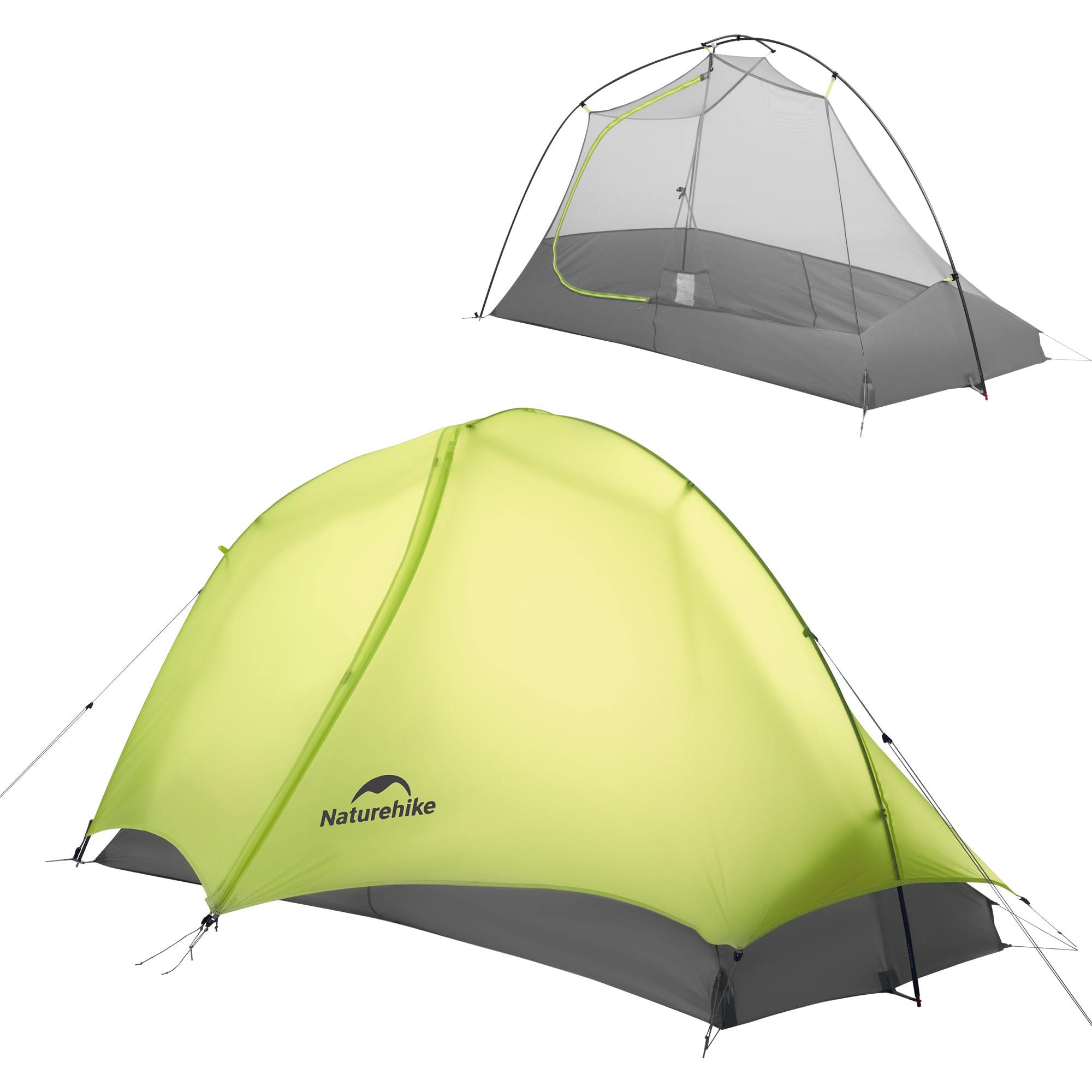
Naturehike Star Trail 1P
Key Features
- Min Trail Weight: 2.3 lbs
- Waterproof Rating: Fly 1500mm / Floor 3000mm
- Pole Material: Aluminum
- Doors & Vestibules: 1 door, 1 vestibule
- Setup Type: Freestanding
- Price: $$
The Naturehike Star Trail hits a rare combination: it weighs 2.3 lbs, is freestanding, and includes a footprint – all at a mid-range price point. That package alone sets it apart from heavier budget tents and pricier ultralight options that charge extra for ground protection.
Inside, the tent offers enough width for a regular sleeping pad and space to stash gear beside you – a comfort for solo ultralight use. However, the peak height is limited. At 6′ or taller, headroom becomes tight, and the single-door design means you’ll crawl in and out from one side.
This tent is built for weight-conscious solo backpackers, bikepackers, and thru-hikers on a budget who prioritize low pack weight over interior space or dual doors. Taller hikers may find the cramped headroom a dealbreaker, and the limited user feedback means long-term durability under heavy use is still unproven – a few reports of missing poles suggest careful pre-trip inspection is wise.
Against non-freestanding trekking-pole shelters, the Star Trail trades some potential weight savings for easy setup flexibility. For the same cash, you get a freestanding structure that pitches anywhere, without needing trekking poles or extra stakes for the corners.
Pros
- Weighs 2.3 lbs – light enough for thru-hikers and bikepackers to count ounces.
- Spacious interior for a solo ultralight tent – room for gear alongside you.
- Freestanding design simplifies setup on varied terrain – rare in this weight class.
- Includes a footprint – a cost-saving addition that many competitors charge extra for.
Cons
- Peak height can be restrictive for backpackers over 6′.
- Some units have shipped with missing components (e.g., pole) – inspect upon receipt.
This tent delivers the best weight-to-price ratio in the ultralight solo segment – ideal for gram-counting backpackers who prioritize a low pack weight over extra space or dual doors.
Best for Thru-Hikers
Featherstone Backbone 1P
Key Features
- Min Trail Weight: 2.5 lbs
- Waterproof Rating: Seam-taped Sil-Nylon
- Pole Material: No poles (trekking pole)
- Doors & Vestibules: 2 doors, 1 vestibule
- Setup Type: Trekking pole required
- Price: $$
The Featherstone Backbone shaves weight by relying on trekking poles instead of dedicated tent poles — a design choice that drops the trail weight to 2.5 pounds while still offering two doors and a large vestibule. That combination is rare at this weight class; most sub-3-pound solo shelters make do with a single door and smaller vestibule.
This tent fits best for thru-hikers who already carry trekking poles and treat weight as the top priority. The single-wall construction means condensation forms on the interior fabric from breath and humidity — an issue that is manageable with careful site selection and venting in dry climates, but becomes a persistent challenge on damp western trails. Even with that tradeoff, the interior space is generous: enough floor length for a 6-foot sleeper with space beside for a backpack and boots.
Build quality is consistent with the price point: seam-taped Sil-Nylon fabric, zippers that operate smoothly, and stake loops that hold securely. The setup sequence takes a few tries to memorize, but once learned, it goes up in under five minutes. At a mid-range price, the Backbone delivers a feature set that costs significantly more from established ultralight brands, making it a pragmatic choice for weight-focused hikers who don’t need freestanding convenience.
Pros
- Ultralight 2.5-pound trail weight — among the lightest in its class.
- Two doors and a large vestibule allow easy entry and gear storage.
- Seam-taped Sil-Nylon fabric provides solid weather protection for the weight.
- Cost-effective for a sub-2.5-pound shelter with dual-door layout.
Cons
- In humid or rainy conditions, the single-wall design allows condensation to collect on the interior — manageable with venting but not ideal for wet climates.
- Requires trekking poles for setup — not usable without them, and not freestanding.
For weight-conscious hikers who already pack trekking poles, the Backbone avoids the weight penalty of freestanding poles while adding dual-door convenience — just accept the condensation tradeoff in damp conditions.
Best for Couples
Naturehike Mongar 2P
Key Features
- Min Trail Weight: 4.73 lbs
- Waterproof Rating: 4000 mm
- Pole Material: 7001 Aluminum
- Doors & Vestibules: 2 doors, 2 vestibules
- Setup Type: Freestanding
- Price: $$
The Naturehike Mongar stands out among two-person backpacking tents by offering two doors and two vestibules that let each occupant enter and store gear independently. Where many 2P tents feel narrow, this design provides enough width for two adults to sleep comfortably without constant contact. The 4000mm waterproof rating adds confidence in storms, and the color-coded clip system makes setup intuitive.
This tent fits couples who prioritize living space over minimal pack weight, or solo hikers wanting room for gear. At 4.73 lbs trail weight it is heavier than ultralight solo options, so those counting every ounce may prefer lighter shelters.
Pros
- Two doors and vestibules let each person enter and store gear independently.
- Sets up quickly with color-coded clips and symmetrical pole structure.
- 4000mm waterproof coating keeps the interior dry during sustained rain.
- Well-stitched seams and 7001 aluminum poles provide durable construction.
Cons
- Stock stakes can bend when driven into rocky or compacted soil.
For couples who want real two-person space and reliable weather protection without chasing the lightest possible weight, the Mongar delivers a comfortable shelter at a fair price.
Best for Bikepackers
Big Agnes Copper Spur 1P
Key Features
- Min Trail Weight: 2.5 lbs
- Waterproof Rating: 1200 mm (PU)
- Pole Material: DAC Featherlite NSL Aluminum
- Doors & Vestibules: 2 doors, 2 vestibules
- Setup Type: Freestanding
- Price: $$$
The Big Agnes Copper Spur HV UL Ultralight Bikepacking Tent weighs just 2.5 lbs yet packs down short enough to fit inside a handlebar bag, thanks to its DAC Featherlite NSL aluminum poles cut into bikepacking-friendly lengths. This freestanding design includes two doors and two vestibules, plus helmet storage loops — features tuned for cyclists, not generic backpackers.
This tent fits bikepackers and motorcycle campers who need low pack volume and light weight on short trips. The premium pricing narrows its audience to gear enthusiasts; if you don’t require short pole segments or helmet storage, the top-pick Star Trail offers comparable weight at half the cost. Inside, the single-person layout comfortably accommodates a wide sleeping pad and gear with enough headroom to sit up — impressive for a sub-2.5-lb freestanding shelter.
Real-world users note that the compact pole sections make loading onto a bike frame straightforward, and the dual vestibules provide separate storage for bike bags and hiking gear. The tradeoff: those without a bike will pay extra for features they don’t use.
Pros
- Weighs just 2.5 lbs for a fully freestanding design
- Spacious interior fits a wide sleeping pad and gear
- Short pole segments and helmet loops are purpose-built for bikepacking
- Two doors and two vestibules provide easy access and storage
Cons
- Premium pricing puts it beyond casual or budget buyers
- Bikepacking-specific pole length and helmet storage add no benefit for standard backpacking
For bikepackers who demand a freestanding tent that stows easily on a loaded bike, the Copper Spur delivers — others should look to the lighter, cheaper Star Trail.
Best for Budget Backpackers
Clostnature 2P Tent
Key Features
- Min Trail Weight: 4.52 lbs
- Waterproof Rating: PU 5000 mm
- Pole Material: Aluminum
- Doors & Vestibules: 2 doors, 2 vestibules
- Setup Type: Freestanding
- Price: $
The Clostnature 2P tent packs features that usually cost twice as much: aluminum poles, a 5000mm waterproof rating, two doors with vestibules, and a 4.5 lb trail weight that fits the ultralight 2-person threshold. Setup is genuinely fast — even first-time campers can pitch it in minutes without consulting instructions. Compared to premium ultralight tents that shave ounces at triple the price, this tent offers a spacious interior and solid weather protection for a fraction of the cost.
In rain, the coated fly holds up well, and the dual vestibules provide dry storage for packs. The interior comfortably fits two adults on standard sleeping pads with room for small gear bags. The 4.5 lb weight is acceptable for short backpacking trips but becomes noticeable on longer hauls. Durability, however, is the main variable: some units have developed pole fractures or fabric tears after a handful of uses, so careful inspection after each trip is wise.
This tent suits budget-conscious backpackers, beginner scout groups, and anyone who camps a few weekends a season and wants a functional shelter without a big investment. It is not built for thru-hikers or extended backcountry use where gear failure means real trouble. If you need a tent that will reliably survive months of continuous use, look at the lighter, more expensive options — but for casual trips, the Clostnature delivers impressive capability per dollar.
Pros
- Tool-free setup that clicks together in minutes, even for first-time users.
- Generous interior for two people plus gear, with two doors for easy access.
- Strong value — under $80 for aluminum poles, a 5000mm fly, and dual vestibules.
Cons
- After several trips, some tents may develop broken poles or fabric tears; inspect before extended use.
- At 4.5 lbs, the trail weight is heavier than dedicated ultralight shelters — a factor for ounce-counters.
The Clostnature is the best budget-friendly 2-person tent for occasional backpackers who value easy setup and weather protection over long-term durability.
Best for Car Camping
ShinHye 1P Tent

Key Features
- Min Trail Weight: 3.8 lbs
- Waterproof Rating: 2000 mm
- Pole Material: Fiberglass
- Doors & Vestibules: 1 door, 1 vestibule
- Setup Type: Freestanding
- Price: $
Setup is quick, the interior comfortably fits one, and the price is the lowest you will find for a shelter. However, the 3.8 lb weight with fiberglass poles exceeds even casual backpacking limits, and the zippers may wear out after limited use. This works as a budget car-camping tent or emergency backup, but hikers seeking an ultralight pack should look to dedicated options.
Pros
- Easy to set up – quick assembly even for first-time users.
- Roomy interior for one person with comfortable space for gear.
- Great value – lowest price point for a functional shelter.
Cons
- Zipper quality may fail after limited use – a concern for backcountry trips.
- Weight of 3.8 lbs is too heavy for ultralight backpacking – better suited for car camping.
This tent makes sense only if you need a cheap shelter for car camping or as a backup in your trunk – for backpacking, the weight and zipper reliability are dealbreakers.
Best for Beginner Backpackers
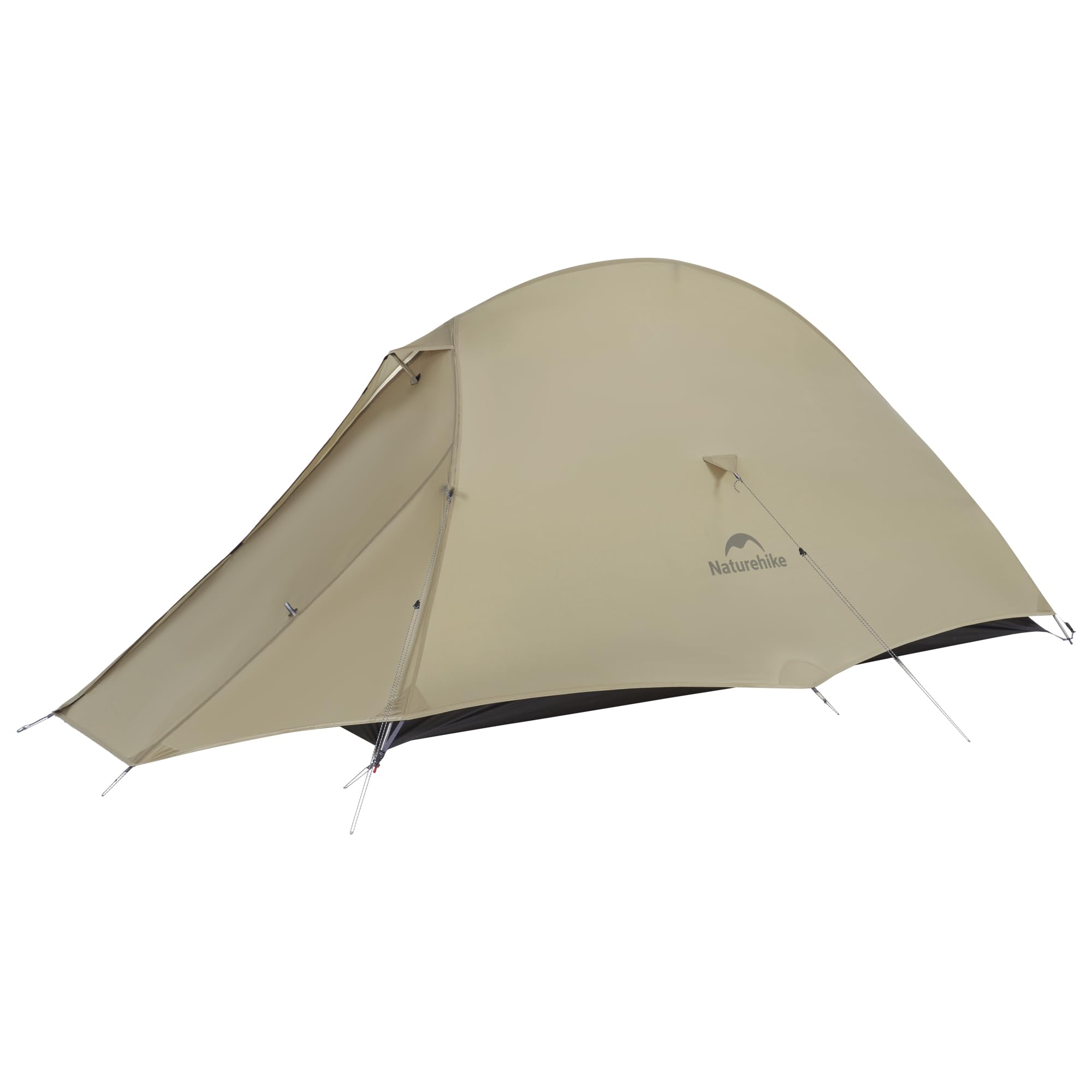
Naturehike Cloud Up 1P
Key Features
- Min Trail Weight: 3.57 lbs
- Waterproof Rating: PU 4000 mm
- Pole Material: 7075 Aluminum
- Doors & Vestibules: 1 door, 1 vestibule
- Setup Type: Freestanding
- Price: $$
The Cloud Up 1P delivers a quick, color-coded setup and includes a footprint, making it a practical companion for short hikes and weekend trips. Its 3.57 lb trail weight, while manageable, exceeds the sub-3 lb mark that defines ultralight gear. The fabric, though adequately waterproof for moderate weather, has shown vulnerability to tears in rough conditions. This tent fits beginner backpackers and bikepackers who prioritize durability and convenience over absolute weight savings.
Pros
- Color-coded poles and clips make setup fast and intuitive.
- Includes footprint and aluminum poles at a mid-range price.
- Pack weight is manageable for shorter trips and casual use.
Cons
- Trail weight of 3.57 lbs keeps it above the ultralight threshold; better suited for casual use than long-distance hikes.
- Thin material can develop tears after moderate use, especially on rocky ground.
This tent is a solid pick for casual weekend hikers and bikepackers who value easy setup and included accessories over shaving every ounce.
Best for Budget Solo
Clostnature 1P Tent

Key Features
- Min Trail Weight: 4.2 lbs
- Waterproof Rating: PU 5000 mm
- Pole Material: Aluminum
- Doors & Vestibules: 1 door, 1 vestibule
- Setup Type: Freestanding
- Price: $
For under $80, the Clostnature 1P tent delivers surprisingly solid build quality, a quick freestanding setup, and enough interior space for a wide sleeping pad and gear. It’s a natural fit for car camping, motorcycle touring, or beginner backpackers who aren’t counting every ounce. However, at 4.2 lbs trail weight it sits well above the sub-3 lb ultralight threshold, and durability can be inconsistent – some units develop tears or pole issues after moderate use. This tent works best when weight is a secondary concern and value is the priority.
Pros
- Freestanding design sets up in minutes – no fiddling with guylines.
- Generous interior fits a 25-inch sleeping pad with room to spare.
- Compact packed size stows easily on a motorcycle or in a car trunk.
Cons
- At 4.2 lbs, it’s too heavy for ultralight backpackers targeting sub-3 lb shelters.
- Long-term durability can vary – some users report fabric tears or pole breakage after a few trips.
Best for budget-conscious solo campers who prioritize easy setup and interior space over minimal weight, or for car and motorcycle camping where pack weight matters less.
How to Choose
Many ultralight tents sacrifice durability for weight, but knowing the trade-offs helps you pick the right one for your trips.
Minimum Trail Weight
Trail weight is the lightest possible configuration: tent body, fly, and poles. It excludes stakes, guylines, and stuff sack, which can add 10-15% to the actual pack weight.
A sub-3 lb solo tent means you feel the difference on long climbs, but that low weight often comes from thin 10D-15D fabrics that tear more easily. A 3.5 lb tent may be more durable if it uses 20D or 30D nylon.
Waterproof Rating
Waterproof ratings in mm measure hydrostatic head: the water column pressure the fabric can hold. 3000 mm is generally reliable for heavy rain; 5000 mm plus offers extra margin.
The rating is only part of the story. Seam taping, pole geometry, and pitch tension matter just as much. A low-rated tent pitched taut and with sealed seams can outperform a high-rated tent with loose fabric and unsealed seams.
Pole Material
Aluminum poles (especially 7001 or 7075 alloy) provide a good strength-to-weight ratio and are repairable if bent. Fiberglass poles are heavier, less durable, and can shatter under stress.
On a long thru-hike, aluminum poles justify the extra cost. For occasional car camping, fiberglass may be acceptable if weight is not a concern.
Doors and Vestibules
A single door means you crawl over your partner or gear to get out. Two doors allow each occupant to exit independently and store gear in separate vestibules.
Vestibule size is as important as count. A small vestibule barely holds boots; a large one can stash a pack and cook kit. In wet weather, a roomy vestibule is a huge advantage for keeping gear dry.
Setup Type
Freestanding tents can be pitched anywhere, even on rocky ground or tent pads. They are easier to adjust and relocate but carry a few extra ounces due to the pole structure.
Trekking-pole tents (also called trekking-pole shelters) use your hiking poles as supports, dropping weight by 0.5–1 lb. They need soft or deep ground for stakes and are trickier to pitch in wind. Best for hikers who already carry poles.
FAQ
How much does an ultralight tent actually weigh when fully packed?
The minimum trail weight quoted by manufacturers typically excludes stakes, guylines, and the stuff sack. For a sub-3 lb solo tent, pack everything needed for setup and you will likely add 0.3–0.5 lb. Always check the packed weight spec or weigh your own kit to avoid surprises.
Can a trekking pole tent withstand strong winds?
Yes, if pitched correctly. Trekking-pole tents rely on taut guylines and properly angled poles for stability. In high winds, lower the pitch, use all stake loops, and orient the lower end into the wind. A well-set trekking pole tent handles gusts as well as a freestanding model of the same fabric weight.
Why does my ultralight tent have condensation even with a double wall?
Condensation forms when warm, moist air from your body meets a cold fly. Double-wall tents reduce it by creating a gap between inner and outer layers, but still need ventilation. Open the vents or crack the door slightly. In humid climates, a single-wall tent will always struggle more because there’s no airflow layer.
Are cheap ultralight tents durable enough for a thru-hike?
Generally, no. Budget tents use thin fabrics (10D–20D) and low-cost zippers that show wear after a few hundred miles on a long trail. A $80 tent might survive a weekend trip, but for a thru-hike expect tears, broken poles, and zipper failures. Invest in a tent with 20D+ fabric and aluminum poles if you plan to live in it for months.