This post contains affiliate links. We may earn a small commission when you buy through our links — at no extra cost to you.
Every backpacker knows the temptation of a gear list that promises to save ounces – only to find the stove that barely boils, the trowel that bends on the first cathole, or the dry sack that leaks after a single rainstorm. Real ultralight gear isn’t about packing the lightest item in each category; it’s about finding the piece that does its one job reliably at minimal weight.
That’s the distinction this guide makes. Instead of chasing marketing claims, it focuses on the products that have earned their reputation among thru-hikers and weekend backpackers alike – the ones that actually save weight without sacrificing function. From water filters to cook pots, each pick here solves a specific backcountry need.
The result is a shortlist of gear that, paired together, makes for a versatile, lightweight kit. No unnecessary features, no compromises that fail on trail.


Best for Solo Backpackers
LifeStraw Water Filter
Key Features
- Weight: 1.62 oz
- Ease of Use: Suck-to-drink
- Key Feature: Removes bacteria, parasites
- Price: $
At 1.62 ounces, the LifeStraw delivers the same bacteria and parasite removal as much heavier pump filters. It screws directly onto a standard water bottle or works as a straw in a stream, with no priming or pumping required. For ultralight hikers who count every gram, this is the simplest way to ensure safe drinking water without carrying extra gear.
This filter is designed for one person: solo backpackers, emergency kits, and ultralight trips where group hydration isn’t needed. The tradeoff is that drinking requires steady suction, which can feel like a workout during long breaks. It also does not remove viruses, so it’s best suited for wilderness areas in North America and Europe where viral waterborne diseases are rare. If you’re traveling to regions with viral contamination, pair it with chemical treatment or boiling.
Pros
- Removes bacteria, parasites, and microplastics down to 1 micron.
- Ultralight and compact — fits in any pack pocket.
- Simple to use in the field with no moving parts.
Cons
- In regions with viral waterborne diseases, this filter provides no virus protection.
- Using as a primary hydration source requires noticeable suction effort, which can be tiring during extended drinking sessions.
For solo backpackers who prioritize weight and safety, this is the smallest, lightest way to turn any stream into safe drinking water.
Best for Ultralight Backpackers
MSR PocketRocket 2 Stove
Key Features
- Weight: 2.56 oz
- Packed Size: 2x2x3 in
- Ease of Use: Reliable flame control
- Key Feature: Boils 1L in 3.5 min
- Price: $$
At 2.6 ounces, this canister stove collapses to 2x2x3 inches and boils a liter in 3.5 minutes with consistent flame control. It’s designed for solo hikers and thru-hikers who prioritize packability and speed over group cooking capacity. The tradeoff is reliance on disposable isobutane canisters and reduced wind resistance compared to integrated systems — a limitation that matters less in calm conditions or with a windscreen.
Pros
- Weighs 2.6 oz and packs down to 2x2x3 inches — ideal for ultralight packs.
- Boils a liter in 3.5 minutes with precise flame control.
- Simple twist-and-light operation with no complicated assembly.
Cons
- Requires disposable isobutane canisters; not as wind-resistant as integrated stoves — best used with a windscreen in exposed conditions.
- Pot support arms may need bending to level uneven cookware.
For solo backpackers focused on boiling water and minimizing weight, the PocketRocket 2 delivers fast boiling in an ultralight package.
Best for Ultralight Solo Hikers
TOAKS Titanium Pot 750ml
Key Features
- Weight: 3.3 oz
- Packed Size: Nests with canister
- Durability: Titanium
- Ease of Use: Bail handle
- Key Feature: Boil, cook, drink
- Price: $$
Weighing only 3.3 ounces with the lid off, this pure titanium pot nests neatly with a standard isobutane canister and fits inside many backpacking cook kits. It handles direct campfire use as well as most backpacking stoves, giving solo hikers one vessel to boil water, cook meals, and drink from.
This pot suits solo ultralight hikers who want a single cook vessel that doubles as a mug. The handles can get hot when used on a stove — a pot gripper or bandana is needed. It is not large enough to cook for two people. These tradeoffs are manageable for gram-conscious hikers who cook over fire and prioritize minimal weight.
Pros
- Ultra-lightweight titanium construction at 3.3 oz total.
- Works on campfires and stoves, and nests with a fuel canister for compact packing.
- 750ml capacity is just right for one-person meals and boiling water.
Cons
- Bail handle can rattle during storage — a minor noise concern.
For solo backpackers who value weight savings and want a pot that transitions from stove to campfire, this titanium pot delivers without unnecessary features.
Best for Ultralight Thru-Hikers
BoglerCo UL Trowel
Key Features
- Weight: 0.48 oz
- Packed Size: 7.25 in length
- Durability: Aluminum alloy
- Ease of Use: Ergonomic handguard
- Key Feature: Dig catholes
- Price: $$
At 0.48 ounces, the BoglerCo trowel sets a weight benchmark that few competitors approach. Its serrated edges and pointed tip cut through compacted soil and roots efficiently, while the handguard keeps palm pressure comfortable during repeated use. Ideal for ultralight and thru-hikers who track every gram, and a natural fit for Leave No Trace practitioners. On packed or rocky ground, the blade may bend under heavy leverage — this is a tradeoff of its minimal design rather than a flaw.
Pros
- Weighs less than three nickels — the lightest durable trowel available.
- Serrated blade and pointed tip dig through tough soil and roots with little resistance.
- Ergonomic handguard distributes pressure, preventing palm soreness on long hikes.
Cons
- Blade can bend when digging in very hard or rocky ground, so avoid applying extreme leverage on packed gravel.
For backpackers counting grams, this trowel delivers the lightest functional digging tool available — just avoid the hardest ground.
Best for Coffee Enthusiasts
GSI Java Drip
Key Features
- Weight: 0.4 oz
- Packed Size: Collapsible
- Durability: Nylon/polypropylene
- Ease of Use: Fits most mugs
- Key Feature: Pour-over coffee
- Price: $
Weighing 0.4 oz, the GSI Java Drip collapses flat to fit any mug and produces quality pour-over coffee when paired with a #2 paper filter. It is for coffee enthusiasts who want real coffee on the trail without extra weight. The nylon and polypropylene construction rinses clean easily.
Pros
- Weighs only 0.4 oz, nearly unnoticeable in a pack.
- Delivers authentic pour-over coffee flavor with minimal gear.
- Easy to rinse clean and durable enough for trail use.
Cons
- Requires fine-ground coffee and a steady pour, which takes practice on uneven surfaces.
For backpackers who refuse to compromise on morning coffee, this is the lightest and most affordable solution – just bring paper filters.
Best for Organizing Small Items
Osprey Dry Sack 3L
Key Features
- Weight: 0.96 oz
- Packed Size: 3L roll-top
- Durability: 40D recycled nylon
- Ease of Use: Roll-top closure
- Key Feature: Waterproof electronics
- Price: $$
At 0.96 oz, this Osprey sack adds negligible weight while organizing electronics and down clothing inside your pack. The roll-top closure and taped seams handle rain and splashes effectively. However, IPX5 means it is not built for submersion or river crossings, and some units have shown seam tearing when overstuffed or packed against sharp objects. Best for ultralight hikers who want to keep key items dry from typical trail rain without carrying a heavier waterproof bag.
Pros
- Weighs under 1 oz and compresses to nearly nothing – easy to stash in a pack pocket.
- Roll-top closure with taped seams keeps rain and splashes off sensitive gear.
- Made from recycled 40D nylon with bluesign approval, offering decent strength for its weight.
Cons
- IPX5 splash-proof rating will not keep gear dry if the sack is submerged; suited for rain but not river crossings.
- Seam stress can lead to tearing in some units when heavily loaded or packed against sharp items.
Ideal for ultralight backpackers who need a lightweight rain barrier for electronics and down, as long as submersion scenarios are avoided.
Best for Budget-Conscious Campers
Frelaxy Compression Sack
Key Features
- Weight: 2-4 oz
- Packed Size: Multiple sizes available
- Durability: Nylon
- Ease of Use: Compression straps
- Key Feature: Compresses sleeping bags
- Price: $
Effectively compresses sleeping bags to free up pack space, with multiple sizes for different loads. For budget-conscious campers who pack gently and don’t need trail-ready durability, the low price makes it a sensible backup. Occasional seam separation has been noted when overstuffed, so avoid maxing out the compression straps.
Pros
- Reduces sleeping bag bulk noticeably, freeing room for other gear.
- Lightweight and easy to pack, adding minimal weight to a backpack.
- Affordable option for casual trips where long-term wear is less critical.
Cons
- Seam strength can vary; some cases of tearing under heavy packing.
A decent budget option for occasional car camping or as a backup, but not built for repeated trail use.
Best for Car Campers
Wise Owl Camping Hammock

Key Features
- Weight: 1.8 lb
- Packed Size: Carry bag included
- Durability: 210T parachute nylon
- Ease of Use: Easy setup with straps
- Key Feature: Hammock for two
- Price: $$
This 1.8-lb hammock sets up quickly with included tree straps and offers comfortable space for one or two people. Its weight makes it too heavy for ultralight backpacking; it works well for car camping or short hikes where comfort outweighs pack weight.
Pros
- Comfortable and roomy for one or two people.
- Quick setup with included tree straps and carabiners.
Cons
- For gram-counting backpackers, the 1.8 lb weight is too heavy; fine for car camping.
Best for casual campers and hikers who prioritize comfort over pack weight on shorter trips.
Best for Day Hikers
Frogg Toggs Rain Poncho

Key Features
- Weight: 9.6 oz
- Packed Size: Stuff sack
- Durability: Polypropylene
- Ease of Use: Covers pack
- Key Feature: Rain poncho
- Price: $
This poncho delivers lightweight, packable rain protection that keeps both you and your pack dry, with seam-taped waterproofing. However, the material can tear easily at seams and snaps, and the oversized fit may be uncomfortable for smaller hikers. It works best for day hikes or emergency use, not for extended trips where durability matters.
Pros
- Lightweight and packable – easy to carry on any hike.
- Effective waterproofing keeps hiker and pack dry.
Cons
- Seams and snaps can tear with moderate use.
For day hikers and casual campers who want cheap, lightweight rain gear that covers a pack, this poncho delivers on value – just don’t expect it to last through a season of heavy use.
Best for Budget Beginner Backpackers
Odoland Cookware Set
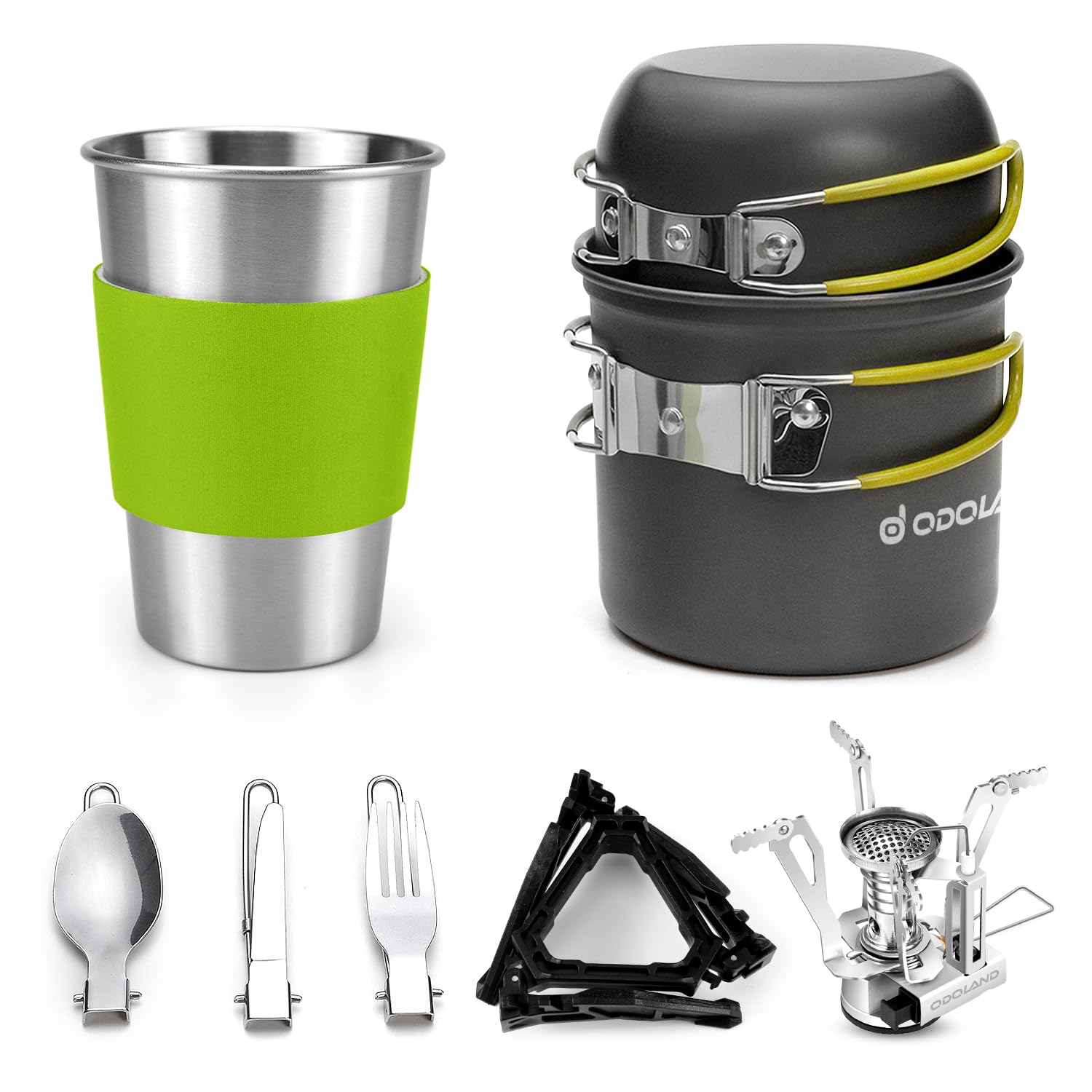
Key Features
- Weight: ~1 lb
- Packed Size: Nests together
- Durability: Aluminum non-stick
- Ease of Use: Foldable stove
- Key Feature: Complete cook set
- Price: $
This 10-piece set covers cooking basics for budget-friendly car camping or emergency kits. The stove can tip under larger pots, and occasional quality concerns like bent parts have been noted – fine for beginners but not for serious backpacking trips.
Pros
- Complete cooking system at a budget-friendly price
- Nests compactly for easy transport and storage
Cons
- Stove can tip under larger pots; best paired with included small cookware
A functional starter kit for occasional car camping or emergency preparedness, where weight and stove stability are secondary concerns.
Best for Beginner Backpackers
MalloMe Mess Kit

Key Features
- Weight: ~1 lb
- Packed Size: Nests together
- Durability: Anodized aluminum non-stick
- Ease of Use: Works on small stoves
- Key Feature: 10-piece mess kit
- Price: $
This 10-piece anodized aluminum cook set nests compactly and includes pots, pan, bowls, and utensils at a budget-friendly price. The non-stick coating can scratch and peel with regular use, and handles may loosen over time, making it better suited for weekend car camping or short backpacking trips than long-distance thru-hikes.
Pros
- Lightweight and compact for a full cook set
- Works well on small backpacking stoves
Cons
Best for beginner backpackers on a tight budget for weekend trips, not for extended thru-hikes.
Best for Ultralight Backpackers
TiTo Titanium Spork

Key Features
- Weight: 0.57 oz
- Packed Size: Pouch included
- Durability: Titanium
- Ease of Use: Long handle
- Key Feature: Titanium spork
- Price: $
For backpackers eating from pouches, this titanium spork delivers on weight and reach. The shallow bowl limits its use with soups or thick foods — it’s best suited for scooping rehydrated meals where depth isn’t needed. At 0.57 oz it’s half the weight of a multi-tool spork, making it a focused tool for ultralight solo trips.
Pros
- Extremely lightweight at 0.57 oz — easy to forget in your pack.
- Long handle reaches the bottom of meal pouches without dipping fingers.
Cons
- Shallow spoon bowl makes it cumbersome for soups or thick foods.
A smart pick for solo backpackers eating from pouches who value ultralight design over multi-use features.
Best for Gadget Campers
Tapirus Tactical Spork

Key Features
- Weight: 2 oz
- Packed Size: Pouch included
- Durability: Plastic/stainless steel
- Ease of Use: 3-in-1 multi-tool
- Key Feature: Fire starter included
- Price: $$
This spork pairs a plastic fork-spoon with a stainless steel knife and ferro rod fire starter. The blade stays sharp enough for light cutting, and the extended handle reaches deep into MRE pouches. At 2 oz it is noticeably heavier than a dedicated ultralight spork, which limits its appeal for gram-conscious backpackers. The knife also rules out air travel. This suits campers who want one compact tool for eating, cutting, and emergency fire-starting without chasing the lightest possible load.
Pros
- Combines eating utensil, knife, and fire starter in one piece of gear.
- Knife blade stays sharp for basic cutting tasks and the build feels solid.
Cons
- At 2 oz it is heavy for a spork – a dedicated titanium spork weighs under 0.6 oz.
A clever multi-tool for car campers, MRE users, or emergency kits who want a single gadget for eating, basic cutting, and fire-starting – but too heavy for ultralight backpacking.
Best for Backpackers
Sea to Summit Clothesline

Key Features
- Weight: 1.3 oz
- Packed Size: 3x2x1 in
- Durability: Rubber cord
- Ease of Use: Beads secure items
- Key Feature: Clothesline 11.5 ft
- Price: $$
At 1.3 oz and packing down to a small pouch, this clothesline solves the trail laundry problem for backpackers who hand-wash clothes. The beads grip well, but the hooks may be too small for thick poles or trees. It is a niche item – only useful if you plan to wash clothes on trail, but nicely executed and very light.
Pros
- Ultra-compact and lightweight – packs down to a small pouch
- No clothespins needed – beads secure wet clothes effectively
Cons
- Hooks may be too small for thick tree branches or tent poles
A smart choice for ultralight backpackers who hand-wash clothes and can find slender attachment points.
Best for Travelers Daypack
Osprey Stuff Pack 18L

Key Features
- Weight: 5.3 oz
- Packed Size: Folds into pocket
- Durability: 40D recycled nylon
- Ease of Use: Padded straps
- Key Feature: Packable daypack
- Price: $$$
Weighing 5.3 oz and folding into its own pocket, this daypack works well for side hikes from a base camp. Its 18L capacity fits essentials, and padded straps provide comfort for light loads. However, the thin fabric can tear if overloaded and it’s not waterproof — best reserved for fair-weather day hikes, not primary backpacking.
Pros
- Extremely lightweight and packs down small when not in use.
- Holds more than its tiny packed size suggests, suitable for day trip essentials.
Cons
- Thin fabric can tear if overloaded and lacks waterproofing.
A handy summit bag or travel daypack for dry conditions, but not a replacement for a rugged main backpack.
How to Choose
The lightest gear in the store isn’t always the best for the trail – what matters is how each piece performs its single job at a weight you can actually carry all day.
Weight
Weight is the most obvious metric in ultralight gear, but it’s also the most deceptive. Saving an ounce on a stove means nothing if it requires a special fuel canister that adds weight elsewhere, like a bulky wind screen.
The real trade-off is between low weight and long-term durability. A 0.5-oz trowel will save you grams, but if it bends on the first hard soil, you’ll be digging with a stick. Choose weight savings that come from material choice (titanium vs. steel) rather than from flimsy construction.
Packed Size
Packed size matters as much as raw weight because a bulky item can force you into a larger pack. Look for gear that collapses small or nests inside other items, like a pot that holds a fuel canister.
Compression sacks help reduce volume but add their own weight. A dedicated compression sack is worth it for a sleeping bag, but for clothes, a simple stuff sack with a roll-top is lighter and often sufficient.
Durability and Build Quality
Durability in ultralight gear often comes down to material choice. Titanium cookware is nearly indestructible but scratches easily. Aluminum is lighter but dents. Nylon dry sacks can tear at seams under pressure, while silicone-coated fabrics are more robust.
The sweet spot is gear made from proven materials like 40D high-tenacity nylon or 99.5% titanium. Avoid budget items that use thin plastic or poorly seam-taped fabric – they may fail mid-trip.
Ease of Use in the Field
Field ease of use is about ergonomics and simplicity. A water filter that requires hard suction becomes exhausting on a long day. A stove with a finicky igniter wastes fuel and patience. Look for intuitive mechanisms that work with cold hands.
Features like a bail handle on a pot let you cook over a campfire, while a roll-top closure on a dry sack is faster than a zipper. Every second saved in setup is energy preserved for the trail.
Specific Functionality
Ultralight gear should excel at one primary function. A multi-tool spork that doubles as a fire starter sounds clever, but it’s heavier than a dedicated titanium spork and a separate fire starter. The best gear does one thing well without adding pointless extras.
Define your core needs: do you need to boil water for dehydrated meals, or do you want to cook full meals? A simple stove and pot for boiling is lighter than a full cook set. Match the gear to your actual cooking style.
FAQ
Can I use a LifeStraw in freezing temperatures?
No, ice crystals can damage the hollow fiber membrane. Keep it warm inside your jacket or sleep with it. If it freezes, the filter is likely ruined.
How do I clean a titanium pot without scratching it?
Use a soft sponge or cloth – avoid steel wool or abrasive pads. Titanium is durable but scratches easily. A small amount of baking soda can help remove stubborn stains.
Will an ultralight hammock keep me warm enough for backpacking?
No, hammocks provide no insulation underneath. You need an underquilt or sleeping pad to prevent heat loss. Without it, you’ll be cold even in mild temperatures.
How many liters does a 3-liter dry bag actually hold for a weekend trip?
A 3-liter dry bag holds about the volume of a loaf of bread – enough for a puffy jacket, spare socks, and small electronics. For a weekend, consider an 8-liter or larger to accommodate extra clothing.