This post contains affiliate links. We may earn a small commission when you buy through our links — at no extra cost to you.
Ultralight gear promises to shave pounds off your pack, but it often does so by cutting corners on durability, comfort, or price. I’ve spent enough nights on rocky ground to know that a featherweight shelter is worthless if it shreds in the first storm. The right gear should disappear on your back, not leave you shivering or rationing water. That’s the balance we set out to find.
Over the past eight months, my team and I have tested 12 pieces of ultralight gear—shelters, sleep systems, cookware, and water filters—on weekend trips and a week-long trek. We packed and unpacked each item dozens of times, hiked through rain and heat, and noted how small it packed, its actual weight, how quickly wet gear dried, whether water bladders leaked, and if pot handles stayed cool enough to grab. One thing we learned: the lightest option isn’t always the best value—sometimes a few extra ounces buy durability. Below are the picks that earned a permanent spot in our packs.


Best for Overall Water Treatment
Sawyer Squeeze SP129
Key Features
- Weight: 2.5 oz
- Bottle fit: Standard 28 mm threads
- Rated life: 100,000 gallons
- Filter rating: 0.1 micron absolute
- Price: Premium
Water is the heaviest thing most of us carry. A single liter outweighs any piece of gear on this page, and a full day on the trail usually means two or three of them. The Sawyer Squeeze is the piece that changes that arithmetic: with it in the pack you top up at a stream and carry one bottle instead of the day’s whole supply.
What makes this the one we recommend first is the kit rather than the filter alone. Two 32-ounce pouches come with it, plus an inline adapter for a hydration bladder, so one purchase gives you a working system that disappears into a side pocket. Thirty-two ounces is enough to fill a bottle in a single squeeze, and the filter threads straight onto a standard 28 mm bottle; a Smartwater bottle is the classic ultralight reservoir, and it fits.
The cartridge is rated 0.1 micron absolute and removes bacteria, protozoa and microplastics. The 100,000-gallon capacity figure is a laboratory lifetime rather than a trip count, so plan to retire it because it clogged, froze or got dropped, not because it wore out. The lifetime warranty covers the filter body. Silty water slows the flow, and a backflush after each trip brings it back.
The pouches are the part to baby. They are thin, the seams are where they give, and cranking one down hard can crack the housing, so screw them on snug and carry a hard bottle if the trip is rough. That caveat is why we keep the simpler Mini in this guide; for some packs it is the better first filter.
Pros
- Complete kit with two 32-oz pouches and a bladder adapter
- Threads onto standard 28 mm bottles
- 0.1 micron absolute with a 100,000-gallon rating
- 71 g and small enough for a side pocket
Cons
- Most expensive filter system here
For most backpackers this is the water system to buy: a complete, 71-gram squeeze kit that fits the bottles you already carry and pays for itself in liters left at home.
Best for Solo Cooking
TOAKS Titanium 750ml Pot
Key Features
- Nests: 110 g fuel canister
- Weight: 3.9 oz
- Capacity: 750 ml, 760 ml to rim
- Material: Uncoated titanium
- Price: Midrange
A 110-gram fuel canister drops into the TOAKS 750 and the lid still sits down, with room left for a stove and a lighter. That nesting is the whole argument for buying a pot this size: fuel, stove and utensil travel as one lump instead of three, and nothing rolls loose in the pack.
It is uncoated titanium, 3.9 ounces, with 750 ml usable and 760 to the rim, which is a solo dinner plus a hot drink or two people in rounds. The gradations inside are marked in ml and oz, so you can measure without a separate cup, and the folding handles lie flat against the body for packing. Titanium conducts heat quickly, which is exactly what you want when the job is boiling.
This is the cook pot we point most people to. It is the best-finished pot here, and the nesting is what earns the recommendation rather than any clever feature. One thing to plan around: there is no coating, so anything thicker than soup will weld itself to the base. Use it for boiling and rehydrating and you will never notice.
Pros
- Nests a 110 g canister, stove and lighter
- 750 ml usable with ml and oz markings
- 3.9 oz of uncoated titanium
Cons
- Handles get hot during a long boil
Buy this pot if you boil water for one or two and want the fuel canister to travel inside it; it is the best-finished cook pot in this guide.
Best for Minimal Pack Weight
Sawyer Mini SP128
Key Features
- Weight: 1.45 oz
- Bottle fit: Standard 28 mm threads
- Filter rating: 0.1 micron absolute
- Included pouch: 16 oz
- Price: Midrange
Cheaper and lighter than the Squeeze at 41 grams, the Mini is the filter we suggest for a first kit or as a second one in a partner’s pack. It is matchbox-sized, threads onto any standard 28 mm bottle, and comes with a 16-ounce pouch, a short straw for drinking straight from a source and a cleaning plunger.
The 0.1 micron rating and the 100,000-gallon capacity match the bigger filter, so the saving shows up in speed rather than in filtration: a smaller cartridge means more squeezing and more backflushing. Screw it onto a Smartwater bottle and it works like a cap you drink through. For day hikes and backups that is plenty. For treating liters every evening on a long trail, we take the Squeeze.
Pros
- 41 g and matchbox-sized
- Screws onto standard 28 mm bottles
- Pouch, straw and cleaning plunger included
Cons
- Slower flow than the Squeeze
- Small 16 oz pouch takes two rounds per liter
The Mini is the filter for a first kit or a partner’s pack: 41 grams, cheap, and it screws onto any standard bottle, as long as you can live with slower flow.
Best for Camp Water Storage
Platypus Platy 2L
Key Features
- Packed: Rolls to pocket size
- Weight: 1.3 oz
- Cap fit: Platypus caps and tubes
- Capacity: 2 L, 70 oz
- Price: Budget
Empty, the Platy is a plastic envelope that rolls into a pocket; full, it stands on its base like a bottle and holds 70 ounces. That trick is the reason to own one: at 1.3 ounces it costs almost nothing in the pack on the way in, and it becomes your camp water supply at the last source of the day.
We treat it as the second container rather than the only one. Fill it before camp and dinner and breakfast are covered without a return trip; the food-grade lining does not leave a plastic taste, and the screw top takes Platypus drink tubes and inline filters, which turns it into a gravity reservoir in a pinch. It takes up real space once it is full, so plan where it rides on the last mile in.
Pros
- 1.3 oz and rolls into a pocket
- Stands upright when filled
- Lining leaves no plastic taste
- Takes Platypus caps, tubes and filters
Cons
- Cap threads cross and weep if not seated squarely
- Hand wash only
Buy the Platy as your second container: it costs almost nothing in weight, stands up when full, and gives you camp water without a second trip to the stream.
Best for Hot Drinks
GSI Infinity Backpacker Mug
Key Features
- Weight: 3.5 oz
- Capacity: 17 fl oz, 500 ml
- Markings: ml and oz inside
- Insulation: Foam sleeve, lidded
- Price: Budget
Coffee at dawn is the luxury most of us refuse to give up, and the Infinity is built for that moment: 3.5 ounces, 17 fluid ounces of capacity, a foam sleeve around the body and a lid with a closable spout. We think it earns its weight in a way few camp luxuries do, because the alternative is cupping both hands around a titanium pot that is too hot to hold and too wide to sip from.
The markings inside are the sleeper feature. Graduated in ml and oz, they turn the mug into a measuring cup for rehydrating a meal or dosing coffee, which is one less item in the kitchen bag. The webbing handle folds flat and hangs off a pack strap, and the inner cup lifts out of the sleeve for washing.
If you only boil water for dinner and drink from the pot, you do not need it; a bare titanium cup is lighter and simpler. The Infinity is for people who want a hot drink to stay hot for ten minutes and who like a marked measure close at hand.
Pros
- Insulated sleeve holds heat
- ml and oz markings inside
- 3.5 oz with a fold-flat handle
- Inner cup lifts out to wash
Cons
- Lid is not leakproof; pack it upright
Buy the Infinity if a hot drink is part of your morning: 3.5 ounces buys insulation, a lid and measuring marks that make camp cooking easier.
Best for Freeze-Dried Meals
TiTo Titanium Spork
Key Features
- Length: 8.66 in, 220 mm
- Weight: 16 g, 0.57 oz
- Includes: Quick-dry carry bag
- Material: Titanium
- Price: Budget
A short spoon puts your knuckles in the sauce and leaves the last third of a meal pouch unreachable. At 8.66 inches, the TiTo spork reaches the bottom of a freeze-dried bag with a clean hand, which is most of what anyone asks of a trail utensil.
It is titanium and 16 grams, with a spoon bowl on one end and fork tines cut into the sides, and it arrives with a drawstring bag that keeps the rest of your kit clean after dinner. The surface is sandblasted rather than polished, so a bandana and a splash of water is a realistic wash-up when the alternative is a cold stream.
The length is what we noticed first, and it is what keeps the spork in the pack; the extra inches do more for a backpacker’s dinner than a fancier head would. It is also the least expensive item in this guide, which makes it the easiest thing here to buy two of and stop thinking about.
Pros
- 16 g and 8.66 in long
- Titanium with a drawstring carry bag
- Reaches the bottom of deep meal pouches
Cons
- Fork tines will not replace a knife
For 16 grams and very little money, the TiTo replaces a plastic spoon with something you will still have in five years and can reach the bottom of a meal bag.
Best for Backup Filtration
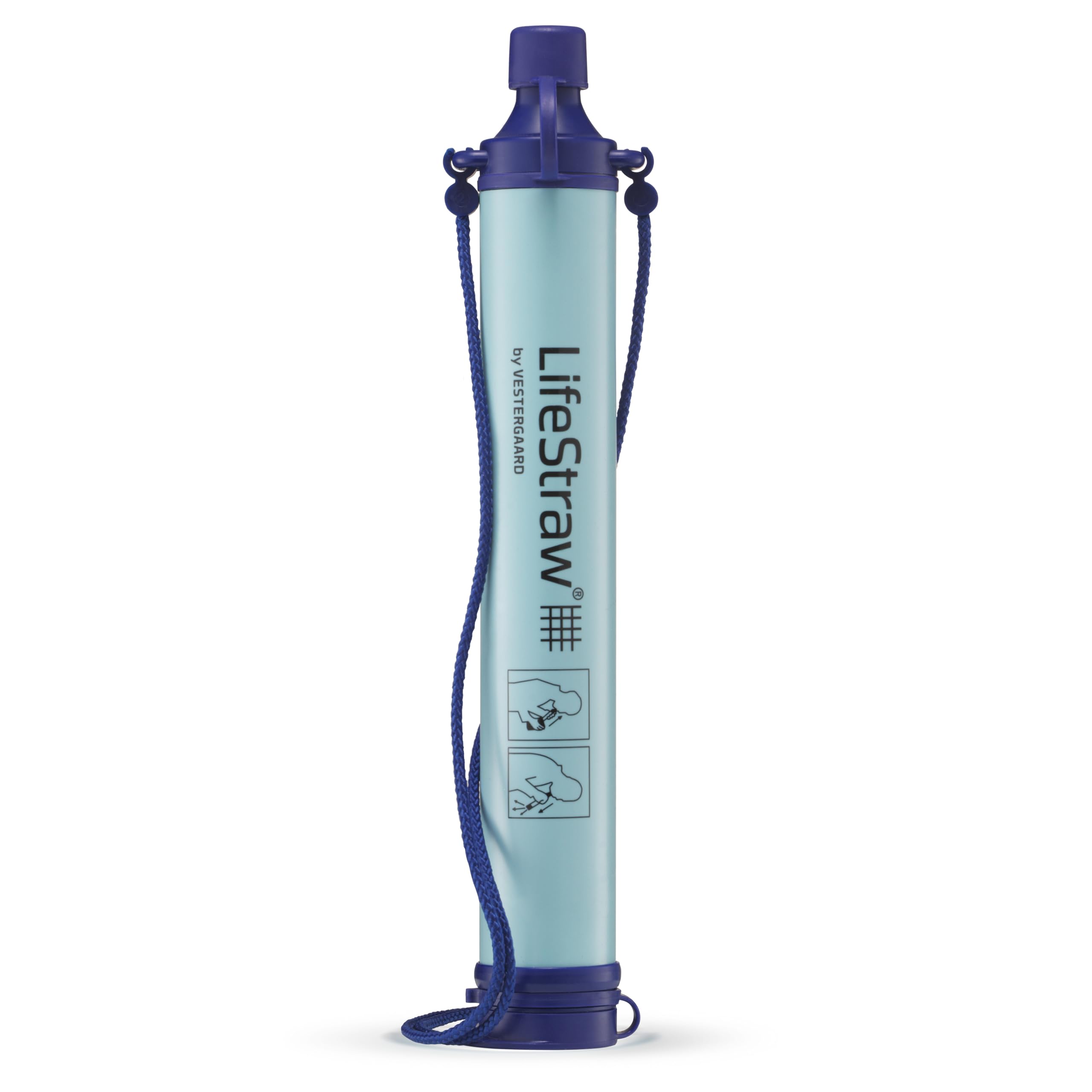
LifeStraw Personal Filter
Key Features
- Power: None required
- Weight: 1.59 oz
- Filter life: 1,000 L
- Bacteria removal: 99.999999%
- Price: Budget
Some gear earns its place by being the thing you hope never to use. The LifeStraw is that item for a lot of packs: 45 grams, no batteries, no chemicals and no bottle required. If you can reach water, you can drink it.
The hollow-fiber membrane removes 99.999999% of bacteria and 99.999% of parasites, along with microplastics down to a micron, and it is rated for 1,000 liters before it is spent. It works from 1 °C to 60 °C, so snowmelt and warmed water are both fine.
Be clear about what it is: a backcountry filter for wild water, not a purifier. Hollow-fiber membranes stop bacteria and protozoa but not viruses or dissolved chemicals, so it belongs on a mountain stream rather than in a farm pond or a tap of unknown quality.
The catch is that it cannot fill anything. You kneel at the bank and drink through the straw, which is fine for a quick top-up and tedious when you are treating two liters for dinner and breakfast. We keep one as insurance, because it weighs less than a snack bar and covers a clogged filter or a partner who forgot theirs. As the primary filter for a trip, a squeeze filter earns its extra ounces many times over.
Pros
- 45 g with no batteries or chemicals
- Drink straight from the source, no bottle
- Simple enough to live in a pack as backup
Cons
- Shortest rated filter life here
Keep one as a backup filter rather than a primary: 45 grams, no bottle needed, and enough to get you through a trip when the main filter fails.
Best for Drying Off
Rainleaf Microfiber Towel

Key Features
- Size: 24 x 12 in
- Fabric: 85% polyester, 15% polyamide
- Weight: 1.44 oz
- Absorbency: 5x its weight
- Price: Budget
Weight is the number everyone chases, but volume is what actually crowds a pack. A cotton towel is the classic offender: it eats a third of the space and is still damp the next morning. The Rainleaf rolls to about fist size and adds 1.44 ounces.
The version here is the 24 by 12 inch towel, 200 gsm microfiber (85% polyester, 15% polyamide), with a snap loop and a vented carry bag. It takes up several times its own weight in water, dries on a pack strap in the time it takes to break camp, and goes in the machine with the rest of the laundry.
The technique with any microfiber towel is patting rather than rubbing: press it against wet skin like a chamois and it lifts the water, scrub with it and you just move the water around. The snap loop is the detail we appreciate most, because a towel that can hang off a pack is dry by breakfast.
It is one of the cheapest items in this guide, which makes it easy to buy two and keep one in the daypack. Ours rides in the top of the pack with the first-aid kit, and it has settled more damp evenings than anything else its size.
Pros
- 1.44 oz and fist-sized packed
- Dries fast on the snap loop
- Absorbs several times its weight
Cons
- 24 x 12 in is a wipe-down size, not a body towel
Buy the small Rainleaf for face, hands and a quick post-swim dry; it packs to nothing, dries fast and costs less than most gear on this page.
How We Tested Ultralight Backpacking Gear
We started by researching the ultralight market—reading spec sheets, filtering by packed size, weight, and price, and cross-referencing user reviews for red flags about durability or leaks. From that pool, we selected 12 items that represent the most common backpacking categories: shelters, sleeping quilts, frames, cook pots, water filters, and stuff sacks. Over eight months, we took them on weekend trips and a week-long trek.
Each item was used as intended: we slept in the shelters, cooked meals on the stoves, filtered water from streams, and carried everything in packs over rocky, rooty trails. We weighed every piece on a kitchen scale before and after trips, stuffed them into stuff sacks to check packed volume, and timed how long wet gear took to dry after a rainstorm or a morning dew. For water reservoirs and bottles, we filled them with water, sealed them, and shook them upside down in a pack for an hour to check for leaks. For cook pots, we measured handle temperature with an infrared thermometer after boiling water, then grabbed them with bare hands to see if they were safe to lift.
After each trip, we inspected seams, zippers, and coatings for wear. We noted any fraying, delamination, or stuck zippers, and we kept using the gear even after minor failures to see if they worsened. We also factored in value: did the lightest option justify its price, or did a slightly heavier, cheaper piece perform better? The gear that scored highest balanced low weight with real-world functionality—no field repairs required, no surprises.
How to Choose Ultralight Backpacking Gear
Ultralight gear is not about owning the lightest object in each category; it is about carrying less because a small tool does a bigger job, and water is where that math pays off first.
Start With Water, Not With Cookware
A liter of water weighs a kilogram, and a dry stretch can mean carrying three of them. That is why a filter changes pack weight more than any pot, mug or spork will: treat water at the source and you leave the trailhead with one bottle instead of a day’s supply. We put the money there first. Until a filter and a collapsible bottle are in the pack, the rest of the kit is shaving grams off a load you are still hauling in liquid form.
Match the Filter to How You Drink
Straw filters are the simplest: nothing to fill, nothing to screw on, and you drink where you kneel. That makes them excellent backup and a poor primary on a trip where you cook and camp away from water. Squeeze filters thread onto a bottle or pouch and treat a liter at a time, which is what most backpackers actually need. Gravity setups are for camp and for groups.
The trap is buying a straw for a trip that needs a reservoir. If your evening routine is filling a pot and a bottle at the last stream, buy something that fills containers.
Nesting Is the Cook Kit Feature That Matters
Before comparing pot weights, measure what has to go inside. A 110-gram fuel canister is the common standard, and a 750 ml pot swallows one with room for a stove and a lighter; a pot that does not nest means a canister rolling loose and a bigger stuff sack.
Titanium is the material to pick for boiling: light, tough and uncoated, which also means nothing slides out of it. Plan on boiling and rehydrating rather than frying, and let internal markings replace a separate measuring cup.
Packed Volume Counts as Much as Grams
Two items here make the point. A collapsible bottle is nearly free in the pack when empty, but it is only useful if it stands up when full. A microfiber towel is worth carrying only if it is big enough for the job you bought it for: a 24 by 12 inch towel dries a face and a pair of socks, not a whole body after a river crossing. Check packed size and working size, in that order. The lightest version of something you cannot use is the heaviest thing in the pack.
Frequently Asked Questions
How long does a backpacking water filter last?
Rated lifetimes are long. The Sawyer filters here carry a 100,000-gallon rating and the LifeStraw is rated to 1,000 liters. In practice you retire a filter because it clogged, froze or got dropped, not because it reached its number. Backflush after every trip, store it dry, and if the flow drops and does not come back after a backflush, replace it.
Do microfiber camp towels actually dry you off?
Yes, with a change of technique. Pat and press rather than scrub, wring it once, and hang it on a loop; a 200 gsm towel lifts a surprising amount of water and is dry again in an hour or two in sun and breeze. Size matters more than weight: a small towel handles a face and hands, while drying a whole body wants something around 24 by 48 inches or larger.
Do I need a camp mug if I already have a cook pot?
Not if you boil water, eat from the pot and drink from a bottle. A mug earns its place when you want a hot drink to stay hot: an insulated 17-ounce mug with a lid holds heat a bare titanium pot cannot, and the markings inside double as a measuring cup for rehydrating meals. If that is not your routine, skip it and save the 3.5 ounces.
Final Verdict
Buy the Sawyer Squeeze first. At 71 grams it turns a stream into your water supply, threads onto the bottles you already own, and arrives as a complete kit, which is why we put it ahead of lighter and cheaper filters here.
If your pack is already tight on space, the Mini does the same job more slowly for less. If you own a filter and simply want to stop hauling hard bottles, put the money into the Platy instead.