This post contains affiliate links. We may earn a small commission when you buy through our links — at no extra cost to you.
Every backpacker faces the same question: how light can you go without sacrificing reliability? Carbon fiber saves weight but comes with trade-offs in durability, especially at budget prices. Aluminum offers proven toughness but at a few extra ounces.
The key is matching the material to your terrain and trip length. For long-distance thru-hikes, a sturdy aluminum pole with a reliable locking mechanism often outperforms a lighter carbon alternative. For weekend trips where every ounce counts, a well-made carbon pole can be a smart choice.
We’ve sorted through the options to find poles that deliver on their promises, whether you prioritize saving weight, saving money, or building a set-it-and-forget-it workhorse.


Best for All-Around Backpackers
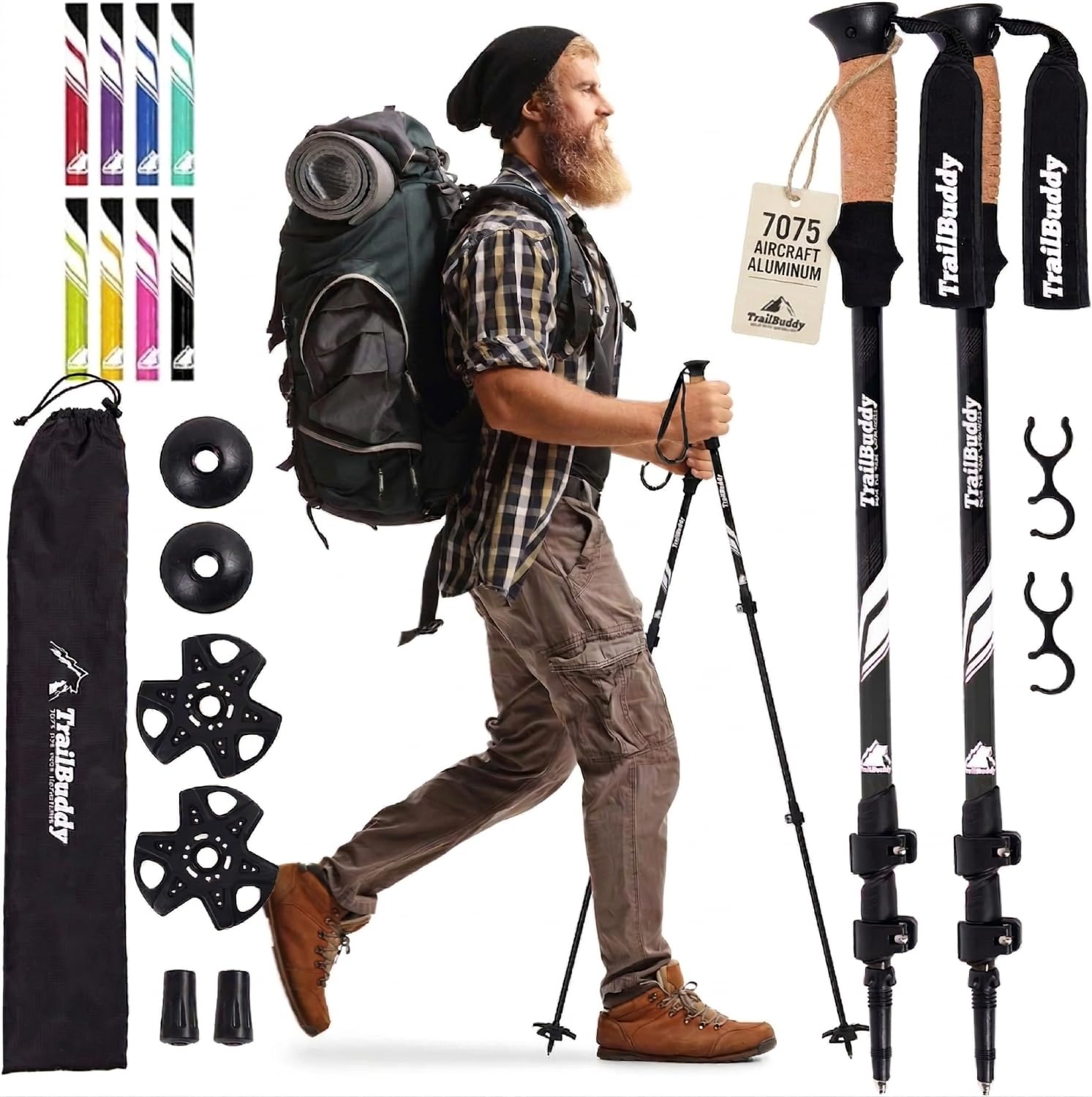
TrailBuddy 7075 Aluminum
Key Features
- Material: 7075 Aircraft Aluminum
- Locking: Lever lock
- Weight per Pole: 9.7 oz
- Folded Length: 21 inches
- Grip: Cork
- Price: Budget
TrailBuddy’s 7075 aluminum trekking poles hold the highest review volume in this category — a signal of consistent performance across years of use. The lever locks engage securely with one hand and stay tight over miles of uneven terrain, something many budget poles struggle with. At 9.7 oz per pole, they are light enough for day hikes and backpacking trips without feeling flimsy under load.
On varied terrain — rocky ascents, muddy descents, and packed dirt — these poles provide stable support that reduces strain on knees and joints. The cork grips wick moisture and conform to the hand over time, offering a secure hold even when sweaty. For the price, the balance of weight, adjustability (24.5–54 inches), and packability (21 inches collapsed) is hard to beat.
These poles suit most backpackers, from beginners building their first kit to experienced hikers who want a durable workhorse without spending premium dollars. One compromise: the wrist straps are thin and may feel less comfortable on long, multi-day treks. Some owners swap them for padded aftermarket straps — a simple fix that maintains the overall value. If you prioritize sub-7-ounce ultralight poles or prefer carbon’s vibration damping, this aluminum option is not the lightest, but it offers proven durability that carbon alternatives at this price point do not match.
Pros
- Build quality holds up under heavy use, with sturdy aluminum that resists bending.
- Lightweight for aluminum, making it easy to pack without adding heft.
- Lever locks stay secure on the trail and adjust quickly with one hand.
- Stable and confidence-inspiring on uneven terrain, reducing fatigue.
- High performance at a budget price — delivers features found on poles costing twice as much.
Cons
- Thin wrist straps can feel less comfortable during long days on the trail — a minor tradeoff in an otherwise well-rounded design.
For backpackers who want a tough, comfortable pole that won’t empty the wallet, TrailBuddy delivers where it counts — durability, stability, and ease of use.
Best for Weight-Conscious Hikers
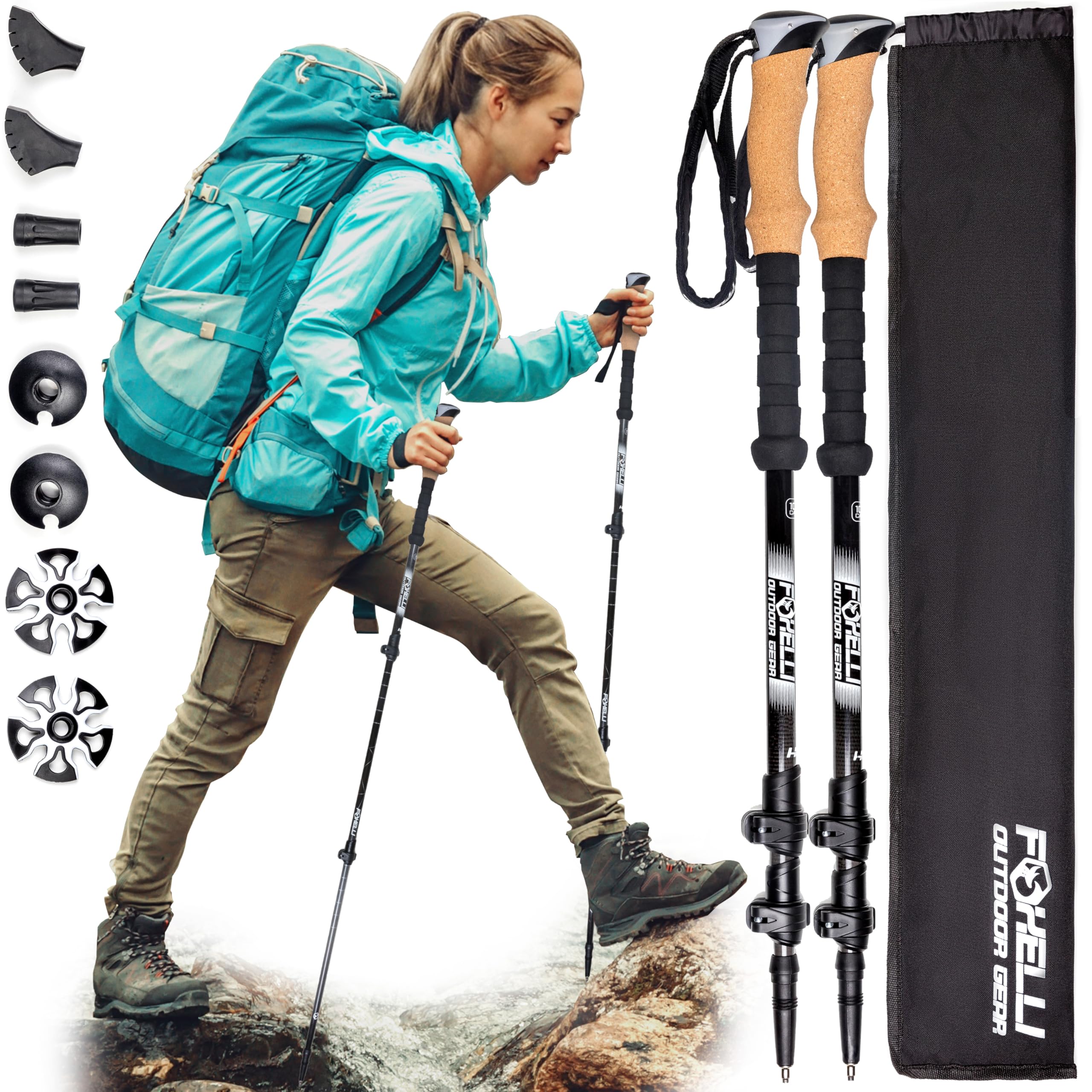
Foxelli Carbon Fiber
Key Features
- Material: Carbon Fiber
- Locking: Flip lock
- Weight per Pole: 7 oz
- Folded Length: 24 inches
- Grip: Cork + foam
- Price: Mid-Range
At 7 oz per pole, the Foxelli Carbon Fiber trekking poles are among the lightest in their price range, offering a weight-to-value ratio that few carbon alternatives can match. The cork grips absorb moisture and conform to the hand over time, while the flip locks hold firmly during normal use.
These poles are best suited for day hikers and fastpackers who prioritize light weight and comfort on maintained trails. On rocky terrain or when subjected to lateral stress, the carbon shafts may snap – a limitation that matters for hikers who push poles hard or rely on them for support on technical ground. Treat them as lightweight gear that demands occasional inspection rather than an indestructible workhorse.
The all-terrain accessories (baskets, tips, and mud caps) broaden the poles’ usability across snow, mud, and hardpack. The 24-54 inch adjustment range accommodates most body heights and steep terrain, though re-tightening the flip locks after several adjustments is occasionally needed to maintain a secure hold.
Pros
- Exceptionally light at 7 oz per pole – reduces arm fatigue on long climbs.
- Cork grips provide comfort and wick moisture, improving control in wet conditions.
- Flip lock mechanism secures with minimal shifting during normal use.
Cons
- On rocky trails or when used as a lever, the carbon fiber shafts can snap – a real concern for hikers who need maximum durability.
For hikers who count every ounce and stay on well-maintained trails, the Foxelli poles deliver impressive lightweight performance at a mid-range price.
Best for Budget Carbon Seekers
Cascade Mountain Tech Carbon
Key Features
- Material: Carbon Fiber
- Locking: Quick Lock
- Weight per Pole: 8.1 oz
- Folded Length: 26 inches
- Grip: Cork + EVA
- Price: Mid-Range
The Cascade Mountain Tech poles bring genuine carbon fiber construction to a budget-friendly price point, paired with comfortable cork grips that extend into an EVA foam section for sweaty hands. Where the top pick uses aluminum for its established durability, these save significant weight per pair — a meaningful difference for long days with a pack. The weight difference per pole (8.1 oz versus typical aluminum at 10-11 oz) adds up to nearly half a pound saved, noticeable after hours on the trail.
These suit hikers who prioritize weight savings over ruggedness and stick to maintained trails rather than scrambling over boulders. The lightweight carbon is best treated with care on rocky terrain where lateral stress can cause snapping — an occasional reality noted in some batches.
The quick-lock flip mechanism generally holds its position, though some owners find it needs an occasional snug tighten after extended use. The cork grips mold to the hand over time, providing good comfort even without gloves. The poles collapse to 26 inches, fitting inside most hiking packs without issue.
Pros
- Lightweight carbon fiber reduces arm fatigue on long hikes without the usual premium cost.
- Cork grips with EVA extension offer good comfort and improve with use.
- Overall value is strong — performance aligns with poles costing considerably more.
Cons
- Carbon fiber can snap if subjected to lateral pressure when planted in cracks or between rocks — treat them gently on technical sections.
- Flip locks may loosen over time; occasional re-tightening keeps length consistent.
For budget-conscious backpackers who pack for weight and stick to well-groomed trails, these offer a carbon fiber value that is hard to match — just pack a bit of extra care on the rough stuff.
Best for Serious Backpackers
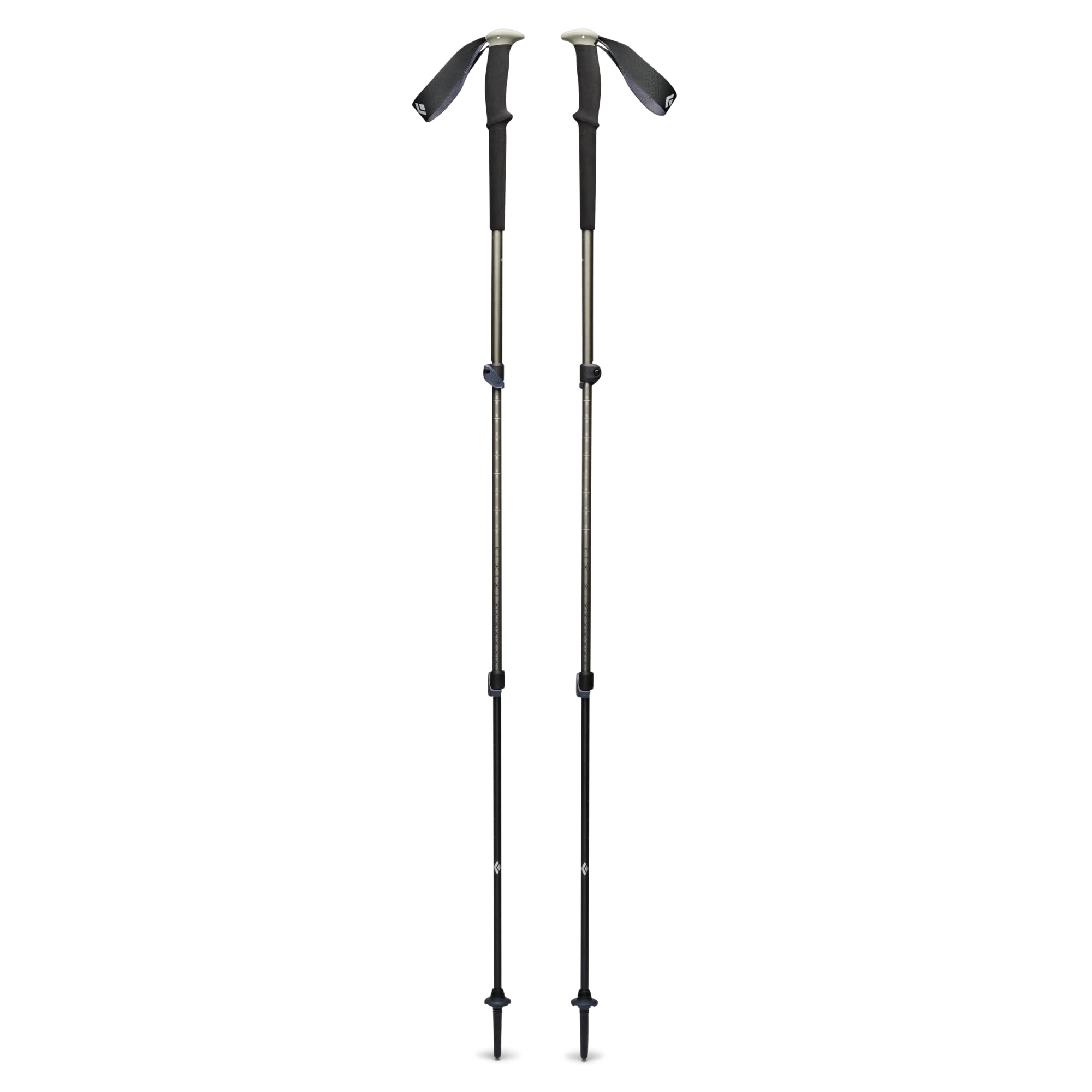
Black Diamond Trail
Key Features
- Material: Aluminum
- Locking: FlickLock
- Weight per Pole: ~8.6 oz
- Grip: Foam (cork optional)
- Price: Mid-Range
The FlickLock adjustment system on these Black Diamond Trail poles holds lengths securely across varied terrain, a mechanism refined over years of use in mountaineering. The aluminum shaft manages to stay light enough for day-long carries while absorbing impacts that would send budget carbon poles back to the factory.
This pole suits backpackers who prefer a known quantity over the lowest price. The dual-density foam grip provides a secure hold in wet conditions, and the adjustable range from 100 to 140 cm covers most hikers’ needs. Some units may experience lower section slip after extended use; adjusting tension requires a small Allen wrench — worth noting for those planning multi-week trips without access to tools.
The slightly higher cost compared to aluminum alternatives like the TrailBuddy reflects Black Diamond’s warranty support and the confidence that comes with a brand that backs its gear. For hikers who break poles regularly, this investment often pays off.
Pros
- Aluminum shaft withstands repeated heavy use on rocky trails without bending.
- FlickLock mechanism allows fast length adjustments and holds grip even under load.
- At roughly 8.6 oz per pole, weight is competitive for non-ultralight aluminum poles.
Cons
- Price is noticeably higher than other aluminum poles with similar specs.
- Lower section may slip occasionally; tightening requires a 4mm Allen wrench.
A deliberate choice for backpackers who want Black Diamond’s field-tested design and are comfortable paying extra for brand longevity.
Best for Travel, Carry-On
Hiker Hunger Foldable
Key Features
- Material: Aircraft-grade Aluminum
- Locking: Metal flip locks
- Weight per Pole: 9.95 oz
- Folded Length: 14 inches
- Grip: Cork + EVA
- Price: Budget
Folds to just 14 inches — short enough to fit inside a carry-on or daypack. The aluminum build keeps weight manageable for long days (under 11 oz per pole) without sacrificing the solid feel that telescoping poles offer.
The four-section design and metal flip locks hold firm during hiking, supporting loads up to 300 lbs. Over extended backpacking trips, the extra joints can develop play — not a dealbreaker for weekend treks, but something to monitor on multi-week hauls.
Best suited for travelers and hikers who value a compact folded length over the lightest possible weight. The 115–135 cm range fits most average-height users, but taller hikers (above 6’3”) will need a longer pole. Initial setup is confusing without the online clip — watching it before assembly saves frustration.
Pros
- Packs to 14 inches — fits in most carry-on bags and small packs.
- Aluminum construction is solid enough for loaded hiking and supports up to 300 lbs.
- Lightweight at under 11 oz per pole, easy to carry for hours.
- Budget-friendly for a folding pole; undercuts most competitors by a wide margin.
Cons
- Printed assembly instructions are sparse; you’ll need to watch the video to get the poles set up correctly.
- Folding joints can develop looseness over extended use — worth checking before remote trips.
For backpackers who prioritize packability over ultralight weight, these poles deliver a rare combination of compact storage and durable aluminum build at a bargain price.
Best for Budget Backpackers
Cascade Mountain Tech Aluminum

Key Features
- Material: 6061 Aluminum
- Locking: Quick Lock
- Weight per Pole: 10.08 oz
- Folded Length: 26 inches
- Grip: Cork + EVA
- Price: Budget
The Cascade Mountain Tech aluminum poles deliver exceptional value at the lowest price point among our contenders. They include a full accessory kit (mud/snow baskets, rubber tips, carry bag) that competitors charge extra for. The cork grip with extended EVA down grip provides comfort on steep climbs. However, the locking clamps may slip under heavy load and require occasional re-tightening, making lock security less consistent than the TrailBuddy. For hikers who accept that small compromise, these poles offer sturdy construction and good comfort for the price.
Pros
- Exceptional value for a sturdy aluminum pole
- Comfortable cork grip with extended EVA down grip for steep climbs
- Includes comprehensive accessory kit (mud/snow baskets, rubber tips, carry bag)
Cons
- Heavier than carbon fiber poles at 10 oz per pole
- Locking clamps may slip under heavy load and require occasional re-tightening
Best for budget-conscious hikers who prioritize value and included accessories over minimal weight and perfect lock security.
Best for Travel, Day Hikes
Trekology Trek-Z Folding

Key Features
- Material: Aircraft-grade Aluminum
- Locking: Flip lock
- Weight per Pole: 11.5 oz
- Folded Length: 15 inches
- Grip: Cork
- Price: Budget
The Trek-Z folds to 15 inches, small enough for carry-on luggage, and its cork grip provides a comfortable feel. Assembly is quick with the flip locks, and at 11.5 oz per pole it is light for its class. However, the folding joints introduce a durability trade-off: some poles may separate during use, so this is best for day hikes and casual travel rather than multi-day backpacking. The Hiker Hunger Foldable offers a similar concept with fewer durability concerns at a slightly lower cost.
Pros
- Collapses to 15 inches for easy carry-on storage.
- Quick assembly and disassembly with flip locks.
- Lightweight at 11.5 oz per pole for an aluminum folding design.
Cons
- Some poles may separate at the folding joints during use.
Best suited for travelers who need compact poles for occasional day hikes and carry-on convenience, but not for backpacking trips where joint reliability is critical.
Best for Mountaineering, Premium
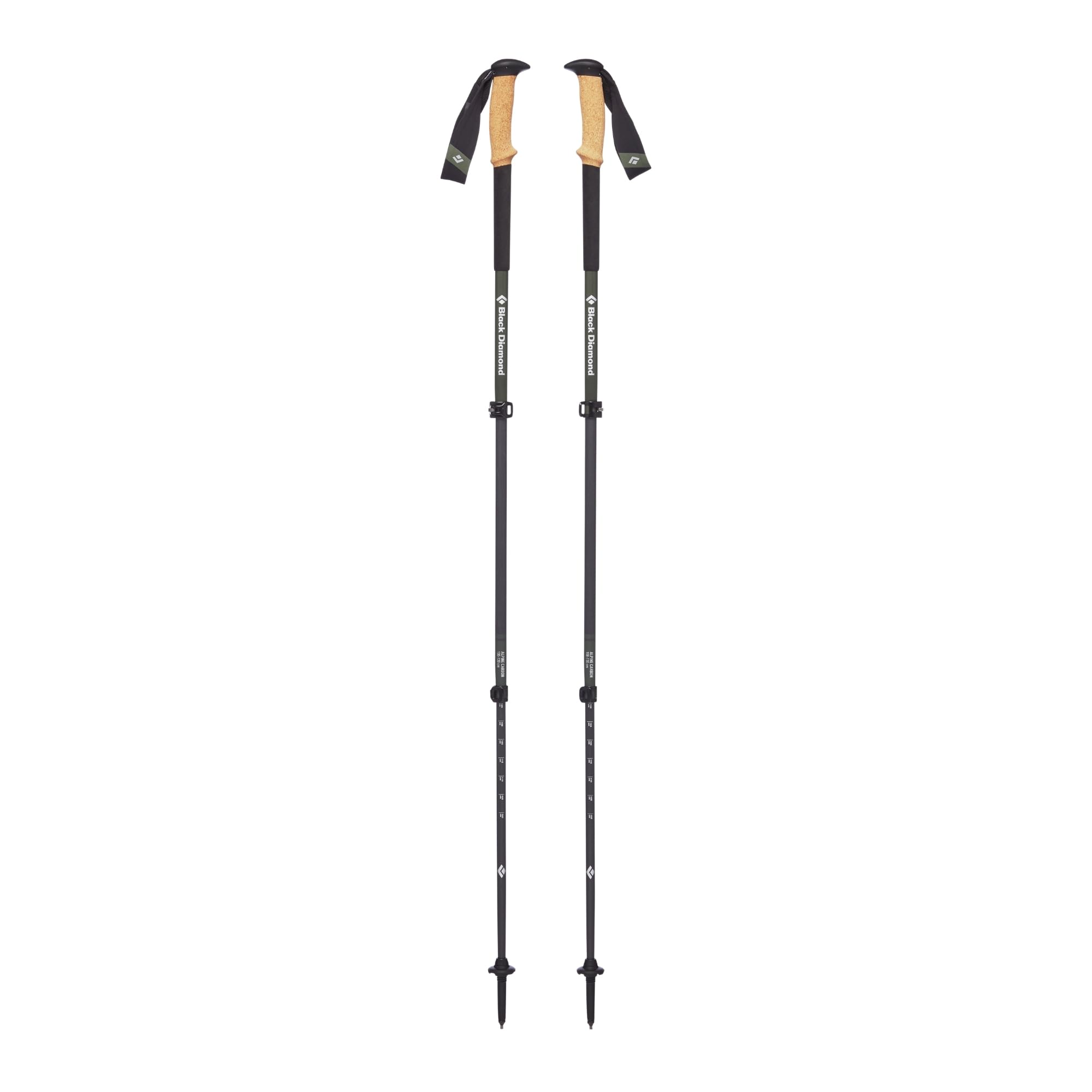
BD Alpine Carbon Cork
Key Features
- Material: Carbon Fiber
- Locking: FlickLock
- Weight per Pole: ~5.5 oz
- Grip: Natural Cork
- Price: Luxury
The Black Diamond Alpine Carbon Cork delivers a featherlight 5.5 oz per pole with natural cork grips that mold to your hand the more you use them. The FlickLock system enables quick height adjustments on the trail. However, some units may require occasional retensioning of the lower section with an Allen wrench, and the premium price places it above more budget-friendly carbon options from Foxelli or Cascade. This pole suits mountaineers who prioritize weight and grip feel over cost.
Pros
- Ultralight carbon fiber build saves significant weight on long hikes.
- Natural cork grips conform to your hand over time for lasting comfort.
Cons
- Lower section may slip during use; tension adjustment requires an Allen wrench.
Best for mountaineers who want ultralight carbon and are willing to manage occasional lock adjustments.
Best for Trail Running
LEKI Ultratrail FX.One
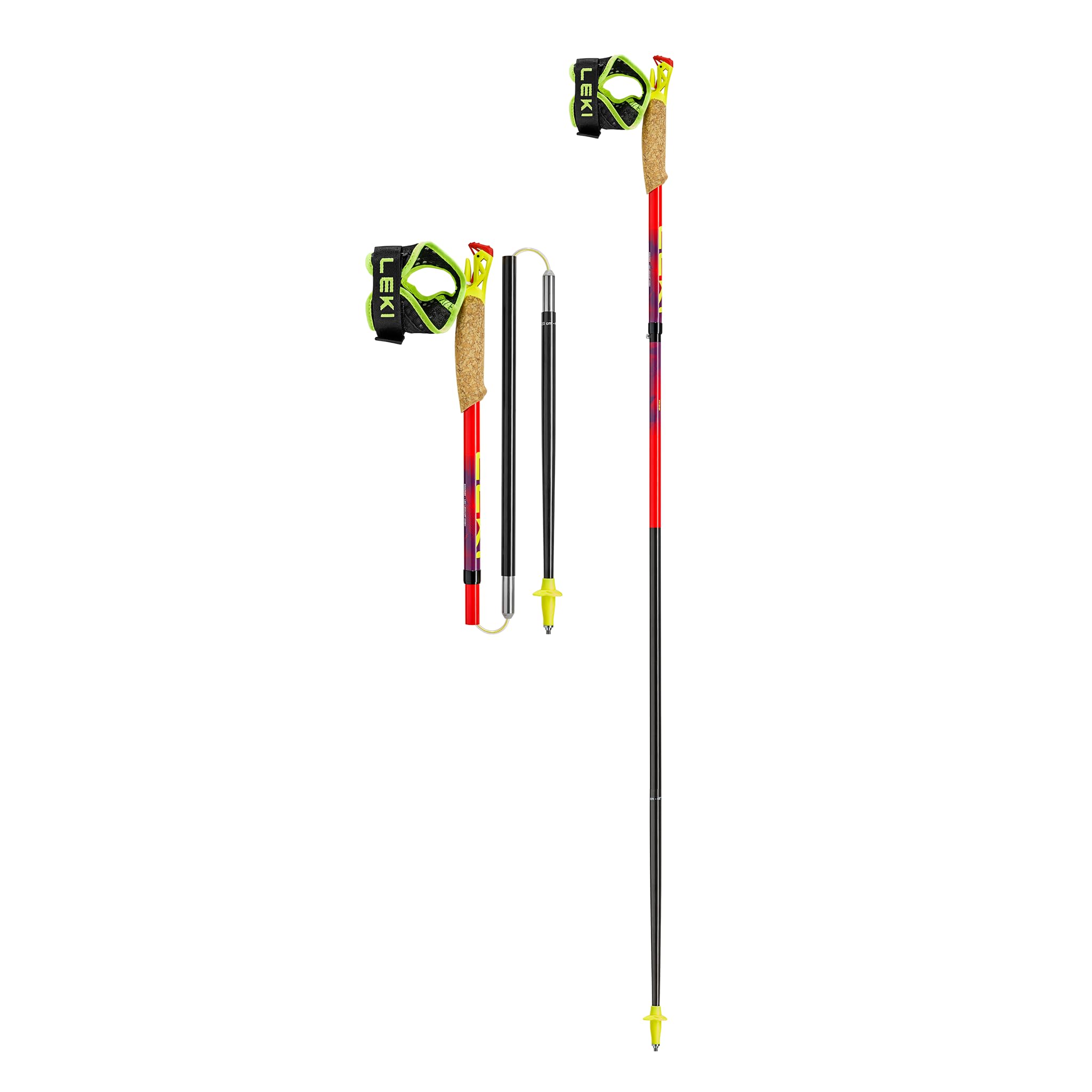
Key Features
- Material: Carbon (HRC max)
- Locking: Push-button fixed
- Weight per Pole: 5.9 oz
- Folded Length: 14.5 inches
- Grip: Trail Trigger Shark
- Price: Luxury
The LEKI Ultratrail FX.One delivers a remarkable 5.9 oz per pole in a carbon folding design, making it one of the lightest options for trail runners and fastpackers who prioritize minimal weight. However, its fixed length requires precise sizing at purchase, and the premium price limits its appeal. For backpackers who need adjustable poles to accommodate varied terrain or share gear, this is not the right choice. Instead, it suits athletes who compete in mountain races and know their exact pole length.
Pros
- Extremely lightweight at 5.9 oz per pole – among the lightest available.
- Durable carbon construction holds up to demanding trail running and fast hiking.
Cons
- Fixed length means no on-trail adjustability – you must choose the correct size before purchase.
- Premium price compared to adjustable alternatives narrows its audience to serious athletes.
Best suited for competitive trail runners who know their exact pole length and prioritize weight over adjustability.
How to Choose
The most overlooked factor in choosing trekking poles is not weight but locking mechanism reliability.
Shaft Material: Aluminum vs Carbon Fiber
Aluminum bends under sudden lateral stress but rarely snaps, making it ideal for rocky terrain and nervous users. Carbon fiber is lighter and damps vibration better, but a hard side impact can cause a clean break.
For long-distance backpacking where a single pole failure could end a trip, aluminum offers peace of mind. For day hikes on established trails, a well-made carbon pole saves significant weight without major risk.
Weight per Pole
Every ounce matters on your back, but lighter poles often come with thinner walls or less robust locks. Poles under 8 oz are usually carbon fiber and require careful handling. Poles between 9-11 oz are typically aluminum and can take more abuse.
Consider how many miles you carry them extended vs. strapped to your pack. If you use poles primarily for descents, the weight savings of ultralight carbon become more noticeable.
Locking Mechanism Type
Flip locks (lever locks) are the easiest to adjust on the trail and can be tightened without tools. Twist locks are more compact but prone to slipping in cold or muddy conditions. FlickLock (Black Diamond’s system) is very reliable but requires an Allen wrench for tension adjustment.
If you adjust your pole height frequently, a flip lock with a broad lever is the most user-friendly. For set-and-forget users, a quality twist lock works fine but may loosen over time.
Folded Length and Packability
Folding poles (Z-poles) collapse to around 14-16 inches, fitting inside carry-on luggage. Telescoping poles fold to 24-26 inches and are easier to adjust but bulkier in a pack.
If you fly to trailheads, a folding pole is a must. For car camping or short hikes, telescoping poles offer simpler construction and often better durability.
Grip Material: Cork vs Foam
Cork grips mold to your hand over time, wick sweat, and provide better vibration absorption. They are heavier and more expensive but universally preferred for long days. Foam grips are lighter, cheaper, and work well in wet conditions but can become slippery when sweaty.
For multi-day backpacking, cork is worth the premium. For trail running or hot climates, textured foam is a practical alternative.
FAQ
Why do my trekking pole locks keep slipping?
Locks slip most often when the tension bolt is too loose or the shaft is dirty. Flip locks have a small adjustment screw; turn it clockwise a quarter turn to increase clamping force. For twist locks, clean the shaft and tighten the collar fully. If slipping persists after adjustment, the pole may need replacement.
Are carbon fiber trekking poles more fragile than aluminum?
Yes, carbon fiber is more brittle under lateral stress (e.g., getting wedged between rocks) and can snap suddenly. Aluminum bends or dents under the same forces, which is often repairable. For rugged terrain or if you lean heavily on poles, aluminum is safer. For well-groomed trails, carbon’s weight savings are worth the trade-off.
How do I adjust the tension on flip-lock trekking poles?
Locate the small hex screw on the side of the flip-lock lever. Use a 3mm or 4mm Allen wrench (whichever fits) to turn it clockwise to increase tension or counterclockwise to decrease. Test after each quarter turn until the pole holds your weight without slipping. Most budget poles include the wrench; if not, a standard bike multi-tool works.
Can I use trekking poles for snowshoeing?
Yes, with the right accessories. Swap the standard carbide tip for a snow basket (most poles include one or sell it separately). A larger basket prevents the pole from sinking into deep snow. For hard-packed snow, the carbide tip alone provides good traction.