This post contains affiliate links. We may earn a small commission when you buy through our links — at no extra cost to you.
Many campers buy a solar generator and discover it can’t keep their fridge running overnight or takes all day to recharge from the sun. The mismatch comes from misunderstanding how battery capacity translates to real device runtime, and what ‘solar generator’ actually includes.
This guide cuts through the spec numbers to show you exactly how much power you need for phones, CPAP, lights, or a mini fridge — and which generators actually deliver on their solar charging promises. We break down capacity vs. output, battery chemistry, and the difference between included panels and optional add-ons.
The right choice depends on your trip length and device list, not on watt-hour bragging rights. Here’s how to match your camping gear to a generator that won’t leave you in the dark.


Best for Car Camping, Rv
Jackery 1000 v2
Key Features
- Capacity: 1070Wh
- AC Output: 1500W
- Battery Type: LiFePO4
- Solar Panel: 200W
- Weight: 23.8 lbs
- Price: $$
The Jackery 1000 v2 charges from empty to full in one hour — faster than any comparable solar generator with a bundled panel. That 200W solar panel is included, so you are ready to capture sunlight right out of the box. The LiFePO4 battery chemistry delivers 4,000 cycles, meaning a decade of regular weekend use before capacity drops noticeably.
In camp, it quietly runs a portable fridge, lights, and phone charging for a full weekend on a single charge. At home, it keeps a WiFi router, a few lamps, and a small TV running during an outage. The app provides real-time monitoring and lets you switch to emergency fast-charge mode. Near the 1500W limit, the inverter may trip when starting high-draw tools like a circular saw — this is a usability boundary, not a flaw, and it protects the system from sustained overload.
This kit suits car campers and RV owners who need a quick recharge between stops, and homeowners looking for a drop-in emergency backup that doesn’t require separate solar panel shopping. It is not for ultralight backpackers (23.8 lbs is too heavy for hiking) or anyone requiring more than 1500W continuous output. The occasional tripping near max load means users should keep sustained draw under 1300W for reliable operation.
Compared to the EcoFlow Delta 2, the Jackery trades expandability and slightly higher AC output for faster charging and longer battery cycle life. If you need a scalable system that can grow to 3kWh or power a full-size refrigerator, the EcoFlow is the better option. For a complete, no-hassle kit that charges in an hour and lasts through hundreds of trips, the Jackery 1000 v2 is the stronger fit.
Pros
- Charges from 0 to 100% in 1 hour with emergency mode.
- Includes a 200W solar panel for immediate off-grid use.
- Dependable power for weekend camping and home backup.
- LiFePO4 battery rated for 4,000 cycles offers long-term value.
- Solid build quality with a user-friendly app for monitoring.
Cons
- Inverter may trip when running tools or appliances near the 1500W limit.
For car campers and home backup buyers who want a complete kit that charges faster and lasts longer than the competition, the Jackery 1000 v2 is the clear choice.
Best for Full-Size Fridges
EcoFlow Delta 2
Key Features
- Capacity: 1024Wh
- AC Output: 1800W
- Battery Type: LiFePO4
- Solar Panel: 220W bifacial
- Weight: 27 lbs
- Price: $$
The EcoFlow Delta 2 pairs a 1024Wh battery with a 220W bifacial solar panel, and its expandable design supports up to 3kWh total capacity — a notable advantage for campers planning to add more storage over time. Solar charging is fast enough to top off the battery during a sunny day, and the 1800W AC output handles most appliances.
This setup suits campers who need to power full-size refrigerators and tools, or want a home backup foundation that grows. At 27 lbs for the station alone, it’s heavier than similarly sized competitors — better for car camping or stationary use than backpacking. The app’s occasional connectivity glitches are worth noting, but the station’s manual controls remain fully functional.
Pros
- Steady performance and fast solar charging from the included bifacial panel.
- 1800W output can run most home appliances, including refrigerators and tools.
- Expandable up to 3kWh with extra batteries — a unique flexibility for growing needs.
Cons
- Station weighs 27 lbs, limiting carry-friendly portability for hiking or long treks.
- App connectivity can be glitchy for some users, though manual controls remain reliable.
A capable expandable system for campers and home backup users who can tolerate the extra weight and occasional app hiccups.
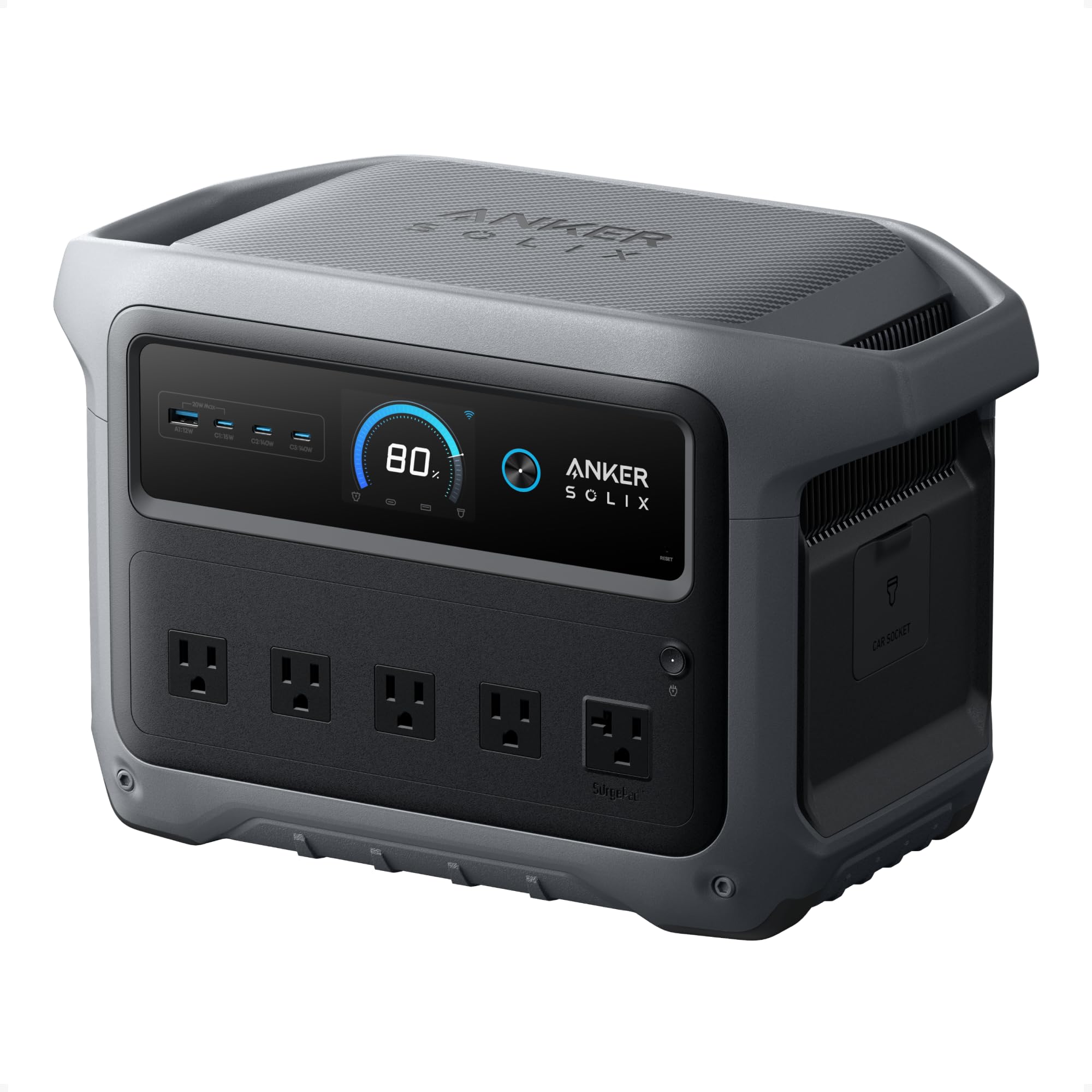
Best for Tech-Savvy Campers
Anker C1000 Gen2
Key Features
- Capacity: 1024Wh
- AC Output: 2000W
- Battery Type: LiFePO4
- Weight: 24.9 lbs
- Price: $$
The Anker C1000 Gen2 recharges from zero to full in 49 minutes — a speed that outpaces any other station in its class. Its 2000W continuous output can run heavy appliances like space heaters and induction cooktops, while the 24.9 lb weight keeps setup and transport manageable. The LiFePO4 battery delivers 4,000 charge cycles, giving it a much longer usable life than typical NMC-based competitors.
This station is best suited for tech-savvy campers who already own solar panels or are willing to buy one separately, as well as home backup users with existing solar infrastructure. The catch: no solar panel is included, so you’ll need to budget an extra $200–400 and handle the setup yourself. Buyers who want an all-in-one kit with a panel out of the box should consider the top pick instead.
Pros
- Ultra-fast AC charging – 49 minutes to full capacity
- High 2000W continuous output in a compact 24.9 lb frame
- Durable LiFePO4 battery rated for 4000 cycles
Cons
- No solar panel included – adds $200+ and extra planning for solar use
- Fixed 1024Wh capacity with no expansion option – limits longer trips or extended outages
If you already own solar panels or plan to buy them separately, the C1000 Gen2 delivers unbeatable AC recharge speed and long battery life for the price. For a complete kit out of the box, the Jackery 1000 v2 is a better fit.
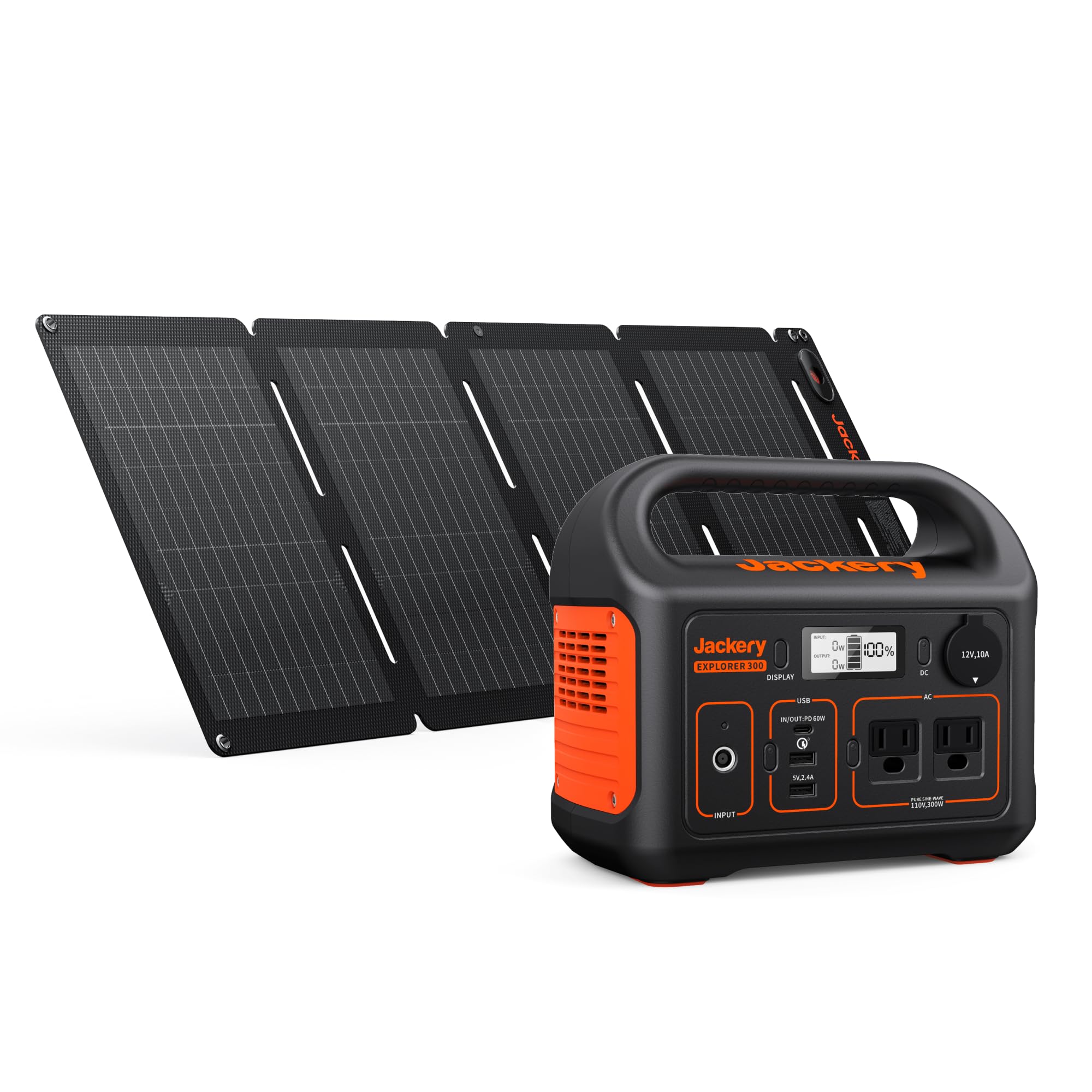
Best for Ultralight Backpacking
Jackery 300
Key Features
- Capacity: 292Wh
- AC Output: 300W
- Battery Type: LiFePO4
- Solar Panel: 40W
- Weight: 7.5 lbs
- Price: $$
At 7.5 lbs with a LiFePO4 battery rated for 4000 cycles, the Jackery 300 offers the best weight-to-durability ratio in its class — lighter than the top pick’s station alone. The included 40W panel keeps the kit compact for a backpack.
The tradeoff is a 292Wh capacity and 300W AC output that rules out toasters, kettles, or CPAP machines. The small battery is best suited for topping off phones, cameras, and LED lights during a day hike rather than powering overnight gear.
This setup suits ultralight backpackers and day hikers who need minimal, reliable power for small electronics. For longer trips with higher power demands or the need to run a mini-fridge, the expandable top pick is a better match.
Pros
- Lightest station in its class at 7.5 lbs — easy to carry on a day hike.
- LiFePO4 battery rated for 4000 cycles, ensuring long service life.
- Fast USB-C PD charging for quick device top-ups.
Cons
- 300W AC output prevents use of heating appliances like toasters or kettles — fine for phones, not kitchen gear.
- 292Wh capacity may not cover a full night of CPAP use — best for short outings.
For backpackers who prioritize pack weight over total capacity, the Jackery 300 is the logical choice. Skip it if you need to run a mini-fridge or CPAP.
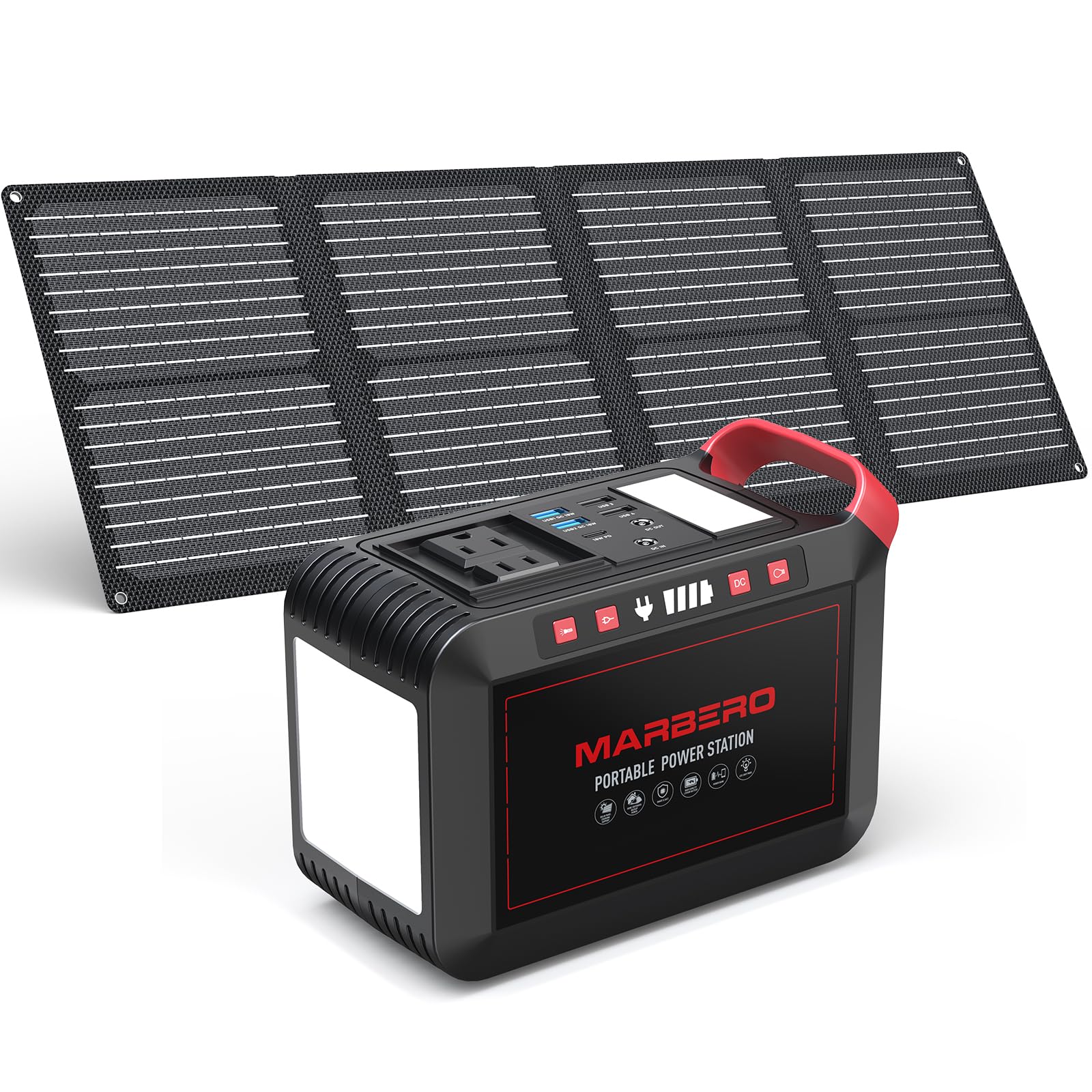
Best for Budget Light Use
MARBERO M823
Key Features
- Capacity: 237Wh
- AC Output: 300W
- Battery Type: Lithium-ion
- Solar Panel: 60W
- Weight: 9 lbs
- Price: $
The MARBERO M823 is the most popular budget solar generator kit, thanks to its complete package — a 237Wh station and 60W solar panel — at a price that undercuts most competitors. Its 9-pound weight makes it easy to toss in a car trunk for camping or outdoor charging of phones and small devices. However, the low price comes with a tradeoff: some units may develop charging issues after a few months, and solar charging speed can be inconsistent between samples.
This kit suits first-time buyers on a tight budget who need occasional power for phones, tablets, or LED lights during short trips. It is not intended for critical devices like CPAP machines or as a long-term home backup solution — the performance variability makes it best suited for light, non-essential use.
Pros
- Lowest-priced complete solar generator kit with both station and panel included.
- Compact and lightweight at 9 lbs, easy to transport for camping or tailgating.
- Entry-level price makes it an accessible way to try solar generator use without a large investment.
Cons
- Some units may stop charging after a few months of use.
- Solar charging speed can vary noticeably between units, making it less predictable for planned outdoor charging.
Best for budget-conscious first-time buyers who need occasional phone charging and are comfortable with the possibility of early charging inconsistencies.
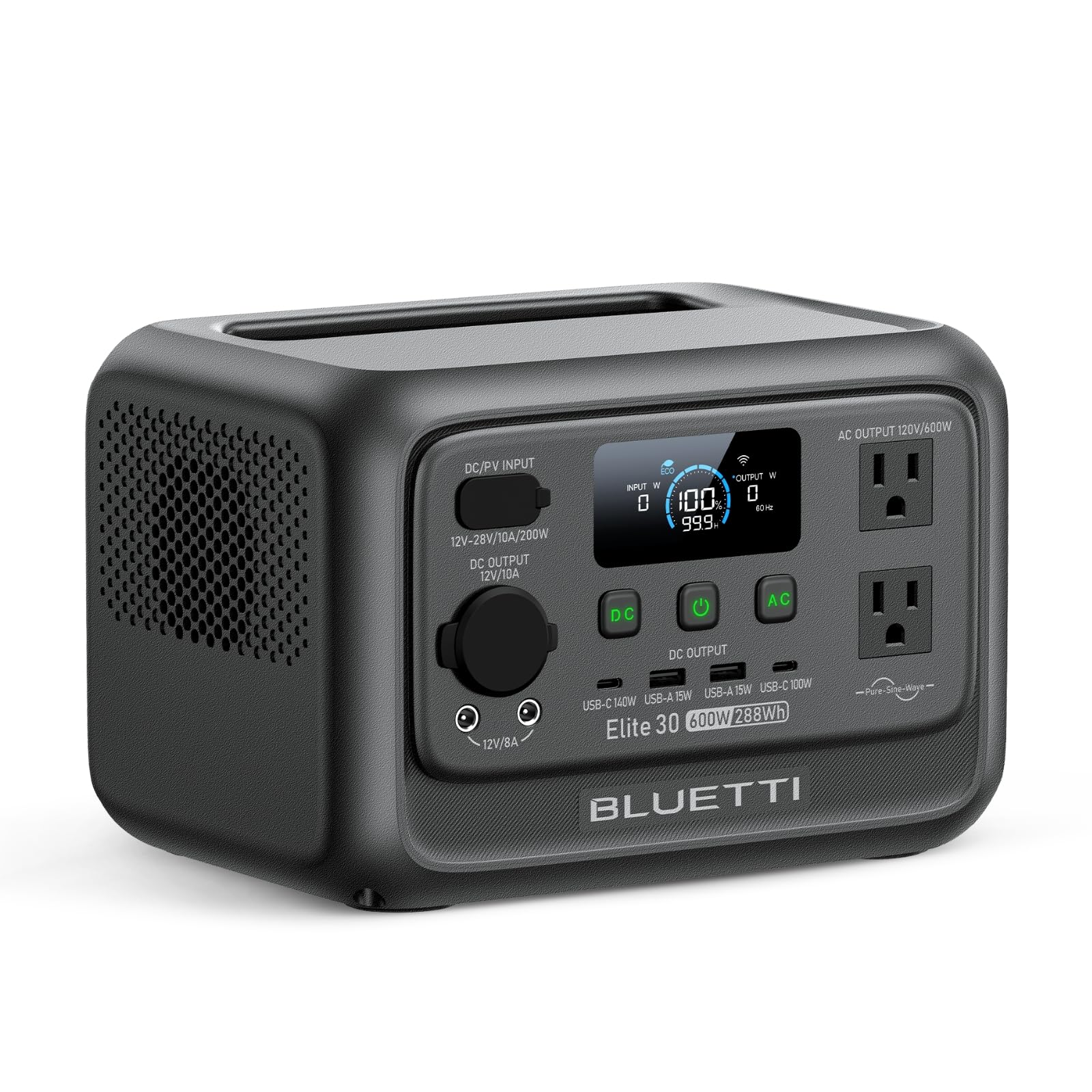
Best for Ups, Cpap
BLUETTI Elite 30 V2
Key Features
- Capacity: 288Wh
- AC Output: 600W
- Battery Type: LiFePO4
- Weight: 9.4 lbs
- Price: $
The BLUETTI Elite 30 V2 delivers a 10ms UPS switch time, allowing it to keep a CPAP machine, router, or computer running through brief power interruptions without a glitch. Its 600W output and 1500W lifting mode handle most personal electronics, and the 9.4-pound frame fits easily into a duffel bag or under a desk.
This unit suits campers who need dependable backup for a CPAP or laptop overnight, and home users who want a compact UPS for a modem or workstation. However, some units may exhibit parasitic battery drain when left idle for days, which can reduce readiness for unexpected outages — worth checking charge level periodically.
Optional solar charging accepts up to 380W input, making it possible to top off during a day trip with an external panel (sold separately). That charging speed is competitive for its size, though real-world gains depend on sunlight conditions.
Pros
- 10ms UPS switch keeps sensitive electronics running through grid interruptions
- Lightweight 9.4-pound design with compact footprint for easy transport
Cons
- Some units may drain battery when idle for days, reducing readiness for emergency use
For anyone needing a lightweight UPS-grade backup for CPAP or electronics, the Elite 30 V2 delivers where it counts — just keep an eye on idle battery levels.
Best for Budget Usb Devices
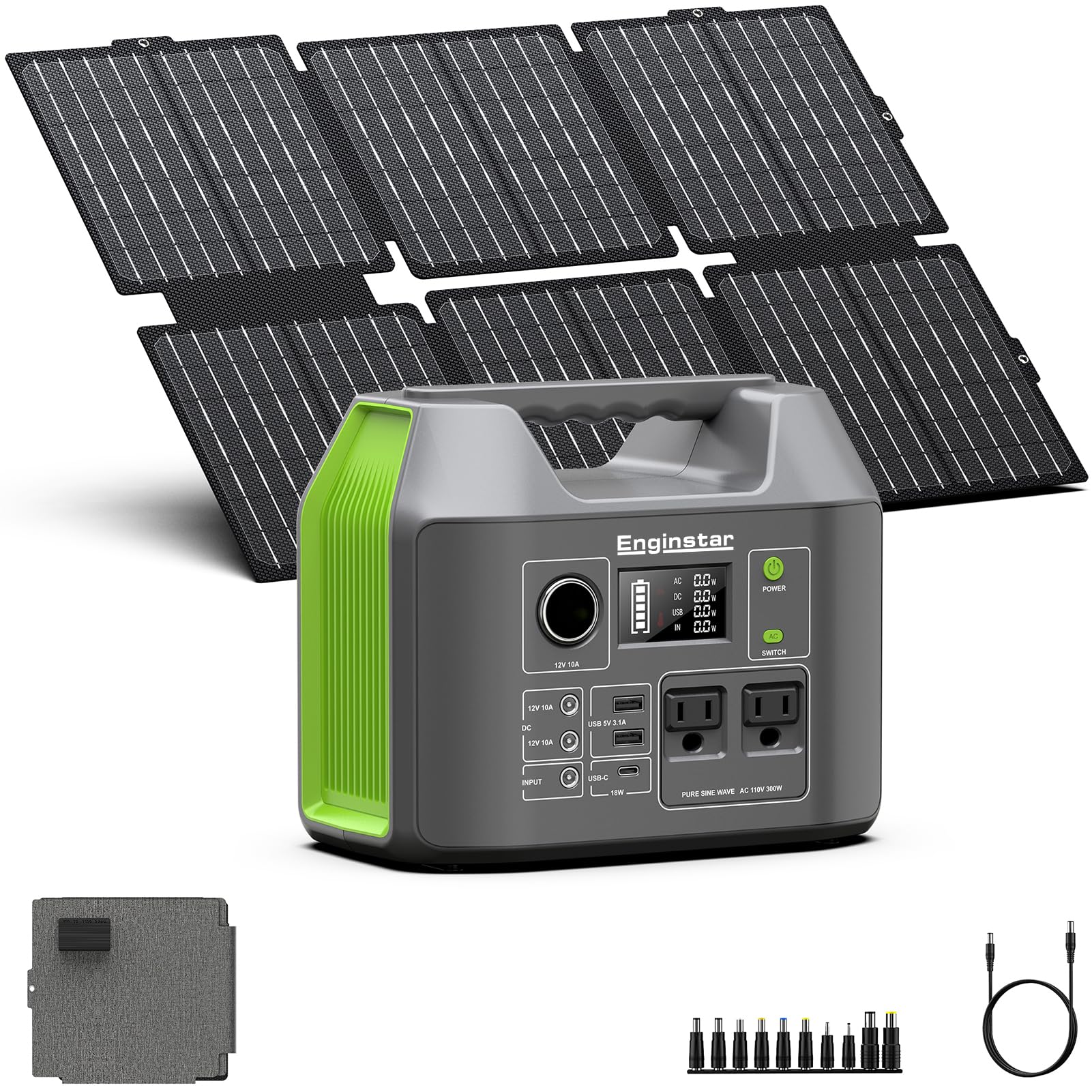
EnginStar R300
Key Features
- Capacity: 296Wh
- AC Output: 300W
- Battery Type: Lithium-ion
- Solar Panel: 60W
- Weight: 6.5 lbs
- Price: $
At 6.5 lbs with a 60W panel included, this budget-friendly kit powers phones, tablets, and CPAP machines for short camping trips. The tradeoff: charging can stall before full capacity or the unit may become unresponsive, and battery capacity can drop after a few months. For light, non-critical use where portability matters more than dependability, this fits. For consistent power or long-term backup, similar-priced options offer better reliability.
Pros
- Powers small devices like phones and CPAP machines without issue
- Weighs only 6.5 lbs for easy carrying
Cons
- Charging may not complete fully or the unit can become unresponsive
- Battery capacity can degrade noticeably after several months of use
Works for short, light-duty camping where occasional charging hiccups are acceptable; for critical needs, consider more reliable alternatives.
Best for Occasional Camping
ZeroKor R200

Key Features
- Capacity: 280Wh
- AC Output: 300W
- Battery Type: Lithium-ion
- Solar Panel: 60W
- Weight: 5.08 lbs
- Price: $
The ZeroKor R200 keeps things simple: a 5 lb station with 280Wh capacity and a 60W solar panel in the box. That price point and size make it an affordable entry point for someone who just wants to keep a phone and a small LED lantern running during a weekend trip.
Solar recharging is slow and can be inconsistent in anything less than direct midday sun, and battery longevity has been noted to vary between units — some show reduced capacity after moderate use. Those limitations mean this kit works best for light, occasional tasks, not for running a CPAP or a mini fridge overnight.
Pros
- Compact 5 lb station with 280Wh capacity for small electronics
- Good value for light camping and emergency phone charging
Cons
- Solar charging is slow; a full charge can take many hours in good sun
- Battery longevity varies between units; some may stop holding charge after a few cycles
Fine for occasional weekend trips where you only need to top off a phone or power a lantern, but not a candidate for overnight CPAP or fridge use.
Best for Lightweight Camping
Anker C300

Key Features
- Capacity: 288Wh
- AC Output: 300W
- Battery Type: LiFePO4
- Solar Panel: 60W
- Weight: 7 lbs
- Price: $$
Weighing just 7 pounds and built around a 288Wh LiFePO4 battery, the Anker C300 pairs its compact frame with 140W two-way USB-C charging — the fastest way to recharge the unit or power a laptop directly. The included 60W solar panel lets you start harvesting free energy right away. But the tradeoff for that portability is capacity: at 288Wh, this station handles phones, tablets, laptops, and CPAP machines for a night, but it can drain quickly if you try to run a mini-fridge or power tools. The price per watt-hour is also on the high side compared to similarly sized kits from other brands, making it a focused buy for those who prioritize fast USB-C charging and light weight over absolute capacity.
Pros
- Fast 140W USB-C two-way charging recharges the station and powers laptops directly.
- Compact and lightweight design at 7 pounds for easy portability.
- Complete kit with 60W solar panel included for immediate solar use.
Cons
- Can drain quickly when powering high-draw devices like mini-fridges or power tools.
- High price per watt-hour compared to similarly sized competitors.
This setup works best for day trips and lightweight camping where fast USB-C top-ups for laptops and phones matter more than running larger appliances. If you need more capacity for extended off-grid use, a larger station with a higher watt-hour per dollar ratio would be a better fit.
Best for Built-In Solar
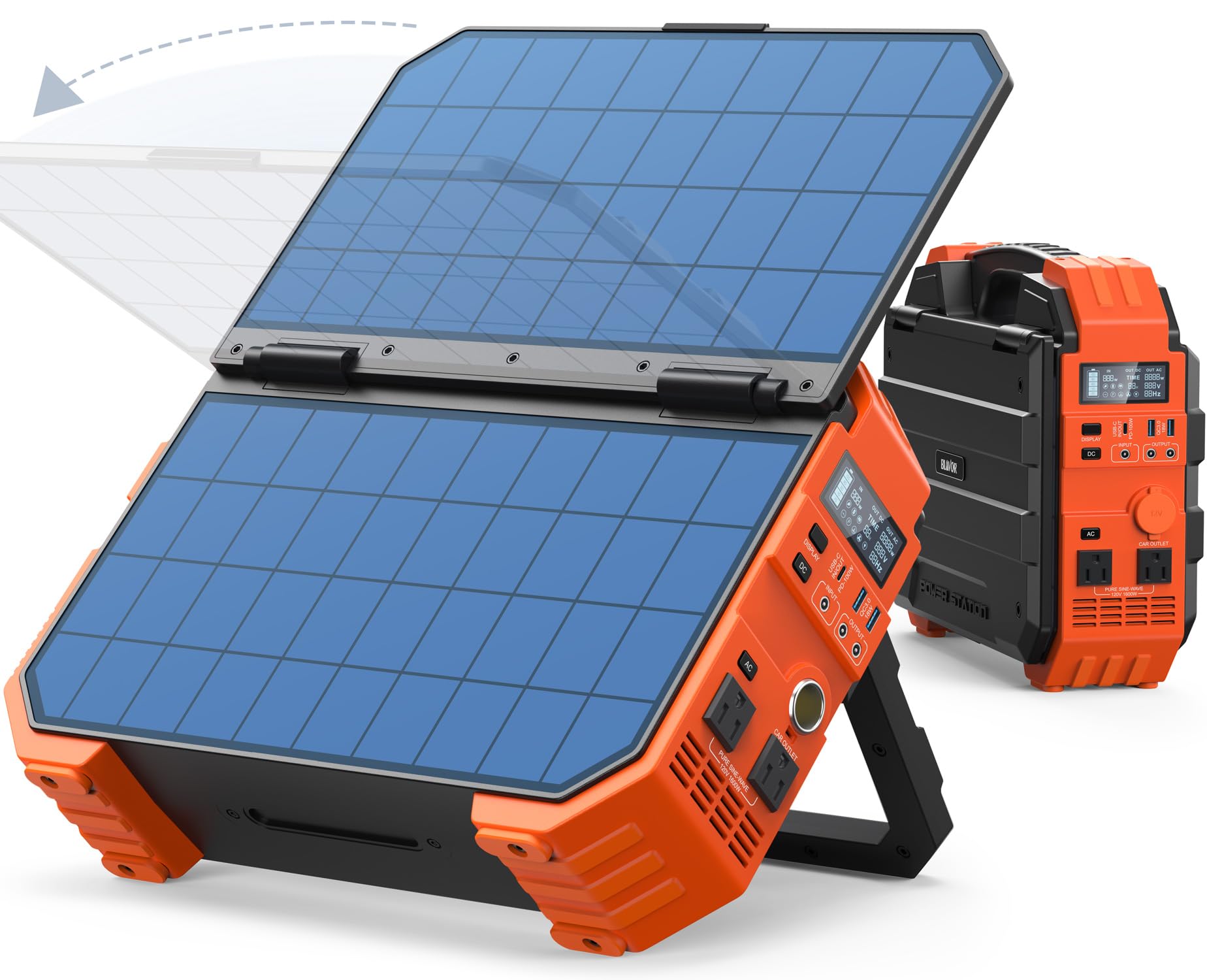
BLAVOR S1600
Key Features
- Capacity: 1024Wh
- AC Output: 1600W
- Battery Type: LiFePO4
- Solar Panel: 40W built-in
- Weight: 26 lbs
- Price: $$
The BLAVOR S1600 integrates a 40W foldable solar panel directly into the unit, so you can start trickle charging without carrying separate gear. Its 1024Wh capacity and 1600W AC output handle most camping appliances and home backup needs. However, the built-in panel is only 40W — fully recharging the station from solar takes days under ideal sun. This makes it impractical as a primary solar source. The station works better as a standard power station, with optional external panels for faster solar charging or AC mains for a full recharge in a few hours.
Pros
- Built-in 40W solar panel for convenient emergency trickle charging without extra gear.
- Good 1024Wh capacity and 1600W output for its size, suitable for camping and home backup.
Cons
- Built-in 40W solar panel is too slow to fully recharge the station; can take days in good sun.
Best for campers who want a built-in backup panel for occasional trickle charging and plan to use external panels or AC for primary recharging.
Best for Emergency Phone
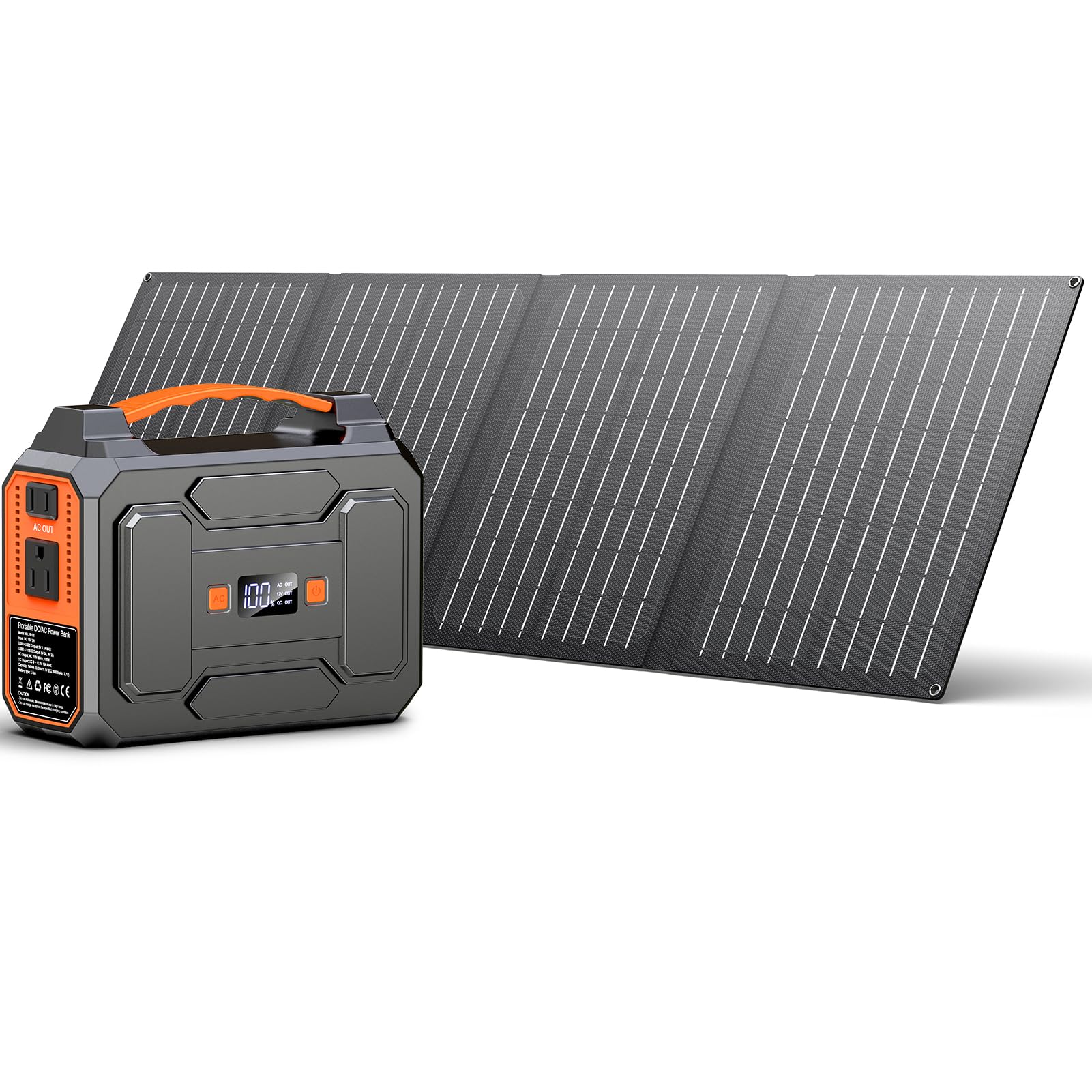
Apowking R100
Key Features
- Capacity: 146Wh
- AC Output: 100W
- Battery Type: Lithium-ion
- Solar Panel: 40W
- Weight: 3.3 lbs
- Price: $
The Apowking R100 is the lightest complete solar generator kit at 3.3 lbs, including a 40W panel that slowly tops off its 146Wh battery — enough to keep a phone running during a short outage. Its small size and low price make it an obvious choice for someone who only needs USB charging for small devices. However, the capacity cannot power any AC appliance, so it is strictly for phones and LED lights. Additionally, a notable portion of units have shown reliability issues over time, meaning this is a budget option best suited for occasional emergency backup rather than regular camping use.
Pros
- Compact and lightweight at 3.3 lbs – easy to carry in a bag.
- Budget-friendly complete kit with solar panel included.
Cons
- 146Wh capacity limits use to small USB devices and LED lights – no AC appliance support.
- Some units may develop issues over time, making long-term durability uncertain.
For emergency phone charging and small LED lights on a tight budget, this kit works if you accept the risk of early failure.
How to Choose
The biggest mistake campers make is underestimating power needs — a 300Wh generator won’t run a fridge all night, regardless of marketing claims.
Battery Capacity (Wh)
Capacity tells you how much energy the unit stores, but real-world runtime depends on what you plug in. A 1,000Wh generator can run a 50W phone charger for 20 hours, but a 500W fridge for only 2 hours under load.
The hidden trade-off: capacity numbers are measured at ideal temperatures. Cold weather reduces lithium battery output by up to 30%, so a 300Wh station becomes 210Wh on a freezing night.
AC Output Power (W)
AC output is the maximum wattage the inverter can deliver continuously. A 300W inverter can charge laptops and lights, but will trip on a 700W microwave or a fridge compressor startup surge that peaks at 1,200W.
Always check the surge rating — most generators handle double their continuous wattage for a few seconds. If you plan to run a fridge or CPAP, look for at least 600W continuous with a 1,200W surge.
Battery Chemistry
LiFePO4 (lithium iron phosphate) batteries offer 3,000-6,000 charge cycles and last 10+ years, while standard lithium-ion (NMC) batteries typically degrade after 500-1,000 cycles. For camping and emergency backup, LiFePO4 is worth the premium.
The trade-off: LiFePO4 batteries are heavier and slightly bulkier than NMC for the same capacity. But if you plan to keep the generator for years, the cycle life difference makes LiFePO4 the cost-effective choice.
Solar Panel Included
Not all ‘solar generators’ include a panel — many top models sell the station alone. An included 200W panel can fully recharge a 1kWh station in 5-6 hours of direct sun, while a 40W panel would take over a day.
The real-world limit: even with a 200W panel, solar charging slows dramatically in cloud cover, under trees, or in northern latitudes. For reliable off-grid use, either get a panel larger than the station’s solar input limit or plan for wall charging backup.
Weight (lbs)
Weight directly affects portability. A 7-pound station fits in a backpack but tops out at 300Wh. A 25-pound mid-range unit (1kWh) is car-camp friendly but not hikeable. Stations over 40 pounds need a wheeled cart or strong helper.
Consider this: if you have to carry it more than 50 yards from your vehicle, every extra 10 pounds feels like 20. Match the weight to your camping style — base camp or RV can handle 25+ lbs, but backpacking requires under 10 lbs.
FAQ
Can I run a CPAP machine all night on a 300Wh solar generator?
Depends on your CPAP model and pressure settings. A standard CPAP draws 30-60 watts, so a 300Wh generator might last 5-10 hours without heated humidification. With a heated tube or humidifier, draw can exceed 100W, cutting runtime to under 3 hours. Always check the device’s wattage and add a 20% buffer.
Why does my solar generator battery drain faster than expected?
Most generators have a parasitic drain of 5-15 watts when idle to run internal electronics and cooling fans. A 1kWh station can lose 20% of its charge in 24 hours if left on. Turn off AC and USB outputs when not in use, and store the unit at 50-80% charge to minimize degradation.
Do I need to buy a separate solar panel or is one included?
It depends on the model. Jackery and MARBERO include panels in their kits. Anker’s SOLIX C1000 and BLUETTI sell the station alone, requiring a separate panel purchase. Always read the product title: if it says ‘solar generator’ without mentioning a panel, assume it’s station-only and budget an extra $100-300 for a panel.
What’s the difference between LiFePO4 and NMC batteries in portable power stations?
LiFePO4 lasts 3,000-6,000 charge cycles (10+ years) and is safer against thermal runaway, but is heavier and costs more per watt-hour. NMC (lithium-ion) is lighter and cheaper initially but degrades after 500-1,000 cycles. For camping use over 3+ years, LiFePO4 is the better investment.