This post contains affiliate links. We may earn a small commission when you buy through our links — at no extra cost to you.
Headlamps are one of those pieces of gear where marketing numbers rarely match real-world performance. Claimed lumens are often exaggerated, and battery life quoted on low mode is useless when you need high output on a night trail. The real trade-off is between brightness and runtime — and most budget options compromise heavily on the latter.
After digging into thousands of user experiences across the most popular rechargeable headlamps, a clear pattern emerges: the sub-$20 2-packs that dominate search results are hit-or-miss for anything beyond casual use. Random shutoffs, charging failures, and dead batteries after a few months are common complaints. The headlamps that actually hold up tend to cost more upfront but deliver consistent performance over years.
This guide focuses on finding the headlamp that matches your specific activity — whether that means ultralight for trail running, bright enough for search and rescue, or simply a reliable light for weekend camping. The right choice depends on understanding which specs actually matter in the field.



Best for Hikers & Campers
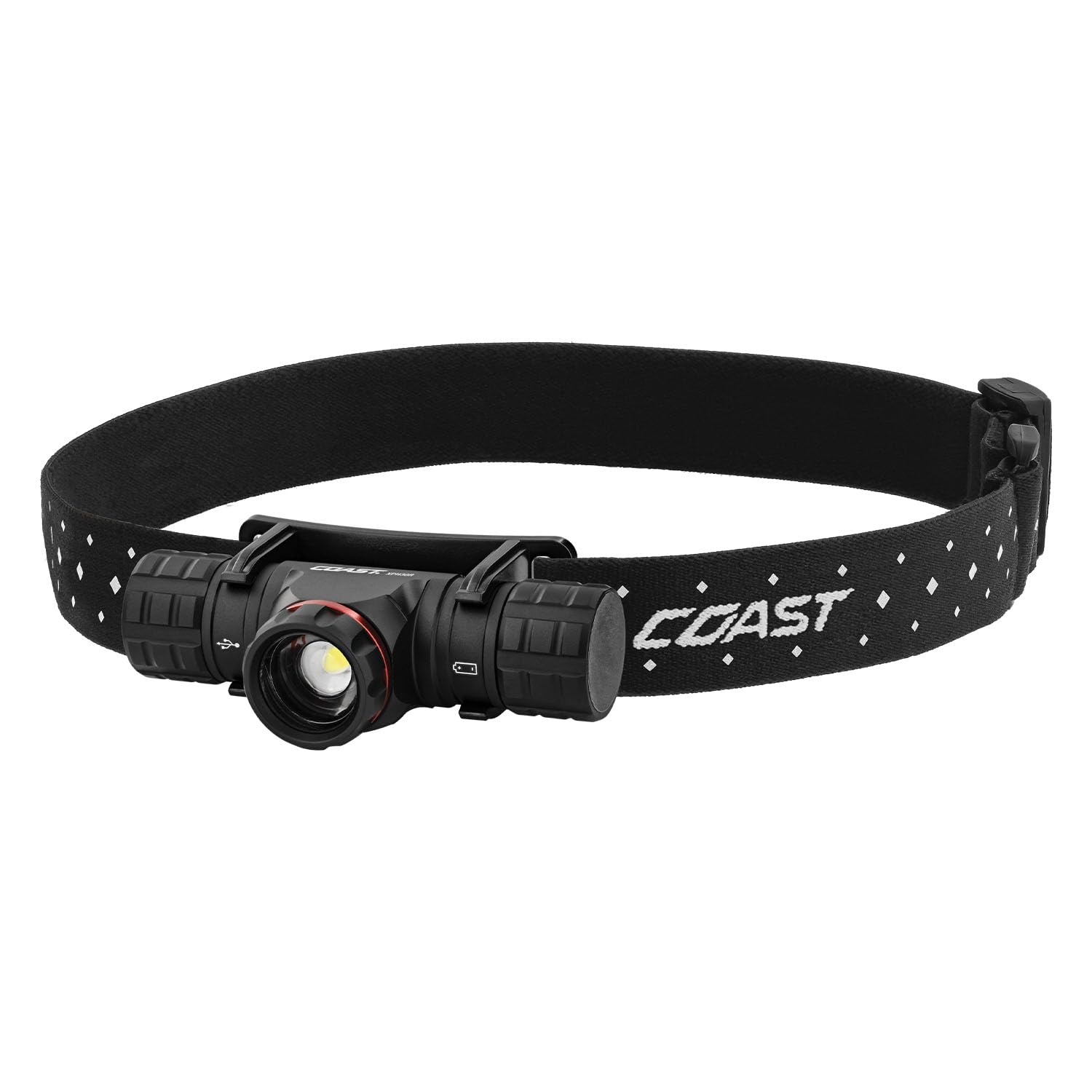
Coast XPH30R
Key Features
- Brightness: 1200 lumens
- Battery Life: 6.75h high, 28h low
- Weight: 4.37 oz
- Charging: USB-C + AA backup
- Water Resistance: IP54
- Price: $$
The Coast XPH30R delivers 1200 lumens from a twist-focus beam that goes from wide flood to tight spot, making it as useful for close-up camp tasks as for scanning a trail ahead. Its dual power system – a built-in rechargeable battery plus AA backup – means you are never left in the dark if the battery dies. The magnetic base adds hands-free convenience on metal surfaces.
This headlamp suits hikers, campers, and tradespeople who value a rugged build over minimal weight. At 4.37 oz, it is heavier than many budget lights and not comfortable for running or ultralight backpacking. The plastic mounting bracket can break under excessive force – fine for standard use but something to note if you plan to mount it on a hard hat in rough conditions.
Pros
- Premium build quality with a solid, durable feel.
- Bright 1200-lumen output with adjustable twist-focus beam.
- Long battery life with convenient USB-C charging and AA backup.
Cons
- At 4.37 oz, it’s heavier than many budget headlamps and may feel cumbersome for trail running.
- The plastic mounting bracket can break under excessive force – worth handling with care.
For hikers, campers, and tradespeople who need a headlamp that handles rough use, the Coast XPH30R is a sound investment – just not for trail running.
Best for Budget Hikers
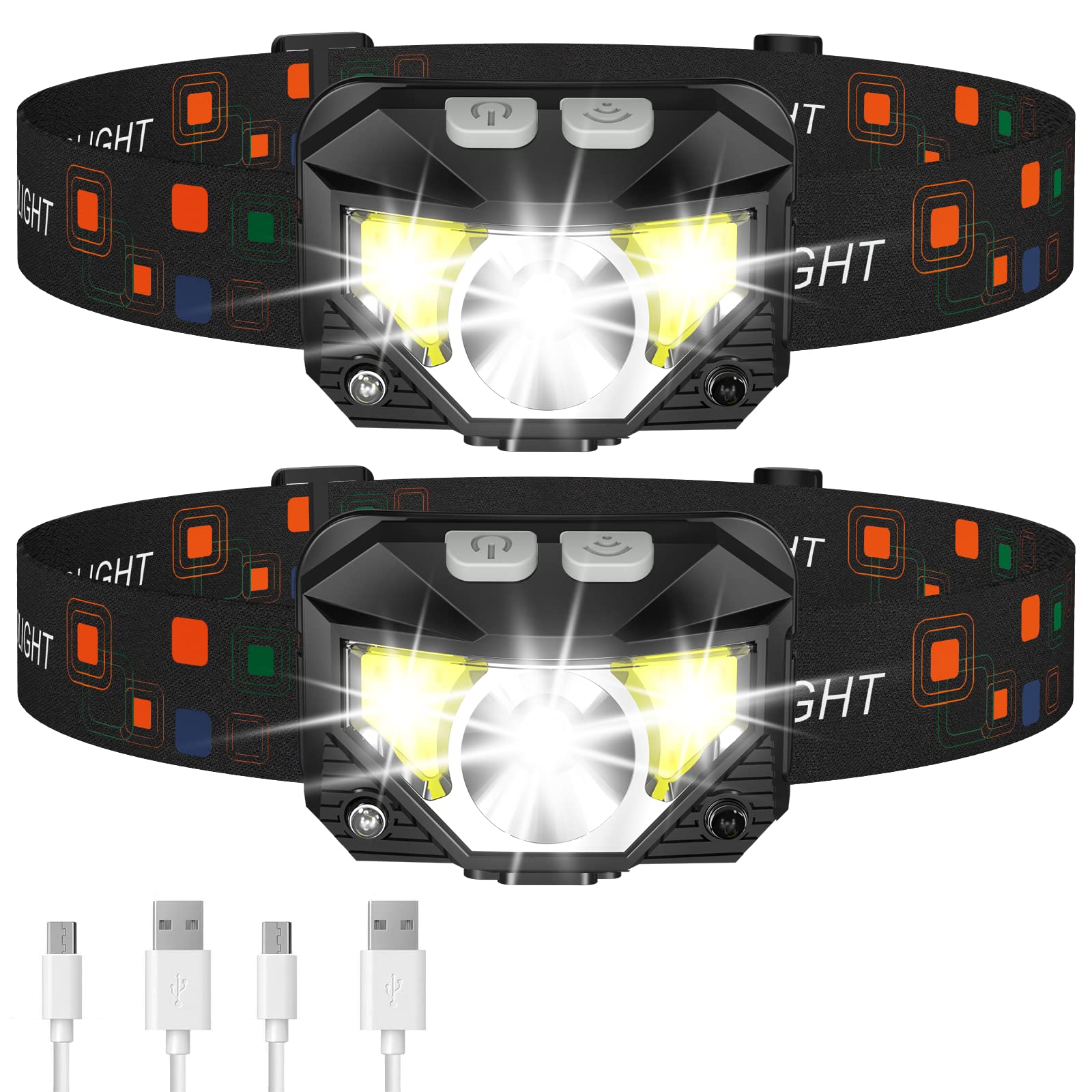
Lepro LE 2-Pack
Key Features
- Brightness: 2000 lumens (claimed)
- Battery Life: Up to 15h low
- Weight: 2.65 oz
- Charging: Micro-USB
- Water Resistance: IPX4
- Price: $
With a claimed 2000 lumens and up to 15 hours on low, the Lepro LE 2-Pack outperforms most headlamps in its price range. Actual brightness is lower than advertised, but still sufficient for camping, running, and household tasks. At 2.65 ounces each, they are comfortable for all-day wear. These are best for budget-conscious outdoor enthusiasts who don’t need ultra-long battery on high and can accept micro-USB charging.
Pros
- Very bright with spot and flood modes
- Long battery life on lower settings
- Lightweight and comfortable for all-day wear
Cons
- Charging uses micro-USB instead of USB-C; included cable is short
- Actual brightness falls short of the 2000-lumen claim, limiting long-distance spotting
For budget-minded shoppers who want a capable two-pack for general outdoor use, the Lepro LE is a smart buy – just keep expectations in check regarding peak output.
Best for Trail Runners
Klarus HM1
Key Features
- Brightness: 440 lumens
- Battery Life: 70h low, 8h med
- Weight: 3.0 oz
- Charging: USB-C
- Water Resistance: IPX6
- Price: $
Weighing just 85 grams with a measured 70-hour runtime on low, the HM1 is one of the lightest rechargeable headlamps with serious endurance. Its 440-lumen output is modest — bright enough for trail running and camp tasks but not for long-distance spotting. This is the headlamp for fastpackers, trail runners, and multi-day hikers who value each gram and need a light that won’t quit before they do. IPX6 water resistance and fast USB-C charging round out a package built for consistent use on the move.
Pros
- Long battery life (70 hours on low) supports multi-day trips without recharging
- Weighs only 85 grams — among the lightest rechargeable headlamps available
- Fast USB-C charging (2.5 hours) and IPX6-rated build handle rain and drops
Cons
- Charging port area may become loose if the cable is pulled at an angle
- Output is limited to 440 lumens — enough for close- to mid-range tasks, not long-distance spotting
If your priority is shaving weight and maximizing battery life for multi-day trips, the HM1 delivers precisely that — just accept its limited reach.
Best for Search and Rescue
Coast XPH34R
Key Features
- Brightness: 2700 lumens
- Battery Life: Up to 120h low
- Weight: 6.35 oz
- Charging: USB-C
- Water Resistance: IP54
- Price: $$$
At 2700 lumens and 295 meters of beam distance, the XPH34R is the brightest option here — unmatched for search and rescue or night work. It detaches to become a handheld light with a magnetic base, and the metal build carries a lifetime warranty. At 6.35 ounces, it’s too heavy for running or all-day wear, and the strap and clips may show wear under heavy use. This is for users who prioritize raw output and toughness over portability.
Pros
- Extremely bright beam with precision focus — cuts through dark work sites.
- Premium metal housing with lifetime warranty — built to take rough handling.
- Detachable magnetic base and dual power (USB-C plus batteries) — use as a handheld or headlamp.
Cons
- Strap and clip hardware may loosen over time with repeated heavy use.
- At 6.35 ounces, extended wear can cause neck fatigue — best for stationary or short-duration tasks.
Ideal for heavy-duty work, search ops, or any situation where maximum brightness matters more than weight. Not for running or lightweight carry.
Best for Family Camping
LHKNL 2-Pack
Key Features
- Brightness: 1200 lumens (claimed)
- Battery Life: 4-10h
- Weight: 1.87 oz
- Water Resistance: IPX4
- Price: $
The LHKNL two-pack packs a surprising 1200 lumens, motion sensor, and red light into a lightweight design at a budget price – impressive for the cost. Battery life and charging can be inconsistent between units, and some may turn off without warning, so this set is best as a backup or for short-duration activities like evening walks, camping with the family, or glovebox storage. The comfortable strap and adjustable beam angle are bonuses, but it’s not a dependable primary light for extended trips.
Pros
- Brightness exceeds expectations for the price
- Two headlamps for under $20 is a strong value
- Lightweight and comfortable to wear for extended periods
Cons
- Battery life and charging can be inconsistent between units
- Some units may turn off without warning during use
Best as a spare or for casual evening use, this two-pack offers strong features for the price – just expect potential battery quirks on some units.
Best for Night Running
Energizer PRO-400 2-Pack
Key Features
- Brightness: 400 lumens
- Battery Life: Up to 4h high
- Charging: USB
- Water Resistance: IPX4
- Price: $
The Energizer PRO-400 2-Pack includes red and green modes alongside white light, making it useful for preserving night vision while stargazing or reading a map. Build quality from a recognized brand gives it an edge over cheaper no-name options. The high mode runs for about 4 hours, which suits shorter outdoor sessions rather than all-night use.
This two-pack fits night runners, weekend campers who value red light, and emergency kits at home or in the car. Occasional unit failures have been noted, so it’s best as a backup or for intermittent use rather than daily reliance.
Pros
- Red and green modes preserve night vision for stargazing or reading maps.
- Two headlamps from a well-known brand at a budget price.
- Bright enough for most camping and evening walks.
Cons
- High mode runtime of about 4 hours limits use to shorter activities.
- Some units may stop working unexpectedly, reducing long-term dependability.
A good match for short night runs, camping where red light helps preserve night vision, or emergency kits – provided you accept the limited battery life and occasional unit variability.
Best for Occasional Use
Blukar 2000L 2-Pack

Key Features
- Brightness: 2000L (claimed)
- Battery Life: Up to 30h
- Weight: 2.96 oz
- Water Resistance: IPX5
- Price: $
Bright output with adjustable levels and a motion sensor that actually works make this pair handy for quick tasks around the house or evening walks. But random shutoffs and battery life that runs shorter than advertised mean it is a gamble for anything beyond occasional use. Keep one in the glovebox or camping kit as a backup, not your primary outdoor light.
Pros
- Very bright output with adjustable brightness
- Good features for the price: motion sensor, multiple modes
Cons
- Can shut off unexpectedly during use
Works as a budget backup or for short, low-stakes night tasks, but not for regular outdoor activities where consistent light matters.
Best for Family Camping
Lighting EVER 2-Pack

Key Features
- Brightness: 150 lumens (claimed)
- Battery Life: Up to 30h
- Weight: 2.85 oz
- Water Resistance: IPX4
- Price: $
This two-pack headlamp offers a lightweight 2.85-oz design with five modes including red light, making it easy to operate for children or elderly users. However, the 150-lumen brightness is best for close-up tasks around camp rather than lighting a trail ahead, and the mounting bracket may not hold up to rough handling. It serves well as a backup or for casual family camping where simplicity matters.
Pros
- Good quality for the price – dependable basic light
- Comfortable and lightweight
Cons
- Brightness is limited to close-up tasks; not suited for distance
Best for budget-conscious families needing spare headlamps for tent setup or reading in camp, not for trail navigation.
Best for Work Use
SLONIK 1000 Lumen

Key Features
- Brightness: 1000 lumens
- Weight: 4 oz
- Water Resistance: IPX4
- Price: $$
Delivers 1000 lumens from a sturdy aluminum body that weighs only 4 ounces, with a replaceable 18650 battery for flexibility. Battery life on the highest setting is limited, and the mounting bracket can detach under repeated stress—fine for occasional camping or workshop tasks, but not for demanding all-day use.
Pros
- High 1000-lumen output with adjustable brightness levels.
- Aero-grade aluminum build provides a solid feel without adding weight.
Cons
- Some units may stop functioning after a few charging cycles.
Best suited for occasional use where a replaceable battery and bright beam are handy, but not for extended high-output sessions or frequent repositioning.
Best for Close-Up Tasks
BIAT 230° Wide 2-Pack

Key Features
- Brightness: 350 lumens
- Weight: 2.47 oz
- Water Resistance: IPX4
- Price: $
The BIAT 2-pack delivers a useful wide beam for close-up work and feels comfortable on the head. The motion sensor is a handy extra for quick on/off. However, battery life is modest even on low, and some units may not hold up long-term — best reserved for short-duration tasks like repairs or walking the dog, not for extended outdoor use.
Pros
- Wide 230-degree beam illuminates peripheral areas for close-up repairs and reading.
- Lightweight design at 2.47 oz makes it comfortable for extended wear without strain.
Cons
- Battery life is limited even on low mode, and some units may show reduced function over time.
Best for short indoor tasks or as a spare in an emergency kit where quick replacement is not a concern.
Best for Workshop Use
DanForce Bold-S

Key Features
- Brightness: 1080 lumens
- Weight: 8.8 oz
- Charging: USB-C
- Water Resistance: IPX45
- Price: $$
The DanForce Bold-S delivers impressive brightness with a detachable magnetic base that works well as a handheld work light. However, its 8.8-ounce weight makes extended head wear uncomfortable, and some units may develop battery or lens issues over time.
Pros
- Ultra-bright 1080-lumen output with adjustable zoom beam.
- Detachable design doubles as a handheld flashlight with magnetic base.
Cons
- The 8.8-ounce weight and potential battery degradation can limit this headlamp to short-term or stationary tasks.
Best for workshop or automotive use where a bright, detachable light is needed and weight or battery longevity are secondary concerns.
Best for Emergency Backup
Lepro Single

Key Features
- Brightness: 300 lumens (claimed)
- Battery Life: Up to 30h
- Weight: 2.86 oz
- Water Resistance: IPX4
- Price: $
This headlamp delivers decent brightness and USB recharging at an entry-level price. However, some units may become unreliable after limited use, and the plastic hinge can loosen over time. It works best as a backup light in a car or emergency kit where occasional failure is acceptable.
Pros
- Extremely low price for a rechargeable headlamp
- Decent brightness for the cost
Cons
- Some units may not hold up over time – best reserved for emergency backup rather than daily use
Fine for the glove box or emergency kit, but not for regular camping or running.
Best for Workshop Flood
Blukar 8000L Zoomable

Key Features
- Brightness: 8000L (exaggerated)
- Battery Life: Up to 20h
- Weight: 9.7 oz
- Water Resistance: IPX6
- Price: $
The Blukar headlamp puts out impressive brightness for its cost, flooding a large area with light that works well for illuminating a campsite or engine bay. But the 9.7-ounce body becomes noticeable during any head movement, and the claimed 8000 lumens are exaggerated – actual output is lower. This is a capable compact work light, not a wearable headlamp for hiking or running.
Pros
- Impressive brightness for the price – illuminates large areas.
- Long runtime on lower settings keeps it going through extended tasks.
Cons
- The 9.7-ounce weight can be uncomfortable for head-mounted use during movement – fine for stationary work.
Use this as a bright, affordable work light for the workshop or car repair – not for wearing on your head during activities.
Best for Group Events
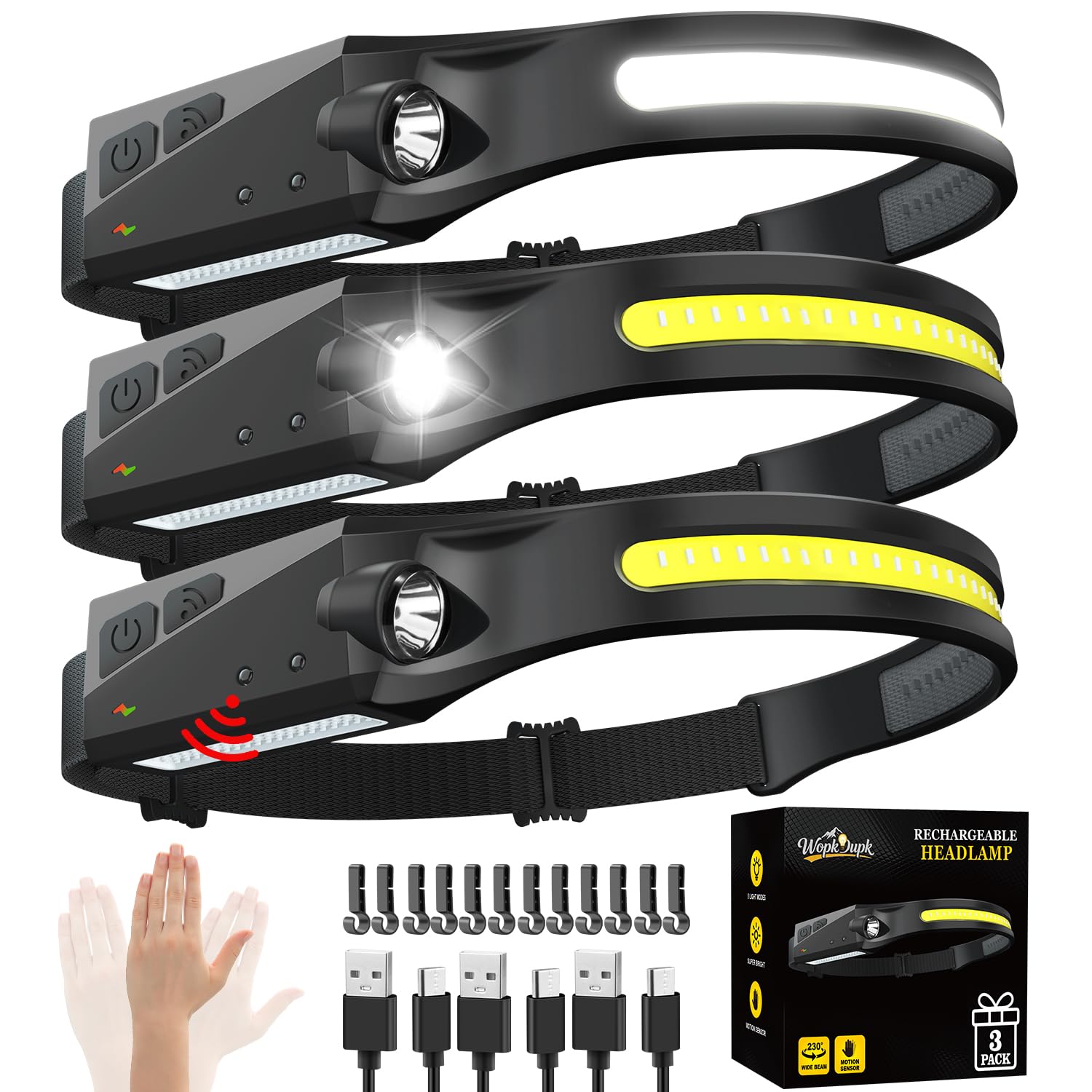
WopkDupk 3-Pack
Key Features
- Brightness: 350 lumens
- Weight: 2.47 oz
- Water Resistance: IPX4
- Price: $
These three headlamps deliver a wide 230-degree beam that works well for close-up tasks, plus a motion sensor for hands-free use, all at a low price. However, battery recharge cycles may be limited — some units stop accepting a charge after a few uses, and battery swelling has been noted in isolated cases. This makes them best suited for single-event group use rather than repeated outdoor activities.
Pros
- Wide beam provides good coverage for close-up tasks.
- Three-pack offers good value for the price.
Cons
- Battery recharge cycles can be limited — some units may stop accepting a charge after a few uses.
Best for a single camping trip or group event where you can treat them as disposable lights.
How to Choose
Brightness numbers are meaningless without runtime data – a 2000-lumen headlamp that lasts 30 minutes on high is useless for a night hike.
Brightness (Lumens)
Lumens measure total light output, but the number you see is often a peak ‘turbo’ mode that drops after a few minutes to prevent overheating. Sustained output is usually 50-70% of the peak. For hiking on trails, 300-500 sustained lumens is sufficient; for search and rescue or scanning distant terrain, 1000+ lumens may be needed but at the cost of battery life.
Battery Life
Runtime is always stated on the lowest setting, which is misleading for active use. The real-world figure that matters is runtime on medium or high. A headlamp that lasts 4 hours on high is adequate for a single night hike; multi-day trips require at least 8 hours on high or the ability to swap batteries. Replaceable 18650 cells let you carry spares instead of waiting for a recharge.
Weight
Every ounce on your forehead is felt after 30 minutes of movement. A headlamp under 3 ounces is comfortable for running and all-day wear; models over 5 ounces tend to bounce and cause neck fatigue. The trade-off: lighter lights usually have smaller batteries and lower output. For ultralight backpacking, the Klarus HM1 at 3 ounces is a sweet spot.
Charging Type
USB-C is preferred for faster charging and cable commonality with modern devices. Micro-USB is still common on budget models but is slower and more prone to port wear. Some headlamps offer dual power – rechargeable battery plus AA backup – which is a major advantage for extended trips where wall outlets are unavailable.
Durability and Water Resistance
IPX4 handles splashes and rain, IPX6 can withstand heavy rain or hose spray. But water resistance ratings don’t cover impact or bracket strength. Plastic mounting brackets are the first point of failure on many budget headlamps. Metal housing and reinforced hinges indicate a longer-lasting build. For hard use, look for drop-test ratings and user feedback on bracket longevity.
FAQ
Why does my headlamp keep turning off by itself while I’m wearing it?
This is often caused by a loose battery connection or a faulty motion sensor. Many budget headlamps have poor contact between the battery and terminals, especially when the unit is jostled during running or hiking. If the headlamp has a motion sensor, it may be overly sensitive and interpret head movement as a command to turn off. Check the battery compartment for corrosion or try disabling the sensor if possible. If the problem persists, the headlamp likely has a design flaw and should be replaced.
How long does a 1000-lumen headlamp actually last on high mode?
A 1000-lumen headlamp on continuous high mode typically runs for 1.5 to 3 hours, depending on battery capacity and thermal management. Many models automatically dim after 10-15 minutes to prevent overheating, reducing output to around 500-700 lumens. Always check the sustained runtime on the highest non-turbo setting. For a full night of hiking (8+ hours), you will need a headlamp with at least 3000mAh battery or a replaceable cell.
Is it worth paying more for a headlamp with a replaceable battery?
Yes, especially if you plan to use the headlamp for multiple seasons. Rechargeable headlamps with built-in batteries become e-waste once the battery degrades, which can happen after 1-2 years of regular use. Models that use standard 18650 cells let you swap in a fresh battery on the trail and replace the cell later at low cost. For weekend campers, a built-in battery may suffice, but for frequent or expedition use, replaceable batteries are a clear advantage.
Can I use a rechargeable headlamp in heavy rain or snow?
It depends on the IP rating. IPX4 is splash-resistant and fine for light rain, but heavy rain or snowmelt can penetrate the seals over time. IPX6 is rated for powerful water jets and will handle sustained downpours. For winter use, also consider that cold temperatures reduce lithium-ion battery capacity by up to 50%. A headlamp with an external battery pack that can be kept warm in a pocket is a better choice for snow trips.