This post contains affiliate links. We may earn a small commission when you buy through our links — at no extra cost to you.
Most 1-person backpacking tents advertise impressive waterproof ratings, but many fail to keep the rain out after a few trips. The gap between marketing specs and real-world performance has left many solo hikers frustrated — especially when budget tents cut corners on seam taping and pole quality.
A reliable shelter for one doesn’t have to cost a fortune, but the cheapest options often trade weather protection for weight savings. The key is finding a tent that balances trail weight with something that actually holds up in a storm. Freestanding double-wall designs with aluminum poles offer the best chance of staying dry without adding unnecessary pounds.
For most solo backpackers, the real choice comes down to whether you want maximum value per dollar or a more refined build that’s been proven over years of use. Both paths lead to good tents — but the wrong pick could leave you wet and cold.


Best for Budget Solo Campers
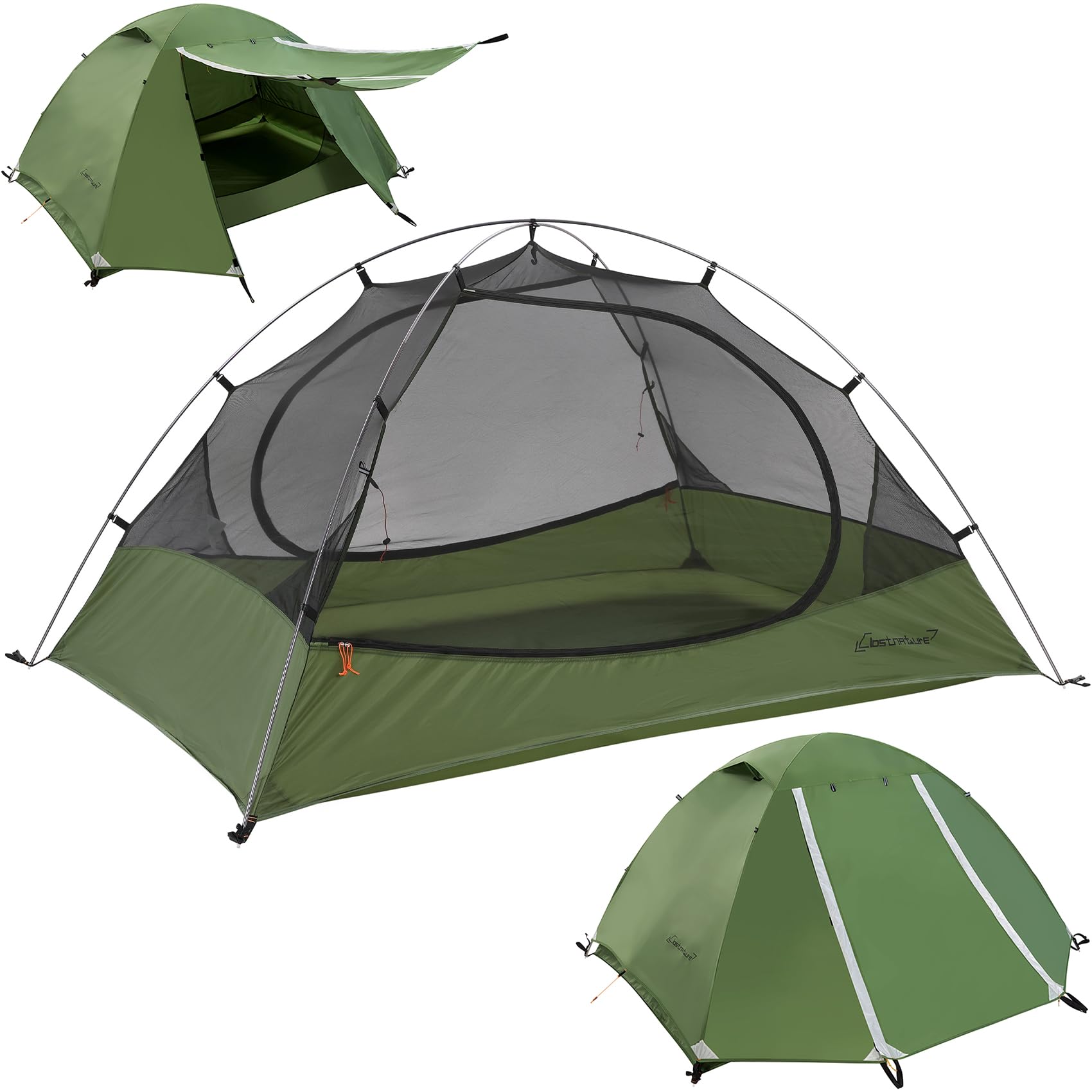
Clostnature 2-Door
Key Features
- Trail Weight: 3.85 lbs
- Waterproof Rating: PU 5000mm
- Setup Type: Freestanding
- Price: $
This tent gives solo campers two points of entry and storage space that competitors reserve for tents costing twice as much. Setup takes minutes thanks to clip-on pole attachments, and the packed weight stays under four pounds — light enough for most backpacking trips.
The easy setup translates directly to camp: stake out the corners, snap the poles into the clips, and the shelter is ready. The dual vestibules offer separate dry storage for gear and a cooking area away from the sleeping space. Pole and mesh durability can be inconsistent across units — some owners encounter tears or broken sections after limited use, so inspecting before each trip is wise.
This tent suits budget-conscious solo backpackers who want the convenience of two doors without paying a premium. It works best for weekend trips and fair-weather outings where weight and setup speed matter more than long-term ruggedness. Taller campers (over about 5’10’) will find the 35.8-inch peak height and 86-inch floor length cramped, and thru-hikers covering months of daily use should look for a more robust build.
Pros
- Clip-on pole system enables tool-free setup in under two minutes.
- Two doors and two vestibules provide separate entry and gear storage typically found on pricier tents.
- Packed weight of 3.85 lbs suits backpackers watching their base weight.
- Offers a rare combination of dual access and budget pricing in the 1-person tent category.
Cons
- Pole segments and mesh fabric can fail sooner than expected in some units — worth inspecting before each trip.
For solo campers who prioritize value and dual-access convenience over absolute durability, this is the most feature-rich option at the price.
Best for Beginner Backpackers
ALPS Lynx 1
Key Features
- Trail Weight: 4.1 lbs
- Waterproof Rating: 1500/2000mm
- Setup Type: Freestanding
- Price: $$
The ALPS Lynx 1 sets up in minutes thanks to color-coded clips and a straightforward freestanding frame — no puzzling over pole sleeves or tent orientation. This simplicity is why it’s the go-to recommendation for anyone new to backpacking who wants a tent that works on the first try.
Build quality punches above its price point: aluminum poles and a sturdy floor that holds up to rough campsites. The tradeoff is a 4 lb 1 oz pack weight — fine for short trips or car-to-campsite hikes, but you’ll feel it after five miles. For beginners focused on reliability over ultralight grams, this is a fair compromise.
Rain protection is the one area where this tent asks for caution. In sustained, wind-driven rain, water may enter through the ventilation slots near the fly. This makes the Lynx 1 better suited to fair-weather trips or campsites where you can pitch under a tarp — not for deliberate wet-weather expeditions. If dry camping is your priority, the top pick’s double-wall design offers more certainty.
Pros
- Color-coded clips make setup intuitive, even for first-time users.
- Aluminum poles and solid stitching hold up well over multiple seasons.
- Packs more reliability per dollar than most tents at this price.
Cons
- In prolonged rain, moisture may enter through the ventilation slots — less of an issue in dry climates or with added tarp coverage.
For beginner and intermediate backpackers who value quick setup and durability over ultralight weight, the ALPS Lynx 1 delivers consistent performance with only a modest waterproofing caveat.
Best for Ultralight Thru-Hikers
Featherstone Backbone
Weighing just 2.5 pounds with a 45-inch peak height, the Backbone delivers a livable interior that few sub-3-lb shelters match. The single-wall design and trekking-pole dependency cut weight dramatically, but demand a specific packing style and site awareness.
Setup is straightforward once you have poles adjusted to the right length — the clips and tensioners work cleanly. Condensation is a recurring topic among owners, especially in still, humid air; cracking the dual vestibules helps, but single-wall physics mean some moisture is unavoidable.
This tent suits thru-hikers and ultralight purists who already carry trekking poles and prioritize weight above all else. It is not a good fit for wet-climate trips or anyone who wants a freestanding pitch. The condensation tradeoff requires deliberate ventilation management, and without trekking poles the shelter cannot be erected at all.
Pros
- Extremely lightweight for its spacious interior, with 19 sq ft of floor and 45 inches of headroom.
- Easy to set up with trekking poles once you dial in the pole length.
- Roomier feel than most 1-person shelters thanks to steep walls and dual vestibules for gear storage.
Cons
- Cannot be pitched without trekking poles — a non-starter for hikers who don’t use them.
- Single-wall design can accumulate condensation in humid or still conditions, requiring careful site and vent management.
For hikers who already carry trekking poles and know how to manage condensation, the Backbone provides the best weight-to-space ratio in its price tier — a focused tool for serious weight savers.
Best for Bicycle Tourers
Big Agnes Copper Spur
The Big Agnes Copper Spur HV UL is designed specifically for bikepackers, with shorter pole sections that fit inside frame bags and clips that attach directly to bike frames. At 2.3 lbs trail weight, it’s lighter than the Clostnature 2-door, but that comes at a premium price and a smaller review base that leaves long-term durability less certain.
This tent suits ultralight enthusiasts and bicycle tourers who prioritize minimal weight and compact packing over budget. The 20 sq ft floor and 40-inch peak height provide good interior space for one person, and the freestanding design with DAC Featherlite poles sets up quickly on varied terrain. Buyers who want extensive user feedback before committing may find the current sample size too small to gauge reliability over heavy use.
Pros
- Extremely lightweight for a freestanding tent at 2.3 lbs trail weight
- Roomy interior with 20 sq ft floor and 40-inch peak height
- Packs small enough to fit inside frame bags or panniers
Cons
- Premium price puts it above many competing 1-person tents
For bikepackers who need a purpose-built ultralight shelter and can accept the higher cost and limited long-term feedback, the Copper Spur delivers a specialized solution.
Best for Tall Backpackers
camppal 4S Long
Key Features
- Trail Weight: 3.75 lbs
- Waterproof Rating: 3500-4000mm
- Setup Type: Freestanding
- Price: $
The camppal 4S Long carves a unique niche as the only budget solo tent with a 98.4-inch floor that fits campers up to 6’4′ without footbox cramping. Its single aluminum ridge pole makes setup a five-minute task, and the 3.75-pound weight is easy to pack for multi-day hikes. Experienced backpackers appreciate the straightforward design that requires no fiddling with multiple poles.
This tent targets tall backpackers who value length and low weight above all else. The tradeoff is weather protection: seam waterproofing can be inconsistent, and in steady rain moisture may enter through stitched points. For campers who can pick their trips around dry forecasts, the space and portability are worthwhile. This makes it a solid choice for summer through-hikes in arid regions.
In dry conditions, the interior feels spacious for one person, with enough headroom at 35.4 inches to sit up and change clothes. The single-pole layout also means fewer failure points, and the included stuff sack compresses to a manageable size. The price makes it an entry-level option for tall first-time backpackers, provided they understand its fair-weather boundaries. With proper seam sealing, some users have reported adequate rain protection for light showers, though heavy downpours remain a risk.
Pros
- Extra-long interior fits campers up to 6’4′ comfortably
- Single-pole design enables quick and intuitive setup
- Lightweight and packable for backpacking
Cons
- In steady rain, water can seep through seam stitching
A capable fair-weather tent for tall backpackers on a budget who can work around its rain limitations.
Best for Cold-Weather Campers
Underwood 4S Tent
Key Features
- Trail Weight: 4 lbs
- Waterproof Rating: PU 5000mm
- Setup Type: Freestanding
- Price: $
The Underwood Aggregator 1/2 Person Tent brings a winter-ready shelter to a budget price point. Unlike ultralight trekking-pole shelters that compromise on weatherproofing, this freestanding dome includes a snow skirt and a PU 5000mm waterproof rating that handles cold-weather trips.
Setup is straightforward with color-coded clips and a simple pole structure, so you can get it pitched quickly even in windy conditions. At 4 lbs it’s within backpacking range, though not the lightest option for summer carries.
This tent fits best for shorter to average-height solo backpackers who need a 4-season shelter on a budget. The 35.8-inch peak height means taller campers may not be able to sit up fully, and the floor fabric can wear faster on abrasive surfaces — a ground tarp is a practical addition. You get a winter-capable tent at a low price, but you have to accept the size and floor durability boundaries.
Pros
- Good build quality and components for the price
- Easy to set up and take down
- Provides good warmth and wind protection
Cons
- Interior can be tight; taller campers may not sit up comfortably
- Floor durability may be limited; using a tarp is recommended
For shorter backpackers on a budget who prioritize winter weather protection over interior space and floor longevity, the Underwood tent delivers solid value. Those needing room to sit up or a more durable floor should consider spending more.
Best for Budget Minimalist Campers
Clostnature 1P Dome

Key Features
- Trail Weight: 4 lbs
- Waterproof Rating: PU 5000mm
- Setup Type: Freestanding
- Price: $
The Clostnature 1P Dome assembles in minutes with two aluminum poles and color-coded clips, weighing under 4 pounds on the trail. It uses a single door and single vestibule, which keeps the price the lowest in the brand but limits gear storage for longer trips. That tradeoff suits weekend backpackers who want a lightweight shelter without overspending. The 5000mm PU coating on the fly provides good rain protection for its price class, and the included stakes and guy lines are functional.
Pros
- Tool-free setup with color-coded clips gets you sheltered in minutes.
- Trail weight of 4 pounds fits easily into a backpack without making you sacrifice other gear.
- Cost-effective – offers weather protection and build quality comparable to tents costing significantly more.
Cons
- For extended trips or rough terrain, some units may develop pole or mesh issues.
Best for budget-conscious solo travelers who value quick setup and low weight over interior space and long-term ruggedness. A footprint is recommended for added ground protection.
Best for Solo Hunters
GEERTOP Bivy

Key Features
- Trail Weight: 3.7 lbs
- Waterproof Rating: PU 2500mm
- Setup Type: Bivy style
- Price: $
The GEERTOP Bivy offers a spacious interior that fits one person plus gear, with straightforward setup that appeals to beginners. The low price makes it an attractive entry point for solo backpacking. However, the seam construction may show wear after limited use, and condensation is a known bivy limitation in damp conditions. This combination of low cost and compromises positions it as a fair-weather shelter for short trips rather than a long-term backpacking tent.
Pros
- Spacious interior fits a person and gear comfortably
- Simple setup with minimal fuss
- Budget-friendly price for a lightweight bivy
Cons
- Low peak height limits use for taller campers
- Seam durability may be an issue with repeated use
This bivy works well for short, fair-weather trips where weight and price are priorities and long-term durability is not expected.
Best for Cyclists with Budget
Naturehike Cycling

Key Features
- Trail Weight: 3.63 lbs
- Waterproof Rating: 4000/3000mm
- Setup Type: Freestanding
- Price: $
The Naturehike tent includes a footprint and uses quality materials at a budget-friendly price, with a 43.3-inch peak height that feels roomy inside. Setup is quick, and the pack-down process is straightforward. However, its 3.63-pound weight edges it out of ultralight territory, and the 80.7-inch floor length may feel snug for hikers over six feet. Long-term build consistency is less established compared to more widely reviewed competitors, making it a fit for those who prioritize immediate value and comfort over the lightest possible carry.
Pros
- Quick to pitch and stow, saving time at camp.
- Includes a footprint and uses quality materials at a budget-friendly price.
- 43.3-inch peak height creates a spacious, roomy interior for a one-person tent.
Cons
- 80.7-inch floor length may feel tight for campers over 6 feet tall.
- At 3.63 pounds, weight is noticeable for gram-conscious backpackers.
Best suited for hikers who want an included footprint and easy setup, who are under 6 feet tall, and who can accept a slightly heavier pack.
Best for Ultralight Risk-Takers
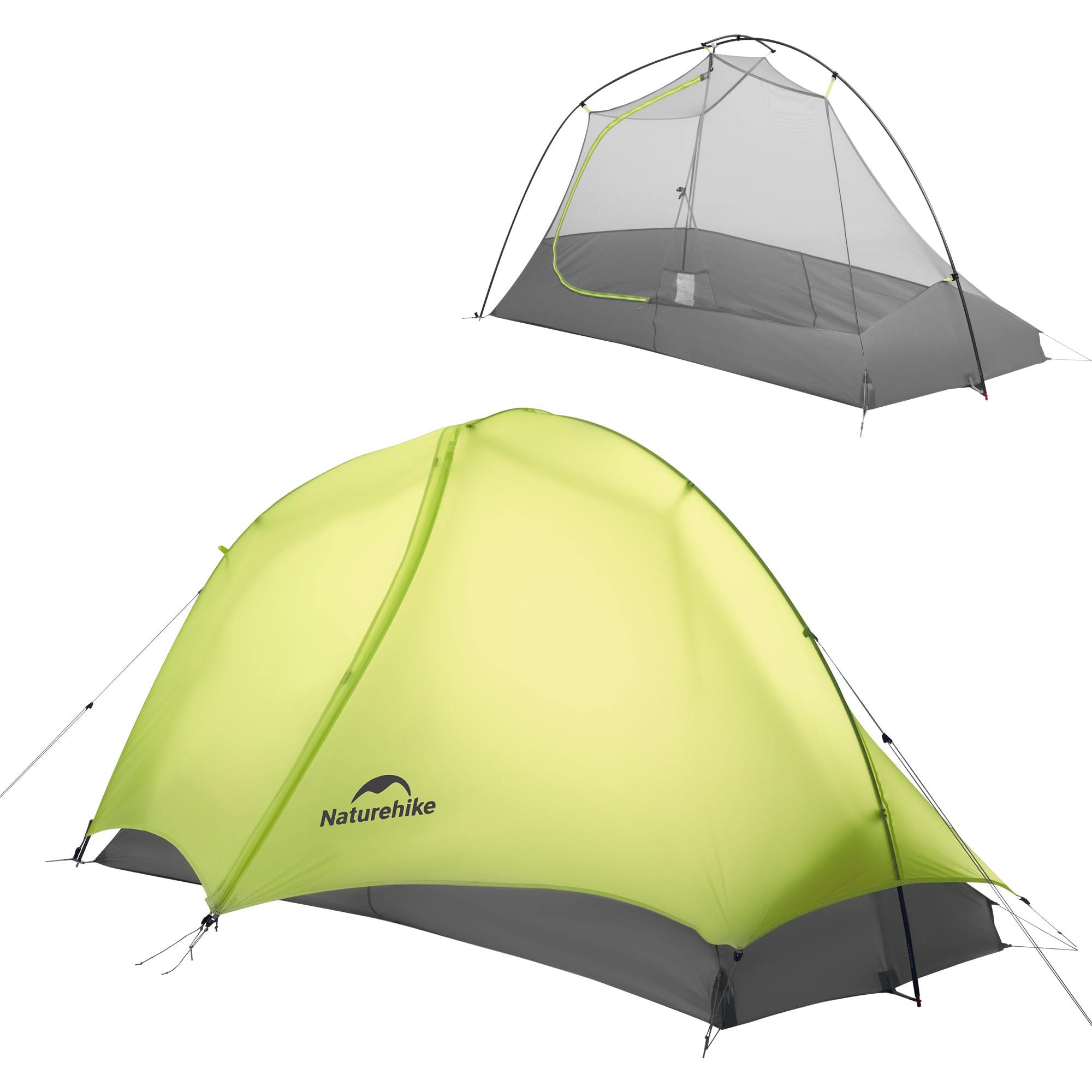
Naturehike Star Trail
Key Features
- Trail Weight: 2.3 lbs
- Waterproof Rating: 1500+/3000+mm
- Setup Type: Semi-freestanding
- Price: $$
Weighing just 2.3 lbs, this tent delivers a rare combination of ultralight carry weight and freestanding convenience. Setup is straightforward thanks to the semi-freestanding design. However, the interior width can feel cramped for taller campers, and long-term durability under heavy use is unproven — a risk for those planning extended trips.
Pros
- Extremely light for a freestanding single-person tent
- Quick and intuitive setup with semi-freestanding structure
- Competitive price point for an ultralight offering
Cons
- Interior width may feel cramped for campers over 5’10"
A fitting choice for shorter ultralight backpackers who prioritize weight savings and are comfortable with an unproven track record.
How to Choose
The most reliable 1-person backpacking tents balance trail weight with a freestanding double-wall build and properly sealed seams.
Trail Weight
A tent under 4 lbs is the typical threshold for backpacking, but lighter doesn’t always mean better. Tents that drop below 3 lbs often use thinner fabrics and require trekking poles for setup, which saves ounces but sacrifices freestanding convenience.
For weekend trips, a 4 lb tent is manageable; for thru-hikes, every ounce matters. Choose based on how far you carry it, not just the scale reading.
Waterproof Rating
A PU rating of 2000mm or higher sounds reassuring, but the real protection comes from factory-sealed seams and a bathtub floor. Many budget tents with 5000mm coatings still leak because the seams are untaped or the floor stitching isn’t sealed.
In sustained rain, a tent with properly taped seams will stay dry while one that relies only on coating will wet out over time. Check for seam tapes on the fly and floor before buying.
Interior Dimensions
Peak height determines if you can sit up comfortably, and floor length decides if you can stretch out. A 35-inch peak is fine for sleeping and quick changes; 45 inches lets you sit upright. Tall campers need at least 90 inches of floor length.
Extra interior space adds weight and pack size. If you’re under 5’10", most standard tents work; if taller, prioritize length over headroom to avoid sleeping diagonally.
Setup Ease
Freestanding tents pitch on any surface and use color-coded poles or clips for rapid setup — ideal for beginners and campsites with hard ground. Trekking-pole tents save over a pound but require skill, staking, and a good pitch to stay taut.
If you often camp on rock slabs or after dark, freestanding is worth the weight. Trekking-pole designs reward experienced users who can manage guylines and wind orientation.
Durability of Poles and Floor
Aluminum poles bend under strain but rarely snap, while fiberglass poles can break in wind or when folded repeatedly. Floor fabric thickness (denier) also matters: 30D is lighter but abrades faster than 70D.
For frequent or long trips, invest in aluminum poles and a floor with at least 40D fabric. Occasional car-camping users can get away with fiberglass and thinner floors.
FAQ
Why does my tent leak even with a 5000mm waterproof rating?
Waterproof ratings measure fabric resistance, not seam integrity. Most leaks occur through stitched seam holes that aren’t taped or are poorly sealed. Factory-taped seams and a bathtub-style floor are more important than a high PU number. Always check for seam tape on the fly and floor before buying.
Can I use a trekking pole tent without trekking poles?
No — trekking-pole tents require poles or substitute sticks at least 50 inches long to pitch. Without them, the tent will collapse. If you don’t hike with poles, stick to freestanding or semi-freestanding models.
How do I reduce condensation in a single-wall backpacking tent?
Pitch in a breezy spot, open all vents fully, and avoid camping in low depressions where moisture collects. Single-wall tents from body heat and breath unless ventilation is aggressive. If condensation is a constant issue, consider switching to a double-wall tent for damp climates.
Is a 4-pound tent too heavy for backpacking?
It depends on your trip length and personal tolerance. For weekend trips under 20 miles, 4 lbs is fine. For multi-day thru-hikes, most ultralight hikers aim for under 3 lbs. If your total pack weight is under 30 lbs, the tent weight matters less than comfort and weather protection.