This post contains affiliate links. We may earn a small commission when you buy through our links — at no extra cost to you.
Campers face a frustrating choice: cheap rechargeable headlamps with sky-high lumen claims that often die within months, or simple AAA-powered lights that work every time but lack flashy features. The marketing numbers rarely match real-world performance.
This guide cuts through the noise to find headlamps that actually perform at camp. The real trade-off is between rechargeable convenience and long-term reliability. Most budget rechargeables cut corners on battery quality and charging ports, while established AAA models tend to keep working year after year.
Whether you need a light for setting up a tent, cooking after dark, or emergency backup, the right headlamp comes down to matching your use case with honest specs and proven track records.




Best for Minimalist Campers
Foxelli MX20
Key Features
- Brightness: 165 lumens
- Battery Type: AAA
- Red Light: Yes
- Water Resistance: IPX5
- Price: Budget
The Foxelli MX20 delivers 165 lumens with a comfortable, lightweight fit that stays put during runs or campsite chores. Its white and red light modes cover trail navigation and nighttime camp tasks without blinding nearby tentmates. The IPX5 water resistance handles rain without worry.
Minimalist campers and families on a budget get a headlamp that starts on the first press every time, thanks to included AAA batteries. The ongoing cost of replacements is the main tradeoff — this isn’t rechargeable — but the long runtime and solid build make it a fair trade for those who value dependability over convenience.
Pros
- Bright output that exceeds expectations for the price
- Comfortable enough to forget you’re wearing it during extended use
- Batteries included — ready out of the box with no extra purchase
Cons
- Requires ongoing AAA battery purchases instead of a rechargeable battery
- The mounting bracket may snap after heavy use in rocky or tight spaces
For campers who want a no-fuss headlamp that works consistently night after night, the Foxelli MX20 delivers — just keep spare batteries in your pack.
Best for Red Light Campers
Energizer PRO-360
Key Features
- Brightness: 360 lumens
- Battery Type: AAA
- Red Light: Yes
- Water Resistance: IPX4
- Price: Budget
With 360 lumens, red and green light modes, and VisionGuard, this Energizer headlamp packs more features than typical budget options. It runs on three AAA batteries, so no charging required — a plus for campers who keep spare alkalines in their pack. Battery life on the brightest setting drains quickly, making it better suited for short bursts of high output or using the lower modes for extended camp chores. The headband adjustment can feel finicky on some head shapes, but once set, it stays put. This headlamp works well for campers who want multiple color modes and high brightness without moving to rechargeable.
Pros
- Bright 360-lumen output with red and green modes for trail use and night vision preservation
- Solid build quality holds up to outdoor conditions like rain or dust
- VisionGuard feature prevents sudden blinding when switching on
Cons
- Battery life on high is limited — lower modes extend runtime for longer camping sessions
- Headband adjustment can take a few tries to fit securely on smaller or larger heads
For campers who want red and green light at a budget price, this Energizer delivers where it counts — just plan around the drain on high settings.
Best for Campers Wanting Rechargeable
Lepro LE Rechargeable 2-Pack
Key Features
- Brightness: 2000 lumens
- Battery Type: Rechargeable
- Red Light: Yes
- Water Resistance: IPX4
- Price: Budget
The Lepro LE delivers USB-C rechargeability, a red light mode, and brightness that lights up a campsite effectively — all at a price that makes the two-pack hard to ignore. The advertised 2000-lumen figure is likely optimistic, but the output still meets the needs of most tent setup, cooking, and night hiking tasks. Battery or charging issues can appear in some units, so this pair suits campers who want rechargeable convenience and are willing to accept the possibility of varied long-term performance rather than the near-certain reliability of a AAA-powered model like the top pick.
Pros
- USB-C rechargeable with quick charging; battery lasts several hours on a single charge.
- Lightweight build makes it comfortable to wear for extended periods around camp.
- Two lights included at a budget-friendly price — good value for families or backup use.
Cons
- Claimed 2000-lumen brightness may be overstated; still bright enough for most camping but not as intense as numbers suggest.
- Battery or charging issues can occur in some units, making long-term consistency uncertain.
If you want rechargeable convenience and two lights for the price of one, the Lepro LE delivers solid brightness and features — just keep expectations realistic on sustained reliability.
Best for Backpackers Needing Power
Coast XPH30R
Key Features
- Brightness: 1200 lumens
- Battery Type: Rechargeable
- Red Light: No
- Water Resistance: IP54
- Price: Premium
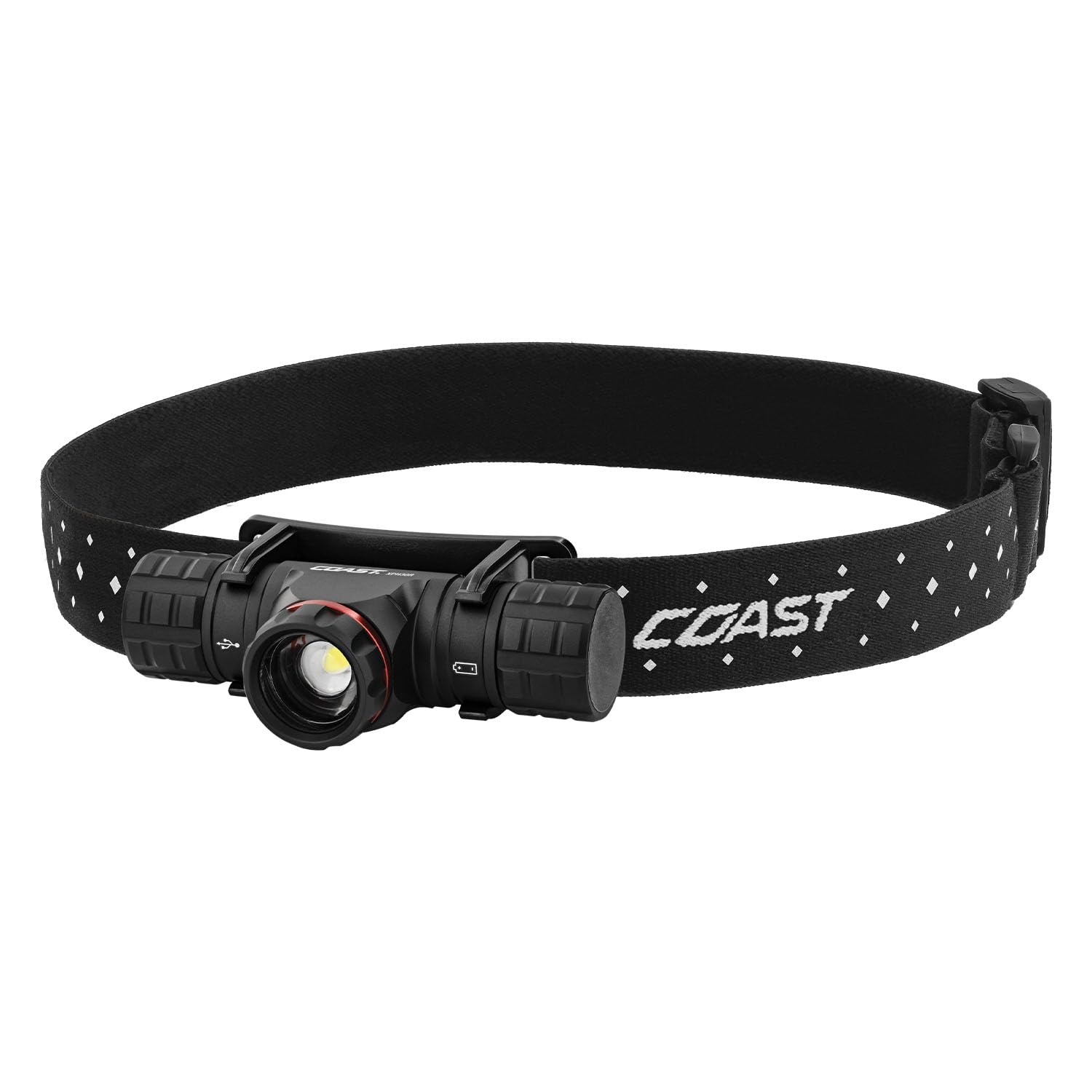
The Coast XPH30R delivers 1200 lumens with a twist-focus beam that shifts from flood to spot, backed by a replaceable 18650 battery for extended trips. It lacks a red light mode, and its aluminum body adds noticeable weight, making it less suited for ultralight backpacking but ideal for basecamp or car camping where durability and beam control matter.
Pros
- Machined aluminum body withstands drops and weather
- Twist-focus beam adjusts from wide flood to tight spot
- USB-C fast charging with long runtime on medium
Cons
- No red light mode for preserving night vision
- Heavier than typical camping headlamps; may cause fatigue on long night hikes
For campers who value raw output, build, and adjustable beam over weight and red light, the XPH30R is a capable companion — just don’t expect it to disappear on your forehead.
Best for Families Needing Multiple
GearLight S500 2-Pack
Key Features
- Brightness: 200 lumens
- Battery Type: AAA
- Red Light: Yes
- Price: Budget
Two fully functional headlamps with red light and seven modes for under $15 – a practical choice for families or as glovebox backups. The 200-lumen beam works fine for campsite tasks like cooking or reading, and the red mode preserves night vision. This set works best for casual campers who prioritize cost over long-term consistency; some units have shown battery life variation and occasional button failures after extended use.
Pros
- Good brightness for close-to-medium camping tasks
- Comfortable and adjustable fit with tilt feature
- Outstanding value as a two-pack
Cons
- Battery life can vary, with some units draining faster than expected
- Occasional button or electrical failures after extended use
A budget-friendly two-pack that covers the basics for casual camping and emergency use.
Best for Campsite Area Lighting
BIAT Wide Beam 2-Pack
Key Features
- Brightness: 350 lumens
- Battery Type: Rechargeable
- Red Light: No
- Water Resistance: IPX4
- Price: Mid-Range
The BIAT headlamp’s wide 230-degree beam turns your campsite into a well-lit workspace — ideal for cooking, organizing gear, or reading inside a tent. The motion sensor adds hands-free convenience. However, the built-in battery may drain quickly, and some units may stop charging or turn on unexpectedly after a few weeks. This makes it a reasonable choice for short trips where you can recharge nightly, or as a disposable light for kids, rather than a primary headlamp for extended backcountry use.
Pros
- Wide 230° beam covers the entire campsite without needing to turn your head.
- Lightweight and low-profile design comfortable for extended wear.
- Two-pack with motion sensor offers good value for casual use.
Cons
- Battery life can be short; some units may not hold a charge for long.
- Durability varies — some units may stop working within weeks.
A suitable secondary light for campsite chores and short outings where you can recharge easily — not a long-term dependable headlamp.
Best for Short Camping Trips
LHKNL Rechargeable 2-Pack
Key Features
- Brightness: 1200 lumens
- Battery Type: Rechargeable
- Red Light: Yes
- Water Resistance: IPX4
- Price: Mid-Range
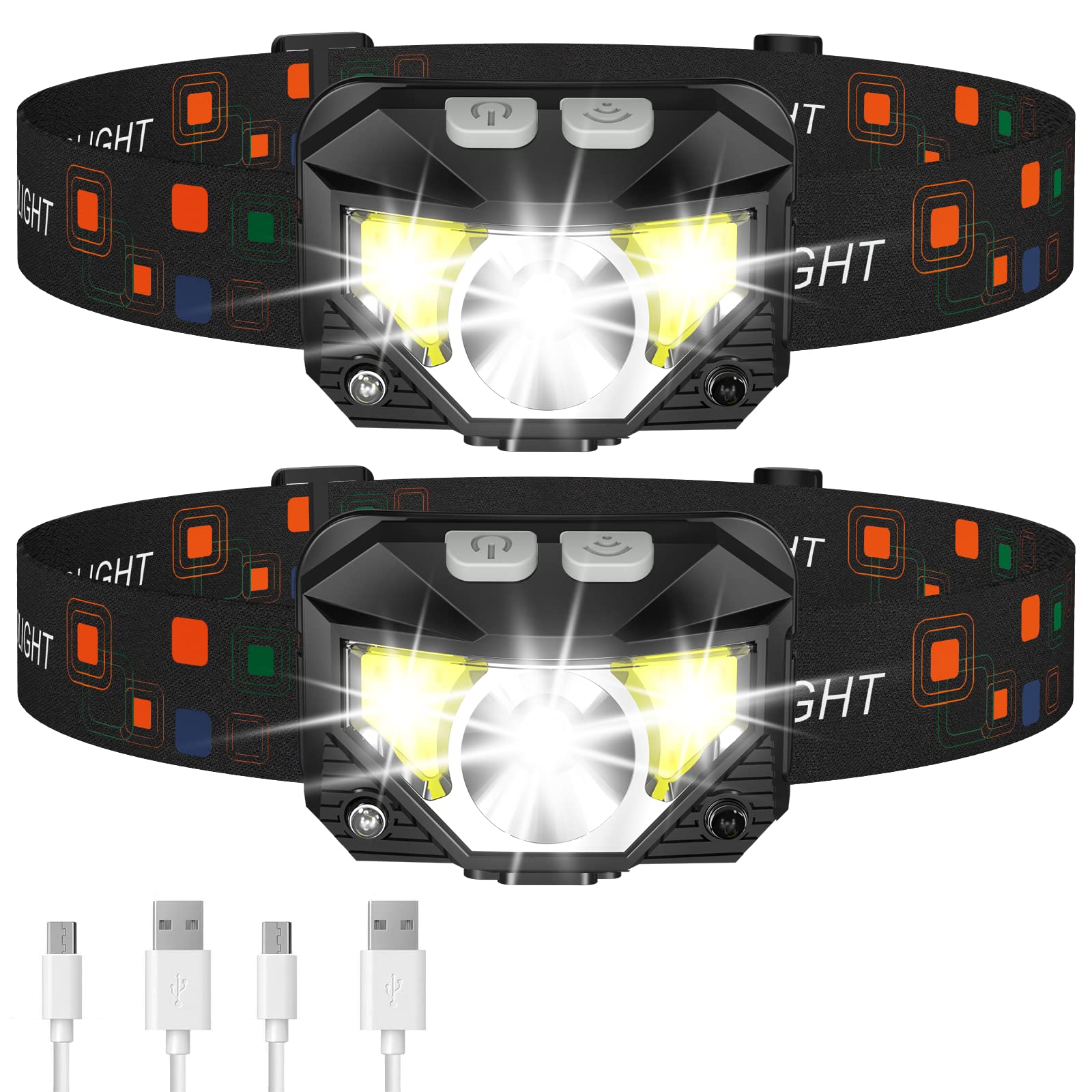
This two-pack delivers impressive brightness and a useful motion sensor at a budget-friendly price. However, battery life can drain quicker than expected and some units may experience charging port issues or random shutdowns. These concerns make it better suited for short camping trips or emergency backup rather than consistent long-term use.
Pros
- Bright illumination that stands out for a budget two-pack
- USB-C rechargeable design eliminates need for disposable batteries
Cons
- Battery life may drain quicker than expected, and charging issues can develop over time
Best as a short-term or backup light for campers who want high brightness at low cost and are okay with occasional performance variance.
Best for Families on Budget
Lepro Battery 2-Pack

Key Features
- Brightness: 200 lumens
- Battery Type: AAA
- Red Light: Yes
- Water Resistance: IPX4
- Price: Budget
This 2-pack covers the basics: spot and flood modes with a red light option, all running on standard AAA batteries. At 200 lumens it handles campsite tasks and evening walks well. The catch is battery life can be inconsistent, so it suits campers who keep spares handy rather than those needing predictable runtime.
Pros
- Two headlamps with red light at a low price
- Spot and flood modes cover a range of tasks
Cons
- Battery life can vary, leaving some runs shorter than expected
Good for families or backup needs where you can carry extra AAA batteries and don’t mind occasional runtime surprises.
Best for Short Trips, Backup
Blukar Rechargeable 2-Pack

Key Features
- Brightness: 2000 lumens
- Battery Type: Rechargeable
- Red Light: Yes
- Water Resistance: IPX5
- Price: Budget
This 2-pack delivers high claimed brightness and a motion sensor for hands-free operation, plus red light for camping. Brightness is impressive for the price, and the motion sensor is convenient. However, random shutdowns and charging port durability issues make it best suited for short-term or backup use.
Pros
- Bright output for the price makes this headlamp useful for campsite tasks.
- Motion sensor enables hands-free control by waving a hand.
Cons
- Battery life may be shorter than advertised.
Best as a backup light for camping kits or short trips where failure is acceptable.
Best for Night Hikes, Car Camp
SLONIK Rechargeable

Key Features
- Brightness: 1000 lumens
- Battery Type: Rechargeable
- Red Light: No
- Water Resistance: IPX4
- Price: Mid-Range
The SLONIK delivers impressive 1000 lumens from a sturdy aluminum housing, and the replaceable battery is a plus. However, on high mode, battery life runs short, and the plastic bracket can break under stress — better suited for occasional car camping than for extended backpacking trips.
Pros
- Bright, adjustable light output with 6 brightness levels and SOS mode.
- Sturdy aluminum construction withstands rough handling on job sites or campsites.
Cons
- On high mode, battery life runs short — for extended use, carry spare batteries or use lower settings.
Best for car campers who need high brightness for short tasks and prioritize aluminum build over long runtime.
Best for Emergency Kits, Simple
Energizer PRO-260

Key Features
- Brightness: 260 lumens
- Battery Type: AAA
- Red Light: Yes
- Water Resistance: IPX4
- Price: Budget
The Energizer PRO-260 provides 260 lumens with spot and wide beam modes, handling tasks around the house or in an emergency kit. However, it lacks a red light mode, making it less suitable for camping where preserving night vision matters.
Pros
- Multiple beam patterns (spot and wide) for different lighting tasks
- Water and impact resistant design for outdoor durability
Cons
- No red light mode – limits use for camping and night activities where red light helps maintain night vision
Best for emergency kits and household use where red light is not needed; campers should consider the PRO-360.
Best for Emergency Kits, Kids
EverBrite 5-Pack

Key Features
- Brightness: 30 lumens
- Battery Type: AAA
- Red Light: No
- Price: Budget
This five-pack delivers basic LED lights for close-up tasks and power outages at a budget price. However, the 30-lumen output is too dim for camping or hiking, and the lack of water resistance limits use to dry conditions. These work best as emergency kit fillers, children’s toys, or craft lights where brightness isn’t critical.
Pros
- Great value for a 5-pack with batteries included
- Simple to use and lightweight
Cons
- 30-lumen output is too dim for camping or outdoor tasks beyond close proximity.
Suitable as a giveaway, emergency kit light, or for children’s crafts — not for camping.
Best for Tent Reading, Dog Walk
Lighting EVER 2-Pack

Key Features
- Brightness: 150 lumens
- Battery Type: Rechargeable
- Red Light: Yes
- Water Resistance: IPX4
- Price: Mid-Range
This two-pack delivers USB-C charging and a battery that lasts multiple nights. The 150-lumen output handles tent reading and dog walks, but for unlit trails or tasks needing more light it falls short. Charging port issues can appear after limited use.
Pros
- USB-C charging removes the need for disposable batteries
- Battery holds enough charge for several nights of use
Cons
- For outdoor camping tasks requiring more illumination, the 150-lumen output feels dim compared to alternatives
A decent backup or indoor light for campers who already have a brighter primary headlamp.
How to Choose
Pairing the right brightness level with the right battery type is the single most important decision for a camping headlamp that won’t leave you in the dark.
Brightness (Lumens)
Lumens measure total light output, but more is not always better for camping. A 200-lumen headlamp is plenty for setting up camp, cooking, and walking short trails. Above 400 lumens, you start to sacrifice battery life rapidly and may blind others at close quarters.
Inflated claims are common in budget rechargeable models. A headlamp that advertises 2000 lumens often delivers half that in real use. Stick to well-known brands or cross-check user photos and reviews to gauge actual brightness. For most campers, 150-400 real lumens is the sweet spot.
Battery Type (Rechargeable vs AAA)
Rechargeable headlamps eliminate the need for spare batteries and reduce long-term cost. However, built-in lithium-ion batteries degrade over time and cannot be replaced. Many cheap rechargeables fail within months due to poor charging port quality or battery cell defects.
AAA-powered headlamps require ongoing battery purchases but offer instant swap-in convenience and near-infinite lifespan if the unit itself is durable. They are also lighter and simpler. If you camp infrequently, AAA models from established brands often outlast rechargeable competitors by years.
Red Light Mode
Red light preserves night vision — your pupils don’t constrict as much, so you can see stars and terrain details immediately after turning off the light. It also attracts fewer insects at camp. For any activity where you need to move between lit and dark areas, red light is invaluable.
The trade-off is lower perceived brightness in red mode, typically 10-20 lumens. That’s fine for close tasks like reading a map or navigating a tent. If you only need white light and don’t care about night vision, you can skip red and save money.
Water Resistance (IPX Rating)
IPX4 means splash-proof from any direction and is sufficient for rain and condensation. IPX5 handles sustained water spray, and IPX6 or higher can handle hose-level water. For camping, IPX4 is the minimum standard — you will likely be outside in damp conditions.
The hidden risk is that the charging port cover on rechargeable models often fails first. A headlamp with an IPX4 body may still have a vulnerable rubber flap. Models with a sealed housing or screw-down port cover are more reliable in wet weather.
Beam Pattern (Spot vs Flood)
Spot beams concentrate light into a narrow cone for seeing far ahead (useful for trail navigation). Flood beams spread light wide for peripheral awareness (better for campsite tasks and close work). Many headlamps offer both via a switch or adjustable lens.
The trade-off is that a pure spot beam creates sharp shadows that can be disorienting in camp, while a pure flood beam lacks reach. Look for a headlamp with separate spot and flood LEDs or a mechanical focus system. Twist-focus or sliding optics give the most flexibility.
FAQ
Why does my rechargeable headlamp stop working after a few months?
Most cheap rechargeable headlamps use low-quality lithium-ion batteries and unsealed USB ports that corrode or break. The battery management circuit is often the first component to fail, causing the light to not charge or turn on. To avoid this, choose a model with a replaceable battery (like an 18650) or stick to AAA-powered lights from known brands.
Is 200 lumens bright enough for camping at night?
Yes, 200 real lumens is sufficient for most camping tasks: setting up a tent, cooking, walking to the bathroom, and reading. It won’t illuminate a distant trail marker, but for camp-based activities it’s ideal. Only night hikers or those needing to see beyond 50 feet should consider 300+ lumens.
Do I really need a red light on my headlamp for camping?
If you value night vision and want to avoid blinding tentmates or attracting bugs, a red light is worth having. It allows you to see close-up without losing adaptation to darkness. If you only use your headlamp for short bursts and don’t care about preserving night vision, a white-only light will do.
What headlamp features matter most for hiking vs camping?
For hiking, beam distance and weight matter most: a spot beam of 200+ lumens and a lightweight design (under 3 oz) keep you safe on trails. For camping, flood beam and battery life take priority: a wide, soft beam for camp tasks and enough runtime to last a weekend without battery changes. Red light is beneficial for both but non-essential.