This post contains affiliate links. We may earn a small commission when you buy through our links — at no extra cost to you.
Many foam rollers look similar on the shelf, but the first few seconds of use reveal a critical difference: some feel like concrete, others like a marshmallow. The problem is that labels like ‘high density’ or ‘medium firm’ rarely tell you how a roller will actually feel on tight muscles or bony areas.
Length is another hidden pitfall. A 12-inch roller might fit in a backpack, but try to roll out your entire back and you will spend more time repositioning than recovering. The right choice comes down to matching two variables — firmness and length — to your specific use case, pain tolerance, and whether you need portability or full-body coverage.
This guide cuts through the marketing noise to help you find a foam roller that matches your recovery needs, not just the shelf tag.


Best for Travel and Portability
TriggerPoint Grid 1.0 13"
Key Features
- Length: 13 inches
- Density / Firmness: Extra Firm
- Surface Texture: Multi-density GRID
- Material: EVA foam over hollow core
- Price: Mid-Range
The multi-density GRID surface applies even, targeted pressure without slipping, even on uneven surfaces or during sweaty sessions. The hollow EVA core keeps the roller light enough to toss in a duffel while maintaining a firm feel that stands up to repeated use.
This roller suits intermediate to advanced users who prioritize portability and precise trigger-point relief. Beginners or those with sensitive areas may find the extra-firm surface intense on bony spots, and the 13-inch length requires repositioning to cover the full back.
Pros
- Durable construction holds up to frequent travel and heavy use
- Effective for deep muscle recovery and trigger point release
- Compact size fits easily in a carry-on or gym bag
Cons
- Firmness may feel too intense on bony areas like the spine or hips
- Short length means repositioning is needed for full back coverage
For travelers and athletes who demand portable deep-tissue pressure without sacrificing durability, this compact roller delivers.
Best for Budget Full-Body
Amazon Basics 24"
Key Features
- Length: 24 inches
- Density / Firmness: Firm
- Surface Texture: Smooth
- Material: Polypropylene foam
- Price: Budget
At a fraction of the cost of premium rollers, the 24-inch high-density foam covers your entire back without breaking the bank. This firm roller suits those who want consistent pressure for muscle recovery and stretching, but its density can feel too hard for anyone seeking a softer surface. Occasional durability concerns, such as cracking over time, are worth being aware of.
Pros
- Excellent value for a full-size roller
- Well-constructed and effective for sore muscles
- Good for back and leg stretching
Cons
- Firmness can feel too hard for those expecting a medium or soft density
- Durability may be inconsistent, with occasional reports of cracking after extended use
A solid entry-level choice for home rolling if you prefer firm pressure and budget is a priority.
Best for Full Back Coverage
ProsourceFit 36"
Key Features
- Length: 36 inches
- Density / Firmness: Firm (high-density EPP)
- Surface Texture: Smooth
- Material: Expanded polypropylene (EPP)
- Price: Mid-Range
This high-density foam roller covers your whole back and legs without repositioning, making it efficient for home recovery sessions. The firm expanded polypropylene core provides consistent pressure, but that same firmness can be too intense when rolling directly on the spine or bony areas. It is best suited for users who prefer a hard surface and have experience with self-myofascial release.
Pros
- Full-length design allows uninterrupted rolling of the entire back in one pass
- Solid construction holds up to regular use
- Competitive pricing for a 36-inch roller with firm density
Cons
- Firmness may be too intense for users sensitive to hard pressure, especially on the spine
- Some units may crack under heavy use over time
This is the right choice for home users who want uninterrupted full-back rolling and don’t mind firm pressure.
Best for Beginners and Rehab
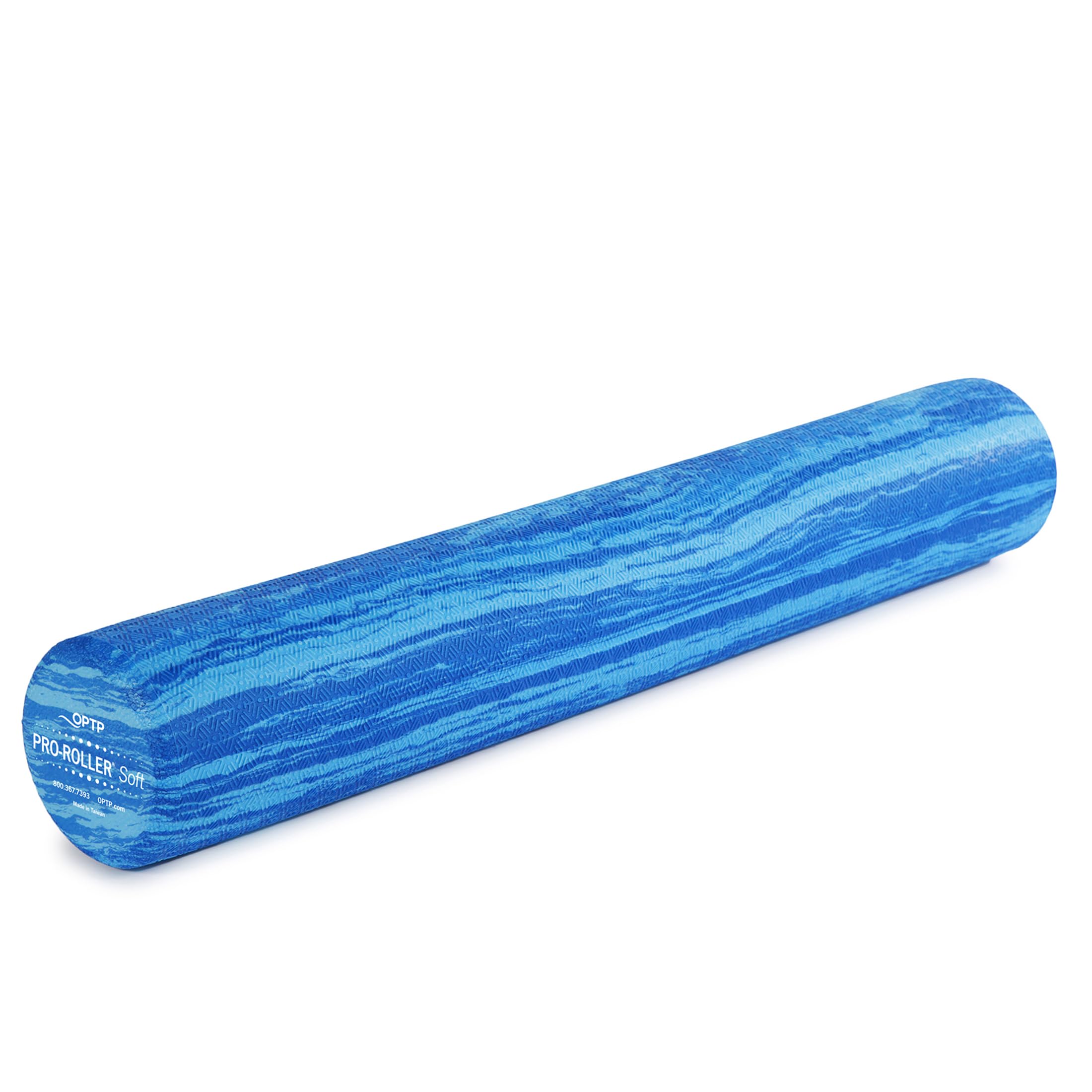
OPTP PRO-Roller Soft 36"
Key Features
- Length: 36 inches
- Density / Firmness: Soft
- Surface Texture: Smooth
- Material: EVA closed-cell foam
- Price: Premium
The OPTP PRO-Roller Soft Density delivers a forgiving surface that makes foam rolling accessible for those who find standard firm rollers uncomfortable. Unlike the firmer TriggerPoint Grid 1.0 (our top pick), this 36-inch roller uses soft EVA foam that compresses under body weight, reducing intensity. Its smooth surface and full length allow seamless rolling across the back and legs. It’s ideal for physical therapy recovery, beginners, or anyone with low pain tolerance. Advanced users seeking deep tissue work will find it lacks the necessary pressure – a firm roller serves that need better.
Pros
- Soft foam cushions sensitive muscles and joints, reducing discomfort during rolling.
- Durable EVA foam construction retains shape with regular use.
- Helps relieve muscle tension and speed up post-exercise recovery.
Cons
- Premium-priced compared to basic firm rollers of similar length.
A soft, forgiving roller suited for those new to foam rolling or recovering from injury; for deep tissue pressure, rely on the firmer TriggerPoint Grid 1.0.
Best for Deep Tissue Release
RumbleRoller Original 22"
Key Features
- Length: 22 inches
- Density / Firmness: Firm
- Surface Texture: Hexagon bumps
- Material: EVA/polyolefin
- Price: Premium
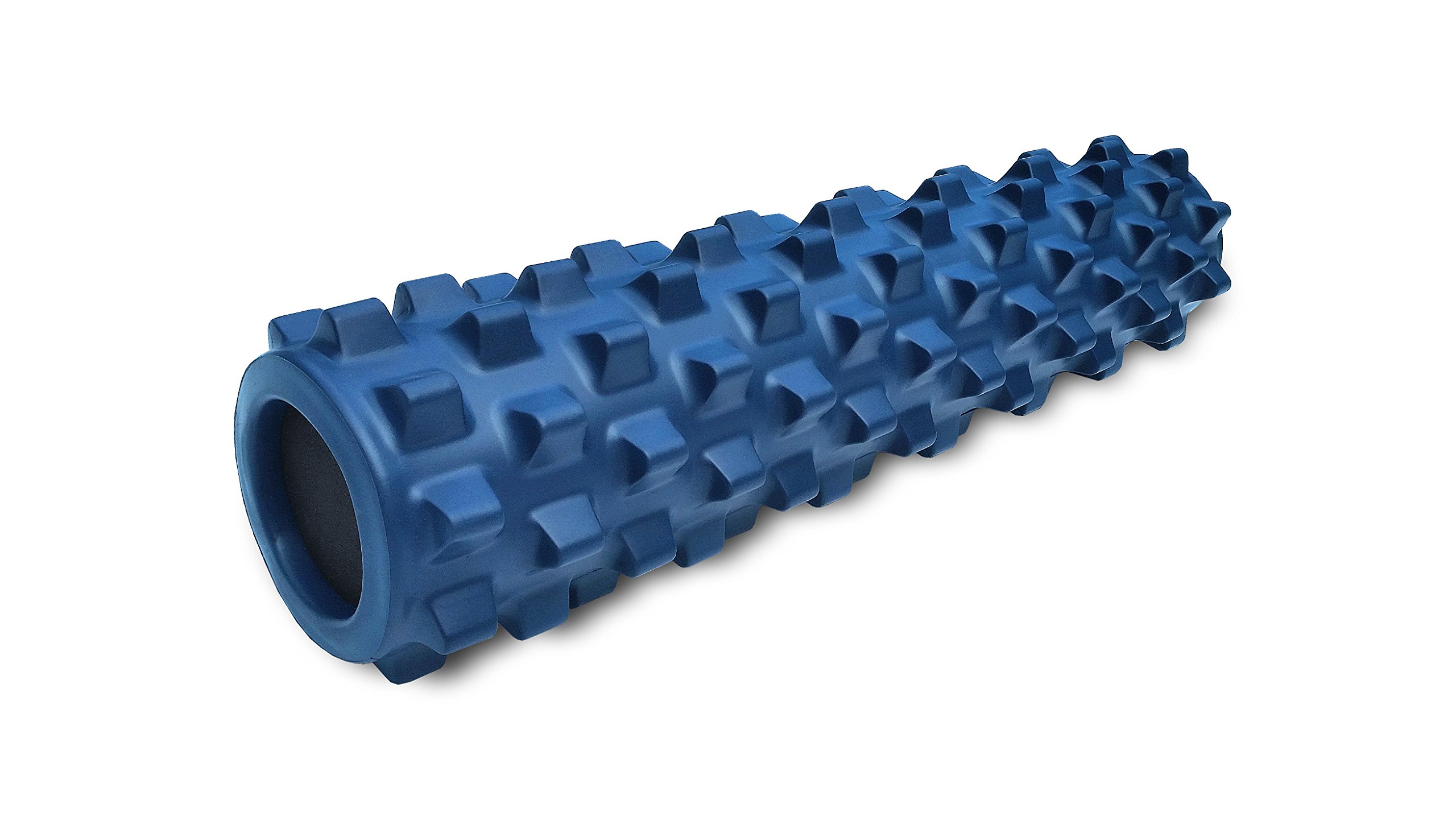
Unlike the top pick’s multi-density design, the RumbleRoller relies on its aggressive hexagon bumps to deliver targeted deep tissue pressure that feels like a professional massage. The firm construction holds up to repeated use without losing shape.
This roller is best for advanced athletes with high pain tolerance who need to release stubborn knots and trigger points. It is not suitable for beginners or those with low pain threshold – the firm texture can be painful on bony areas and may be too intense for casual use.
Pros
- Loosens tight muscles and releases knots with targeted pressure.
- Durable construction holds up well to regular use.
Cons
- Can be painful on bony areas like shins or spine.
- Firmness may overwhelm those unaccustomed to deep pressure.
Best for advanced athletes who know they want intense deep tissue work and can handle the aggressive pressure.
Best for Targeted Trigger Points
321 Strong 13"

Key Features
- Length: 12.7 inches
- Density / Firmness: Medium
- Surface Texture: Three massage zones
- Material: EVA foam
- Price: Mid-Range
The three distinct surface patterns (finger, thumb, palm) let you switch between light, moderate, and deep pressure on the same roller. The medium-density foam feels firmer than expected – suited for those who prefer intense pressure on knots, but may be too much for sensitive areas. The 12.7-inch length works well for calves, quads, and shoulders, but requires repositioning for back work. With fewer reviews than the top pick, this targets users who already know they want a textured, portable roller for spot treatment rather than full-body rolling.
Pros
- Three distinct surface zones allow customized pressure for different muscle groups
- Sturdy EVA foam construction holds up to regular use without losing shape
Cons
- Firmness can feel too intense for those expecting a softer medium-density roller
Best for experienced users who want a travel-friendly textured roller for spot treatment and are comfortable with firm pressure.
Best for Beginner-Friendly Medium
TriggerPoint CORE 18"

Key Features
- Length: 18 inches
- Density / Firmness: Medium
- Surface Texture: 3D pattern
- Material: Solid-core EVA foam
- Price: Mid-Range
The solid-core EVA foam provides consistent medium firmness that is a step up from soft rollers. The 18-inch length can feel short for full back rolling, and the firmness perception varies — some find it too soft, others too hard. Softer than the Grid 1.0, it’s less suited for deep tissue but works well for beginners and intermediate users seeking a portable option.
Pros
- Well-constructed solid-core foam delivers even pressure for effective muscle recovery.
- Provides reliable relief for back and hip tension during post-workout stretching.
Cons
- The 18-inch length may require repositioning for full back coverage.
A suitable choice for beginners who need a portable roller and don’t require full back rolling in one pass.
Best for Full-Body Budget
Yes4All EPP 36"

Key Features
- Length: 36 inches
- Density / Firmness: Extra Firm
- Surface Texture: Smooth
- Material: Expanded polypropylene (EPP)
- Price: Budget
This 36-inch roller provides full back and leg coverage at a budget price. The extreme firmness (similar to hard styrofoam) suits those who want maximum pressure, but durability can vary with occasional cracking. It is comparable to pricier full-length rollers but with a rougher feel and more quality variance.
Pros
- Effective for back and leg pain
- Good value for a full-size roller
Cons
- Some units may crack after limited use
A functional choice for home users on a tight budget who prioritize length over comfort and can accept potential durability issues.
Best for Travel and Storage
Day 1 Fitness 12"

Key Features
- Length: 12 inches
- Density / Firmness: High Density (Firm)
- Surface Texture: Smooth
- Material: EPP foam
- Price: Budget
The 12-inch length fits easily in a duffel bag, making it travel-friendly for targeting calves, quads, and shoulders. The high-density foam is durable and provides effective deep tissue pressure. However, the roller is very firm – intense for those who prefer softer foam – and the short length means it won’t cover the full back.
Pros
- Good build quality for the price
- Effective for pain relief on small muscle groups
Cons
- Very firm; may be too intense for those who prefer softer rollers
Best suited for travelers or those needing a compact roller for specific muscle groups who are comfortable with firm pressure.
Best for Budget Intermediate
Gaiam Essentials 18"

Key Features
- Length: 18 inches
- Density / Firmness: Extra Firm
- Surface Texture: Smooth
- Material: Foam (high-density)
- Price: Budget
This budget-friendly roller delivers effective back pain relief and solid value for money. The high-density foam is noticeably firm — some users may find it too hard, so it suits those who already prefer firm pressure over softer alternatives.
Pros
- Effective for relieving back pain and sore muscles.
- Offers solid value for the price.
Cons
- Firmness can be too intense for users with low pain tolerance.
A solid budget option for home users who want an intermediate-length roller and prefer a firm surface.
Best for Intense Deep Tissue
Original Body Roller 13"

Key Features
- Length: 12.5 inches
- Density / Firmness: Extra Firm
- Surface Texture: Dual grid design
- Material: EPP foam
- Price: Budget
This budget roller provides intense, targeted pressure through its dual-grid texture and extra-firm foam, making it effective for deep tissue work on small muscle groups like calves and quads. However, the extreme hardness can be painful, especially on the spine or bony areas, so it is only appropriate for experienced users who deliberately seek aggressive myofascial release.
Pros
- Effectively relieves back pain and muscle tension for those who can tolerate high pressure
- Cost-effective option for intense deep tissue massage
Cons
- Extreme firmness can cause discomfort on the spine or other bony areas
Best for experienced rollers who want an intense, low-cost deep tissue tool, but not for anyone with low pain tolerance or sensitivity to hard surfaces.
Best for Portable Deep Tissue
RumbleRoller XF 12"

Key Features
- Length: 12 inches
- Density / Firmness: Extra Firm
- Surface Texture: Textured bumps
- Material: EVA/polyolefin
- Price: Premium
The RumbleRoller XF’s aggressive hexagon bumps provide unmatched deep tissue intensity in a compact 12-inch body that fits in a travel bag. However, its extreme firmness can be painful for anyone with low pain tolerance, and the small size limits it to targeted areas — not full-body rolling. The premium price for this size means it suits advanced athletes who prioritize portability and intensity over coverage.
Pros
- Aggressive hexagon bumps deliver deep tissue manipulation for advanced recovery needs.
- Compact 12-inch design fits easily into a daypack or gym bag for travel.
Cons
- Extreme firmness can be painful even for experienced users, especially on bony areas.
This roller fits best for advanced athletes who need intense portable deep tissue and accept the premium cost; skip it if you want full-body coverage or have low pain tolerance.
Best for Physical Therapy
Yes4All Half 12"

Key Features
- Length: 12 inches
- Density / Firmness: Extra Firm
- Surface Texture: Flat side (half-round)
- Material: Expanded polypropylene (EPP)
- Price: Budget
The flat side of this half-round foam roller gives a stable surface for knee rehab, foot massage, and Pilates balance work. However, it is very firm and not intended for typical back or leg rolling, making it a niche tool rather than a general-purpose muscle recovery roller.
Pros
- Works well for physical therapy and specific exercises
- Good quality and sturdy build
Cons
- Very firm – may be too hard for back work
Best when you need a stable, firm surface for targeted PT exercises like knee rehab or foot massage, not for general self-myofascial release.
How to Choose
The most overlooked decision when buying a foam roller is length: a short roller forces constant repositioning, while a long one stays put under your spine.
Length: Coverage vs. Portability
A foam roller’s length determines how much of your back it can cover in one pass. Rollers under 18 inches require you to lift and shift your body to reach the upper and lower back, which interrupts the rolling rhythm and can strain your neck.
If you plan to use it mainly at home for full-body recovery, a 36-inch roller covers your entire spine and hamstrings without realignment. For travel or targeted work, 12- to 13-inch rollers pack easily but limit you to smaller muscle groups like calves and quads.
Density and Firmness: Matching Pain Tolerance
Firmness is the single biggest reason foam rollers get returned or abandoned. Extra firm rollers provide deep pressure that can release tight fascia, but for most people they create sharp pain on bony areas like the spine or hip flexors.
Soft and medium density rollers offer a gentler entry point, allowing you to apply more body weight gradually. They are less likely to cause bruising or muscle guarding. Start softer if you are new to rolling or have a low pain threshold; you can always upgrade to a firmer roller later.
Surface Texture: Smooth vs. Textured
Smooth rollers deliver consistent, even pressure across the muscle belly. They are predictable and comfortable for most users, especially on the first few uses. Textured rollers add ridges, bumps, or grid patterns that mimic a massage therapist’s hands for breaking up knots.
The trade-off is intensity: textured surfaces can be significantly more painful, especially on thin or sensitive tissue. If you have never used a textured roller, try a smooth one first and add texture only if you need deeper targeted work.
Material: Durability and Feel
The three common materials are EVA foam, expanded polypropylene (EPP), and polypropylene. EVA foam is dense and resilient, holding its shape longer under repeated use. EPP is lighter and stiffer but can crack or dent if stored in direct sunlight or dropped frequently.
Hollow-core rollers (like the TriggerPoint Grid) offer a distinct firmness at a lower weight, but they can be less stable under heavy load. Solid-core EVA rollers provide a uniform density and tend to outlast EPP versions when used regularly.
Weight Capacity: Matching Your Body Weight
Most foam rollers support around 250–300 lbs, but some heavy-duty models are rated up to 500 lbs. If you weigh more than 250 lbs, a roller with a weight limit below your body weight may compress or collapse under full pressure, reducing its effectiveness.
Check the manufacturer’s weight rating, and if you are in doubt, choose a solid-core EVA roller or one with a reinforced hollow core. EPP rollers generally feel firmer initially but may bottom out under heavier loads.
FAQ
Why does my foam roller hurt so much?
The pain usually comes from using a roller that is too firm for your current tolerance. Extra firm rollers press hard on sensitive fascia and bony areas, causing a sharp sensation. Switch to a medium or soft density roller, and reduce your body weight by using your arms to control pressure. If the pain persists, consider a textured roller with lower density, which can target knots without the same blunt force.
What size foam roller should I buy for back pain?
For full back coverage, choose a 36-inch roller so you can lay your entire spine on it without repositioning. A 24-inch roller works for most people but may leave the upper or lower back hanging off. Short 12- to 13-inch rollers require you to roll in sections, which can be done but takes more effort and time.
Are hard foam rollers better for deep tissue massage?
Hard rollers provide more pressure per unit of body weight, making them effective for releasing deep knots and trigger points. However, they are not better for everyone — they can cause muscle guarding and bruising if you cannot relax into the pressure. Medium density rollers allow you to control the depth more precisely, and are often recommended for anyone starting deep tissue work.
How long do foam rollers typically last before they break?
Solid EVA foam rollers can last several years with regular use, while EPP (expanded polypropylene) rollers tend to crack or flatten after 6–12 months of frequent rolling. Hollow-core multi-density rollers generally hold up well unless subjected to extreme weight or direct heat. If you roll daily, expect to replace a budget EPP roller every year; a quality EVA roller can last 3 to 5 years.