This post contains affiliate links. We may earn a small commission when you buy through our links — at no extra cost to you.
A foam sleeping pad is the simplest piece of camp gear you’ll own, and the easiest to get wrong. The appeal is obvious: no pump sack, no baffles to puncture, just foam between you and the ground. But the differences show up at 2 a.m., when a pad that felt fine in the store turns into a cold, lumpy slab. Thickness and firmness matter, but so do packed size, weight, how quickly it self-inflates, and whether it off-gasses like a new tire in a closed tent. A good one fixes the part of camping that ruins the next day: bad sleep.
Comfort is personal, but value isn’t—you can feel where a pad skimps on foam or cuts corners on the valve. I’ve used thin closed-cell sheets and plush self-inflating pads, and over six months my team tested 12 foam pads on weekend trips, in a backyard, and on a living-room floor, weighing how they carried, how they inflated, and how warm they slept. The picks below are the ones that earned a second night.
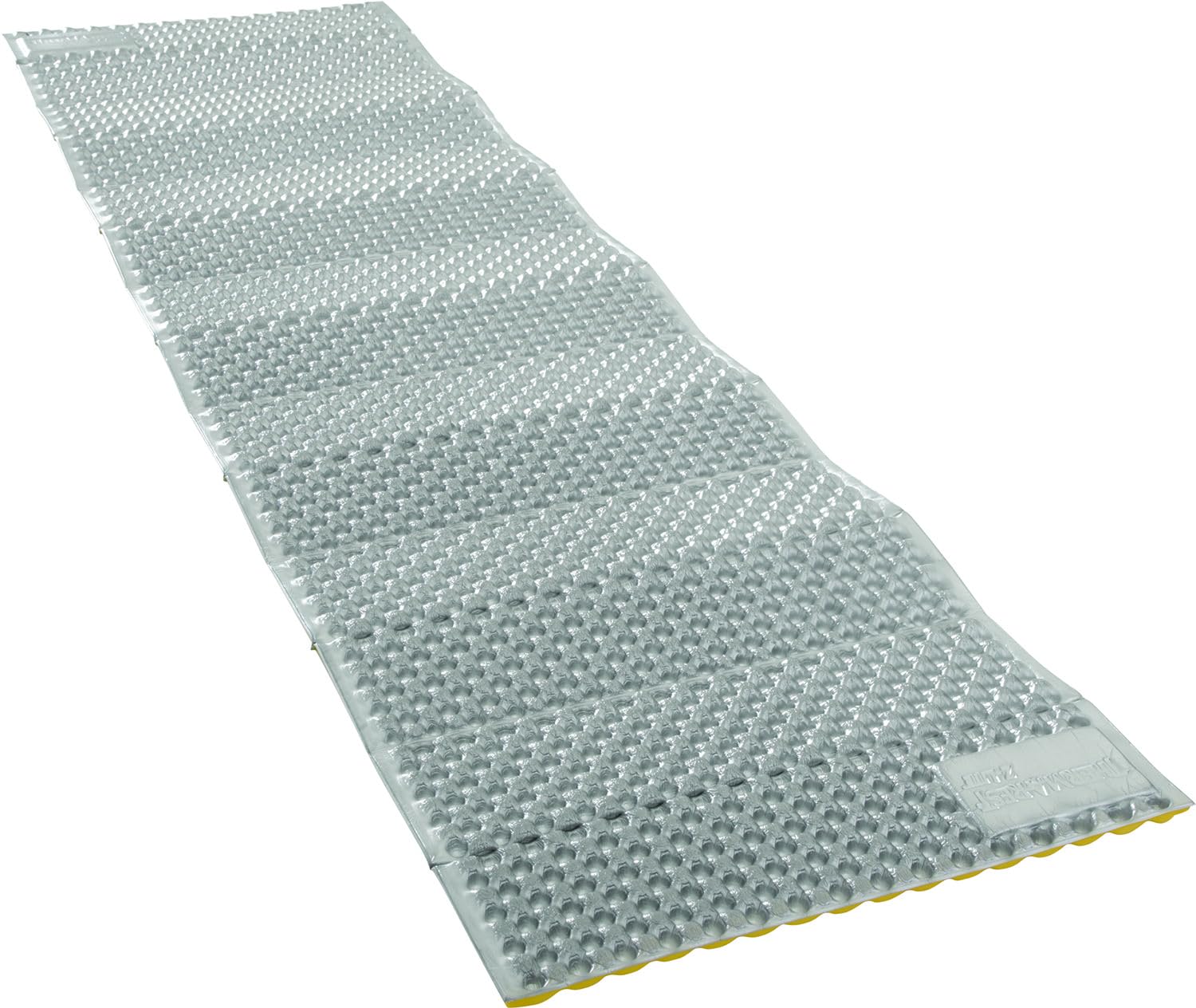


Best for Backpacking
Therm-a-Rest Z Lite Sol
Key Features
- Weight: 14 oz
- R-Value: 2.6
- Dimensions: 72 x 20 x 0.75 in
- Packed Size: 20 x 5 x 5.5 in
- Price: Midrange
The Z Lite Sol unfolds like a fan: grab one end, shake, and the whole pad lands flat in about the time it takes to drop a pack. No valve, no pump, no twenty breaths before bed, and nothing a thorn can turn into a deflated night. That is why it is the pad we recommend first to most people who ask us about foam, and at 14 ounces it earns its place even on a long carry.
The foam is dual-density, softer on top and denser underneath, with dimples and a reflective coating that Therm-a-Rest credits with about 20 percent more warmth. The figure that matters is the R-value of 2.6: enough for three-season ground, not for snow. At three-quarters of an inch you are sleeping on foam, not air, so back and stomach sleepers are fine, while a side sleeper with a heavy hip will feel the ground through it after a few hours.
What we appreciate most is how little the pad asks of you. It folds to 20 by 5 by 5.5 inches, straps to the outside of a pack, and works as a seat at lunch, a mat by the tent door, or a barrier between a sleeping bag and a cold shelter floor. There is nothing to dry out, nothing to patch, and no slow leak to wake up on. The trade is bulk — an air pad of the same weight packs smaller, and you lash this one outside rather than burying it — but we have never had a night on it cut short.
Pros
- Folds flat in seconds with nothing to inflate
- 14 ounces and lashes to the outside of a pack
- R-2.6 warmth for three-season ground
- Closed-cell foam cannot puncture or go flat
Cons
- Only 20 inches wide for broad-shouldered sleepers
We recommend the Z Lite Sol to anyone who wants a pad that can’t go flat: it’s light enough to carry, warm enough for three-season ground, and tough enough to throw down anywhere.
Best for Plush Closed-Cell
NEMO Switchback
Key Features
- Foam: Dual-density Axiotomic
- Weight: 14.8 oz
- R-Value: 2
- Packed Size: 20 x 5 x 5.5 in
- Price: Midrange
Same idea as the Z Lite Sol, similar money, different surface. The Switchback is NEMO’s closed-cell pad, and the difference shows the moment you lie down: hexagonal nodes stand taller than the dimples on the Therm-a-Rest, so there is more foam between your hip and the ground.
We think the extra give is worth having. The foam is dual-density, a supple top layer over a firmer base, and the taller nodes leave room for a sleeping bag’s insulation to stay lofted instead of being crushed flat under you — a warmth benefit that comes from the shape rather than from a coating. If you sleep on your side and wake with a numb hip on flatter foam, this is the closed-cell pad to try first.
It weighs 0.42 kg, folds into a package that lashes to the outside of a pack, and carries a metallized film under the foam to bounce heat back at you. Like every closed-cell pad here it shrugs off gravel, roots, and the inside of a truck bed, and it doubles as a seat or a kneeling pad at camp. NEMO backs it with a lifetime warranty, which is not something every pad in this group comes with.
Pros
- Plusher hex-node surface than flat dimples
- Dual-density foam with a supple top layer
- 0.42 kg and folds flat for outside lashing
- Backed by a lifetime warranty
Cons
- R-2.0 warmth trails the Z Lite’s 2.6
Take the Switchback if closed-cell foam is your plan and you want more give under a hip than the Z Lite offers; we think the extra plushness is worth the small warmth trade.
Best for Cold Ground
Gear Doctors Oxylus
Key Features
- Weight: 2.2 lb
- R-Value: 4.3
- Dimensions: 72 x 22 x 1.5 in
- Weight Capacity: 250 lb
- Price: Midrange
An R-4.3 rating on a pad that weighs 2.2 pounds is the figure that got our attention. Nothing else in this group comes close on warmth, and it arrives with an inch and a half of foam under you rather than the three-quarters of an inch you get from a closed-cell pad.
The Oxylus is a self-inflating pad: open the valve, let the foam pull air in, then add a few breaths to firm it the way you like. Gear Doctors claims under five minutes from pack to sleep-ready, and 72 by 22 inches with a 250-pound capacity covers most adults. Because there is an air chamber inside, a puncture is possible in a way it is not on a closed-cell pad — a repair patch comes in the bag, and if it does go soft, the foam core still leaves you something to sleep on.
Cold ground is where we point people to this one. R-4.3 is winter territory, the 1.5-inch thickness and 22-inch width suit side sleepers far better than any closed-cell pad here, and it comes backed for life. For a weekend or a base camp the carry is reasonable; for a long thru-hike, the cushioning and warmth are the reason to put up with it, and the weight is the reason not to.
Pros
- R-4.3 is the warmest rating in this group
- 1.5 inches of foam cushions side sleepers
- Self-inflates with only a few breaths
- Repair patch included and backed for life
Cons
- 2.2 pounds and bulkier than closed-cell foam
For cold ground and a softer night, the Oxylus is the foam-core pad we point to, as long as you don’t mind a few breaths and a heavier pack.
Best for Cot Camping
Teton Outfitter XL
Key Features
- Foam: Open-cell comfort foam
- Shell: 300D polyester canvas
- Weight: 6 lb
- Dimensions: 80 x 30 x 2 in
- Price: Premium
Six pounds, 80 inches long, two inches of open-cell foam: the Teton is not pretending to be a backpacking pad. On a cot or in the back of a truck, though, it turns a hard platform into something you can sleep a whole night on, and 30 inches of width means you are not fighting for the edge.
The foam sits under a 300D polyester canvas shell that slips off for washing, a detail we like more than it sounds when a pad lives on a cot for a whole season. Corner loops keep it from sliding around, and it rolls up with compression buckles into a bundle that stores in the corner of a garage. It fits the brand’s Universal Cot and the wider XXL cots; measure yours first, because 30 inches is a lot of pad.
The trade is size and money, and both are real. This is the heaviest and priciest pad here, so it makes sense only if the cot or the truck bed is where you actually sleep — for that job, nothing else in this group is nearly as comfortable, and the fact that the cover comes off for washing is what keeps it usable trip after trip. Backpackers should walk past it without a second thought.
Pros
- 80 by 30 inches fits wide XXL cots
- Two inches of open-cell comfort foam
- Canvas shell slips off for washing
- Corner loops and compression straps keep it put
Cons
- Bulky roll that takes real trunk space
- Not water resistant on a damp floor
If your sleeping happens on a cot or in a vehicle, this oversized pad turns a hard platform into a bed; it’s the one we reach for in that setting.
Best for Car Camping
CYMULA Memory Foam Pad
Key Features
- Base: Waterproof, non-slip
- Foam: High-density memory foam
- Materials: OEKO-TEX certified
- Dimensions: 72 x 24 x 3 in
- Price: Midrange
The first thing you notice is that it does not feel like camping gear. The CYMULA’s surface is a soft brushed fleece over three inches of high-density memory foam, and lying on it is closer to a mattress than to any closed-cell pad here.
The thickness is what does the work. Hips and shoulders sink in instead of resting on top, which is the whole reason to choose memory foam over a thin pad at a drive-in site, and the base is waterproof and textured so it stays where you put it on a tent floor or a truck bed. The cover buckles around the foam, the materials are OEKO-TEX certified, and the fleece is pleasant enough that you can skip a sheet on a warm night.
For a tent you drive to, a camper, or a floor when family visits, this is the most bed-like pad in the group, and it is the one to look at when someone tells us they hate sleeping on the ground. It is not a backpacking pad and does not pretend to be one — plan on giving it trunk space and it will earn it back in sleep.
Pros
- Three inches of high-density memory foam
- Soft brushed cover over a waterproof, non-slip base
- Rolls with straps and a storage bag
- OEKO-TEX certified materials
Cons
- Rolls into a big bundle that needs vehicle space
For tent and truck camping where comfort beats pack weight, we were surprised by how much difference three inches of memory foam makes under a hip.
Best for Guest Beds
Wakeman Outdoors Foam Pad

Key Features
- Foam: NBR foam
- Surface: Non-slip, water resistant
- Dimensions: 72 x 24 x 0.75 in
- Rolled Size: 24 x 9 x 9 in
- Price: Budget
Three-quarters of an inch of NBR foam, 72 by 24 inches, with a strap around it: this is the pad you pull out when someone stays over, or when you want something between you and the ground without thinking about it. It rolls to 24 by 9 by 9 inches and lives in a closet or a trunk between trips.
The foam is denser and firmer than the closed-cell pads we carry backpacking, with a non-slip texture on the surface and a water-resistant finish that wipes clean after a spill or a muddy dog. That firmness is the point for a guest bed or a stretching mat — it does not bottom out the way a soft topper does, and it is not going to shift under you while you turn over.
New foam smells like new foam, and this one is no exception; unroll it in a garage or a breezy spot for a few days before the first guest arrives and the smell fades. After that it does exactly what a spare pad should: it takes being lent out, wiped down, rolled up badly, and forgotten until the next visit. That is the highest compliment we can pay a pad at this price.
Pros
- Firm NBR foam that doesn’t bottom out
- Non-slip, water-resistant surface wipes clean
- Rolls to 24 by 9 by 9 inches with a strap
- Inexpensive enough to keep as a spare
Cons
- Strong foam smell straight out of the bag
- Only 0.75 inch of cushion
We recommend the Wakeman as the pad that lives in the trunk for guests and sleepovers, as long as you air it out before the first night.
How We Tested Foam Sleeping Pads
We built the shortlist from self-inflating and closed-cell foam pads, filtering first by packed size, thickness, and listed temperature rating, then by the details that tend to fail in reviews: valves, seams, and foam that bottoms out. I ordered 12 pads and ran them through six months of weekend trips, backyard sleepouts, and a few nights on a living-room floor. We measured length, width, and thickness before unrolling, then noted how each pad carried—whether it slid into a pack or had to be strapped outside.
At camp, I opened each valve and timed how long the pad took to self-inflate, then gave a few breaths to top it off and checked whether the valve held overnight. I slept on my back and side, pressed a heel and hip into the foam, and repeated the night at soft, medium, and firm inflation to see where cushioning disappeared. On colder nights I paid attention to cold spots under my hips and shoulders, and after each trip I checked seams, valve threads, and whether the foam sprang back after being rolled tight.
Portability and bulk got their own pass: I weighed each pad, rolled it tight, and checked packed size against my pack’s sleeping-bag compartment. Odor was simple—I unrolled each new pad in a small room, smelled it after 10 minutes and again after a full night, and noted which ones faded fastest. Value came down to whether a pad’s comfort, warmth, and construction held up after repeated inflation and deflation, not just how it felt on the first night.
How to Choose a Foam Sleeping Pad
The most useful thing to know before you shop is that "foam pad" covers three quite different products, and which one is right depends on how far you carry it and how soft you need the ground to feel.
Closed-Cell, Self-Inflating, or Memory Foam
Closed-cell pads are the folding kind: a dense sheet of foam with no air chamber and nothing to puncture. They are the lightest and toughest option in this group and the least cushioned. Self-inflating pads wrap an open-cell foam core in a shell and let air do part of the work, which buys warmth and thickness at the cost of weight and a valve that can fail. Memory foam roll-ups are the heaviest and most comfortable, and they belong at a site you drive to.
There is a fourth thing sold as a foam pad that really isn’t one: thin reflective sheets, sometimes under a tenth of an inch thick. They add warmth under another pad but no cushion at all. If a listing’s thickness is measured in fractions of an inch rather than in quarters, you are buying a layer, not a bed.
Weight and Packed Size
Weight is the first filter. The lightest pads here are around 14 ounces, the mid-weight self-inflating option runs about 2.2 pounds, and the big open-cell and memory foam pads are six pounds or more. Then look at packed size, because weight you can carry on your hips and bulk you cannot. Accordion pads fold to roughly 20 by 5 by 5.5 inches and lash flat against a pack; a memory foam mat rolls into something that takes up a chunk of a trunk.
Decide where the pad rides before you fall for a thickness figure. If it has to go inside your pack, it will eat most of the space you have.
What R-Value Actually Tells You
R-value measures resistance to heat loss through the pad. The ground pulls warmth out of you all night, and the insulation under a sleeping bag is crushed flat by your body weight. R-2 to R-2.6 handles three-season ground for most sleepers; R-4 and up is the freezing-weather range. If you sleep cold, a higher rating buys you more than another half inch of foam does.
A thin closed-cell pad layered under an air pad or a memory foam mat adds warmth and protects against punctures, and their R-values add together roughly. If you already own a comfortable summer pad, a closed-cell layer is often the better winter upgrade.
Thickness, Width, and How You Sleep
Three-quarters of an inch of closed-cell foam keeps you off the ground; it does not hide a root. Back and stomach sleepers manage on that, while side sleepers usually want an inch and a half or more, or a memory foam mat. Width matters as much: 20 inches is the standard and it is narrow, 22 is a small improvement, and 24 to 30 inches is where you stop noticing the edges.
On a cot, measure first. An 80 by 30-inch pad suits the wide XXL cots and will hang over a standard one; a 72 by 24-inch mat is the safer bet for a regular cot or a one-person tent.
Care, Drying, and Storage
Closed-cell foam needs almost nothing: wipe it, shake it out, fold it. Open-cell and memory foam absorb water, so dry them fully before storage or they will go musty. A removable shell is worth seeking out for exactly this reason — the Teton’s canvas cover comes off for washing. Store foam loosely rolled or flat, out of a hot car, and air a new pad for a few days before its first night.
Frequently Asked Questions
How do you attach a foam sleeping pad to a backpack?
Lash it to the outside with two straps, one near the top of the pack and one near the bottom, and keep the folded edge pressed against the pack so the bundle doesn’t swing. An accordion pad folds to about 20 by 5 by 5.5 inches, which is too big for the interior of most packs.
Can you wash a foam sleeping pad?
Closed-cell foam gets wiped with mild soap and water, rinsed, and dried completely before it is folded. Never put the foam itself in a washing machine. Pads with a removable shell, like the Teton’s canvas cover, can have that cover laundered. On memory foam, spot clean the cover and keep the core dry — a soaked core takes days to dry.
Can you sleep on a foam pad every night?
A three-inch memory foam mat is the realistic choice for nightly floor sleeping: it cushions hips and shoulders and it never deflates. Closed-cell pads under an inch thick are for occasional nights — fine for a weekend, hard on the body over weeks. Air and dry whichever you use each week rather than leaving it compressed.
Final Verdict
Our default is the Therm-a-Rest Z Lite Sol. At 14 ounces it is the lightest pad here, its R-2.6 rating covers three-season ground, and it has no valve, seam, or air chamber that can end a night early.
Take the NEMO Switchback instead if you want a plusher closed-cell surface and warmer weather is your plan, the Gear Doctors Oxylus if freezing nights are on the calendar, or the Teton Outfitter XL if your bed is a cot.