This post contains affiliate links. We may earn a small commission when you buy through our links — at no extra cost to you.
Exercise bikes under $400 often promise quiet rides and smooth resistance, but a closer look at real-world use reveals two recurring issues: seats that feel like concrete after 20 minutes, and pedals that can snap during a sprint. The good news is that a handful of models combine true magnetic silence with stable frames and trackable reliability.
This guide cuts through the marketing to highlight bikes that deliver on their core promise — quiet, low-maintenance cardio — without expecting you to budget for replacements out of the gate. The best picks balance comfort upgrades (a gel seat costs $15) with structural integrity that keeps you safe at any intensity.

Best for Budget, Quiet Home
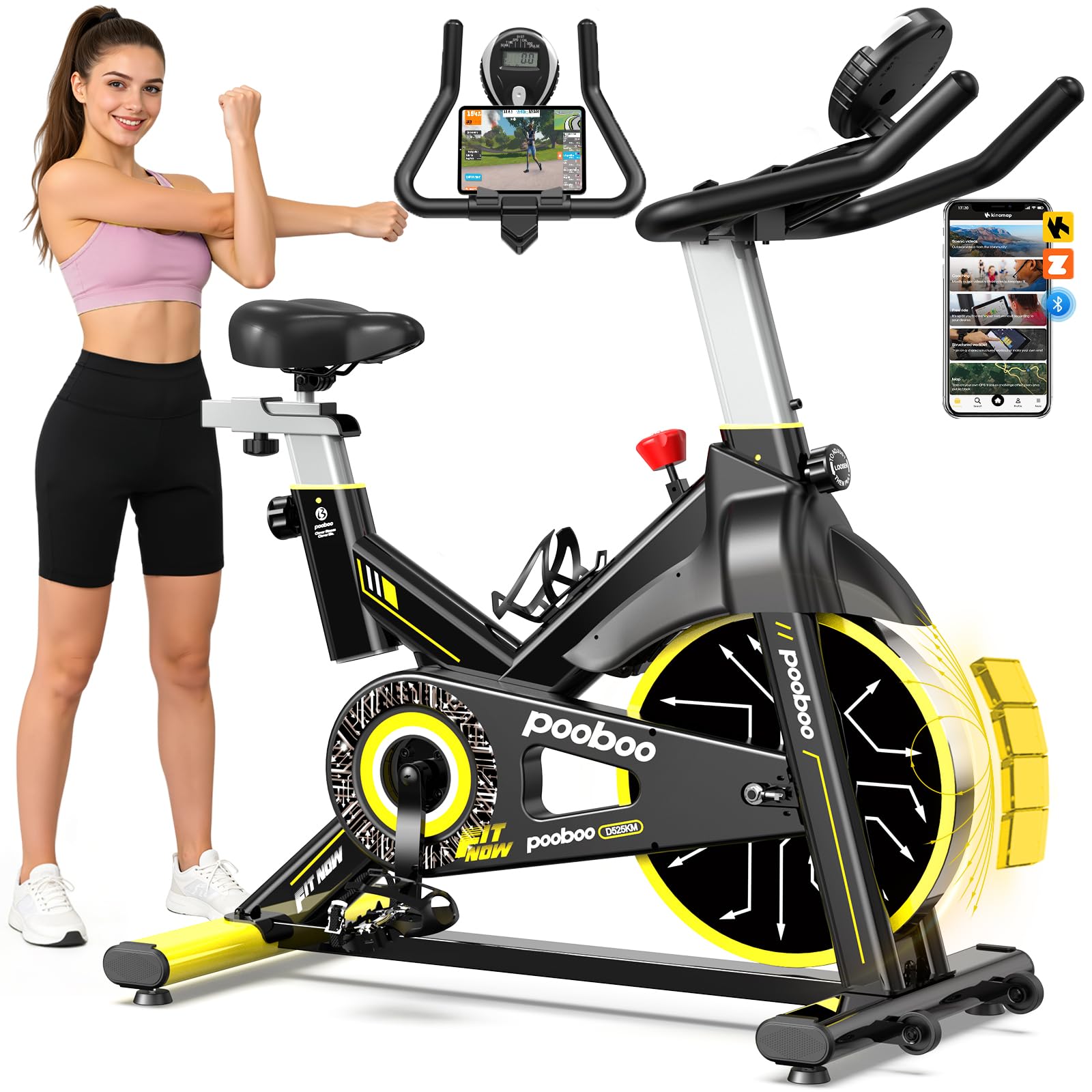
pooboo Magnetic Upright
Key Features
- Resistance: Magnetic 100-level
- Weight Capacity: 350 lb
- Noise: <25 dB
- Seat Comfort: Firm stock
- App: Basic app
- Price: Budget
The pooboo exercise bike keeps noise under 25 dB – quiet enough for apartment living while delivering 100 levels of magnetic resistance. The belt drive is smooth and the 350 lb weight capacity accommodates a wide range of riders.
Assembly is simple: most buyers finish in under 30 minutes with basic tools. The frame feels solid during use, with minimal wobble even at higher resistance or standing climbs. Welds are clean and pedals use standard threads.
The magnetic resistance is surprisingly smooth for the price – no feel of cogging or friction. This is a rare budget bike with a clean safety record: no pedal arm failures have been documented, which differentiates it from several high-volume competitors.
This bike suits first-time buyers wanting maximum value under $200 and apartment dwellers who need a quiet machine. The seat is firm – riders planning sessions longer than 20 minutes should budget for a padded cover or gel seat. For short daily rides the stock cushion works fine.
Pros
- Extremely easy assembly – typically takes 30 minutes or less.
- Solid frame and components for a budget-friendly bike.
- Near-silent belt drive under 25 dB.
- Smooth magnetic resistance with 100 levels at an entry-level cost.
- Stable frame with minimal wobble during intense sessions.
Cons
- Stock seat is too firm for rides longer than 20–30 minutes; cushions help but the saddle is hard.
For under $200, the pooboo delivers the quietest, most stable ride in its class – just plan to swap or pad the seat for sessions over half an hour.
Best for Seniors, Joint Comfort
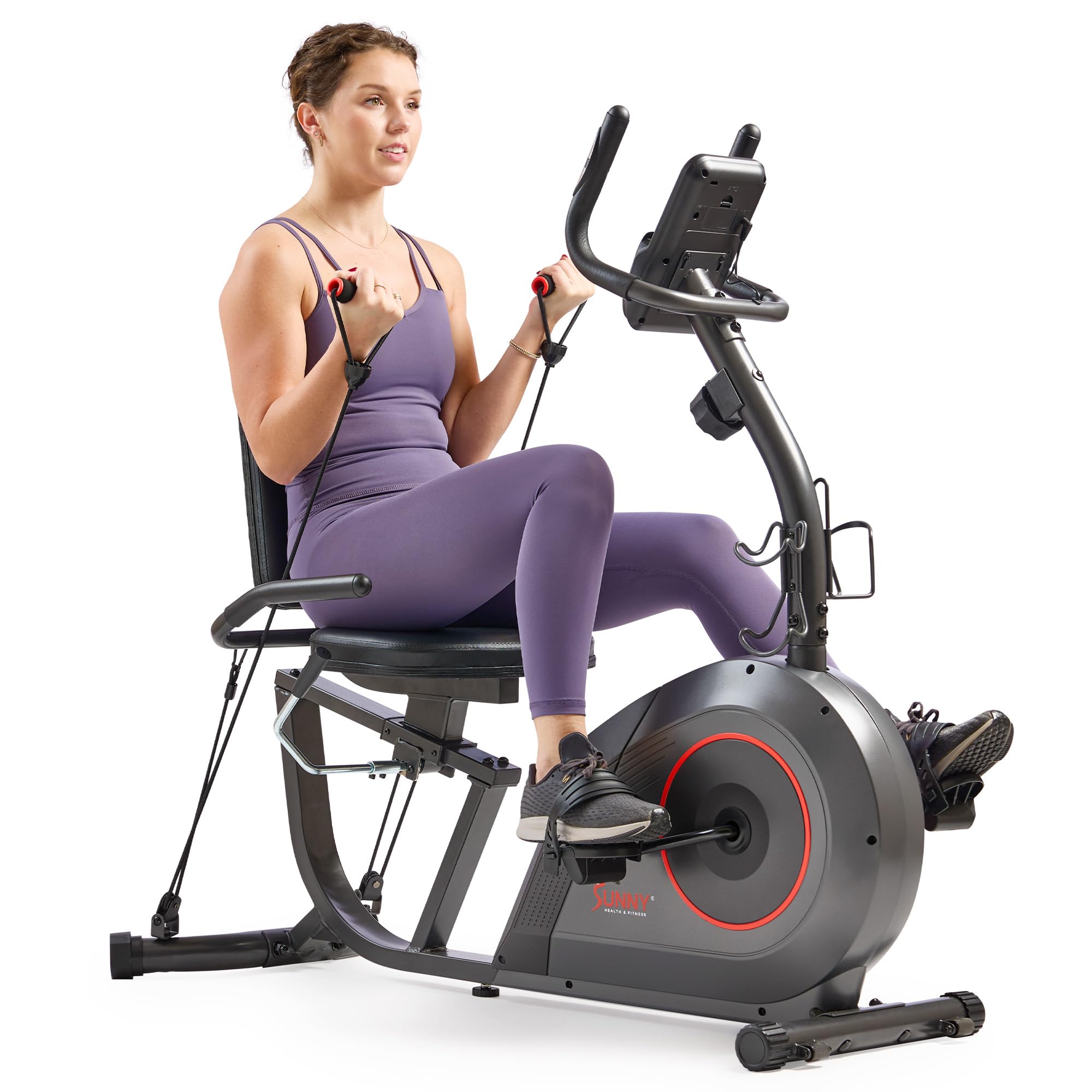
Sunny Recumbent SF-RB424006
Key Features
- Resistance: Magnetic 16-level
- Weight Capacity: 300 lb
- Noise: Quiet
- Seat Comfort: Wide cushioned
- App: Free SunnyFit
- Price: Mid-Range
While the Niceday wins on raw weight capacity and tall rider fit, the Sunny Recumbent prioritizes comfort above all — its wide cushioned seat and backrest reduce pressure points during long rides, and the free SunnyFit app adds structured workouts without subscription fees.
The SunnyFit app pairs via Bluetooth to track distance, calories, and time, with guided rides and scenic routes — no membership needed. The belt drive keeps operation quiet enough for TV or conversation, and labeled parts make assembly straightforward.
This bike is best suited for steady-state cardio, recovery rides, or light exercise. The 16 magnetic resistance levels top out at a moderate intensity — active cyclists looking for a high-resistance challenge will want a more aggressive upright or spin bike. For seniors, casual riders, or anyone with joint concerns, the ergonomic design and quiet belt drive make it a reliable home companion.
Pros
- Wide cushioned seat and backrest keep pressure off hips and lower back during extended rides.
- Quiet magnetic belt drive allows TV or conversation at normal volume.
- Sturdy steel frame and simple assembly with clearly labeled parts.
Cons
- Maximum resistance may not challenge fit riders — best for steady cardio, not high-intensity intervals.
- Bearing noise can develop over time in some units, requiring periodic lubrication or inspection.
If your priority is seated comfort and a free app over maximum resistance, this recumbent delivers better value than most alternatives at this price.
Best for Families, Tall Riders
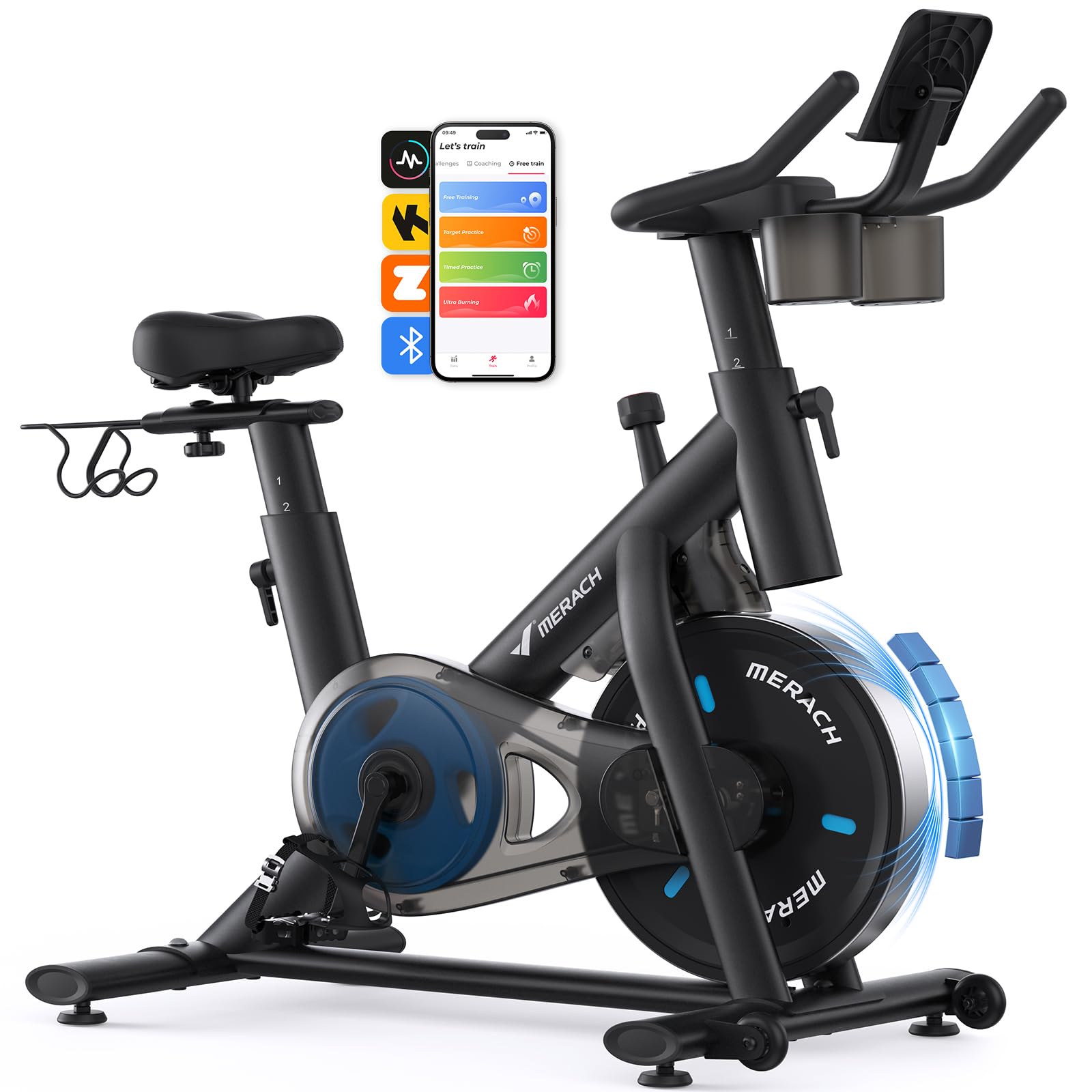
MERACH S26 Magnetic
Key Features
- Resistance: Magnetic 8-level
- Weight Capacity: 300 lb
- Noise: <25 dB
- Seat Comfort: Medium firm
- App: Exclusive app
- Price: Mid-Range
The MERACH S26 Magnetic pairs near-silent magnetic resistance with thoughtful extras like a dumbbell rack and dual water bottle holders. Where the top pick focuses on pure value and simplicity, this model offers a broader height range (4’8" to 6’2") and a reinforced steel frame that feels solid under most riders. Magnetic resistance with 8 levels transitions smoothly, and the belt drive keeps noise below 25 dB — discrete enough for apartment living.
This bike suits home users who prioritize quiet operation and need a stable platform for riders up to 6’2". The 300 lb weight capacity and wide base limit wobble during moderate effort, though some movement may occur during standing climbs at higher resistance. The included tablet mount holds most devices securely, and the dumbbell rack keeps light weights within reach.
The seat is firm out of the box, so a padded cover or gel cushion makes longer sessions more comfortable. Riders who typically cycle for 20 minutes or less may find it tolerable as-is, but anyone planning extended cardio workouts should budget for a simple seat upgrade.
Pros
- Quiet magnetic resistance keeps noise under 25 dB
- Reinforced steel frame supports riders up to 300 lb
- Broad height range accommodates users from 4’8" to 6’2"
- Dumbbell rack and dual bottle holders add convenience
Cons
- Stock seat padding is firm enough that longer rides may require a cushioned cover
- Frame may produce slight movement during aggressive standing climbs
For buyers who need a quiet bike that fits taller riders and appreciate extra storage, the MERACH S26 delivers reliable performance with one caveat: plan to upgrade the seat cushion.
Best for Heavy Users, Rehab
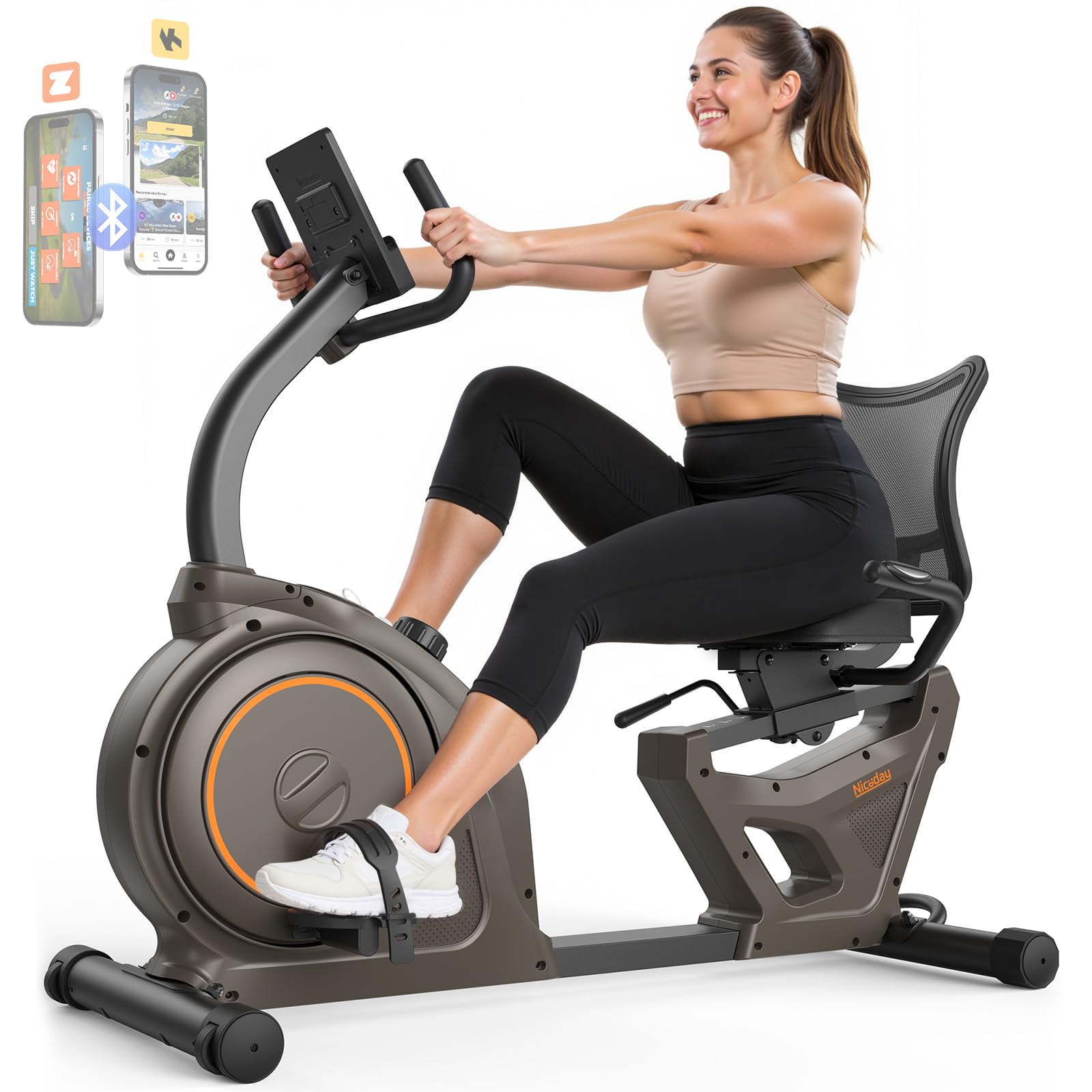
Niceday RC88 Recumbent
Key Features
- Resistance: Magnetic 16-level
- Weight Capacity: 400 lb
- Noise: Whisper-quiet
- Seat Comfort: Mesh backrest
- App: Smart app
- Price: Mid-Range
The Niceday RC88 stands out among recumbent bikes for its 400 lb weight capacity and generous fit for riders up to 6’3", combined with 16 levels of quiet magnetic resistance and a belt drive that keeps noise nearly absent. The ergonomic mesh backrest and padded seat provide a stable platform that feels far more expensive than its mid-range price suggests.
This bike targets users who need a low-impact, joint-friendly ride — especially those with back or knee issues, or heavier individuals who have struggled with wobblier frames. The step-through design and adjustable seat make entry easy. However, the LCD monitor is basic: no backlight, small digits, and a minority of owners have noted the display or connectivity faltering after several months of use.
On the road, the magnetic resistance ramps smoothly from gentle to challenging, and the 15 lb flywheel keeps momentum consistent. Owners consistently describe the operation as whisper-quiet, making it suitable for apartment or shared-wall setups. The steel frame feels planted even during harder intervals, with no wobble reported.
Pros
- Deeply comfortable mesh backrest and seat support riders with back or knee concerns
- Near-silent magnetic resistance and belt drive for distraction-free workouts
- Sturdy frame feels solid at any resistance level, no wobble during use
- Delivers comfort and build quality that rivals bikes costing hundreds more
Cons
- In dim lighting, the small unbacklit LCD digits are hard to read during workouts
- A small number of units may develop display or connectivity issues after months of use
For riders who put joint comfort and high weight capacity above a flashy console, the Niceday RC88 delivers a quiet, stable ride that punches well above its mid-range price tag.
Best for Compact Budget
CHAOKE 520A Magnetic
Key Features
- Resistance: Magnetic 100-level
- Weight Capacity: 300 lb
- Noise: <25 dB
- Seat Comfort: Firm stock
- App: Basic app
- Price: Budget
The CHAOKE 520A delivers 100 levels of magnetic resistance and belt-drive quietness in a frame that takes up noticeably less floor area than the leading budget upright. Assembly clocks in under 30 minutes, and the solid steel base holds steady during moderate-intensity rides. The digital display shows time, speed, distance, and calories without needing an app, though Bluetooth connectivity is available for those who want additional metrics.
This bike suits budget-conscious buyers who prioritize a quiet, stable ride and don’t plan to exceed 6’1" in height. The stock seat is firmer than what you’d get on a premium bike; riders doing daily sessions over 20 minutes may want to swap it for a padded aftermarket option. For shorter cardio sessions, knee rehab, or casual pedaling while watching TV, the CHAOKE delivers a consistent, wobble-free experience.
Pros
- Assembly finished in under 30 minutes with clear instructions
- Quiet enough for TV-watching or calls in the same room
- Frame feels solid with no side-to-side movement during use
- Smooth, quiet resistance makes it suitable for cardio and light rehab
Cons
- Seat padding is firm; riders doing longer sessions may need a gel cover or replacement saddle
If the top pick’s larger user base and slightly higher weight capacity aren’t dealbreakers, the CHAOKE is a near-identical performer in a more compact package – just budget for a seat cushion if your rides stretch past 20 minutes.
Best for Live Class Fans
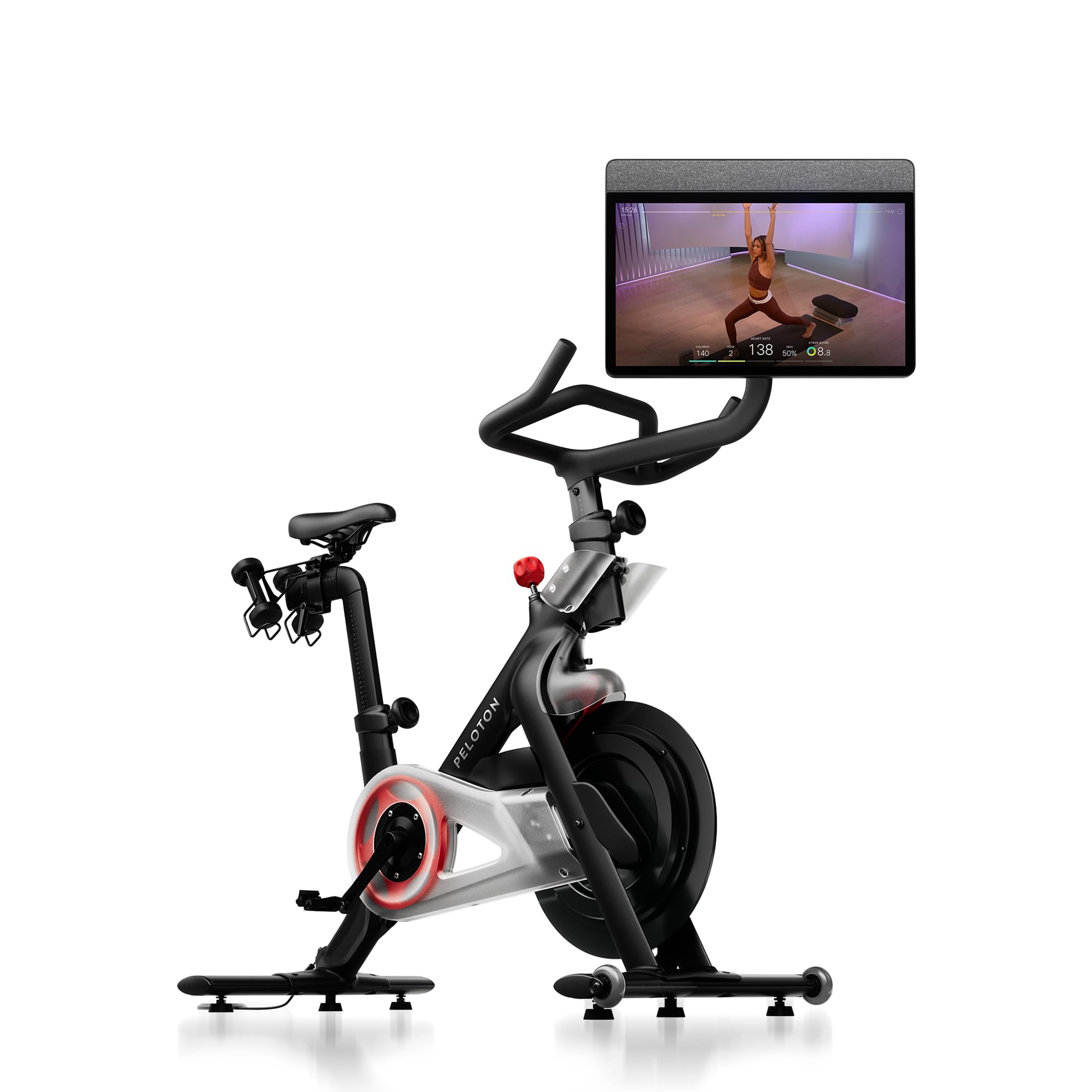
Peloton Bike+
Key Features
- Resistance: Magnetic 100-level
- Weight Capacity: 297 lb
- Noise: Quiet
- Seat Comfort: Standard
- App: Peloton ($49.99/mo)
- Price: Luxury
The Peloton Bike+ delivers a polished class experience with a large swivel screen that makes cross-training easy. However, the $1,695 price and mandatory $49.99 monthly subscription limit its appeal to those fully committed to the Peloton ecosystem, and isolated quality control issues — such as units arriving with screen or speaker flaws — add a note of caution when spending this much.
Pros
- Professionally-produced classes with charismatic instructors keep workouts engaging.
- Heavy, rock-solid frame provides a stable ride even during intense intervals.
- The 21.5-inch rotating screen allows seamless transitions to yoga and strength classes.
Cons
- The bike itself costs over $1,600, and full class access requires a $49.99 monthly fee.
- Some units have arrived with screen or speaker problems that require service.
This bike is a strong fit if you’re already planning a Peloton subscription and value an integrated, polished experience — but avoid it if you want a standalone bike without ongoing costs or are wary of potential early defects.
Best for Short Seniors
MERACH S08 Recumbent

Key Features
- Resistance: Magnetic 8-level
- Weight Capacity: 300 lb
- Noise: Quiet
- Seat Comfort: Medium firm
- App: Basic app
- Price: Budget
The MERACH S08 delivers a quiet, low-impact ride with a low step-through frame that makes mounting and dismounting simple. It’s compact and light at 57 pounds, so moving it around is no chore. However, the seat padding is firm enough to become noticeable after 30 minutes, and the leg room is limited — riders over 5’8" will find the range restrictive. For the same money, the Sunny Smart Recumbent offers a more comfortable seat and better leg clearance, making the MERACH a better fit for shorter users who prioritize ease of entry over long-session comfort.
Pros
- Very easy assembly with clear instructions and separate parts pouches.
- Good build quality at a budget price.
- Comfortable for short riders with easy on/off access.
Cons
- Seat padding is firm; rides over 30 minutes may cause discomfort.
- Leg room is limited; riders over 5’8" may find pedaling cramped.
For seniors or shorter riders who need a low-cost, easy-entry recumbent for light cardio, the MERACH is a sensible choice — just keep sessions under 30 minutes or add a cushion.
Best for Ultra-Budget Quiet
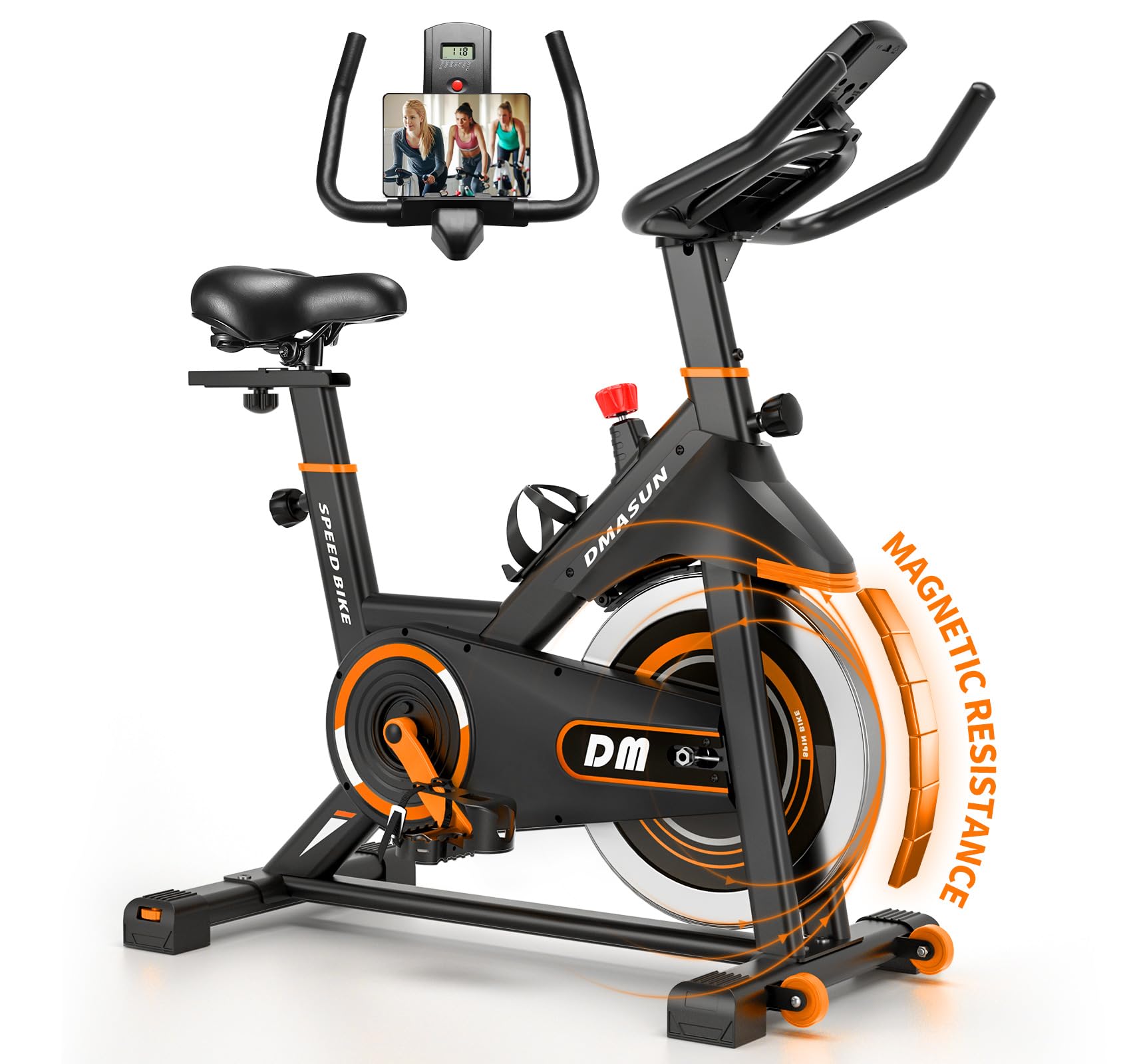
DMASUN Magnetic Upright
Key Features
- Resistance: Magnetic variable
- Weight Capacity: 330 lb
- Noise: <25 dB
- Seat Comfort: Firm stock
- App: Basic
- Price: Budget
The DMASUN Exercise Bike delivers a surprisingly solid feel for its price point — the 35-pound flywheel and magnetic resistance keep operation near-silent, and assembly takes about half an hour. The anti-loosening pedal nuts address a common concern on budget bikes, and the 330-pound capacity accommodates a wide range of riders.
What holds it back from a wider recommendation is the handlebar design: it adjusts vertically but not fore or aft, which can make the reach feel off for some riders. Additionally, with fewer than 300 reviews on record, long-term durability under regular use remains unverified — a consideration for buyers who plan to ride several times a week for years.
Pros
- Exceptionally quiet magnetic resistance for a budget-priced bike
- Sturdy construction with a 330-pound weight capacity that feels more expensive than it is
- Simple assembly completed in roughly 30 minutes
Cons
- Handlebars lack fore/aft adjustment — riders who need precise reach may find the position awkward
Works best for average-height buyers on a tight budget who want a quiet, well-built upright and can accept a fixed handlebar position — those seeking proven long-term reliability should consider the higher-reviewed pooboo.
Best for Premium Recumbent
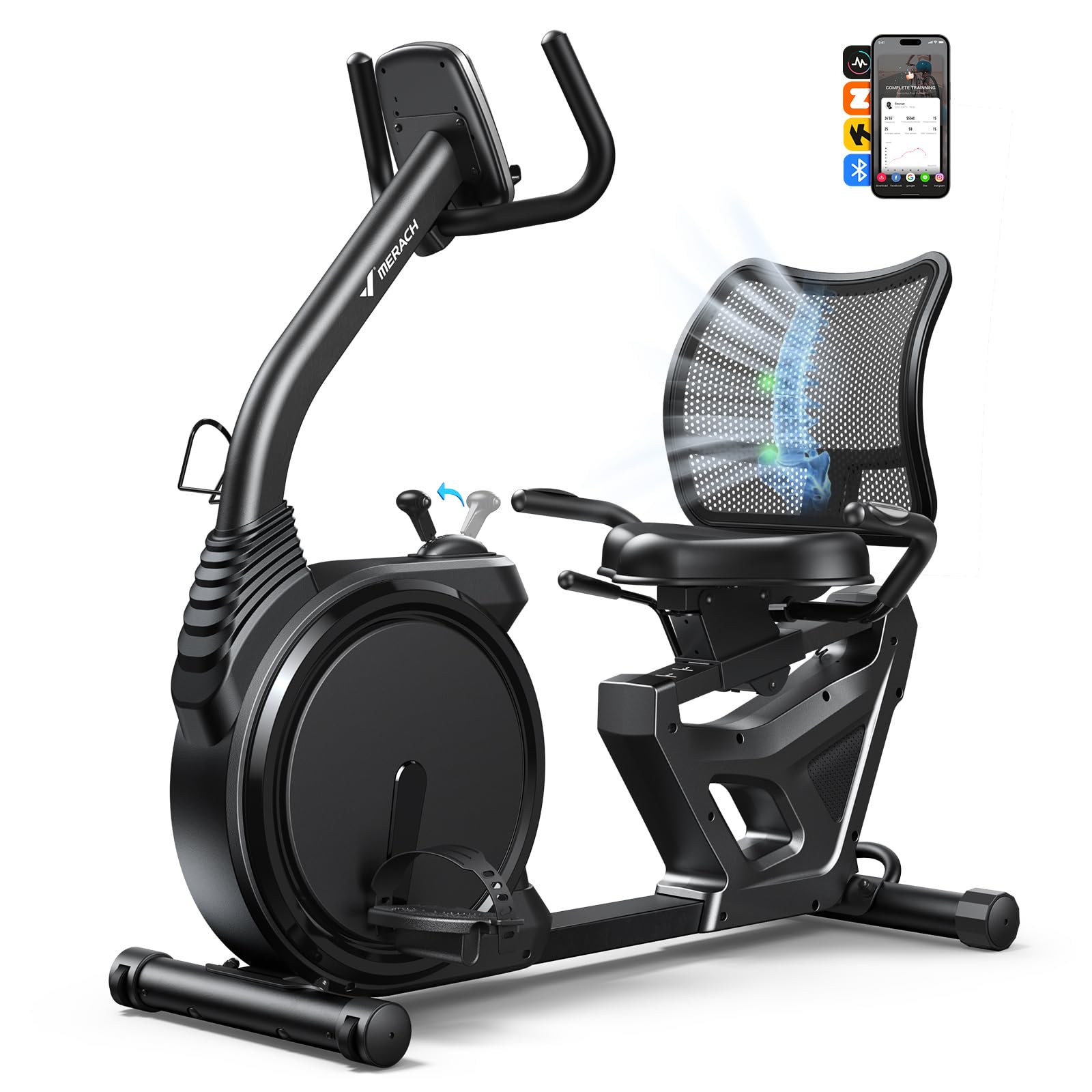
MERACH S19 Recumbent
Key Features
- Resistance: Magnetic 8-level
- Weight Capacity: 330 lb
- Noise: Quiet
- Seat Comfort: Meshed backrest
- App: Exclusive app
- Price: Mid-Range
The MERACH S19 Recumbent delivers the most comfortable seat and backrest we have tested in this price range, making long low-impact sessions genuinely enjoyable. Magnetic resistance runs whisper-quiet, and the car-style resistance lever is easy to reach. However, at this mid-range price point the bike provides only eight resistance levels, while competitors like the Sunny and Niceday offer sixteen for less money. That makes it a premium choice for buyers who prioritize comfort over resistance range or advanced display features.
Pros
- Padded seat and mesh backrest support long rides without discomfort
- Near-silent magnetic drive suits apartment or shared spaces
- Sturdy frame and components feel built to last at this price
Cons
- Basic LCD screen lacks backlight and pre-programmed workouts
- Limited legroom may feel cramped for riders over 6 feet tall
Best for seniors or anyone who values seat comfort above all else and can live with a basic display and fewer resistance levels.
How to Choose
The single most important insight: most under-$400 exercise bikes have uncomfortable seats and potential pedal durability issues, so focus on magnetic resistance and a solid frame first.
Resistance Mechanism
Magnetic resistance uses magnets to create drag without physical contact, resulting in near-silent operation and zero pad wear. Friction resistance (felt pads or chain drives) generates noticeable noise and requires regular replacement of pads or chain lubrication.
For home use, especially in apartments or shared walls, magnetic systems are the clear choice. The trade-off is that cheap magnetic bikes may have fewer resistance levels (8 vs 100), but even 8 levels are enough for most steady cardio routines.
Weight Capacity and Stability
A higher weight capacity usually correlates with a heavier, wider frame that resists wobble during standing pedaling. Look for a minimum of 300 lb capacity if you plan to ride aggressively.
Bikes with reinforced steel frames and wide stabilizer bars (often found on bikes above $200) feel much more planted. Lighter budget models may flex under heavy use, so test for wobble by rocking the handlebars at the store.
Noise Level
Noise is primarily determined by the drive system (belt vs chain) and resistance type. Belt-driven magnetic bikes produce below 25 dB — quieter than a whisper. Friction pad bikes can reach 40-50 dB, especially as pads wear.
If you exercise while others sleep or watch TV, prioritize a magnetic bike with a belt drive. Even some magnetic bikes develop clicks from loose components over time, so check user reviews for long-term noise complaints.
Seat Comfort and Adjustability
Almost every exercise bike under $400 ships with a seat that feels hard after 15 minutes. Manufacturers cut costs on padding because it’s easy to replace. Budget $15-$20 for a gel seat cover or wider saddle.
Adjustability range matters: fore-aft and vertical seat adjustment accommodates different leg lengths. Recumbent bikes generally have more cushioned seats out of the box, making them better for users with lower back or knee issues.
App Connectivity
Bluetooth connectivity to apps like Zwift, Peloton, or branded apps can add motivation with virtual rides and classes. However, many budget bikes have basic apps with limited content; the bike’s mechanical quality matters far more than app features.
Treat app support as a bonus. The bike’s ride feel, quietness, and durability are what you’ll interact with every session. A $170 bike with a decent app is a better buy than a $300 bike with a glitchy app and poor resistance.
FAQ
Is magnetic resistance really quieter than felt-pad resistance?
Yes, magnetic resistance generates no physical contact, so it’s near-silent (<25 dB). Felt-pad resistance rubs against the flywheel and creates a noticeable whoosh that gets louder as the pad wears. For shared living spaces, magnetic is the clear winner.
Why do so many exercise bike seats hurt? Can I replace them?
Manufacturers use firm minimal padding to keep costs low and avoid warranty claims from sagging. A gel seat cover ($15) or a wider comfort saddle ($30) solves this instantly. Budget for it as a standard upgrade.
How much weight can a $200 stationary bike safely hold?
Most $200 bikes claim 300 lb, but real-world stability varies. Look for a steel frame with wide stabilizers and at least 5 feet of distance between the front and rear feet. Bikes with 350 lb capacity at this price (like pooboo) tend to feel more solid.
Can I use a Peloton subscription with a cheap exercise bike?
Yes, if the bike has Bluetooth connectivity (most magnetic bikes do). You can use the Peloton app ($12.99/mo for digital-only) on a tablet. You won’t get auto-resistance or leaderboard integration, but the classes work fine with manual resistance.