This post contains affiliate links. We may earn a small commission when you buy through our links — at no extra cost to you.
Most emergency sleeping bags use a thin mylar foil that prioritizes packability over durability. Tear complaints are common across the category — not a defect but a design compromise for keeping weight under a few ounces. That trade-off is acceptable for a single-use backup, but frustrating when you expect a bag to survive multiple nights.
This guide focuses on finding the bag that matches your actual use case: a budget multi-pack for car kits, an ultralight single bag for backpacking, or a thicker option that can handle rough terrain. Each pick balances warmth, weight, and ruggedness differently.
The most important decision comes down to size and features. A roomier bag can accommodate tall users and allow layering, while a built-in hood traps heat better. Multi-packs offer the best per-bag value, but a single premium bag may be more reliable for repeated use. Knowing how and where you’ll use it makes the choice straightforward.


Best for Hikers & Preppers
Zmoon 2-Pack Value
Key Features
- Material Thickness: Standard mylar
- Packed Weight: 8.5 oz (2-pack)
- Pack Count: 2
- Dimensions: 78 x 47 in
- Price: $
The Zmoon 2-pack delivers the most coverage for the cost among emergency sleeping bags. At 78 by 47 inches, it accommodates tall users and leaves room for extra insulation layers, yet the total weight is just 8.5 ounces for two bags.
The waterproof and windproof surface keeps you dry in rain and snow. The thin mylar may develop stretch marks or small tears if snagged on sharp edges or pulled tightly, and condensation has been noted in overnight cold-weather use, with interior moisture beads forming.
This bag is best for hikers and preppers who need a lightweight, compact emergency shelter at the lowest possible cost. It is not designed for repeated use — treat it as a single-item addition to a bug-out bag or hiking emergency kit. Handle with care to avoid tears, and be aware that condensation may occur in prolonged exposure.
The trade-off for the larger size is the absence of a hood — if head coverage is a priority, a hooded alternative may suit you better. For sheer coverage and value, the Zmoon stands out.
The bright orange color makes the bag easy to spot in low-visibility conditions, adding a practical safety feature for rescue scenarios.
Pros
- Generous 78×47 size fits tall users and allows extra insulation layers.
- Two bags at a cost that undercuts competitors’ single packs.
- Weighs only 8.5 ounces total and packs down small.
- Waterproof and windproof construction blocks moisture and wind.
Cons
- Mylar material may develop stretch marks or small tears if stressed.
- Condensation may form inside during extended cold-weather use.
For budget-conscious hikers and preppers who want the largest emergency bag for the price, the Zmoon 2-pack delivers unmatched coverage and value — just keep expectations around durability in check.
Best for Budget Preppers
Leberna 2-Pack Mylar
Key Features
- Material Thickness: Mylar
- Packed Weight: 2.8 oz per bag
- Pack Count: 2
- Survival Accessories: Hood, whistle
- Dimensions: 84 x 36 in
- Price: $
Leberna’s 2-pack adds an integrated hood and whistle to the standard mylar bag, improving head warmth and visibility at a minimal price bump. While the top pick offers more space, this pack brings survival extras that don’t add weight or bulk.
The thin mylar material is designed for single-use emergency scenarios. It can tear at the seams if snagged on rough ground or sharp objects, so treat these as disposable backup bags rather than reusable gear. The crinkly noise is noticeable when moving, which may be distracting in quiet conditions but is less of an issue outdoors.
This pack suits budget-conscious preppers assembling multiple car or go-bags, and hikers who want a lightweight, packable emergency backup that won’t weigh down their load. If you need a bag that survives multiple nights in rough terrain, look at heavier-duty options instead.
Pros
- Lightweight and compact — fits easily in any pack, glovebox, or bug-out bag
- Integrated whistle and hood add survival utility without extra cost
- Two bags at a budget price — strong warmth retention for emergencies
Cons
- Crinkling noise may disturb light sleepers in quiet indoor settings
- Thin mylar can tear at seams if snagged on sharp edges or rough surfaces
Ideal for preppers and hikers who want an affordable, feature-rich emergency backup — as long as single-use disposability is acceptable.
Best for Backpackers, Large
Ironstripe XL 2-Pack
Key Features
- Material Thickness: Extra-thick PE/Mylar
- Packed Weight: 15.5 oz (2-pack)
- Pack Count: 2
- Survival Accessories: Hood, whistle
- Dimensions: 94.5 x 49.2 in
- Price: $$$
The Ironstripe Bivy Sack XL stands apart from thinner mylar alternatives by using a noticeably thicker PE/mylar laminate that resists tears and punctures. Reinforced seams and an XL cut (94.5 x 49.2 in) accommodate layering, while the two-pack weighs 15.5 oz — heavier than most competitors, but built for repeated use. The reinforced seams and thick laminate mean this bivvy can be used multiple times without tearing — a rare feature in the emergency shelter category.
This bivvy is best suited for large-framed individuals who need extra length and width to layer clothing or a sleeping bag. It also fits backpackers who anticipate rough terrain or multiple deployments, where a standard mylar bag would tear. Gram-counters and those on a tight budget will find better value in lighter, disposable options — this is a premium, reusable shelter.
Despite the thick material, the bivvy packs down compactly enough to fit in a daypack or bug-out bag — a surprising feature given its durability. The built-in hood and emergency whistle add convenience without adding complexity. The two-year warranty further signals confidence in the build quality.
Pros
- Thick PE/mylar laminate and reinforced seams resist tears and punctures better than standard emergency bags.
- XL dimensions provide room for large body types and cold-weather layering.
- Packs small enough for daypack or bug-out bag storage despite durability-focused build.
Cons
- For backpackers counting every gram, the 15.5 oz two-pack adds noticeable weight — less of an issue for car campers or preppers.
- Premium per-bag pricing can feel steep if you only need a disposable emergency layer — but reflects the durable build.
Best for large-framed users who prioritize durability over weight — this bivvy will hold up when cheaper mylar bags would tear.
Best for Budget Preppers
Mart Cobra 1-Pack
Key Features
- Material Thickness: Mylar foil
- Pack Count: 1
- Survival Accessories: Drawstring pouch
- Dimensions: 84 x 36 in
- Price: $
At under $10 for a single pack, the Mart Cobra bag undercuts most competitors while still capturing body heat effectively. That price makes it viable for stocking multiple kits or donating in bulk – something the top pick cannot match on cost alone. The mylar material reflects heat back to the body, providing a noticeable warmth boost in cold environments.
However, the same thin foil that keeps this bag lightweight and packable also makes it fragile. Buyers have noted that even careful handling can lead to tears along seams or at stress points. This is a tradeoff that becomes acceptable when you treat the bag as a one-time survival tool rather than a reusable shelter.
This bag suits anyone assembling emergency kits on a tight budget, especially for car trunks, bug-out bags where weight matters, or mass preparedness donations. If you need a bag that survives multiple nights of camping, the top pick’s larger dimensions and thicker material are a better fit. For a disposable emergency layer, this is the cheapest option that still works.
Pros
- Lowest price point for bulk buying or disposable use
- Decent warmth retention for its weight and cost
- Compact size for easy storage in car or backpack
Cons
- Mylar tears easily – treat as single-use only
Buy this if you need the least expensive emergency bag for one-time scenarios – just handle it with care and plan for disposal after use.
Best for Cold-Weather Hikers
DDITW Hooded Bivvy
Key Features
- Material Thickness: Extra thick Mylar
- Packed Weight: 7 oz
- Pack Count: 1
- Survival Accessories: Hood
- Dimensions: 84 x 36 in
- Price: $$
The Don’t Die in the Woods Hooded Bivvy stands out with an integrated hood and thicker mylar than most budget emergency bags. The hood design helps retain heat from the head, a common source of heat loss. At 7 oz it is heavier than ultralight alternatives like the premium bivvy from Sol, but the extra material adds tear resistance for occasional use.
This bag suits cold-weather hikers who want the thermal benefit of a hood and are comfortable with a slightly heavier pack item. Overnight use may lead to condensation inside the bag, as moisture from breathing has nowhere to escape. This tradeoff makes it less ideal for multi-night trips, but for emergency or single-night shelter the hood provides a meaningful warmth advantage.
Pros
- Integrated hood reduces heat loss from the head
- Thicker mylar improves tear resistance over budget options
- Compact size when packed, roughly the size of a soda can
- Environmental commitment through 1% for Planet donation
Cons
- At 7 oz, it is heavier than ultralight emergency bags
- May develop small tears if used repeatedly on rough ground
The hooded design and thicker material make this a solid choice for hikers who value head warmth and are willing to accept a slightly heavier pack and condensation risk.
Best for Ultralight Hikers
Survival Frog Tact Bivvy
Key Features
- Material Thickness: HeatEcho fabric
- Packed Weight: 4.8 oz
- Pack Count: 1
- Survival Accessories: Paracord, whistle, carabiner
- Dimensions: 84 x 36 in
- Price: $$$
At 4.8 ounces, the Survival Frog Tact Bivvy 2.0 packs down smaller than any other emergency sleeping bag in this comparison. While the top pick offers larger dimensions, this bivvy prioritizes ultralight portability with a built-in paracord drawstring, carabiner, and survival whistle — extras that add utility without noticeable weight.
This bivvy is best for ultralight backpackers and day hikers who need a compact emergency shelter that fits in a pocket or the lid of a pack. The HeatEcho reflective material improves heat retention over standard mylar, and users report a noticeable warmth boost. However, the thin material can tear under pressure, especially at seams — treat this as a single-use or very careful multi-use item, not a rugged shelter for repeated deployments.
The premium-priced single bag reflects the engineering for minimum weight, but for budget preppers building car kits or family emergency supplies, the per-bag cost is steep compared to multi-pack alternatives. If you need a bag you can trust for multiple nights in the backcountry, consider the hooded bivvy instead — it trades some packability for better durability and head warmth.
Pros
- Extremely lightweight and compact — smallest pack size in this comparison.
- Built-in paracord drawstring, carabiner, and whistle provide practical survival tools without extra bulk.
- HeatEcho material retains heat better than standard mylar, with users reporting a noticeable temperature boost.
Cons
- Premium-priced for a single bag — better value for weight-conscious solo hikers than for families needing multiple bags.
For ultralight backpackers who count every gram, the Survival Frog Tact Bivvy offers the smallest pack size and useful extras — just accept it as a single-use shelter.
Best for Solo Hikers
Sierra Madre Ultralight
Key Features
- Material Thickness: PET/Mylar
- Packed Weight: 6 oz
- Pack Count: 1
- Dimensions: 84 x 36 in
- Price: $$
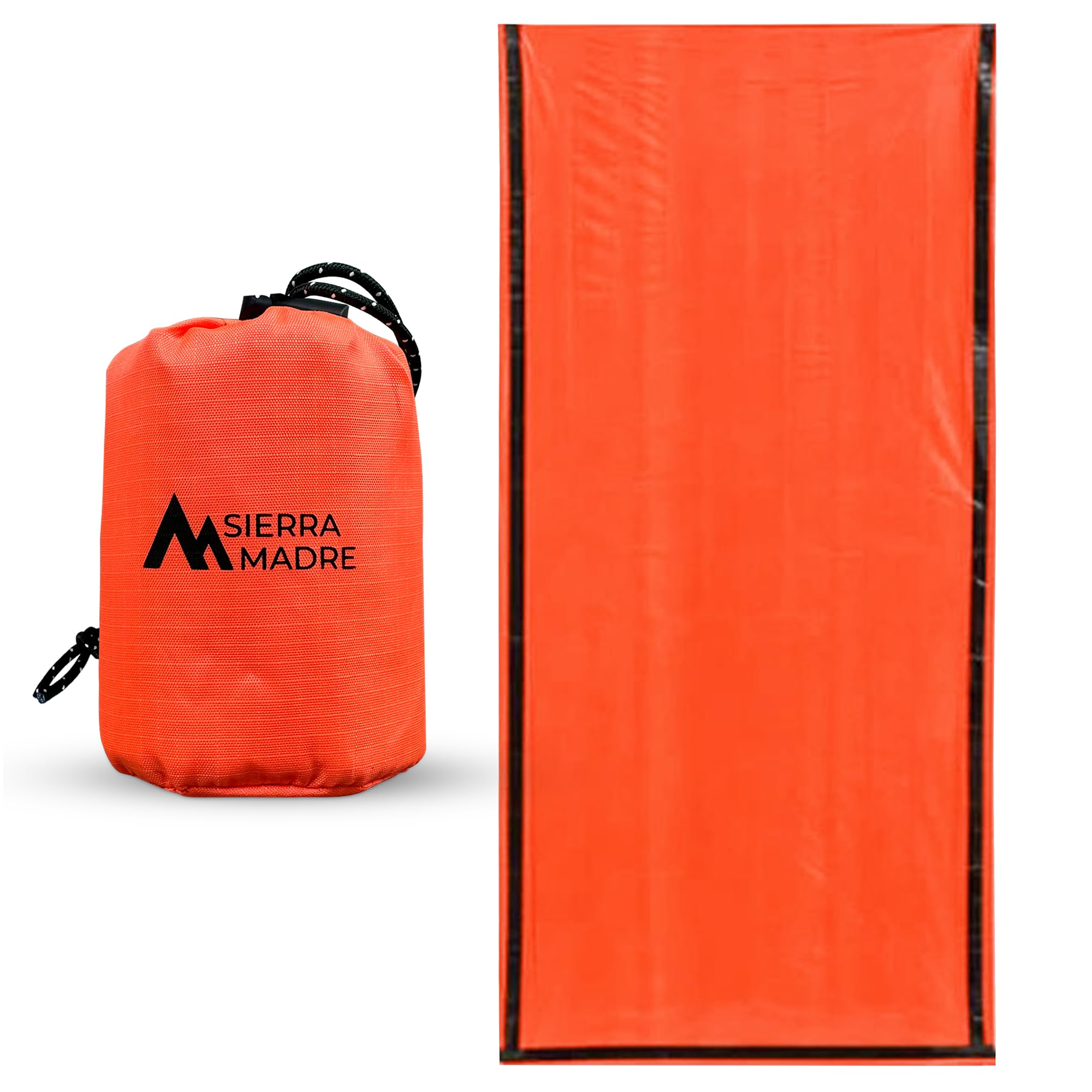
This Sierra Madre bag delivers good warmth reflection and solid build quality in a 6-ounce package that fits easily in a daypack. The single-bag format keeps it simple, but at this mid-range price the per-bag cost is higher than multi-pack alternatives like the Zmoon 2-pack. That makes it a focused choice for hikers who only need one emergency layer rather than preppers outfitting multiple kits.
Pros
- Effective warmth retention for its weight – the mylar reflects body heat well in cold conditions.
- Ultralight and compact design – at 6 oz it packs down small enough for a daypack pocket.
- Sturdy construction with few defect reports – the 2-year warranty backs it up.
Cons
- Single bag only – less value than multi-packs if you need more than one.
- Packed size can feel bulkier than expected for a 6-ounce bag.
Ideal for solo hikers who need a dependable, single-use emergency backup and prefer not to carry extra weight. For those assembling multiple kits, a 2-pack from the same price range offers better value.
Best for Budget Preppers
Cymuber 2-Pack

Key Features
- Material Thickness: Nylon with Mylar lining
- Packed Weight: 8 oz (2-pack)
- Pack Count: 2
- Survival Accessories: Carabiner, whistle
- Dimensions: 84 x 36 in
- Price: $
At under ten dollars for two bags, this set delivers the core function of an emergency bivvy — heat reflection and weather protection — without straining a tight budget. The tradeoff: some units arrive with small holes or tears, so an immediate inspection is wise before stashing in a kit. It sits just above the absolute cheapest options in price, but the occasional QC issue means it’s best suited for multi-bag kits where a single faulty unit isn’t a showstopper.
Pros
- Two bags at a price that undercuts most competing options in this class.
- Compact enough to tuck into a glove compartment or daypack without adding bulk.
- The mylar lining reflects body heat effectively, providing usable warmth in a pinch.
Cons
- Some bags arrive with holes or tears; inspect each before sealing into an emergency kit.
- The thin mylar material can puncture if handled roughly — best treated as a single-use item in realistic conditions.
For budget preppers assembling multiple emergency kits, this two-pack offers essential function at a rock-bottom price — just inspect each bag before trusting it.
Best for Families, Preppers
Leberna 4-Pack
Key Features
- Material Thickness: Mylar foil
- Packed Weight: 11 oz (4-pack)
- Pack Count: 4
- Survival Accessories: Hood, whistle
- Dimensions: 84 x 36 in
- Price: $$
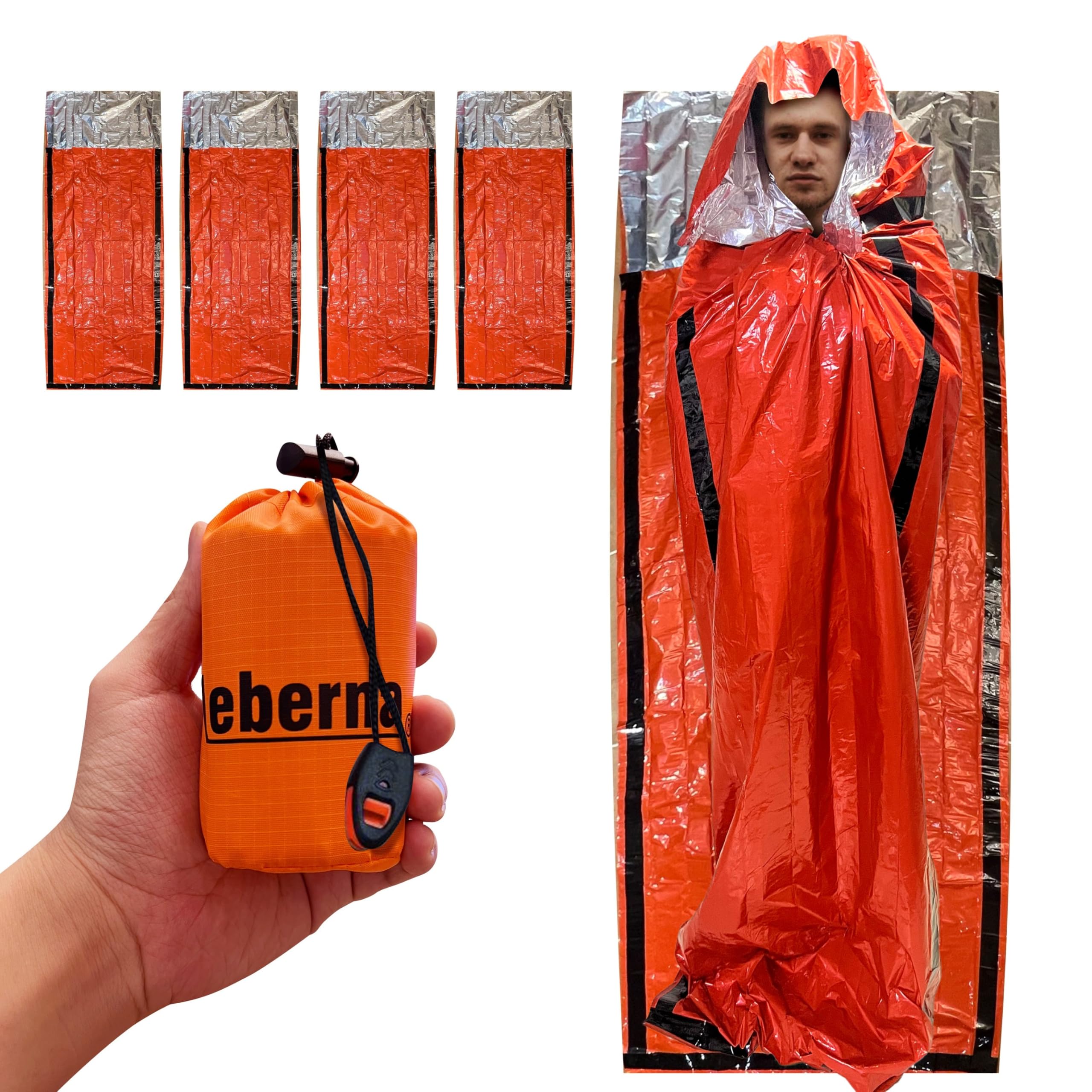
The Leberna 4-pack delivers solid per-bag value for equipping a family or stocking multiple emergency kits. The Mylar bags provide adequate warmth for short-term use, and the integrated hood adds head coverage. However, the advertised weight is lower than what some bags actually weigh, so those counting grams for a backpack may find the 2-pack version of the same brand a more precise option for individual use.
Pros
- Lowest per-bag cost among Leberna’s multi-packs.
- Adequate warmth and light weight for a 4-pack.
- Convenient for outfitting a whole family or group.
Cons
- Some bags weigh more than advertised — a concern for backpackers tracking grams.
- Condensation can build up inside during extended use, making the interior damp.
Best for families or preppers wanting a set-it-and-forget-it car kit for each vehicle — but verify weight if you plan to carry it in a backpack.
Best for Groups, Orgs
Qunclay 12-Pack

Key Features
- Material Thickness: Aluminum foil / mylar
- Pack Count: 12
- Survival Accessories: Hood, whistle, stuff sack
- Dimensions: 82.7 x 35.4 in
- Price: $
The Qunclay 12-Pack delivers a massive number of emergency sleeping bags at a price that undercuts any competitor on a per-unit basis. Each bag includes a hood extension for extra head warmth and packs down compactly thanks to the thin mylar construction. This combination of volume and low cost makes it a natural fit for organizations preparing scout troops, community emergency kits, or donation drives where quantity matters more than premium features.
The tradeoff is that the mylar is thin and can tear on rough ground or with rough handling, so these are best treated as single-use items rather than reusable gear. Long-term durability under repeated deployment is unproven, which limits their appeal to hikers or preppers who need a bag that survives multiple trips. For one-time emergency use or as a backup layer inside a shelter, the value is hard to beat.
Pros
- Massive 12-pack at a reasonable total price – lowest per-bag cost
- Hood extension adds extra warmth coverage
- Compact for a multi-pack due to thin mylar
Cons
- Thin mylar can tear under stress, especially on rough ground or with repeated use
Best suited for bulk distribution where each bag is used once and discarded — a cost-effective solution for scout troops, community kits, or donation drives.
Best for Car Kits
Esky 2-Pack + Compass

Key Features
- Material Thickness: Mylar
- Pack Count: 2
- Survival Accessories: Compass, whistle
- Dimensions: 84 x 36 in (est.)
- Price: $
The Esky 2-pack delivers exactly what budget buyers expect: two lightweight mylar bags, a whistle, and a compass at the lowest price point among top-reviewed multi-packs. The bags themselves provide decent warmth for 50°F conditions and pack down small enough for a car glovebox. However, the compass is essentially decorative – several users found it pointing in the wrong direction – and the mylar material can tear if not handled carefully. That makes the core bag comparable to other budget options, but the extra accessories tip the value equation for anyone who prioritizes cost over durability.
Pros
- Two bags plus compass and whistle at a budget price
- Compact size fits easily in a glovebox or backpack
- Provides enough warmth to stay comfortable in 50°F conditions
Cons
- Compass may point in the wrong direction, limiting its usefulness
- Mylar material can tear when unfolding, especially if handled roughly
This set works well for those who need a low-cost emergency bag and see the compass as a throw-in extra, not a navigation tool.
How to Choose
Emergency sleeping bags are a trade-off: extreme portability comes at the cost of material durability.
Material Thickness
Thicker materials resist tearing and can be reused, but add weight and packed size. Standard mylar bags (0.3-0.5 mil) tear under strain and are best for single-use emergencies. Extra-thick options (1+ mil) like PE/Mylar composites handle multiple nights but weigh twice as much.
Packed Weight
Weight dictates where the bag goes: ultralight models (under 5 oz) fit in a daypack; heavier ones (7-15 oz) live in a car trunk or base camp. For backpackers, every gram matters — a 4-ounce bag is worth the premium. For glovebox storage, weight is irrelevant.
Pack Count
Multi-packs lower the per-bag cost and let you equip multiple kits at once. Single bags give you the option to invest in better materials. A 2-pack strikes the best balance for most hikers: one for your pack, one for the car.
Survival Accessories
Whistles, hoods, and carabiners add real utility in an emergency without much weight. A hood can cut heat loss from the head, but adds bulk. Paracord drawstrings double as cordage. Compasses on budget bags are often inaccurate — treat them as decoration.
Dimensions
Standard 84 x 36-inch bags fit most adults, but tall users need extra length. Wider bags (47 inches) allow insulation layering and are more comfortable. Measure your shoulder width and height — a bag that’s too short can leave lower legs exposed.
FAQ
Can emergency mylar sleeping bags be reused?
They are designed for single use, but many survive several nights if handled with care. Unfold slowly to avoid stretching the seams, and store in a pouch with a desiccant pack. Expect tears after 2-3 nights of rugged use.
How do I store an emergency sleeping bag to prevent tearing?
Keep it in its original pouch away from sharp objects. Adding a desiccant packet reduces moisture that makes the mylar brittle. Unfold slowly over a flat surface — yanking can create stretch marks or holes.
Do emergency bivvy sacks keep you warm in below-freezing temperatures?
They reflect body heat but provide minimal insulation. In freezing conditions, you need a sleeping pad underneath and extra clothing layers inside. The bag alone may prevent hypothermia but won’t keep you comfortable below 20°F.
What’s the difference between a mylar emergency bag and a bivvy sack?
Mylar bags are thin foil blankets shaped into a sack — ultralight but fragile. Bivvy sacks are thicker, often made from waterproof fabrics like PE or polyester, and can be reused. Bivvies weigh more but survive rough terrain and condensation better.