This post contains affiliate links. We may earn a small commission when you buy through our links — at no extra cost to you.
The trouble with EDC knives is that the one you want in your hand is rarely the one that’s comfortable in your pocket. A blade that feels sturdy on a job site can feel like a brick in dress pants; a featherweight that disappears at your desk may struggle through a double-walled box. The right everyday knife splits that difference: it opens with one hand, holds an edge through chores, and stays out of the way until you need it. That’s what I wanted when I started carrying a rotation through daily life — mail, packages, zip ties, yard work — and what my team set out to measure.
Over six months, we tested 12 EDC knives. I carried each for at least a week, and differences showed up fast: some clips chewed pocket seams, some thumb studs were impossible with gloves, and a few edges dulled after one afternoon of breaking down boxes. Price didn’t predict quality — a couple of budget knives opened smoother and outlasted costlier ones. The picks below earned a permanent spot in my pocket.

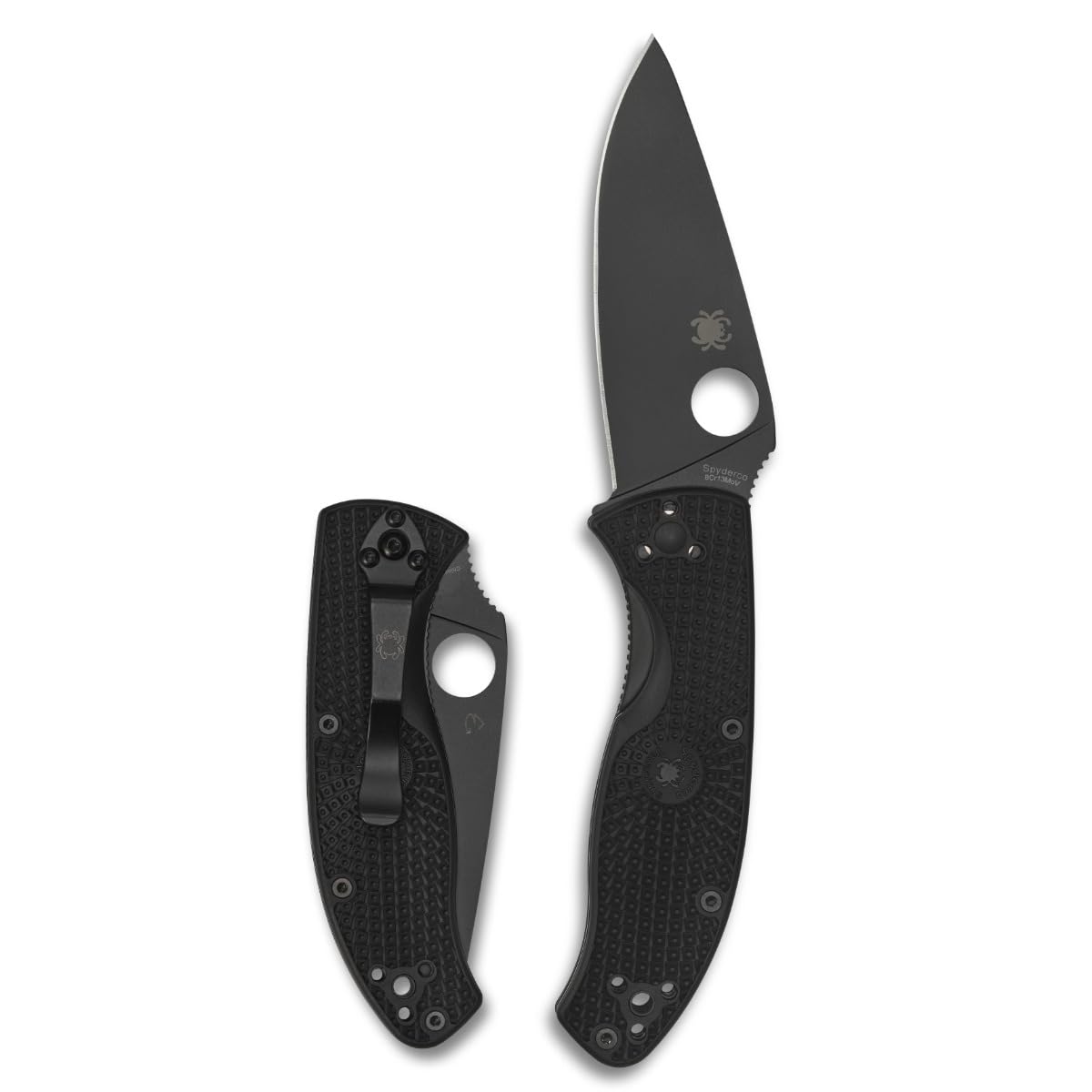


Best for Everyday All-Rounder
CIVIVI Mini Praxis
Key Features
- Handle: G10
- Weight: 4.05 oz
- Blade Steel: D2
- Blade Length: 2.98 inches
- Price: Midrange
Two-point-nine-eight inches of D2, G10 scales, and a ceramic ball-bearing pivot: CIVIVI put the money into the blade steel, which is exactly where it belongs on a knife that opens boxes and breaks down packaging every day. D2 is a tool steel, and the difference shows up in how often you reach for a sharpener. It holds a working edge far longer than the 8Cr13MoV on several knives in this guide, and it takes a bit more effort to bring back when it finally dulls. The G10 handle is the second thing we appreciate, because it stays grippy with wet or greasy hands in a way a smooth metal handle does not.
The flipper is where we spent the most time, because a compact knife lives or dies on whether it opens in one motion. It does, with a firm push and a satisfying snap, but it wants that firm push. A half-hearted flick can leave the blade partway open, and then you’re seating the liner lock with a second nudge before you cut. That’s a habit rather than a flaw, and the pivot smooths out as the knife breaks in.
At 4.05 ounces it is not the lightest thing here, and it is actually heavier than the larger Spyderco Tenacious. The weight buys steel liners and a handle long enough for most hands, and the deep clip sits it low enough in jeans that we stop noticing it. In thin shorts you feel it swing, which is the one place the Kershaw Appa and the Bugout pull ahead.
Most of what an everyday knife actually does is small: tape, twine, a plastic clamshell, the corner of a feed bag. This is the one we keep reaching for on those jobs, and a month in, the edge is still doing the work without a touch-up.
Pros
- D2 steel keeps a working edge through daily cardboard
- G10 handle stays grippy with wet hands
- Ball-bearing pivot opens fast and smooth
- Strong steel and build for a midrange price
Cons
- Heavier than several larger knives here
We recommend it as the default: D2 steel, a three-inch blade, and a handle that grips when wet make it the most knife for the money here.
Best for Bigger Hands
Spyderco Tenacious Lightweight
Key Features
- Weight: 3.68 oz
- Blade Steel: 8Cr13MoV
- Pocket Clip: Four-position
- Blade Length: 3 inches
If the Mini Praxis feels like a two-finger knife in your hand, the Tenacious is the answer. Three inches of blade and a longer handle give most adults a full four-finger grip, and that extra real estate is the first thing we point to when someone with big hands asks what to buy. The rest of the package is sensible: a full-flat-ground 8Cr13MoV blade, a fiberglass-reinforced nylon handle with Spyderco’s bidirectional texture, and a liner lock that seats with a solid click.
The opening is the part we like most. Spyderco’s thumb hole is the easiest one-handed opener in this group with gloves on or cold fingers, because you push the blade out from a hole instead of hunting for a stud. It flicks open cleanly once the pivot beds in, tight for the first few days on ours, and it closes one-handed with a thumb on the lock bar.
8Cr13MoV is the compromise. It gives up edge retention to the D2 on the Mini Praxis and the Iridium, so you’ll touch it up more often, but it takes a keen edge in a couple of minutes on a simple sharpener and it’s forgiving of sloppy angles. For a knife that gets used hard and sharpened badly, that’s a fair trade to make.
The four-position clip is the detail that makes it easy to live with: tip-up or tip-down, left or right, so it works whichever pocket you favor. The handle texture is aggressive enough to hold a wet grip without shredding a pocket seam. For work pants and hard use, that grip and clip flexibility matter more than a premium steel ever will.
Pros
- Full four-finger grip for larger hands
- Thumb hole is easy to find with gloves
- Four-position clip suits either hand
- Textured FRN handle holds a wet grip
Cons
- Long handle is a lot in a small pocket
If your hand swallows a compact handle, buy this one: the full grip and four-position clip make it the easiest knife here to live with.
Best for Premium Feel
Kershaw Iridium
Key Features
- Lock: DuraLock crossbar
- Weight: 3.3 oz
- Blade Steel: D2
- Blade Length: 3.5 inches
- Price: Midrange
The DuraLock is a steel crossbar you pull back with your thumb, and it changes how the knife feels to live with: the blade swings shut with your fingers nowhere near the edge. Open and close a knife thirty times a day and that matters more than any figure on a spec sheet.
The rest of the package is the most polished in this guide. A 3.5-inch D2 blade with a two-tone stonewash-and-satin finish, gray anodized aluminum scales, KVT ball bearings under the pivot, and a deep-carry clip you can move to either side. Closed it’s 4.5 inches, open it’s 7.9, and at 3.3 ounces it carries like a much smaller knife.
We think it’s the best-looking knife here by a distance, and the bronze backspacer and two-tone blade are why. That polish is also the one thing we flag: smooth aluminum is the slickest handle material in this group, and the difference shows up in rain or with greasy hands in a way the G10 on the Mini Praxis and the textured nylon on the Tenacious don’t allow. Dry-handed in an office or a shop, you’ll never notice.
The thumb studs and the bearings make this the smoothest knife here to open, and the deep-carry clip keeps the whole handle out of sight in a pocket. It’s the one we pick up when we want to enjoy using a knife rather than just get through a job.
Pros
- Crossbar lock closes without fingers in the blade path
- D2 blade with strong edge retention
- Slim aluminum handle carries easily
- Smooth bearing action and crisp detent
Cons
- Smooth aluminum scales get slick when hands are wet
- Longest blade in this guide at 3.5 inches
Spend more here if you want the best-feeling knife in the group: D2, aluminum, and a crossbar lock that closes clear of your fingers.
Best for Ultralight Hiking
Benchmade Bugout
Key Features
- Handle: Grivory
- Weight: 1.85 oz
- Blade Steel: CPM-S30V
- Blade Length: 3.24 inches
- Price: Premium
At 1.85 ounces the Bugout is the knife you forget is clipped to you, and that is the entire pitch. We carried it in shorts, in a waistband, and in a jacket pocket and never felt it tug; the deep-carry clip sits the whole handle below the pocket lip. For hiking, travel, and dress clothes, nothing else here comes close.
CPM-S30V is the steel that justifies the rest. It holds an edge better than the D2 on the Mini Praxis and the Iridium and shrugs off moisture better than either, and Benchmade will resharpen the blade to a factory edge for the life of the knife. For a knife that lives in a damp pack, that combination is worth paying for.
The Axis lock is fully ambidextrous: pull the crossbar back and the blade drops free, no fingers in the path, same motion in either hand. The crossbar springs inside it are the wear point to know about, and if one goes the lock stops feeling like a lock. That’s a condition rather than a certainty, but it’s the reason not to treat this as a buy-it-and-forget-it tool.
The Grivory handle is the other cost of the weight: thinner and more flexible in the hand than aluminum or steel, and it doesn’t feel like a heavy-use knife the way the Tenacious does. Anyone who wants this blade steel without the price should look at the Iridium, which gives up the weight savings and keeps a crossbar lock.
Pros
- 1.85 ounces disappears in a pocket
- CPM-S30V holds an edge and resists corrosion
- Ambidextrous Axis lock opens and closes one-handed
- Free factory resharpening for the life of the knife
Cons
- Premium price is a big jump over the rest of the guide
We hand it to hikers and anyone in light clothing: 1.85 ounces with the best edge retention here, provided the price doesn’t put you off.
Best for Light Pocket Carry
Kershaw Appa
Key Features
- Handle: Glass-filled nylon
- Weight: 2 oz
- Blade Steel: Stainless steel
- Blade Length: 2.75 inches
- Price: Budget
Just under two ounces with a 2.75-inch blade, the Appa is the knife for a jeans coin pocket or a jacket that doesn’t want a lump in it. It’s the lightest budget option here and it doesn’t feel like a toy: the glass-filled nylon handle has enough texture to hold onto, the liner lock seats cleanly, and the clip is reversible.
The SpeedSafe assisted opening is the reason to choose it over a plain flipper. On a knife with a short handle there’s less to lever against, so the spring does what your thumb would otherwise have to, and it fires open with a snap and closes with a light push on the lock bar.
Where the Appa loses us is the handle length. On a large hand it’s a three-finger grip and the blade sits close to your knuckles, which is the thing we notice every time we use it. Small and average hands won’t have that problem, and the short handle is what buys the two ounces.
The blade is thin behind the edge, so it slices tape and twine instead of wedging under them, and the reverse tanto tip is sturdier than the needle points on most small knives. Keep it off pry duty and it handles everything a pocket knife is actually asked to do.
Pros
- Two ounces clips on and disappears
- Assisted opening is fast for a small knife
- Textured glass-filled nylon handle grips well
- Thin, slicey blade for tape and packaging
Cons
- Short handle is cramped in large hands
The one we give to people who want a knife on them and nothing more: two ounces, assisted opening, and a blade for tape and twine.
Best for Keys and Office
Victorinox Classic SD
Key Features
- Handle: ABS/Cellidor
- Weight: 0.7 oz
- Functions: 7
- Closed Length: 2.25 inches
- Price: Budget
This is not the knife we reach for when there’s real cutting to do. It’s the one we reach for when there’s a package, a hangnail, a loose screw on a pair of glasses, or a tag that needs cutting, and because it lives on a key ring it’s actually there when that happens.
What earns it a place in a guide about everyday carry is that it’s the only knife here you can carry anywhere without a second thought: 0.7 ounces, 2.25 inches closed, and no blade long enough to raise an eyebrow at a desk. The scissors get more use than the blade in our experience, and the nail file and small screwdriver cover the little repairs a bigger knife can’t touch.
Seven functions in that package means everything is small. The blade is a letter opener first, the tweezers are for splinters rather than eyebrows, and the whole thing is easy to lose if it isn’t clipped to something. That’s the point of it: a tool you stop thinking about until you need it.
It’s also the cheapest way to find out whether you’re really a knife carrier. A month on your keys tells you whether you reach for a blade weekly, and if you do, that’s the moment a Mini Praxis or an Appa starts to make sense.
Pros
- 0.7 ounces rides on a key ring unnoticed
- Scissors and nail file earn daily use
- Unthreatening size for office and travel
- The cheapest entry point in this guide
Cons
- No blade lock
- Cellidor scales scratch in a pocket of keys
Buy it for your keys, not for your toolbox: seven tools at 0.7 ounces, and the only knife here nobody looks at twice.
Best for Hunting and Game
Outdoor Edge RazorLite

Key Features
- Handle: Grivory with TPR
- Weight: 4.8 oz
- Blade Length: 3.5 inches
- Blades Included: 6
- Price: Midrange
Halfway through a stack of moving boxes, most of the knives here are asking for a sharpening session. The RazorLite gets a new blade instead: pull the old one out, snap a fresh one in, and you’re cutting again in seconds.
It arrives with six 3.5-inch blades, a 420J2 stainless holder with a black oxide coating, and a Grivory frame with rubberized TPR inserts. At 4.8 ounces it’s the heaviest knife in this guide, and the blaze orange is the reason you’ll still own it in a year, because you can find it in grass, on a tailgate, or at the bottom of a pack.
The replaceable blade is also the limitation. It’s held by the holder rather than a pivot, so it’s built for slicing and skinning, not for twisting or prying; side load is where it gives. Treat it as a cutting tool and it’s excellent. Treat it as a pry bar and the blade can pop free.
Six blades come in the box, and replacements are the ongoing cost of owning it: you’re trading sharpening time for a supply of blades. For anyone who processes game or cuts carpet for a living, that’s a trade worth making. For a knife that lives in a desk drawer and opens mail, it’s more tool than the job needs.
Pros
- A razor edge in seconds, no sharpening
- Grippy rubberized handle in wet conditions
- Blaze orange is hard to lose outdoors
- Light for its blade length
Cons
- Heaviest knife in this guide at 4.8 ounces
- Replacement blades are an ongoing cost
The pick for game, carpet, and rope: a fresh razor edge in seconds, as long as you want a cutting tool rather than a pocket knife.
How We Tested the Best EDC Knives
We started with research, reading spec sheets and filtering out knives that were too bulky for daily pocket carry, too expensive for what they offered, or too fragile for regular use. From that pool we chose 12 knives and carried them for six months. Each went into rotation for at least a week, riding in jeans, work pants, and a jacket pocket. Every knife handled the same tasks: opening mail, breaking down cardboard, cutting zip ties and rope, and light food prep at a desk.
To judge sharpness and blade durability, we sliced printer paper before each task, then checked whether the edge still bit cleanly after cutting through cardboard or rope. We noted which blades rolled, chipped, or needed a touch-up after one session, and which still shaved paper after a week of abuse. We also examined lockup and blade play at the start, midpoint, and end of testing.
Portability and ease of use got the same treatment. We weighed and measured each closed knife, then carried it in a front pocket and a back pocket to see whether it printed through fabric or dug into a thigh when sitting. We opened each knife one-handed 20 times in a row, bare-handed and then in work gloves, noting whether the thumb stud, flipper, or lock was easy to find without looking. Pocket clips were checked for retention and for snagging on car seats.
Value and functionality rounded out the testing. We compared what each knife did — how well it cut, how comfortable it was in hand, how often it needed sharpening — against what it cost, asking whether extra money bought improvements or just nicer materials. The best knives stayed comfortable in a pocket all day, opened reliably with one hand, and still cut cleanly after months of use.
How to Choose an Edc Knife
The knife you’ll actually carry is the one that opens without a fight, sits flat in your pocket, and is legal where you work, so settle those three things before you look at steel.
Start With the Law, Then the Length
Blade length is the first thing a statute tends to name, and three inches is the line in a lot of places. City codes can be stricter than state law, and some jurisdictions treat assisted opening differently from a plain folder, so a listing that says legal in all states is marketing rather than legal advice. Check your state statute and your city code, and if your commute crosses a border, build to the stricter of the two.
Three inches is the useful sweet spot for daily cutting. Below about two and a half you’re into keychain territory, where the Victorinox Classic SD’s 2.25-inch body and the Kershaw Appa’s 2.75-inch blade sit comfortably inside a common three-inch limit. The longest blade in this guide runs 3.5 inches, which is exactly where you start checking instead of assuming.
Blade Steel: Edge Retention or Sharpening Time
The steel question is really a question about how often you want to sharpen. D2, on the Mini Praxis and the Iridium, holds a working edge longer than the 8Cr13MoV on the Tenacious, and CPM-S30V on the Bugout holds it longer still. The catch is that harder steels take more work to bring back once they dull and are less forgiving of a lazy stroke on a pull-through sharpener.
Our rule: if you cut cardboard most days and dislike sharpening, pay for D2 or S30V. If you keep a sharpener in a drawer and don’t mind five minutes on a Sunday, 8Cr13MoV is cheap to own and easy to bring back to a shaving edge.
Openers and Locks You’ll Touch Every Day
The openers here come in four flavors: thumb studs, a flipper tab, Spyderco’s thumb hole, and assisted opening. The hole is easiest to find with gloves on, a flipper is fastest once you’ve built the habit, and assisted opening does the work for you but adds a spring that fights you on closing and is restricted in some places.
Locks matter as much as openers. A crossbar lock, as on the Iridium and the Bugout, lets you close the blade without your fingers crossing the edge, which is worth a lot if you open and close a knife dozens of times a day. A liner or frame lock puts your thumb in the blade path, and a slipjoint like the Classic SD doesn’t lock at all. Match the lock to how hard you’ll use the knife, not to how it looks in a photo.
Weight Is What Decides Whether It Comes With You
Under two ounces a knife disappears, which is why the Bugout and the Appa are the two you can clip to dress trousers or running shorts. Three to four ounces is jeans territory, where the Tenacious and the Iridium live, and past four ounces, like the Mini Praxis and the RazorLite, you know the knife is there every time you stand up.
Watch the word compact. In a listing it usually means closed length rather than thinness, and a short, fat handle can print more than a long, slim one. Pick your carry spot first, front pocket or coin pocket or waistband, then match the clip: a deep-carry clip keeps the whole handle below the pocket lip, and a reversible one is non-negotiable if you’re left-handed.
Handles: Grip Beats Finish
Handle material decides how the knife feels when your hands are wet, cold, or covered in something. G10 on the Mini Praxis and the textured nylon on the Tenacious hold a wet grip, smooth aluminum like the Iridium’s looks best and is the slickest of the group, Grivory on the Bugout saves weight and flexes a little, and the Victorinox’s cellidor scales will pick up scratches from a pocket full of keys.
If you’ll use the knife with gloves or wet hands, choose texture over finish. If it lives in a desk drawer and opens mail, buy the handle you like looking at.
Frequently Asked Questions
Can you take an EDC knife on a plane?
No. Knives have to travel in checked baggage, and that includes a Classic SD on a key ring, because security doesn’t make an exception for a 2.25-inch body. If you’re flying carry-on only, leave the knife at home or plan to buy one when you land.
How do I know when it’s time to sharpen?
Try slicing a sheet of paper while holding it by the corner. If the blade bites in and cuts cleanly it’s fine; if it slides or tears, it’s time. A few light strokes on a pocket sharpener at that point bring the edge back long before a full session is needed, and touching up early is what keeps a blade out of trouble.
Plain edge or serrated for everyday carry?
Plain, for most people. A plain edge slices packaging and cardboard cleanly, sharpens on any stone, and doesn’t snag. Serrations earn their keep on rope, hose, and heavy strapping; if that’s most of what you cut, a partially serrated blade is the compromise, but expect more work at sharpening time.
Do I need to oil a folding knife?
A drop of light oil on the pivot every few months keeps the action smooth, and it’s worth doing after the knife gets wet or cuts anything sticky. Wipe the blade dry rather than letting it sit wet, since the tool steels hold an edge well but stain more readily than the stainless options here.
Final Verdict
The CIVIVI Mini Praxis is the knife we recommend to most people: D2 steel, a three-inch blade, and a handle that grips when your hands are wet, at a price that still leaves room for a sharpener. Move to the Spyderco Tenacious if your hands are large enough that a compact handle feels cramped, and to the Benchmade Bugout if 1.85 ounces is worth the premium to you.