This post contains affiliate links. We may earn a small commission when you buy through our links — at no extra cost to you.
A dry bag’s job is simple: keep water out. But the market is full of options that claim waterproofness yet let moisture in after a few trips or a capsize. Many kayakers learn this the hard way.
The difference between a bag that lasts years and one that fails on the first real test comes down to specific design choices: a proper roll-top closure, thick PVC or welded seams, and a realistic waterproof rating. These details matter more than brand names or flashy features.
This guide matches dry bags to how you actually use them on the water — from calm lake paddles to rough whitewater — and steers you toward the ones that consistently deliver dry gear trip after trip.



Best for All-Around Kayaking
Earth Pak Dry Bag + Phone Case (10L)
Key Features
- Capacity: 10 liters
- Waterproof Rating: User-verified submersion resistance
- Material: PVC
- Carrying System: Shoulder strap
- Price: $$
The Earth Pak dry bag uses a thick PVC shell and a roll-top closure to keep contents dry even when fully submerged. The included IPX8-rated phone case fits screens up to 6.5 inches and allows touchscreen use underwater. This combination has earned a Wirecutter recommendation and sets the standard for kayak gear protection.
Under real-world conditions on kayaks, paddleboards, and rafts, the bag floats and the roll-top seal stays tight during splashes and brief submersions. The phone case’s touchscreen works reliably through the plastic, and the single shoulder strap is comfortable for carrying a 10L load to and from the water.
This is the right pick for kayakers and paddleboarders who want a straightforward waterproof solution with dedicated phone protection and don’t need quick access to the main compartment. Some units may develop stitching wear after extended heavy use—a tradeoff of PVC construction. Careful rolling and periodic seam inspection can mitigate this.
Pros
- Waterproofing keeps gear dry even when the bag is fully submerged.
- Durable PVC and stitching hold up across repeated trips.
- Roll-top design is simple and effective for kayaking.
- Included IPX8 phone case adds separate protection at a fair overall cost.
Cons
- No external quick-access pocket; retrieving items requires fully unrolling the top.
- Seam wear may appear in some units after extended use; periodic inspection is advised.
For anyone who needs a dry bag that actually stays sealed and comes with a waterproof phone pouch, this set delivers on both fronts without unnecessary complexity.
Best for Budget Kayakers
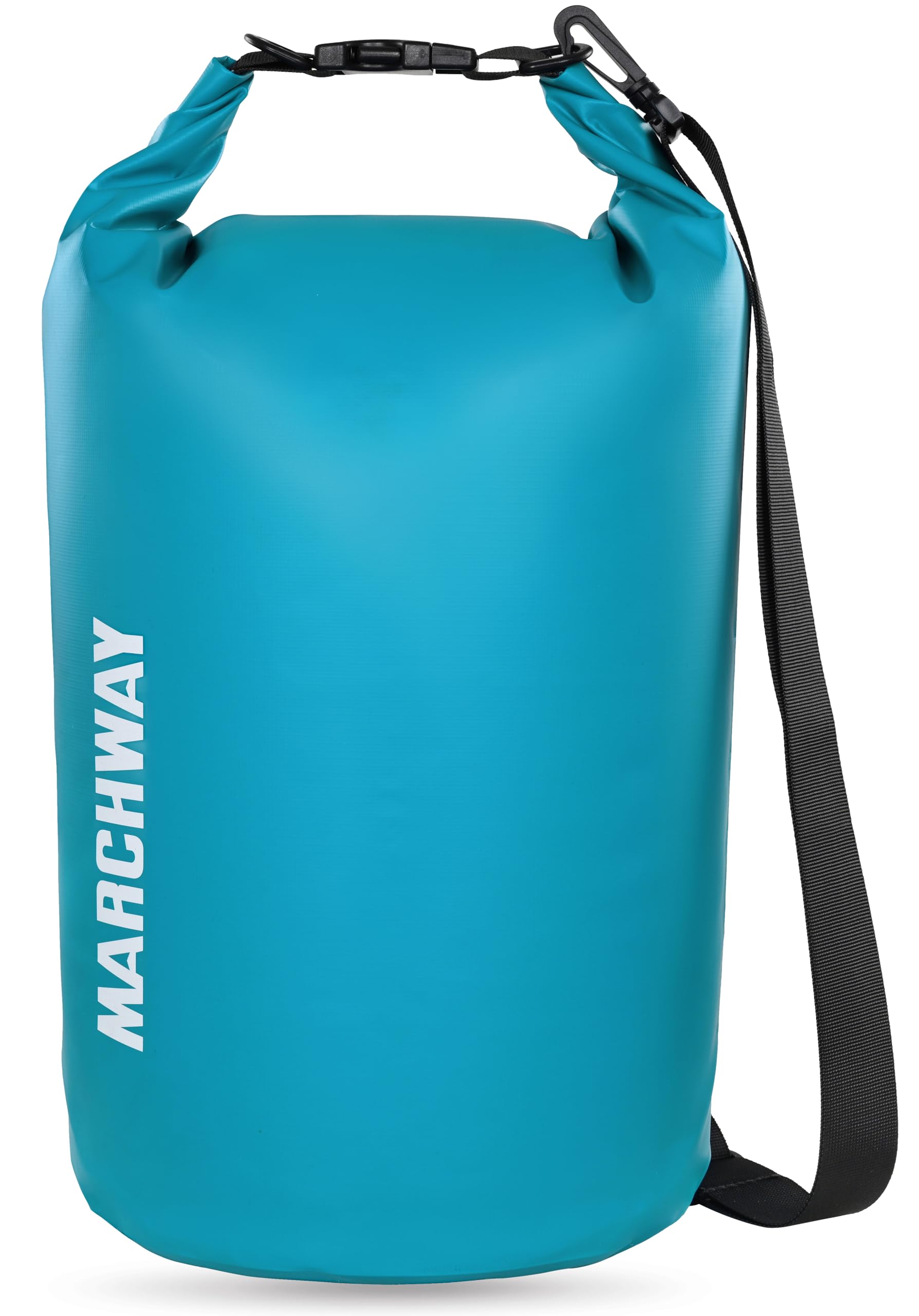
MARCHWAY Floating Dry Bag (10L)
Key Features
- Capacity: 10 liters
- Waterproof Rating: Good submersion resistance
- Material: Multi-layer PVC
- Carrying System: Shoulder strap
- Price: $
The MARCHWAY floating dry bag stands out for its buoyancy – when sealed and not overloaded, it stays visible on the surface, making retrieval after a capsize straightforward. At a budget-friendly price, it offers waterproofing that holds up against splashes and short submersion typical of kayaking and rafting. Available in sizes from 5 to 40 liters, the 10-liter version is a solid day-trip companion.
While the top pick includes a phone case and broader warranty, the MARCHWAY delivers comparable waterproofing for less money and adds the floating advantage. This bag suits paddlers who want a low-cost option and don’t mind a bit of extra attention to the roll-top seal. Over time, the material may show wear, and the seal needs to be rolled carefully each time to avoid moisture ingress – a tradeoff that matters less on day trips where gear isn’t submerged repeatedly.
Pros
- Floats visibly when sealed, making gear easy to spot after a capsize.
- Build quality and materials feel sturdy for the price point.
- Outstanding value – performs above its price point.
Cons
- Material at fold points can wear after extended use, leading to possible leaks.
- Roll-top seal needs careful rolling each time to prevent moisture ingress over time.
The MARCHWAY is the right dry bag for kayakers on a budget who want a bag that floats and don’t mind a few extra steps to keep the seal tight.
Best for Quick-Access Days
Earth Pak Zippered Dry Bag (20L)
Key Features
- Capacity: 20 liters
- Waterproof Rating: Good splash resistance
- Material: 500D PVC
- Carrying System: Shoulder strap
- Price: $$
The front zippered pocket is the standout feature, letting you grab sunscreen or keys without the hassle of unrolling the entire bag. The 500D PVC construction holds up against scrapes on rocky shores and the roll-top seal handles splashes and light rain during casual paddling.
This bag suits day trippers who value convenience over submersion-proof protection. The zippered pocket can allow moisture in if fully submerged, so it is best kept above water on lakes or calm rivers. Some seam wear may occur with heavy use, but the build quality generally handles regular recreational trips without issue.
Pros
- Front zippered pocket provides quick access without unrolling the main compartment.
- Heavy-duty 500D PVC material resists wear from sand and rocks.
- Keeps contents dry during beach days and light kayaking.
Cons
- Zippered pocket may let in moisture if the bag is submerged — best for surface-level use only.
- Occasional seam or strap failures can occur after extended use.
If quick access to small items matters more than full submersion protection, this bag delivers a smart upgrade over basic dry bags.
Best for Style-Conscious Paddlers
Skog Å Kust DrySak 10L
Key Features
- Capacity: 10 liters
- Waterproof Rating: Splash-proof
- Material: Vinyl
- Carrying System: Shoulder strap
- Price: $$
The Skog Å Kust DrySak brings a clean Scandinavian aesthetic and reflective detailing to a category dominated by utilitarian black cylinders. The splash-proof zippered front pocket gives quick access to a phone or snack without unrolling the main compartment, a practical touch for day trips on calm water.
This bag is best for paddlers who prioritize style and visibility over submersion-proofing. The main compartment handles splashes and rain effectively, but it’s not built for full immersion — moisture can seep in under sustained pressure. If your trips involve whitewater or intentional dunking, the top pick Earth Pak is a better fit.
Pros
- High-quality materials and construction with a premium finished feel.
- Water resistance works well for splashes and rain, keeping contents dry.
- Reflective trim and clean design improve visibility and style on the water.
Cons
- Higher price than basic dry bags offering similar splash resistance.
- Stitching wear may appear on some units after extended use.
A well-made, good-looking dry bag for surface-level paddling, but not the choice for submersion or tight budgets.
Best for Ultralight Kayakers
Sea to Summit Lightweight (3L)
Key Features
- Capacity: 3 liters
- Waterproof Rating: Splash-proof (IPX5)
- Material: 70D Nylon
- Carrying System: D-ring only
- Price: $$
The Sea to Summit Lightweight Dry Bag delivers a well-executed roll-top closure and 70D nylon body that holds up to regular use while adding minimal weight to your pack. Unlike fully waterproof kayaking bags, this is designed as a splash-proof sack – under sustained submersion, water pressure will force entry through the closure.
This bag suits backpackers who need an ultralight way to separate wet clothes or store electronics from rain and splashes. Travelers will appreciate the compact size for toiletries. It is not intended for kayaking or any scenario where the bag may be fully submerged. The plastic band in the closure can degrade over time, but for splash-only use that tradeoff is acceptable.
Pros
- Roll-top with Hypalon buckle seals securely against rain and splashes.
- Weighs next to nothing – easy to carry as an organizer inside a larger pack.
- Sturdy 70D nylon with taped seams keeps contents dry during wet hikes.
Cons
- Under sustained underwater pressure, the bag will leak – not a kayaking dry bag.
- The plastic closure band can weaken or break after extended use.
For backpackers wanting a lightweight splash sack to organize gear, this is a solid buy. Kayakers should choose the top pick for true waterproofing.
Best for Phone-Focused Kayaking
Piscifun Floating Dry Bag (10L)
Key Features
- Capacity: 10 liters
- Waterproof Rating: Good splash/submersion
- Material: 500D PVC
- Carrying System: Backpack straps
- Price: $$
The included phone case gets consistent praise for keeping phones dry and responding to touch through the clear window. That, combined with an outer mesh pocket for quick-access items, gives this bag a feature set that rivals pricier options without the extra bulk of a zippered front compartment.
This bag suits kayakers and paddleboarders who want a floating roll-top that’s easy to spot in the water and prefer a separate phone case over a zippered pocket. The 500D PVC material adds weight compared to nylon alternatives, and a few owners have noted the mesh pocket or strap stitching can loosen over time — something to inspect before extended trips.
Pros
- Heavy-duty PVC construction feels durable for the price
- Keeps gear dry during kayaking and paddleboarding sessions
- IPX8 phone case works reliably for most users, touchscreen still responsive
Cons
- Water resistance may degrade after extended use — a few units can leak at the seams
- Strap stitching or mesh pocket attachment can fail over time
A solid mid-range option for paddlers who want a functional phone case and mesh pocket — worth the weight tradeoff if you value those extras over a simpler, lighter bag.
Best for Light Beach Trips
Unigear Dry Bag (2L)

Key Features
- Capacity: 2 liters
- Waterproof Rating: Splash only
- Material: 500D PVC
- Carrying System: D-rings
- Price: $
At under $8, the Unigear Dry Bag offers a functional floating bag with included phone case that works well for light beach trips and poolside use. However, the water resistance isn’t reliable for full submersion, and durability can be an issue with larger sizes — this is a backup bag for casual outings, not for regular kayaking where gear must stay dry.
Pros
- Good quality for the price – surprisingly well-made for a budget bag.
- Keeps contents dry during light beach trips and poolside use.
Cons
- Water resistance is not guaranteed for full submersion; some units may leak after repeated use.
- Durability can be a concern – tearing or buckle failure may occur, especially in larger sizes.
Best kept as a spare for unexpected rain or as a temporary bag for a day at the pool — not a primary dry bag for kayaking.
Best for Pack Organization
Wise Owl 3-Pack Dry Bags

Key Features
- Capacity: 5L/10L/20L
- Waterproof Rating: Splash-only
- Material: 190D Ripstop Nylon
- Carrying System: No strap
- Price: $
The three-pack of 5L, 10L, and 20L bags provides a lightweight and affordable way to organize clothes and gear inside a larger pack, offering splash resistance against sweat or light rain. But the bags are not truly waterproof — moisture can penetrate under sustained contact — and the plastic buckles and thin fabric may not hold up to rough handling, making them a practical accessory for packing organization rather than a reliable dry bag for kayaking or rafting.
Pros
- Lightweight and packable for organizing gear inside a backpack.
- Three sizes in one set offer good value for sorting different items.
Cons
- In wet conditions, the bags allow moisture to seep through — better suited for splash protection than submersion.
- Plastic clips and fabric may wear or tear under regular use.
Best as an inexpensive packing organizer for travelers and hikers who want to separate dry clothes from damp gear, but not for keeping essentials dry on the water.
Best for Brand Trust
Pelican Exodry Dry Bag (10L)

Key Features
- Capacity: 10 liters
- Waterproof Rating: Moderate splash
- Carrying System: Backpack strap
- Price: $$
Pelican’s Exodry Dry Bag brings brand recognition and reflective accents to the dry bag market, offering decent waterproofing for moderate kayaking where submersion is unlikely. However, sparse specifications and a relatively small number of customer experiences mean long-term durability and consistent water resistance are not as well established as with better-reviewed options. Stitching may show wear over time, and water resistance can vary during repeated submersion, making this bag a better fit for casual use than for extended expeditions.
Pros
- Solid build quality from a recognizable brand
- Reflective accents improve visibility in low light
Cons
- Stitching may fray with repeated heavy use, particularly under load
- Water resistance can be inconsistent during prolonged submersion
Best for casual paddlers who value brand recognition and reflective safety over proven submersion protection.
Best for Ultralight Splash
Osprey Ultralight Dry Sack (3L)

Key Features
- Capacity: 3 liters
- Waterproof Rating: IPX5 splash-proof
- Material: Nylon
- Carrying System: D-ring
- Price: $$$
This 3-liter sack weighs just 0.06 lb and packs down to nothing, making it a natural fit for ultralight backpackers who need a lightweight way to keep a sleeping bag or spare clothes dry in light rain. The roll-top closure and coated nylon provide splash resistance, but this is not a submersible dry bag — water can enter under sustained pressure or full immersion. For kayakers who expect guaranteed dry storage after a capsize or wet launch, this sack will leak. It works well as an organizer inside a larger pack or for toiletries and electronics on a trip where submersion isn’t a risk.
Pros
- Extremely lightweight and compact — reduces pack weight with minimal bulk
- Well-constructed with quality materials that hold up to regular backpacking use
Cons
- Thin fabric can tear when contacting sharp objects or under stress
- Not waterproof for submersion — will leak if fully immersed or pressed under water
Best for ultralight backpackers who accept splash-only protection and want the lightest possible stuff sack. Not a kayaking dry bag — choose a thicker PVC roll-top model for any trip where gear may go underwater.
Best for Expedition Camping
Gonex Large Dry Duffel (60L)

Key Features
- Capacity: 60 liters
- Waterproof Rating: Moderate roll-top
- Material: PVC
- Carrying System: Crossbody strap
- Price: $$$
This bag offers generous 60-liter capacity for bulky camping gear and sturdy build quality at a premium price, making it a solid choice for boaters who keep their duffel above water. However, the roll-top with Velcro closure can allow moisture in under heavy rain or pressure, and the cost doesn’t guarantee the waterproofing level some expect from a premium-priced dry bag.
Pros
- Spacious interior fits bulky gear like tents and sleeping bags for multi-day trips.
- Build quality feels robust for the price with strong seams and hardware.
Cons
- Roll-top with Velcro closure can let moisture in under heavy rain or pressure.
- Buckles or stitching may fail after repeated use.
Best suited for surface-level use on boats or campsites where submersion isn’t expected. Choose the more waterproof top pick if your gear could end up underwater.
How to Choose
For kayaking, the sweet spot for a dry bag that actually keeps gear dry trip after trip is between $15 and $25 — below that, materials and seals often fail; above that, you pay for extras you may not need.
Capacity (Liters)
Choose capacity based on trip length and gear volume. A 10–20 liter bag suits day trips with a phone, snacks, and a spare layer. For multi-day expeditions that require a tent and sleeping bag, look at 30 liters and above.
Remember that a roll-top closure reduces usable space by about 20% — a 20 liter bag may only hold 15 liters when properly sealed. If you often carry bulky items, size up one step.
Waterproof Rating
Most dry bags use a roll-top design without an official IP rating, but the practical difference between splash-proof and submersion-proof is huge. Splash-resistant bags (IPX5 equivalent) handle rain and light spray but will leak if fully submerged.
For kayaking where capsizes are possible, seek bags with verified submersion performance — often indicated by thick PVC, welded seams, or user feedback. Many products labeled ‘waterproof’ only resist splashes; check reviews for real-world leak reports.
Material and Durability
Thicker PVC (500 denier or higher) resists punctures from rocks, branches, and kayak edges far better than thin nylon or polyester. The trade-off is weight: a heavy-duty 500D PVC bag can weigh twice as much as a lightweight option.
If you plan to drag your bag over gravel or tie it to a kayak deck, prioritize durability over lightness. For ultralight backpacking that avoids submersion, nylon with a PU coating is acceptable.
Carrying System
A simple shoulder strap works for short walks from car to water. But for portaging or hiking to a launch spot, backpack straps distribute weight much better and free your hands. Some bags only have D-rings — fine for clipping to a pack but uncomfortable for long carries.
Consider how you’ll transport the bag: if you mostly paddle from a dock, a shoulder strap suffices. If you often hike miles with gear, choose a model with padded backpack straps.
Included Phone Case
Many dry bags come with a separate waterproof phone pouch, but the quality varies widely. Budget ones often develop micro-cracks after a few folds, leading to leaks, or the touchscreen stops responding. IPX8-rated cases from reputable brands tend to hold up better.
If phone protection is critical — for GPS, photos, or communication — consider buying a dedicated high-quality pouch separately. An included case is a bonus, not a guarantee.
FAQ
How many times should I roll a dry bag’s top to make it truly waterproof?
Roll the top at least three full times, then secure the buckle. Fewer rolls create an incomplete seal that can let water seep through. Many reported leaks trace back to user error in closure, not product failure.
Can I use a sub-$15 dry bag for whitewater kayaking or will it leak?
Sub-$15 dry bags typically use thinner materials and less reliable seals, making them risky for whitewater. They may survive a few splashes but will likely leak under sustained submersion or capsize. Invest in a mid-range bag ($15–$25) if your gear must stay dry.
Why does my dry bag’s included phone case stop working after a few uses?
Most included phone cases are made of thin plastic that develops micro-cracks after repeated folding, or the zipper seal degrades. Touch sensitivity often fails because the screen pocket is not rigid enough. For frequent use, replace it with a dedicated high-quality waterproof case.
What’s the difference between IPX5 and IPX8 dry bags for sea kayaking?
IPX5 means splash-resistant — it handles rain and light splashes but not submersion. IPX8 means the bag can be submerged in water at a specified depth for a set time. For sea kayaking where capsizes are possible, choose an IPX8-rated bag for electronics, and use IPX5 only for items that can get damp.