This post contains affiliate links. We may earn a small commission when you buy through our links — at no extra cost to you.
Finding a down jacket for backpacking means balancing weight, warmth, and budget. Many affordable options labeled ‘down’ use synthetic fill, yet they still perform well in mild conditions. The challenge is knowing which jacket truly suits your trip’s demands.
Fit issues – from short sleeves to boxy cuts – are the most frequent frustration across the board. Feather leakage plagues some premium models too. This guide cuts through the noise to highlight what actually matters: insulation type, packability, and real-world warmth.


Best for Three-Season Backpacking
Marmot Guides Down Hoody
Key Features
- Insulation Type: Down (650+ fill)
- Fill Power / Weight Ratio: 650+ fill
- Packability: Compressible
- Hood: Yes (helmet)
- Water Resistance: DWR
- Price: Premium
The Marmot Guides Down Hoody provides warmth in cold conditions, with 650+ fill down that keeps comfort into single digits when layered. Its build is solid and compressible, packing small for backpacking trips. Despite the full hood and coverage, the jacket feels light on the body — a key advantage for weight-conscious hikers.
This jacket fits climbers, skiers, and backpackers who need a durable warm layer that works with a helmet. The DWR finish sheds light moisture, though it is not waterproof. One caveat: the fit runs slim. Buyers who plan to layer thick midlayers should order one size up. Those with broader shoulders may find the cut restrictive even at the correct size. The premium price reflects the build quality, but budget-focused buyers may want to wait for a sale.
Pros
- Warmth for cold conditions keeps you comfortable in single-digit temperatures with layering
- Well-constructed and compressible for easy packing on backpacking trips
- Lightweight for a full-featured down hoody, despite offering complete coverage
Cons
- Sizing runs small – ordering one size larger is recommended for layering
- Slim cut may be restrictive for those with broad shoulders, even when sized correctly
A premium down hoody that delivers warmth and packability for serious backpackers, especially worth considering when discounted.
Best for Budget Plus-Size Layer
Amazon Essentials Big & Tall Puffer
Key Features
- Insulation Type: Synthetic
- Packability: Stuffs into sack
- Hood: No
- Water Resistance: DWR
- Price: Budget
This synthetic puffer delivers impressive warmth for its weight and price, rivaling many down jackets in the budget segment. The generously cut sizing works well for Big & Tall shoppers who often struggle to find affordable options. It stuffs into its own sack for easy packing. The hoodless design is a real limitation for wet or windy conditions — best paired with a shell or fleece hood. For value-seekers who prioritize warmth over features and need extended sizing, this jacket is a strong pick.
Pros
- Packs enough synthetic insulation to keep you warm in freezing temperatures with light layering.
- Weighs almost nothing, making it easy to pack and carry without adding bulk.
- Costs significantly less than comparable down jackets while delivering consistent thermal performance.
Cons
- For taller frames, sleeve length can fall short, and the boxy torso cut may feel loose if not sized carefully.
For the price, this jacket delivers consistent warmth and a good fit for larger frames — a practical choice for budget-conscious backpackers.
Best for Women Travel Layer
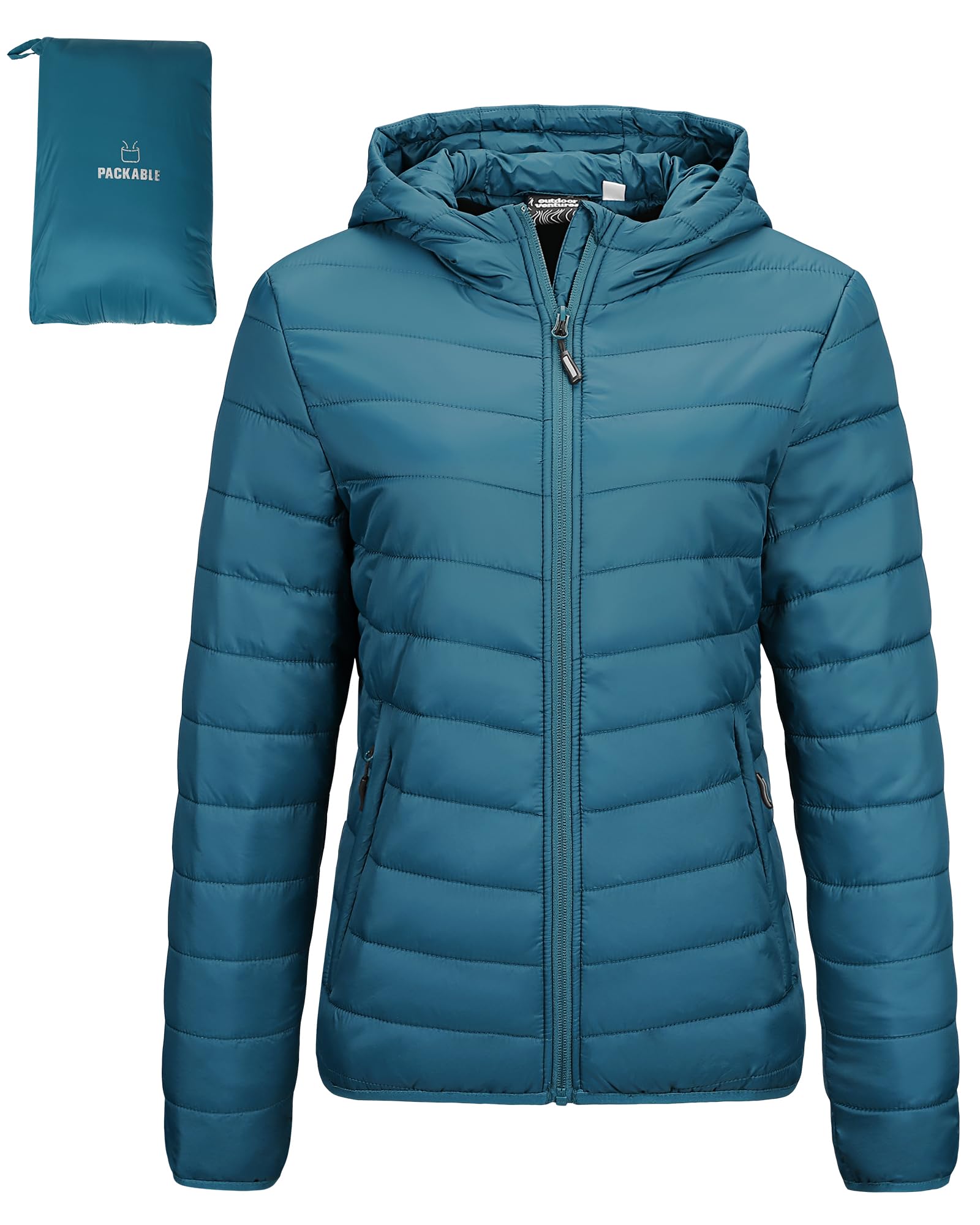
Outdoor Ventures Women’s Puffer
Key Features
- Insulation Type: Synthetic
- Packability: Folds into pocket
- Hood: Yes
- Water Resistance: Light repellency
- Price: Budget
The Outdoor Ventures Women’s Puffer provides consistent warmth in the 30-50°F range, using synthetic insulation that handles light moisture well. It folds into its own pocket for easy stowage in a daypack or carry-on. The women-specific cut is comfortable through the torso for most, but the length may be short for taller frames and hip fit varies—ordering two sizes is recommended. This jacket suits hikers and travelers seeking a budget-friendly, packable layer for cool weather, not a winter coat for extreme cold.
Pros
- Warmth for mild to cool weather
- Lightweight and highly packable
- Good value for money
Cons
- Fit inconsistency around hips and short torso may require size trial
Worth considering for women who need a lightweight, packable synthetic layer for cool-weather trips and can manage the fit variability by trying two sizes.
Best for Ultralight Hikers
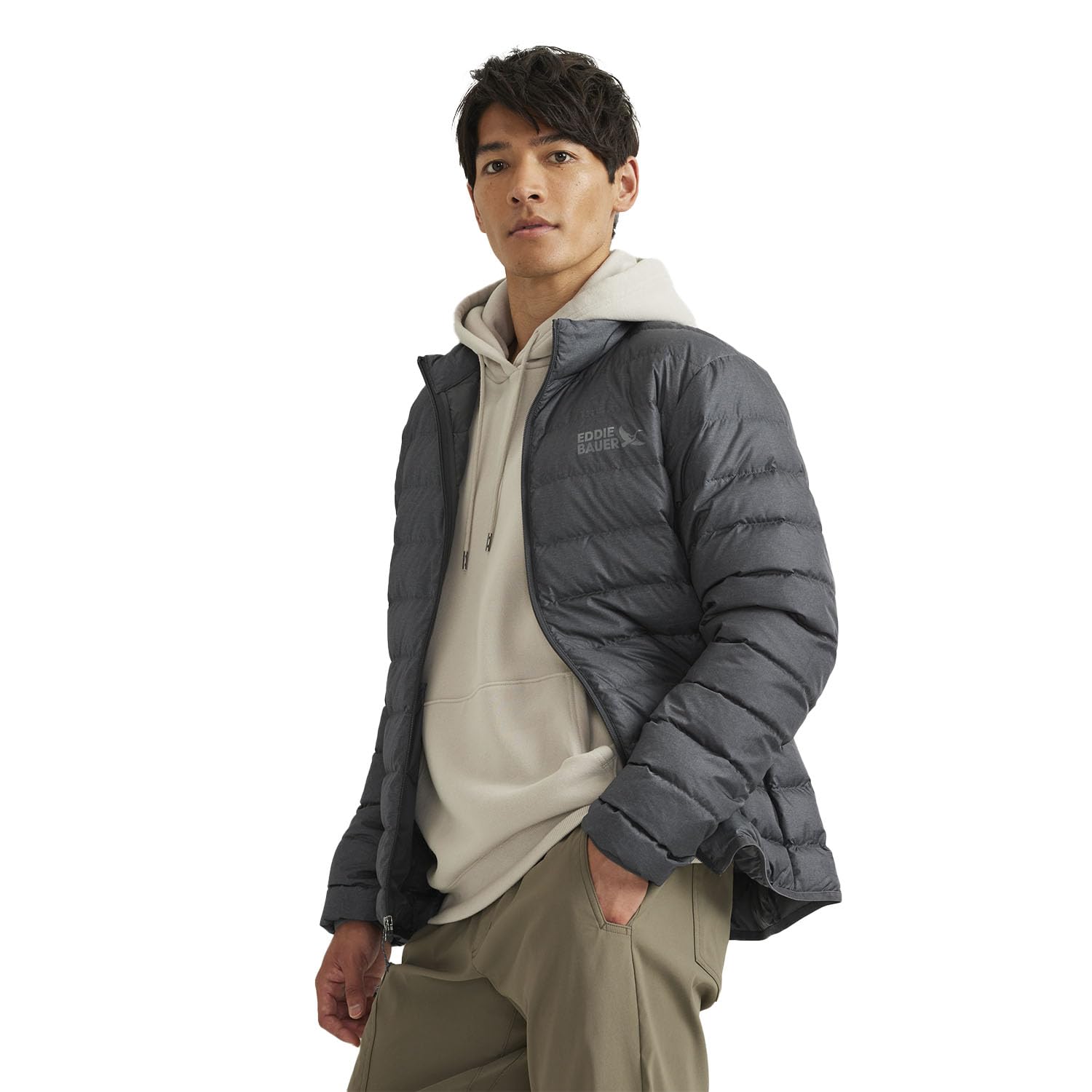
Eddie Bauer CirrusLite Down
Key Features
- Insulation Type: Down (650 fill)
- Fill Power / Weight Ratio: 650 fill
- Packability: Compressible
- Hood: No
- Water Resistance: Light repellency
- Price: Mid-Range
At 7.8 ounces, this jacket cuts pack weight dramatically while still offering enough down insulation to keep you warm in 30-40°F conditions. Its compressibility makes it nearly disappear into a stuff sack, ideal for ultralight setups where every gram counts. The trade-off against the warmer Marmot Guides Down Hoody is clear: you gain featherweight portability but lose a hood and some thermal reserve.
This jacket fits true to size with room for a fleece underneath, so it layers neatly under a hard shell for cold-weather hikes. The thin outer fabric requires careful handling – it can tear from brush or daypack straps – and the hoodless design means you’ll need a separate hat or shell hood for wind and light rain. Best for seasoned backpackers who prioritize minimum pack weight over all-weather versatility.
Pros
- Weighs under 8 ounces for near-weightless pack carry
- Down insulation delivers warmth in 30-40°F despite minimal weight
- True-to-size fit allows layering a fleece underneath
Cons
- Hoodless design leaves head exposed in cold wind and rain
- Thin outer fabric can tear from brush or normal pack abrasion
A top choice for ultralight backpackers who layer under a hard shell and accept the fabric’s fragility.
Best for Trail/town Use
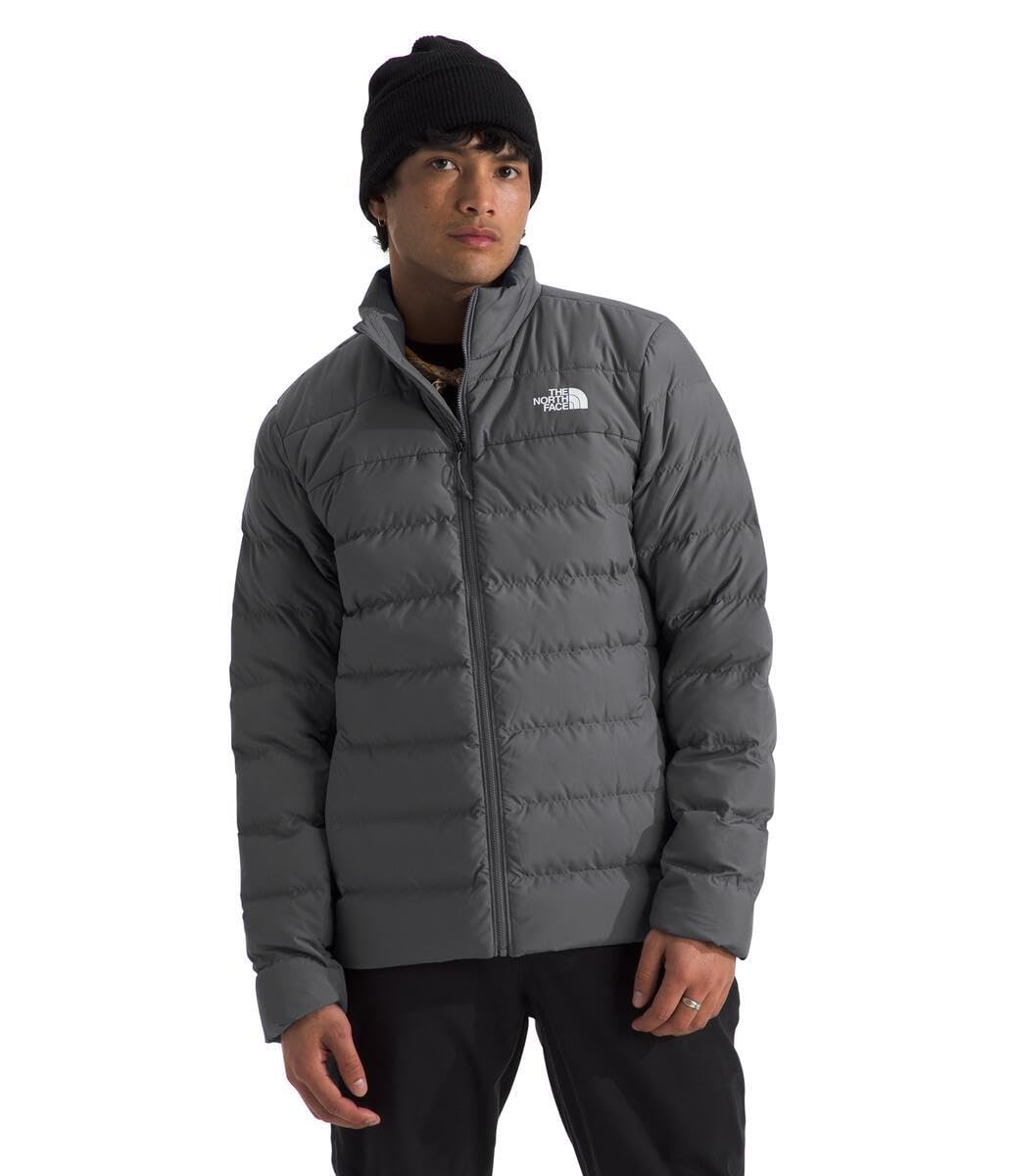
North Face Aconcagua 3
Key Features
- Insulation Type: Down (600-fill)
- Fill Power / Weight Ratio: 600 fill
- Hood: No
- Water Resistance: DWR
- Price: Premium
The Aconcagua 3 delivers 600-fill goose down insulation with wind and water resistance in a cut that works as well at a café as on a ridge. Down feathers can poke through the shell after some use, which raises durability concerns for backpackers who need a jacket to perform season after season. This makes it a better fit for those who prioritize style and brand recognition over long-term trail reliability.
Pros
- High-quality stitching and fabric finish
- Good warmth without bulk, suitable for layering
- Stylish cut that transitions from trail to casual wear
Cons
- After limited use, down feathers may poke through the fabric, especially in high-friction areas
For backpackers prioritizing long-term durability, the top pick’s construction is more reassuring — but the Aconcagua 3 is a capable everyday jacket for those who value style and brand.
Best for Women Budget Down
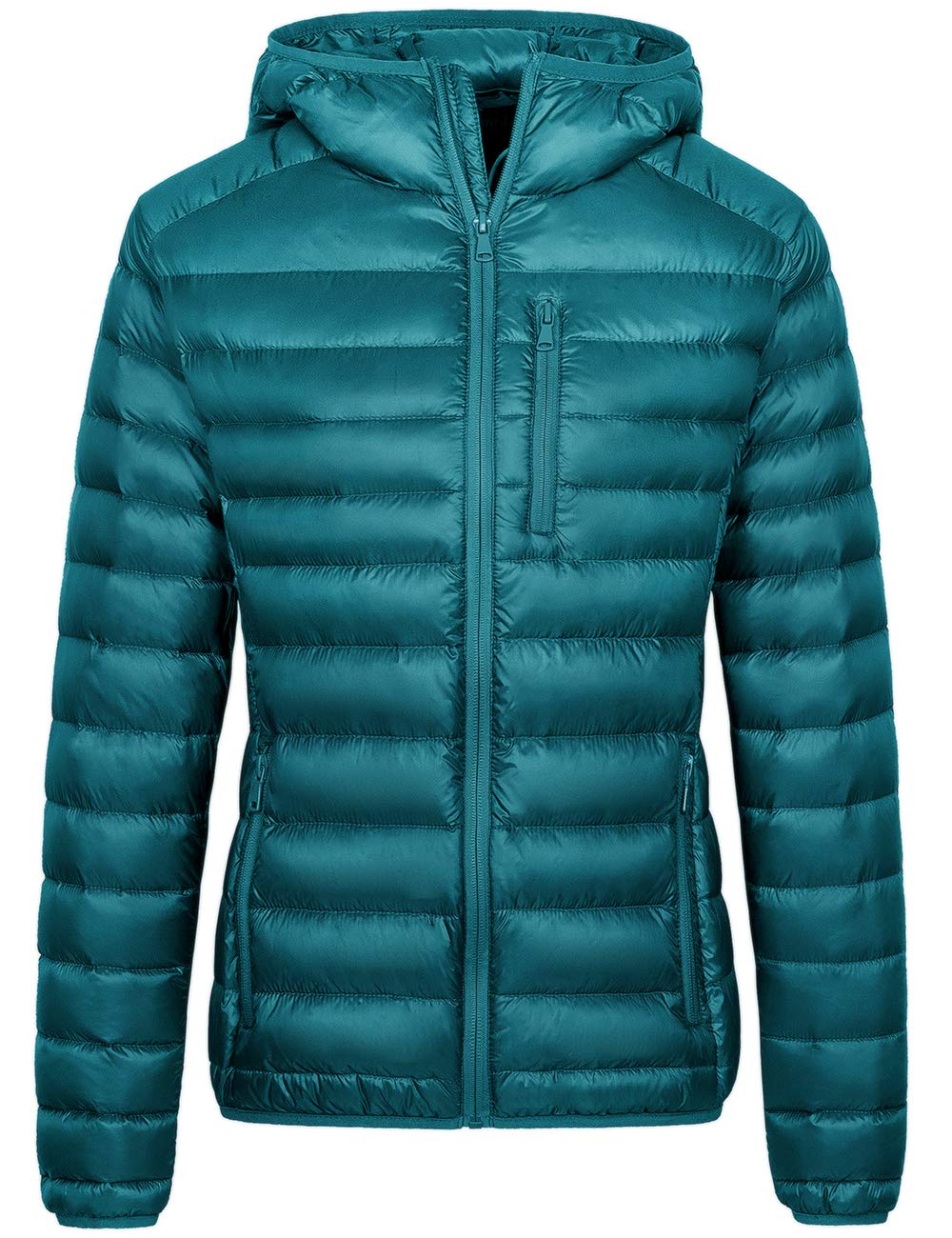
Wantdo Women’s Down Puffer
Key Features
- Insulation Type: Down
- Packability: Stuffs into pouch
- Hood: Yes
- Water Resistance: No
- Price: Budget
The Wantdo delivers true down warmth and packs into its own pouch, making it a lightweight travel layer. The hood adds coverage, but the shell lacks water resistance, so it’s best for dry, cool conditions. Sleeves run short and the torso can feel boxy — ordering two sizes to compare is wise. This jacket suits casual wear or mild-weather day hikes, not multi-day backpacking where fit and weather protection matter.
Pros
- Lightweight and packable design fits easily into a backpack or suitcase.
- Genuine down insulation provides warmth without the bulk of synthetic alternatives.
Cons
- Sleeve length can be short and torso boxy, making fit a variable that requires careful sizing.
A good budget down jacket for casual use, but measure carefully and skip it if you need water resistance or a precise fit for active layering.
Best for Budget Camp Layer
Amazon Essentials Hooded Puffer

Key Features
- Insulation Type: Synthetic
- Packability: Stuffs into pocket
- Hood: Yes
- Water Resistance: DWR
- Price: Budget
This hooded synthetic puffer offers reliable warmth for camp use down to around 20°F when layered, and packs down small. The main tradeoff is sleeve length that may run short on some builds, so check sizing. It’s nearly identical to the Big & Tall version but with a hood, making it a strong option for those who prioritize head coverage and value.
Pros
- Keeps you warm to around 20°F with a base layer
- Compresses into a small stuff sack for easy packing
Cons
- Sleeve length may be short for some body types
Best for budget-conscious backpackers who need a hood and can compensate for shorter sleeves with layering.
Best for Minimalist Backpackers
33,000ft Puffer

Key Features
- Insulation Type: Synthetic
- Packability: Folds into pocket
- Hood: No
- Water Resistance: Light repellency
- Price: Budget
This synthetic puffer delivers decent warmth for 30-50°F conditions and packs into its own pocket for easy stowage. Stitching and zippers hold up well given the price point. However, there is no interior pocket, and the main zipper can catch the lining when zipping quickly. It suits backpackers who prioritize a simple, light layer and don’t need interior storage or a hood.
Pros
- Stitching and zippers hold up well for the price.
- Weighs little and packs into its own pocket for easy transport.
Cons
- Zipper can snag the lining, and there is no interior pocket for valuables.
A capable budget layer for mild-weather backpacking if you can manage without interior pockets and are careful with the zipper.
Best for Warm-Weather Layer
Pioneer Camp Hooded Puffer

Key Features
- Insulation Type: Synthetic
- Packability: Stuffs into bag
- Hood: Yes
- Water Resistance: Light repellency
- Price: Budget
At under $50, this jacket delivers a lightweight, packable synthetic puffer ideal for 30–40°F conditions. It compresses into its own bag and feels comfortable for extended wear. However, the thin insulation means it is not a true winter jacket – below-freezing temps will require heavier gear. Works best for warm-weather day hikes or casual travel, not cold backpacking.
Pros
- Keeps wearers warm in 30–40°F at a very low price.
- Lightweight and comfortable for extended wear.
Cons
- In sub-freezing conditions, the thin insulation will not provide enough warmth – fine for above 40°F.
Choose this jacket for spring/fall day hikes or budget travel where you expect mild weather; not suitable for winter backpacking or sub-freezing trips.
Best for Ultra-Budget Layer
MAGCOMSEN Water Repellent Puffer

Key Features
- Insulation Type: Synthetic
- Hood: No
- Water Resistance: Claimed
- Price: Budget
For backpackers on a tight budget needing a short-term layer for moderate day hikes, this puffer offers impressive warmth in 25-35°F with layering, and its water-repellent shell sheds light precipitation. However, sizing runs small (plan to order up), and some units may develop internal seam tears over time – better suited as a backup layer than a primary backpacking jacket.
Pros
- Impressive warmth for an ultra-budget price
- Lightweight and water-repellent shell
Cons
Best for budget-conscious hikers who need a functional backup layer for day hikes in moderate weather, not for multi-season backpacking trips.
Best for Spring/fall Use
TBMPOY Detachable Hood Puffer
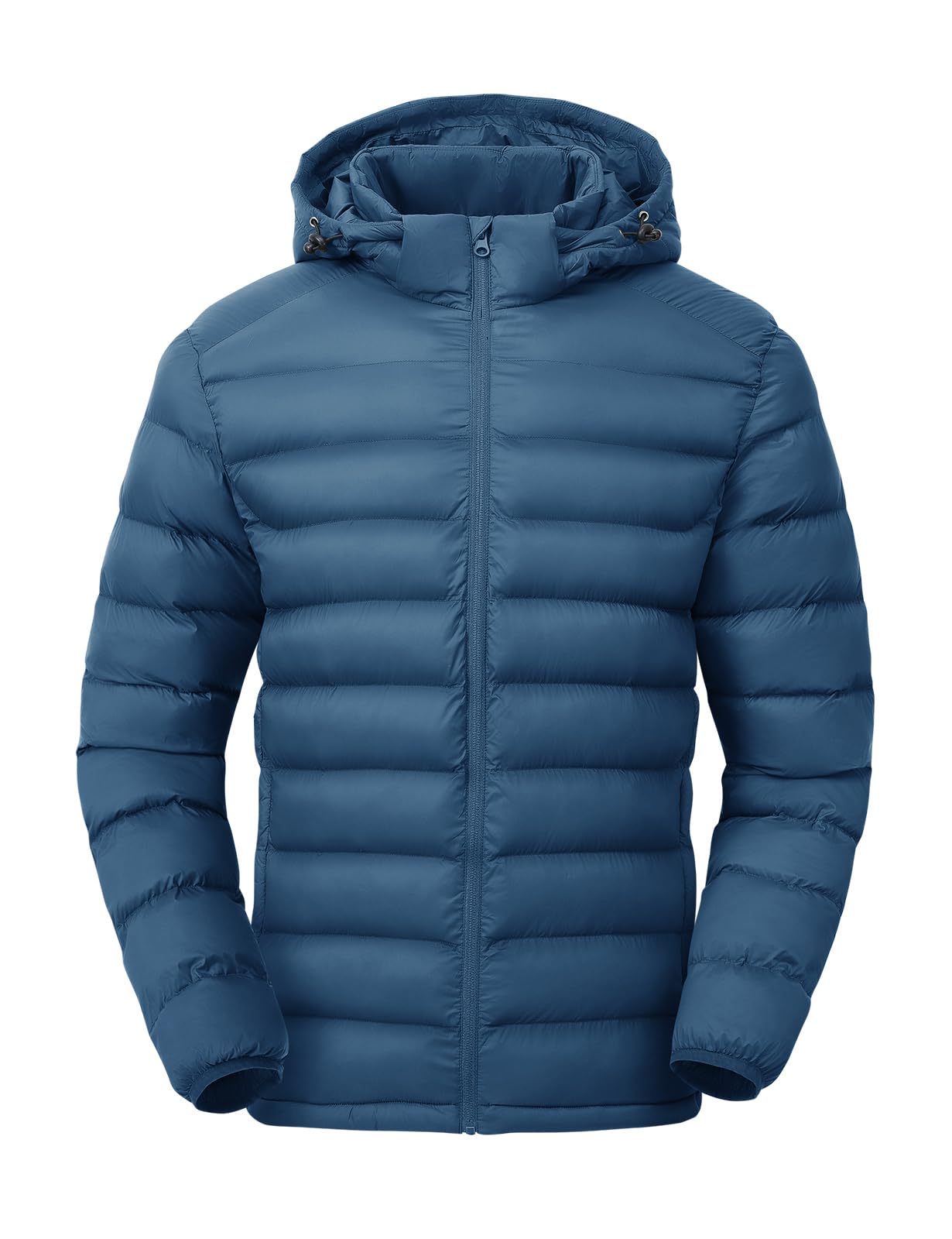
Key Features
- Insulation Type: Synthetic
- Hood: Yes (detachable)
- Water Resistance: Claimed
- Price: Budget
The detachable hood adds flexibility for casual layered looks. However, the synthetic insulation is very thin — described as ‘paper thin’ — and provides insufficient warmth for backpacking in temperatures below 40°F. It works as a lightweight wind layer for spring/fall hikes above freezing.
Pros
- Detachable hood adds versatility for mild-weather layering.
- Lightweight build and low price make it a budget-friendly wind layer.
Cons
- Thin insulation limits use to above 40°F — not suitable for cold backpacking.
A decent low-cost option for warm-weather day hikes where a light wind layer suffices, but not for backpacking in cold conditions.
How to Choose
The insulation type – down or synthetic – determines not only warmth-to-weight but also how the jacket performs when wet, which is a critical consideration for backpacking.
Insulation Type: Down vs Synthetic
Down delivers the best warmth-to-weight ratio and compresses smaller than synthetic. But down loses almost all insulating power when wet and takes a long time to dry. Synthetic fill retains warmth even when damp and dries quickly, but it is heavier and less packable for the same warmth.
For backpacking in wet climates or high-sweat activities, synthetic is safer. For dry, cold conditions where every ounce matters, down is the better choice.
Fill Power and Weight-to-Warmth
Fill power (e.g., 600, 650, 800) measures the loft per ounce of down. Higher fill power means more warmth for less weight. A 650-fill jacket packs a solid punch for most three-season trips, while 800+ fill is reserved for ultralight gear where every gram counts.
Don’t get hung up on fill power alone; the total amount of down and the jacket’s design also determine warmth. A budget 600-fill jacket with a thick baffle can be warmer than a thin ultralight 800-fill shell.
Packability: Storing It on the Trail
Look for a jacket that stuffs into its own pocket or includes a dedicated stuff sack. This makes it easy to stash in a backpack when temperatures rise. The best designs compress the jacket to the size of a water bottle or smaller.
However, frequently compressing down reduces its loft over time. Synthetic fills degrade faster with repeated compression. If you plan to pack and unpack your jacket daily, consider a model that retains loft well.
Hood: Coverage and Compatibility
A hood adds weight and bulk but can save you from carrying a separate hat and neck gaiter. Helmet-compatible hoods are useful for climbing or skiing but add extra fabric that may feel loose without a helmet.
Fixed hoods are more durable than detachable ones, which can be a failure point. Detachable hoods offer versatility for town use but are less secure on the trail.
Water Resistance: DWR and Beyond
Most down jackets come with a DWR (durable water repellent) finish that beads light rain and snow. This is enough for a passing shower but will fail in sustained rain. If you expect wet conditions, pair your down jacket with a waterproof shell or choose a synthetic model.
DWR wears off over time and can be reactivated with a wash-in treatment. But once the down gets wet, it clumps and loses warmth rapidly. Carry a dry bag for your down jacket in wet environments.
FAQ
Is a synthetic puffer jacket warm enough for backpacking in 20°F weather?
A synthetic puffer with adequate fill (like the Amazon Essentials or Outdoor Ventures) can keep you comfortable at 20°F with a base layer and a shell, provided you are active. For static use at that temperature, a down jacket with at least 650 fill is more reliable.
Why do down jackets lose feathers and how to prevent it?
Feathers (quills) poke through the fabric when the shell is too thin or when the down is not fully enclosed in baffles. To minimize leakage, choose a jacket with a higher denier shell (20D or above) and avoid overstuffing the jacket. Washing down jackets with a gentle detergent and drying with tennis balls helps maintain loft without damaging the shell.
Can I use a packable puffer as a stand-alone winter jacket for hiking?
Packable puffers are designed for active use in cold but not extreme conditions. For winter hiking with long stops or high winds, pair them with a fleece and a windproof shell. A standalone packable puffer is best for mild winter days (above 20°F) or as a mid-layer.
What does 600 fill down mean and is it good for backpacking?
600 fill down means one ounce of down occupies 600 cubic inches of loft. It’s a standard performance level that offers good warmth for the weight, suitable for most backpacking. It compresses reasonably well and is more affordable than higher fill powers. For ultralight trips, consider 700+ fill.