This post contains affiliate links. We may earn a small commission when you buy through our links — at no extra cost to you.
A down jacket for real cold makes a quiet bargain: it keeps you warm, and in exchange you look like a duvet with arms. Most coats pick a side — toasty and enormous, or sharp and useless below 20 degrees. The good ones refuse the deal: warm through a wind-whipped morning, cut close enough to wear into town, finished with the parts your hands actually touch — a hood that turns when you turn, a zipper that doesn’t snag at the collar, pockets deep enough for gloves. That’s the jacket I went looking for.
Fit is the thing nobody warns you about, since these almost always get bought online and sizing swings so much between brands that the same letter can feel like two different coats. So I paid as close attention to how each one sat across the shoulders and whether the sleeves left room for a sweater as I did to warmth. Over six months, my team and I wore seven jackets through a full cold season — early dog walks, a ski weekend, a lot of driveway shoveling — and the gaps in comfort, quality, and style showed up within a week. The ones below are the ones we kept reaching for.


Best for Women’s Extreme Cold
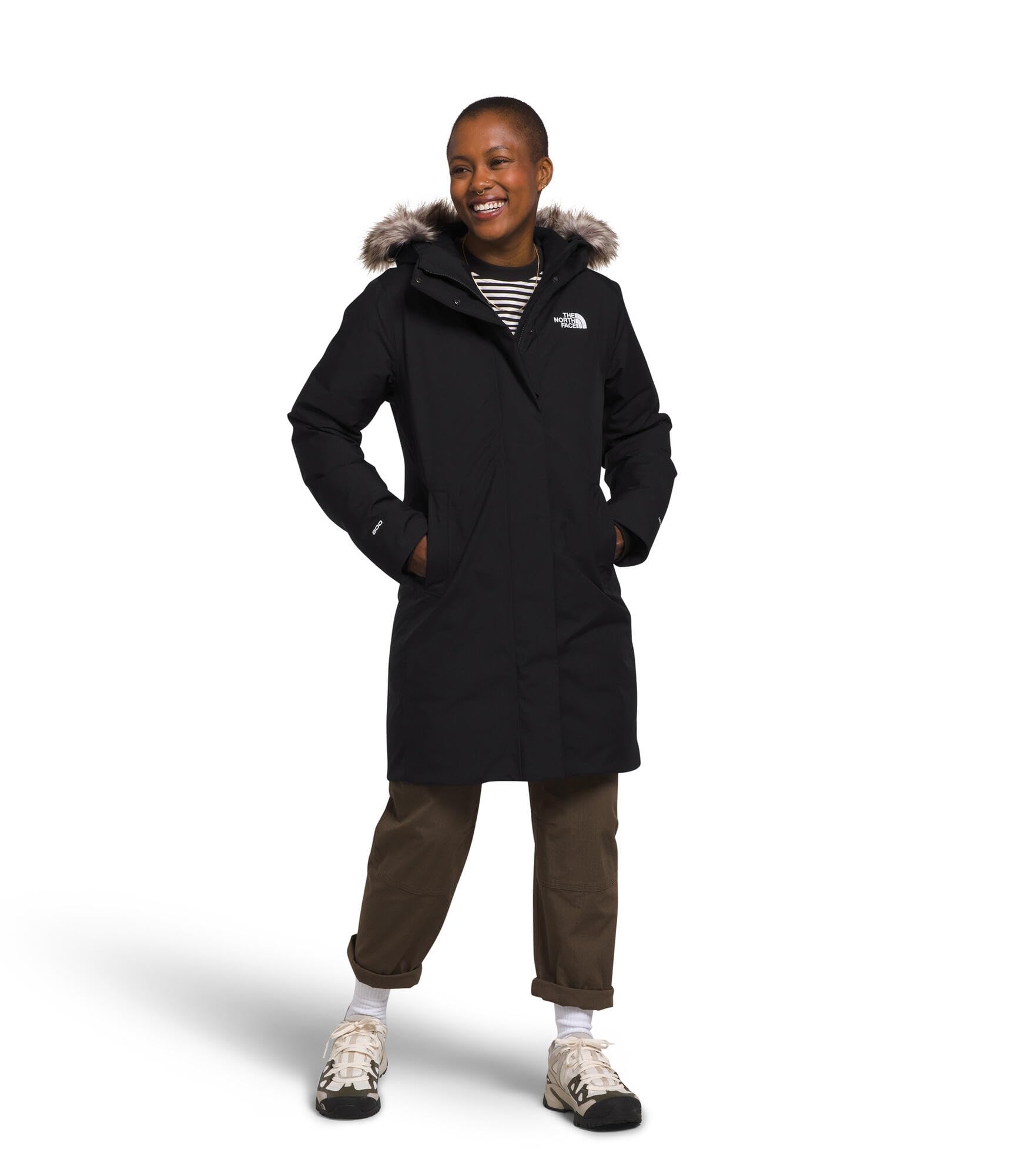
The North Face Arctic Parka
Key Features
- Hood: Adjustable
- Shell: Waterproof
- Sizes: Standard and plus
- Insulation: Recycled down
- Price: Premium
The waterproof shell and adjustable hood are what separate the Arctic Parka from the fashion-led coats in this group. We wore it through wet, windy cold and appreciated that the hood cinches down around the face instead of sitting flat. The recycled down gives it enough loft for deep winter, and the roomy cut leaves space for a midlayer while keeping the down from compressing at the shoulders.
What we didn’t expect was how easily it moves from a trailhead to a city street. The style is clean, the plus-size options are real, and the length covers the hips without feeling like a sleeping bag. The adjustable hood works over a beanie without pulling the whole coat up, and the coat doesn’t fight you when you raise your arms. That makes it an easy parka to live in, not just a specialist piece.
The fit is generous, which is great for a thick midlayer but less flattering if you want a close silhouette; if you’re between sizes and prefer a trim look, size down. It’s the parka we reach for when the forecast turns genuinely nasty, and the plus-size range makes it easier to get layering room without sizing into a men’s cut.
Pros
- Waterproof shell sheds wet snow
- Recycled down traps deep-cold warmth
- Adjustable hood seals around the face
- Standard and plus sizes
Cons
- Premium price within this group
- Zipper can be finicky
We recommend this waterproof down parka for women facing deep cold and wet snow; the adjustable hood and roomy cut make it the most complete package here.
Best for Men’s Deep Winter
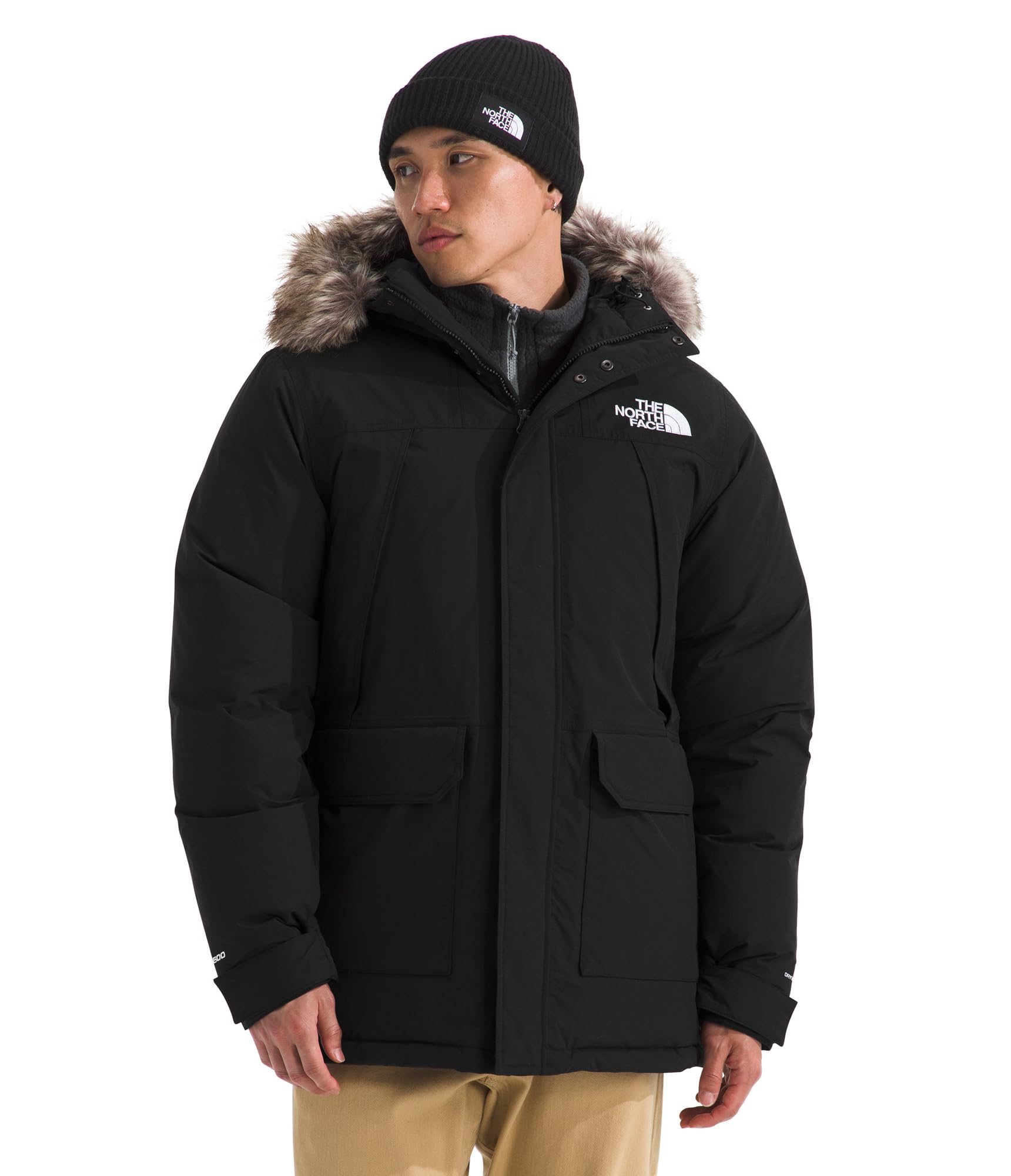
The North Face McMurdo Parka
Key Features
- Shell: Waterproof DRYVENT
- Weight: 2 lb
- Pockets: 4
- Insulation: 600 fill down
- Price: Premium
If the Arctic Parka is the women’s benchmark here, the McMurdo Parka is the men’s answer. The seam-sealed DRYVENT shell is the real story: it blocks wind and wet snow, while the 600-fill waterfowl down provides the loft. At 2 pounds, it’s not a burden on a long walk, and the relaxed fit means you can add a fleece without feeling packed in.
We like the length for standing around in cold weather; it covers the hips and upper thighs, and the four pockets are placed where you can actually reach them with gloves. The hood is a proper three-piece design, not a token flap, and it adjusts over a hat. That combination is what makes it feel like a winter tool rather than a fashion puffer.
The caveat is the fit: it runs roomy, which is useful for layering but can feel big if you’re between sizes. Try the smaller size if you won’t wear a heavy midlayer. The McMurdo is the pick for a man who wants one parka for a real winter, not a jacket for a mild city commute.
Pros
- Waterproof DRYVENT shell blocks wind
- 600-fill down adds deep-cold loft
- Four pockets reachable with gloves
- Relaxed fit leaves room for layering
Cons
- Premium price for a parka
The men’s equivalent of the Arctic Parka: a long, waterproof 600-fill parka that handles wet cold and leaves room for a heavy midlayer.
Best for Long Cold-Weather Trips
Fitouch Waukee Down Coat
Key Features
- Hood: Removable
- Length: Mid-calf
- Fill power: 750+
- Carry straps: Interior
- Price: Midrange
The first thing you notice is the length. This is a proper mid-calf coat, and that extra coverage is what makes it so useful for standing around in cold weather—watching a winter game, waiting for a bus, or walking between errands. The 750+ fill down is high-quality insulation, and the long cut means less exposed leg when the wind picks up.
We also appreciate the practical details: the removable hood gives you a sleeker look in town, and the interior backpack-style straps let you carry the coat on your shoulders when you step inside. The two-way zipper helps when you sit down or climb stairs, though it can catch if you rush it. A gusseted storm flap backs up the zipper, which matters when the wind is sideways.
The hood is generously sized, which is great over a hat but can feel like a lot of fabric without one. The coat is roomy enough for a sweater, which is what you want for a deep-cold trip. For a long, warm coat that handles real cold-weather travel, it’s one of the strongest values in this group.
Pros
- Mid-calf length blocks cold wind
- 750+ fill down for deep cold
- Removable hood changes the look
- Interior carry straps free your hands
Cons
- Sizing can run inconsistent
We reach for this 750+ fill coat when we want mid-calf coverage and a storm flap without technical-parka pricing.
Best for Everyday Winter Style
Orolay Thickened Down Jacket
Key Features
- Hood: Attached
- Pockets: Multiple zippered
- Insulation: Down
- Side zippers: Yes
- Price: Midrange
Orolay’s thickened down jacket is the one you see everywhere for a reason: it looks more expensive than it is, and it handles a cold commute without making you feel like you’re wearing a sleeping bag.
The pockets are a genuine strong point. There are zippered hand pockets and enough storage that you can leave a small bag at home, and the side zippers let the coat open up when you sit down or get too warm. The hood is attached and soft, with a fleece lining that takes the sting out of a raw wind.
What we appreciate most is how little fuss there is. The coat is easy to put on, the hood covers your head properly, and the pockets are where you expect them. It’s not a specialist piece, but it doesn’t ask you to treat it like one.
Within this group, it’s a strong value for everyday cold. We like it for city winters, school runs, and anyone who wants warmth without a technical look. It is not the coat for a wet, exposed mountain day; the Fitouch or Arctic Parka are better there.
Pros
- Warm without feeling bulky
- Many zippered pockets for storage
- Side zippers add venting
- Stylish everyday winter look
Cons
- Sizing can run inconsistent
- Zippers can stick when rushed
We recommend this warm, pocket-rich crowd-pleaser for everyday deep winter, especially if you want style without a technical look.
Best for Budget Deep Winter
MOERDENG Long Down Jacket
Key Features
- Hood: Removable
- Length: Long
- Lining: Fleece
- Insulation: Down
- Price: Budget
The budget end of this group is where the MOERDENG makes its case. It’s a long, puffy down coat with a fleece lining, a removable hood, and enough warmth for genuinely cold days. The long cut covers the hips and thighs, and the fleece inside makes it feel warmer the moment you put it on.
We like the removable hood and faux-fur trim for versatility: you can take the fur off for a cleaner look, and the hood comes off if you prefer a hat. The pockets are deep and numerous, and the cuffs close around the wrist to keep cold air from riding up your sleeves. The fleece lining is the detail we noticed most; it takes the shock out of a cold morning and makes the coat feel more expensive than it is.
This is a coat for dry, bitter cold and city snow rather than a wet, exposed mountain day, and the zipper is the part to check before you rely on it. For a tight budget, it’s a lot of coat.
Pros
- Long cut covers hips and thighs
- Fleece lining feels warm
- Removable hood and faux fur
- Deep pockets hold daily essentials
Cons
- Sizing can run inconsistent
We keep this long, fleece-lined down coat on our budget shortlist for deep winter; it costs far less than the technical parkas here.
Best for Men’s Value Parka
Pioneer Camp Long Parka

Key Features
- Hood: Attached
- Length: Long
- Closure: Full zip
- Insulation: Down
- Price: Midrange
Pioneer Camp’s long parka is the kind of coat that makes sense for a cold-weather commute: it covers the thighs, the hood and collar close around the neck, and the down fill gives it more warmth than the price suggests. It’s not as technical as the McMurdo, but it doesn’t ask you to pay for a mountaineering shell you won’t use.
The construction feels solid for the category, and the lightweight build makes it easier to wear than a heavy expedition parka. We noticed the hood and collar work together well, which matters more than a hood that only looks substantial. The full-zip front runs the length of the coat, so you can open it up when you step inside. The coat has a roomy feel through the body without being a tent, and the length gives you more protection than a hip-length puffer.
The shell is water-resistant rather than waterproof, so this is a coat for dry cold and light snow, not a wet, exposed day. If you want a low-cost long men’s coat and don’t need a technical shell, it’s worth a look; if you need proven wet-weather protection, the McMurdo is the safer choice.
Pros
- Long cut covers the thighs
- Down fill for cold commutes
- Hood and collar seal together
- Lightweight for its warmth
Cons
- Sizing can run tight
- Zipper can be hard to start
We see this low-cost men’s long parka as a value option for dry cold and light snow, with a hood that seals out wind.
Best for Active Cold Layering
Rab Electron Pro

Key Features
- Gender: Men’s
- Insulation: Down
- Package weight: 1.16 lb
- Price: Premium
The Electron Pro is a genuinely light jacket, and that’s the point. It packs down small enough to live in a daypack, and the down insulation gives you a surprising amount of warmth for the weight. It’s the jacket we grab for a fast hike, a ski tour, or a cold-weather travel layer.
It is not a parka. The cut is closer to a technical midlayer than a full-length winter coat, and there’s no long skirt to block wind around the thighs, so it’s not the one for standing still in extreme cold. What it does well is move with you and trap heat when you’re working, and the fit is athletic enough to wear under a shell.
We found the fit runs small, especially through the chest and shoulders. If you want to wear a fleece underneath, go up a size; if you’re using it as a standalone layer on active days, your usual size may be fine. The jacket layers easily under a shell, which is what you want on a weather-exposed day.
For extreme cold, use it as a midlayer under a shell or a waterproof parka; for active days, it’s the most packable option here. It won’t replace a long parka, but it’s the one we pack when weight matters.
Pros
- Light enough for a daypack
- Warm for its weight
- Moves well under a shell
- Lightweight alpine layering piece
Cons
- Runs small for layering
- Not a standalone extreme-cold parka
We treat this lightweight alpine down jacket as a layering piece for active cold, not a stand-around parka.
Best for Budget Full Length
LOLA PIU Full-Length Down Coat

Key Features
- Hood: Attached
- Waist: Adjustable
- Length: Full length
- Fill power: 800
- Price: Budget
The full-length silhouette is the first thing you notice, and it’s the reason to consider this coat. It covers the thighs and below the knee, which makes a real difference when you’re standing in cold wind or walking a few blocks in a skirt. The 800-fill duck down gives it a light, lofty feel rather than a heavy, stiff one.
We also like the adjustable waist and the zippered pockets; they give the coat some shape and keep essentials secure. The hood covers the head well, and the coat is light enough to wear for a full commute without feeling weighed down. The reflective panel at the back is a useful detail for dark winter evenings. The adjustable waist is the detail that keeps a full-length puffer from looking like a sleeping bag.
For the budget end of this group, it’s a lot of coverage and down fill. We see it as a coat for dry cold and city wear, and a strong option if you want maximum length without a technical-parka price. If you want the same length with a more established design, the Fitouch is the safer choice.
Pros
- Full-length coverage blocks wind
- 800-fill down for deep cold
- Adjustable waist adds shape
- Lightweight for its length
Cons
- Zipper can catch in fabric
- Sizing can run inconsistent
We like this full-length 800-fill down coat for budget-minded cold-weather coverage and real warmth.
How We Tested the Warmest Down Jackets
I started with roughly 30 jackets, reading spec sheets for fill power, baffle construction, shell fabric, and advertised temperature ratings, then weighing price against the size range each brand actually offers. That cut the field to seven. Anything with a fixed hood, a zipper that owners repeatedly described as sticky, or a size run that stopped short of an extended fit didn’t make it — those are the complaints that come up again and again in customer reviews, and they’re hard to fix after you’ve bought the coat.
Testing ran from November through April. We wore the jackets for morning dog walks in the teens, a weekend ski trip, a daily commute that meant twenty minutes standing on a cold platform, and more shoveling than anyone wanted. Each tester kept the same base layer and midlayer so the warmth comparisons meant something, and we noted when we had to unzip, add a fleece, or give up and go back inside.
Zippers got the harshest treatment: one-handed, in gloves, in the dark, noting where the fabric caught or the pull snagged at the chin. Hoods were tested with a beanie underneath and a lot of head-turning, checking whether the brim blocked peripheral vision or rode up over the eyes. We loaded the pockets with a phone, keys, and gloves to see whether the seams sagged, and reached overhead on the coldest days to feel how much air rushed up the hem. Every jacket went to dinner and to the office at least once for a read on appearance, and after a wash we checked the seams for stray feathers.
How to Choose a Down Jacket for Extreme Cold
The warmest jacket is not automatically the right one; for extreme cold, you want enough loft, a shell that handles the weather you’ll actually meet, and room to layer without cutting off circulation.
Start with loft, not just fill power
Fill power measures how much space an ounce of down takes up, not how much down is in the jacket. A high fill power in a thin jacket can be less warm than a lower fill power with more insulation and a roomier cut. We treat fill power as a starting point, then look at how puffy the jacket actually is and whether it leaves room for a midlayer. The Rab Electron Pro is light and packable, but it works best as a layer; the McMurdo Parka has the bulk to stand alone.
Match the shell to your weather
A down jacket keeps you warm only if the down stays dry and the wind doesn’t strip the heat off the surface. For wet snow, freezing rain, or exposed ridges, look for a seam-sealed waterproof shell and a hood that adjusts over a hat. For dry cold and city wear, a water-resistant shell is often enough and feels softer. The Arctic Parka and McMurdo Parka are the wet-weather picks here; the Orolay is the dry-cold everyday option.
Choose coverage for how you’ll be cold
Length matters most when you’re standing still. A mid-calf or full-length coat keeps wind off your thighs and lets you wear a skirt or lighter trousers in serious cold. If you’re moving hard or driving, a shorter jacket is less restrictive. The Fitouch and LOLA PIU are the long-coverage picks; the Rab Electron Pro is the one for active days when you’ll generate your own heat.
Fit for layers, then check the zipper
Size for the layers you’ll actually wear, not the thinnest shirt in your closet. You want room across the shoulders and enough sleeve length to cover your wrists when you reach forward, but not so much volume that cold air circulates inside. Zippers are the most common weak point in this group, especially on long coats, so test the zip with gloves on and make sure it starts cleanly.
Frequently Asked Questions
How should I wash a down jacket?
Use a front-loading machine on a gentle cycle with a down-specific detergent, then tumble dry low with two or three clean dryer balls. Skip fabric softener and avoid high heat, which can damage the shell. Check the care label first; some waterproof shells need a technical wash and a re-proofing step.
What should I wear under a down jacket in extreme cold?
Start with a thin moisture-wicking base layer, then add a fleece or wool midlayer if the jacket has room. Avoid cotton next to the skin because it holds moisture and cools you down. The jacket should close around the neck and cuffs without compressing the down.
Can I store a down jacket in its stuff sack?
For travel, yes—compress it for the trip, then unpack it as soon as you can. For long-term storage, hang it loose or lay it flat in a dry closet; leaving down compressed for months can reduce loft. A stuff sack is a packing tool, not a storage system.
Final Verdict
For women, our default is the Arctic Parka: it’s the most complete combination of waterproof shell, down warmth, and an adjustable hood in this group. For men, the McMurdo Parka is the direct equivalent, with a longer, roomier cut and the same wet-weather protection.
If you want to spend less, the MOERDENG is the budget pick for dry cold, and the Fitouch is the long-coverage alternative with 750+ fill. Start with the weather you’ll actually be out in; that decides more than fill power alone.