This post contains affiliate links. We may earn a small commission when you buy through our links — at no extra cost to you.
Many backpackers discover the hard way that a boot labeled ‘waterproof’ soaks through after a few stream crossings, and that sole separation can end a trip early. The real challenge is finding a boot that delivers on its promises without costing a fortune.
This guide focuses on boots that balance support, durability, and weather protection for multi-day trips. The mid-range market offers strong contenders, but hidden trade-offs—like lace hardware failure or inconsistent sizing—can derail your hike.
Whether you are tackling a weekend in the Rockies or a longer thru-hike, the right boot makes the difference. Here is what to look for and what to avoid.


Best for Comfort & Durability
Foxelli Hiking Boots
Key Features
- Waterproof Membrane: Branded membrane
- Ankle Height: Mid
- Weight: Lightweight
- Price: $$
Exceptional comfort out of the box, often compared to slippers, makes these boots easy to wear from day one. The suede leather upper and branded waterproof membrane handle damp trails and stream crossings without soaking through. Despite the protection, the boots remain lightweight – reducing fatigue on long days – and the mid-cut collar offers enough ankle support for a loaded backpack. The padded collar and tongue prevent rubbing even under heavy pack weight, and bonus socks and extra laces add practical value.
This boot is a strong match for backpackers with average-width feet who want durability and comfort on multi-day trips without breaking the bank. The toe box runs average, so hikers with wide feet should consider the Merrell Moab 3 for more room. That single fit limitation aside, the Foxelli shows no functional weaknesses – no reports of sole delamination, waterproofing failure, or hardware issues. Build quality is high, with durable stitching and a protective toe cap, making it a consistent performer on varied terrain.
Pros
- Outstanding comfort right out of the box – many compare them to slippers.
- High build quality and durability that hold up under load.
- Lightweight design that doesn’t compromise support.
Cons
- Toe box may feel snug for hikers with wide feet – best for average-width feet.
For backpackers with standard-width feet, the Foxelli delivers near-premium performance at a mid-range price with no major tradeoffs beyond fit.
Best for Serious Backpackers
Merrell Moab 3 WP
Key Features
- Waterproof Membrane: Merrell branded
- Ankle Height: Mid
- Weight: 11.68 oz/shoe
- Price: $$
Exceptional out-of-box comfort and a roomy toe box make the Moab 3 WP feel broken-in from the first step. The wide sizing and arch support handle orthotics and loaded packs without fatigue. Where it trails the top pick is waterproofing longevity — the membrane can lose effectiveness under prolonged rain or after several months of regular use, making it better suited for dry climates or treated with an additional sealant.
Pros
- Immediate ‘slipper-like’ comfort with no break-in period
- Excellent fit options including wide sizes that accommodate orthotics
- Solid arch support and underfoot stability for multi-day loads
Cons
- Waterproofing can degrade under sustained heavy rain or after extended use
For hikers who value instant comfort and a spacious fit above guaranteed waterproofing, this boot delivers proven durability and support for demanding trails.
Best for Wet Conditions
Danner Mountain 600
The Danner Mountain 600 delivers effective waterproofing and grip from Gore-Tex and Vibram Megagrip in a lightweight mid-cut design, with no break-in needed for immediate comfort on multi-day trips. The boot runs large, so sizing down half to full size is typically necessary to get a secure fit. This makes it a strong option for backpackers who prioritize waterproof performance and out-of-box comfort and are willing to order multiple sizes to dial in the right fit.
Pros
- Comfortable straight out of the box with no break-in period
- Gore-Tex membrane keeps feet dry in wet conditions
- Lightweight build reduces fatigue on long days
Cons
- Sizing runs large – ordering a half to full size down may be needed
- Seam separation can occur under heavy use in some cases
For backpackers who value immediate comfort and waterproof protection more than a hassle-free sizing process, this boot delivers where it counts – just be prepared to try a smaller size.
Best for Budget Backpackers
NORTIV 8 Backpack W
Key Features
- Waterproof Membrane: Claimed, mixed
- Ankle Height: Mid
- Weight: Lightweight
- Price: $
The NORTIV 8 Backpack W delivers solid arch and ankle support that rivals boots costing twice as much, with a fit that accommodates orthotics and requires no break-in. Where it falls short is waterproofing — the membrane is inconsistent, so sustained rain or stream crossings can leave feet wet. That tradeoff makes it a smart pick for budget-conscious women tackling light to moderate multi-day trips on dry trails, rather than wet-weather backpacking.
Pros
- Extremely comfortable with no break-in needed
- True-to-size fit with room for orthotics
- Great arch and ankle support for the price
Cons
- Water resistance is not reliable; some users get wet feet even in light rain
A strong choice for women on a budget who need arch support and a comfortable fit for multi-day backpacking — just keep it dry.
Best for Light Backpackers
Columbia Newton Ridge II
Key Features
- Waterproof Membrane: Omni-Tech
- Ankle Height: Mid
- Weight: Lightweight
- Price: $$
The Columbia Newton Ridge II delivers effective waterproofing at a mid-range price. While the top pick in this category offers wider sizing and arch support for loaded packs, this boot prioritizes water resistance and out-of-box comfort for lighter loads.
This boot suits day hikers and light backpackers with narrow to average feet. The lace hooks may pop off over time, so inspecting them before longer hikes is advisable. The snug toe box works well for slim feet but will feel restrictive for wider foot shapes.
Pros
- Soft interior provides immediate comfort with no break-in needed.
- Waterproofing holds up in rain and puddles, keeping feet dry on wet trails.
- Lightweight build reduces fatigue on day hikes.
Cons
A practical choice for narrow-footed day hikers who prioritize waterproofing and comfort over wide fit.
Best for Moderate Hiking
Columbia Newton Ridge W
Key Features
- Waterproof Membrane: Omni-Tech
- Ankle Height: Mid
- Weight: 15.4 oz/shoe
- Price: $
The Columbia Newton Ridge Plus offers effective Omni-Tech waterproofing and a comfortable mid-cut design that requires no break-in period. Unlike backpacking-specific boots, its lightweight build and foam midsole are optimized for day hikes on moderate terrain rather than sustained loads.
This boot suits hikers on a budget who primarily tackle wet day hikes and want ankle support without the weight of a full backpacking boot. However, the sole bonding can separate under the stress of heavy packs or rough terrain, so it is not appropriate for extended trips.
Pros
- Comfortable out of the box with no blister issues.
- Good ankle support for stability on uneven trails.
- Omni-Tech membrane keeps feet dry in rain and snow.
Cons
- On multi-day hikes with a loaded pack, the outsole can separate from the boot — a limitation that makes this boot better suited for lighter day use.
A capable budget boot for day hikes in wet conditions, but not one to trust for backpacking trips.
Best for Budget Day Hikes
NORTIV 8 Armadillo

Key Features
- Waterproof Membrane: Claimed, mixed
- Ankle Height: Mid
- Weight: Lightweight
- Price: $
The NORTIV 8 delivers notable comfort and cushioning at a budget-friendly price, feeling lightweight on the trail. For serious backpacking or wet conditions, sole bonding and water resistance have shown inconsistency, making this boot better suited to dry day hikes where annual replacement is acceptable.
Pros
- Very comfortable with good cushioning.
- Excellent value for the price.
Cons
- In wet conditions or on regular hikes, sole separation and water resistance can degrade within months.
Best for budget-conscious hikers sticking to dry, well-maintained trails and willing to replace boots annually.
Best for Budget Day Trips
NORTIV 8 Seeker W

This budget boot delivers out-of-the-box comfort and a stylish look, but sizing varies between pairs, the weight is noticeable, and waterproofing tends to fade over time. It suits day hikes rather than multi-day backpacking.
Pros
- Comfortable out of the box with no blister reports
- Attractive appearance and quality feel
Cons
- Sizing is inconsistent; some find boots too big or too tight
Best for budget-conscious women who prioritize comfort and style on day hikes, provided they can confirm their size fits correctly.
Best for Casual Use
NORTIV 8 Paladin

Key Features
- Waterproof Membrane: Claimed, mixed
- Ankle Height: Mid
- Weight: Lightweight
- Price: $
Offering surprising comfort and a stylish look at an entry-level price, this boot works well for casual walks and dry work settings. However, sole bonding can separate and water resistance may degrade within weeks of regular use, making it unsuitable for backpacking or wet terrain.
Pros
- Surprisingly comfortable for the low price
- Stylish appearance that looks more expensive than it costs
Cons
- Sole bonding can separate within weeks of regular use – best for occasional light walks only
For casual day walks on dry paths or as a budget work boot, this offers surprising comfort at an entry-level price – but it is not suitable for backpacking or wet conditions.
Best for Casual Walks
Skechers Relment

Key Features
- Waterproof Membrane: Claimed, mixed
- Ankle Height: Mid
- Weight: Lightweight
- Price: $$
The Skechers Relment delivers a soft, slipper-like feel for short walks. Its roomy toe box fits varied feet, and water resistance handles light rain. But lace eyelets and hooks may break, and soles can separate—limiting this to casual use only.
Pros
- Plush cushioning provides immediate comfort for daily walks.
- Spacious toe box suits wider feet without pinching.
Cons
- Lace eyelets and hooks can break during normal use, requiring careful handling.
Best for casual walks and errands where comfort is the priority, not for backpacking or trails.
Best for Wide Feet Day Hikes
KEEN Targhee 2
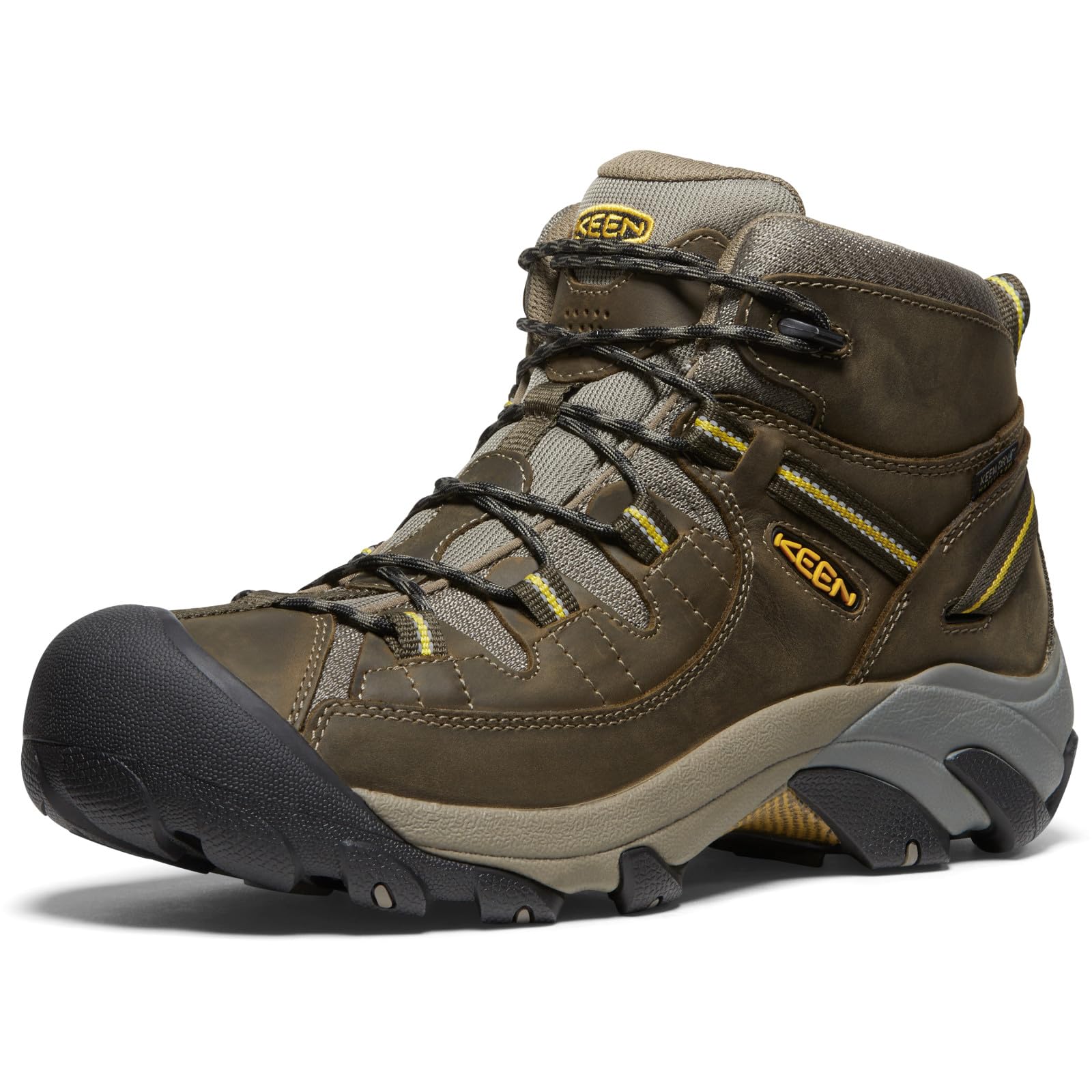
The Targhee 2 delivers the most generous toe box and supportive arch in its class, ideal for day hikers who prioritize comfort over long-term durability. It is not designed for the repeated stress of multi-day backpacking sessions.
Pros
- Very comfortable with great arch support
- Roomier fit for wide feet and thick socks
Cons
- Sole separation can occur within months, leading to sole peeling
A comfort-first option for day hikes with wide feet, but not a backpacking boot.
How to Choose
The most overlooked factor in backpacking boots is the quality of the sole bond and the longevity of the waterproof membrane.
Waterproof Membrane
Gore-Tex is the most trusted membrane, but it comes at a premium price. Branded membranes like Omni-Tech or Merrell’s own can perform nearly as well in light rain, but often degrade faster under sustained wet conditions.
The underlying mechanism is that all waterproof membranes rely on a thin polymer layer that can delaminate or clog over time. Once compromised, the boot becomes a sponge. For multi-day trips in wet climates, Gore-Tex offers the longest window of protection.
Ankle Height
Mid-cut boots (typically 4-5 inches) provide the best balance of support and mobility for backpacking. High cuts offer more stability for heavy loads but restrict ankle flexion on steep terrain.
Low-cut boots, often labeled as hiking shoes, lack the lateral support needed to prevent ankle rolls under a pack. For any trip involving a loaded pack over uneven ground, a mid or high cut is essential.
Outsole Traction
Vibram outsoles are the gold standard for grip on wet rock and loose dirt, but they wear faster on pavement. Proprietary rubber compounds from brands like Columbia and Merrell are adequate for most trails but can be slippery on polished stone.
The trade-off: a softer rubber compound grips better but wears out sooner. For backpackers who spend most of their time on trail, a mid-durability compound like Vibram Megagrip is the sweet spot.
Weight
Lightweight boots (under 2 lbs per pair) reduce fatigue on long days but often sacrifice durability and cushioning. Heavier boots (2.5-3 lbs) offer more protection and support but can feel sluggish.
The key is to match weight to your trip duration. For multi-day trips with a 35+ lb pack, a boot around 2.5 lbs provides enough structure without excessive fatigue. For day hikes, a lighter boot is fine.
Durability of Sole Bonding and Lace Hardware
Sole separation is the most common premature failure mode, caused by poor adhesive bonding between the rubber outsole and the midsole. Boots with a stitched welt or a vulcanized construction resist separation far longer than those relying solely on glue.
Lace eyelets and hooks are another weak point. Metal hooks can bend or break, while plastic eyelets crack under tension. Look for reinforced metal hardware and check user reviews for reports of eyelet failure.
FAQ
Why do my new hiking boots leak even though they say waterproof?
Most waterproof membranes (except Gore-Tex) are designed for light rain and snow, not submersion. Also, the membrane’s effectiveness depends on the boot’s construction; if water enters through the tongue or ankle collar, the membrane is bypassed. To test a boot, stand in a shallow puddle for 30 seconds before buying, and always treat the leather or fabric with a DWR spray to maintain beading.
How long should backpacking boots last before the soles separate?
Quality boots should last at least 500-700 miles before sole separation becomes a risk. Cheap boots under $60 often delaminate within 100-200 miles. To extend lifespan, store boots away from heat and direct sunlight, and avoid using them as everyday shoes. If you see the outsole pulling away from the midsole, apply a dedicated shoe glue immediately.
Are lightweight hiking boots good enough for multi-day backpacking trips?
They can be, but only if they offer sufficient ankle support and a sturdy sole. A lightweight boot under 2 lbs per pair with a mid-height cut and a stiff shank can handle a 30-40 lb pack on moderate terrain. For heavier loads or very rocky trails, a slightly heavier boot with a sturdier chassis is safer and more comfortable.
What is the difference between Gore-Tex and brand-name waterproof membranes?
Gore-Tex uses a proprietary ePTFE membrane that is highly breathable and durable, backed by strict quality control. Brand-name membranes (e.g., Omni-Tech, KEEN.DRY) use similar technology but often with thinner layers, making them less breathable and prone to failure after 6-12 months of regular use. For frequent wet-weather backpacking, Gore-Tex is worth the premium.