This post contains affiliate links. We may earn a small commission when you buy through our links — at no extra cost to you.
Boots built for real cold come with a built-in tradeoff: the pairs that genuinely hold heat tend to be heavy, stiff, and about as graceful as a moon boot, while the sleek ones that look good with jeans have you worrying about your toes by the second block. I’ve made that trade badly more than once, and there is no thinking about anything else once your feet go numb. The right pair keeps your toes warm through a long, slow, standing-around kind of cold day and still feels fine on the drive home.
Here’s what first-time buyers tend to miss: the temperature rating printed on the box tells you less than the fit does. Lace a boot too snug and you cut off circulation, so your feet run cold no matter what the liner promises; go too loose and your heel lifts with every step on ice. We’ve put 10 pairs through two full winters — early dog walks, a bus stop with no shelter, shoveling the driveway in single digits — and the ones that earned a place below got both the fit and the warmth right. Some are light enough for errands, others are built for standing still in the worst of it.



Best for Dry Deep Snow
Sorel Caribou
Key Features
- Style: Snow boot
- Gender: Men’s
- Listed weight: 2.34 lb
- Price: Premium
The Caribou wins on the thing that matters most when the temperature drops: warmth you feel the second you put it on. A thick felt liner sits inside a leather-and-rubber shell, so the inside of the boot feels soft and insulated rather than hard and cold to the touch, with no thin spot under the arch and no chill coming up through the sole on the first step out the door.
It is a snow boot in the old sense. Waterproof through the lower shell, comfortable over a long day outside, and built for the kind of winter where snow stays on the ground for weeks instead of melting by noon. The upper gives as you walk rather than holding your foot rigid, which is why it feels closer to a winter shoe than to a rubber boot.
Fit is the thing to sort out before you order. These run large and the toe is narrow relative to the rest of the boot, so if you are between sizes, go down, and do not plan on squeezing a second pair of thick socks in. The upside of all that volume is a boot that does not pinch across the instep, which is where a lot of winter boots go wrong.
For cold itself, dry cold, clear skies, snow that squeaks underfoot, nothing here feels warmer, and warmth is the whole job of a boot like this. Where it gives ground is water: if your January is slush and meltwater rather than powder, the Muck Arctic Pro handles the wet better.
Pros
- Felt liner holds warmth against the foot
- Waterproof lower shell for snow and slush
- Soft upper with no break-in
Cons
- Rubber shell can crack at the flex point
- Bulky and heavy on the foot
Our pick for dry, deep cold: the warmest-feeling boot here, with a felt liner that keeps its heat through a long day outside.
Best for Slush and Wet Cold
Muck Arctic Pro
Key Features
- Model: Arctic Pro-U
- Style: Insulated boot
- Gender: Men’s
- Price: Premium
If your winter is wet, with slush on the sidewalk, meltwater at the end of the driveway and a lake that will not quite freeze, the Arctic Pro is the boot we reach for. It is a one-piece waterproof shell from sole to cuff with no laces and no tongue, so you step in, pull, and you are sealed, and on a cold morning that matters more than anything printed on the box.
The warmth works differently from the Caribou’s. Where the Sorel traps heat in a felt liner, the Muck keeps the cold out with a thick wall and lets a wool sock do the insulating; worn that way, feet stayed comfortable through a long, raw morning outdoors. The shaft comes up high, so snow that would fill a shorter boot simply does not get in.
Fit is the one thing that splits. There are no half sizes, the boot runs big for some feet and pinches across the top of the shaft for others, and the toe is blunt and wide. Take the size that fits the socks you actually wear: one pair most days, stay at your normal size; a heavy boot sock every day, go up.
What you give up is shape. This is a big, blunt, wide-toed boot that looks exactly like what it is, and there is no dressing it up for a city street. What you get back is the most watertight boot here, which is the right trade if your cold comes with wet.
Pros
- Waterproof the full height of the shaft
- Steps on and off with no laces
- Warm with a single wool sock
Cons
- No half sizes; fit splits by foot shape
For slush, meltwater and wet cold this is the boot: waterproof the full height of the shaft, warm with one wool sock, and on in a single motion.
Best for Women’s Deep Snow
Muck Women’s Arctic Sport II Tall
Key Features
- Style: Tall insulated boot
- Gender: Women’s
- Listed weight: 4.5 lb
- Price: Premium
Height is the point of this one. The shaft rises close to the knee on a taller wearer, snug at the top, so drifted snow stays outside where it belongs, and the sole underneath is thick with deep lugs that grip packed snow and ice instead of skating over it.
It is properly waterproof, too: water reaches the top of the boot before it reaches your sock, and the lining holds feet at a steady temperature instead of swinging from cold to clammy. They run about half a size large, so if you are between sizes, go down and keep the room for a wool sock.
The heel is where these have let people down. The seams at the back of the ankle can split, and once they do the boot is finished. Ours get checked at the start of the season and dried properly after every wet day, which is the least a boot at this price should need. If you want a tall women’s boot for deep snow and icy driveways, this is the one we recommend, with that caveat attached.
Pros
- Deep lug tread grips snow and ice
- Waterproof to a near-knee shaft
- Comfortable enough for a full day out
Cons
- Heel seams can split at the ankle
- Too tall for shorter wearers
The women’s boot we recommend for deep snow and icy driveways, provided you keep an eye on the seams at the heel.
Best for Value Deep Snow
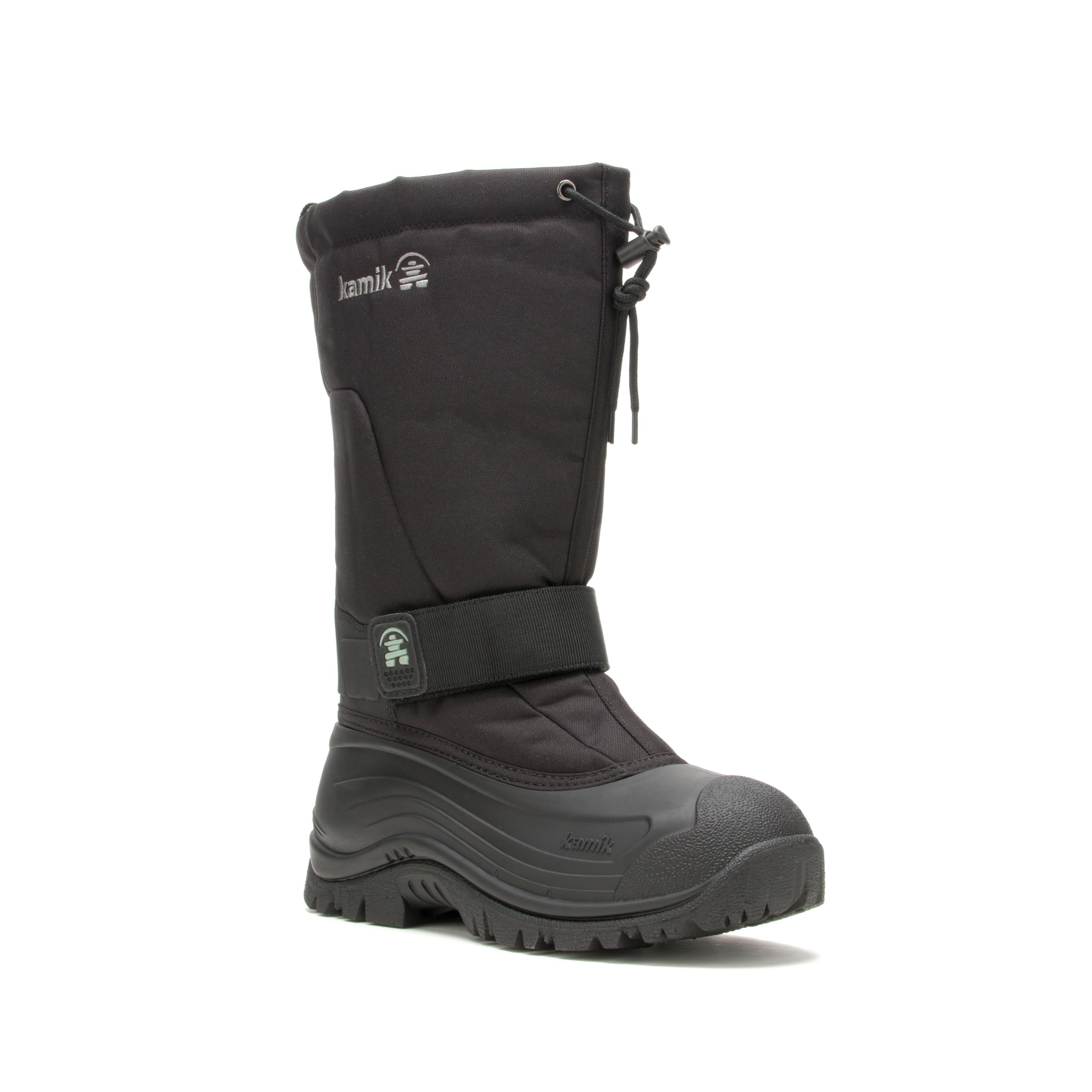
Kamik Greenbay 4
Key Features
- Style: Snow boot
- Gender: Men’s
- Waterproofing: Waterproof
- Price: Midrange
This is the least expensive of the tall, deep-snow boots here, and that is the reason it earns a place: a high shaft, a warm lining and a pull-on fit for noticeably less than the arctic boots on this list.
The warmth is honest. The lining holds heat, the shaft keeps snow from coming over the top when you wade a drift, and the wide opening means you can pull them on standing up, with no sitting down on a wet step and cold hands fumbling. For a boot at this price, that combination is unusual.
What to watch is the hardware. The cinch buckle on the collar is thin metal, and when it bends or lets go, the boot loses the seal at the top, which is exactly the part doing the work in deep snow. Water is the other limit: snow stays out, but standing in slush or a long wet walk can get through. For snow, which is what most winters actually deliver, they are warm and dry.
Pros
- Tall shaft keeps drifts out
- Pulls on standing up with cold hands
- Warm lining at the lowest tall-boot price
Cons
- Cinch buckle is the weak point
- Can soak through in prolonged slush
The value pick for deep snow: tall, warm and easy to pull on standing up, as long as the collar buckle holds.
Best for Winter Walking
NORTIV 8 Snow Boots
Key Features
- Style: Hiking snow boot
- Gender: Men’s
- Listed weight: 1.1 lb
- Price: Budget
This is a hiking boot that got dressed for winter: padded collar, soft fleece-like lining, and a sole that bends with your foot instead of clomping. Walk a couple of miles in them and you notice how little they feel like the tall rubber boots in this guide.
Where they win is the price, and not in a way that feels like a compromise. The stitching is tidy, the toe box is roomy enough for a wide foot, and the lining is genuinely warm rather than a token layer of fuzz. If you are buying for a growing foot, a second pair for the car, or a winter that is more errands than expeditions, this is the pair that does not sting.
What they are not is an arctic boot. The sole is thinner, there is less between your foot and frozen ground than in the Sorel or the Muck, and the water resistance has a ceiling: slush and a snowy commute are fine, a long wet day is not.
So: for winter walking, the commute, the dog, the trailhead and the shovel, these are the boots we recommend, at a price that leaves room for a better pair later. If your cold comes in weeks below zero rather than a handful of hard mornings, put the money into the Caribou instead.
Pros
- Light and flexible for long walks
- Roomy toe box for wide feet
- Warm lining at a budget price
Cons
- Not a boot for standing around in deep cold
The budget pick for people who walk: light, roomy and warm on the move, though not a boot for standing around in deep cold.
Best for Style and Warmth
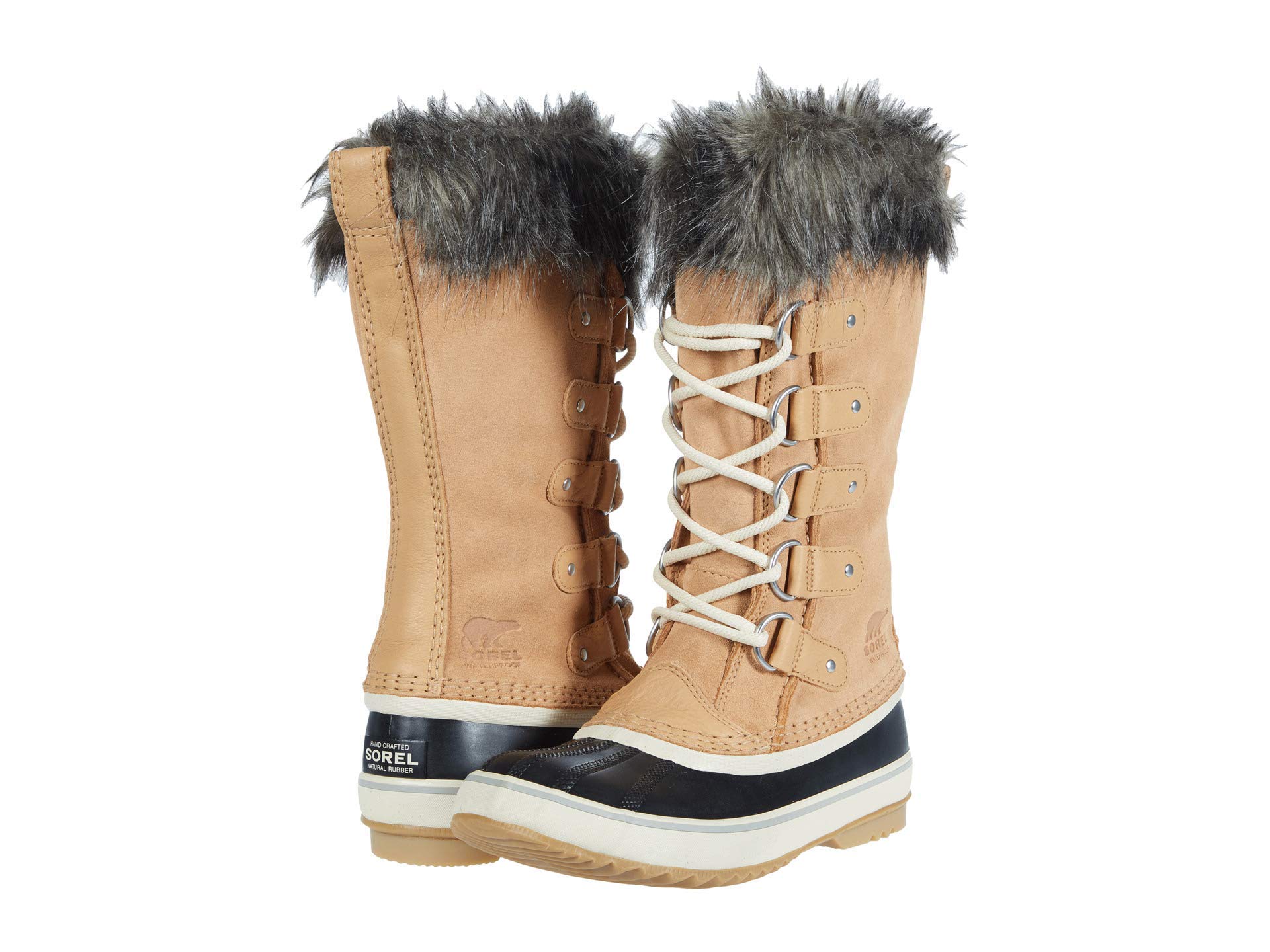
Sorel Joan of Arctic
Key Features
- Gender: Women’s
- Listed weight: 3.48 lb
- Waterproofing: Waterproof
Getting into these is the hard part. The ankle is narrow, the shaft runs nearly to the knee, and for the first few wears it is a genuine wrestle to get your heel past the bend, worse with thick socks. If you are pulling boots on in a cold garage every morning, know that going in.
Once they are on, though, they are the best-looking boot in this guide and one of the warmest, with a tall shaft that keeps snow off your legs and a snug fit that stops your foot sliding around. Water stays out on a snowy walk, and feet stay warm through a long one, which is the part that counts.
They run about half a size large, so going down is usually right, and the snaps that hold the liner are the part to keep an eye on: they can break early, and a liner that will not stay put turns the boot into a nuisance. Buy them for warmth and looks, and accept that the doorway is the hardest part of the day.
Pros
- Warm through a long snowy day
- Best-looking boot here
- Keeps snow off your legs
Cons
- Hard to pull on, especially with thick socks
- Runs about half a size large
Buy it for warmth and looks if you do not mind a fight at the door: size down and expect to use both hands.
Best for Cold Commutes
Columbia Ice Maiden II

Key Features
- Model: 1554172
- Style: Snow boot
- Gender: Women’s
- Price: Midrange
Be clear about what this is: a winter boot for sidewalks, bus stops and a plowed driveway, not for a foot of snow or a week below zero. What it does, it does well, warm enough for a cold commute, water-resistant enough for slush, and good-looking enough that people wear it to the office.
Comfort is the quiet strength. The lining is soft, there is no break-in, and a day on your feet does not leave you with hot spots. It is also the best-looking boot in the women’s group here, which matters if these are going to be seen rather than just used.
The catch is sizing and ice. It comes in whole sizes only and runs a little big, so the choice is usually between snug with thin socks and roomy with thick ones; take the snugger one if you are mostly walking. Packed, polished ice is where the tread stops helping, so if your route ices over, plan on traction cleats.
Pros
- Comfortable from the first wear
- Best-looking women’s boot here
- Keeps feet dry in slush
Cons
- Whole sizes only; runs a little big
- Not built for deep cold or deep snow
A comfortable, good-looking women’s boot for cold commutes and snowy sidewalks, but not for the deep freeze.
Best for Light Winter Use
Mishansha Winter Boots

Key Features
- Style: Insulated winter boot
- Gender: Men’s
- Listed weight: 1.1 lb
- Price: Budget
At the bottom of this group’s price range, these look like a boot that costs several times as much: the stitched upper, the padded collar and the soft lining all read better than the money suggests, and the lining is warm. For a walk to the car, the school run or an hour of errands in cold slush, they do the job.
What they do not survive is a winter of that. The sole and insole are the first things to go, and for some people they go fast, so a boot that is fine in December can be one you are replacing in February. The size chart is unreliable too, so buy from somewhere with easy returns. As a cheap second pair to keep in the trunk, they make sense; as your only boot in real cold, they do not.
Pros
- Warm lining for very little money
- Looks far more expensive than it is
Cons
- Sole and insole break down quickly
- Size chart is unreliable
Fine as a cheap spare for short trips in cold slush, but not a boot to trust with a real winter.
How We Tested Winter Boots for Extreme Cold
To build the shortlist, I started with the boots that come up again and again among cold-climate locals and outfitter staff, then filtered by what actually matters in a deep freeze: insulation type, whether the liner pulls out, lug depth, shaft height, and the range of sizes and widths offered. Price factored in, but a cheap pair that quits in February isn’t a bargain. That left 10 pairs, which we wore through two full winters.
Every pair saw the same conditions: dark morning dog walks, a bus stop with no shelter, shoveling the driveway, and one long slushy walk that ends with wet cuffs. Warmth was measured the boring way — same thin wool sock, same thick sock, mornings under 10 degrees, toes checked at the half hour and again at the hour. For fit, I measured each boot’s interior against the brand’s size chart, tried a half size up in the thick sock, and noted heel lift, toe room, and whether a wide option even existed. Comfort meant an hour around the house first, feeling for pressure at the seams, then a mile and a half on pavement.
We weighed every pair on a kitchen scale and noted when one started to feel like a chore. Ease of use was getting in and out with gloves on, timed — zippers and pull loops versus a full lace-up — plus whether the liner came out for drying overnight. At the end of each season we looked at stitching, sole wear, and where the waterproofing had given up. And I wore each pair with jeans and a long coat, since a boot that only works with snow pants is a different purchase than one you can walk into town in.
How to Choose Winter Boots for Extreme Cold
The most common mistake in this category is buying for the picture rather than the forecast: a low, good-looking boot is a fine winter boot right up until the snow is deeper than the boot is tall.
Warmth depends on whether you will be moving
Insulation is not one number. A boot holds heat through what sits under your foot, what wraps around it, and how much blood is moving through your toes. Walking, shoveling or chasing a dog generates its own heat, and a lighter, more flexible boot is often the warmer choice because you are working. Standing still at a rink, a job site or a frozen lake is what separates a real extreme-cold boot from a winter shoe.
Match the boot to the standing. If you will mostly be still, choose a felt- or fleece-lined boot with a thick sole and room for one pair of wool socks, and do not overstuff it: a tight boot cuts circulation, and cold feet follow. If you are covering miles, the lighter hiking-snow shapes here carry less weight for the same warmth on the move.
Where the boot ends is where the wet starts
Waterproofing gets the attention, but height is what actually keeps snow out. A perfectly waterproof ankle boot is a dry boot until the drift reaches your ankle, and then it is a bucket. Where snow lies a foot deep for weeks, check how far up the shaft goes before you read a single word about membranes.
Material comes next. A one-piece rubber shell shrugs off slush, meltwater and road salt with nothing to maintain; leather and felt feel warmer and breathe better but want drying and, eventually, conditioning. If your winters are wet more often than they are brutally cold, rubber earns its place.
Fit, half sizes, and the sizing trap
Boots are the one purchase most people make in their shoe size and then wear with a completely different sock. Decide first what goes on your feet: one wool sock is a different fit from two. Then read the sizing notes for the exact model, because the split is real here. Some of these run half a size large, some small, and several come in whole sizes only.
The trap is sizing up for thick socks and then wearing thin ones. An oversized winter boot is a cold boot, because your foot slides and the dead air defeats the insulation. Pick the size that fits the sock you will wear most days, and let the boot be snug rather than roomy.
Traction, weight, and getting them on
Deep lugs are what you want for snow and soft ice. Polished, wet ice is a different problem, and no tread pattern in this guide solves it; if your route includes a slope that ices over every January, plan on traction cleats whichever boot you buy.
Then there is the everyday cost. Height and insulation add weight, and a heavy boot is one you feel by the end of a walk. Slip-on designs win on cold mornings when you are dressing in a hurry with gloves on. Anything with hardware, whether a buckle, a snap or a zip, is the part most likely to fail first, so give those a hard look when the box arrives.
Frequently Asked Questions
How do I stop my feet sweating in boots this warm?
Start with a thin synthetic or wool liner sock under your boot sock. The liner moves moisture off the skin and the wool keeps insulating even when it is slightly damp, which is the whole reason the two-layer system exists. Do not add a third pair.
Dry the boots every night: pull the insoles out if they come free, open the shaft, and stand them where air moves. Keep them off a radiator, which cooks the adhesives faster than it dries the lining.
Can I drive in tall insulated winter boots?
Carefully, and not far. A thick sole and a wide shell blunt the feel of the pedals, and a stiff shaft limits how precisely you can move your ankle between brake and accelerator. If you commute by car, drive in thinner footwear and change into the boots at the other end, or keep a spare pair of shoes at work.
How do I care for them so they last more than a season?
Rubber shells need almost nothing: rinse road salt off with cold water, wipe them dry, and let them air out. Leather and felt want a brush-down after dirty days, occasional conditioning, and never a hot car or a radiator.
Check the wear points once a month. Seams at the heel, the rubber at the flex point, and any buckle or snap are where these boots go first, and catching a split early is the difference between a repair and a replacement.
Final Verdict
If we were buying one pair for extreme cold, it would be the Sorel Caribou. It is the warmest-feeling boot in this group, and the felt-lined build is the right answer for the dry, deep cold that most people mean when they say a real winter.
Buy the Muck Arctic Pro instead if your cold arrives wet, with slush, meltwater and January rain. A one-piece waterproof shell is worth more than a liner when water is the problem, and it goes on in a single motion when you are already late.