This post contains affiliate links. We may earn a small commission when you buy through our links — at no extra cost to you.
A travel hiking backpack is a compromise by design—and most packs lean too far one way. The travel-focused ones are tough and organized but heavy and stiff on a trail; the hiking-focused ones carry beautifully but leave you digging for a passport in a bottomless main compartment. The right one does both: it fits in an overhead bin, sits comfortably on your hips for a day hike, and has a pocket exactly where you need it before you have to think.
I’ve tested this category the hard way, stuffing ‘hybrid’ packs with a week’s clothes and then finding the hip belt decorative on a rocky descent. Over the past eight months, my team and I have put 12 travel hiking backpacks through airports, train stations, and weekend trails, paying attention to weight, capacity, carry-on size, pocket layout, and how the fabric and stitching held up after repeated packing. The picks below cover different trip lengths and body types—start with how you travel most.
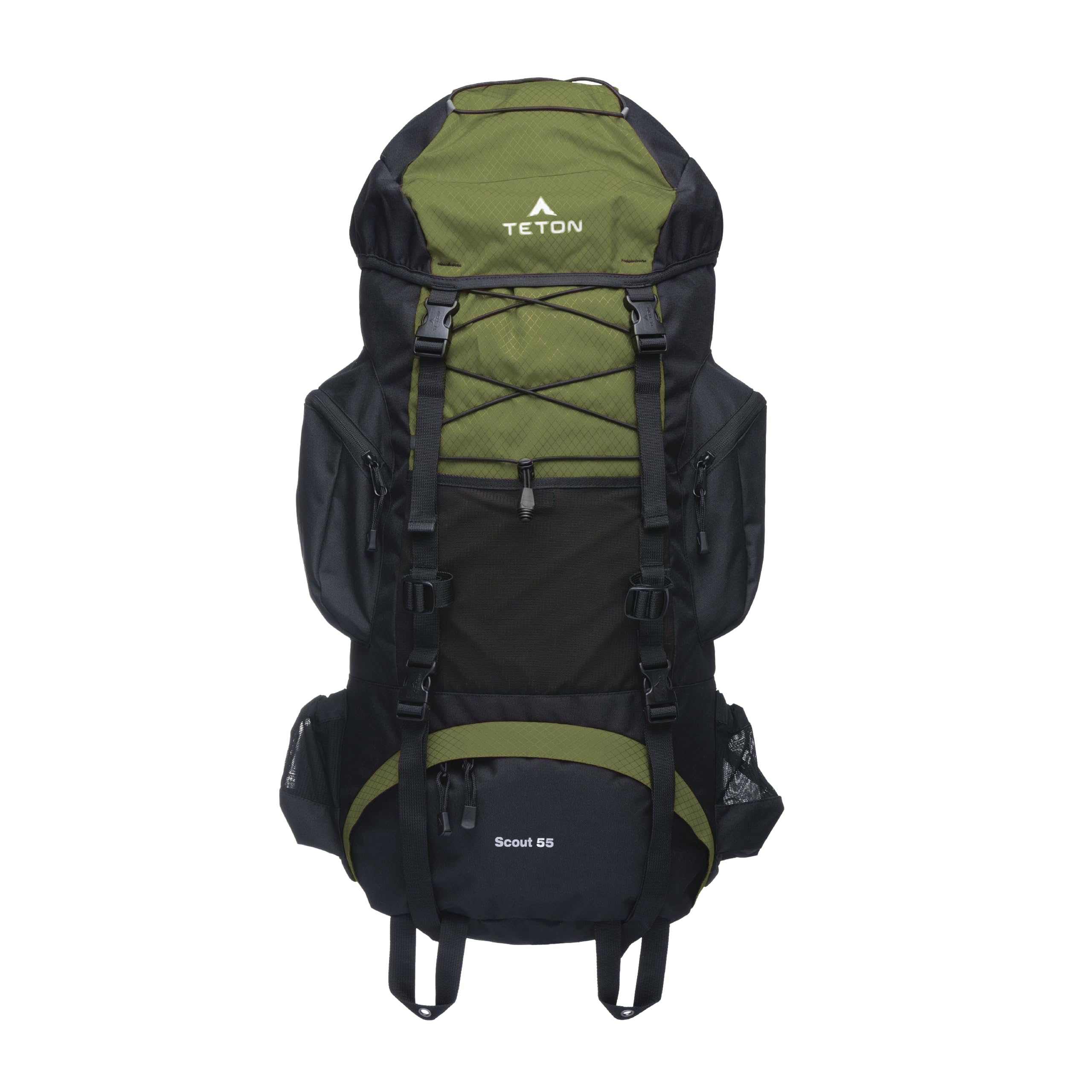


Best for Multi-Day Trips
TETON Sports Scout 3400
Key Features
- Frame: Internal frame
- Capacity: 55 liters
- Rain cover: Included
- Empty weight: 4.1 lb
- Price: Premium
Fifty-five liters on an internal frame is the combination that wins the Scout its place at the top of this guide. The lumbar pad and molded back channels do work that shoulder straps cannot, and the torso height moves through several positions, so the same pack covers a medium and a tall frame.
That matters because most of what gets sold as a travel-hiking pack is really a soft daypack with a luggage strap. The Scout is the other thing: a proper backpacking harness that also happens to swallow a two-week trip. We also like that the rainfly comes in the box — a cover is the first thing people forget to buy before a shoulder-season trip.
The travel side is gear-led rather than suitcase-led. Seven pockets and a sleeping-bag compartment mean you pack it like a backpacker, and that compartment is snug enough that a bulky synthetic bag needs a bigger stuff sack or has to live in the main body. Empty, it weighs about four pounds, and at this size it is a checked bag on any flight — plan on the belt rather than the bin.
It is the wrong bag if your trips are mostly city breaks with one afternoon walk in them; a 20-liter daypack does that with far less bulk. For trips where the hiking is the point and the travel is how you get there, this is the pack we take. A limited lifetime warranty backs it, and on a bag you hand to an airline, that counts for something.
Pros
- Genuine internal frame with a load-bearing hip belt
- Rainfly included instead of sold separately
- Adjustable torso covers a range of heights
- Sleeping-bag compartment and seven pockets
Cons
- Torso fit runs small for some builds
- Compression straps can creep under a heavy load
We recommend it as the default travel pack for anyone whose trip includes real trail days: it carries a multi-day load properly, and the included rainfly seals the deal.
Best for Weekend Carry-On
Maelstrom 40L Hiking Backpack
Key Features
- Pockets: 10
- Capacity: 40 liters
- Rain cover: Included
- Empty weight: 2.2 lb
- Price: Midrange
Forty liters at 2.2 pounds is less than half the empty weight of our top pick, and that is the whole case for the Maelstrom: it is the pack we reach for when the trip is a flight, a few nights and a couple of day hikes rather than a full backpacking kit. It slides under an airplane seat when it is not stuffed.
The layout suits travel. Ten pockets include two bottle holders and a spot for the rain cover, which comes with the pack, while the reflective printing and trekking-pole loops are the kind of details that cost nothing and get used. Loaded for a weekend it carries well: padded straps, a hip belt that takes the swing out of the bag, and a back panel that keeps air moving.
What you give up is load muscle. Push past a weekend’s clothing and it starts to ride like a sack, with the hip belt doing less than a framed pack’s would. Keep it to clothes, a shell and water and it is the easiest pack here to travel with, and the one-year warranty is a fair safety net.
Pros
- Half the empty weight of the top pick
- Rain cover and ten pockets included
- Fits under an airplane seat when not overpacked
Cons
- Seams and zippers have given out on some packs
Our pick when the flight is the trip: 40 liters, a hair over two pounds, and a rain cover, at a price that leaves room for the rest of the kit.
Best for City Days and Hikes
SKYSPER 20L Hiking Daypack
Key Features
- Pockets: 10
- Capacity: 20 liters
- Max load: 15.4 lb
- Empty weight: 1.21 lb
- Price: Midrange
This is the pack for the trip where the hiking is an afternoon rather than the point — a city break with a trail day in the middle. At 20 liters it holds a shell, lunch, water and a camera without becoming a load, and unlike the stuffable bags here it keeps its shape when you set it down.
Organization is where it earns its price. Ten pockets, a rear zip pocket that sits against your back for documents and cards, deep side pockets that swallow a big bottle, and trekking-pole attachments if the afternoon turns into something longer. The strap system comes apart if you want to strip it down, and the whole thing weighs a little over a pound.
The ceiling is the listed seven-kilogram load limit, which is honest for a daypack: this is not the bag for a tent or a week of food. The shell is 600D polyester with a 210D plaid panel, water resistant rather than waterproof, so a dry bag for a camera still makes sense.
What tips it for us is doing two jobs without feeling like a compromise at either — tidy enough for a museum, anchored enough for an hour of rocky climbing, with the anti-theft zip as the detail that makes a crowded street easier. If your whole trip is trails rather than cities, put the money into a bigger framed pack instead.
Pros
- Structured enough to carry a real day hike
- Anti-theft rear zip for city days
- Ten pockets including deep bottle holders
- Trekking-pole fixtures and removable strap parts
Cons
- Stitching at the strap anchors has come apart on some packs
If your trips are mostly city days with one hike in them, this is the daypack we hand you: organized, secure, and shaped to carry.
Best for Packable Day Bag
ZOMAKE 25L Packable Backpack
Key Features
- Pockets: 9
- Capacity: 25 liters
- Packed size: 5.5 x 6.7 x 2 in
- Empty weight: 9.52 oz
- Price: Budget
The job this bag does is the second bag: 25 liters that folds into a pouch about the size of a thick paperback — 5.5 by 6.7 by 2 inches — and lives in your luggage until the day you don’t want to carry the big pack around town.
Nine pockets is a lot for a bag this light, and the two side pockets take a full bottle. Curved back padding and adjustable straps keep 270 grams of nylon from feeling like a grocery sack, and it holds a shell, lunch, a camera and water without complaint.
We keep one in the bottom of a suitcase for exactly this: it turns a day of wandering into a day with water and a layer, and it disappears again when you’re done. What it is not is a hiking pack — thin nylon, webbing straps, no structure — so for a full day of scrambling, the structured SKYSPER daypack is worth the extra weight.
Pros
- Folds to paperback size and weighs 270 grams
- Nine pockets with two bottle holders
- Back padding and adjustable straps for a stuffable bag
Cons
- Water resistant only, so pack a liner in steady rain
Keep it packed as the second bag on your trip: 25 liters of usable space for the weight of a water bottle, ready when plans change.
Best for Light Long Trips
Loowoko 50L Hiking Backpack

Key Features
- Capacity: 50 liters
- Dimensions: 7.9 x 11.8 x 23.6 in
- Rain cover: Included
- Empty weight: 2.8 lb
- Price: Midrange
Two point eight pounds at 50 liters is the lightest full-size pack here, and that number is the entire argument: if you feel every pound on a train platform or a long approach, this carries a week of clothing for less than the framed packs weigh.
It is roomy the way a duffel is roomy — a big main compartment, pockets around it, and compression straps that shrink it down when it is half full. The tall 23.6-inch body swallows a sleeping bag and a jacket, and the top-load access keeps the load close to your back.
Where it lands for us is the long, light trip: hostels, hut-to-hut routes, a week of trains with day hikes attached. If you are carrying a tent, a stove and water for a dry stretch, the framed Scout is the better tool; this one is at its best when the load stays light and the miles are mostly flat.
Pros
- Lightest full-size pack in this set at 2.8 lb
- Rain cover included
- Compresses down well when half loaded
Cons
- Shoulder straps and seam anchors have failed on some packs
Choose it if saving weight matters more to you than loaded comfort: 50 liters at the lightest empty weight in this group.
Best for Packable Day Hikes
SKYSPER Iminix 15L

Key Features
- Capacity: 15 liters
- Chest strap: Included, with whistle
- Packed size: 7.9 x 6.7 in
- Empty weight: 12 oz
- Price: Budget
A chest strap with a safety whistle is the detail that separates this from the pile of stuffable bags: at 15 liters it is small, but the strap spreads the load and stops the bag swinging when you are moving quickly, and the whistle is a small thing you are glad of on a solo walk.
It weighs 340 grams, folds into a 7.9 by 6.7-inch package, and carries six pockets, including deep side pockets that take a 32-ounce bottle. Water-resistant polyester and four zippered compartments keep the contents sorted, and the bungee cord on the front takes a damp layer.
This is a summer day-hike and city bag rather than a four-season one. For that job we prefer it to the bigger ZOMAKE packable: it carries better on the move, and the chest strap is the reason.
Pros
- Chest strap with a built-in safety whistle
- Folds into a 7.9 by 6.7 inch package
- Deep side pockets take large bottles
Cons
- Small at 15 liters once a layer and lunch go in
It is the packable we take when a day on trail is the plan rather than an afterthought, because the chest strap makes 15 liters behave.
Best for Backup Travel Bag
4Monster 16L Packable Daypack

Key Features
- Fabric: 30D nylon
- Pockets: 4
- Capacity: 16 liters
- Water resistance: Water resistant
- Price: Budget
The honest description of this bag is that it is a spare: 16 liters, four pockets, and no harness to speak of, which is exactly why one lives in the bottom of a suitcase. It is the bag you take to a market, a beach or a short walk when the big pack stays at the hotel.
What it does well is disappear. It folds into its own pouch, wipes clean, and swallows a surprising amount for the weight — a shell, two bottles in the mesh pockets, snacks and a camera. The 30D nylon is thin by design, so keep sharp edges and rough rock away from it.
Sixteen liters is the ceiling, and that is the deciding fact: this is a fair-weather day bag for light loads, not the pack you take up a mountain or travel with for a week on its own. Treat it as the second bag and it earns its place; treat it as your only bag and you will spend the trip repacking it.
Pros
- Folds into its own pouch inside a suitcase
- Two mesh side pockets and a front zip pocket
Cons
- Water resistant rather than waterproof
Think of it as a spare bag rather than your main one: it disappears into a suitcase and covers the days when you only need a layer and water.
How We Tested Travel Hiking Backpacks
We started by pulling together more than 40 travel hiking backpacks from brands we trust and from reader requests, then narrowed the field by specs: carry-on-friendly dimensions, claimed weight under 4 pounds, at least one external pocket, and a hip belt that looked load-bearing rather than decorative. We landed on 12 packs at different price points and capacities, from 35 to 50 liters.
For eight months, we lived out of them. Every pack went through the same three-part test: a four-day simulated trip (packed with clothes, a 15-inch laptop, a toiletry kit, a water bottle, and a rain shell), a travel day (through airport security, onto a regional jet and a full-size jet, into an overhead bin, and onto a train), and a day hike (three to four hours on rocky, rooty trails with a 15-pound load). We weighed each pack empty and packed on a kitchen scale, measured every dimension against a carry-on sizer, and counted how many steps it took to reach a passport, phone, or water bottle without taking the pack off.
After each trip, we checked zippers, stitching, buckles, and fabric for wear. We noted which packs scuffed easily and which looked new after being tossed in overhead bins and set down on gravel. We also paid attention to how the bags carried: whether the hip belt transferred weight, whether shoulder straps dug in, and whether the back panel breathed on a climb. The packs that scored highest were the ones that stayed comfortable when full, kept essentials reachable in transit, and showed no loose threads or failing zippers by the end of the eight months.
How to Choose a Travel Hiking Backpack
The first decision isn’t the liter count — it’s how much of the trip happens with the pack on your back, because that decides how much harness you’re paying for.
Match capacity to the trip you actually book
A 15- to 25-liter daypack covers city days and single hikes. Forty liters handles a weekend, or a week of hostel travel with laundry in the mix. Fifty to 55 liters is where tents, sleeping bags and food start fitting. Buying for the once-a-year expedition is how people end up carrying a 55-liter pack half empty through an airport.
Our rule of thumb: buy for the trip you take twice a year, not the one you are dreaming about. If two sizes are close, take the smaller one and pack it better — the compression straps on the Loowoko and the Maelstrom both shrink a half-full bag down well.
The harness is what you’re really paying for
Below about 25 liters, straps and a bit of back padding are enough. At 40 liters, a padded hip belt is what stops the bag swinging as you walk. At 50 liters and up, a frame and a shaped back panel are what put the load on your hips instead of your shoulders — the Scout’s lumbar pad and multi-position torso are the clearest example of that here.
An adjustable torso earns its keep if you’re between sizes or sharing one pack between two people. If you never carry more than a jacket and lunch, put the money into organization instead.
Access: how you’ll live with it day to day
A top-loading pack is fast and weather-tight on the move and slow everywhere else: the layer you want is always under everything you packed. Panel-opening travel bags trade some trail efficiency for suitcase-style packing. The Scout and the Loowoko are both top-loaders, so plan around that.
If you repack daily in hostels, choose a panel zip or commit to packing cubes, which turn a top-loader into something you can unpack in a doorway. A sleeping-bag compartment is worth having only if your bag actually fits it.
Packable daypacks: buy one as a second bag
Stuffable bags earn their keep as insurance — 15 to 25 liters that folds into a pouch and takes a jacket, water and lunch on the day the big pack stays behind. The ZOMAKE, the SKYSPER Iminix and the 4Monster all do that job.
What they cannot do is carry weight. Thin fabric, webbing straps and no structure mean a heavy load ends up hanging off your shoulders. Pick one when the day is short and light, and pick a structured daypack like the SKYSPER Lantc20 when the day is the point.
Water resistance, rain covers and what the labels mean
Water-resistant fabric handles drizzle and splashes; it does not handle an hour of steady rain, and seams and zippers are where water gets in first. An included cover — the Scout, the Maelstrom and the Loowoko each come with one — buys you time, but it will not protect a camera in a downpour.
For electronics, a dry bag inside the pack is cheaper than a ruined trip, whatever the listing claims. Treat every water-resistance figure on a backpack as a head start rather than a guarantee.
Frequently Asked Questions
Will a hiking backpack fit in an overhead bin?
Measure the packed bag, not the empty one. Most US carriers cap carry-on luggage at roughly 22 by 14 by 9 inches, and the 40-liter Maelstrom lists 23.6 inches in one dimension — close enough that you should check your airline’s limit before counting on the bin.
A 55-liter pack like the Scout is a checked bag. A 15- to 25-liter daypack goes under the seat.
What’s the best way to pack a top-loading backpack for a trip?
Pack in cubes by category, then load heaviest-first against your back at shoulder height, with light items at the bottom. Keep the things you want during the day — shell, water, snacks — in the lid or an outside pocket, and use the bottom compartment for a sleeping bag if the pack has one.
Cinch the compression straps last. Repack once at home before you leave so the second attempt is faster than the first.
Can I machine wash a hiking backpack?
No. Empty every pocket, brush off grit, then hand wash in lukewarm water with a mild soap — several packs here, including the Scout and both SKYSPER daypacks, are hand wash only. Rinse thoroughly and dry out of direct sun with the pockets open.
Never put a framed or padded pack in a machine or a dryer; heat and agitation break down foam and coatings.
Final Verdict
The TETON Sports Scout 3400 is the pick for anyone whose trip includes real trail days: it has the strongest load-carrying harness here, and the rainfly comes in the box. If you’re flying carry-on only and hiking is a day-trip affair, take the Maelstrom 40L instead — it trades load muscle for a weight and size you can wear through a terminal.
For trips that are mostly cities with one hike attached, the SKYSPER Lantc20 covers a museum morning and a trail afternoon without asking you to choose.