This post contains affiliate links. We may earn a small commission when you buy through our links — at no extra cost to you.
The worst part of a travel day usually isn’t the flight — it’s the moment you take your shoes off and realize your sock has slid halfway down your arch. I’ve spent layovers fishing a sock out of a shoe, and I’ve landed with ankles puffy enough that my sneakers felt tight the next morning. A good travel sock fixes that: it stays where you put it, cushions the spots that take a beating, and applies just enough graduated pressure to keep swelling in check.
Over the past four months, my team and I have worn 16 pairs of travel socks on real trips — red-eyes, tight connections, full days on our feet, and hotel sinks where we hand-washed a pair and hoped it would be dry by morning. One thing I’ve learned the hard way: the compression number on the package tells you almost nothing about how a sock feels at hour eight. The cuff and the heel fit matter more. Here’s what survived.



Best for Long Flights
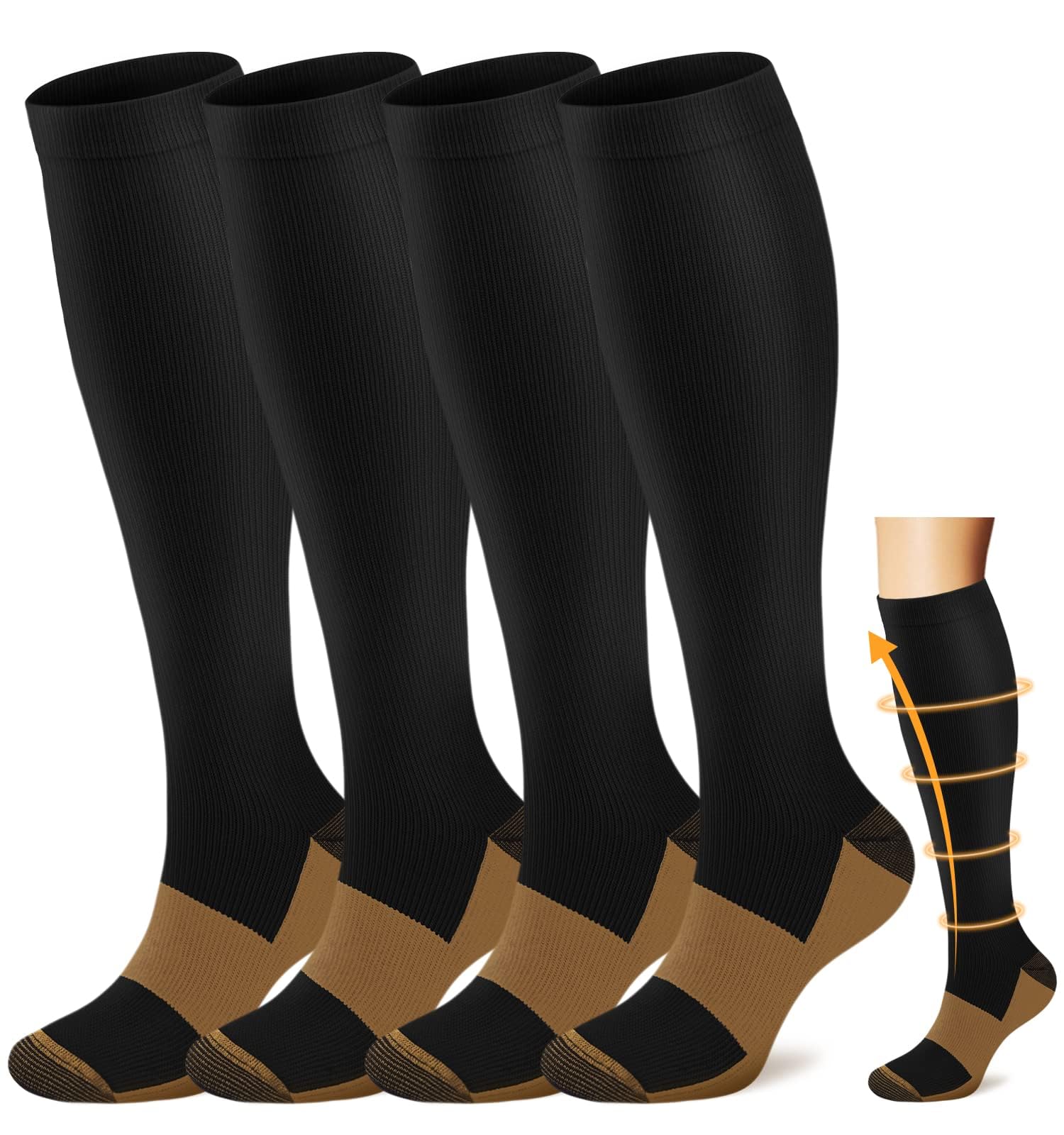
CHARMKING Compression Socks
Key Features
- Length: Knee-high
- Pack size: 8 pairs
- Compression: 15-20 mmHg
- Price: Midrange
Eight pairs at a moderate 15–20 mmHg is the travel-sock math that makes CHARMKING the default here. You get a fresh pair for each leg of a trip, and the pressure is gentle enough for a first compression sock without feeling like a medical garment. In our testing, that middle ground was the pair we could leave on through a travel day and still want to wear on the walk to the hotel.
The fit is the reason it works: the sock stays up without a top band that digs in, and the foot has enough room that your toes are not compressed into a point. The weak point is durability. Heels and toes can wear through, so we treat this as a pack to rotate rather than a buy-it-once sock. The 15–20 range is the right call for most travelers; if you need firmer support, a 20–30 pair is a different purchase, not a small upgrade.
The eight-pair count is the underrated part. A lost sock or a hotel-sink wash does not derail the rest of the trip, and you can keep one pair for the flight home without doing laundry. For a first travel sock or a family pack, that redundancy matters more than a single premium pair.
Pros
- Eight pairs cover a full trip
- Moderate 15–20 mmHg suits most travelers
- Stays up without a punishing band
- Easy enough for a first compression sock
Cons
- Heel and toe wear is the weak point
We put CHARMKING first for most travelers: eight pairs of moderate 15–20 mmHg compression that stay put and suit a full trip, though the heel and toe may wear first.
Best for Firm Compression
Physix Gear Compression Socks
Key Features
- Type: Compression calf socks
- Department: Unisex adult
- Compression: 20-30 mmHg
- Price: Premium
The 20–30 mmHg range puts Physix Gear in a different category from the gentle travel socks: this is the pair we reach for when the goal is firm support on a long flight, not just a cozy sock. We think it earns a runner-up spot for travelers who already know they like firm compression, because the support is serious and the sock stays put. It is not the easiest pair to haul on in a cramped seat.
The fit is the thing to get right. The sock runs big for some and short for others, and the foot can feel roomy, so measure your calf and check the size chart before ordering. The 20–30 pressure also makes it harder to get on than a 15–20 pair, especially if your hands are cold or you are rushing through a connection. That firmness is the point on a long-haul flight, but it is more sock than a weekend trip needs.
The fabric feels dense and supportive rather than soft, and the toe seam is more noticeable than on the lighter socks. We noticed the compression most in the calf and ankle, which is where travel swelling tends to settle. If you want a sock that disappears on your foot, choose a milder pair; if you want to feel held, this is the one.
Pros
- Firm 20–30 mmHg support
- Strong for swelling and leg fatigue
- Stays put under trousers
Cons
- Sizing runs big and long for some
- Firm pressure takes effort to pull on
Choose Physix Gear when you want firm 20–30 mmHg support for a long-haul flight; we rate it highly for swelling, but measure your calf and expect a harder pull-on.
Best for Wide Calves
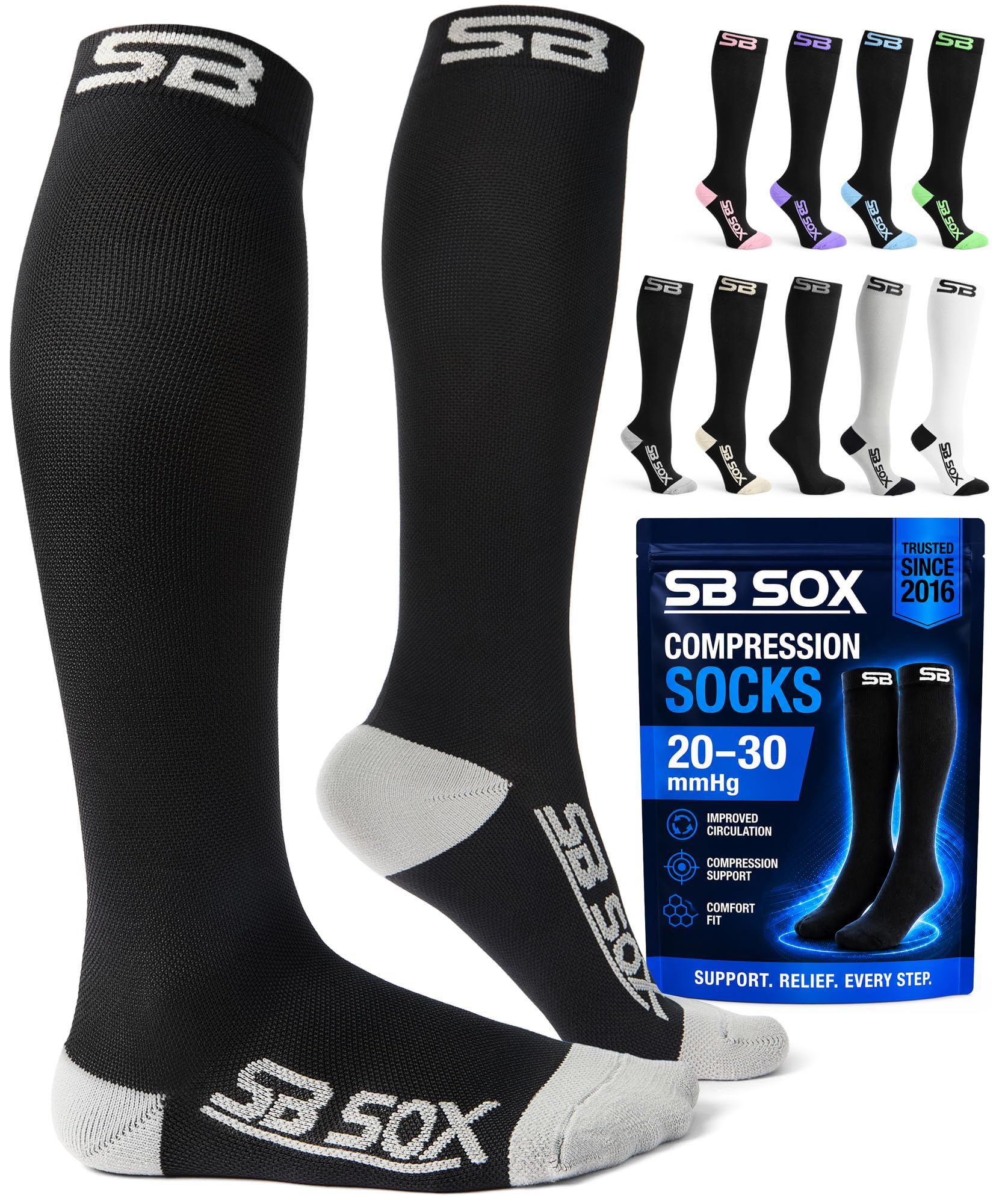
SB SOX Compression Socks
Key Features
- Care: Hand wash only
- Size: Large
- Fabric: 80% nylon/20% spandex
- Compression: 20-30 mmHg
- Price: Premium
The first thing we look for in a firm travel sock is a sizing chart that asks for calf circumference, not just shoe size, and SB SOX is the one here that puts that measurement up front. That makes it our pick for wider calves and anyone who has been burned by one-size travel socks. The 20–30 mmHg support is firm, and the reinforced heel and toe add a little cushioning where travel socks usually feel thin.
The catch is care and fit: it is hand wash only, and the sizing still runs small for some, so use the chart rather than your usual sock size. The top band is firm enough to stay up on a flight, which is what you want, but it takes more effort to get on than a 15–20 pair. The reinforced heel and toe are the details we appreciated most; they make the sock feel less like a disposable travel accessory. If you have a wide calf, this is the pair to try first.
Pros
- Calf-based sizing chart
- Firm 20–30 mmHg support
- Reinforced heel and toe
- Stays up on long days
Cons
- Hand wash only
- Sizing still runs small for some
We point travelers with wider calves to SB SOX: the calf-based chart and firm 20–30 mmHg support earn it a place, as long as you accept hand washing.
Best for Budget 3-Pack
FITRELL Compression Socks
Key Features
- Length: Knee-high
- Pack size: 3 pairs
- Compression: 20-30 mmHg
- Price: Budget
A three-pair pack is the reason FITRELL keeps showing up in travel lists, but the real question is whether the firm 20–30 mmHg support is comfortable enough to wear for a long day. The sock is thin enough to sit under trousers, and the knee-high cut stays in place without a hard band. It feels like a straightforward compression sock, not a luxury one.
The fit is the usual compression-sock compromise: firm through the calf and ankle, with a top band that stays put. The fabric is thin enough to wear under trousers, and the toe box has enough room. Durability is the question mark; some pairs develop holes at the toe or heel, so treat them as a rotation pack. The three-pair count is enough to test the fit before you commit to a bigger stash.
We think FITRELL is the right budget pick if you want firm compression for a trip and don’t need an eight-pair stash. It gives you three pairs to see whether 20–30 mmHg suits you; if you need easier-on support or a more generous calf fit, spend more on SB SOX or go milder with CHARMKING. That is a useful test, not a compromise.
Pros
- Low-cost three-pack
- Firm 20–30 mmHg support
- Thin enough under trousers
- Good fit for a test run
Cons
- Toe and heel durability is inconsistent
Our budget pick is FITRELL: three pairs of firm 20–30 mmHg compression let you test the fit before committing, though the toe and heel may wear first.
Best for Light Travel
ACTINPUT Copper Compression Socks
Key Features
- Material: Copper compression
- Pack size: 4 pairs
- Department: Unisex adult
- Price: Budget
ACTINPUT is the pair we hand to someone who has never worn compression socks and is nervous about the squeeze. It feels light and easy to pull on, with enough support to take the edge off a long travel day without the firm grip of a 20–30 sock. The four-pair pack also makes it easy to keep one pair in a carry-on and one in a checked bag.
The compression is gentle, and the sock sits smoothly without cutting in; the trade-off is that it won’t satisfy someone who needs firm medical-level support. The fabric is thin, which makes it pack small, but the footbed is not heavily cushioned. The toe area has enough room, and the band stayed put on our test days without leaving a deep mark.
We think ACTINPUT is our value pick for shorter trips, warm-weather travel, or a first pair; the four-pack gives you room to lose one. If swelling is your main concern, step up to a 20–30 pair. If you just want to get off the plane with less tired legs, this is the easier introduction.
Pros
- Light, easy-on compression
- Four-pair pack
- Packs small
- Good first compression sock
Cons
- Too mild for firm swelling support
For a first compression sock or a short trip, we choose ACTINPUT: four easy-on pairs with gentle support, not the firmness a heavy-swelling traveler needs.
Best for Sporty 8-Pack
fenglaoda Compression Socks

Key Features
- Length: Knee-high
- Pack size: 8 pairs
- Compression: 20-30 mmHg
- Price: Premium
fenglaoda’s eight-pair pack looks more like a sports sock than a medical stocking, and that is exactly why we kept it in the travel rotation: the 20–30 mmHg support is firm, but the colors and cut make it feel less clinical. The eight pairs are enough for a full trip, and the sporty look is a real advantage if you want to wear the socks with shorts or a casual dress.
The fit is the thing to watch. The sock stays up well for some and slips at the calf for others, and the compression feels firmer in the foot and ankle than higher up. We found the top band comfortable, but if you have a wide calf, check the size before committing to eight pairs. The fabric is thicker than the light travel socks, so it is better for cool-weather trips than hot ones.
We think it is a good also-consider for travelers who want a firm sock they won’t mind being seen in, especially if they like a sporty look. It is not the first choice for a very wide calf or for someone who wants gentle pressure. If you already know 20–30 mmHg works for you, the eight-pack is a practical way to buy it.
Pros
- Eight pairs in a sporty look
- Firm 20–30 mmHg support
- Comfortable top band
- Good for cool-weather travel
Cons
- Can slip down on some calves
- Compression feels uneven for some
We keep fenglaoda in the mix for its sporty eight-pack and firm 20–30 mmHg support, but check the calf fit because the sock can slip on some legs.
Best for Color Choices
Bluemaple Compression Socks

Key Features
- Material: Copper compression
- Pack size: 6 pairs
- Department: Women
- Price: Midrange
Bluemaple’s six-pack is the one that looks least like a piece of medical equipment; the colors stay bright, and that matters if you want to wear the socks with a dress or shorts on a trip. The pack gives you enough pairs to rotate, and the knee-high cut is easy to pair with travel clothes.
The compression is moderate and the fabric feels soft against the skin; the sock stays up without a hard band. The fit is not universal: some pairs feel tight through the calf, and the ankle area is thin enough that you can see wear starting. The toe and heel are the first places to go, so wash them gently and rotate pairs.
We appreciated the variety more than the firmness. This is not the pair for a traveler who needs 20–30 mmHg support or a precise calf fit; it is the pair for someone who wants a softer, more normal-feeling sock and a little color in the packing cube. The six-pack makes that choice easy to live with.
We think Bluemaple is the best choice here for color and pack variety, not for maximum support. If you want a travel sock that feels more like a normal sock and you don’t need firm compression, it earns a place; if swelling is the priority, choose a firmer pair.
Pros
- Bright, varied colors
- Soft, moderate compression
- Six-pair pack
- Stays up without a hard band
Cons
- Thin heel and seams wear early
- Fit runs tight for some calves
Bluemaple earns our attention for color and variety: six soft, moderate-compression pairs that look less clinical, not a firm support sock for swelling.
Best for Copper Blend
BLUEENJOY Copper Compression Socks

Key Features
- Care: Machine wash
- Size: Large-X-Large
- Fabric: 85% nylon, 15% polyester
- Pack size: 6 pairs
- Price: Premium
Copper is the headline on BLUEENJOY’s six-pack, but the useful part for travel is the machine-washable nylon blend and the moderate, all-day feel. The sock is soft and stretches over the calf, and the Large-X-Large size is generous. That generosity is also the caveat: the sizing runs inconsistent, with some pairs feeling loose and others tight, so check the calf measurement rather than assuming your shoe size will sort it out.
The compression is gentle to moderate, not a firm 20–30 grip; it is comfortable for a flight and easy to get on, but it may not be enough if you are traveling with significant swelling. The fabric is thin and smooth under trousers, and the six-pack gives you a spare pair for the return leg. The footbed is not heavily cushioned, so treat it as a light travel sock rather than a recovery sock.
The machine-washable care is a real convenience on a longer trip. You can rinse them in a sink or run them through a gentle cycle and air-dry them, which is more than some firm compression socks allow. The copper label is not a reason to buy on its own; the fit and the mild pressure are what matter.
We think BLUEENJOY is a good also-consider for travelers who want a soft copper sock they can machine wash and don’t need firm support. It is not the one we reach for when the priority is a precise calf fit or maximum compression. If you have a wide calf or need firm swelling support, start with SB SOX or Physix Gear instead.
Pros
- Machine washable
- Soft, easy-on feel
- Six pairs
- Copper-blend fabric
Cons
- Sizing runs inconsistent
- Too mild for firm swelling support
We like BLUEENJOY for a soft, machine-washable copper sock with mild compression; check the sizing carefully, because the fit can run loose or tight.
How We Tested Travel Socks, From Red-Eyes to Nine-Hour Walking Days
We built the shortlist by pulling together every sock actually designed for travel — merino and synthetic blends, graduated compression styles and lighter support pairs, cushioned heels, flat toe seams — then narrowed it by reading sizing charts and fabric contents closely enough to drop anything that came in only one size or that shrank badly in the wash according to buyer reviews. That left 16 pairs, which we rotated through four months of real trips instead of one long weekend.
Each pair got at least one full travel day: a flight of four hours or more, a connection made at a near-run, and an afternoon of walking with a bag. Before boarding, we measured calf circumference and marked where the cuff sat; after landing, we checked those same spots for deep indentations, asked the wearer whether their ankles felt puffy by evening, and counted how many times they had to tug the sock back up. We wore them with sneakers, loafers, and hiking boots too, since a sock that bunches in a narrow shoe is a different failure from one that slides down inside a loose one.
Back home, every pair went through a dozen gentle machine washes, and we looked for thinning at the heel, stretched-out cuffs, and pilling under the sole. We also timed how long each pair took to line-dry in a hotel bathroom, because a sock that’s still damp at 6 a.m. is no use to anyone, and noted how easily each one went on and came off in a cramped airplane seat.
The pairs that rose to the top were the ones we forgot we were wearing — no adjusting in the security line, no red marks by dinner, no negotiating a wet sock before checkout.
How to Choose Travel Socks
For travel, the right sock is less about the highest compression number and more about a fit that stays up through a long day and comes off without a struggle.
Match compression to the trip
A 15–20 mmHg sock is the easier starting point for most travelers: it gives gentle support without the fight of a firmer medical-style stocking, and it is the range we reach for on a normal flight plus a day of walking. A 20–30 mmHg sock is noticeably firmer and better suited to long-haul days when swelling is the main concern, or to travelers who already know they like that level of pressure. If you are between the two, choose the milder pair for a first trip and save the firm pair for a flight where you will be sitting for many hours. CHARMKING sits in the milder group here; Physix Gear and SB SOX are the firm options.
Measure the calf, not just the shoe
Compression socks live or die by calf fit, and shoe size alone is a poor guide. Measure the widest part of your calf and compare it with the maker’s chart; if you are between sizes, follow the calf measurement rather than sizing up for a roomy toe. SB SOX is the clearest example here, with a chart that pairs calf circumference and shoe size, while the packs with a single broad size ask you to check more carefully. A sock that is too loose slides down and stops doing its job; one that is too tight leaves marks and is miserable to remove.
Ease of use is a travel feature
Getting compression socks on in a hotel room or an airplane seat is part of the experience, not a detail. A 20–30 mmHg sock takes more effort than a 15–20 pair, and that matters if you have limited hand strength, cold hands, or a tight connection. Look for a smooth heel and toe, a band that does not roll, and enough stretch to pull the sock over the heel without a fight. ACTINPUT is the easy-on end of this group; the firm pairs reward patience but are not the ones to try for the first time on a red-eye.
Pack size, washing, and the durability question
Pack size is really a laundry decision. A three-pair pack is enough for a short trip if you can wash and air-dry; an eight-pair pack gives you a fresh pair for each leg of a longer trip and a spare if one disappears. Check the care label before you pack: some firm socks are hand wash only, while others are machine washable, and heat is the enemy of elasticity. Toe and heel wear is the weak point to watch across this category, so rotate pairs and air-dry them rather than treating one pair as indestructible.
Frequently Asked Questions
Should I wear socks under compression socks?
No—compression socks are designed to sit against the skin. A liner or another sock underneath can bunch, create pressure points, and make the fit tighter than intended. If the sock feels scratchy, choose a softer fabric rather than adding a layer.
How do I keep compression socks from rolling down?
Start with the right calf size; a band that rolls is usually a sign the sock is too loose or too short for your leg. Pull the sock smooth from the ankle up, leave the top band flat rather than folded, and avoid tugging it higher than the knit allows. If it still slips, the fit is wrong, not the technique.
Are copper compression socks better for travel?
Copper is mostly a fabric story, not a guarantee of better circulation. The compression level, calf fit, and how easily the sock goes on matter more. If you like the feel of a copper blend and the price is right, choose it for comfort; don’t choose it over a better-fitting sock just for the copper label.
Final Verdict
For most travelers, CHARMKING is the sock we recommend first: eight pairs of moderate 15–20 mmHg compression, a fit that stays up, and enough value that you can pack a spare without thinking about it. If you need firmer support for long-haul swelling, choose Physix Gear or SB SOX; SB SOX is the better bet if your calf is wider or you want a calf-based sizing chart. Start with the milder pair unless you already know you like firm compression.