This post contains affiliate links. We may earn a small commission when you buy through our links — at no extra cost to you.
The hike that changed my mind about socks was a rainy fourteen-miler in cheap cotton crews — by mile eight they’d bunched under my arches and my toes had gone numb. I finished it in a borrowed pair of merino hikers and haven’t bought a cotton sock for the trail since. Merino keeps insulating when it’s damp and doesn’t turn into a swamp by lunchtime, which is most of what anyone actually wants from a sock.
Socks are also where hikers get quietly fleeced: a label that says merino can mean 80 percent wool or 18 percent wool cut with nylon, and a thicker knit doesn’t automatically mean a warmer foot. Over the past six months, my team and I hiked, camped, and did a lot of laundry with 14 pairs to see which kept their shape, their softness, and their warmth. The ones below are the pairs we kept reaching for.


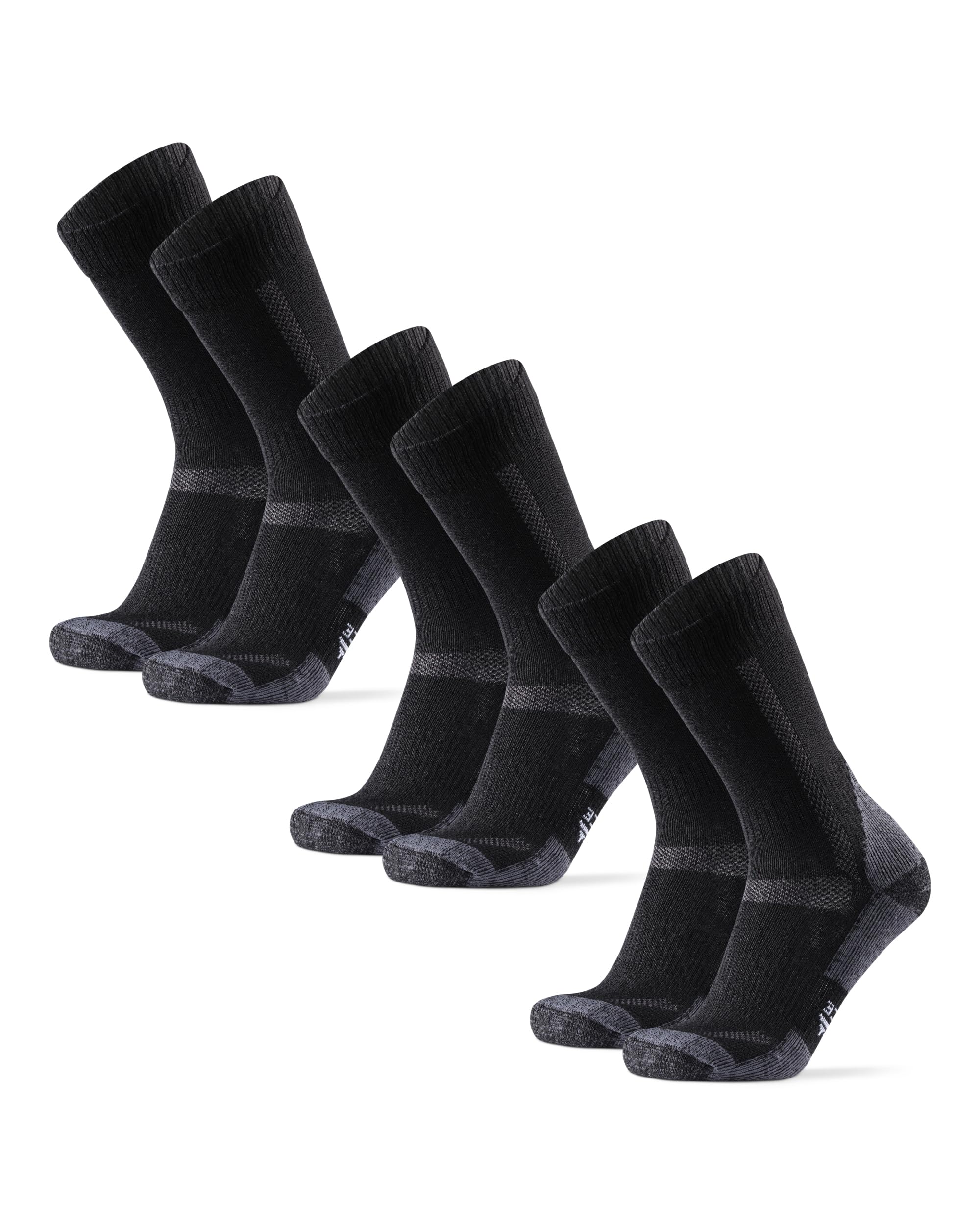


Best for Boots and Backpacking
Darn Tough Hiker Boot Full Cushion
Key Features
- Height: Mid-calf boot
- Warranty: Lifetime
- Cushioning: Full cushion
- Merino content: 66% merino, 32% nylon, 2% spandex
- Price: Premium
Full cushion means padding runs through the entire sock rather than sitting in a panel under the sole, and that is the detail that puts the 1405 at the top of this set for boot wearers. Pull one on and the cushion wraps the top of the foot and the ankle bone as well as the heel and ball — exactly the spots a boot tongue and cuff press on a long descent. The knit is 66 percent merino, 32 percent nylon and 2 percent spandex, so it is warm without behaving like a winter sock.
We paid close attention to whether it stayed put, because a sock that creeps down into the heel pocket is the quickest route to a blister. The arch band and cuff hold their position, and on climbs and descents the sock stayed where we put it instead of bunching under the arch. The seamless toe removes the ridge that rubs across the toes, and the mid-calf rise clears a boot collar without gapping.
What the premium tier really buys is wear and the guarantee behind it. A lifetime warranty changes the arithmetic: a pair that gets replaced when the heel goes is a different proposition from a three-pack that gets thrown out. The merino does the quiet work too — it holds warmth when damp, dries overnight and keeps a weekend hut from smelling like a weekend hut.
Two things to know before you commit. The knit feels slightly coarse against bare skin for the first few wears, so wear a thin liner if your feet are sensitive. And it is a substantial sock: in a very snug boot you will feel the bulk across the instep, which is a boot problem rather than a sock problem but worth checking before a long trip.
Pros
- Full cushion wraps the whole foot
- Stays up on climbs and descents
- Lifetime warranty backs the price
- Mid-calf rise clears boot collars
Cons
- Slightly coarse against bare skin
- Premium price tier for one pair
We recommend it without hesitation for anyone hiking in boots: full cushion, a cuff that stays up and a lifetime guarantee make the price easier to justify.
Best for Women’s Trail Fit
Darn Tough Treeline Micro Crew
Key Features
- Care: Hand wash
- Height: 7.5-inch micro crew
- Cushioning: Midweight terry underfoot
- Merino content: 63% merino, 35% nylon, 2% spandex
- Price: Premium
Seven and a half inches from heel to cuff is the number that matters here. That rise puts the Treeline just above a low hiking shoe and just over the collar of a standard boot — high enough to keep grit and low brush off your heel, low enough that you are not hauling a calf sleeve up a hot climb.
Cut on a women’s last rather than scaled down from a men’s pattern, it is the pair we hand women first. The heel is narrower, the arch band lands where it should, and the fit is the most consistent of the women’s socks in this group: it hugs without pinching, and the cuff does not creep down on descents, which is where most women’s socks give themselves away. Midweight terry underfoot plus a little extra at the ankle is enough for rocky ground without crowding a shoe.
The blend is 63 percent merino with nylon and a touch of spandex, and the warmth is genuinely three-season — warm on a cold morning without being stifling by midday. Two things we minded. The care instruction specifies hand washing, which is a chore for a sock you sweat in weekly. And the pattern leaves loose loops inside, so toes catch when you pull the sock on; ease it over rather than yanking.
Pros
- Women’s last fits narrow heels
- 7.5-inch rise suits shoes and boots
- Warm without overheating
- Holds its shape through washing
Cons
- Hand wash only
- Loose inner loops snag toes
The women’s-specific last is why we chose it: a narrow heel, a 7.5-inch rise and terry cushioning that suits both low hiking shoes and standard boots.
Best for Hot-Weather Hiking
Danish Endurance Hiking Socks
Key Features
- Sizes: Men’s and women’s
- Style: Hiking, thermal
- Material: Merino wool blend
- Price: Premium
The wool share is where this sock has to be judged honestly. It is a merino blend rather than a merino sock with a little nylon in it, and you can feel that in the hand: lighter, thinner and with less loft than the premium pairs here. If wool content is the reason you are shopping, check the composition before you buy.
Where it earns its place is hot weather. The knit is breathable and moves sweat away quickly — on warm, humid hikes we found it kept feet dry and never turned clammy, and it dried fast enough overnight that a rinse in the sink had it ready the next morning. It is warm enough for a cool start without becoming a winter sock, which makes it the most versatile single pair here across three seasons.
As an all-rounder we rank it below the Darn Tough pairs: less cushioning underfoot, and the least predictable fit in this group, with a firm ankle band and a roomier forefoot. It suits a narrow ankle and a wider front of foot; the reverse will feel like it is gripping in the wrong place. What it does well is summer mileage, travel and anything where a wet sock needs to dry before tomorrow.
One more thing to plan around: it is thin. On sharp, rocky ground you feel the trail through it, so keep it for groomed paths, forest tracks and everyday wear rather than talus and scree.
Pros
- Dries fast after a rinse
- Breathable in heat and humidity
- Warm without feeling bulky
Cons
- Thin underfoot on rough ground
- Modest merino share in the blend
We keep a pair for hot, humid days: it is light, dries quickly and never feels like a winter sock, as long as you accept a modest wool share.
Best for Budget Backup Pairs
Alvada Merino Crew 3-Pack
Key Features
- Pack: 3 pairs
- Sizes: Unisex adult
- Height: Crew
- Material: Merino wool blend
- Price: Budget
Three pairs for roughly what one premium hiking sock costs is the entire argument for the Alvada, and it is a good one if you are outfitting a family, stocking a car kit, or building a rotation you do not want to think about.
We think the trade is fair as long as you know which trade you are making. These are soft, thick, genuinely warm crews that stay up on the calf and sit inside a boot without bunching — the kind of sock you grab on a cold morning and then forget about. What they are not is a sock you will still be wearing in five years. The value is in the first two seasons, not the tenth.
Wear concentrates at the heel and toe, which is where these thin out first, and it can happen within a couple of months of regular hiking. Wash them cool and air dry: warm water and a hot dryer shrink them noticeably, and a shrunken pair is a tight pair. They are also a winter-weight sock — on a hot climb they feel like too much sock, so keep a lighter pair for summer.
Pros
- Warm, soft and thick
- Stays up on the calf
- Cheapest per pair in this group
- Good value for the money
Cons
- Heel and toe wear out first
Our budget pick: three warm pairs that stay up for roughly the cost of one premium sock, with the understanding that heels and toes wear first.
Best for Women’s Value Pack
Anlisim Merino Hiking Crew
Key Features
- Sizes: Women’s
- Height: Crew
- Material: Merino wool blend
- Intended use: Hiking, running, work
- Price: Budget
Sizing up is the first thing to know. The Anlisim runs snug through the foot and firm at the cuff, and the pairs sit better with a little extra room than at the size the chart suggests — order up if you are between sizes or have a wide forefoot.
What you get for a very low per-pair cost is a soft, warm crew that behaves the way merino should: cozy without itch, warm in the cold, breathable enough that feet do not overheat in a warm room or a heated car. The colors are a genuine pleasure — bright shades that survive repeated washing instead of going grey and muddy.
Cushioning is modest: a soft panel under the sole rather than terry through the whole foot. That makes them a good three-season sock and a poor choice for rocky alpine ground or a genuinely cold day, where the heavier Darn Tough pairs in this group earn their keep.
For a first hiking sock, a gift, or a drawer full to rotate through a wet weekend, this is the pack we point value shoppers to, and the pairs we kept in rotation handled day hikes without a single hot spot. Just do not expect them to replace a premium sock — the merino is blended and the knit is thin enough that the heel will tell you when it is done.
Pros
- Soft, warm and not itchy
- Cuff stays up without pinching
- Colors hold through washing
- Cheap enough to buy a drawer full
Cons
- Runs snug; order a size up
- Modest cushioning for rough ground
We hand it to value shoppers: a soft, snug women’s crew that keeps feet warm without overheating, as long as you size up and expect a blend.
Best for Wider Calves
MOGGEI Merino Crew 5-Pack

Key Features
- Pack: 5 pairs
- Sizes: Women’s
- Height: Crew
- Material: Merino wool blend
- Price: Budget
Calf room is the reason to pick this pack, and it is the detail we noticed first. Most hiking socks grip the leg hard, and on a wider calf that grip turns into a red mark by mid-afternoon; the MOGGEI cuff is cut looser, sits without binding and stays in place instead of rolling down. For anyone who has given up on crew socks because they cut in, that alone justifies a try.
The rest is what you want from a cheap five-pack. They are soft, warm, cushioned enough underfoot for a day hike, and thin enough in the leg that they fit inside a normal boot without crowding it. Colors hold up and the pairs come through ordinary washing without drama.
Two caveats. The toe seam is where these give out first — a pair can open at the toe after a few wears, so check the stitching before a long trip rather than after. And they run short for a crew: on a taller boot the cuff can end up under the foot inside the shoe, which is uncomfortable enough to rule them out for anything above ankle height.
Pros
- Loose cuff suits wider calves
- Soft and warm underfoot
- Fits inside normal boots without bulk
- Good value for five pairs
Cons
- Toe seams can open early
- Runs short for a crew sock
Our choice for wider calves, where the loose cuff is the difference between all-day comfort and a red mark by lunchtime.
Best for Cold-Weather Camp
EBMORE Merino Women’s 5-Pack

Key Features
- Pack: 5 pairs
- Sizes: Women’s
- Height: Crew
- Material: Merino wool blend
- Price: Budget
Warmth is the headline. This is the warmest-feeling cheap sock in this group — thick enough that a winter boot fits differently on the first step, and soft enough that you notice the cushion before you notice anything else.
The prints and colors are why these get bought as gifts, and they hold: bright shades stay bright wash after wash, and the knit does not itch, which is more than can be said for a lot of inexpensive wool. In a roomy winter boot they fill the extra volume nicely, and they are thin enough in the leg that they do not crowd a laced shoe.
We treat them as a cold-camp and winter-boot sock rather than a summer trail sock, and at that job they are excellent value: warm, cozy, and cheap enough that losing one to the laundry is not a tragedy. On a warm-weather hike they are too much sock, and the merino is blended with synthetics, so do not expect premium odor control over a multi-day trip.
Fit is the thing to get right. They run small, and they shrink if you dry them warm, so wash cold, hang them, and order a size up. Do that and they are comfortable; order true to size and you may be handing them to someone with smaller feet.
Pros
- Warmest feel of the budget pairs
- Soft and not itchy
- Bright colors that survive washing
Cons
- Runs small; order up
- Pills after a few washes
We treat it as the warm, soft, cheap sock for cold camps and winter boots rather than summer trails, and at that job it is hard to beat.
How We Chose and Tested the Best Merino Hiking Socks
We started with roughly 30 candidates from brands we already trust on the trail, plus a few recommended by friends who hike more than we do. From that pile we cut anything with merino content below about 40 percent, anything that skipped half sizes or a wide option, and anything priced so high that a three-pair rotation would cost more than a decent pair of trail runners. That left 14 pairs, spanning budget multipacks to the pricier end of the category.
Each pair went into real boots for six months: shoulder-season day hikes in drizzle, one three-day backpacking trip, plenty of cold morning dog walks, and a few hot, sweaty climbs where breathability mattered more than warmth. We wore one pair three days straight without washing to see how quickly they turned, and we noted whether the heel pocket stayed put or slid down into the boot, whether the toe seam rubbed, and whether the cuff left a mark on the calf.
Back home, every pair went through 10 machine washes. We checked for pilling at the heel and toe, thinning at the ball of the foot, and whether the elastic bounced back or stayed stretched out. Thickness was judged both by feel and by how much room was left in a boot once the sock was on — a plush sock that crowds the toe box causes the blisters it’s meant to prevent. Softness got scored on the first wear and again after the tenth wash, since scratchy merino often relaxes while a very soft knit can pill. Value came down to cost per wear after those washes.
How to Choose Merino Wool Hiking Socks
The sock decides more of a hike than most of us admit: warmth, fit and blister risk all come down to a piece of kit that costs a fraction of the boots it goes inside.
Match the rise to your footwear
A quarter sock disappears into a trail runner, a micro crew sits just above a low hiking shoe, and a boot sock reaches mid-calf and stays there under a cuff. Height is measured heel to cuff, and the word crew on its own means very little — one of the crews here is 7.5 inches, while another runs short enough to end up under the foot inside a taller boot.
Take the rise seriously if you wear boots. A sock that stops at the boot collar bunches, and one that stops below it lets grit and low brush work down to your heel. If your boots are mid-height and your socks are crew, check the stated rise before you order.
Read the merino percentage, not the label
Merino is what keeps feet warm when damp, dries quickly and resists odor, but no hiking sock is pure merino — it would wear through in weeks. The strongest blends here sit around two-thirds merino with nylon for abrasion and a little spandex for stretch, and that balance is why they survive seasons of trail use.
Some socks sold as merino carry a much smaller wool share and lean on synthetics. They can still be comfortable and quick-drying; they just will not give you the same warmth for the weight or the same odor control over a multi-day trip. If the wool content is not stated clearly, assume it is modest.
Decide how much cushion you actually want
Cushioning is a volume decision, not a quality grade. Full cushion runs through the whole sock and protects the top of the foot and the ankle bone as well as the sole — excellent under a boot on long descents, wrong inside a snug shoe where it crowds the instep. A terry panel under the sole is the middle ground most hikers end up wanting.
Two symptoms tell you which way to move. If you feel every rock through the sock, you have gone too light. If your toes go numb on the downhill, you have gone too thick for that boot.
Get the fit right, including the last
Fit is the weakest part of this category, and most disappointment comes from sizing rather than design. Several pairs here run small, so order up if you are between sizes. Men’s and women’s models are cut on different lasts — a women’s pair has a narrower heel and a shorter foot — and picking the right one matters more than picking the brand.
Calf room is the other variable nobody warns you about. If crew socks usually leave a red mark, look for a looser cuff rather than a bigger size; a bigger sock will simply slide down inside the boot.
Weigh the warranty against the multipack
A premium pair with a lifetime guarantee and a five-pack of cheap socks solve the same problem from opposite ends. The expensive route wins if you hike often and want one pair you trust for years; the multipack wins if you need several pairs at once for a trip, a family, or a rotation that dries between hikes.
Count the cost per pair rather than the sticker price, and be honest about how many days a year you actually spend on trail. A drawer of cheap socks that wear at the heel is not a saving if you replace them every season.
Frequently Asked Questions
What’s wrong with cotton or synthetic socks for hiking?
Cotton holds sweat against your skin, loses what little insulation it has when it gets wet, and stays wet — which is how blisters start on a long descent. Synthetics wick better and dry fast, but they hold odor in a way wool does not. A merino blend gives you warmth when damp, quick drying and far less smell. Save the cotton socks for the drive home.
How many pairs should I take on a multi-day hike?
One pair per hiking day plus a dry spare is a comfortable rule for a three- or four-day trip. Merino blends dry overnight in a hut or tent, so two pairs can cover three days if you rinse one in the evening and hang it off your pack. The spare earns its weight at camp — a dry pair for sleeping is the difference between a good night and a cold one.
Can merino hiking socks go in the dryer?
Better not to. Heat is what shrinks merino blends and pills the surface, and one of the socks here specifies hand washing outright. Wash them cool, inside out, and hang them to dry — they will be dry by morning in most conditions. If you do use a dryer, keep it on the lowest heat setting and pull them out slightly damp.
Final Verdict
Our pick is the Darn Tough Hiker Boot Full Cushion. Cushioning that wraps the whole foot, a mid-calf rise that stays put under a boot cuff and a lifetime guarantee make it the pair to buy first, even at the premium price tier — this is the one we reach for when the day involves a heavy pack or a long descent.
If you wear low hiking shoes or want a women’s-specific last, the Treeline Micro Crew is the better cut and just as well made. If the budget is the deciding factor, the Alvada three-pack is the sensible way to fill a drawer, as long as you accept a shorter life at the heel.