This post contains affiliate links. We may earn a small commission when you buy through our links — at no extra cost to you.
The blister announced itself around mile seven, on a flat stretch of trail where I’d stopped thinking about my feet. My boots were fine. My socks were not — thin at the heel, damp by mid-morning, and bunched under the arch in a way I only noticed once it was too late. Socks are the cheapest part of a hiking kit and the one most likely to decide whether a day ends early, so I stopped treating them as an afterthought.
My team and I have spent the past eight months hiking in 15 different pairs, through cold mornings and more laundry cycles than I care to count. The differences are real. A sock that fits well and manages moisture can carry a mediocre boot, but no boot can save a sock that slides. Thickness matters too, and not how most people assume — a heavily cushioned sock stuffed into a snug boot is just as blister-prone as a paper-thin one. The picks below cover hot days, cold days, and the long ones in between.


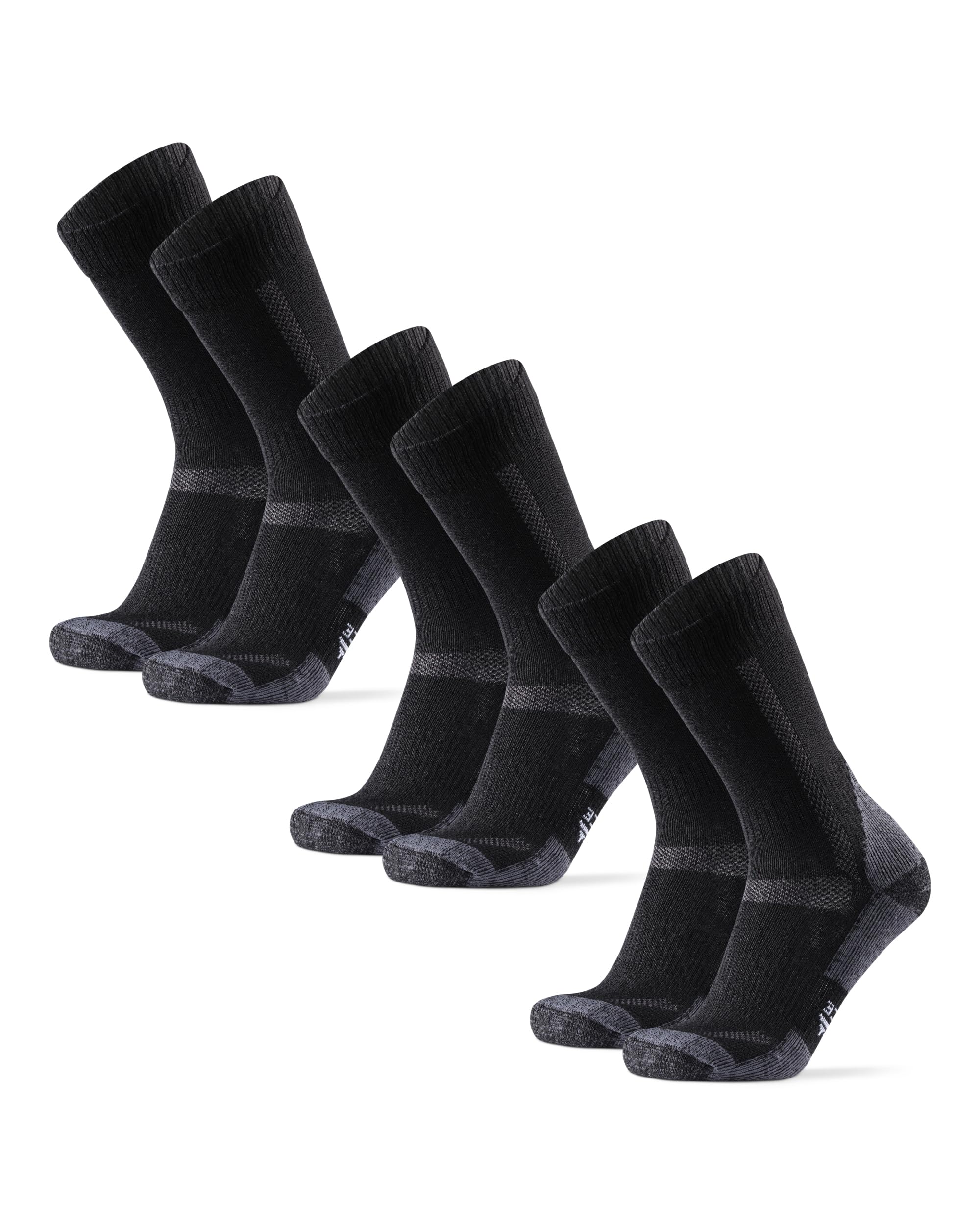


Best for All-Around Trail Days
Darn Tough Hiker Midweight Micro Crew
Key Features
- Height: Micro crew
- Weight: Midweight
- Material: Merino wool
- Warranty: Lifetime
- Price: Premium
The Hiker Midweight’s best trick is that it feels plush without turning into a boot-filler. The micro-crew height sits above the boot collar, and the midweight cushioning lands under the foot and around the heel without making a snug trail shoe feel packed with felt.
That balance is why we keep reaching for it as the default. The knit stays put around the arch and heel, and the toe seam sits flat, so the sock is not the thing you notice at the end of a long day. In cool, damp conditions it regulates temperature well, and the cushioning takes the edge off rocky ground.
The lifetime warranty is more than a slogan here: it changes the math on a premium sock, because a worn-through heel is a replacement conversation rather than a full repurchase. The fit is available in a proper men’s cut, too, with a shaped heel that feels less like a tube sock than the budget pairs.
Pros
- Plush underfoot without excess bulk
- Stays put around heel and arch
- Lifetime warranty backs the price
Cons
- Runs narrow for some wide feet
We recommend the Hiker Midweight as the default trail sock for most hikers: proven cushioning, a stay-put fit, and a lifetime warranty make it the safest buy here.
Best for Women’s Three-Season Hikes
Darn Tough Women’s Hiker Micro Crew
Key Features
- Height: Micro crew
- Weight: Midweight
- Material: Merino wool
- Warranty: Lifetime
- Price: Premium
The women’s Hiker Micro Crew is the pair we point to when a men’s cut has always felt slightly off through the heel. It uses the same micro-crew height and midweight cushioning as our top pick, but the narrower women’s-specific shape hugs the arch and heel without squeezing across the forefoot.
On the trail, the story is familiar in the best way. The cushioning takes the sting out of rocky ground, the knit stays put instead of sliding down into the boot, and the toe seam is smooth enough that we stopped thinking about it. The merino blend handles sweat well on cool-to-mild days.
We also like the color range, which is a small thing until you are buying a sock you will wear constantly. The lifetime warranty remains the clincher: a worn-through heel becomes a replacement conversation rather than a full repurchase.
Pros
- Women’s-specific heel and arch fit
- Cushioned without bulk
- Lifetime warranty
Cons
- Higher upfront cost than budget multi-packs
For women who want the same sure-footed formula in a women’s-specific cut, this is the pair we hand over without hesitation.
Best for Warm-Weather Hiking
Danish Endurance Hiking Socks
Key Features
- Fit: Men and women
- Use: Hiking
- Warmth: Thermal
- Material: Merino wool
- Price: Premium
The first thing to know about the Danish Endurance pair is that it is a lighter, leaner hiking sock than the word thermal suggests. On mild days and in roomy boots, that is a good thing: the knit breathes, dries quickly, and does not make your feet feel stewed after a long climb.
We found it most useful as a warm-weather and travel sock, the pair that works in a walking shoe as well as a light hiker. The cushioning sits at the heel and ball without turning the sock into a shin-high pillow. It is not the sock we choose for a cold, wet day in stiff boots.
The fit is the real wildcard. Some feet find the ankle too tight, while others find the length loose, so buy from a retailer with easy exchanges and compare the size chart with your foot length. The thin knit is comfortable, but it is a different animal from a dense, high-wool hiking sock.
Pros
- Breathable on mild days
- Dries quickly
- Cushioning without bulk
Cons
- Only 30% merino wool
These are our pick for mild-weather hikes and travel, where a breathable, quick-drying sock matters more than plush warmth.
Best for Low-Cut Trail Shoes
Busy Socks Merino Compression Ankle
Key Features
- Height: Ankle
- Cushioning: Thick
- Compression: Support
- Pack options: 3 or 6 pairs
- Price: Midrange
If your trail shoe sits below the ankle, this is the pair that fills the gap. The Busy Socks cut has a low profile with a small heel tab, so it disappears under a low-cut hiker or trail runner instead of bunching at the collar. That low shape is exactly what we want when a crew sock feels like too much fabric.
We like the light compression feel through the arch; it gives the sock a secure, huggy character without turning it into a medical-grade sleeve. The cushioning is thicker than a liner, though not plush enough for cold weather. In warm conditions the merino blend moves sweat well.
The multi-pack is the practical draw. You can keep one pair in the car, one in the pack, and one in the wash without paying premium single-pair money. The trade-off is warmth: this is a low-cut, light sock, not a cold-weather layer.
Pros
- Low-cut ankle coverage
- Light arch compression
- Multi-pack value
Cons
- Only partly merino wool
Choose these when your trail shoe sits low and you want light compression plus a multi-pack that keeps the rotation going.
Best for Budget Winter Hikes
Alvada Merino Wool Crew Socks
Key Features
- Height: Crew
- Warmth: Thermal
- Material: Merino wool
- Pack size: 3 pairs
- Price: Budget
Three pairs arrive in the Alvada pack, which is the first clue about what it is for: keeping a cold-weather rotation going without treating each sock as an heirloom. The crew height covers the ankle and the knit feels soft and thick, with a brushed interior that takes the chill off a boot.
We found them most at home on winter walks, workdays outdoors, and around camp rather than on fast, sweaty climbs. The warmth is the point. The fit stays up on most feet, but the sock is not as dense or as closely shaped as the premium hiking pairs here.
The practical appeal is the rotation: keep a dry pair in the pack and a warm pair for camp. They are not the pair we choose for a fast summer climb, where the thick knit can feel like too much. For cold, slow days, the softness and warmth are the reason to reach for them.
Pros
- Three-pair value
- Warm brushed interior
- Crew height covers boots
Cons
- Heel and toe wear before the rest
For cold-weather walks on a budget, these deliver warmth and softness in a three-pair pack.
Best for Budget Women’s Hikes
Anlisim Merino Hiking Socks
Key Features
- Fit: Women’s
- Use: Hiking and running
- Height: Crew
- Material: Merino wool
- Price: Budget
The Anlisim pair makes a strong first impression: soft merino-blend knit, cheerful colors, and a crew height that works with hiking boots and everyday shoes. It is the kind of sock that gets pulled into the rotation for errands as well as trail days.
We found the fit secure without being tight around the ankle, and the cushioning is enough for moderate hikes without crowding a roomy boot. The fabric is not the densest or most technical blend here, but it feels pleasant against the skin and handles cool weather well.
The value case is easy to make for a multi-pair women’s rotation, especially if you want color options. The fabric is a blend rather than pure wool, so treat them as a comfortable everyday hiker, not an expedition sock.
Pros
- Soft merino-blend feel
- Secure fit around ankle
- Colorful multi-pair value
Cons
- Sizing runs small for some
We steer women shopping on a budget toward these for their soft merino feel, cheerful colors, and dependable stay-up fit on moderate hikes.
Best for Thin Boot Layers
Sandsuced Merino Boot Socks

Key Features
- Height: Boot
- Warmth: Thermal
- Material: Merino wool
- Pack size: 5 pairs
- Price: Budget
A lot of hiking socks are really winter boot socks: warm, thick, and too much for a snug pair of trail shoes. The Sandsuced pack goes the other way, with a thinner boot-height knit that slides under the laces without crowding the toe box.
We like them as a layering sock for cold but active days, when you want wool’s warmth without the bulk of a dedicated winter sock. The tops stay put without digging in, and the colors hold up through washing.
The five-pair pack is the obvious draw: it lets you keep a pair in the car, a pair at the cabin, and a pair in the wash. The colors hold up through washing, and the knit is soft enough for all-day wear.
For a moderate hike or a winter walk, that is enough. We keep them in the car and at the cabin, where a warm, thin sock earns its place.
Pros
- Thin enough for snug boots
- Five-pair value
- Warm without bulk
Cons
- Limited cushioning for long rocky descents
These are the thin, warm layer we reach for when boots are already snug and a bulky sock throws off the fit.
Best for Cold-Weather Base
EBMORE Super Thick Merino Socks

Key Features
- Fit: Men’s
- Warmth: Cold weather
- Material: Merino wool
- Thickness: Super thick
- Price: Budget
The EBMORE is built for one job: keeping feet warm when the temperature drops. The interior is plush and brushed, the knit is genuinely thick, and it takes the sting out of a cold morning.
The warmth is genuine, and the softness is the kind you notice when you pull them on. They are thick enough to cushion a cold walk, and the crew height covers the ankle, though it sits lower than a true tall boot sock.
That shorter height is the first thing to check against your boots. It works best with shorter winter boots or as a camp sock; under a tall hiking boot, it can leave a gap at the calf. The sock is also not shaped as closely as the premium hiking pairs here.
Durability is the other question: the heel is the first place these thin out, and they are not the pair we count on for several hard seasons. For deep winter walks and cabin mornings, the warmth is worth the trade; for high-mileage three-season hiking, choose a lighter, more technical pair.
Pros
- Very warm for cold weather
- Soft brushed interior
- Cushions cold walks
Cons
- Bulk can crowd a close-fitting shoe
When the forecast turns bitter, these thick socks bring the warmth; choose them for deep winter walks and cabin mornings, not high-mileage summer hikes.
How We Tested 15 Pairs of Hiking Socks
Every pair started with the same shortlist process. We read through hundreds of customer reviews, then filtered by fiber content — how much merino versus nylon versus elastane — along with cushioning level, height, and whether the sizing actually ran up to large and wide feet. From there we bought 15 pairs outright, from thin liners to heavily cushioned crews, and put them all into the same rotation.
Testing ran for eight months, so each pair saw real trails and real laundry days rather than one afternoon. We hiked in them on humid summer mornings and on a cold overnight where the temperature dropped below freezing at camp, then wore them around the house afterward to see whether the initial softness held or turned scratchy. Every pair went through the wash at least a dozen times, and after each cycle we checked for pilling, thin spots at the heel and ball of the foot, and whether the cuff had gone slack. Value came last but counted: a sock that fuzzes out by the fifth wash is expensive no matter what it cost.
Fit got the closest attention. We noted where the heel seam landed, whether the toe box bunched, and whether the sock slid down inside the boot on a long descent. To judge thickness honestly, we wore the same pair with two different boots — a snug, low-volume pair and a roomier one. We also weighed each sock dry and after a soak, then checked how fast it dried overnight, since a damp sock on day two is where most trips quietly fall apart.
How to Choose Hiking Socks
The right hiking sock is the one that fits your boot, your season, and your foot without asking you to think about it again at mile five.
Match the sock to the boot and the trail
A micro-crew or crew sock sits above the boot collar and is the safest default for three-season hiking. A quarter or ankle sock is better with low-cut trail shoes, where extra fabric bunches. Cushioning should follow the boot: a stiff, heavy boot benefits from a midweight sock; a snug trail runner may need a thin one to avoid pressure points.
We start with height and cushion before anything else because they change how the whole system feels. If your boots are already snug, a thick sock can turn a good fit into a cramped one. If you feel every rock, a thin liner will not fix the boot.
Fit and sizing decide more than fabric
A hiking sock should hug the heel and arch, lie smooth across the toes, and stay up without leaving deep marks. Buy the size that matches your foot length, not the size you wear in dress socks, and check the maker’s chart for a men’s or women’s-specific last. A sock that slides down or bunches is a blister risk.
If you are between sizes, size up for hiking and use the extra room for a liner or a thicker boot fit. Wide feet may need a roomier cut; narrow feet may find some unisex socks baggy through the heel.
Read past the merino label
Merino is the headline fiber because it regulates temperature and manages moisture, but the percentage matters. A high-merino sock feels soft and warm; a blend with more nylon is usually thinner, faster-drying, and more abrasion-resistant. Neither is automatically better.
Look for a blend that matches the job: high wool for cold, damp days, a lighter wool-nylon blend for warm-weather hiking and travel. If a listing only says merino without a percentage, treat the warmth and durability claims cautiously.
Durability, warranty, and the real cost
Hiking socks usually fail at the heel and toe, not the cuff. A tight weave, reinforced high-wear zones, and a warranty all change the real cost of ownership. A premium pair with a lifetime guarantee can be cheaper over several seasons than a rotating stack of budget socks.
We still keep budget multi-packs in the mix for car socks, camp socks, and backups. The mistake is expecting the same lifespan from a thin, inexpensive pair as from a dense, warrantied hiking sock. Rotate pairs and air-dry them to slow wear.
Warmth and thickness for the season
Thick socks are not automatically better hiking socks. In summer, a thin wool blend that moves sweat and dries fast is more comfortable than a plush boot sock. In winter, a thicker knit adds insulation, but it has to leave room in the boot.
We match thickness to conditions: lightweight for hot, fast hikes; midweight for three-season boots; thick for cold-weather walks and camp. If you hike year-round, two weights make more sense than one do-everything sock.
Frequently Asked Questions
How many pairs of hiking socks do I need?
Two or three pairs cover a weekend rotation: one on your feet, one drying, one clean. For a longer trip, plan one pair per hiking day plus a dry pair for camp. Rotating pairs also gives the knit time to recover between wears.
Can I wear hiking socks with everyday shoes?
Yes, but match the thickness to the shoe. A thin merino hiking sock works well in sneakers and loafers; a midweight or thick boot sock can crowd a casual shoe. If you want one pair for both, choose a lightweight crew and save the thick socks for trail boots.
How should I wash merino hiking socks?
Wash them inside out in cool or lukewarm water on a gentle cycle, then air-dry. Heat is what shrinks wool and speeds up pilling, so keep them out of a hot dryer and away from radiators. Avoid fabric softener, which coats the fibers and reduces wicking.
Final Verdict
Most hikers should start with the Darn Tough Men’s Hiker Midweight Micro Crew. It has the best balance here of cushioning, stay-put fit, and long-term backing, and it works across three-season boots. Women should take the women’s-specific version; if you wear low-cut trail shoes, the Busy Socks pair is the more natural shape. The Danish Endurance sock is the one for mild weather and a thin profile, provided the fit works for your foot.