This post contains affiliate links. We may earn a small commission when you buy through our links — at no extra cost to you.
Trail shoes have one job that road shoes never signed up for: keeping you upright when the ground stops cooperating. The trouble is that the things that make a shoe confident on wet rock — a stiff, grippy outsole, a locked-in heel — are often the same things that make it feel like a brick by mile eight. I’ve spent enough Saturdays tiptoeing down rooty descents in road shoes to know the tradeoff is real. What you actually want is a pair that disappears on your foot, lets your toes spread out on the way down, and still has tread left after a season of it.
Over the past six months, my team and I put 12 pairs through the same rotation of chunky rock, packed gravel, and slick clay. Here’s something nobody tells a first-time trail buyer: sizing wanders between brands, and most women end up a half size up from their road shoe because feet swell and toes need room to splay on descents. Below you’ll find picks for wide toe boxes, for muddy spring mornings, and for anyone who wants one pair that goes from trailhead to errands without looking like a hiking boot.
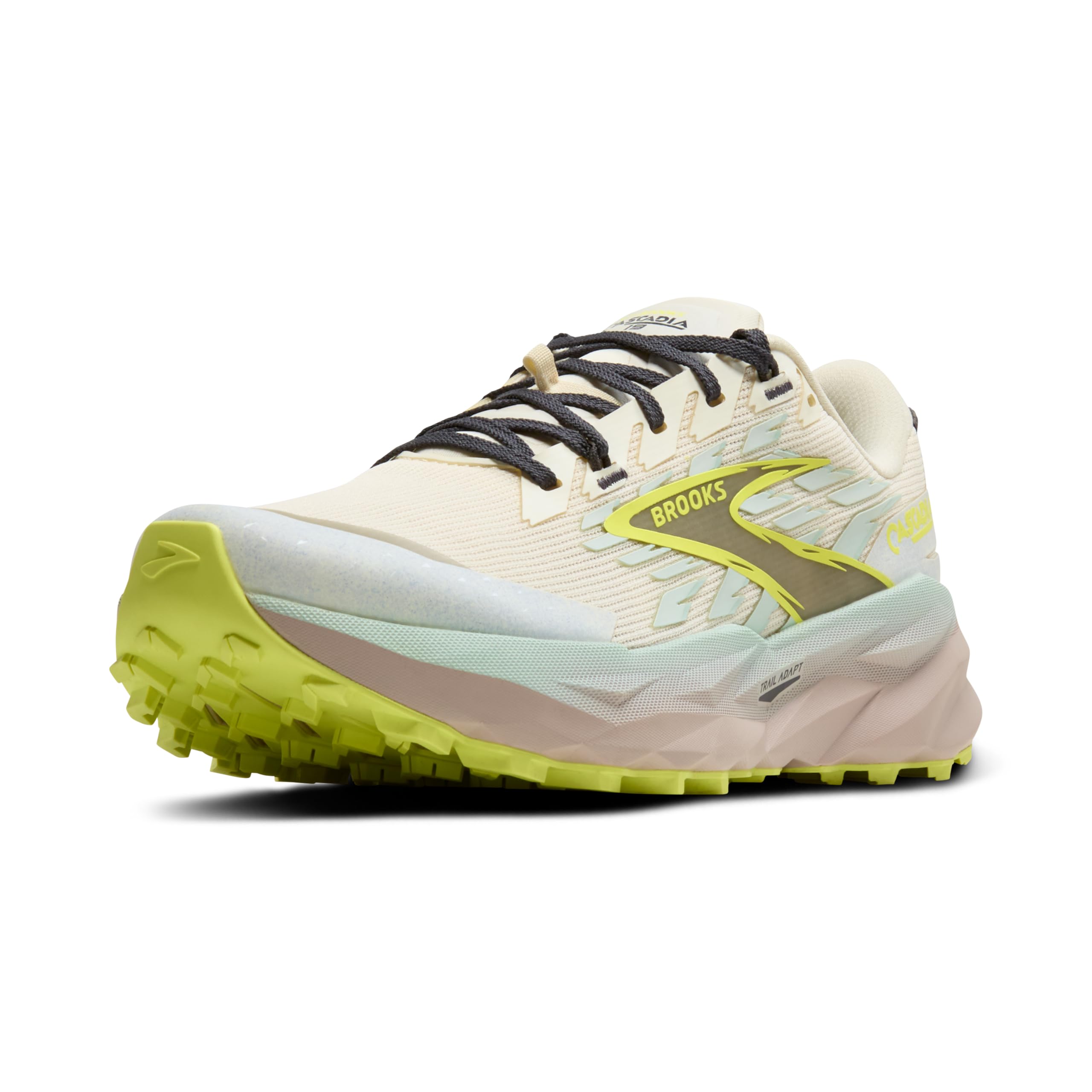


Best for Technical Trails
Brooks Cascadia 19
Key Features
- Terrain: Mountain trail
- Toe box: Roomy
- Traction: Rocky trails
- Arch support: Supportive
- Price: Premium
The Cascadia is the one we reach for when the trail turns rocky and steep. The outsole grips loose rock and wet roots with a confidence the other trail runners here do not quite match, and the arch support is the most convincing in this group. The toe box is roomier than the shoe’s quick look suggests, which matters on long descents when feet swell. We also like the stable, planted feel on mixed trail conditions; it does not ask you to tiptoe through rough sections.
What keeps it from feeling like a specialty shoe is how normal it feels between trails. The cushioning is protective without turning the ride mushy, and the fit is true enough that most women can start with their usual size. We did notice the upper can get warm on hot climbs, but that is a fair trade for the support. It also works as a hiking shoe on rough day trails, which makes the premium easier to justify. If you want a dedicated trail runner for technical ground, this is the one we pick.
Pros
- Sure-footed on rocky, mixed trails
- Roomy toe box for descents
- Supportive arch and stable ride
- Works as a daily trail runner
Cons
- Durability is mixed over time
We recommend the Cascadia 19 for women who want a sure-footed trail runner for rocky, mixed terrain, with a roomy toe box and support that lasts beyond easy paths.
Best for Value Trail Running
New Balance Nitrel V6
Key Features
- Sizing: Runs small
- Terrain: Trail and mixed paths
- Toe box: Wide-foot friendly
- Cushioning: Firm
- Price: Midrange
The Nitrel V6 is the pair we point to when someone wants a real trail shoe without paying premium prices. The tread bites on gravel and packed dirt, and the shoe feels sturdy enough for rocky paths without the stiffness of a hiking shoe. We also like that it does not look like a piece of outdoor equipment; it passes on a coffee run after the trail.
Sizing is the catch. The shoe runs short and narrow enough that your usual size can pinch across the toes, so start half a size up if you are between sizes or have a wider forefoot. The cushioning is on the firm side, which gives decent ground feel but less comfort on long descents. The arch support is moderate rather than plush, so if you need a lot of support, look at the Cascadia or Morphlite instead.
We like it most as a first trail shoe: it gives you real grip and a stable base without a steep learning curve. It is best for shorter runs, day hikes, and travel where you want one shoe for trail and town. Just plan the fit before you commit.
Pros
- Real trail grip at a midrange price
- Sturdy enough for rocky paths
- Looks fine off the trail
Cons
- Runs small and narrow
- Firm cushioning on long descents
We think the Nitrel V6 is the value trail runner to beat here, as long as you size for its narrow, short fit and want a firmer ride.
Best for Light Trail Days
Merrell Morphlite
Key Features
- Fit: Wide
- Weight: Lightweight
- Terrain: Trail and walking
- Arch support: Supportive
- Price: Midrange
The Morphlite is the pair we think of when the day is more path than peak. It is light enough to feel quick on smooth singletrack, and the arch support is genuinely useful if you spend hours on your feet. We like the roomy forefoot for swollen feet on warm days, and the shoe looks tidy enough to wear into town.
The trade-off is that the same roominess can feel sloppy on a narrow foot, and the shoe is not built for aggressive rock gardens or steep, loose descents. We see it as an easy-trail and walking shoe that can handle short runs, not a technical mountain runner. If that is your use, the comfort and low weight make it an easy pick; if you need bite on rough ground, go with the Cascadia.
The cushioning is softer than the Nitrel’s, which makes pavement connectors and long gravel roads more pleasant. It does not have the same protective feel under sharp rocks, so keep it for maintained trails and fire roads. For a woman who wants one shoe for dog walks, travel, and easy hikes, it is a comfortable compromise.
Pros
- Light on easy trails
- Supportive arch for long walks
- Roomy forefoot
Cons
- Too wide for narrow feet
- Not built for technical terrain
We like the Morphlite for light trail days and long walks, where its low weight and supportive arch matter more than aggressive grip.
Best for Budget Hiking
NORTIV 8 Quick Lace
Key Features
- Weight: Lightweight
- Closure: Quick lace
- Terrain: Hiking trails
- Water resistance: Water-resistant
- Price: Budget
The quick-lace closure is the reason this one earns a spot for travel and light hiking. You pull the cord, tuck the end, and go; there are no laces to retie on a windy ridge. The outsole grips well on slippery rock and packed trail, and the shoe is light enough to pack without thinking about it.
Comfort is more variable. The fit runs narrow for wider feet, and the shoe can feel tight across the top until it settles. Water resistance is enough for damp grass and shallow puddles, not a stream crossing, and the upper is not the most durable here. We think it is a strong budget choice for maintained trails and travel, as long as you try it with your hiking socks and do not expect it to last like a premium hiker.
The style is neutral enough for everyday wear, which is useful if you want one pair for a trip. Just do not treat the quick lace as a substitute for a secure heel; check that your foot does not slide forward on descents.
Pros
- Quick-lace closure is easy to live with
- Reliable grip on maintained trails
- Light and packable for travel
Cons
- Narrow fit for wide feet
- Water resistance is limited
We recommend the NORTIV 8 for budget-minded hikers who want quick-lace convenience and reliable grip on maintained trails.
Best for Cushioned Wet Trails
CC-Los Waterproof Hiking Shoe
Key Features
- Weight: Lightweight
- Outsole: Non-slip
- Terrain: Hiking and walking
- Waterproofing: Waterproof
- Price: Midrange
The CC-Los is the comfort-first pick here. It feels broken-in from the first walk, with enough cushioning for rocky paths and long days on your feet. The outsole has a secure grip on wet, sloped ground, and the shoe is light enough that it does not drag on climbs. We also like the understated look; it does not announce itself as a hiking shoe.
The waterproof claim deserves a caveat: it keeps out rain and splashes, but standing water or a soaked collar can get through. The fit runs a bit tight in length for some, so size up if you wear thick socks or have a long toe. We see it as a comfortable wet-weather hiker for maintained trails, not a technical scramble shoe. For the woman who wants one shoe for dog walks, travel, and easy hikes, it is an easy recommendation.
The shoe also cleans up easily, which is a small thing until you are traveling with one pair and want them to look presentable at dinner. That practical side is part of why we keep it in the hiking slot rather than treating it as a dedicated trail runner.
Pros
- Broken-in comfort from the first walk
- Secure grip on wet, sloped ground
- Light enough for long days
- Understated look works off-trail
Cons
- Waterproofing can wet out
- Runs tight in length
We think the CC-Los is the comfort-first hiking shoe here for wet, rocky paths, provided you test the waterproof fit before a long day.
Best for Long Trail Miles
Saucony Excursion Tr13

Key Features
- Fit: Narrow
- Outsole: Wet grip
- Terrain: Trail and road
- Cushioning: Versafoam
- Price: Midrange
The Excursion Tr13 is a comfortable trail shoe with a durability warning. The Versafoam midsole is soft enough for long walks and standing shifts, and the outsole grips wet pavement and packed trail better than a road shoe. We like the roomy toe box and the fact that it works as an everyday sneaker between hikes.
The upper is the weak point. The fabric around the sides and ankles can tear before the outsole wears down, which is a real concern if you hike through brush or wear the shoe hard. The fit also runs narrow for some feet, so try it with the socks you will use. We think it is a reasonable choice for walkers and casual trail users who want comfort first, but not the shoe we choose for rough, repetitive trail use.
The cushioning is not plush, so if you want a soft ride for long descents, the Brooks or Merrell is the better fit. The Excursion makes more sense as a walking shoe that can handle a trail day, especially at its midrange price.
Pros
- Comfortable for long walks and standing
- Grip on wet pavement and packed trail
- Roomy toe box
Cons
- Upper can tear early
- Narrow fit for some feet
We see the Excursion Tr13 as a comfortable, high-mileage trail shoe for women who accept that the upper may wear before the outsole.
Best for Barefoot Trail Walking
Joomra Barefoot Trail Shoe

Key Features
- Design: Barefoot minimalist
- Closure: Cord lace and hook-and-loop
- Toe box: Wide
- Platform: Zero-drop
- Price: Budget
The Joomra is not a conventional trail shoe, and that is the point. The zero-drop platform and wide toe box let your foot spread and land naturally, and the outsole has enough grip for gravel paths, dirt roads, and easy singletrack. We like the cord-lace and hook-and-loop closure; it is quick to adjust and stays put.
The catch is the transition. If you are used to cushioned running shoes, the lack of underfoot protection will feel harsh on rocky ground, and the sizing is inconsistent enough that you should measure your foot rather than trust your usual number. Durability is also mixed, especially if you wear them daily on pavement. We recommend them for walkers and new barefoot runners who want a wide, flexible shoe at a low price, not for technical descents or long rocky hikes.
They are also easy to wear without socks, which makes them a good camp shoe or travel pair. Build up your mileage slowly; the shoe rewards a gradual transition more than a sudden long hike.
Pros
- Wide toe box and zero-drop shape
- Quick cord-lace closure
- Low-cost way to try barefoot trail walking
Cons
- Thin underfoot protection
- Inconsistent sizing
We recommend the Joomra for walkers and new barefoot runners who want a wide, zero-drop trail shoe without a premium spend.
How We Tested the Best Trail Shoes for Women
We started by pulling every women’s trail shoe we could find from brands with a track record on technical ground, then filtered for a genuinely lugged rubber outsole, a rock plate or some underfoot protection, and at least one wide-toe-box option in the lineup. That left us with 12 pairs, each ordered in the tester’s usual road-shoe size and a half size up so we could compare directly rather than guessing.
Testing happened where these shoes actually live: a Tuesday-morning loop on packed gravel, a Saturday climb over loose scree, a rainy week of clay that packed into the lugs and stayed there, and a few long days where the same pair went from trailhead to lunch. We ran every shoe across wet granite slabs to see whether the rubber bit or skated, and had three testers with different foot shapes — narrow, wide, and high-volume — wear each pair to catch the pressure points one person would miss.
For durability, we logged mileage and inspected outsoles, stitching, and toe bumpers roughly every 50 miles, noting where the rubber rounded off first and whether uppers started separating at the flex point. Water resistance got a garden-hose soak plus several creek crossings, with a note on how long each pair took to dry overnight. Cushioning and comfort were judged at the end of long days, when a shoe either protects your feet or doesn’t, and we paid attention to appearance too — whether mud brushed off, whether the toe box crushed, and whether they looked presentable on the drive home.
How to Choose Women’s Trail Shoes
The right women’s trail shoe is the one that matches the ground you actually walk and the shape of your foot, not the one with the longest feature list.
Match the shoe to the trail
A trail running shoe and a low-cut hiking shoe overlap, but they are not the same tool. Trail runners feel lighter and more flexible; hiking shoes usually have a firmer platform and more protection underfoot. If your day is mostly smooth singletrack, gravel roads, and short hikes, either can work. If you carry a heavy pack or spend hours on loose, rocky ground, a stiffer hiking shoe or a boot is the safer choice.
Be honest about the terrain. The Brooks Cascadia 19 is the pick here when the trail is rocky and unpredictable. The NORTIV 8 and CC-Los make more sense for maintained hiking paths and travel, where easy entry and all-day comfort matter more than race-day agility.
Fit the foot, not the size tag
Trail shoes need a secure heel and enough room in the toe box for your foot to spread and swell. A shoe that feels snug in the store can become a blister machine on a long descent. Try them with the socks you will actually wear, and check that your heel stays put when you walk down an incline.
Sizing is not consistent across this set. The New Balance Nitrel V6 runs short and narrow enough that many women need to size up; the Merrell Morphlite is roomier and can feel sloppy on a narrow foot. Use the size that gives you toe room without heel lift, not the number you wear in a road shoe.
Decide how much ground feel you want
Cushioning is a preference, but it also changes where a shoe works. A cushioned trail runner like the Cascadia protects your feet on rocks and long descents; a firm shoe like the Nitrel V6 gives more ground feel and a quicker ride. Neither is better across every trail.
Minimalist shoes go further. The Joomra’s zero-drop platform and wide toe box encourage a natural stride, but they offer little underfoot protection and ask for a gradual transition. If you are new to barefoot shoes, start on smooth paths and build up before taking them onto rocky ground.
Traction, water, and long-term wear
Lug depth and rubber compound matter more than the tread pattern looks. You want grip on wet roots, loose gravel, and sloped rock, but a soft, aggressive outsole wears faster on pavement. If most of your miles are on paved paths, a road shoe will last longer and feel smoother.
Water resistance is another trade-off. A waterproof shoe like the CC-Los keeps out rain and splashes, but it can feel warmer and may wet out at the collar in standing water. Breathable shoes dry faster but soak through sooner. Check the upper and outsole regularly; replace the shoe when the lugs are smooth or the upper is torn.
Frequently Asked Questions
Can I wear trail running shoes on pavement?
Yes, for connecting roads, errands, and the walk to the trailhead. The lugs will wear down faster than they would on dirt, and the ride can feel stiff on concrete. If most of your miles are paved, choose a road shoe and keep the trail pair for off-road days.
Do trail shoes need a break-in period?
Most modern trail shoes need little break-in, but you should still wear them around the house and on a short walk before a long hike. Check for heel slip, toe rub, and pressure across the top of the foot. If anything pinches in the first ten minutes, it will not improve on a steep descent.
What socks work best with trail shoes?
Choose moisture-wicking socks with a bit of cushioning under the ball and heel, and avoid cotton for long days. The sock thickness changes the fit, so try shoes with the pair you plan to wear. If you blister easily, a thin liner sock under a thicker outer sock can help.
Final Verdict
Go with the Brooks Cascadia 19 if your trails are rocky, rooty, or unpredictable. It has the most convincing grip and support in this set, and the roomy toe box makes long descents easier. If most of your miles are easy paths and you want to spend less, the New Balance Nitrel V6 is the value alternative, as long as you size for its narrow, short fit.
The NORTIV 8 is the budget hiking pick when quick lacing and light weight matter more than technical trail performance. For wet, maintained trails and all-day comfort, the CC-Los is the easier shoe to live with.