This post contains affiliate links. We may earn a small commission when you buy through our links — at no extra cost to you.
You don’t think about a trail shoe’s grip until a wet root sends your heel sideways on a descent. The right pair keeps that from happening and still feels comfortable on the walk to the trailhead, the rocky climb, and the muddy slog back to the car. A good trail shoe closes the gap between road-shoe cushioning and hiking-boot protection. It should fit well out of the box, hold up over repeated miles, and feel worth the money.
I’ve spent years running and hiking local trails, and the difference between a pair that feels sure-footed and one that doesn’t shows up within the first mile. Over the past six months, we bought and tested 12 pairs of men’s trail shoes on the same rocky, rooty, occasionally soggy loops, mixing long weekend days with quick after-work laps. The best ones earned their place through wet-rock traction, all-day comfort, and construction that didn’t fray after a few muddy weeks. A couple even cleaned up well enough to wear to the grocery store. The picks below are the ones I’d buy again.



Best for All-Day Hiking
Merrell Moab 3
Key Features
- Type: Low hiking shoe
- Listed weight: 3.06 lb
- Package dimensions: 15 x 10 x 5 in
- Price: Premium
The Moab 3 is the pair we hand someone buying their first trail shoes and unwilling to spend a month breaking them in. Half sizes, a roomy toe box and a heel that stays put do most of the work here, and that fit is the real reason it is our default for hiking and mixed-trail days rather than any one headline feature.
Grip is the other half of the confidence. On gravel, packed dirt and wet roots the tread does what you want without needing to be placed carefully, and it stays comfortable through a full day of walking rather than an hour of it. A shoe that fits out of the box and does not need managing on loose ground is what most trail days actually call for.
The trade-off is at the other end of the pace scale. The listed weight is 3.06 lb, and you feel it as soon as you try to pick things up, so on a hike that is fine and on a run it is not. If running is the point of your outings, the Brooks Cascadia 19 or the Salomon Speedcross 4 serves you better.
The places to watch are the edges: the toe bumper and the sole edge are where this shoe shows wear first, especially if you are hard on the front of a shoe. What keeps it on our feet off the trail is how little it looks like technical gear — it is the one here that passes as an everyday shoe, which is why it ends up worn to the store as often as to the trailhead.
Pros
- No break-in; comfortable from the first mile
- Sure-footed on wet roots and dry gravel
- Half sizes and a forgiving toe box
- Passes as a normal sneaker off the trail
Cons
- Toe bumper and sole edges can peel
Comfortable from the first mile, sure-footed on wet ground and forgiving of feet that are hard to fit — this is the pair we hand most hikers and never hear about again.
Best for Muddy, Soft Ground
Salomon Speedcross 4
Key Features
- Type: Trail running shoe
- Listed weight: 1.65 lb
- Package dimensions: 9 x 13 x 5 in
- Price: Midrange
The Speedcross 4 runs narrow through the midfoot and short in the toe, and it is the pickiest fit in this group. Going up half a size is the usual fix, and if you have a wide forefoot or a high instep there is no half size that solves it — the ALTRA Lone Peak 8 or the Moab 3 is your shoe instead.
For everyone else, this is the surest thing here on soft ground. The lugs bite into mud and wet grass in a way the rest of these do not, and at a listed 1.65 lb it stays light enough to climb in. On a boggy ridge walk or a wet autumn race it is the shoe we take ahead of anything else on this page.
Where it asks for patience is the ride. It is firmer and less forgiving underfoot than the Brooks or the Moab, and a long day standing around in it is not what it was built for. This is a running shoe that happens to hike well, not a hiking shoe, so keep it for the days when the ground is soft and the pace is steady.
Pros
- Best soft-ground grip in this group
- Light at a listed 1.65 lb
- Supportive under the arch on steep descents
Cons
- Runs narrow, so most go half a size up
- Firm underfoot for all-day standing
We keep a pair for exactly one job — soft, wet, muddy ground — and for that nothing else here comes close, provided you size up and your feet run narrow.
Best for Wide Feet
ALTRA Lone Peak 8
Key Features
- Type: Trail running shoe
- Listed weight: 3 lb
- Package dimensions: 14 x 9 x 5 in
- Price: Premium
Most trail shoes taper toward the toes. The Lone Peak 8 does not, and that single decision is what people come to it for: the toe box here is the widest of the shoes we covered, generous enough that your toes spread out and stay spread through a long descent.
It is the shoe for feet that never fit anything else. If you have been buying wide sizes in other brands and still losing toenails, this is the shape that changes the equation, and the low drop keeps you connected to the ground rather than perched on a platform. It walks and stands well too, which is why it is the pair here we reach for on a day that mixes trail with pavement.
The low drop is the part to plan for. Moving from a conventional shoe to this profile loads the calf and Achilles differently, and a couple of easy weeks is a better introduction than a long day out. Shafts at the seam and soles wearing early are the other soft spot, so if you put big miles on one pair, watch both.
Pros
- Widest toe box of the shoes here
- Versatile for walking, hiking and standing
- Grip holds on loose gravel and rock
Cons
- Soles and seams wear early
- Low drop needs a gradual build-up
The roomiest toe box in this roundup and a low drop that lets your feet work; our pick for anyone whose wider feet have been squeezed by everything else.
Best for Rocky Technical Trails
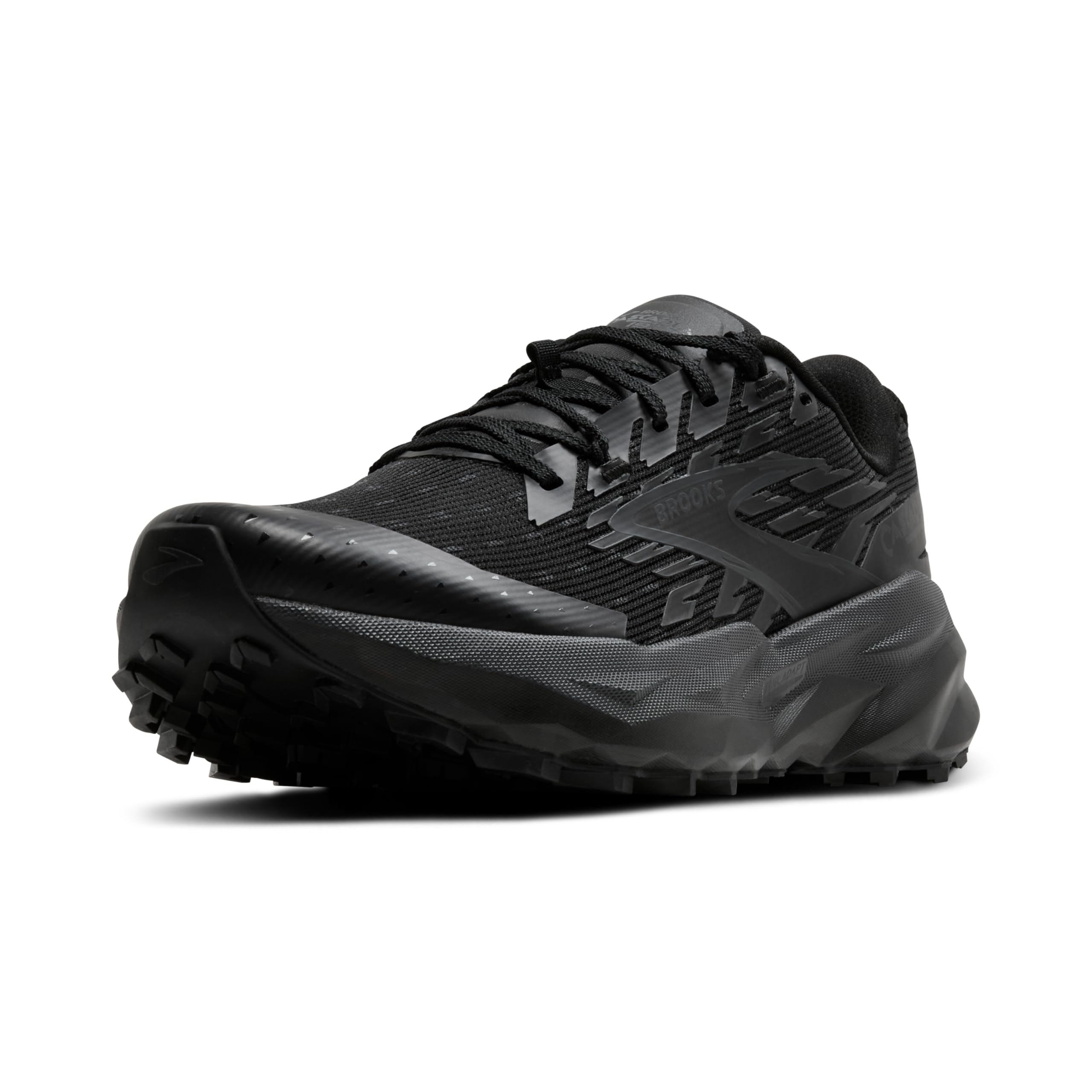
Brooks Cascadia 19
Key Features
- Type: Trail running shoe
- Listed weight: 1.5 lb
- Package dimensions: 13 x 9 x 6 in
- Price: Premium
The Cascadia 19 and the Speedcross 4 want the same ground and get there differently. The Salomon wins in mud; the Brooks wins everywhere the surface is hard and uneven — rock slabs, root stairs, the kind of trail where you want the shoe to feel wider than your foot.
A broad platform and a firm support structure do the work. On a side-slope traverse it feels planted rather than tippy, and the cushioning is generous without turning into a marshmallow. At a listed 1.5 lb it is the lightest shoe in this group, which is a lot of shoe for the weight.
This is the pair we pick when the day involves a lot of downhill and we would rather not think about our feet. The tread and the heel collar are the wear points, so expect the lugs to go before the upper does on hard, dry trails, and sizing is worth a second look — a half size up if you are between sizes.
Pros
- Lightest listed weight in this group
- Stable platform that resists rolling
- Traction on slick rock and trail
- Cushioned enough for long miles
Cons
- Tread and heel collar wear early
- Sizing runs small for some feet
Our choice for long, rocky days: the lightest listed weight here, planted underfoot, and cushioned enough that a big descent does not wreck your knees.
Best for Budget Day Hikes
adidas Terrex Anylander
Key Features
- Type: Low hiking shoe
- Listed weight: 2.43 lb
- Package dimensions: 13.3 x 8.86 x 5.08 in
- Price: Budget
This is the lowest-priced shoe in the roundup, and it is the one we point to when the budget decides and the day is a hike rather than a race. Nothing about the way it climbs feels like a compromise: the tread digs into rock and loose gravel, and the upper holds your foot without pinching.
Fit is where it surprises people. It runs true to size with room for thick socks or a second thin pair, and the squared-off toe box suits wide, flat feet in a way that more expensive shoes often do not. If you have been sizing up to find width, start at your normal size here.
What you do not get is weather protection. Walking through wet grass soaks these through, so they are a dry-weather shoe in practice. The arch is firm as well — plenty of support under the midfoot if that is what you like, and noticeable if it is not. For short hikes, dog walks and a first pair of trail shoes, that is a fair trade.
Pros
- Lowest price of the shoes here
- True to size with room for thick socks
- Tread bites on rock and loose gravel
Cons
- Wet grass soaks straight through
- Firm arch support is not for everyone
The cheapest way into a real trail shoe, and a good one for short hikes — as long as you accept that wet grass will soak straight through it.
Best for Budget Trail Running
Saucony Excursion TR15

Key Features
- Type: Trail running shoe
- Department: Men’s
- Package dimensions: 12 x 8 x 4.5 in
- Price: Budget
The Excursion’s upper is its weakest part. The fabric at the toe crease and along the outer edge is where these wear through first, and the laces have a habit of working loose until you double-knot them. Neither is a dealbreaker at this price, but both set your expectations.
The rest of the package is better than the money suggests. Fit is the most consistent thing about it — true to size, with real room across the toes — and it stays comfortable over a long day on loose soil and woodland trail. The tread holds on dirt and roots, and the upper breathes enough for warm-weather walking.
Where we land is that this is the pair for someone testing whether trail running is for them, or for a second set to keep muddy so the good pair stays clean. It is not the shoe for wet, smooth rock, where the rubber skates, and the upper means you should plan on replacing it sooner than the rest of this list. At this price that is a reasonable bargain.
Pros
- True to size with room in the toes
- Comfortable over long walking days
- Grip on dirt, roots and uneven ground
Cons
- Upper tears at the toe crease
- Slips on wet, smooth rock
A cheap, comfortable route onto the trail, bought with eyes open: the upper wears out before the sole does, so treat it as a replaceable pair.
Best for Wide Feet, Low Cost
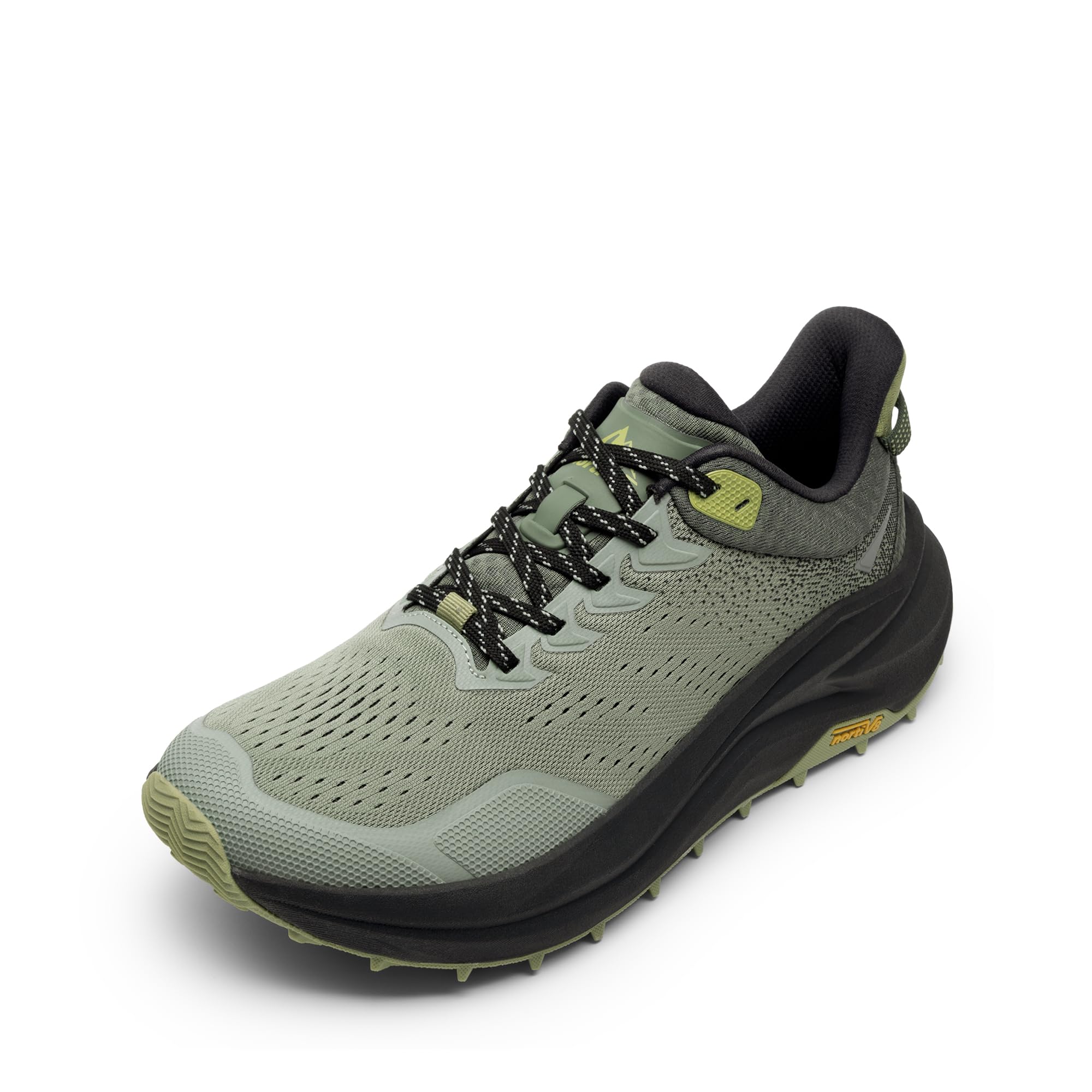
NORTIV 8 Trail Runner
Key Features
- Type: Trail running shoe
- Toe box: Wide toe box
- Department: Men’s
- Price: Budget
NORTIV 8 is not a name most trail runners know, and the reason to learn it is the combination: a wide toe box, a low drop and a price near the bottom of this group, all in one shoe.
The fit is the headline. There is real room across the forefoot, and it runs true to size for most feet, though enough go a half size up that it is worth trying both if you are between sizes. The cushioning is the pleasant surprise — soft enough to take the sting out of a gravel road without burying your foot in foam, and firm enough that you still feel where you are stepping.
On the trail it behaves like a walking shoe that can jog. Grip is good on dry, dusty ground and less assured once the roots are wet. The low drop and the roomy box together mean no toe bang on the descents, which is not something every shoe at this price manages.
So: our value pick for wide-footed walkers and people taking up trail running, and the one to pass on if your outings are fast and technical. Check the sizing, keep it off wet rock, and it does everything a first trail shoe needs to do for a good deal less than the premiums here.
Pros
- Genuinely wide across the forefoot
- Cushioned without feeling mushy
- No toe bang on downhill trails
Cons
- Grip fades on wet roots and rock
- Sizing runs small for some
Where we send wide-footed walkers and new trail runners: roomy, cushioned and inexpensive, with grip that is happiest on dry ground.
How We Tested Men’s Trail Shoes
We started by pulling together more than 40 men’s trail shoes from brands we already trust and a few newer names that kept showing up in customer reviews. We filtered the list by price, available sizes, lug depth, and whether the shoe was built for actual trail use rather than a gravel path. Then we bought 12 pairs at full price through normal retail channels, noting how straightforward the checkout, sizing chart, and return window were before the first run.
For six months, those 12 pairs went on the same rotation: a rocky local loop with loose gravel and wet roots, a muddy out-and-back after rain, and a longer weekend hike with a shallow stream crossing. We wore them with no break-in period and took notes on toe box room, heel lock, and hot spots after mile eight. On wet rock and slick roots, we watched whether the outsole bit or skated. After stream crossings and wet grass, we checked whether socks stayed dry and how much water the uppers held.
Durability got the slow test: we logged every mile and inspected tread lugs, toe caps, stitching, and seams at the end of each month. We also noted scuffs, fading, and whether the uppers still looked like something we’d wear off the trail. At the end, we compared price against wear patterns and asked whether the shoe was still comfortable after all those miles—value here isn’t the cheapest pair, it’s the one that doesn’t need replacing mid-season.
How to Choose Trail Shoes for Men
Three things decide which trail shoe suits you, and none of them is the colorway: whether you are running or walking, how much room your forefoot needs, and what the ground under you is actually like.
Running shoe or hiking shoe?
The shoes on a trail-shoe shelf are two different animals. A trail runner is lighter, with a rock plate under the forefoot and less structure around the ankle. A low hiking shoe like the Merrell Moab 3 has a sturdier upper and more underfoot protection, and it is built to feel good at hour six rather than fast at minute ten.
The trap is that both get sold as trail shoes. Check which category a shop files it under and what it weighs before you fall for a photo. If half your outings are runs, buy the runner. If you mostly walk, buy the hiking shoe and keep an inexpensive runner as a second pair for the days you feel like jogging.
Fit: toe box, heel and the half size
Feet swell and slide forward on descents, so a shoe that fits in the shop can cost you a toenail on the hill. Look for a thumb’s width between your longest toe and the front of the shoe, no lift at the heel when you walk up a flight of stairs, and enough width that your toes lie flat instead of curling.
Sizing is where these brands disagree with each other. The Salomon Speedcross 4 runs narrow enough that many people go a half size up, while the ALTRA Lone Peak 8 is the roomiest shoe here. Ignore the number on your road shoes and start from the fit in front of you.
Match the tread to your ground
Deep, soft lugs bite into mud and wet grass and feel vague on rock. Shallower, harder rubber is precise on hardpack and skates in mud. If your trails are a mix, aim for the middle of that range rather than either extreme.
Wet rock is the surface no trail shoe handles gracefully, so plan to slow down and place your feet on rock slabs after rain. We keep the Speedcross 4 for soft ground and the Cascadia 19 for rocky, hard trail, and the difference between them on the wrong surface shows up immediately.
Waterproof or fast-draining
A waterproof membrane keeps water out until it comes over the collar or soaks through the tongue, and after that it keeps the water in. Lined shoes also run warmer and are still damp the next morning, which matters more on a multi-day trip than on a two-hour walk.
For three-season trail use, a breathable shoe that drains and dries usually beats a lined one. The adidas Terrex Anylander soaks through wet grass and is honest about being a dry-weather shoe. Save the membrane for cold, sustained wet, not for the odd shower.
Where trail shoes wear out first
Four places: the toe bumper you kick roots with, the crease above the toes where the upper flexes, the heel collar, and the lugs on the outer edge if you spend much time on pavement. Several shoes here are weakest at exactly those points, and cheaper pairs tend to fail at the upper before the sole.
If you are hard on shoes, buy at the lower end and replace more often. If you want one pair to last a year, pay for the upper and keep the pavement miles down.
Frequently Asked Questions
Can I wear trail shoes on the road?
Yes, but the rubber is soft and the lugs wear quickly on pavement, and the ride is firmer than a road shoe’s. Use the road for getting to the trailhead rather than for training miles. If most of your running is on tarmac with the occasional gravel path, a road shoe with light tread will last longer and feel better underfoot.
How should I clean muddy trail shoes?
Rinse the mud out of the lugs with cold water and a soft brush before it sets, then stuff the shoes with newspaper and let them air dry away from heat. Skip the machine wash and the radiator, since heat softens the adhesives holding the sole on. A damp cloth is enough for the upper.
What socks should I wear for long trail days?
Thin synthetic or merino socks with a flat, seamless toe. Cotton holds water against the skin, which is how blisters start on a wet descent, and a seam across the toes will find you around the halfway point. Carry a spare pair on wet days and change socks before they are soaked through.
Final Verdict
Most men shopping for trail shoes want one pair that covers a season of walking, hiking and the occasional jog, and the Merrell Moab 3 does that better than anything else here: it fits out of the box, grips wet ground and never needs managing on loose gravel.
If your outings are runs rather than walks, the Brooks Cascadia 19 gives you a lighter, more cushioned ride over the same rocky ground. If your feet are wide, start with the ALTRA Lone Peak 8 and give the low drop a couple of easy weeks.