This post contains affiliate links. We may earn a small commission when you buy through our links — at no extra cost to you.
Thermal underwear has one job—keep you warm without making you feel like you’re wearing a snowsuit under your jeans—and plenty of sets only half do it. I’ve had base layers that trapped heat on a crowded train and others that pilled or went thin after a few washes, so fabric quality, thickness, and fit matter more than the label’s promise. The right set feels soft against bare skin, stays put at the cuffs and hem, and adds warmth without bulk. That’s the balance I went looking for.
For four months, my team and I wore 14 sets through cold-morning commutes, a weekend ski trip, and drafty nights at home. We paid close attention to sizing and length—a too-short hem or a tight shoulder can ruin an otherwise good set—and washed each one repeatedly to see how the material held up. The best ones felt soft, stayed warm without overheating, and were worth keeping in the drawer; the rest got demoted to pajamas.




Best for Cold-Weather Default
CL convallaria Long Johns Set
Key Features
- Type: Top and bottom set
- Style: Long johns
- Department: Men’s
- Price: Midrange
Buying a top and a bottom from the same maker sounds like a shortcut, but it earns its keep at the waist: the two pieces are cut to overlap, so nothing parts when you bend, kneel or reach overhead. That’s the first thing we check with any set, and this one passed.
Warmth is where it justifies the top spot. Under a shell on a windy morning the knit holds heat without the clammy feel of a thick cotton long john, and it stretches enough that climbing into a truck or stepping over a stile doesn’t bind at the hip. The top is also long in the body, which is rarer than it should be and is the usual reason a cheap set fails under a backpack.
As a midweight layer it’s happiest under something else: a hike, a morning on the water, a day in a tree stand, a shift on a cold dock. It isn’t the set for standing still in deep cold — the Carhartt bottoms are warmer — but it covers the widest range of cold-weather days in this group.
Compare it with the Amazon Essentials set and you’re paying for a heavier knit and a longer body; compare it with buying a top here and a bottom there and you’re saving yourself the gap at the waist. Both are good trades.
Pros
- Top and bottom cut to overlap at the waist
- Warm without going clammy under a shell
- Enough stretch to move and climb in
- Long body that stays tucked
Cons
- Runs small; the largest sizes come up short
Our default for cold-weather work and hiking: a warm, stretchy set that stays tucked, provided you order from the size chart rather than your usual size.
Best for Everyday Layering
Amazon Essentials Thermal Set
Key Features
- Fit: Slim
- Type: Top and bottom set
- Style: Waffle knit
- Department: Men’s
- Price: Budget
Thin is the trick here. The waffle knit is the lightest of the sets on this list, and that’s exactly why it works under dress pants and slim jeans, where a beefier thermal shows through at the knee.
It’s cut close through the body and the legs, so it layers without bunching, and the warmth is middling for this group — plenty for a cold commute, a dog walk or a day of errands, not what we reach for to stand around outdoors.
The cuffs are the one detail we’d change if we could. They aren’t especially elastic, so sleeves and ankles creep up over a day of movement; tucking them under a glove cuff or a sock sorts it.
Where the set wins is the price of admission: it’s the cheapest full set here and it doesn’t feel like a compromise under clothes. This is the one we hand someone buying their first base layer, and it’s enough for a city trip. Step up to the Convallaria set when the cold is the point of the trip rather than an inconvenience.
Pros
- Thin enough to disappear under dress pants
- Slim cut layers without bunching at the knee
- Cheapest complete set in this guide
Cons
- Cotton blend can shrink after a few washes
The budget set we recommend first: thin enough to vanish under dress pants, warm enough for a commute, and the cheapest full set here.
Best for Comfort under Jeans
Duofold Midweight Thermal Pant
Key Features
- Type: Thermal bottoms
- Weight: Midweight
- Feature: Moisture-wicking
- Department: Men’s
- Price: Midrange
The first thing we noticed was the hand-feel: smooth and soft, closer to a well-worn flannel shirt than to the slick synthetics in this group. That’s why these ended up in the wear-them-around-the-house pile as well as the layering pile.
Midweight is the right label. They’re warm under jeans without a visible bulk line, and the wicking finish keeps them from going clammy when you’re moving — a commute, a walk, an hour with a shovel. Sitting still in real wind is where a heavier bottom earns its money.
The waist sits high, which we liked for keeping the lower back covered under a short jacket, though the rise will feel generous on a short torso. As a bottom you can wear for a whole day without thinking about it, nothing else here comes close.
Pros
- Soft, smooth fabric that doesn’t itch
- Midweight warmth without a visible bulk line
- Wicks instead of turning clammy
- Comfortable enough to wear as loungewear
Cons
- Inseam runs short for taller wearers
- Sold as bottoms only
The most comfortable bottom in this group — soft as a worn flannel, warm for its weight, and the pair we stopped noticing we had on.
Best for Standing in Cold
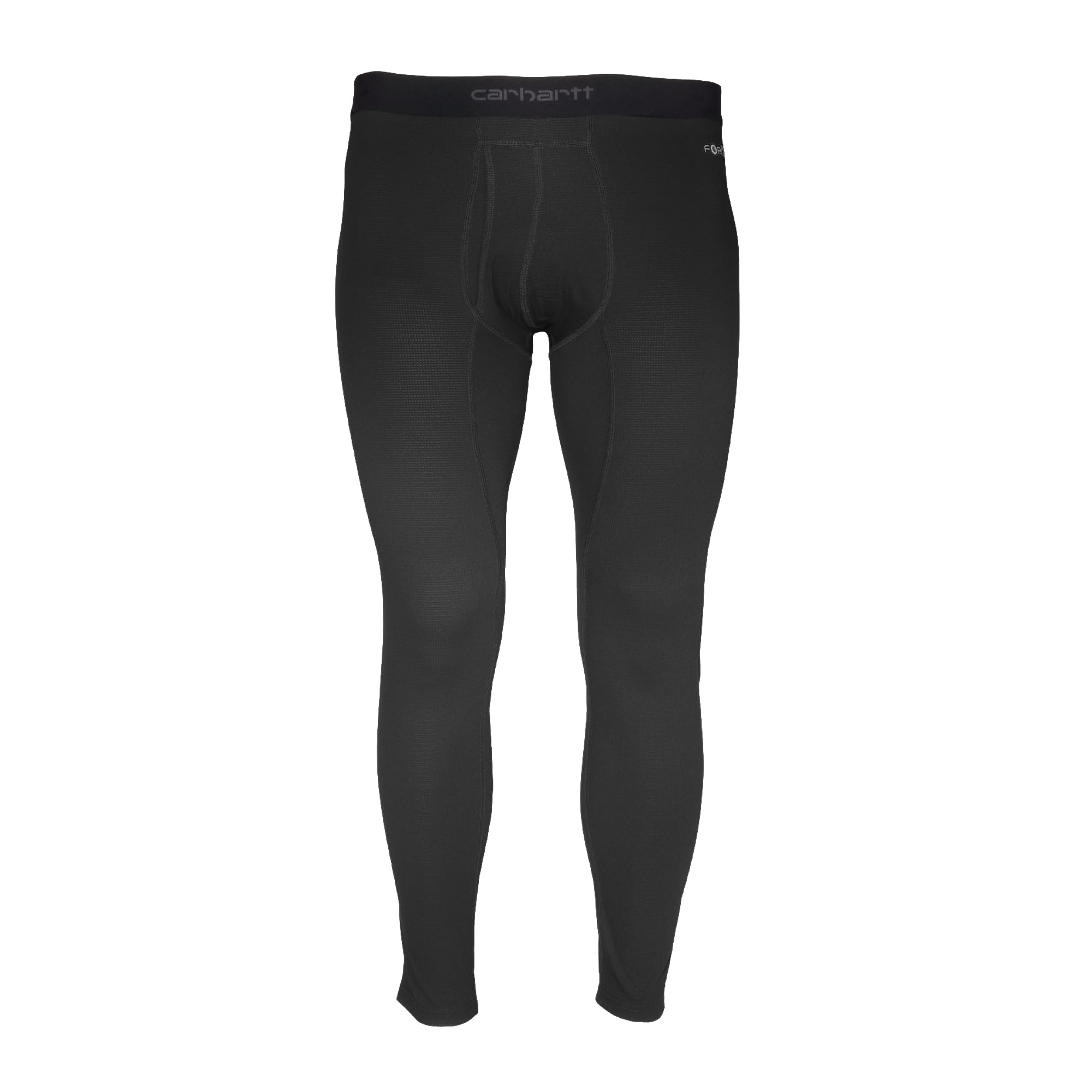
Carhartt Force Base Layer Pant
Key Features
- Type: Thermal bottoms
- Style: Waffle knit
- Weight: Midweight
- Department: Men’s
- Price: Premium
These cost more than any other bottom in this guide, by a margin you’ll notice at checkout. The fair question is whether the extra buys anything, and the answer is warmth, with a couple of conditions attached.
The waffle knit is denser than the Duofold and the Fruit of the Loom, and it’s the pair we reach for when the day involves standing around in serious cold — a job site, a breakdown, a long wait outdoors — rather than moving through it. That density has a cost: these are warmer than you want at a desk, so they aren’t the pair for an office commute.
For anyone who’s outside in it all day, we think the money is justified, and for everyone else the cheaper bottoms do the job. It’s the clearest case in this group of paying for a specific capability rather than a name on a waistband.
They run large through the hip and the waist sits snug, so if you want them under slim work pants, take the smaller of two sizes. The generous leg length is a bonus over a boot.
Pros
- Warmest-leaning bottom in this group
- Holds up in the wash
- Generous leg length over a boot
Cons
- Leg seam can split under hard wear
The bottom we choose for hard, cold work: heavier and warmer than anything else here, if you can live with the price and a roomier cut.
Best for Women’s Winter Runs
BALEAF Fleece Lined Leggings
Key Features
- Type: Leggings
- Lining: Fleece
- Department: Women’s
- Price: Midrange
Fleece-lined leggings do something long johns can’t: they’re warm next to the skin and still look like something you meant to wear. If you want one layer that handles a winter run, the walk to the trailhead and the errands after, this is the pair.
The lining is thin but genuinely warm, and it doesn’t add a bulk line under jeans, which is the usual failure of fleece leggings. Pockets are the detail we didn’t expect to care about — a phone and a key in the layer you’re already wearing means one less thing in your hands.
The waistband is high and holds you in, which most of us liked and anyone short in the torso will find is a lot of rise. It also stays put better in a snug size than a relaxed one, so resist the urge to go up twice. Cheaper fleece sets exist; the stretch and the pockets are what you’re paying for here.
Pros
- Fleece lining warms without adding bulk
- Pockets that hold a phone and keys
- Looks like leggings, not underwear
- Soft inside, smooth outside
Cons
- Runs small; size up from your usual
The pair we kept reaching for: warm enough for winter runs, smart enough to wear on its own, and equipped with real pockets.
Best for Women’s Budget Set
WEERTI Women’s Thermal Set
Key Features
- Type: Top and bottom set
- Lining: Fleece
- Department: Women’s
- Price: Budget
This is the least expensive full set in the women’s half of this guide, and on warmth it gives away very little to the pair that costs more.
The fleece lining is soft against the skin and thin enough that jeans go over the top without a fight. We wore the set under denim and under snow pants and never felt like the layer was the problem; as pajamas on a cold night it’s better than it needs to be, and it sits under a skirt without a line.
Check the fabric the day it arrives. Some sets come through thinner than the fleece-lined photos suggest, and it’s easier to send them back in October than to discover it in January. Where it is thick, it’s a genuinely warm set for very little money.
Pros
- Warmth without bulk under jeans
- Soft fleece against the skin
- Layers under snow pants and skirts
Cons
- Top runs large while the bottom runs small
A warm, soft women’s set for the least money here — the one to buy if you want fleece against your skin without paying for a name.
Best for Stocking Up
TELALEO Thermal Shirt Pack

Key Features
- Pack: 4 or 5 shirts
- Type: Long-sleeve compression top
- Lining: Fleece
- Department: Men’s
- Price: Midrange
Four or five tops in one order changes how you use a base layer. Instead of rationing the one good thermal shirt, you keep one in the truck, one in the gym bag, one in the drawer, and midweek laundry stops being an emergency.
The shirts themselves are thin, close-fitting and warmer than their weight suggests — the fleece inside does the work, and the smooth outside lets a shirt or hoodie slide over the top instead of catching on it.
We think the pack is the right buy for someone who wears a base layer most days: a job, a barn, a winter commute. It’s overkill for a single ski weekend. They’re cut to compress, so order your normal size only if you want it snug.
Pros
- Four or five tops in a single order
- Thin but warmer than they look
- Smooth outer face layers without catching
Cons
- Sold only in multipacks
Four or five thin, warm compression tops for about the cost of one branded thermal shirt, so laundry stops deciding your week.
Best for Tall Frames
Fruit of the Loom Waffle Bottom

Key Features
- Type: Thermal bottoms
- Style: Waffle knit
- Department: Men’s
- Price: Budget
The legs on these run longer than the price suggests. For anyone who usually finds long johns stopping short of the boot, that extra length is the reason to look here rather than at the pricier waffle knits.
Warmth is decent rather than outstanding: the waffle traps air well under jeans, and the texture is soft enough that we stopped noticing it within a minute of putting it on. It doesn’t chafe, which is more than we can say for some heavier knits.
Sizing runs large and the waist is the loosest part, so order down rather than up. If you’re between sizes, take the smaller one and skip the belt battle.
What this bottom is, then, is the least expensive way to add real warmth under work pants or ski bibs, and the best of the budget bottoms here if length is your problem. For a cold commute under jeans, it’s more than enough.
Pros
- Longer legs than most budget bottoms
- Warm waffle knit under jeans
- Lowest-priced bottom in this guide
Cons
- Seams can separate with repeated washing
A warm waffle-knit bottom for very little money, cut longer in the leg than most — our budget pick for tall frames and boot wearers.
How We Wore, Washed, and Compared 14 Sets of Thermal Underwear
We began with a shortlist of more than 30 sets, then narrowed it by material, advertised warmth-to-thickness ratio, available sizes, and price. The goal was a mix of natural and synthetic fabrics, light and midweight options, and cuts long enough to stay tucked under jeans. We ended up testing 14 sets over four months, rotating them through the same cold-weather routines rather than saving them for one big trip.
We wore each set for a full day on a cold-morning commute, under jeans at a desk, on longer weekend walks, and on drafty nights at home, noting whether it felt scratchy at the seams, rode up at the torso, or left us overheated indoors. We also checked sleeve and leg length under trousers, tried one size up when a set landed between sizes, and compared how thin or bulky each fabric felt under normal clothes. On a weekend ski trip, we paid attention to whether the fabric dried after sweat and whether the cuffs stayed put inside boots and gloves.
Every set went through repeated laundry cycles, and after each wash we checked for shrinkage, pilling, stretched cuffs, loose seams, and any change in softness. We compared the washed fit against the original measurements and noted which sets still felt warm after several wears. At the end, we weighed the price against how often we reached for each set—because a cheap base layer that pills in a month is no bargain, and an expensive one that overheats is worse.
How to Choose Thermal Underwear
The right base layer is the one you forget you’re wearing until you stop moving. Everything below follows from that: how much warmth you need, how the fabric handles sweat, and whether it fits under the shell you already own.
Match the weight to what you’ll be doing
A base layer that’s slightly too warm is a bigger problem than one that’s slightly too light, because sweat is what chills you once you stop. If you’ll be moving — hiking, climbing, running, shoveling — lightweight or midweight is the better bet, and the heavy stuff belongs to the days you stand around. The Carhartt bottoms here are the heaviest in the group, and we rate them for a job site rather than a trail.
A workable rule: pick the layer for the coldest part of the day you’ll spend standing still, then add a shell over it. If you run hot, drop a weight rather than squeezing into a smaller size.
Fabric matters more than thickness
Thick stops meaning warm the moment you start sweating. Cotton waffle knits feel lovely against the skin and trap air well while they’re dry, but they hold moisture and stop insulating when damp — perfectly good under jeans on a dry commute, a poor choice for a hard climb in the cold.
Synthetic blends move moisture and dry faster, which is why the outdoor-oriented picks here use them. If you’re buying one layer and you’ll be active in it, put the money into wicking fabric rather than into extra bulk.
Fit is where most of the disappointment lives
A base layer should touch you everywhere without compressing anything. Snug is right; tight enough to leave marks and restrict movement is not. Length counts as much as width — a leg that stops above the boot leaves a cold gap, and a top that won’t stay tucked undoes the whole set.
Sizing is the least consistent thing about this category. Order from your measurements rather than your usual size, expect to go up in one brand and down in another, and if you’re tall, treat inseam and body length as the specification that decides it. Two sets in this guide, nominally the same size, fit differently enough that the chart is the only reliable guide.
Sets, separates and how many you’ll actually wear
A full set is the simpler purchase and usually the better value: the top and bottom are cut to meet at the waist, and one order covers you. Separates make sense when you only need half — bottoms under work pants you already own, or tops under a shirt you’d wear anyway.
Think about laundry, too. If you’ll wear a base layer most days, a multipack of tops or a second set costs less than the wear you’ll put through one piece. If it comes out for two weekends a year, one good set is plenty.
Frequently Asked Questions
Should you wear anything under thermal underwear?
Usually not. A base layer works by lifting moisture off your skin, and it only does that in direct contact — a t-shirt or briefs underneath block the effect and stay damp themselves. If you want something beneath it, make it a thin synthetic brief rather than cotton, which holds moisture against you.
Can you sleep in thermal underwear when camping?
Yes, and a fleece-lined set makes decent camp pajamas. The part that matters is dry: change out of whatever you hiked or worked in before you get into the bag, because a damp base layer chills you overnight no matter how warm it felt while you were moving. Keep one dry set aside for the tent.
Is thermal underwear the same as a base layer?
Mostly. Base layer is the outdoor-industry term and usually signals a synthetic or wool piece built to wick; thermal more often describes a cotton waffle knit. The word on the packet tells you less than the fiber content does, so read that line before buying — especially if you plan to be active in it.
Final Verdict
For most people buying one thermal layer this winter, we point at the CL convallaria set. It’s warm enough for real cold, long enough in the body to stay tucked, and it covers you from waist to wrist in a single order — order from the size chart and it does everything a base layer needs to do.
Change the requirement and the answer changes. If you’re shopping for a woman who wants a layer that doubles as leggings, the BALEAF pair is the better buy. If budget decides it, the Amazon Essentials set is the cheapest full set here and doesn’t feel like a compromise. And if the day is spent standing in serious cold, pay for the Carhartt bottoms.